






























![[리플과 화폐개혁1부] XRPㅣ국가의 화폐 통제권상실ㅣ연방준비제도를 만든 로스차일드 록펠러 JP모건ㅣ 화폐개혁의 숨은 배후ㅣWHITE DOG](https://i.ytimg.com/vi/75TFSuD7J-k/maxresdefault.jpg)


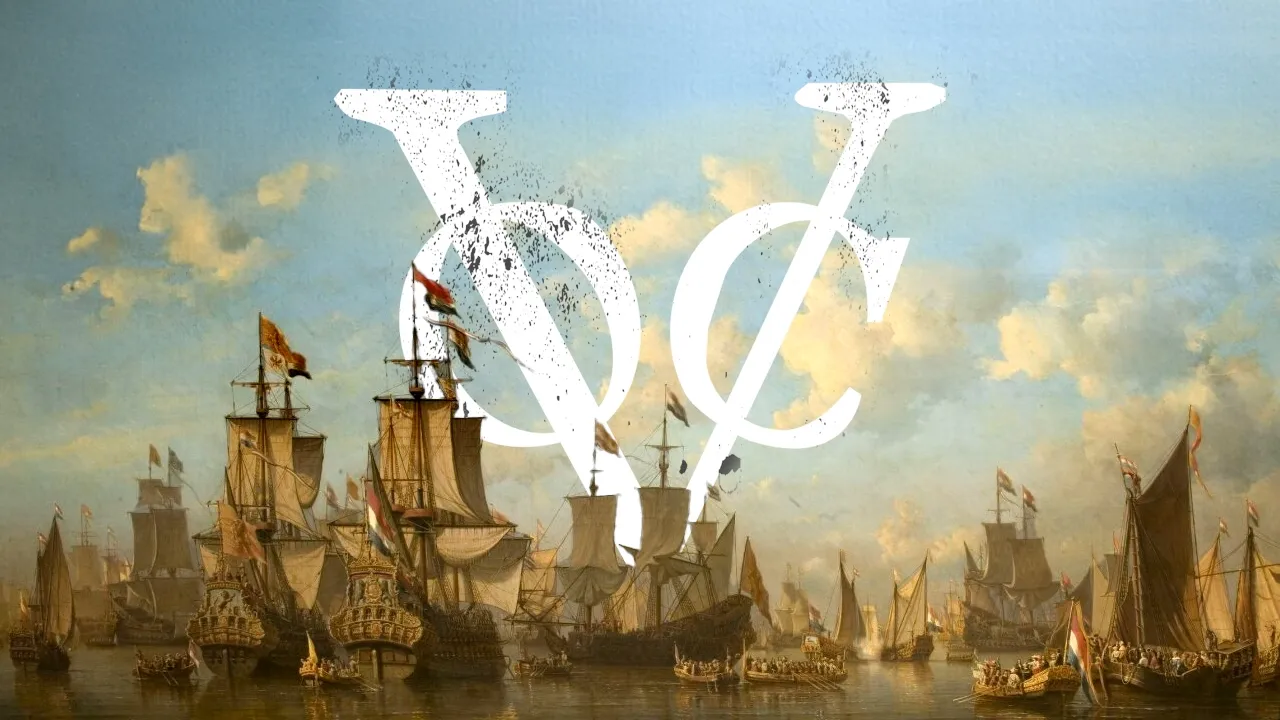
Amsterdam invented modern capitalism in the late 16th century through a combination of factors: religious refugees from Antwerp fleeing Spanish persecution brought capital and expertise; technological innovations like the crankshaft revolutionized shipbuilding; and the formation of the Dutch East India Company (VOC) in 1602 created the world's first stock exchange, democratizing investment and establishing the template for modern financial markets.
Amsterdam and the Birth of Global Capitalism
Added:The fundamentals of Mercantilism: Understanding the dominant economic theory of the 16th and 17th centuries, which emphasized state-controlled trade and the accumulation of precious metals.
The geopolitical context of the Dutch Golden Age: The emergence of the Dutch Republic following the Eighty Years' War and the establishment of a merchant-oligarchy political structure.
Early maritime trade and risk: How European exploration opened global trade routes and the inherent financial risks associated with long-distance sea voyages.
Basic concepts of banking and credit: Familiarity with how bills of exchange and early merchant banks operated in Europe prior to the 17th century.
The structure and legacy of the Dutch East India Company (VOC): Exploring the operational, financial, and colonial impacts of the world's first publicly traded multinational corporation.
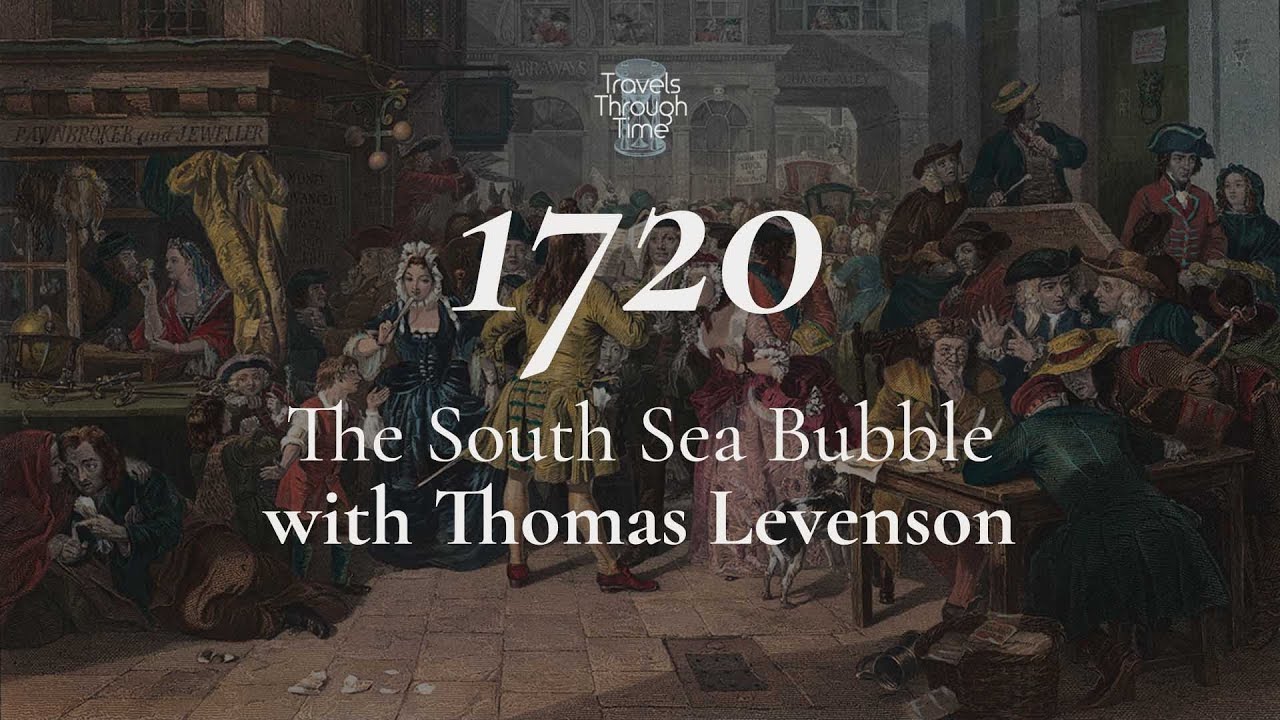
Speculative bubbles and market psychology: Analyzing the Tulip Mania of 1637 as one of the earliest recorded financial crises driven by speculative asset bubbles.
The financial revolution in Great Britain: How the British adopted, refined, and scaled the Dutch financial model after the Glorious Revolution of 1688, shifting global financial hegemony to London.
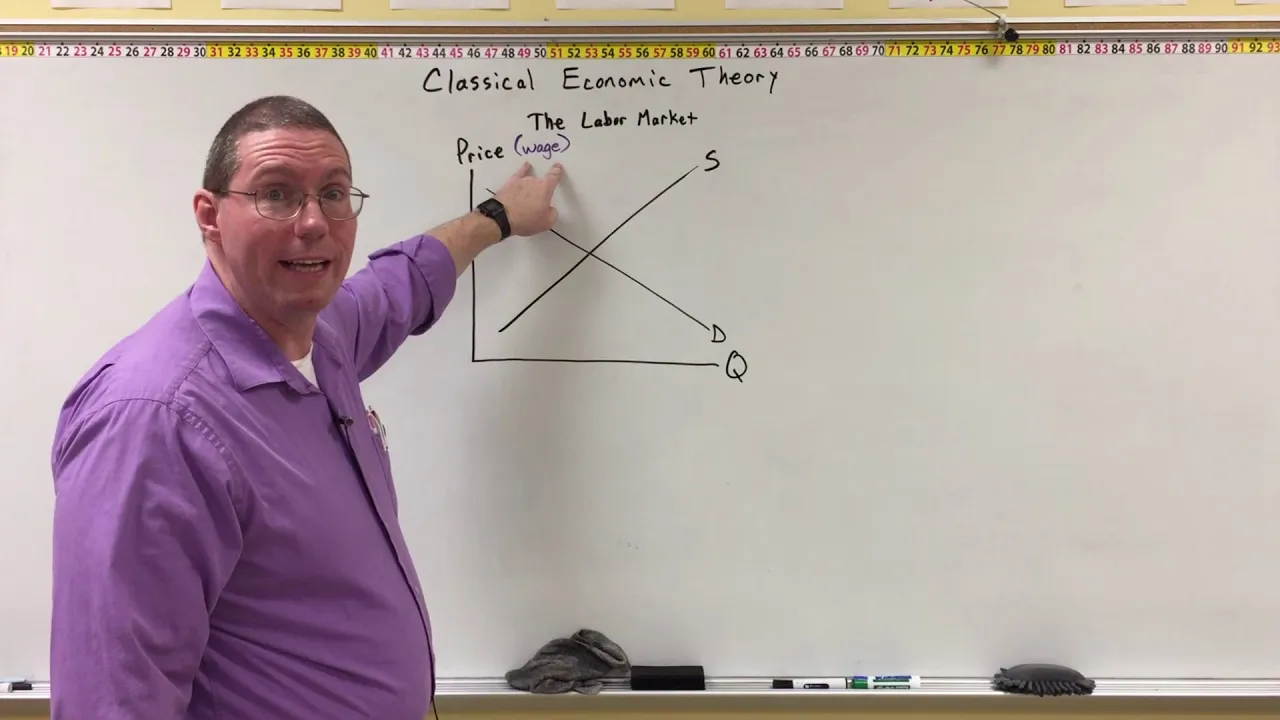
Classical economic theory: Studying Adam Smith's 'The Wealth of Nations' to understand the theoretical formalization of the capitalist systems pioneered in Amsterdam.
Evolution of modern stock markets and central banking: Tracing how the Amsterdam model laid the groundwork for today's global exchanges, fractional reserve banking, and monetary policies.
1.7M views29.1Klikes52:57Original Release: 2025-05-18
Four hundred years ago, a village by the name of Amsterdam set out to conquer the world, invented capitalism as we know it, and became the richest city on the European continent.
there was this sense among the Dutch that whoever you were, you could have a piece of the action. You could be involved in this great economic activity of your society.
One hundred years later, London, its main rival, took its place.
The greatest trading power in the world, London endured terrific hardships, but went on to become the world's largest city, and invented the megalopolis of tomorrow's world.
When the railways crashed through the poorer areas of London, people were just dispersed. They were swept aside, you might say.
Meanwhile, New Amsterdam had now become New York. It was under British rule.
The city cut itself free and entered the fray.
At the outpost of the technical revolution, New York became the vertical city, and created a whole new horizon for itself.
You watched day by day as this stone structure was being built in the middle of the river.
And it got bigger and bigger and bigger.
Today, we admire the beauty of the city's houses, and the charm of its canals.
But there's much more to Amsterdam than that.
It marks the starting point of a great adventure.
That of the rise of liberal capitalism, the expansion of worldwide commerce, and the emergence of the global city.
A combination of circumstances that has rarely been seen in human history, and one which changed the face of the world.
Amsterdam was still just a small town of less than thirty thousand inhabitants, a town of small consequence in terms of the European continent.
On this spring morning of 1594, near Dam Square, which has been the heart of Amsterdam since its very origins, ten men held a meeting.
The meeting took place in one of the participants' houses, a certain Martin Spill, a brewer by profession.
Around the table sat men whose businesses traded wood, salt, and herring, products which Amsterdam had become a specialist in.
Their ships were, however, excluded from the trade of pepper and spices with South Asia, the most lucrative products around.
Because this form of trade was run by Portugal, which owned a huge number of trading posts along the route to Asia, serving as stopovers for its trading boats and as bases for its warships.
On the day in question, it was this very monopoly that was at the heart of their discussion.
And the idea is we can attack the Portuguese monopoly on trade with the Far East.
And they realized that by this time, the city of Amsterdam has developed.
It's got money. It's got these people with this kind of expertise. They've been building ships. So in other words, all the ingredients are coming into place.
Each of the men present that morning had already amassed a fair amount of capital.
But it was nothing compared to what they'd soon own, and the veritable empire they'd contribute towards founding.
Among them was Dirk van Oss, one of the city's most dynamic traders.
Originally from Antwerp, he was a refugee, like many of the men who attended this meeting.
They moved to Amsterdam following a conflict that had been ravaging this part of Europe for the past twenty-five years.
On one side was William the Silent, who was championing the cause of the Dutch Protestants.
On the other side was Philip II of Spain, an uncompromising Catholic and one of the most powerful men on the continent.
When the northern provinces revolted, he put them to fire and sword.
But Amsterdam and the Netherlands finally gained their independence, whereas Antwerp and Flanders remained under his control.
Antwerp was, at that point, the main commercial city in Europe, the richest city in the continent, a primordial source of taxation for Philip II and his kingdom.
However, the King of Spain made a bet, which would cost him dearly.
They knew that one way or another, you couldn't lock up all the merchants.
Money is mobile.
So they perhaps uniquely said to the inhabitants of Antwerp, there is a choice.
You can either stay with us, you have to convert to Catholicism if you're not yet a Catholic, but you could also leave and you have three years to liquidate your assets and take them with you.
Half of the inhabitants of Antwerp, who were often more enterprising, chose to leave.
Many of them left for London or Germany, but ultimately chose to settle just two hundred kilometres from their city of origin, in Amsterdam.
The richest among them bought themselves a house in the small medieval town.
But those who couldn't afford to do so built their own homes outside the city walls, on agricultural land.
There would soon be dozens of thousands of people here, waiting for a better solution.
For these refugees, it was the start of a new life, and when a chance presented itself, they weren't going to miss it.
They sit down with their cartographer. They've got all the people there.
And they work out a system of how they're going to do this, a route they're going to go, what ships they'll need.
And they form a company, which they call the Compagnie Fanfare, which translates as something like the Company for Faraway Lands.
It's fair to say that this small group were well prepared.
A man named Cornelius de Houtman was sent to Lisbon in Portugal, where he would work for several years, and spy on the leading market players.
He knew what he was doing, and despite his lack of experience, he was designated by the group as the leader of this expedition.
The total amount invested was three hundred thousand Dutch guilders, an enormous amount. Even the richest traders in Amsterdam didn't have these kinds of sums available in cash. A house in Amsterdam cost around five thousand Dutch guilders, and that would get you a very beautiful house. So they needed to involve a lot of traders in order to raise such a sum of money. Certainly, dozens of traders were involved as investors in this initial campaign of Houtmans.
Three ships.
Two hundred and forty-nine crew members.
Nobody in Holland had ever undertaken a voyage this far.
Moreover, should they cross into hostile territory, the Portuguese could at any moment intercept the expedition, and destroy their ships.
Plagued with scurvy and rebellions, the voyage did not go well, and Houtman had to stop over for several months in Madagascar.
Before setting sail for Asia, he was forced to leave the country. And ultimately reaching Bantam, on the island of Java.
Nothing was left to chance.
During his stay in Lisbon, Houtman realized that this was somewhere where he'd be able to buy pepper and spices.
But when he reached his destination, he was met with disappointment.
The Sultan, who initially greeted him warmly, took him prisoner.
Houtman escaped, and after several journeys, on August the fourteenth, 1597, he returned to Amsterdam.
More than two years later, about eighty of the original two hundred and some people make it back. They look like skeletons.
And they've got just a few, really, a few sacks of pepper and spices in their hold.
So by any logical means, this is a complete disaster, except that handful of men who backed the voyage realized they had done it. They had actually gone the whole way there, somehow or other gotten their hands on some of the spices and came back. So they'd beaten the Portuguese.
And they realized then that this was an opportunity. This was going to work.
Amsterdam now needed to gather enough resources that it would need for its global ambitions. It needed ships. Lots of ships. And as quickly as possible.
And it just so happened that, in 1594, that is to say three years before Houtman's return to Amsterdam, one man found the answer.
His name was Cornelis Corneliszoon, and he owned several mills in the village of Oudgeest, near Amsterdam.
Cornelius Corneliszoon was a great inventor.
He helped Holland harness wind power.
Until this point, sawing planks of wood required several men and lots of patience.
But this all changed when Cornelis Corneliszoon developed the crankshaft.
This revolutionized shipbuilding production.
The crankshaft is actually a very simple invention that converts a circular movement into a vertical movement.
With this new technique, it was possible to produce planks of wood, which were mostly used for shipbuilding, thirty times faster than before.
This considerably lowered production costs and sped up the shipbuilding process, which made the production of ships, large ships, much cheaper. And you have to remember, this was happening at the end of the sixteenth century. The patent dates back to around 1592 to 1594. In other words, exactly at the time when the Dutch set off on their huge explorations.
At first, the invention met a lot of opposition, and many shipyard workers refused this piece of innovation.
But within a few years, its usage became more widespread, and Holland's advantage over its foreign competitors was overwhelming.
Amsterdam was now the leading shipyard in Europe, and that's where they mass-produced the best trade ship of its time.
The five years that followed were full of excitement.
More and more expeditions were launched, and many shipping companies were founded.
Seventy-five ships were sent to Asia.
And the ships start coming back loaded with these incredibly valuable spices.
And this is really the moment that the Dutch Golden Age takes off.
There's a scene that's described by several writers where, when these first ships come back, all the church bells are ringing, because this is just this awareness that something really big has happened.
These expeditions brought back nine million Dutch guilders, which equated to the total sum of Holland's national debt.
The debt amassed during the war against Spain.
They couldn't carry on this way forever, because all these companies would eventually start competing. They all wanted to travel to Asia and buy spices. The prices in Asia started climbing, which nobody was happy about. And the second problem was the Portuguese and Spanish, who didn't want to relinquish their spoils to the Dutch. They needed to be a well-organized and centralized company, with a monopoly of the market, and one that would be able to defend itself against the Spanish and Portuguese.
And so, VOC was created.
It's a key date in the history of capitalism, as well as that of Amsterdam.
One morning in April 1602, Dirk van Oss transformed a room of his house into a temporary office for the Dutch East India Company, of which he'd just been nominated a director.
Whoever wished to could buy shares of this new company.
There was this sense among the Dutch that whoever you were, you could have a piece of the action. You could be involved in this great economic activity of your society.
One thousand one hundred and forty-three people seized this opportunity.
Not just traders, but also joiners, bronze smiths, and all sorts of craftspeople, and even seven people who worked as housekeepers.
It was a sample of society in Amsterdam at that time.
A total of three million six hundred and eighty thousand Dutch guilders were invested in this new shipping company, a huge success for the first operation of its kind in Dirk van Oss and his house in this moment when these ordinary people came walking into his house to buy shares of stock might have an outsized place in history, because this is, you could say, the moment that capitalism was born.
But there was a problem. The investors were used to investing in a single voyage.
They had to wait. And when the ships returned, they put their money back, and could either choose to continue or stop investing. But with the VOC in 1602, they were told, you can invest, but for ten years. Your money will be held for ten years.
And ten years was much too long for many small investors.
The VOC found the solution on a small bridge, which can now be found outside the exit of Amsterdam station.
This area, in the early seventeenth century, was home to the city's port and its many ships, which were ready to set sail out to sea.
On the old bridge, the one nearest the sea, those who wanted to sell their shares of the VOC would meet those who wanted to buy them.
But the weather in Amsterdam wasn't always accommodating, and on rainy days, people would meet inside the Saint Olaf Church, a Catholic church that had been abandoned during the Protestant victory and since left to the traders of Amsterdam, who'd come from Scandinavian countries.
This place, to some extent, became the first stock exchange to exist in human history.
The process was you did your exchange on the bridge or in the church. And then you walked to the headquarters of the Dutch East India Company. And you had to get signatures and stamps. And so that sealed the deal. That made it efficient.
The Dutch East India Company headquarters are now part of the University of Amsterdam.
It was the first headquarters in the world, with its offices, managers and board of directors.
The edifice is the work of Hendrik de Keizer, the leading architect at that time.
He's the one they called when as stock trading activity increased, they decided to build a proper stock exchange.
Hendrik de Keizer had two models to work with, the stock exchange in Antwerp and its copy, the stock exchange in London.
But Antwerp was in enemy territory, so Hendrik de Keizer went to England.
Here only merchandise was traded, company shares did not yet exist.
But the architecture was interesting, and Hendrik de Keizer used it for inspiration.
Once back in Amsterdam, he built an edifice based on the same model.
Its location is no coincidence. The new stock exchange was built right in the center of Amsterdam, a stone's throw from the city hall, a sign that finance and politics would work hand in hand.
In Amsterdam, unlike London, merchandise was being exchanged, but so were shares of the Dutch East India Company.
In this regard, the Amsterdam Stock Exchange became the first in the history of global economics.
The stock exchange was inaugurated in 1611, meanwhile a truce was being signed between the Dutch Republic and Spain.
Temporarily relieved of the burden of its war debts, the city would finally have the resources to expand.
In the space of thirty years, ten square kilometers were dug up, around a hundred bridges were constructed, and three thousand houses were built.
With thirty thousand inhabitants in 1585, and a hundred and five thousand thirty years later, Amsterdam would soon be the third largest city on the European continent.
The next part of this story took place in London, at the heart of the city, the business district.
Back then, much like now, it was a city of traders too.
In the early seventeenth century, London had not yet undergone its urban revolution.
It was still a city in the Middle Ages.
Well, it was actually a very small place compared to London we know now.
A tiny fraction of the scale of the city as it exists in the XXI century, even in the XIX century.
The city is currently a crucial financial hub, and not many people live there.
But back at this time in history, most of the population of London were still mostly living here.
And the city was the area confined to the old medieval walls, which had been built on top of the old Roman walls. So really a very small space, what we call a square mile.
A place that was made up of medieval houses, packed very closely together, essentially timber.
There are some new structures amongst them, but it was very much a medieval city, very old-fashioned.
The city was separate from the royal power.
The sovereigns needed money lent to them by traders, who would, in return, receive a certain degree of freedom.
England's great fortunes had their home there.
In 1534, when Henry VIII split from the Roman Church, he seized all the Catholic monasteries.
Until this point, they occupied sixty percent of the city's space.
The king redistributed this among his courtiers.
And so when the king appropriates that wealth for himself, you have a change in ownership of the property of more than half of the buildings in the city of London. And they move from conservative landlords, who are the churchmen, to go-ahead entrepreneurs, the merchants, who are buying the church property as investments.
In a period of maybe fifty years, London becomes a place which is actually filled with extremely wealthy people living in their own very large houses. And these people spent the winter months in London with their wives, and their wives wanted to go shopping.
And shopping is absolutely the key to what happens to London. It becomes this extraordinary emporium where people come and buy and sell, and buy and sell high-value luxury goods.
At the start of the seventeenth century, the city of London was therefore a rapidly developing commercial center.
But it was still far behind Amsterdam.
And when the two cities came up against each other, the city of London would come up short.
Back then, much like now, in the city, business people often have confidential information disclosed to them.
Especially in pubs, where eavesdroppers would often overhear conversations.
Pubs are places where people meet. Pubs are the social hubs, and business centers need social hubs as much as residential areas. Work is primarily a social activity.
The British, unlike most other nationalities, drink standing up rather than sitting down.
If you're sitting at a table in a French cafe, all you hear is the gossip of your friends. You can never quite hear what's being said on the next table, which is always far more interesting than what your friends are saying.
In a British pub, no such problem.
Because you're standing up, you can easily get close enough to the other group to hear what they're saying, and you can switch off from what your friends are saying, which you already know anyway.
Strategic information could fall into the wrong hands.
Which is exactly what happened in late summer of 1608.
And this changed the fate of London, Amsterdam, and even the whole of America.
That morning, a certain Henry Hudson had a meeting in the offices of the Muscovy Company, in a little street of the city called Budge Row.
The Muscovy Company was specialised in trading with Russia.
And it's not the first time Henry Hudson had put himself in their service.
Henry Hudson had spent many years undertaking many voyages to try to find a short route to Asia.
On two occasions, Hudson tried to find the right route.
The first one went via the North Pole, which obviously didn't work.
And the second attempt went via the far north coast of Russia, and wasn't successful either.
I think of him as kind of like a, I don't know, a Steve Jobs or someone like that of his era, who people started to look to him as someone who knows.
Whether or not he did know, and we know today that he did not, but what you had to do was you had to guess.
You had to say, I'm going to put all this information together. And my next guess is that this is the best way.
This time, Hudson had a new idea.
Instead of travelling towards the east, they'd have to cross the Atlantic and the continent.
That's what he was explaining to his employers.
However, inside the building, nothing happened as he'd expected.
Not only did they refuse his offer, but they showed him to the door.
That said, this incident didn't go unnoticed.
A sixty-two-year-old man, Emmanuel van Metteren, quickly seized the opportunity.
As the Dutch Consul in London, he'd look for every piece of information.
And he had spies. He paid people to find out information. And one of the things that he was following was Henry Hudson. And he found out very quickly that the Muscovy Company had fired Henry Hudson.
And so he approached him and said, come to Amsterdam.
We'll fund you.
London had just missed an amazing opportunity, because Hudson was quickly persuaded.
And a month later, he sailed to Amsterdam.
He comes to Amsterdam, and there are different accents.
There are different languages. There's different dress.
It's the very moment when they are building their first stock exchange and starting the idea of expanding this canal grid.
So it's all just happening. And this multi-ethnic polyglot society is something that would have been very strange to him.
Hudson discovered a new world. A mixed population with many refugees, unlike his city of birth.
In Europe, intolerance is official policy. And if you're in London, basically you're English. This is still that moment when that kind of identity is intensified and codified by law almost.
Here, there was no king or absolute power, but a republic formed of seven provinces.
They all had to reach a compromise for any big decision.
When the city became Protestant, the Catholic churches were converted into the general places of worship.
But there were still many Catholics in the city.
They represented a third of the population, and their faith had not been banned.
Their churches were simply no longer visible.
They were now in individual homes.
There were sixty-six churches like this during the Dutch Golden Age.
Everyone knew that services were held every Sunday, but they were tolerated.
At a time where Europeans were killing each other for religious reasons, this was proof of a greater openness.
And it's a legacy that Amsterdam passed on, throughout the Golden Age, across the entire world.
So Hudson goes into the courtyard of this now legendary building, which was the headquarters of the East India Company, meets with the directors.
And they hammer out an agreement by which they will fund his voyage.
On one condition, however.
Hudson would not head west, as he'd proposed, but would find a shortcut to Asia through Russia.
They, for their own reasons, insisted that he try a northeast passage.
He had tried that and failed. He was convinced that wouldn't work.
But from one line in the contract, we know that there was tension. And the line says something like, Hudson will think of taking no other route than a northeast passage.
Which suggests that he was saying, no, no, no. We want to go northwest. We want to go northwest. And they were saying, no, no, no. We want you to do northeast.
In May 1609, as he set sail for Russia, the seafarer was under no illusions as to his chances of success.
But he had other intentions.
Having only just arrived in Norway, and facing the difficulties they'd encountered, he persuaded his crew to do a U-turn, and to head towards America.
The Indians, so we're told, mentioned a waterway that wound its way far into the depths of the continent.
Hudson looked for it along the north side, turned round, and finally found the river Mouth.
He made his way down this river, which would later take his name, the Hudson River.
But after a few days of sailing, he had to face facts. It was a dead end.
So Hudson turned back on himself.
Along the route, he met some Indian tribes, some hostile, others happy to trade.
And he saw lots of beavers, whose fur was worth a fortune in Europe.
Amsterdam had not found the sea route it had been looking for.
But the city had set foot on the American continent.
The year Hudson returned was also the year Amsterdam underwent its transformation.
Amsterdam, until that time, was still this little medieval city. But from that moment, they undertake this vast urban expansion program.
A few years earlier, a new district had popped up in the northeast of Many refugees from Antwerp had settled there.
The less wealthy were living on top of each other in the three thousand three hundred small homes built outside the city walls.
They lay out a plan for a belt of canals, a kind of U of canals that will wrap around the medieval center of the city.
And the canals will be used to take the problem of water and convert it to an advantage.
A team was put together to carry out this ambitious project, and Hendrik de Keizer was one of the men in charge.
At the start of the seventeenth century, this construction company was formed of around a hundred and fifty people.
Specialists, craftspeople from various fields, masons, carpenters, sculptors, and this number just kept growing. And we know that in the mid-seventeenth century, it had between six hundred to seven hundred employees.
There were huge difficulties, because Amsterdam is built on marshy land, whereas each building needs a solid foundation.
As such, hundreds of ships traveled back and forth to the Swedish port of Stavanger, to bring dozens of thousands of tree trunks to Amsterdam.
Amsterdam was transforming itself into a huge, bristling construction site of wooden triangles, on top of which heavy loads were being hoisted.
And so, this is how the posts necessary for the foundation of such construction were buried into the ground.
One post per meter across the entire city.
So I have often thought that if you were walking through Amsterdam in its golden age, I think really you would have been struck by the sound of hammering and of the piles being driven and driven, because that was going on all through the century as this belt of canals was dug and these roads and bridges and houses were being built.
The perimeter of the city wall was extended.
The refugee homes were demolished, and two new districts emerged.
A residential district, and on the outside was a commercial and residential area for those with fewer means.
It was the first town planning scheme in the history of European cities.
In the commercial area, each profession had its own area.
Whereas in the residential areas, it was forbidden to make noise, and no polluting forms of industry were tolerated.
Here, everybody was free to build the house of their choice, to the size and style of their pleasing.
There was only one restriction.
The house could only occupy half the surface of the plot of land.
And what's unique about the houses in Amsterdam along the canals, is that each of them has a garden.
The inhabitants of Amsterdam who lived in these houses, the wealthy traders, the bankers and men in power, were passionate gardeners, and wanted to create palatial gardens at the heart of the city.
And the Dutch way of designing these urban gardens was characterized by their different designs.
There were boxwood hedges, plant beds, topiary, original plants.
There were also statues, benches, garden pavilions.
Everything you'd find in a palace garden could be found here, but on a smaller scale, in a smaller space.
On the ground floor of the house, there'd be a reception area.
Next door would be the office, where one's business would be run, with one or two employees.
Upstairs was the family space.
Family in the strict sense of the term, as we know it today.
Before that, European homes tended to be much more mixed.
You may have extended family. There might be servants or boarders who were renting rooms.
The Dutch canal house, and this again reinforces this new notion of what an individual is, and not just an individual, but what a family is. This new kind of sensibility, which I think most of us consider now, today, to be part of our lives.
The Dutch canal house was intended to be for a man and his wife and their children.
The Dutch have this word, gezelligheid. It means cozy, intimate, a place of domesticity.
When you read the tales of foreigners who walked along the canals in the mid-eighteenth century, they seem surprised that there are so many high-value houses, and no sovereign.
They are also surprised that this architecture is not solely used for the houses of rich individuals, but that even simple public buildings are built this way too.
Orphanages, retirement homes.
They thought it's really quite astonishing, and they even thought it's a bit excessive to design public buildings like palaces.
Amsterdam would now start exporting this revolutionary societal design to the other side of the Atlantic.
1623 marked the creation of the Dutch West India Company, which had a monopoly over trade with the Americas.
A year later, it invited volunteers to its headquarters in Amsterdam to join its new colony.
It's the golden age in Holland, and it's hard to get settlers.
So they are advertising, and they have this multi-ethnic society. And as you would imagine would happen, it's people who are at the bottom rung of the society who are willing to, they're the ones who have nothing to lose, who say, OK, I'll join.
Young people in their twenties, a boy for each girl.
All from French-speaking Flanders, now Belgium.
In 1624, a few dozen volunteers signed up for this American adventure.
At that point, Amsterdam and the Dutch Republic were, without contest, the world's leading commercial power.
However, on the other side of the North Sea, London was building up its forces.
Its secret? Textiles. A force born two hundred and fifty years earlier, in terrible circumstances.
The greatest epidemic in European history.
The Black Death.
Half of the English population were wiped out in the space of a decade.
But it was at this point that the English economy discovered sheep farming.
Before the Black Death, there was a very high population.
The economy was geared towards agricultural produce to feed this population. But after the Black Death, there was what they called a dearth of people. There were very few people, and there was a lot of land.
And so the economy changed, and they made use of the huge amount of land by switching the economy from this agricultural economy to sheep farming.
Wool supplies were gathering in London, and for the next two centuries, the city traders exported it, particularly to Amsterdam and Holland, where a great number of some of the best weavers on the continent were working.
This was all very well. Exporting wool was very good. It was a cargo that made good profit. But there was a way to make even more profit, and that was to not only send wool abroad to allow people to make cloth out of it, but to make the cloth yourself and then sell that with its increased added value.
In the mid-seventeenth century, London finally decided to take the next step.
The weavers of Holland were invited to move to the English capital, as well as French Protestants, the Huguenots.
Among them were many textile craftsmen.
London thus sowed the seeds for its future industry.
They settled in the east of London, near to the city of London and close to the port where they had arrived from the continent.
They built houses with weaving lofts at the top of the houses with large windows and plenty of daylight to operate their looms for making cloth.
And this early development of the cloth industry in the UK was what really allowed the economy of London to take off, which produced the great wealth that led to it becoming a financial centre.
The weavers formed the initial hub of the future East End, the major industrial district of the nineteenth century.
And the port in London saw its activity increase tenfold.
In a space of fifty years, the population of London more than doubled.
By the mid-seventeenth century, it had amassed five hundred thousand inhabitants.
The medieval city grew beyond its confines, and rapidly spread towards the west, in the direction of Westminster.
Westminster, where the King reigned, and he saw urbanization sprawl beyond control.
There were real anxieties about the expansion of London, because it was this place of disease, of vice, of crime.
And the idea that the city might expand, might get bigger, was an incredibly worrying thing for that reason.
In his palace in Whitehall, the King dreamt of a different city, a city devoted to royal greatness.
The example to follow, according to Charles I, is the Banqueting House, one of the wings of his palace.
With its classic design, the building was used for great royal ceremonies.
It was built by his father, King James I.
The King, featured in these ceiling paintings, done by Rubens in person, celebrate glory.
The two sovereigns made life difficult in London.
By imposing all sorts of regulations, they wanted to force it to change.
But they had a problem.
Unlike European monarchies, where the monarch genuinely had the power to completely remodel city centres, James I and Charles I were completely dependent upon Parliament. And the City of London government had a complete stranglehold, complete control over the nature of the city. And so their hands were tied.
London became one of the bones of contention between the King and Parliament.
And the conflict contributed to the civil war which devastated England in the mid-seventeenth century.
Charles I was defeated, sentenced to death, and decapitated on thirtieth of January 1649, in front of the Banqueting House, the palace he'd so dearly loved, and recommended as an example to be followed.
It was a terrible period.
But the city emerged richer and more powerful than before, because this is when the first banks set themselves up in London, and financial business became a formal profession.
Until this point, things had been done in an informal manner, mostly in settings like pubs.
A rich tradesman would sit at a table, from which he'd hold business meetings.
A person who wanted to borrow money would come up to him, accompanied by another person who'd act as a guarantee.
And the rich tradesman, if he deemed them suitable, would lend them the money they'd requested.
But this practice changed after the death of Charles I.
A few months after his execution, Oliver Cromwell became Lord Protector, a sort of dictator, and allowed Jews to return to England.
They'd been deported several centuries beforehand.
As such, Jewish bankers moved to London from Lombardy in Italy.
They chose a street in the city center, now called Lombard Street, and set up their offices there.
These were the first office blocks such as we know them today.
However, the newcomers still maintained a vestige of the old practices. This type of sign, which all English pubs worthy of this name would hang outside, and would be named after.
Pubs and coffeehouses had done this for a long time. They'd always had a picture outside, a picture of the king or a picture of a castle or something more unusual.
And so it is in Lombard Street that to this day we see a collection of signs hanging from buildings that look very much like pub signs.
They don't have any words on them.
They are the world's first logos.
So when we see the cat and fiddle over a building in Lombard Street, this is because it was the visual symbol of the company, the bank that operated within, very much as had been the case in the days of pub banking.
In the space of fifty years, the city had carried out its transformation.
From a commercial center, it was now becoming a financial hub.
England now had the means required for its ambitions, and a first war soon broke out between London and Amsterdam to take control of certain sea channels.
But Amsterdam continued to grow, an incredible success which aroused keen interest from all around.
Up Next
55:18
AP Euro: Dutch Golden Age & Republic Explained
@ThinkFiveable
548 views•2020-12-20

33:02
The Great Schism of 1054: Causes and Consequences
@SacredCathedrals
113.5K views•2026-02-19

91:57
The Geopolitics of the Ukraine War and the Rise of Global Autocracy
@JordanHarbingerShow
468K views•2025-04-19

17:05
Understanding the Cold War: Superpower Conflicts and the Road to Détente
@OverSimplified
46.1M views•2019-01-24
Related Study Plans & Knowledge Roadmaps
Structured learning paths in History
history
Byzantine Iconoclasm: Theology, Art & Politics
01Foundations of Byzantium and Early Christian Images
02The First Iconoclasm: Leo III and the Crisis of Images
03Empress Irene, Nicaea II, and the Second Iconoclasm
+ 2 more learning modules
9h5 modules
Explore Roadmap
history
Iranian Revolution (Causes, Events & Legacy)
01The Pahlavi Dynasty and the Roots of Discontent
02The Spark of Rebellion and the Rise of Khomeini
031979: The Fall of the Shah and the Climax of the Revolution
+ 2 more learning modules
8h5 modules
Explore Roadmap
history
Mali Empire: Mansa Musa, Trade & Timbuktu
01Foundations of the Mali Empire
02The Trans-Saharan Gold and Salt Trade
03The Reign and Pilgrimage of Mansa Musa
+ 1 more learning modules
6h4 modules
Explore Roadmap
history
1947 Partition: Politics, Borders & Legacies
01Foundations of British India and the Divide
02The Political Negotiations and the Mountbatten Plan
03Drawing the Boundary: The Radcliffe Line
+ 2 more learning modules
8h5 modules
Explore Roadmap