




















Green colonialism represents a new form of environmental dispossession where multinational corporations, extractive industries, and governments exploit the global climate crisis to seize land and resources under the guise of conservation and green solutions, perpetuating historical patterns of colonial extraction; however, communities worldwide are resisting these 'fake fixes' through solidarity-based movements that advocate for 'Land Back'—returning control of ancestral lands to Indigenous peoples—as the fundamental solution to both environmental destruction and social injustice.
Resisting Green Colonialism and Global Land Grabs
Added:The history of classical colonialism and imperialist dispossession, specifically how Western powers historically extracted resources from the Global South and marginalized Indigenous populations.
The concept of 'Green Capitalism' (or ecological modernization), which posits that market-based mechanisms and technological innovations can solve environmental crises within a capitalist framework.
The mechanics of global 'land grabbing', including how transnational corporations, conservation NGOs, and foreign governments acquire large tracts of land in developing nations.
The fundamental differences between Western concepts of private property and Indigenous frameworks of communal land stewardship and sovereignty.
The 'Just Transition' framework and degrowth theories, which propose systemic economic reorganizations that prioritize social and ecological well-being over GDP growth.
In-depth case studies of modern green colonialism, such as the Sami struggle against wind energy projects in Sápmi, or lithium mining resistance in the South American 'Lithium Triangle'.
The role of international legal instruments, such as the United Nations Declaration on the Rights of Indigenous Peoples (UNDRIP) and the principle of Free, Prior, and Informed Consent (FPIC).
The study of Agroecology and traditional ecological knowledge (TEK) as viable, decentralized alternatives to corporate-led industrial green initiatives.
7.1K views309likes1:21:41Original Release: 2024-07-23
[Music] hello everybody Welcome uh good morning good afternoon and good evening depending on the time zone you're in and we have many represented today in this International Event um with panelists from Nigeria um Indian Country H in the in North America and um the United States and uh and we're thrilled to welcome all of you I'm Becca economopoulos with the Natural History Museum we're a traveling uh and virtual uh museum for the movement and uh we are hosting an ongoing um year-long programming series called natural history for a world in crisis so today's event resisting the global land grab is part of that the event series is curated by our red Natural History fellows and you will hear today from Crystal tubs uh Nemo Bassie and our red Natural History fellow Ashley Dawson on the panel I want to um I first let you know that intro music was by the mcmc artist Willie Dunn um song of the Sun and um I encourage all of you to introduce yourselves let us know where you're calling in from from and what it is that attracted you to today's event or what you're hoping to get out of it um I also want to thank our sponsors um the hulet foundation the Henry loose foundation and for culture uh without whom this programming would not be possible and uh last thing a little bit of housekeeping um you will not be able to be heard um uh your audio as um guests of the event but um you will be able to engage in the chat and also post questions for our panelists so if you look at the bottom of your screen there is a Q&A button um and that's where you can share questions um with that I'm going to turn it over to the Natural History Museum's research director Steve Lions to tell you a little bit more about today's event thank you Becca um so uh good morning good afternoon and good evening uh to all uh this is the third event in our ongoing webinar series uh natural history for a world in crisis so this series is about the social political and natural forces that have shaped the world we live in today that is both the forces that have plundered profited from and poisoned the land Water and Air unevenly driving the planet's vital ecosystems to the brink as well as the forces that that have historically and today stood in the way and more than this it's also a platform for scientists Scholars organizers activists and community members to come together to think ambitiously about what kinds of Institutions institutional practices and ideas we need if we are to break from the Paradigm that got us into the mess we're in today so our first event a few weeks AG or a few months ago uh organized by da geographer Andrew Curley took us to the Colorado River to ask how the Colorado River has transformed over the past two centuries of colonization as well as how an understanding of this colonial history can reshape not only how we understand the Contemporary Water Crisis there but also how we collectively respond to it and our second event uh just a few weeks ago was organized by Dina gilia Whitaker uh which and it took us into the realm of implementation it and we assembled a group of conservation practitioners there who are trying in Earnest to place tribal sovereignty and Indigenous knowledge at the heart of their conservation initiatives So today we're going to zoom out to a global scale to come to grips with today's so-called green transition so we're going to think about how multinational corporations extractive Industries Finance capitalists and corrupt governments are seizing the green transition as an opportunity to extract more and more wealth from communities across the world many of which are community that have already endured centuries of colonial dispossession but the point is not just to gain a better sense of how the powerful are taking the global climate and biodiversity crisis as an opportunity to expand their power and reach but also to attune ourselves to the openings from which a more durable solidarities might be forged between peoples across the world who are finding themselves in the crosshairs so Ashley Dawson is going to be a facilitator for the event today um he will lead the uh conversation uh and uh begin us with an introduction followed by opening comments by Nemo Bassie and Crystal tubal will'll be dropping their bios in the chat um but uh as Becca has said uh you're welcome to contribute to the conversation via the chat um or if you have questions for the panelists you can submit them via the Q&A function uh at the bottom of your screen so we will try to take a few uh audience questions at the end of the session um but without further Ado I'm going to send it over to Ash uh who will set the stage for today's conversation thanks so much Steve um and thank you to you and Becca and the rest of the team at the Natural History Museum for making today's conversation possible and uh of course I also want to thank Nemo bassi and Crystal tubs for joining me today to talk about what I think is a a very important issue and uh last of all thanks to everyone who has tuned in um so my name is Ashley Dawson I'm a professor at City University of New York and I'm joining from uh Lenape man land and I'm just going to give a brief introduction to our conversation which as you heard has to do with uh green grabs and how they can be resisted so what do we mean when we talk about uh land and water grabs to today I'll start off with a specific example to give you a bit of context last year in the runup to the 2023 U climate conference in Dubai news circulated of a United Arab Emirates based company called blue carbon and its exploits linked to Dubai's royal family blue carbon bought up vast swaths of forests in Africa including a fifth of the country of Zimbabwe 10% of the land in Liberia and Zambia and 8% of Tanzania added together this land amounted to an area the size of Great Britain which of course is a a breathtaking land grab by any measure and all of it was done in the name of offsetting carbon emissions now blue carbon is is an admittedly shocking but not unique example of a broader contemporary phenomenon of green grabs fake fixes and green capitalist so-called solutions to a kind of linked interl environmental climate and biodiversity crisis already 20% of the large land deals taking place in subsaharan Africa are green grabs and they often Target indigenous lands and of course this could soar in coming years and this is taking place not just in Africa but uh across all of the continents on the planet government's pledges for landbased carbon removals worldwide already add up to almost 1.2 billion hectares of land which is about as much land as is used to grow crops worldwide today so I I think those very basic statistics underline to all of us how dramatic what is uh happening today really is contemporary fake fixes of course also include schemes like carbon markets and geoengineering so-called nature-based Solutions um which we're going to explore in detail in our conversation today and I would argue that not only do these fake climate fixes distract And Delay from real climate action while permitting big polluters and corrupt governments to carry on with their toxic business but they also escalate the long-standing inequalities faced by underrepresented and oppressed groups including indigenous peoples people of African descent and people living in global South Nations what we face today in other words is a kind of new green colonialism a form of disposition made all the more Insidious since it's been carried out under the benign sounding names uh of nature-based solutions and community-based conservation but there is mounting resistance to these kinds of fake fixes in fact just to give you one example at the 2024 United Nations permanent Forum on indigenous issues just a few months ago here in New York City indigenous peoples from around the world called for a permanent end to carbon markets and other fake fixes we need a moratorium on false Solutions like carbon markets and offsets they argued we're gathered at a critical time in efforts to fight back against these kinds of fake climate fixes and the global land grabs that they perpetuate official bodies are currently engaged in heated discussions around Article 4 of the Paris agreement an relatively overlooked element of the treaty that deals with market-based approaches to mitigating climate change including carbon pricing carbon trading and carbon offsets the aim of Elites I would argue is to create what amounts to a kind of climate stock market that will allow polluters to keep polluting while also making money from the sale of carbon credits um and these conversations are unfolding right now and are going to be folded into the United nation's climate process so during today's conversation we will try and place these forms of green colonialism in some historical context for you we will also reflect critically on contemporary strategies to cope with the interl climate and biodiversity crisis and we will think together about the most productive strategies to resist green colonialism the aim of the conversation or at least the aim I had in mind in um uh inviting the wonderful speakers that we have with us uh today um Nemo and Crystal was to help highlight and expand contemporary forms of transnational resistance and solidarity to today's green grabs so I'm really excited uh about the conversation we're going to have but before we start um discussing these things there's time for um Crystal and Nemo to react to what I've said by way of introduction and to give us a bit of a perspective regarding land grabs and um fake fixes from uh where where they sit so we'll start out with Nemo and uh then Crystal so I'll turn things over right now to Nemo and thanks again to everyone for tuning in thank you so much Ash and um I thank everyone for joining us in this conversation today um I I particularly thank the Natural History Museum uh for for making this possible because we are really in a season or a time of very very intense emergency but let me Begin by saying that when there is an emergency it's exactly that time that we need to stay calm is that time that we need to stand back and reason which I believe that this is what we're going to do in this conversation talking about the how to resist uh the global land land grab resistance starts from knowledge it starts from knowing what you are resisting starts from knowing why this is so critical and why this is so important I'm speaking to you from Nigeria right now I'm sitting in the Delta where all has been extracted for close to seven decades with absolute impunity and I will be giving a whole lot of the emphasis on what I'm going to speaking the next few minutes on the realities on the ground in Nigeria because Nigeria is so important in Africa uh it's a leader in terms of many things including in pollution and when I say Niger living pollution I'm actually talking about International oil companies who have created a lot of a lot of pollution and reduced life expectancy in the region to such an abysmally low figure I don't even feel like mentioning it at this moment now so land grabbing sea grabbing and Sky grabbing have have been going on for quite a while now uh the roots of this crisis goes back and all everything is suing up in what we experience as the climate crisis at this time and the climate crisis we need to understand is not just something about geography it's not about not just about erratic rainfalls or floods it's about talk about social a social crisis it's an environmental justice crisis it's an ecological crisis a gender crisis it's a political crisis it's an economic crisis and so everything some comes under this crisis because the roots are many but they're all about control of capital it's about disposition it's about accumulation it's about insistent to to remain on one part way of consumption rather than taking a step back and say no we've done enough of this is we have to go in a different direction and so this has been pushed and the the corporate corporations were pushing the wrong direction and not only doing that in terms of intensifying extraction they're also extracting our memories and kind of filling us up with the wrong understanding of the roots of the crisis and this is something we have to resist so that we clearly see clearly what the problem is and what the solution must be you know in my context the crisis heightened under colonialism and at the point we mve into the era of neon colonialism uh but you know if you listen to what if legendary first president of Kenya of of K Ghana said K kruma he said that neoc colonialism is the last the last stage of imperialism but we're seeing a situation where neoc colonialism is Reinventing itself in many many forms in terms of green colonialism and all kinds of you know colonialism uh so that people don't think to notice don't seem to notice we tend to forget that the actual root is about extractivism in a way that put places the the centers of exraction in complete disadvantage in other words expansion of sacrifice zones in very vulnerable territories that are then impacted in very serious ways on in when you talk about climate change now as I said earlier all have been extracted for right the first commercial export of oil from Nigeria was in 1958 so oil have been extracted for more than 66 years now and now the very first oil wells have occupied territory in N Delta they've not been de commissioned they've not been removed they still there colonizing the land if I may use that term and take space that could have been used for other uses but there there are monuments you want to see Monument to a failed production and consumption manner this is what you need to take a take a ride or a flight or come by what one means or the other to theator to see this D relate equipment and oil that have been left behind and the Oil Corporation the big fire the Big Oil corporations have converted our water bodies into drainage channels where they dispose of their wte they spill their oils and this is a way of grabbing our water bodies when you convert the clean water sources into Sixx pits of pollution the corporations make extreme profit because they don't have to put they place any care at all on the environments so our lands are grabbed uh for extractive purposes uh for exploitative purposes and this in turn drives global warming because these are the things the resour that are being extracted that is being burnt elsewhere as Ash mentioned um the conference of parties which some of us call conference of polluters on climate change actually heightens the crisis and heartly offers the way out of the crisis every successive here we're seeing a slide into patterns of extraction patterns of reasoning that Deens the crisis and so a corporation like blue carbon would come up and do what Ash mentioned earlier grabbing up to 25 million hectares of African land through certain kind of agreement with government without any consultation whatsoever with the communities whose lands are being traded in this way and so we have massive massive loss of land you heard about Zimbabwe 20% Liberia Kenya Tanzania Zambia 10% of their land going off for for blue carbon and you know in some areas like Nigeria you don't really hear directly about land grabbing but I could tell you that in a state in niga called Delta State there's been an agreement to Le out 258,000 hectares of mangrove forest for car for blue carbon for carbon sequestration and the the arrangement is almost in the same pattern of arrangement between the Nigerian State and oil companies in Sharing oil revenue and not surprising the main players beyond Behind that land grab are the international oil companies who been who polluted area for almost seven decades and who've exploited everything in the area so the pattern Remains the Same and every move that made and all the debates at the climate conference is just about how to keep this this petroleum civilization on life support that is something that we need to take note of you know the N data is one of the top 10 most contaminated places on planet Earth and just imagine millions of barrels of crude oil have been dumped into the ocean into rivers in the creeks in the swamps and you know to get a picture of how how devastating this is just imagine that one liter of crude oil can contaminate 1 million liters of water I said one gallon of CR oil can contaminate 1 million gallons of portable water the impact is enormous it's on all living things disrupts the food chain and kills the mang gr trees mang gr trees get suffocated because they breath through the roots and when the crude oil spill comes it blocks those roots so these trees suffocate because they can't break and this is happening across the region and now there the same kind of trat the one that are surviving that oil companies and carbon speculators want to use to to receive carbon credits uh and and then of course to to kind of say well we're doing this so it's okay to keep on contaminating and keep on polluting I could give you examples of the massive Devastation that the region has suffered but let me just say that let's assume that that is pretty well known across the world we have sometimes there one particular oil well blowout that H that happened in Shallow waters on the Continental ship of the coast of Nigeria this happened in May 2020 and is still burning and spilling more than four years after it happened it brought daylight something that you can see from it you can just see it so it's not hidden so the the ecological crimes that accompany the land grab the seag grab the sky is something that is done so blatantly and so openly because these corporations have the power sometime they more powerful than the states and so these agreements that you hear about carbon trading and so on and so forth is not as though this is done by real conent a kind of consensual agreement by the people is a kind of some sometimes this done through blackmail as as you can imagine and so we have for another example I could mention quickly about gas flaring giant furnaces that burn about 14 170 locations in the Delta burning continuously and releasing a toxic cocktail of gases dangerous gases to the atmosphere harming the climate and harming the people who live close to them in 2023 it was noted that half of Shell Oil Company toal gas fles will happened in Nigeria half 50% more than 50% of the gas FL Global gas fling happened in Nigeria now it looks like there's an assault on the Deltas on the African continent uh and all also protected areas protected area areas that been designated as Heritage zones by United UNESCO I mention for example what is going on in Uganda in the N nationally protected region where you having very heavy crude being extracted that is going to be shipped through a pipeline to Tanzania for export almost every new location of oil extraction is aimed for export and this something that we should always keep in mind very Colonial form of extraction for export just like it's been in other f f now we also have the assault on o Vango in Namibia which is a very pristine biodiversity Hotpot that is being uh being assaulted by a Canadian company that is drilling there Sagal just celebrated the first oil wear imagine the celebration of oil wear in 2024 where we do know that this is what is uh creating harm for our climate and creating serious problems but that is what is happening because our country our governments tend to think that foreign uh currencies like Petro dollars and foreign investment is the best way to go and not so much about what happens on the ground and to the people so I'm going to to rush towards an end because know my time is running but let me just mention as been said in many of many platforms that the just transition we're looking for has to be a post instructivist transition we cannot this is why the green the kind of transition that we're having right now that is promoting green colonialism is promoting extract extrac extra extraction of So-Cal critical minerals in place like in Latin America in other parts of Africa this using the same pattern to try to move from the HS that we're suffering now is just going to deepen the problem with the different coloration so instead of having you're going to have green colonialism BR colonialism but all this as long as we stay on the extractivist pattern then we're not going to get a different solution we're just going to have the same climate crisis for and other crisis for commun ities who happen to be in the territories where these resources are being extracted and now let me just end up by saying what gives me hope about all this crisis the communities that are being impacted other than who whose CLS are been grabbed for other conservation activities or for carbon credits they are they are not accepting this kind of thing quietly they are resisting and if you remember just last year on another note last year in August last year there was a referendum in Ecuador in Latin America where the people voted overwhelmingly to keep the oil in the soil in yasuni in yasuni which is a very VI diverse area and that is a signal that if people who stay United and stay strong in resisting they can always get a result now the challenge is how to get that referendum implemented by the new government in that country in Nigeria in 1993 the people ofon there were just 500,000 people at that time they sent shell parking from their territory because of years of Reckless degradation of the environment of their sea of of their Rivers Creeks swarms and streams and as I speak to you shell is unable to go back to that territory to reopen the all world so if people United with the resolve to stand in I mean they suffered a lot of harm so 2,000 more than 2,000 of people got killed in the crisis in the early 90s including Kwa and eight other leaders who were executed on in November 1995 for resisting the reg operations of oil companies and the complicit Nigerian State and so I would like to take a pause at this point that we have this clear example we have in Norway the Fisher folks and the people in Len area have fought to keep extraction of oil offshore L for 10 and we've got a few other countries who have said not to extraction although they could say want the revenue from extraction but we have to know that life is much more valuable than petrol dollars and a safe environment in one territory is good for everyone and destruction in one area is harmful to everyone and so we have to keep this in mind as we go forward I thank you for your attention thanks so much Nemo um for those really powerful words about the Eco crime of fossil capitalism how they're linked to Green grabs of various different kinds and also you know these inspiring examples of resistance that you gave us um so let's turn things over now to Crystal tool to bows Crystal thank you thank you Nemo thank you Ashley um and thank you uh to the folks that invited us here and have convened us um my name's tual um as you've seen I believe my bio we will be dropped so I'll go ahead and just dive in um for the amount of time that we have and basically just want to name speaking from like a us uh context here uh given that these are the lands you know that I have deep relationship with here in the so-called us uh but for us I think the story around green colonialism and land grabs really starts with the doctrine of Discovery uh stutler colonialism the removal of us the original peoples on these lands um to basically get access to the land and to replace us right so that way they could actually exploit and extract the land um for money for power for capitalism right I think it's important to understand what that process looked like here in the so-called us because it informs uh what we see and what we continue to see happen in terms of uh green colonialism land grabs um even us imperialism and also um false Solutions right and so we've been what we're seeing right now has roots and it has Origins I think we were we were removed right by the military before the US military was even the US military um I always talk about that being a veteran myself being an anti-war veteran um anti-militarism veteran I think that it's important to name the military's role in uh green colonialism settler colonialism in land grabs as well so we were removed by force by the military right and then even the mil the US Military started to form around indigenous resistance so those of us Nations uh myself being ogala and Cheyenne come from a long standing uh history of resisting um in fact we're some of the only Nations that have actually defeated the so-called US military on these lands in particular right and so uh we were removed by them by force um you know in acting genocide in the name of exploitation extraction and removal of us um you know then treaties were introduced to us treaties um were only introduced to us as indigenous peoples and we were only named as quote unquote Sovereign Nations so that way the so-called us could get access to these lands right and manipulate us using those treaties naming just wanted to name to date no us treaty with indigenous Nations has ever been honored um they had broken every single one of them massacres occurred to remove us um there were complete acts that were put into place legislation put into place to remove us naming the allotment act specifically where uh each adult native person man specifically was given um so many acres I believe 64 Acres uh per person and then anything in excess right excess of that after the treaties named all of this territory to be territory that we are going to be in relationship with uh then they enacted the allotment act which basically like I said only offered 64 acres per adult male and then anything in excess of that was basically um given that's where you see the land lotteries that happen on the plains we see a lot of like historical western movies that it reenact that that speak to that but all of that excess land is basically how we come across fourth fifth sixth generation families that own land and ranches here on our own territories but that was part of forcefully removing native folks from our land also we're seeing the the enactment of the national park system right so the fallacy there is that national parks were actually designated as ways to preserve the land and preserve for future Generations is the narrative that we were pitched and that we're still pitched right but that's actually not accurate uh national parks were formed specifically to remove indigenous peoples legally from our lands um we have the black feet people here uh that have deep relationship and in our part of the landcape when it comes to the um Glacier National Park we have Yellowstone National Park which hundreds of uh native nations actually had deep relationship and connections to and then when Yellowstone and Glacier National Park only two examples were enacted it was actually to remove us from having access to those lands right and from enacting our traditional lifeways um boarding schools when it was deemed unsuccessful that they are able to successfully remove us from our land they were also um unsuccessful in colonizing us fully and having us assimilate and so the best way to actually get the land the best way to actually remove us from that relationship to land was to go at our children and to really Target the future um the best way to remove a people from existence is to Target the children um our very ability to exist into the future um and so boarding schools were were basically propped up uh they were models that were modeled off of basic training in a military format ran by the church um during that time frame and and actually where uh these boarding schools happened to be originally were on reservations but they actually determined that it wasn't effective enough because we were still close to our community still close to our people and so then um you know boarding schools were built um in locations that were far from our traditional homelands and so car loyal boarding school being one of the first um in Pennsylvania and so my people in particular on the planes were were shipped over on trains to Carlile uh where they were actually forced to cut their hair they weren't allowed to speak their language they were sexually abused they were um violated they were shamed they were guilted and basically the motto during that time was kill the Indian save the man um which probably was one of the most single effective uh campaigns by the US uh to assimilate us to eradicate us and also to gain access fully to the land with very little resistance after that um all of that is the the predecessor to what we're experiencing now when it comes to Green colonialism and land grabs um all of which happened we went from you know being part of the land and having that deep relationship across millions and millions of Acres of the entire so-called United States um at that time there was no borders and so even our relatives to the South relatives to the north uh were also part of that and so just to say that we were forced to remove from the land um to the point that we you know now are only barely 1% of the total population in the so-called us and we also only have um a very small percentage of our original land base that we were um in relationship with the way that we're seeing this play out and I think what's really important to understand in the US context is that you know I just broke down us settler colonialism in in the way that we experienced it in a very very summarized uh version very quickly but it's important to understand that it starts with the doctrine Discovery right which which came from the Pap Bulls came from the church basically saying that lands can be claimed on behalf of the Sovereign if there are no Christians on those lands right um and so basically that's that was what opened the door that is the predecessor of manifest destiny here in the so-called us this saying that it is Settler's uh god-given right to get access to these lands um it is also the predecessor of eminent domain which we still currently see happening um and being called into to gate for corporations in the US government to gain access to more lands right is they will name eminent domain and then they will just take control of whatever lands regardless um of who it is right whether it's indigenous folks native folks or even ranchers right that own those lands and so that is the predecessor of it but it's important to understand that that was enforced by the US military but that process right of invading lands removing the indigenous peoples replacing them with settlers fully um and that being enforced by the US militarism is what basically manifested into what we now see as the US Empire um us imperialism uh for the us to go overseas to other indigenous Nations and to be able to state claim they're using the US military to invade um under the name oftentimes of democracy or under the name of mutual Aid um you know and so they invade and then they gain access to those lands they continue to exploit they continue continue to extract um but what's important here in the way that we see it play out today is that that capitalism is on behalf of Corporations and corporatism right it's not on behalf of the United States government because what happens is that those corporations are able to gain full access over there they then pump money billions of dollars into our political campaigns where our politicians and our Representatives who are supposed to represent us the people start making decisions on behalf of Corporations and that is what keeps us at Forever Wars that is what keeps corporations in money that is what keeps corporations invading indigenous people's lands and continuing to extract and to exploit right so we're seeing these process that is a very simplified version right of of how we understand us imperialism settler colonialism um all of these things right but but I I like to summarize things and condense them down because it's important for us to understand that historical context of what led us here and then what we're seeing today happen as well right with the US military US imperialism corporatism and capitalism right um I think it's important also to hold that despite that that there is a lot of Hope um you know listening to Nemo I definitely 100% agree with everything that is being named there and also despite um global warming despite the extreme natural disasters uh that we are experiencing firsthand in indigenous communities um and we are some of the first ones because we actually live still some of our communities live off of 100% sustenance right my community is also a community where a lot of our community still hunts um we actually don't have hunting regulations on our land we're actually able to do that naturally based on our traditional knowledge of hunting and of the ecosystem that we live in uh we still have water fresh clean water that comes out of the earth through Springs I haul water from those Springs into my home um we actually have some of the highest air and water quality standards in the so-called us uh we're also able to still harvest food from our lands right and I think that it's important to note that because that is what we are fighting for right in in shifting gears into the more positive side of this in terms of resisting green colonialism resisting land grabs and and what some of the solutions are is that landback is one of the the primary solutions that myself I organize around and my team organizes around primarily because we believe that is one of the only solutions to actually have an earth that is inh habitable moving forward indigenous peoples in in the way that often times I encounter when I travel internationally in across the so-called us and um uh to the north to the South is that we oftentimes we have teachings that come from our our ceremonies and and our language that tells us we are the land we are not we are not simply in relationship to we are not simply um you know owners of land we are not simply trying to protect the land but we are the land what happens to the land happens to the people and we see that happening constantly and consistently to date right um and so it's important that if we are to have an earth that is inhabitable then it only makes sense for the original peoples to be the ones that lead us in that direction we hold that knowledge still despite massacres beside attempted genocides besides settler colonialism militarism boarding schools all of the things that were thrown at us disease biological chemical warfare against us right we are still holding that knowledge we still maintain that to date those teachings those practices we were fully thriving healthy Societies in in um economies right prior to settler colonialism and so it's important to understand that as we fight for land back and we reclaim ourselves and we reclaim our relationship to land that we are actually reclaiming so many everything stolen from us through the settler Colonial process right so it's looking at how do we reestablish our relationship to land how do we reestablish language ceremony culture spirituality but on top of that how do we reestablish the governance structures that we had pre-c colonialism right the health care structures the housing the food the legal structures all structures in today's US society that are failing the people right those are all failing us why do we have we have housing crisis why do we have to pay so much put ourselves in debt for healthare simply just to be taken care of our bodies right why do we have a legal system that now currently with the the rulings of the Supreme Court is ineffective in serving the people right why do we have a government that is not actually uplifting the people but is actually uplifting corporate greed and corporatism and cap capitalism and profit over people and over humanity and over our ability to even have an earth that's going to be livable for all people right um and so when we organize and when we resist as indigenous peoples we don't do that just for ourselves we do the work on behalf of all of humanity All Peoples at Standing Rock which I was there organizing when we organized there yes it was to fight to have access and to prevent our water from being contaminated by a pipeline but it wasn't just for us it was for all people that depended on that water Downstream as well right so when indigenous peoples fight and we protect the lands that we have relationship to and that we come from right all people benefit and this is a fact um our relatives over at the indigenous environmental Network released a report that basically mapped out the impacts of indigenous resistance right and now we have a new wave I'll wrap up here we have a new fight coming not only are we continuing to fight extraction through the fossil field industry now we have to continue to organize around green colonialism because what the Biden Administration here in the so-called Us in and globally are fighting for is they are they are naming a green transition right and they are pumping billions of dollars into what they are naming is going to be a green transition to Electric right well where do those raw minerals and those resources come from for that transition I can't remember the exact percentage but it's a pretty high percentage of those resources and those minerals are either on indigenous lands globally or within a 35 mile radius of our lands which I would dare to guess are still part of treaty lands originally um and so it's important that we pick up this fight because now in when we go to resist not only are we fighting these corporations we are now being put in a position to resist um critical infrastructure because money is being pushed into these projects by the so-called US Government right and so it's it's really an interesting time that we're living in right now um continuing to resist land grabs right and continuing to resist green colonialism when we are in we are being um inundated with a narrative like the national park system that says this is for the benefit of everyone that this is actually going to be the answer but really what it is is just another false solution and the only solution that I see moving forward is for indigenous peoples to be back in deep relationship and back um and having access and say in how we manage that land um and that's putting in indigenous lands back into indigenous hands um so I'll close there thank you thanks Crystal um for that brilliant um and Incredibly Rich analysis of the history of settler colonialism and how it's related to land dispossession and attempted gen genocide and then how people um uh are resisting today uh so important and um there's so much I could ask you both about um from you know your incredibly important interventions but I think I I'll focus on conservation because um the effort um that the Natural History Museum is involved in is called red Natural History so it's thinking about natural history um and possible radical Alternatives within Natural History um Crystal as you pointed out um conservation historically in the United States was linked to attempted genocide and land dispossession of native people um so I wanted to just ask about a contemporary example of neocolonial conservation um and ask you both to comment on it and that is the uh 30x30 initiative um for folks who aren't familiar with that this is uh an initiative which was adopted at the United Nations um Global uh framework on biodiversity conference in 2022 and the idea is to set aside 30% of the planet's surface and that includes land and water as protected areas by 2030 um now some people have called that a massive land grab um I I wonder if both of you think that is an accurate assessment um or if you see any possibility to um work within contemporary forms of conservation uh and to kind of radicalize conservation um to uh overturn some of the forms of dispossession and the crimes that you've detailed in your presentations so I'll leave it open to whichever one of you wants to pick that question up about 30 by3 and run with it would like to go first okay um I I think the the whole idea of 30 by3 is outrageous uh because I mean how do you which whose territory are you going to designate a protected area and who is who with whom did the system have the conversation that they want to take up 30% of our water bodies of the land surface of planet Earth for conservation conservation for what purpose this the question this the thing as kristo was saying said we don't own the land we are the land you know this there's this this organic connection between people and the environment we're all relatives we're not like we're super beings or and so even for humans to decide what where to damage and where to protect is a very Preposterous idea because thinking that we can determine what we do with territor our peoples have live with within the environment in very respectful relationship and in fact you know there been there's never been a case of anybody trashing the environment so that the whole idea of conservation is very Colonial itself because the idea came up after the colonial extraction and plunder they found that they had almost taken everything so they had to start protecting and now what they were protecting was the area that are peoples were already protecting I mean keeping living in and so um you know is an idea that should should never have been brought up in the first place the thing that is did is for us to recognize that we can we can live in a way that is in harmony with Mother Earth with nature and then we would have to face all the crisis we are confronting today conserving in quotes 30% of the land M or the water B is just a say well we can keep on going with the petroleum L civilization we can keep accumulating keep consuming without and we can keep extracting expand the sacrificial zones provided we have this segment that we box and we kept it so well this so annoying in in Africa they get our governments to agree to some of this kind of crazy ideas of what they call conservation without consultation with the communities and governments after a while will begin to give licens to Trophy Hunters to come shoot the elephant shoot the shoot the Lions sh shoot the the beautiful peaceful animals and then the communities and the people are are denied access even into the areas that they they've kept and maintained for centuries so the whole idea is a crazy idea is an idea to maintain the unequal systems in the world is the idea for those who are controlling power it's it's a very violent idea and I would say it's a mark of violence against mother and against her children absolutely um I absolutely agree with that I think the Le the 30 by3 is just another manifestation of colonialism uh for us right and it's just another land grab I think that it it's really funny when you point out the contradictions of like the Biden campaign in in international The Other Nation States naming that they want to preserve and protect 30 um 30% of the world's Waters and in lands right by 2030 and yet on the other hand they are still approving uh you know all of these leases they are still fast-tracking these things they are skipping and bypassing processes that exist they're stripping the EPA of Rights and the ability to even um act and do the things that they're meant to do which is protect right they're they're continuing to do those things and so it's like they say one thing but their actions are actually saying something else and that's Global that's every nation state that we can actually like point to that is doing that right in the name of corpor in the name of corporatism and capitalism right it's not them making those decisions it's the corporations right and so it's really interesting when we do that also like 30 by3 it's like did they actually like speak to indigenous peoples did they actually incorporate them did they incorporate very many people of color that they weren't tokenizing right and so I think like it's a joke when we think about it in that context and when we're able to name the actual blaring contradictions that exist um and so I I don't think that there's any um f there and in fact like since since the concept came out was just something that we just put to the side as not something that's a real solution but just something that actually appeases people and prevents us from actually doing the work and actually moving forward on solutions that will work for us right um and so it's one of those things that's like a it's like a smokees screen it just distracts us from what we really need to be doing right thank you both yeah um and the whole idea of setting aside 30% of the planet while continuing to extract and pollute the rest of the planet is just on its face ridiculously contradictory and destructive but then as you've both detailed the the implications in terms of dispossession and forms of um violence against people all around the world are are really shocking um so you know as the crisis ramps up so we get these uh outrageous proposed Solutions um I have one question about resistance and then we'll open up to questions from audience members and I guess you know I'm thinking about ways in which movements can work with one another across geographical and cultural differences of various different kinds um because you know as I mentioned the 30x30 was put forward through the United Nations you know through this parallel conference uh to the the climate conference which you you know is a a kind of elite effort to react to the climate crisis there's an elite effort to react to the biodiversity crisis and of course those things are quite nicely connected right because you know you have a climate crisis because of clim uh carbon emissions and you can solve it by preserving biodiversity which is going to absorb all those carbon emissions that's how it's all pitched right but you know we've we've heard that that makes absolutely no sense on so many levels so how are movement working with one another and what kinds of connections um and efforts are you particularly excited about both of you in terms of resisting these kinds of uh grabs uh these kinds of green grabs can jump in first this time Nemo um yeah I think from from the earliest of days when I started to organize I've always known that my people only represent 1% of the the US's population so in any fight that we pick up M like statistically our chances of winning are super small right just by the sheer numbers right and the the fact that exists there I have always known that when we take up these fights it has to be intersectional and it has to be International there's no way the other thing is like it's just common sense it's just like the understanding of like tactic and strategy is like there are are indigenous communities globally that have fought corporations in one against those corporations that maybe I am now fighting in my community right and so really it's just a it's like common to like know if we want to develop tactic and strategy then let's go to the folks that have already fought this fight and let's learn from them right so that's just like really simple when we look at it but I also think that when we look at intersectional campaigns we have to know that like environmental justice is not just environmental justice it's indigenous rights it's anti- Zionism right it's it's anti-racism it's it's all of these things it's the fact that right now we are watching Global genocides happen in real time for extraction and exploitation right so that way we can gain more resources from the land so we can violate her even more for profit and we are willing to witness and observe and allow active genocides in the Congo in Palestine Sudan happen in the name of profit and exploitation and extraction right so our fights are not singular they are not siloed our fights actually have to be intersectional and we have to learn how to organize and resist at those intersections right we have to be able to see each other we have to understand that militarism is a key factor the US military is one of the largest uh polluters in the world not just in the so-called us the world where do we see the US military how many bases exist across the world right how much money do we pump into our military budget as the so-called us where do we see them at right and so it's important that we understand that that these struggles these fights if we are going to have an earth that's inhabitable period they have to be intersectional right I'm really excited about campaigns that are coming up my organization onto the Earth is getting ready to launch some stuff around no- green colonialism so what we've been doing so far in the so-called us is identifying all of the green transition mindes that are proposed and that have been initiated so far and we're actually we have a whole tracker of all of them we've done that research we've done that leg work and now we're in the process of of contacting every indigenous nation that these Minds will be next to are on and giving them a heads up so that way they know that they can resist this they can fight this and that we will be there right there with them every step of the way and then what we plan to do from that place is build a coalition again there are folks indigenous relatives globally that have already fought and resisted some of these um corporations so if we can actually connect and we can build relationship and we can learn from each other and we can actually have each other's back on those front lines we can be a much more powerful force right what happens whenever we bring in indigenous peoples we bring in people that are anti-war anti-militarism we bring in anti-zionist folks we bring in the folks that actually are doing this work right um and we work on an intersectional level that doesn't allow us to negate our own struggles and commitments but that actually finds the connection and the connective thread that weaves us all together right which is a very indigenous way of looking at things because indigenous peoples we know that everything is connected right we know that we are all related and so therefore our resistance should also reflect that right um I'll name no green colonialism campaign coming out of my organization but I'll also name the mark campaign coming out of the Palestinian youth movement so our relatives in Palestine really doing the leg work of of understanding that um there are ships that are actually shipping these things to different nations right that are that are they are basically the infrastructure that is allowing what is happening to happen and so marisk is a dutched owned uh logistics company and Corporation they are Global they are also responsible for shipping the majority of the arms from the so-called us globally right and where do we think that those arms are going they're actually going to indigenous lands that are resisting exploitation and extraction right and so it's like when we can get down to those details then we can actually resist in a real way and that's very intersectional so just calling out the Mar's campaign shouting out Pym also shouting out our own campaign around no green colonialism thank you so much Crystal completely agree with what you said and I should just I should just add that um solidarity is so important for campaigns to succeed because even within countries we have some pecularities in different locations and then within regions and of course across the planet continents of the of the world uh and you know of sometimes we don't uh there's a tendency to think that what we are confronting is very peculiar and it's not there's not nothing similar to it somewhere else but you know when you look in detail when you pay attention you find that there a lot of similarities first of all we're all human beings uh we are I was listening to an analyst one day saying that there's a group of people somewhere in the world who are used to being exploited that they don't mind being exploited I said this is absolute nonsense there's no human being anywhere of planet Earth who is comfortable with being exploited who believes that he just to project so there's always resistance within every society and some of the best lessons I've learned in the struggle over the years have been working with people from other continents especially you know from indigenous communities either in the global North or in other parts of the global South because you need to find the commonalities find the ideas that you can escalate in your own context that you can adapt in your context and then when you share your own concerns you find that there is empathy there's understanding that other people can feel what you are feeling because it's very dangerous if you stand alone and in fact you know it's like dancing alone in a room nobody can you dancing alone in a room you would know if you're dancing well or not you need to have somebody else with you who would say oh well you are making the Right Moves or or this not the way to go and then the struggle is the same way that is why solidarity has been characterized as love on the street you know on the street You Are Not Alone on the street you march on the street you prot on the street you are you are demanding some things and people all of you are moving together in the show of love maybe crying maybe laughing maybe just having a good time but being out together is so so empowering and sometimes of course people get surprised I remember in the 90s I had visitors from across the world was somebody a particular friend from another part of Africa we took around in N they saw the level of pollution he said well if I came from here I would have been a revolutionary and another friend was from Latin America said well you know you are not right if you are careful to observe the objective conditions that is ring wherever you're coming from you have no op you have no option but to be a revolutionary so if you're not revolutionary back means you are not Reser not taking note of what is going on around you and so working together in solidarity is so so so critical and cannot you know cannot be uh overlooked this is why also we need to stand up against militarism the amount of money being spent on Warfare by Rich countries amount to more than $2 trillion a year what is needed for climate action in a year is less than that amount yet the money cannot be found to build resilience but there's money for Destruction it just doesn't make sense the world has to come back to common sense that we are together on this planet I know there some efforts to make colonies in space but that not how many people can escape to Mars or to the Moon to live up there yet trillion billions of dollars are being spent about finding where people could move to in space we got to get back our senses remember to remember to come back as members of the same of the same Circle to struggle for for a same planet to live in harmony and in solidarity thank you so much to you both I think uh we have Steve Lions back with us with some audience questions yeah thank you all so much for your contributions to this panel it's been such an exciting conversation so we have there are 18 or more uh questions in the in the chat so we're uh in the Q&A so we're not going to get to all of them but uh there's a few big buckets that people have been kind of like engaging uh with that I'm sort of seeing uh coming out through this so one uh thing um and and this to be returning to some of our earlier questions is people have a bit of uh curiosity about some more details about how these uh green green Colonial schemes actually work so uh like um like do the blue carbon companies who buy carbon credits by grabbing all these forests Etc prevent any more mining of these areas for oil or minerals these kinds of basically how do the work in practice um and so that's one bucket that people are really interested in thinking about and another that I think is really relevant to the what uh your most recent responses uh place and might be a great place to end um is people looking for affirmative visions of a future Beyond these cycles of colonial dispossession uh right uh visions that give us hope so we've discussed now how our analysis of the problem um which is to say seeing how systems of capitalist extraction militarism Etc uh can help us see across Geographic difference right to see the commonalities and the forms of possible solidarity that can appear Beyond uh Beyond Geographic distance um but the question of an affirmative Vision or or or hope remains right so one Anonymous attendee asks what are your favorite Visions for a future of all life on Earth um and I think crystals offered land back as as in an affirmative vision for uh uh for hope so this is perhaps an opportunity to elaborate on how the kinds of place-based movements and political projects that you support can in Aggregate and in combination rival or beat back the kinds of neocolonial visions that are so Grand like 30x30 and that have so much money and backing behind them so like uh and I think that that's really uh a great place to end and I think that it's possible and I think we're all here because we think it's possible so uh with that uh maybe I'll pitch it back to to to all y'all and see if you have anything uh uh that resonates with that well that that's a whole lot of Reflections to make and uh I'm glad that there's so much engagement in the conversation I wish we had more time but of course but that's a big question how does green colonialism work out in practice uh there are very many ways this is playing out right now apart from the true I mean all the false Solutions are basically um uh emanating from Green colonialism because it's all ways of avoiding action uh way ways of colonizing territories colonizing n Nature's resources the gift of nature to to us and you know avoiding the real climate action that that is why the whole debate about the enrollment of Market environmentalism has created a lot of difficulties for uh for us all because upon all the voluntary climate actions being taken by governments the problem is not being dented at all and the climate I mean the temperature increase is going beyond what the Paris agreement envisaged and could let me just give two examples about why GRE colonialism and so a lot of books have been written on these topics uh one of which is the geopolitics of green colonialism uh which was just published by Pluto press I think that is something good to look at um you know and we've all heard about the extraction of critical minerals millions of people are being displaced in Congo Democratic Republic of Congo because of not just the violence of you know the violence in Congo is not just because people like to fight each other it's about Extra extractivist Spaces people are looking for to get control of extraction and and this is what is really heightening the crisis in the world wherever you look wherever there's war if you look behind it very closely there's one interest an extractivist interest somewhere locking behind somewhere because Capital thrives on extractivism and extractivism is subtraction never addition so it doesn't really add value to anyone's life so critical minerals are called critical so that we could say okay this is what is needed and must be obtained that's why they call critical when you look at the language we're not being told that this are GRE not not so much about green minerals or something that we going to be to bring something different but something that critically needed at this time we're going to escape the climate crisis so why don't you allow us do it without any restraint without any control and this is really crazy then the other thing is about the fact that green energy resources are not neutral that's sing control by big corporations they still about control and power so that the transition may happen but Justice would not be in it we have issues in some territories where indigenous lands are being grabbed for massive wind farms or solar array solar panel array solar farms and then the communities that own that territory and not no discussion with them they don't even have access to the power that been generated we have issues like this when you look at Western Sahara which is being colonized by Morocco their territory is being utilized for some of this part of this desert ised for this without regard to those who who own the territory I mean own in quot and who live there depend on the resources of nature in those territories this this very clear examples of green colonialism because it allows the land itself to be grabbed and then there is this solution solution about hydrogen green you have different kinds of hydrogen green h hydogen two hydrogen Brown Hydro red all kinds of hydrogen and the green one is the most sexy of them all and green hydrogen is produced by using renewable energy and I here some people planning to invest in production of green hydrogen in my country they will use portable water we don't have sufficient access to clean water in my country they will use solar power we have access to very little electricity in my country don't mind not my screen not dark it could go off at any time uh you know we don't have that yet somebody wants to harness our son take our water produce hydrogen split the water to hydrogen and then ship it to Europe crazy idea why don't you do that in Europe why must you come to do it in Africa this is this is the tentacles of the same Colonial mentality and Colonial extractivism which is been perpetuated under the umbrella of green energy so green colonialism is well our life and we just can't I mean it's just crazy so there are so many examples about how this is happening in practice n thanks very much and we will turn it over to Crystal to have uh the last word for the panel um but uh as we're shut uh shutting things down I wanted to thank you both again for your extremely brilliant and important words and interventions and for the incredible work you're doing yeah briefly I know we're we're getting close to time but briefly um just echoing what Nemo shared the way that we're seeing it play out here in the so-called us is really just around the fact that um you know these mines the the minerals that are needed are on indigenous lands are within a 35 mile radius and so rather than Consulting in like getting consent from indigenous peoples and the folks that are actually on those territories and and from those lands it's just you declare imminent domain and you pump federal dollars into it and you just do what you want to do regardless in the name of the profit right and so we're we're seeing that happen but examples of that that we're seeing happen right now is ther pass which is a lithium mine um and that that's part of the Shoni payou territories uh they're actively resisting right now and and it's really an ugly fight the Talon campaign in Minnesota which will be a nickel and Cobalt mine uh we're seeing a Refinery being built uh in so-called Oklahoma which is also uh territory to many different indigenous Nations um but it it's deemed a sacrifice Zone we're willing to sacrif rice Oklahoma um in the lands there and the peoples there in the name of green energy um and so a Cobalt mine um by Westwind um elements is being presented there it'll be the first one in the so-called us that is ever in existence um and it will be on indigenous lands right we're seeing uh Rio Tinto down uh in Oak flat in um Arizona uh we're seeing that Pache peoples resist that and have been resisting that since for a very long time basically building out copper mines over the top of um traditional territories in ceremonial grounds for the Apache peoples and so we're watching these mines spring up everywhere and so it's really interesting to see that uh the goal is more electric cars for everybody right here in the so-called us and that's a very elitist thing as well because it's based on the money and access to money and privilege um and those that have access those that have privilege are the ones that have electric cars versus the folks who's whose lands are actually being mined at the present are the ones that don't have access to those cars right um so why are we focusing on the individual versus the collective when maybe an electric train that actually crosses the entire so-called us is something that's more productive and actually reduces the amount of emission emissions that individuals make and it's something that serves the public and the greater good right and reduces our Demand on the actual mining itself my point there is to name that right now we are in a a morals and a values crisis what we value um or what we spend our time in our money on is what we value right and that's what we're seeing right now and that that is not just as a so-called us and the government and the inflated military budget but that is actually a reflection of us as individuals and what we are willing to spend our money in our time on and we have to ask ourselves what are what do we value where are we going to actually truly choose to invest our time invest our money invest our energy in right and that is something for every individual to think about and that is something that is reflected in our politicians and that's something that's reflected in our US government that is supposed to represent us but does not right and so I think that all of it is a question for individuals and for us as people to say what we value right and and we need a major shift in that um there's much more to be said but we're definitely wrapping up here and at the end of things so I'll just end on that and just to say again emphasizing the intersectionality and the morals and the values and what we invest our time in thank you so much Crystal so um it's been an absolutely amazing panel we've had some uh incredible ideas and possibilities put forward um and I'll again thank the team at the Natural History Museum for making this possible and turn it back over to youall um thanks thank you um so much Ashley and Nemo and Crystal um we are gonna uh close the floor with one last contribution and invite Nemo to share um one of his poems um and then I'll let you know about the next event in the series so please Nemo thank you so much um I'm going to read a poem for my collection titled uh the collection is called I see the invisible and this poem is titled Horizon The Horizon never leaves yet even at Full Throttle even on full solar tanks none could reach her the Horizon never leaves yet she's so aloof even when the sky kisses the sea none could grasp her the Horizon is never rough her perfect cve the Ark of her back none could find a tole The Horizon is never uncertain constant as the Northern Star she dances on the edges of her eyes none could ignore her the Horizon is loudly clear even on Misty days she is there waste on our imagination she is the Eternal lighthouse thank you Nemo that was just beautiful and a perfect note to close us out on um a a hopeful note um so I want to thank all of our panelists all of you for coming we have people tuning in from around the world um more than 700 people registered um for the event and the recording um we would love your feedback um the poll has popped up on your computer will also be emailing a survey out do let us know what you think um so that we can keep improving we will also be sharing the recording in the chat transcript from this event so it'll be posted on the naturalhistory museum.org within a few days and we will also email that around please don't miss the next event in our series it's on August 1st at 700m Eastern called aquafer Defenders learning from wuka wag amag um it's curated by critical geographer and red Natural History fellow Kai Bosworth um and the event's going to dive into the ongoing pipeline monitoring work that woag amag or those who help Beaver um are doing uh they are a multicultural group made up of water protectors credentialed scientists licensed drone Pilots field monitors and Grassroots organizers um working around line three and Beyond um I want to thank our sponsors lose Foundation h foundation and for culture um for supporting this series natural history for a world in crisis and also thank our uh event team at the Natural History Museum and alivium Gatherings um if you enjoyed this event you can learn more about the natural history museum and sign up for our email list um at the naturalhistory museum.org and we are now going to close you out with son of the sun uh by the mcmc songwriter and activist Willie Dunn son of the sun son of the Earth the soul of life children of the world Daughters of Starlight Daughters of M sisters of sun sisters of Earth Brothers of nature Brothers of old brothers of Legend and the story Untold I had a dream of my way to rest with a gun and a sword bury the hatchet buried the snake bow to each other peace to make the Earth supplies a nature feeds but we turn and Quake for artificial needs come down to earth I stay a while the sun is shining sit there and [Music] smile I'm a brown skin man that's what I am got a guar and a Dr that's where I come from Spirit of the Sun Spirit of the sea worthy of a shadow I'm try [Music] down son of the sun son of the earth soul of life children of the world Brothers of nature Brothers of old brothers of Legend have the story un Daughters of Starlight Daughters of birth sisters of sunlight the sisters to birth I had a dream of my C you rest with no sword Bu The Hatchet bury the snake go to each other PE to make oh son of the son [Music]
Up Next
12:55
Mutual Aid in the Age of Coronavirus: Organizing for Solidarity
@DemocracyNow
33.3K views•2020-03-20

24:30
BRICS Pay and de-dollarization: A New Financial Order Emerges? | 55 chars
@DannyHaiphongYT
164.6K views•2024-10-22

7:33
Government Surveillance Methods: 10 Ways You May Be Watched
@BeAmazed
1.6M views•2017-04-09
10:19
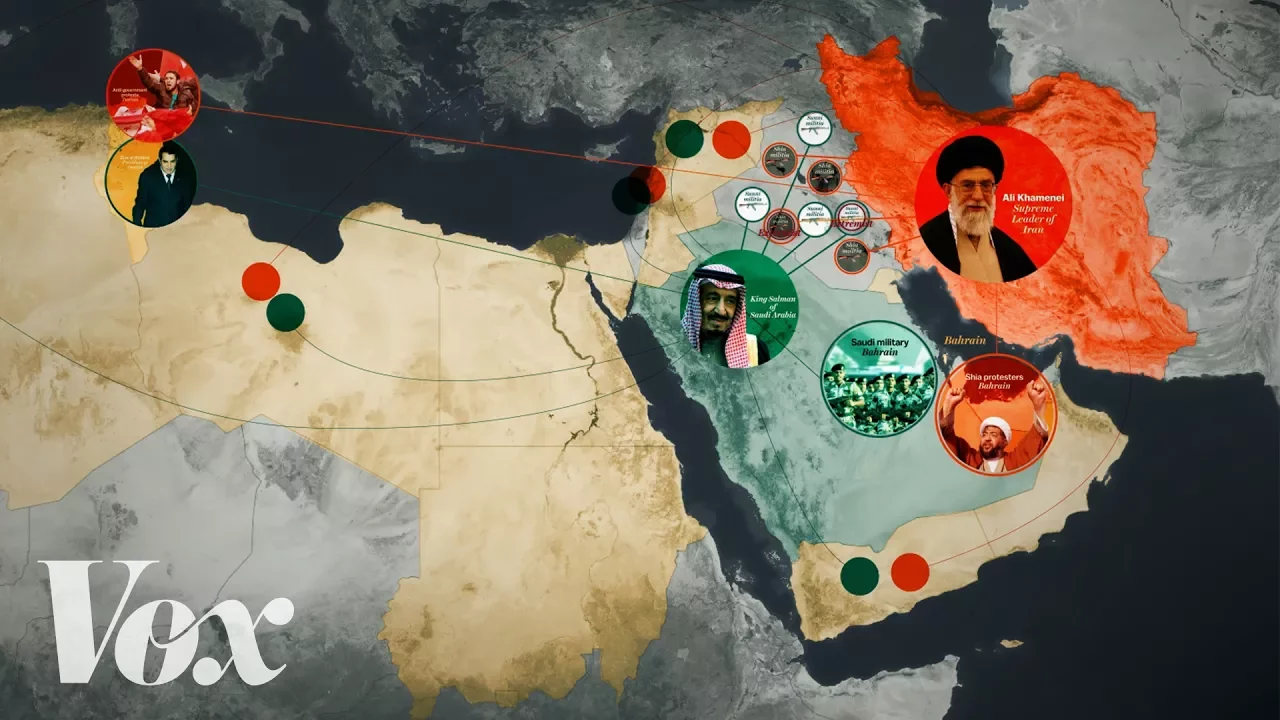
Explaining the Saudi-Iranian Proxy Conflict in the Middle East
@Vox
18.2M views•2017-07-17
Related Study Plans & Knowledge Roadmaps
Structured learning paths in Political Science
political-science
Economic Statecraft: Sanctions & Chokepoints
01Foundations of Geoeconomics and Economic Statecraft
02The Mechanics of Weaponized Interdependence
03International Sanctions: Types, Implementation, and Efficacy
+ 2 more learning modules
12h5 modules
Explore Roadmap
political-science
Central Bank Independence: Politics & Policy
01Foundations of Central Banking and Monetary Policy
02The Time Inconsistency Problem & Inflation Bias
03The Delegation Model and Designing Independence
+ 2 more learning modules
12h5 modules
Explore Roadmap
political-science
Consociationalism: Power-Sharing & Stability
01Democratic Dilemmas in Divided Societies
02Introduction to Consociational Democracy
03The Four Pillars of Consociational Design
+ 2 more learning modules
12h5 modules
Explore Roadmap
political-science
Rebel Governance: Legitimacy, Economy & State
01Foundations of Rebel Governance and Statehood
02Establishing Political Legitimacy and the Rebel Social Contract
03Wartime Economies and Rebel Resource Management
+ 2 more learning modules
14h5 modules
Explore Roadmap