


























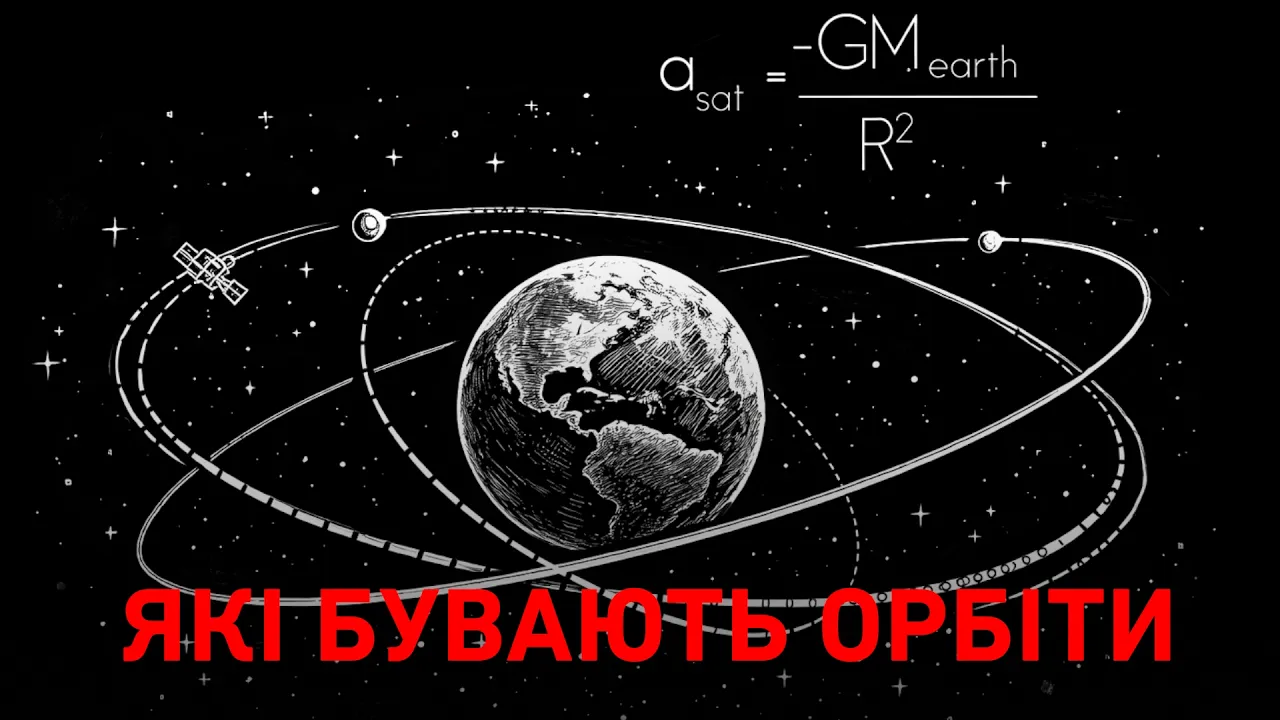
The patched conic approximation is a method for solving interplanetary missions by treating each phase (leaving Earth, transit around the Sun, arriving at Mars) as separate orbits in different reference frames, where the spacecraft's velocity at the sphere of influence boundary (hyperbolic excess velocity) determines the transition between these phases, and the delta-v required for departure equals the hyperbolic excess velocity plus the escape velocity from the initial orbit.
Interplanetary Trajectory Astrodynamics | Patched Conic Approximation
Added:Kepler's Laws of Planetary Motion and Newton's Law of Universal Gravitation
The classical two-body problem and the geometry of conic sections (ellipses, parabolas, and hyperbolas)
The Vis-Viva equation and fundamental concepts of orbital energy and velocity
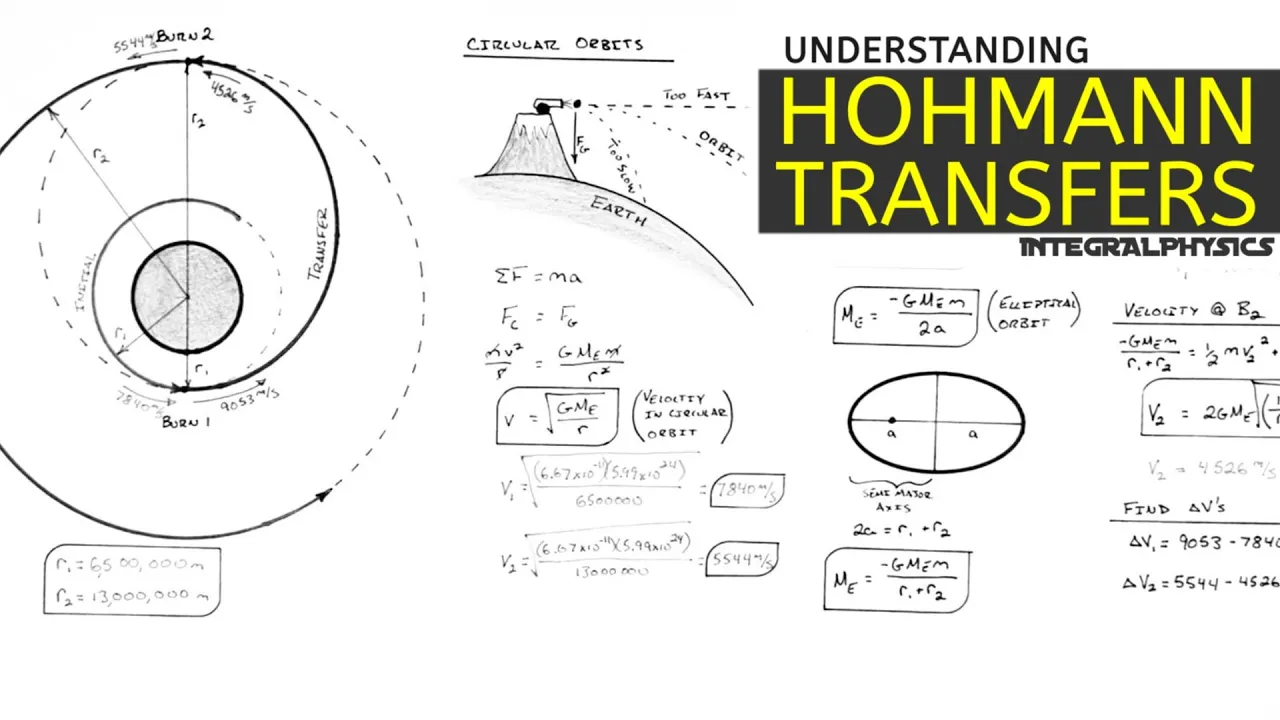
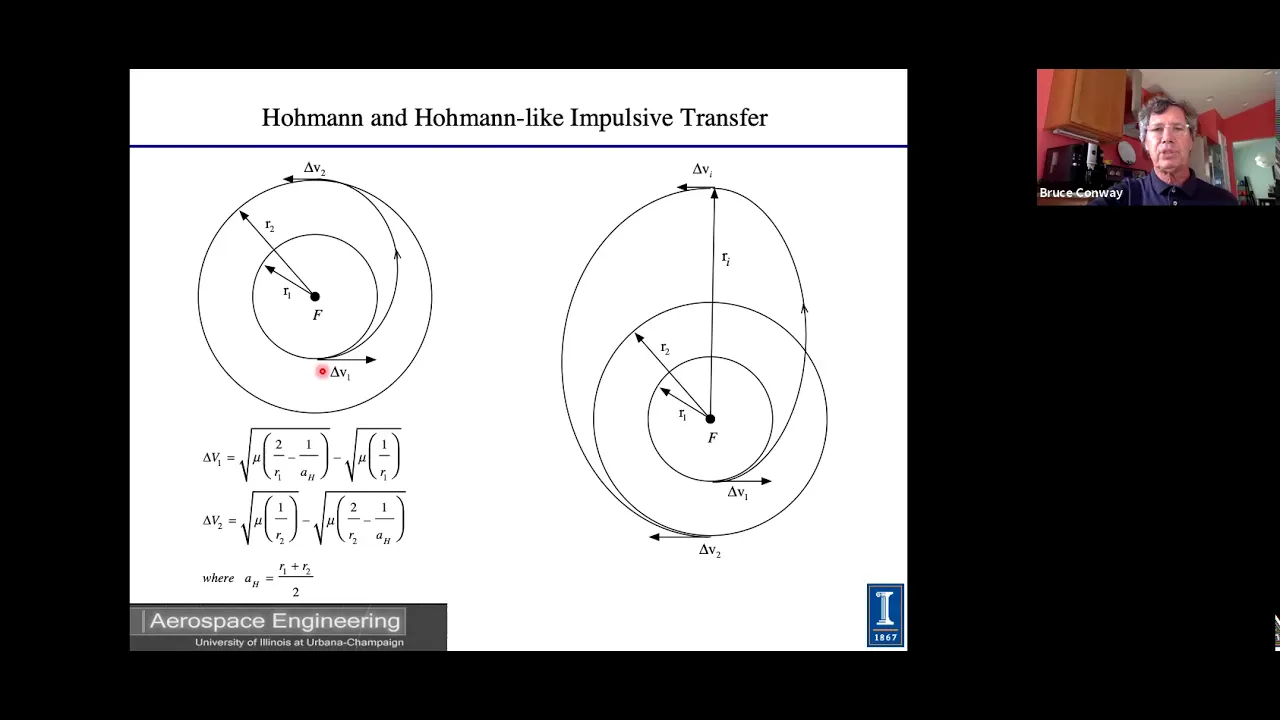
Basic coplanar orbital transfers, specifically the Hohmann Transfer
Gravity Assist (Slingshot) maneuvers to alter spacecraft trajectory and velocity using planetary gravity
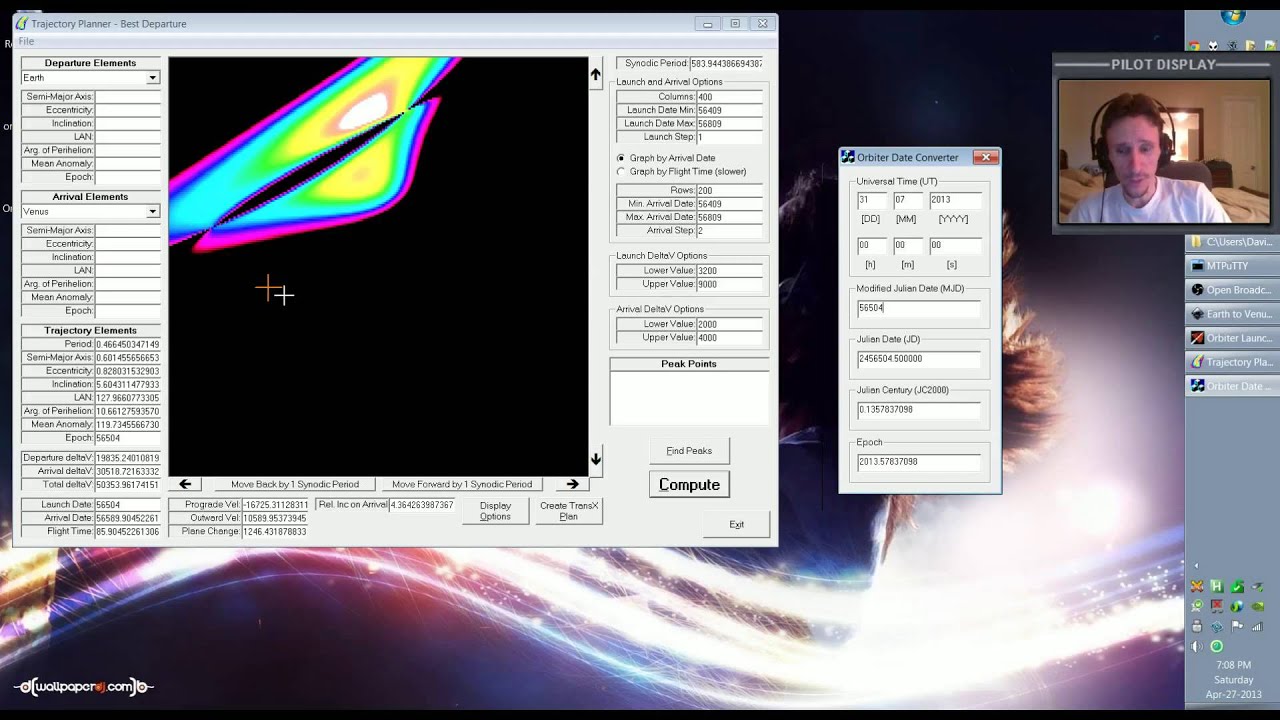
Interplanetary launch windows, synodic periods, and the generation of 'Porkchop Plots'
The Restricted Three-Body Problem and the mechanics of Lagrange Points (L1 to L5)
Low-thrust trajectory design and optimization for continuous propulsion systems like ion engines
High-fidelity numerical orbit propagation techniques that account for non-spherical planetary mass (J2 perturbation) and solar radiation pressure
135 views0likes5:05Original Release: 2021-09-02
all right hello everyone we'll be doing another video today on the astro dynamics of the interplanetary trajectory that we're talking about recap from last time we have the three phases of our mission astro-dynamically speaking where the first phase is leaving earth second phase is the half orbit around the sun and the third phase is arriving at mars and speeding up relative to the sun slowing down relative to mars to be caught in mars orbit remember from last time that the first burns delta v is equated with this formula so a little bit on the theory of how we're able to solve for a mission that has orbits in three different reference frames first being around the earth second being around the sun and the third one being around mars the way this is done is through the patched conic approximation as you know each orbit whether it's ellipse circle hyperbola what have you around a reference body is iconic type of round shape and what happens is if you look at the mission terms of the sun a big overview of it like this what happens when you leave earth's sphere of influence nothing changes you go from technically being closer to the earth and having the earth be your central frame but you can take the hyperbola when you're leaving earth the ellipse around the sun and the hyperbola entering mars and from the perspective of your mission draw them as one line so you start off with the hyperbola in the earth's reference frame which without any input from the spacecraft once you cross that boundary becomes the ellipse around the sun and again when you hit mars becomes a hyperbola coming towards mars part of that's something i mentioned the sphere of influence you're probably familiar with but there's an imaginary line circular orbit somewhere at a distance from the body that we're talking about for the purpose of our conversations things within the sphere of influence are within that central body's reference frame and that's why we have the hyperbolas we're coming and going even though around the sun is an ellipse we solve for the sphere of influence with gravitational parameter of the body we're talking about divided by the gravitational parameter of the sun that body is rotating about all to the two fifths power times and this says radius of the planet what it means is radius the planets orbit around the sun in the case of the earth using one astronomical unit as about 1.5 times 10 to the 8 kilometers sphere of influence is about 924 000 kilometers for context the orbit of the moon around the earth has an apogee of a little less than half that likewise this is for mars the martian sphere of influence ends about 400 000 kilometers above the surface of mars how do we actually mathematically equate these different phases of emission we do so by saying the delta v1 that we're leaving is the same as the excess hyperbolic velocity and that hyperbolic excess velocity is any number above zero of the spacecraft's speed when it hits the exact edge of the spear sphere of influence and that's because to exactly escape if you provide just enough juice to escape a planet's orbit at the edge of the sphere of influence you'll have a zero velocity so anything above that is hyperbolic excess let's talk about the velocity right at that point now using the v's viva equation we can state that the energy throughout that hyperbolic orbit and throughout the mission after the burn happens the first burn is constant so we can equate the two sides noting that r infinity will just go out to infinity so making that term zero we can solve that after the burn when we're going to leave earth our velocity at that low earth orbit point becomes the square root of hyperbolic axis vertically velocity squared plus two times the gravitational parameter of earth divided by that initial orbit's radius right and that's it thank you guys
Up Next
9:39
Gravitational Sphere of Influence | Orbital Mechanics with Python
@alfonsogonzalez-astrodynam2207
3.6K views•2021-05-02

12:53
21cm Hyperfine Transition in Neutral Hydrogen: Radio Astronomy Basics
@AaronRobertParsons
12.4K views•2011-10-13

32:32
NMR Spin Physics I: Zeeman Effect, Resonance Condition & Larmor Frequency
@nptel-indianinstituteofsci8064
2.3K views•2024-01-17

27:14
Entropy and the Second Law of Thermodynamics Explained
@veritasium
27.5M views•2023-07-01
Related Study Plans & Knowledge Roadmaps
Structured learning paths in Physics
physics
Nuclear Physics (Decay, Fission & Reactors)
01Atomic Structure and the Binding Force
02Radioactive Decay and Half-Life
03Nuclear Fission Mechanics and Chain Reactions
+ 2 more learning modules
12h5 modules
Explore Roadmap
physics
Soft Matter (Polymers, Colloids & Rheology)
01Foundations of Soft Matter & Thermal Forces
02Polymer Physics and Macromolecules
03Colloids, Surfactants, and Self-Assembly
+ 2 more learning modules
38h5 modules
Explore Roadmap
physics
Analytical Mechanics: Lagrangian & Hamiltonian
01Mathematical Foundations: Calculus of Variations
02From Newtonian Mechanics to Constraint Dynamics
03The Principle of Least Action & Lagrangian Mechanics
+ 3 more learning modules
28h6 modules
Explore Roadmap
physics
General Relativity (Spacetime & Cosmology)
01Foundations of Relativity: Special Relativity
02The Geometry of Spacetime: Equivalence Principle & Curvature
03Einstein's Field Equations: The Mathematics of Gravity
+ 2 more learning modules
55h5 modules
Explore Roadmap