






![Демократия математически невозможна (но есть нюансы) [Veritasium]](https://i.ytimg.com/vi/Mf0XJMySTDI/maxresdefault.jpg)
















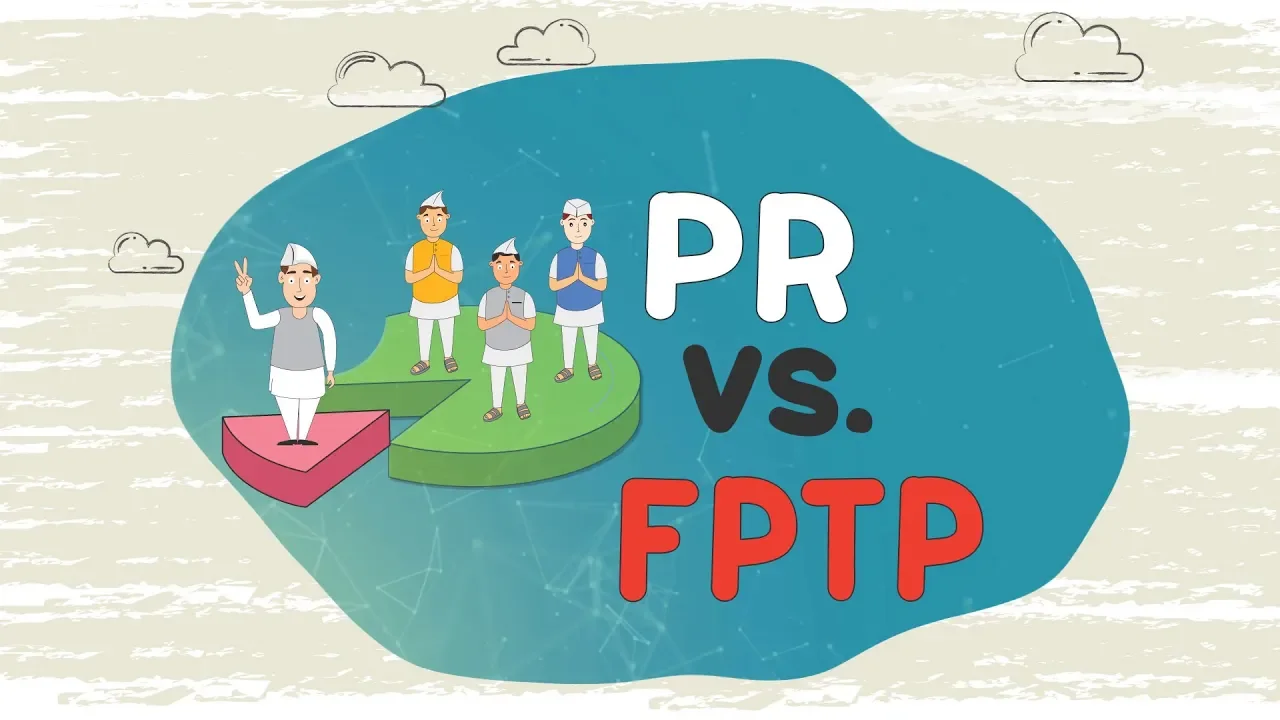


Proportional Representation (PR) is an electoral system that ensures a party's parliamentary representation matches its share of the popular vote, unlike Canada's 'winner takes all' system where vote distribution in individual constituencies can cause significant distortion between vote percentages and seat allocation; for example, in the 2011 Canadian federal election, the Conservatives received 39.6% of votes but 56% of seats due to vote splitting across constituencies, whereas under PR, parties would receive seats proportionally to their vote share, leading to more representative governance, higher voter turnout, reduced gerrymandering, increased diversity in parliament, and more cooperative coalition governments.
Proportional Representation Explained: How It Works and Its Advantages
Added:Basic understanding of representative democracy and how citizens elect legislative bodies.
The mechanics of plurality voting, specifically the First-Past-The-Post (FPTP) or 'winner-take-all' system.
The general structure of a parliamentary system versus a presidential system.
Fundamental electoral concepts such as constituencies (voting districts), parliamentary seats, and political parties.
Detailed mechanics of specific proportional systems, such as Party-List PR, Mixed-Member Proportional (MMP), and Single Transferable Vote (STV).
The dynamics of coalition governments, consensus politics, and how multi-party negotiations and governance function.
The potential drawbacks of proportional representation, including legislative gridlock, party fragmentation, and the empowerment of extremist fringe parties.
Comparative analysis of real-world political landscapes utilizing PR (e.g., Germany, New Zealand) versus FPTP (e.g., United States, United Kingdom).
62.7K views275likes8:00Original Release: 2013-05-28
[Music] welcome we have a winner takes all system of voting in Canada it's at the writing level only one candidate in each writing gets to go to Parliament no matter how close the vote voters for losing candidates in writings get no representation in Parliament and that Winner Takes all system in writings can distort how parties are represented in Parliament did you know that in the 1998 Quebec provincial election the Liberals got the most votes but still were defeated because of the way the votes went in individual writings even though the separatist PTI bequa received only 43% of the votes they won 76 out of 125 writing seats and formed a majority government did you know that in the 2011 Pei election the conservatives got 40% of the votes but because of the way the votes went in individual writings they won only four out of 27 seats in their parliament in the 2011 federal election the conservatives received 39.6% of the votes but because of the way the votes went in individual writings they took 56% of the seats and formed a majority government these three examples indicate how in our system A party's representation in Parliament and the power that comes with that can be out of balance with the voting support the party actually receives 90 countries have chosen a voting system that eliminates this imbalance it's called proportional representation PR for short in PR systems if a party gets 30% of the seats in Parliament it's because they got close to 30% of the votes there are many different forms of proportional representation we've chosen to focus on Direct party and representative voting DPR for short in DPR voters have two votes on their ballot in the first part of the ballot they vote for the candidate who will be elected as their Member of Parliament but on the second part of the ballot people don't vote for a person they vote for the party they want to govern the country this means that a voter can vote for a riding candidate based on personal preference rather than Party Loyalty because it's this second vote that will determine what party rules the country also because all parties are registered on the second part of the ballot a voter can vote for a party that may not be running candidates in their writing like say the green party but how does this lead to proportional representation first all the party votes on the second part of the ballot will be totaled up and imagine 10 million votes then the percentage each party gets of the total votes is determined of course this doesn't match the percentage of MPS already elected on the first part of the ballot let's use the 2011 federal election in Canada to show how far out that mismatch can actually be the conservatives got 44 more seats than they would have under PR because in a 308 seat Parliament 39.6% of the vote allows for 122 seats not the 166 the conservatives did get the ndp's got nine extra seats 30% of the votes is 94 seats not 103 seats because of the way things worked out in writings the Liberals are short seats the blocks are missing seats and the green party so how can DPR correct that in balance in party Power by applying a weight to every MP's vote in Parliament let's start with the conservatives we're going to put a weight of 7 on all their MP's votes in Parliament we got that 7 Waiting by putting the 122 seats the conservatives would have got under PR over the 166 seats they did get to address the ndp's Surplus seats we put the 94 seats the NDP would have got under PR over the 103 seats they already have for a voting weight of.9 note that when we do this for the other three parties every time their MPS vote in Parliament their vote counts for more than one let's summarize first DPR elect MP is just the way we do second DPR uses the second vote on the ballot to identify the percentage of voting support for each party and third DPR uses this information to apply a waiting system to the votes of elected MPS result the number of seats and MPS in Parliament remain the same and proportional representation is achieved by adjusting the weight of each MP's vote so why do all this what are the advantages of proportional representation first under proportional representation all voters have a reason to vote Liberals are ndps in strongly conservative writings conservatives in strongly liberal writings the emerging green party all know that their vote is going to count overall perhaps that's why a voter turnout at the polls is generally higher in European countries with proportional representation Systems Second because every vote counts gerrymandering the manipulation of writing boundaries to favor ruling part parties becomes pointless third there are more women and visible minorities in proportional representation parliaments and the differences can be large fourth proportional representation provides space for the growth of new Parties by contrast our own system underrepresents them Fifth and this is a big one under proportional representation ruling parties can't force through legis if they don't have the support of 50% of the people finally and perhaps most importantly parliaments are much less confrontational and divisive parties know that if they don't have the support of 50% of the people they will have to work in Coalition with other parties that leads to Greater cooperation and fairer legislation it's interesting that Canadians dislike or mistrust of Coalition governments just isn't shared by the rest of the world did you know that the new Northern Irish Scottish and Welsh parliaments chose proportional representation over our own model or that in Europe only Great Britain and the Vatican still use our system of voting or that among the 34 oecd countries only the United States and Great Britain still vote the way we do we'd like to make proportional representation both a topic of conversation around dinner tables and a campaign main issue in the next election a fair voting group has just started up in New Finland in Labrador if you'd like to get involved or you want more information on DPR and other alternative voting systems please contact us at Fair voting NL atgmailcom or visit Fair vote cada's website at www.fote.com
Up Next

33:59
Voting Systems DLC: A Guide to Electoral Reforms in Democracy 4
@positechgames
6K views•2022-05-29

24:30
BRICS Pay and de-dollarization: A New Financial Order Emerges? | 55 chars
@DannyHaiphongYT
164.6K views•2024-10-22

7:33
Government Surveillance Methods: 10 Ways You May Be Watched
@BeAmazed
1.6M views•2017-04-09
10:19
Explaining the Saudi-Iranian Proxy Conflict in the Middle East
@Vox
18.2M views•2017-07-17
Related Study Plans & Knowledge Roadmaps
Structured learning paths in Political Science
political-science
Economic Statecraft: Sanctions & Chokepoints
01Foundations of Geoeconomics and Economic Statecraft
02The Mechanics of Weaponized Interdependence
03International Sanctions: Types, Implementation, and Efficacy
+ 2 more learning modules
12h5 modules
Explore Roadmap
political-science
Central Bank Independence: Politics & Policy
01Foundations of Central Banking and Monetary Policy
02The Time Inconsistency Problem & Inflation Bias
03The Delegation Model and Designing Independence
+ 2 more learning modules
12h5 modules
Explore Roadmap
political-science
Consociationalism: Power-Sharing & Stability
01Democratic Dilemmas in Divided Societies
02Introduction to Consociational Democracy
03The Four Pillars of Consociational Design
+ 2 more learning modules
12h5 modules
Explore Roadmap
political-science
Rebel Governance: Legitimacy, Economy & State
01Foundations of Rebel Governance and Statehood
02Establishing Political Legitimacy and the Rebel Social Contract
03Wartime Economies and Rebel Resource Management
+ 2 more learning modules
14h5 modules
Explore Roadmap