












![Hidrógeno, ¿una solución para la automoción? [TÉCNICA - #POWERART] S12-E32](https://i.ytimg.com/vi_webp/boUSP6SRQFo/maxresdefault.webp)
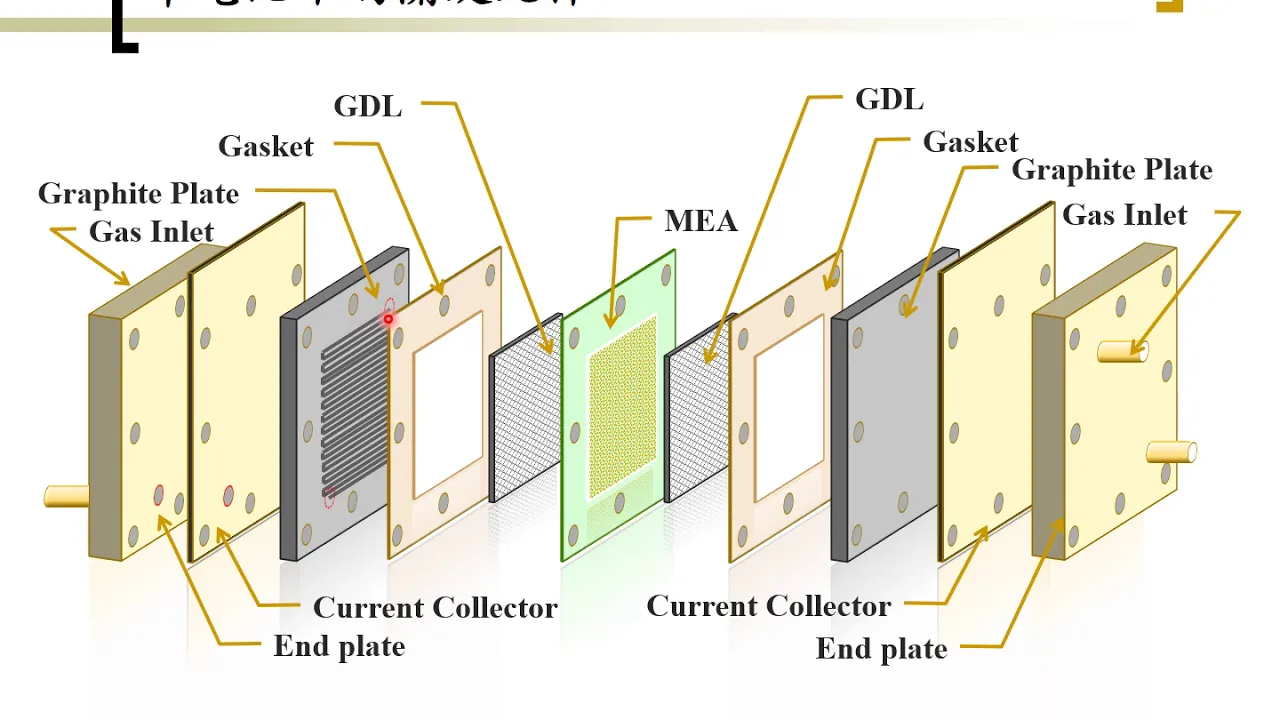




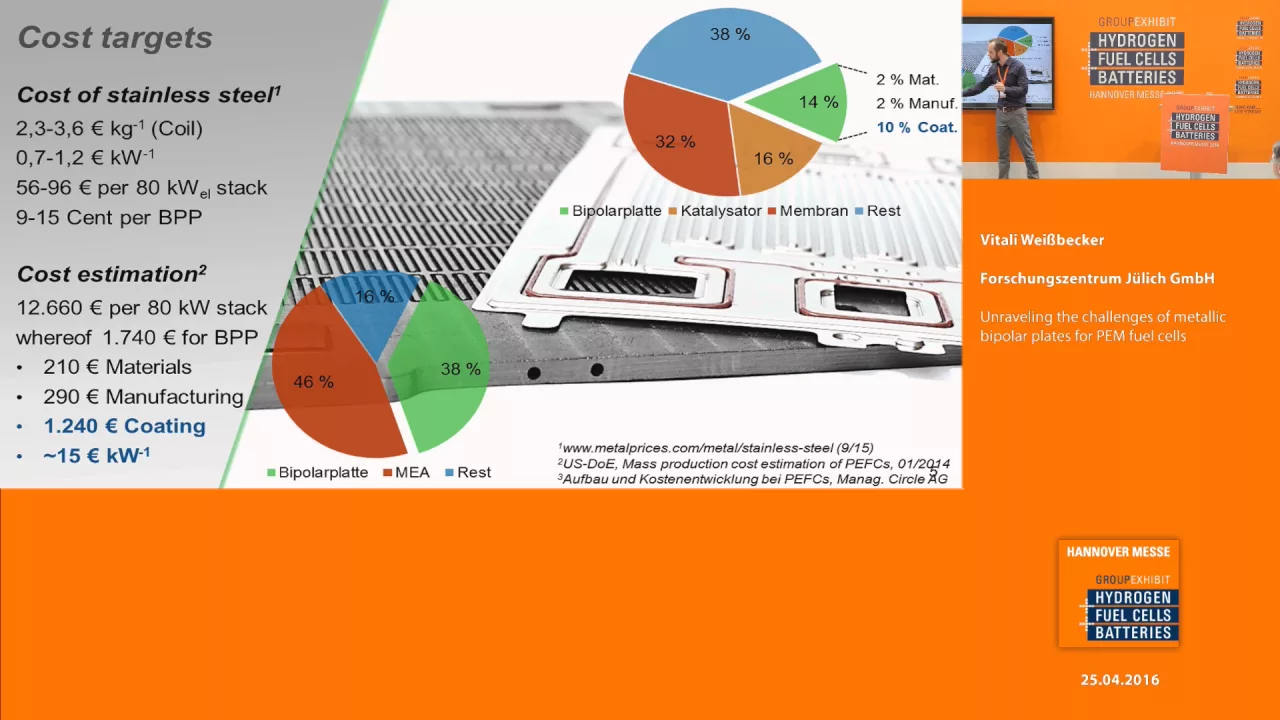






Fuel cell stack power density, measured in kilowatts per liter, is a critical parameter for mobile applications like vehicles and portable devices, as it determines the physical size and weight of the system. Power density is calculated using the polarization curve, which shows how cell voltage decreases with increasing current density due to internal resistance. Optimizing power density involves selecting appropriate operating points on this curve, designing efficient stack dimensions (length, width, height), and accounting for both active components (MEA, electrodes) and peripheral areas (manifolds, tie rods). Improving internal resistance through thinner membranes or higher-conductivity materials, combined with reduced cell thickness via metallic bipolar plates, can significantly enhance power density—potentially tripling it from approximately 0.4 to 0.9 kW/L. Efficient manifold and tie rod design is essential because even small peripheral area additions can substantially reduce apparent power density.
Fuel Cell Stack Power Density Explained | PEMFC Design Guide
Added:hello this is a Kenyan shear speaking in this section we're going to talk about the stake power density from previous would be mentioned the stake is a hid is a single cell connect in series and become a cell stack and but why the potency of self stick is important the power density of users deck will be determined how big the fuel cell might be this is very critical for a fuel cell for mobile application for it as a vehicle or bus or for the portable applications such a for the notebook power unit those kind of sins those credit application the size of the fuel cell is a critical because right now fuses really big and it take a lot of space so the higher the power density of the fuel cell would be better because occupy less space or the weight over here we've been concentrated under volume out of users thick so the power density of the fuser stake is a cake based on per liter volume and how much either fuses take away TN will be generate the power this one will be determined by the typical current voltage curve or we call the polarization curve over here the this is a single single cell the voltage of single cell we plot as a function of current density the how many m per centimeter square of the active inertial area so in general the cell voltage decrease as the current density increase is kinda like this curve but over here I draw the three different curve we with we assumed the internal resistance if at a point to own it somehow you reduce the internal resistance then the curve will be change from the blue to green and it'll red and over here the dashed line is a power density this mean per unit area how much what will be generated there's an equivalent to the silver that you tie the current density that's it so you can see as we if we got a lower lower internal resistance for a given cell voltage we got a higher current density output you can see from that high current density output if we gather the internal reason reduced or if we add a fixed current density we might get a higher cell voltage output or the power density output if we fix the current density we can higher potency output so we can see this dye can use this diagram to evaluate the power density ourself stack we assumed the the future stack now we're gonna design is a output power is one kilowatt and then cell voltage is a 48 volt so from the current the AI curve or the voltage current density curve with this we can pick one operating point this meter at a one here at a point one and over here if we pick at this point here let's mean the internal reasons 0.15 if this one is at the MEA we add we receive and the disapprobation cover they had and in that case if a data we operate at the point seven volt then the output current density will be at a point in Phi M per centimeter square so if we had this piece of information the single cell voltage point seven current density is a point five M or 500 milliamp per centimeter square we assumed a single cell the second is a four millimeter doesn't mean a bipolar pray MEA and the gasket or this country into for a single cell that the thickness out that is a four cent millimeter then based on this information how we can calculate the thus the volume of the cell stack in this case we only calculate the active component with encounter the N play current director and other peripheral materials of components and over here based on this information we can calculate the first how long the the cells taker will be for instance we want to know the value of this the area a1 a2 the width or the height and the length of the stack the first we calculus the length of stack over here that because they all come in series two in order to produce forty a vote I'll put a voltage eg a single cell is 0.7 volt so we need the age of 16 night cells or maybe we for the safety we may give us 70 cells in that case if you sell it's a four millimeter is 0.4 centimeter so the total stack long lens is a twenty seven point six centimeter that's a lens but the only active material not included in the in play or the current collector then we're going to determine how big the area will need for the active component or the electrode area for single cell the first thing we had to calculate the stake output current the upper current equal can be calculate from divided by the palette ends the divided by cell voltage the stake voltage then we give the output the current is a 21 M the current densities at a 500 mini m per centimeter square so how much the area we may need for the electrode is a 42 cent meter square and this one we can determine is that you might have a stack designed by 6 point 7 or 14 times 3 maybe at at this point they should be the same producer-san our energy output order power output but in reality they might be not different might be generally different the power output density so in in this calculation order dimension we calculate is only for a cell stack only count inside the active component this I mean the electrode MEA and then maybe the bipolar play the active area this this area so in that case the the power density of the active area region is this the area times this lens out the stack and n times the area there's a volume of the stack and at the end this is output power so this is per liter what this one is appointing a 7 kilowatt this is the power density output for the stack but this one we only consider the active area only or activate region if we really counter a stack this is the active area there's a where the electrode will be generated electric current in this area but there's the other peripheral area there's no leadership current generator but still need a volume as you be counted into the stack volume and over here is a many for this manifold will carry the reactance active rekt gas from the staggers to the individual single cell and carry out the product and outside the stack so if I assumed and this one the whole reserved for the screw or the tie rod so if it over here there so I assume there's a 1 centimeter recently reserve the space one centimeter for each side then originally a key area it's only for six thousand seven forty two centimeter now is it ended with a tiny night because six plus two both one centimeter is a centimeter and a seven plus two the nine centimeter you end every 72 centimeter square is almost twice only I add a one centimeter on each side in this case how much the real stacker power density in this case the electro area although the total one the area of the stack inside a 42 centimeter is become seventy-two centimeter and then the length of stack when accounted the both in play over here assume the three centimeter for each employee plus the current collector so the total sale lens is a 27-6 plastics because you've got to employ one at each end of the stack so this case will you calculate then the power density is a big help reduce the prong one point eight two point four almost reduce 50% that's very large so you can see over here this the tiny area increase will be reduce the power density significance so the many folder design or the tie rod design together reduce this area it's very important for instant but the other scenes over here I didn't draw if for the cells cells take a greater than 1 kilowatt you had a water cooling manifold to transport water throughout the stake there also had a design into this area so this material flow or mechanical strains how to apply this try to reduce a peripheral area it's very important so this is a steak actually we counted that will be including a total air volume of the stack now the point one is the original design point for instance the upper diffuser operating point right now in the case if we can somehow improve the cell internal resistance from 0.15 to 0.1 in the case even we operate at a point 7 volt the the operating point will be shifted from point 1 to point 2 and the the curl output current density will be increased from 0.5 to 0.7 m per centimeter square this one might be can be done for you in the internal region decrease by you use replace the existing membrane with a higher conductivity membrane then you can reduce the internal resistance or you can simply make the membranes thinner so the end of cancer is getting closed then you will reduce the internal resistance we can now we can see if for you you make this slightly change in the internal resistance only point 0 5 ohm will change and the shooter Frank here the current density how how this will affect is a stack up power density in this case you can see we do the same calculation the only thing is the current density in some 500 we increase to 700 the other thing that the thickness of single cell might be reduced from 4 to 2 millimeter if we replace the carbon by power play into Metallica bipolar play the stickers might be reduced in this case because the Stikine is reduced so the length of the stack will be reduced also there's a category and the power density the current density increase is from here so the area of the electrode area required also reduce the power density for the active area this a previous version is the point a six but with this modification the power density almost tripled you can see time for two point four but ask and again if it over here the peripheral up the area we don't make any improvement this is the first version this is a second version over here in that case that an employee don't increase but in even this way the stake power density will be increased from point four two point nine kilowatt per liter in this way so so far we've been talked about in this unit we've been talk about funda electro catalyst and through the MEA in the membrane editor assembly and then through the single cell and to the stack and then the stake power density then a so we can talk about the power system because the future is different from that the conventional battery is required mass flow control or the pressure regulation and other peripheral material or the component to make it happen to generally power properly because the fuser have maintained certain flow rate pressure and temperature so the the fuser system will be given in the next section
Up Next

Fuel Cell Material and Energy Balance: Testing Station (2021)
@hsueh_kan-lin
4.9K views•2021-02-11

Ultrasonic Transducers: Resonant Frequency Measurement and Horn Design
@imajeenyus42
229.9K views•2017-02-22

Polymer Environmental Degradation: Mechanisms & Stabilization
@iit
1.8K views•2012-07-10

How a Student's Question Saved a NYC Skyscraper from Collapse
@veritasium
22.8M views•2025-04-26
Related Study Plans & Knowledge Roadmaps
Structured learning paths in Engineering