



















![[Треш Обзор] фильм БЛЭЙД - Вампиры снова в моде? (нет)](https://i.ytimg.com/vi_webp/GZ1NtkxauD8/maxresdefault.webp)
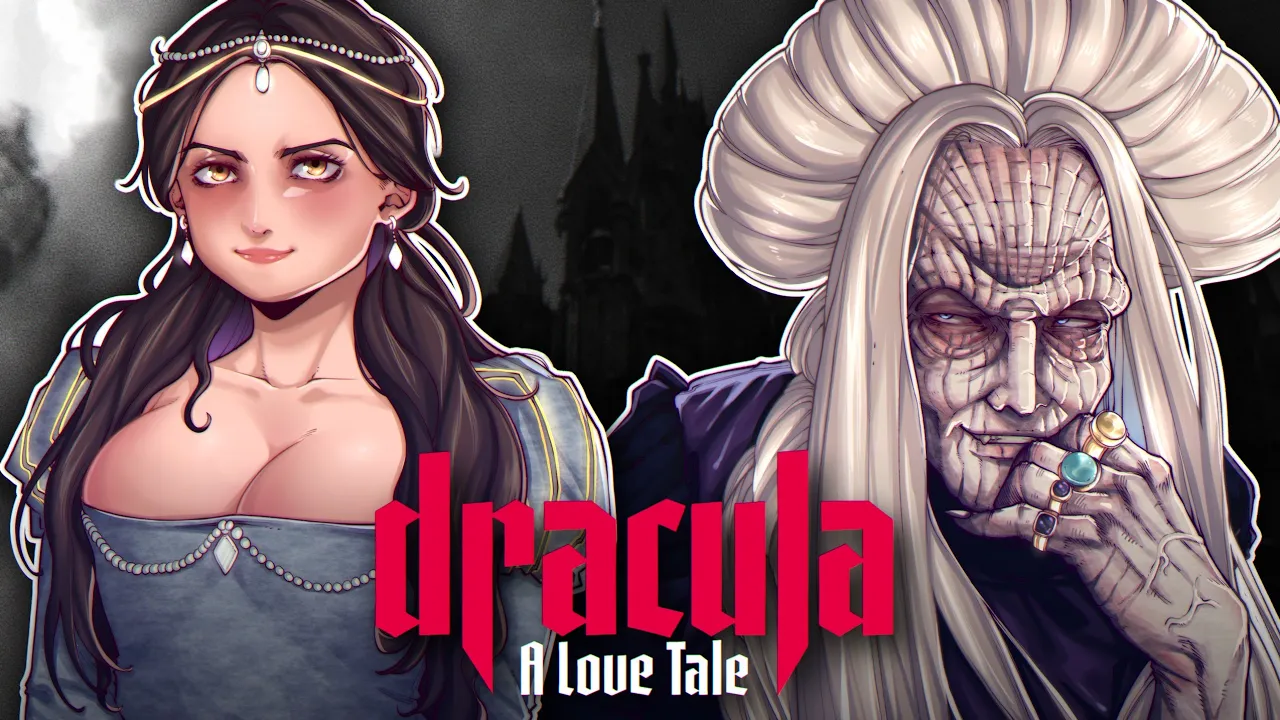
Francis Ford Coppola's 1992 film adaptation of Bram Stoker's Dracula, despite being named after the author and claiming exclusive adaptation rights, significantly deviates from the source material by adding romantic subplots between Dracula and Mina, transforming supporting characters into caricatures, and introducing erotic elements absent from the original non-sexual novel, demonstrating how even confident adaptations can sacrifice fidelity for dramatic effect.
Dracula Adaptation Analysis: Book vs Film Changes
Added:Familiarity with the plot, epistolary structure, and key characters of Bram Stoker's 1897 novel 'Dracula'.
Basic concepts of Adaptation Theory, specifically the debate surrounding 'fidelity' vs. 'artistic license' in translating text to screen.
Understanding of Victorian Gothic literature conventions, including themes of sexual repression, xenophobia, and the clash between science and superstition.
Fundamental film terminology, such as mise-en-scène, characterization, narrative pacing, and visual motif.
Comparative analysis of different historical 'Dracula' adaptations (e.g., F.W. Murnau's 'Nosferatu', Universal's 1931 film, and Francis Ford Coppola's 1992 version) to see how cultural contexts shape adaptation choices.
Exploration of screenwriting techniques for adaptation, studying how complex literary devices like epistolary narratives are translated into cinematic dialogue and action.
Research into reception theory, analyzing how different audiences and critics across eras reacted to the deviations from Stoker's original text.
Advanced study of intertextuality and genre evolution, examining how the film adaptations of 'Dracula' redefined the modern vampire archetype in pop culture.
436.1K views11.1Klikes15:42Original Release: 2015-10-16
[THUNDER] [wood creaks] [JUMPSCARE] [KIIIIIIIIIH] Ah ah ah! I may or may not so just surprised you slightly, ah.
This is good, but I feel like something is missing, I'm not a real vampire yet.
Hello, beautiful watchers and welcome back to Lost in Adaptation, The show that looks at what books are turned into if they're bitten on the neck by an overzealous screenwriter in this Halloween episode.
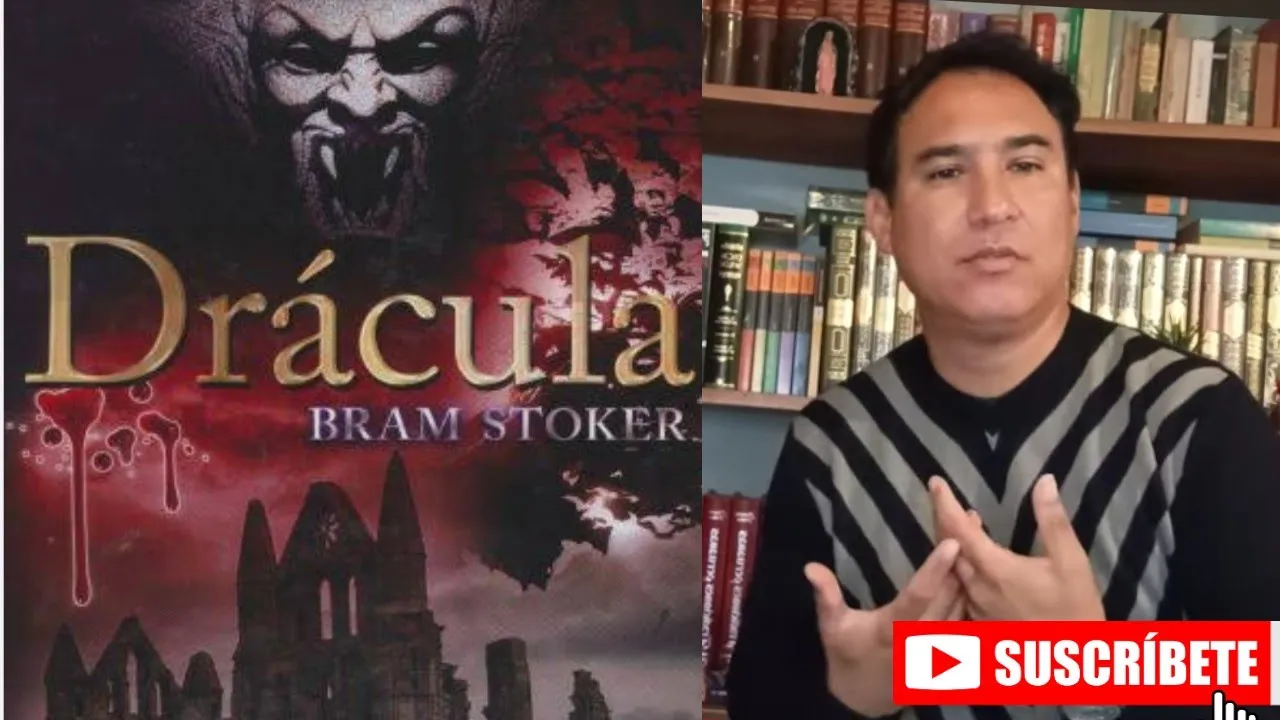
We're going to be taking a look at the supposed king of all vampires, Dracula. Bram Stoker was a 19th century Irishman who only wrote in his spare time.
Being in full-time employment as a famous actor's personal assistant and a theatre manager, the vampire myth predates Stoker quite considerably, But he's often given credit for defining them in modern culture.
It's written in the form of multiple journal extracts, letters, ship's logs and newspaper reports have been collected and put together in chronological order.
Not one word of the book is narrated.
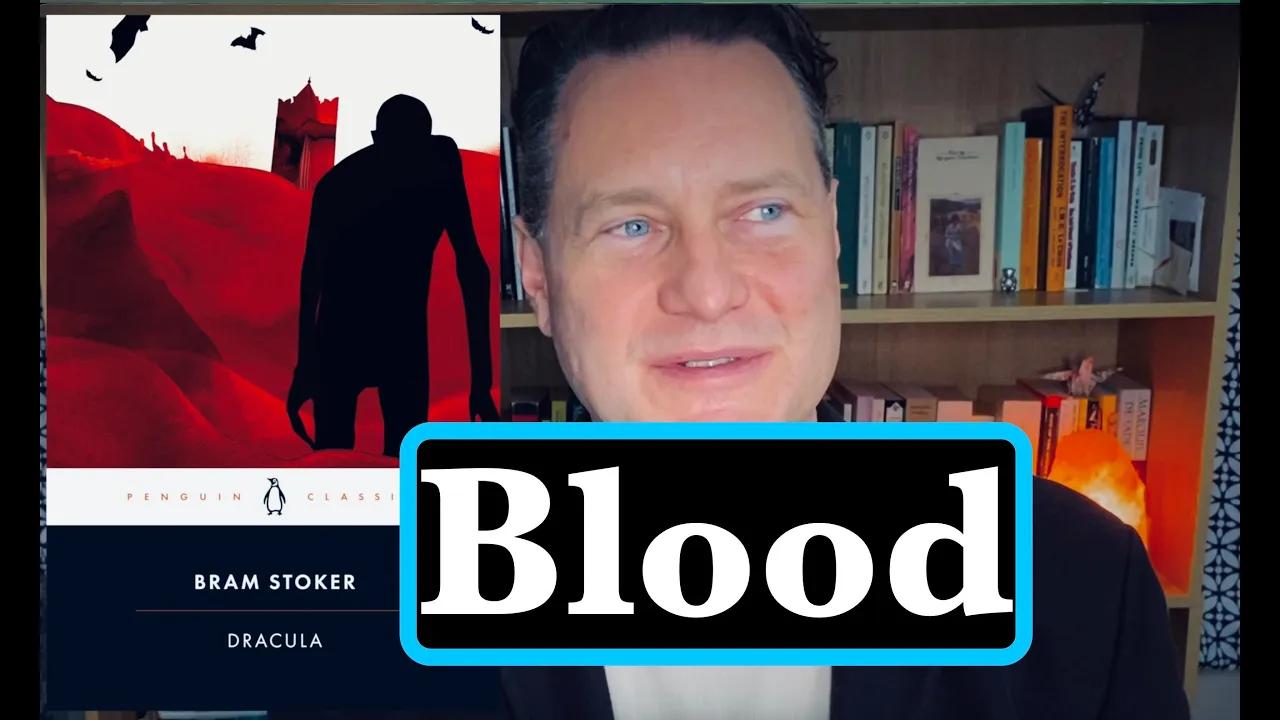
it is essentially the book version of the found footage movie with all of the associated problems with said genre in the same way that one might wonder why someone is constantly filming things even at the cost of his or her own safety. You also start to think it's a tad convenient that so many people involved in the story are OCD journal keepers with eidetic memories. Choosing which of the dozens of Dracula films to compare the book to was a daunting process, so many iconic movies, so many legendary actors. Then, suddenly I realized the decision was obvious, because I remembered there was one film that had no fear of being compared to the book one film that was so confident of itself it put the author's name in its title. It lay down the gauntlet and announced that it and it alone was THE adaptation. Other films may be about Dracula, but it IS Dracula, Bram Stoker's Dracula.
It was directed by a bloke called Francis Ford Coppola who did some little independent films you've probably never heard of.
Okay, cards on the table. I really didn't care for this movie.
Gary Oldman's and Anthony Hopkins' performances as Dracula and Van Helsing almost saved it, but even THEY couldn't overcome the awesome drag factor of the supporting cast's lack of talent. Nevertheless, I am more than willing to give it a fair chance to prove to me that it's a better adaptation than it is a film.
Storyline-wise it is reasonably good at sticking to the important stuff [INHALE]: A young lawyer named Harker is sent to Transylvania to help a local nobleman purchase a house in London.
His trip there is beset with weird and unusual happenings and the count himself introducing himself as "Dra-CU-la" is excessively creepy and Intimidating. After being a guest for some time, it dawns on Harker that he's being kept a prisoner and his captive is clearly some sort of monster masquerading as a human. The count arranges some of his native earth be moved to England in large boxes because he apparently can't survive without it for some reason. He then has himself posted there in such a box by ship. Some time afterwards, Harker manages to escape by Spider-Manning down the side of the castle. Once he's arrived in England, Dracula takes a fancy to a young girl named Lucy who has recently been proposed to by three men in a single day, and sets about turning her into a vampire. A learned professor tries to stop this change, but fails, and they're forced to slay the monster she becomes. Harker is reunited with his fiancée Mina, and everyone teams up and sets their sights on destroying Dracula once and for all.
Dracula then attempts to turn Mina, too - but he's shortly afterwards driven into fleeing England as all his precious Earth boxes are destroyed but one. The gang catches up to him just before he can make it back to his castle and finish him off for good.
The film pays homage to the book's reliance on journals as a plot device which conveniently gives it a get-out-of-jail-free card when it comes to the old "show don't tell the narrating where visuals should have been employed" crime of cinema.
Dracula's forward-facing climb down the front of the building was described in the book and it was equally off-putting there.
Van Helsing's attempt to save Lucy using human blood transfusions was in the book and, fun fact, the issue of blood type compatibility was discovered less than three years after it was published. That vampires could quite happily go out in daylight but couldn't transform into monsters until sunset is good, although interestingly Stoker didn't feel the need to think of excuses for this because the more extreme effects of sunlight on Vampires was something added by later Interpretations. the irony that Dracula moved in right next door to Dr. Seward's insane asylum was an original twist and finally that Quincey the brave American hunter gave Dracula the finishing death blow, but died of his wounds after the fight, becoming the group's only casualty was also true to the book.
I wonder if what Bram Stoker said about vampires and daylight is true.
[FWOOSH] Evidently not.
As I said, the story was spot-on but the details... not so good. It may surprise you to hear that despite it being named after him Dracula doesn't directly feature in the book much once he leaves Transylvania.
You see the results of his actions and people talk about him constantly, but of actual encounters between him and the heroes, there are no more than two or three. While I can never fully prove it, what with it being in written form and all I'm willing to stake my life on it that Harker's accent didn't sound appalling in the book. No Keanu, bad. That's not what we sound like, stop it. You know, I'm pretty sure there would have been some genuine British actors available in 1992, Why the hell do they bring Neo into this?
I would also like to assure you that Dracula had no tinted sunglasses in the book, because despite having lived alone in a ruined castle for centuries, he still had better fashion sense than that.
It's a common belief that bram Stoker based Dracula on a real-life person called Vlad the Impaler of House Drăculești, who earned his place in history by attempting to defend Christian land from invasions from the Ottoman Empire and, allegedly, killing people by impaling them. However, upon reading the book, it quickly becomes clear that Stoker just borrowed the name and nothing else, as Dracula mentioned that he tried to invade Turkey several times and failed not the other way around, and he also makes no claims to ever having impaled anyone again. However the film does everything it can to reaffirm this belief by changing Dracula's backstory to include more references to this historical figure. The whole Dracula's wife and her suicide story is film only. I for one could have done without those awful falling clips that made it impossible to take the film even a little seriously.
How Dracula became a vampire isn't explained to the novel.
It's never actually suggested that he was the first or only one of his kind.
It's just assumed that at some point, some pre-existing vampire turned him into one. Book Harker has given substantially less obvious hints of Dracula's inhumanity, so his slow uptake was more excusable. Hells, when confronted with this monstrosity any sane man's reaction would have been I... do believe I'm in the wrong castle. Yes. No, this is number five isn't it sorry no, ma'am, my mistake entirely, so I bother you, good day to you! There's also no evidence in the book that Jonathan was ever fed upon by a vampire, be it Dracula or any of his brides, His hair still turns completely gray in a short time though, which is a little strange, but I guess not impossible considering the sheer amount of stress he was under. The timeline of events gets a little messed up and overlapped from book to film. Harker escaped the castle right after Dracula left as the brides were planning to kill him rather than just lick him a lot. and Mina got word from him and left England before Lucy fell seriously ill, so she didn't have a suspicion of her death until Van Helsing sent to the sad news. Almost every one of the main characters has walked beyond recognition in the film. One of the film's greatest sins in my opinion is the humanizing of Dracula. Yes, I'm aware of the irony of that statement.
The Dracula of the book has absolutely no love interest in Mina, and he pretty much just ignores her throughout, aside from the short scene where he gives her the vampires' bloody baptism, which was nothing more than a display of his power and an attempt to throw Van Helsing and his crew off-balance. The scene where she drinks his blood was in the book entirely Involuntary.
He held her head to his bleeding chest while she struggled and wept. In order to facilitate these new romantic plot points, Dracula was made a lot more charming than he was in the book and given even weirder powers than he had before. "Look again. The tickets are now diamonds!"
Coppola clearly wanted Dracula to be a somewhat more tragic character that you could feel a bit bad for in between the more horrifying scenes.
That's fine in of itself, but it's a serious adaptation fail. Dracula of the book has NO redeeming features in any way, shape, or form.
He's just a massive massive asshole throughout. Book Wilhemina, even within the cruel subservient confines placed upon her gender in the 19th century was a bit of a badass.
She remained brave and resolute throughout the story, and she's fiendishly intelligent.
She even outdoes Van Helsing when it comes to predicting Dracula's next move. In the film, she's a whiny useless annoying young thing who apparently feels It's okay to keep seeing someone socially after they've dragged her off into a corner and had to fight the urge to tear her throat out with their teeth.So as I mentioned, there's zero romance between Dracula and Mina in the book. The very fact that she went on date with this guy while her best friend is on her deathbed and her fiancée was M.I.A.
was not only disloyal to the novel, it was also just plain insulting to her character. Wilhemina in General just doesn't make any sense in the film. Is she genuinely in love with Dracula?
That would be... odd considering. Is she under some sort of vampire love spell? That would make more sense, but then why didn't Dracula lift it when he seemed to be genuinely having second thoughts about turning her, and again, she still seems to be pretty cut up about it after he's dead nor his magic is gone so it's not an airtight theory. Is she being controlled by destiny because she's the reincarnation of his wife?
Possible, but stupid.
[SIGH] Lucy also becomes vastly different in film form. The sweet, innocent, kind, caring young girl of the novel becomes a wantonly flirtatious airhead. Her slow transformation into a vampire was a painful death, nothing about it amused her in any way.
And why the hell is she dressed up like Harley Quinn on prom night for fuck's sake?
They changed the doctor's name from Jon to Jack in the film, presumably because having two Jons would be a small but needless confusion. Dr. John Seward, were he a real man, would have been appalled by Jack Seward of the film. John was an upstanding learned middle-aged doctor and a dignified gentleman.
Jack comes off as being almost as creepy and off-putting as his patients. And what the fuck, was he taking drugs there?
What is this, Fear and loathing in Las Vegas now? "We can't stop here, this is bat country." So, too, the lunatic asylum he works in, a clean and hospital-like place in the book, becomes a dungeon of filth and squalor, presumably to add to the film's dark tone. What is it with Americans and portraying Victorian England?
There's a nightmare of smog, mud, and death all the time. Between the book and the film, Van Helsing appears to have swatted up on his English quite considerably, as his constant misuse of pronouns and sentence structure, so integral to his character in the book is played down considerably.
It's hinted at in the film that he has some experience with vampires, and maybe even Dracula in the past and he seems particularly pleased when the evidence becomes overwhelming that he is behind Lucy's illness. In the book, Van Helsing was the first to be open-minded enough to think that the cause of their troubles might be supernatural, but this was his first rodeo when it came to dealing with it, just like everyone else.
He was the intelligent, wise, all-knowing yet still very kind Yoda-like character in the book and his film-only eccentric and disrespectful Behavior towards his suffering friend serves to make him funnier, but also makes him come off as more of a dick. Harker: "Oh professor, I believe my sweet Lucy is dying."
Helsing: "Well, Jon, I promise I will do everything in my power to save your beloved." [SWOOP] Harker: "Oh, professor, I believe my sweet Lucy is dying."
Helsing: "Yeah sucks to be you, but, hey, we get to fight the vampire now. That's cool, isn't it?" [SITCOM AUDIENCE] "Van Helsing!
Renfield and his weird belief that consuming living things would add to his own lifespan was in the book, but he has no connection to Harker and Hawkins. He's just a random nut who comes to worship Dracula. He's robbed of what should have been a surprisingly noble death in the book- He was so touched by Mina's kindness to him, when Dracula came to take her, he died fighting to protect her. This has changed to his rather unceremonious and undignified execution in the film there are some truly bizarre new scenes in the film that lead me to question the maturity of the screenwriter.
Just to emphasize my point, let's try transcribing a few of them back into book form to see how it would have sounded.
"And now ladies and gentlemen, I present to you a reading from the recently published novel Dracula by esteemed theatre manager Bram Stoker."
[CLEARS THROAT] Chapter 7, page 3. 'And then Lucy and Mina ran around in the rain giggling while their dresses got all wet and see-through, and then they totally started making out and stuff' [AUDIENCE LADY] I'm sorry, they did WHAT?
[MAN]: You have to be joking [Dom]: Later on, Lucy dressed up like a slutty Red Riding Hood and has sex with a furry.
However, the word 'furry' is crossed out to be replaced with the word 'Wolfman' LADY: Dear heavens!
Man: Good lord, I thought this was supposed to be a bokken vampire!
Dom: Well, now it's a weird porno, okay?
Dom [V.O]: In keeping with this they made a point of making Harker's encounter with the brides in the film a lot more... boob- orientated than it was originally. The final showdown with Dracula in the film was quite different to the book because in the book there... wasn't one. The famous epic chase scene in which they try to catch him up and kill him before the sunset and he gets his powers back and just don't quite make it in time is amusingly ironic, because originally, they just ambushed the cart and made it just IN time. Dracula really thought he'd won because he saw the sun go down, but just seconds later, Harker chopped his head off with a curing knife and Quincy stabbed him in the heart. He then goes the way of Roger Rabbit and crumbles to dust without any more fuss whatsoever.
Now admittedly, this change is almost entirely unsurprising as a film often does need a climactic battle to cap it off way more than a book would.
Vampire Dom: Really dude, really? Are you shitting me right now?
There's not actually much in this category as it happens- a lot of the film was changed drastically, but most plot points of the book were paid homage to in some way or another, the notable exceptions being... Harker's escape climb out of the castle was actually his third such trip down the building. The first time, he came across Dracula sleeping in his box, and was so horrified by his blood-soaked vampire form he climbed right back up again, His nerve came back to him later, and he returned to try to take Dracula's head off the shovel, but unfortunately botched it. The story of the Demeter and her crew, the ill-fated Russian ship that was hired to carry Dracula to England is started, but not finished in the film. The ship's log continues quite a bit and chronicles the crew's mounting terror as they are picked off one by one in the night by a pale thin apparition. When the ship's Captain is the only one left, he swears he will die a sailor doing his duty, so lashes his own hands to the wheel using a rosary so he would remain at the helm even if Dracula killed him. It seems he died of exhaustion. Sten is given a hero's funeral when the ship finally beaches itself on land. Other than that, it's just a little bits here and there that are shaved off to fit the length of a film.
DOM: The Dom's final thoughts.
So I guess this film did better than most Dracula movies in sticking to the book, but much like Watchmen that actually turned out to work against it ultimately by bringing the changes into more painfully sharp contrast. The film tried to make up for not having actual tone with Grotesque imagery with the usual poor results of such an attempt. It also tries way, way too hard to force in the new highly erotic overtones vampires have evolved into in the many years since the book was written.
It's a very sexual film based off an entirely non-sexual book. The result of this contradictory blend comes off as weird and uncomfortable. The makeup department should be very proud of itself, but the special effects are either embarrassingly plastic or just plain embarrassing, and the cartoonish nature of the sets and the characters destroys any real chance the movie had of being genuinely scary like the book was. Both versions are very much a story about love, However in the book, it wasn't a romance, but the kind of love that could keep three best friends together even after they all fell for the same woman, the love a teacher feels for a student who's become like a son to him, and the love for those you've lost that can keep you fighting when all hope seems gone. The film apparently decided not to go in for all Of that and just crowbarred in a bunch of bullshit about destiny, tragedy, and true love instead. Had they not had this sheer audacity to drag Bram Stoker's name into it, I might have just considered this a bad movie instead of an offensive one, but as it stands, I see it as a major blotch on the record of an otherwise very talented director.
The Dom out-can I help you with something?
Vampire Dom: Uh... vampire magic!
Dom: Ah, that's not vampire magic, it's pocket sand you asshole!
Up Next
7:51
Gemina Book Review: The Illuminae Files Sequel | Spoiler-Free
@Bookables
1.3K views•2017-03-08

12:54
Triumph of Orthodoxy Icon: Byzantine Art & History Explained
@BenCallan
2.1K views•2024-08-06

9:49
FastAPI vs Flask vs Django: Choosing the Right Python Web Framework
@TechWithTim
302.5K views•2024-05-26

1:42
Game of Thrones Opening Credits: A Cinematic Analysis
@gameofthrones
46.3M views•2011-04-18
Related Study Plans & Knowledge Roadmaps
Structured learning paths in General & Interdisciplinary Studies
general-studies
Elevator Engineering: History, Physics & Cities
01From Hoists to Safety Brakes: The Dawn of Vertical Lift
02Hydraulic vs. Traction: The Engineering Physics of Elevators
03Modern Speed, Safety, and Algorithms
+ 2 more learning modules
12h5 modules
Explore Roadmap
general-studies
Rubber: Material Science, History & Geopolitics
01Origins of Natural Rubber & Mesoamerican History
02The Chemistry of Natural Rubber & Vulcanization
03The Geopolitics of the Rubber Boom & Colonization
+ 2 more learning modules
12h5 modules
Explore Roadmap
general-studies
Containerization: Evolution, Logistics & Trade
01Ancient Trade & Bulk Cargo: Amphorae to Barrels
02The Industrial Revolution & Cardboard Packaging
03The Containerization Revolution: Malcom McLean
+ 2 more learning modules
12h5 modules
Explore Roadmap
general-studies
Textile Tech: Evolution, Labor & Global Impact
01Pre-Industrial Textiles: Handloom & Cottage Industry
02Mechanization: The Spinning Jenny to the Power Loom
03The Factory System & Global Labor Transformation
+ 2 more learning modules
10h5 modules
Explore Roadmap