Trademark dilution occurs when someone uses a mark in commerce that is substantially similar to or the same as a well-known mark, thereby harming the purchasing public's perception of the well-known mark or weakening its distinctiveness; in the 2003 Supreme Court case Moseley v. V Secret Catalogue, Inc., the Court examined how parties can prove trademark dilution, where a small Kentucky lingerie shop named 'Victor's Secret' was sued by Victoria's Secret for using a confusingly similar name, demonstrating that courts require evidence showing actual harm to the distinctiveness or reputation of a famous trademark.
Moseley v. V Secret Catalogue | Trademark Dilution Case Brief
Added:Deep Dive
The fundamental definition of a trademark, its role in commerce as a source identifier, and the standard 'likelihood of consumer confusion' required for traditional infringement claims.
IP Toolkit: Introduction to Trademarks
118
A trademark consists of words, names, symbols, devices, sounds, or any combination thereof, designed to distinguish goods and services of one source from another. Trademarks serve as tools for creating brand identity and protecting consumers by enabling easy identification of favorite brands. The likelihood of confusion standard measures potential conflicts between marks based on factors including similarity of appearance, sound, connotation, and commercial impression; similarity of goods; trade channels; buyer characteristics; fame of prior marks; and actual confusion. This standard determines whether consumers will be confused about the provider of goods or services.
Click to watch →
Lawyer Reacts| Taylor Swift Sues Evermore Park, Girardi Updates & Your Questions
51.6K
Trademark law protects brand owners by preventing others from using similar marks that could confuse consumers about the source of goods or services. The core principle is that trademarks identify the source of products to consumers. Courts analyze whether consumers would reasonably believe that different products come from the same source. Factors include similarity of marks, relatedness of goods/services, marketing channels, consumer sophistication, and evidence of actual confusion. Even if two businesses operate in different industries, courts may find confusion if consumers could reasonably associate them. The analysis requires balancing the plaintiff's rights against the defendant's free speech interests.
Click to watch →

Airport Master Developers issue TRADEMARK strike of Jim Sterling Video
65.2K
Trademark infringement occurs when someone uses a trademark or service mark without authorization in connection with goods or services in a manner that is likely to cause confusion, deception, or mistake about the source of those goods or services. The key element is the likelihood of consumer confusion - if the unauthorized use might lead consumers to believe that the product comes from or is associated with the trademark holder, infringement has occurred. For example, applying a company's logo to a homemade product would constitute infringement because it would mislead consumers about the product's origin.
Click to watch →

LAWSUIT TRADEMARK INFRINGEMENT PAY UP! OWN KINGDOM REIGN #DISCOVERY CHANNEL #SELENAJOHNSON #BRINGIT
2.3K
To state a claim for trademark infringement, a plaintiff must allege: (1) ownership of a protectable trademark used as a source identifier, and (2) defendant's use of a confusingly similar mark that is likely to cause consumer confusion. Mere use of a tagline or phrase, even for two years, does not automatically establish trademark protection. Courts require specific factual allegations about how the mark is used in commerce and how consumers perceive it.
Click to watch →

I Invested $100,000 Into This Company Already, And I’m More Bullish Now Than Ever
145.9K
Trademark infringement lawsuits require plaintiffs to demonstrate that consumers are likely to be confused between competing products. In the Lululemon vs Costco case, Lululemon argues that Costco's Kirkland Signature clothing creates confusion at the point of sale. However, this argument is weak because: (1) Products are clearly labeled as Kirkland Signature versus Lululemon; (2) Price points differ dramatically ($15 vs $120); (3) Design differences exist in fit, tailoring, buttons, and construction details. Courts typically require actual consumer confusion evidence, not just similarity, making trademark claims against clearly differentiated, independently designed products difficult to prove.
Click to watch →
Deep Dive
The conceptual difference between trademark infringement (which protects consumers from confusion) and trademark dilution (which protects the intellectual property value of famous marks).
Trademark Law: Consumer Protection and Source Identification
318.2K
Likelihood of confusion is the central issue in trademark disputes, determined by seven factors: mark similarity, product similarity, geographic overlap, consumer care level, plaintiff's mark strength, actual confusion evidence, and defendant's intent. The Seventh Circuit emphasizes mark similarity, intent, and actual confusion. Beyond infringement, dilution provides protection for famous trademarks against weakening their distinctive quality, even without confusion. Dilution by blurring occurs when similar marks chip away at a famous mark's distinctiveness (e.g., Apple bulldozers). Dilution by tarnishment happens when similarity harms a famous mark's reputation (e.g., 'Victor's Little Secret' for adult products tarnishing Victoria's Secret). Courts require actual real-world fame for dilution protection, making it difficult for less-well-known marks to qualify.
Click to watch →

INTELLECTUAL PROPERTY--TRADEMARKS AND TRADE SECRETS
234
Trademark dilution is separate from infringement and applies only to famous trademarks. Dilution involves weakening a famous mark's ability to identify and distinguish goods or services regardless of competition in the marketplace or likelihood of confusion. Dilution occurs through blurring (diluting distinctiveness) or tarnishment (associating with inferior goods). The 1995 Federal Trademark Dilution Act made dilution actionable. Unlike infringement requiring proof of actual damages, dilution only requires showing likelihood of dilution. The 2006 Trademark Dilution Revision Act changed this standard following the Supreme Court's Mosley v. Victoria's Secret decision.
Click to watch →

Trademark Infringement: Legal Definition & How to Address Claims
14.7K
Trademark infringement occurs when someone uses a protected mark without permission. The two main categories are likelihood of confusion and dilution. Likelihood of confusion protects consumers by preventing source confusion through priority analysis, mark similarity, and goods/services relatedness. Stronger marks receive broader protection. Federal registration provides enhanced remedies. Dilution protects famous marks against blurring or tarnishment even without consumer confusion, applying across industries to a small percentage of highly recognizable brands. This distinction between confusion-based and reputation-based protection forms the core framework for trademark enforcement.
Click to watch →

Samsung Publishing: Famous Trademark Infringement? I Think So! | Trademark Attorney Angela Langlotz
129
Trademark dilution occurs when a famous mark is used in connection with unrelated goods or services, weakening its distinctive quality; this differs from trademark infringement, which involves consumer confusion about source. Famous trademark owners can prevent others from using their marks in different industries, even if the products seem related, because such use threatens the owner's ability to expand into those markets. Companies should avoid adopting marks similar to famous trademarks, as famous companies will aggressively enforce their rights through cease and desist letters, lawsuits, and profit disgorgement.
Click to watch →

Please DON'T make me side with a CORPORATION (r/joke) | Pattie Gonia vs Patagonia
6.4K
Trademark infringement occurs when a brand is used in connection with commercial sales or advertising of products, causing consumer confusion about product sources and affiliations. The video explains that Patagonia (brand) argued that Patagonia (drag queen)'s use of their trademark caused and would cause additional confusion among consumers. Trademark dilution occurs when a famous mark's distinctiveness is diminished by similar uses. Trademark owners can seek injunctions to stop infringement. The video also explains that trademark law exists to protect small businesses and prevent big companies from stealing ideas, highlighting the balance between brand protection and creative freedom.
Click to watch →
Deep Dive
The two primary forms of trademark dilution: 'blurring' (the whittling away of a mark's distinctiveness) and 'tarnishment' (association with unsavory or low-quality goods).

Trademark | ट्रेडमार्क | Types of Trademark | Trademarks Act 1999 | IPR | by Tanisha Gangrade
164K
Trademark dilution protects famous marks from unauthorized use that weakens their distinctiveness. Two main types exist: (1) Blurring - occurs when unauthorized use of a similar mark on similar or dissimilar goods causes confusion and prevents the mark from distinguishing its goods; (2) Tarnishment - occurs when unauthorized use of a mark on inferior or unrelated goods damages the reputation and quality association of the original mark. Both forms of dilution harm the mark's ability to identify and distinguish goods.
Click to watch →
Trademark Law: Consumer Protection and Source Identification
318.2K
Trademark dilution provides protection even without likelihood of confusion, benefiting only famous trademarks against weakening of their distinctive quality. The Federal Trademark Dilution Act recognizes two types: dilution by blurring and dilution by tarnishment. Additional relevant factors may include marketing channels and whether a trademark is used in parody. This doctrine protects famous marks from unauthorized use that diminishes their uniqueness or reputation.
Click to watch →
Trademark Infringement: Module 5 of 5
1.4K
Dilution takes two forms: (1) Blurring involves association arising from similarity that impairs the distinctiveness of the famous mark, considering degree of similarity, mark distinctiveness, exclusive use, customer recognition, defendant's intent, and actual association. Examples include Rolls Royce shoes, Buick aspirin, Kodak pianos. (2) Tarnishment involves association that harms the reputation of the famous mark, such as adult entertainment using famous brand names like Ben & Jerry's, Victoria's Secret, Barbie, Polo Club, or Pillsbury Doughboy variations.
Click to watch →

N Ranga Rao vs Anil Garg ; Dabur India vs Colgate Palmolive; Pepsi Co vs Hindustan Coca Cola Summary
2.2K
Trademark dilution protects well-known marks from weakening or blurring. It manifests in three forms: (1) Blurring - when competitors use famous marks in inappropriate contexts, causing consumer confusion about product origin; (2) Tarnishment - when competitors use marks in negative contexts, damaging brand reputation; (3) Disparagement - when competitors use marks to put down or negatively compare brands. The Coca-Cola vs. J Rising case illustrates tarnishment, where posters associating Coca-Cola with cocaine successfully demonstrated reputational injury. Well-known marks receive protection regardless of registration status, as shown in the Hindustan Mercedes-Benz case where the luxury car symbol was protected on underwear.
Click to watch →
QuickIP 10: Trade marks: Rights; Infringement and Remedies
574
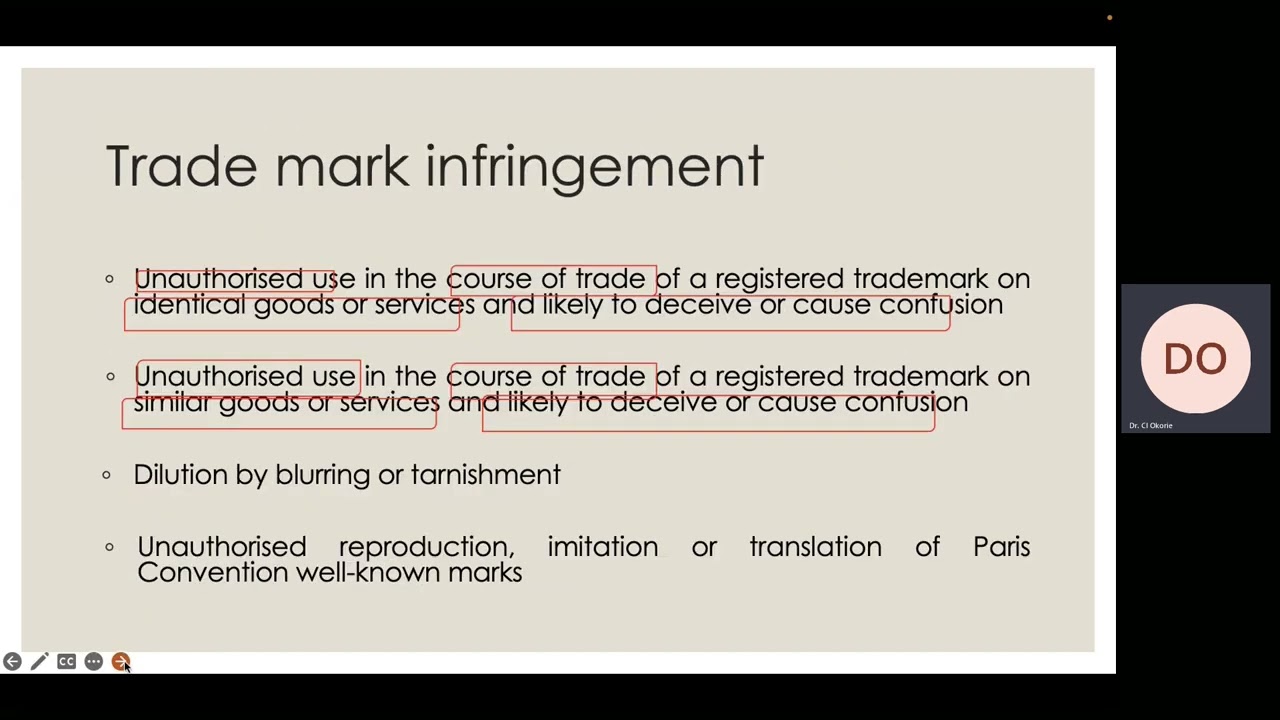
Trademark infringement can occur through dilution, which has two forms: (1) Blurring - using a mark in a way that blurs the distinctive character of the original mark, taking unfair advantage of its reputation; (2) Tarnishment - using a mark in a way that is detrimental to the distinctive character or reputation of the mark, such as associating it with negative contexts.
Click to watch →
Deep Dive
The legislative background of the Federal Trademark Dilution Act (FTDA) of 1995, which served as the statutory basis for the Moseley lawsuit.
INTELLECTUAL PROPERTY--TRADEMARKS AND TRADE SECRETS
234
The primary federal statutory authority for trademarks is the Lanham Act of 1946, though it has existed since 1912 or 1916. The Lanham Act deals with trademark infringement. In 1995, two significant pieces of legislation were enacted: the Federal Trademark Dilution Act of 1995 (dealing with diluting the value of famous trademarks through blurring or tarnishing) and the Anti-Cyber Squatting Consumer Protection Act of 1995 (addressing domain name disputes). In 2006, the Trademark Dilution Revision Act was enacted to improve definitions and protections, overturning the Supreme Court decision in Mosley v. V Secret Catalog.
Click to watch →

V Secret Catalogue, Inc. v. Moseley Case Brief Summary | Law Case Explained
410
The Supreme Court's decision in V Secret Catalogue, Inc. v. Moseley (2010) established that trademark owners must demonstrate actual harm, not merely a likelihood of tarnishment, to succeed on dilution claims under federal law; however, Congress subsequently passed the Trademark Dilution Revision Act of 2006 to restore the likelihood-of-tarnishment standard, allowing courts to consider whether a defendant's use of a similar mark is likely to damage the positive associations consumers have with the original trademark.
Click to watch →
Business Law Chapter 5
1.6K
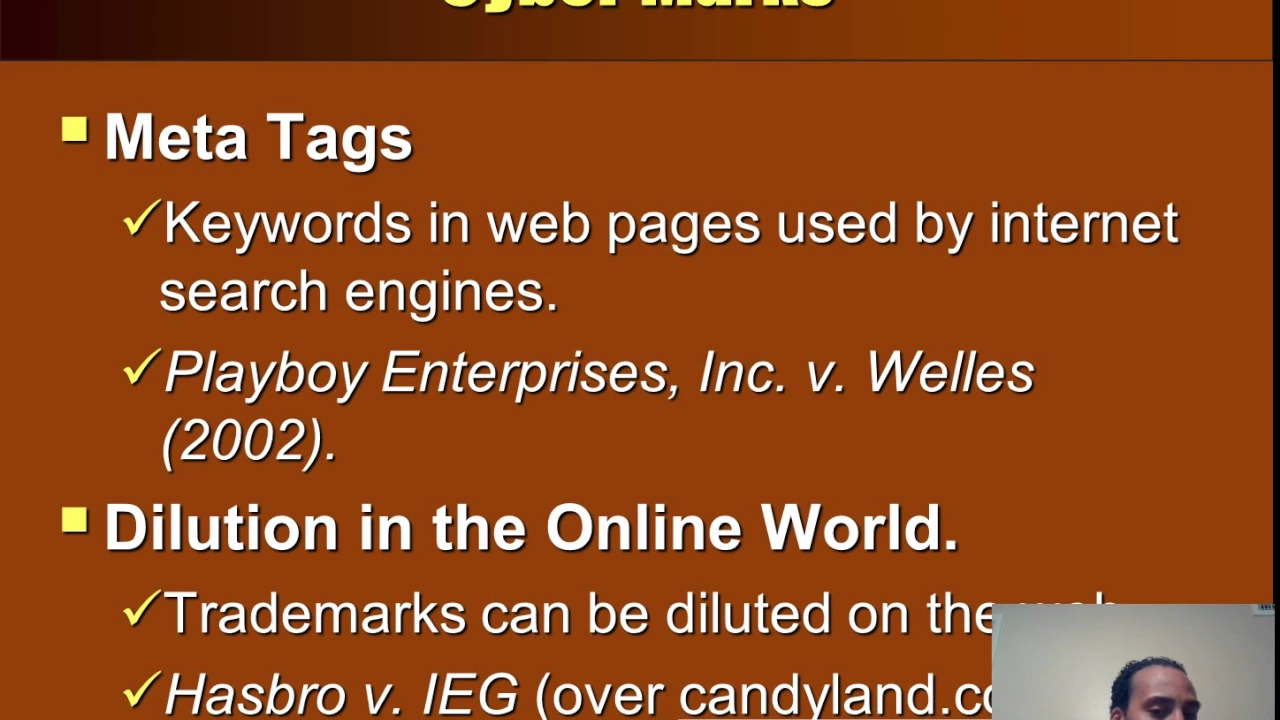
The Trademark Dilution Act of 1995 amended the Lanham Act to provide federal cause of action for trademark dilution, even when the mark is unlikely to confuse consumers. Trademark registration with the US Patent and Trademark Office (USPTO) provides notice to third parties and can be obtained if the mark is in use or will be in use within six months.
Click to watch →
Trademark Law- by Dr. Naira Matevosyan (MD, MSJ, PhD)
322
In Starbucks v. Charbucks, Starbucks was operating almost 26 years since 1971 when in 1997 Wolf's Coffee started roasting dark coffee trademarked as 'Starbucks.' Both brands of roasted coffee met high quality standards. Starbucks filed the dilution lawsuit. The district court held in favor of Charbucks, reasoning that Starbucks failed to prove that Charbucks mark was likely to dilute its famous mark. The court of appeals upheld reasoning by lowering the legal standard for dilution from actual dilution to likelihood to be diluted. The former actual dilution standard was set up by the U.S. Supreme Court in Mosley v. Victoria's Secret catalog case.
Click to watch →

Supreme Court 2002-2003 Term in Review - Part 1
212
In Moseley v. Victoria's Secret (2003), the Supreme Court held that trademark dilution claims require proof of actual dilution (actual injury to economic value of the famous trademark), not merely likelihood of dilution. The Court rejected the circuit split where some circuits required proof of actual losses or financial damages while others accepted likelihood of dilution. The Court clarified that identical trademarks may constitute sufficient circumstantial evidence of actual dilution, while mere mental association is insufficient. This decision narrows trademark dilution protection and requires concrete evidence of market harm rather than speculative potential damage.
Click to watch →
Prerequisite Knowledge
- Concept 01The fundamental definition of a trademark, its role in commerce as a source identifier, and the standard 'likelihood of consumer confusion' required for traditional infringement claims.
- Concept 02The conceptual difference between trademark infringement (which protects consumers from confusion) and trademark dilution (which protects the intellectual property value of famous marks).
- Concept 03The two primary forms of trademark dilution: 'blurring' (the whittling away of a mark's distinctiveness) and 'tarnishment' (association with unsavory or low-quality goods).
- Concept 04The legislative background of the Federal Trademark Dilution Act (FTDA) of 1995, which served as the statutory basis for the Moseley lawsuit.
Subsequent Learning
- Step 01The Trademark Dilution Revision Act (TDRA) of 2006, passed by Congress specifically to overturn the 'actual dilution' standard established in Moseley and replace it with a 'likelihood of dilution' standard.
- Step 02Subsequent landmark case law, such as Starbucks Corp. v. Wolfe's Borough Coffee, Inc., to analyze how courts applied the post-Moseley TDRA standards in practice.
- Step 03The strict legal criteria for establishing whether a trademark is sufficiently 'famous' (e.g., household recognition) to qualify for dilution protection.
- Step 04The balance between trademark dilution claims and First Amendment rights, including fair use defenses such as parody, satire, and comparative advertising.
Dilution Case
Supreme Review
Dilution Case
0:00Playing Section
- 1
Court evaluates proof of trademark dilution harm.
- 2
Mosley's shop conflicts with Victoria's Secret mark.
The 'Likelihood of Dilution' Standard and the Trademark Dilution Revision Act
The Supreme Court's ruling in Moseley v. V Secret Catalogue, Inc., which required trademark owners to prove 'actual dilution' rather than a mere 'likelihood of dilution,' faced intense criticism from intellectual property owners and legal scholars. Critics argued that requiring proof of actual harm established an impossibly high evidentiary hurdle, essentially forcing brand owners to wait until their trademarks had already suffered irreversible damage before they could seek legal recourse. This opposition culminated in a direct legislative counterpoint: Congress passed the Trademark Dilution Revision Act (TDRA) of 2006. The TDRA explicitly overturned the Moseley decision, lowering the burden of proof back to a 'likelihood of dilution' standard, thereby prioritizing proactive trademark protection over the Supreme Court's strict requirement for concrete proof of harm.
Deep Dive
The Trademark Dilution Revision Act (TDRA) of 2006, passed by Congress specifically to overturn the 'actual dilution' standard established in Moseley and replace it with a 'likelihood of dilution' standard.
V Secret Catalogue, Inc. v. Moseley Case Brief Summary | Law Case Explained
410
The Supreme Court's decision in V Secret Catalogue, Inc. v. Moseley (2010) established that trademark owners must demonstrate actual harm, not merely a likelihood of tarnishment, to succeed on dilution claims under federal law; however, Congress subsequently passed the Trademark Dilution Revision Act of 2006 to restore the likelihood-of-tarnishment standard, allowing courts to consider whether a defendant's use of a similar mark is likely to damage the positive associations consumers have with the original trademark.
Click to watch →
Trademark Law: Chapter 19-1: introduction to dilution
746
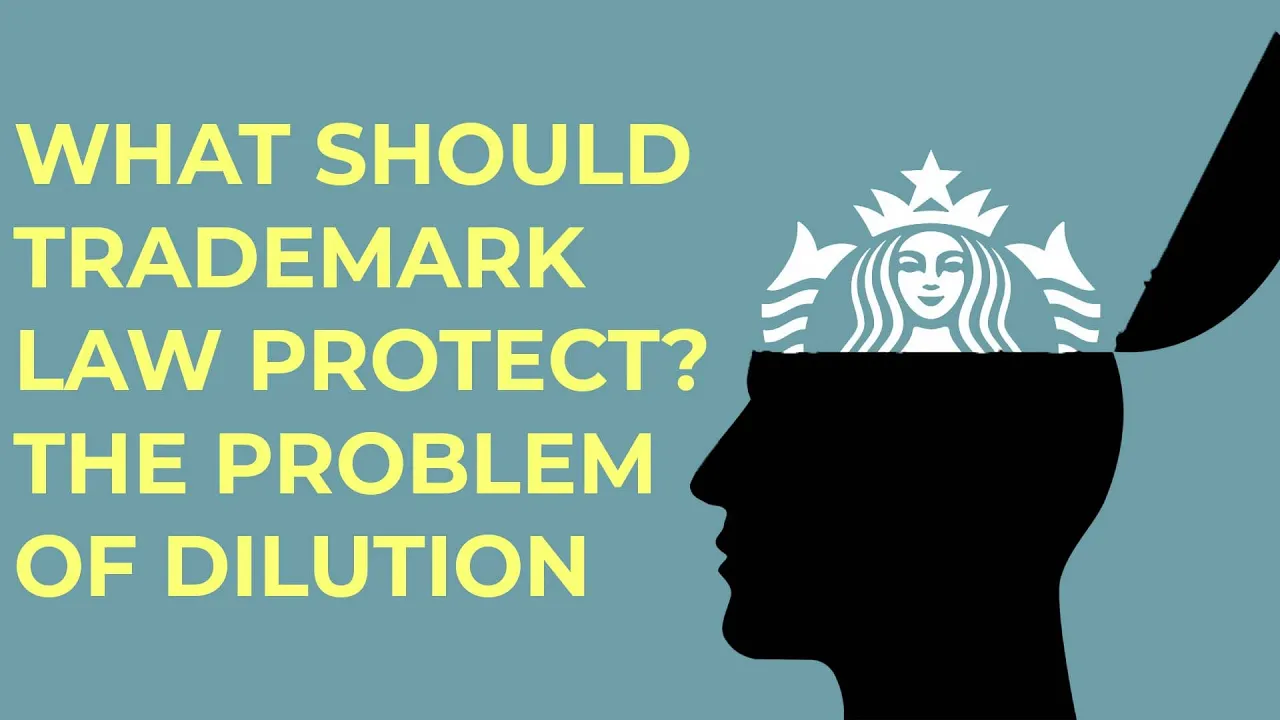
Prior to statutory amendment, the Supreme Court required proof of actual dilution for a dilution cause of action—alleging only likelihood was insufficient. Congress responded by amending the statute to establish that likelihood of dilution suffices for liability. This change lowered the burden of proof for trademark holders seeking relief under dilution claims.
Click to watch →

Trademark Dilution - Davis McGrath LLC IP Webinar Series - February 6, 2013
2K
The federal trademark dilution framework under 15 USC 1125 C protects famous marks through two mechanisms: dilution by blurring (impairing distinctiveness) and dilution by tarnishment (harming reputation). Key requirements include: (1) the mark must be famous and distinctive; (2) the defendant's use must be likely to cause dilution; (3) claims can proceed regardless of confusion, competition, or economic injury. Fame is determined through four factors: advertising reach, sales volume, registration status, and public recognition. Dilution by blurring involves six analytical factors including mark similarity and distinctiveness. Dilution by tarnishment lacks specific statutory factors, requiring case-by-case evaluation. Exclusions protect fair use, news reporting, and non-commercial use. Remedies include injunctions, profits, damages, costs, and attorney's fees in exceptional cases. The 2006 Act eliminated niche fame requirements and shifted from actual to likelihood of dilution standards.
Click to watch →
Supreme Court 2002-2003 Term in Review - Part 1
212
In Moseley v. Victoria's Secret (2003), the Supreme Court held that trademark dilution claims require proof of actual dilution (actual injury to economic value of the famous trademark), not merely likelihood of dilution. The Court rejected the circuit split where some circuits required proof of actual losses or financial damages while others accepted likelihood of dilution. The Court clarified that identical trademarks may constitute sufficient circumstantial evidence of actual dilution, while mere mental association is insufficient. This decision narrows trademark dilution protection and requires concrete evidence of market harm rather than speculative potential damage.
Click to watch →
Trademark Law- by Dr. Naira Matevosyan (MD, MSJ, PhD)
322
Dilution applies only to famous marks: tarnishment portrays marks negatively (obscenity, low quality), while blurring erodes distinctiveness. In Starbucks v. Charbucks, the court lowered the dilution standard from actual dilution to likelihood to be diluted. Disparagement (Lanham Act Section 1052) allows cancellation of marks disparaging persons, institutions, or national symbols. The USPTO uses a two-step test: would the mark refer to an identifiable group, and would that reference be perceived as disparaging? Infringement requires showing likelihood of consumer confusion using Polaroid factors: mark strength, consumer association, similarity, competitive proximity, actual confusion, bridge gap likelihood, defendant's good faith, product quality, and consumer sophistication.
Click to watch →
Deep Dive
Subsequent landmark case law, such as Starbucks Corp. v. Wolfe's Borough Coffee, Inc., to analyze how courts applied the post-Moseley TDRA standards in practice.

Starbucks Corp. v. Wolfe’s Borough Coffee, Inc. Case Brief Summary | Law Case Explained
1.2K
In trademark law, dilution by blurring requires showing that the junior mark has become associated with the senior mark in consumers' minds, but courts must find substantial similarity between the marks and evidence of actual consumer association; mere consumer survey evidence of association is insufficient without proof of mark similarity.
Click to watch →
Trademark Dilution - Davis McGrath LLC IP Webinar Series - February 6, 2013
2K
In this 2009-2011 case, Starbucks sued Wolfboro Coffee for using 'Charbucks' for dark roasted coffee. Key issues: (1) Marks were somewhat similar but not substantially similar; (2) 'Charbucks' was deliberately chosen to associate with Starbucks (derogatory term for over-roasted coffee); (3) Lower court rejected tarnishment claim because Black Bear's product was high quality and actively promoted without harming Starbucks' reputation; (4) On remand, court found 'Charbucks' was merely a varietal name used in conjunction with the primary 'Black Bear' mark, not likely to impair Starbucks' distinctiveness.
Click to watch →
V Secret Catalogue, Inc. v. Moseley Case Brief Summary | Law Case Explained
410
The Supreme Court's decision in V Secret Catalogue, Inc. v. Moseley (2010) established that trademark owners must demonstrate actual harm, not merely a likelihood of tarnishment, to succeed on dilution claims under federal law; however, Congress subsequently passed the Trademark Dilution Revision Act of 2006 to restore the likelihood-of-tarnishment standard, allowing courts to consider whether a defendant's use of a similar mark is likely to damage the positive associations consumers have with the original trademark.
Click to watch →
Trademark Law- by Dr. Naira Matevosyan (MD, MSJ, PhD)
322
In Starbucks v. Charbucks, Starbucks was operating almost 26 years since 1971 when in 1997 Wolf's Coffee started roasting dark coffee trademarked as 'Starbucks.' Both brands of roasted coffee met high quality standards. Starbucks filed the dilution lawsuit. The district court held in favor of Charbucks, reasoning that Starbucks failed to prove that Charbucks mark was likely to dilute its famous mark. The court of appeals upheld reasoning by lowering the legal standard for dilution from actual dilution to likelihood to be diluted. The former actual dilution standard was set up by the U.S. Supreme Court in Mosley v. Victoria's Secret catalog case.
Click to watch →
Courthouse Steps Decision: Starbucks Corp. v. McKinney
8.3K
The Supreme Court issued an 8-1/2 vote decision requiring federal district courts to apply the traditional four-part injunction test when reviewing Section 10(j) applications. Justice Thomas wrote the majority opinion, while Justice Jackson concurred in part but dissented on the deference issue. The Court held that Congress did not intend for the 'just and proper' standard to govern Section 10(j) proceedings, and that the traditional four-part test applies regardless of the statutory language. The case was remanded to the Sixth Circuit for reconsideration under the new standard.
Click to watch →
Deep Dive
The strict legal criteria for establishing whether a trademark is sufficiently 'famous' (e.g., household recognition) to qualify for dilution protection.
Trademark Dilution - Davis McGrath LLC IP Webinar Series - February 6, 2013
2K
The federal trademark dilution framework under 15 USC 1125 C protects famous marks through two mechanisms: dilution by blurring (impairing distinctiveness) and dilution by tarnishment (harming reputation). Key requirements include: (1) the mark must be famous and distinctive; (2) the defendant's use must be likely to cause dilution; (3) claims can proceed regardless of confusion, competition, or economic injury. Fame is determined through four factors: advertising reach, sales volume, registration status, and public recognition. Dilution by blurring involves six analytical factors including mark similarity and distinctiveness. Dilution by tarnishment lacks specific statutory factors, requiring case-by-case evaluation. Exclusions protect fair use, news reporting, and non-commercial use. Remedies include injunctions, profits, damages, costs, and attorney's fees in exceptional cases. The 2006 Act eliminated niche fame requirements and shifted from actual to likelihood of dilution standards.
Click to watch →

Trademark Dilution - July 2011
561
Trademark dilution is a form of trademark protection available only to famous marks (household names known to everyone in the country), which protects against uses on different goods even when no consumer confusion exists; it requires proving the mark is extremely famous, achieved fame before the alleged infringer started using it, and that the use is likely to dilute the mark through either blurring (impairing distinctiveness) or tarnishment (harming reputation).
Click to watch →
Trademark Infringement: Legal Definition & How to Address Claims
14.7K
Dilution protects famous trademarks against blurring or tarnishment, even without consumer confusion. A mark qualifies as famous if widely recognized across demographics regardless of geography, age, or gender. Unlike likelihood of confusion, dilution applies across industries—for example, a famous soft drink brand could block another company from using its name for car parts. This protection, initially judicially created then codified by Congress, applies only to a small percentage of highly recognizable brands. The key distinction is that dilution protects the mark owner even when no actual confusion exists among consumers.
Click to watch →
Trademark Law: Consumer Protection and Source Identification
318.2K
Likelihood of confusion is the central issue in trademark disputes, determined by seven factors: mark similarity, product similarity, geographic overlap, consumer care level, plaintiff's mark strength, actual confusion evidence, and defendant's intent. The Seventh Circuit emphasizes mark similarity, intent, and actual confusion. Beyond infringement, dilution provides protection for famous trademarks against weakening their distinctive quality, even without confusion. Dilution by blurring occurs when similar marks chip away at a famous mark's distinctiveness (e.g., Apple bulldozers). Dilution by tarnishment happens when similarity harms a famous mark's reputation (e.g., 'Victor's Little Secret' for adult products tarnishing Victoria's Secret). Courts require actual real-world fame for dilution protection, making it difficult for less-well-known marks to qualify.
Click to watch →
Trademark Infringement: Module 5 of 5
1.4K
Even without likelihood of confusion, famous mark owners can obtain injunctions against dilution. Dilution typically occurs between unrelated products/services. A mark is famous if widely recognized by the general consuming public as a designation of source. Relevant factors include duration, extent, and geographical reach of advertising, sales volume, actual recognition, and registration status. Examples: 'The Sporting News' was famous in sports periodicals, 'Coach' in handbags, but 'Avery Dennison' was not found famous.
Click to watch →
Deep Dive
The balance between trademark dilution claims and First Amendment rights, including fair use defenses such as parody, satire, and comparative advertising.
Trademark Law- by Dr. Naira Matevosyan (MD, MSJ, PhD)
322
Four defense strategies exist: fair use, first amendment, special defenses to dilution, and first sale doctrine. Fair use has two subtypes: descriptive fair use (ordinary word to describe products, applies to fanciful marks) and nominative fair use (using trademark as name to refer to products). The Third Circuit established Lab factors: price and care factors, actual confusion evidence, defendant's prior use without confusion, and defendant's intent. First Amendment defenses include political speech, commercial speech, and comparative advertising. In Angry Patient, the 9th Circuit ruled that criticizing a provider's business practices on a website using their name doesn't constitute infringement when no profit is sought.
Click to watch →

Trademark Law - by Dr. Naira Renault
531
Four defense strategies in trademark infringement lawsuits: fair use, first amendment, special defenses to dilution, and first sale doctrine. Fair use has two subtypes: descriptive fair use (protects use of trademark as ordinary word to describe products/services, applies to fanciful/arbitrary marks) and nominative fair use (allows using trademark as name to refer to products/services). The Third Circuit established Lab factors: price of goods, evidence of actual confusion, number of times defendant used mark without confusion, and defendant's intent. First Amendment defense includes political speech, commercial speech, and comparative advertising. In cases where defendants criticize business practices without profit, they may not be liable for infringement or dilution.
Click to watch →

The First Amendment in Trademark Law after Vidal v. Elster
8.5K
Trademark dilution laws, particularly tarnishment provisions, face significant First Amendment challenges because they restrict speech causing no actual confusion. Unlike infringement laws regulating fraudulent speech, dilution laws may prohibit legitimate parody and commentary. The Tam and Vidal framework suggests dilution laws may be struck down for lacking historical tradition and potentially discriminating by viewpoint. Copyright law's special exception status (Constitutional mention, idea-expression dichotomy) doesn't easily extend to trademark, which lacks comparable statutory defenses. This creates uncertainty about dilution law constitutionality and signals potential future litigation.
Click to watch →

Chilling Effects Clearinghouse
433
Trademark law extends beyond preventing consumer confusion to protecting famous brands from dilution—uses that blur or tarnish distinctive qualities. Unlike traditional trademark preventing similar marks that might confuse consumers, dilution protects famous marks from any use that could diminish their uniqueness. This has been used to suppress parody and commentary. However, critics argue that famous marks achieving cultural prominence should accept some dilution as the cost of fame. The public interest in criticizing and using famous marks for commentary warrants protection. Trademark dilution claims have been overused to shut down legitimate parodies and commentary, raising questions about the balance between brand protection and free expression rights.
Click to watch →

Jack Daniel’s Properties, Inc. v. VIP Products: A Supreme Court Oral Argument Preview
170
The Supreme Court is examining whether the Rogers test (requiring that trademark use be either not artistically relevant or explicitly misleading) should apply to commercial products using parody, or whether the traditional likelihood of confusion analysis should govern, and whether humorous use of a famous trademark constitutes 'non-commercial' use under the dilution statute, which would bar dilution by tarnishment claims as a matter of law.
Click to watch →
Dilution Case
Supreme Review
Dilution Case
0:00- 1
Court evaluates proof of trademark dilution harm.
- 2
Mosley's shop conflicts with Victoria's Secret mark.
The 'Likelihood of Dilution' Standard and the Trademark Dilution Revision Act
The Supreme Court's ruling in Moseley v. V Secret Catalogue, Inc., which required trademark owners to prove 'actual dilution' rather than a mere 'likelihood of dilution,' faced intense criticism from intellectual property owners and legal scholars. Critics argued that requiring proof of actual harm established an impossibly high evidentiary hurdle, essentially forcing brand owners to wait until their trademarks had already suffered irreversible damage before they could seek legal recourse. This opposition culminated in a direct legislative counterpoint: Congress passed the Trademark Dilution Revision Act (TDRA) of 2006. The TDRA explicitly overturned the Moseley decision, lowering the burden of proof back to a 'likelihood of dilution' standard, thereby prioritizing proactive trademark protection over the Supreme Court's strict requirement for concrete proof of harm.
The fundamental definition of a trademark, its role in commerce as a source identifier, and the standard 'likelihood of consumer confusion' required for traditional infringement claims.
The conceptual difference between trademark infringement (which protects consumers from confusion) and trademark dilution (which protects the intellectual property value of famous marks).
The two primary forms of trademark dilution: 'blurring' (the whittling away of a mark's distinctiveness) and 'tarnishment' (association with unsavory or low-quality goods).
The legislative background of the Federal Trademark Dilution Act (FTDA) of 1995, which served as the statutory basis for the Moseley lawsuit.
The Trademark Dilution Revision Act (TDRA) of 2006, passed by Congress specifically to overturn the 'actual dilution' standard established in Moseley and replace it with a 'likelihood of dilution' standard.
Subsequent landmark case law, such as Starbucks Corp. v. Wolfe's Borough Coffee, Inc., to analyze how courts applied the post-Moseley TDRA standards in practice.
The strict legal criteria for establishing whether a trademark is sufficiently 'famous' (e.g., household recognition) to qualify for dilution protection.
The balance between trademark dilution claims and First Amendment rights, including fair use defenses such as parody, satire, and comparative advertising.
217 views0likes2:20@QuimbeeDotComOriginal Release: 2023-09-07
trademark dilution occurs when someone uses a mark in Commerce that's substantially similar to or the same as a well-known Mark such that it harms the purchasing Public's perception of the well-known Mark or weakens its distinctiveness but how do courts expect parties to prove trademark dilution the 2003 Supreme Court case of Mosley versus V Secret catalog Incorporated examines this question in the context of an extremely famous lingerie mark Kathy and Victor Mosley owned and operated a small lingerie shop called Victor's Secret in a Kentucky strip mall in 1998 the mosleys advertised in a weekly publication distributed to military personnel at Fort Knox the ad announced their grand opening close to Valentine's Day and featured several items including romantic lingerie and adult novelties an army colonel saw the ad and was offended by what he regarded as the Mosley's attempt to profit off Victoria's Secret's reputable trademark to sell tawdry products Victoria's Secret was a massive lingerie company that sold 1.5 billion dollars worth of merchandise annually at the time the colonel sent the Mosley's ad to the lingerie giant whose Council responded by writing to the mosleys Victoria's Secret's council's correspondence explained that the Mosley's name Choice was likely to cause confusion with its Mark and also dilute its distinctiveness it requested the mosleys discontinue their use of the name along with any variations the mosleys in turn changed their store name to Victor's little secret dissatisfied with this response Victoria's Secret sued the mosleys in District Court for trademark dilution the court found for Victoria's Secret and enjoined the mosleys from using the amended name for their shop the mosleys appealed to the sixth circuit which affirmed the lower court the mosleys then petitioned the Supreme Court which agreed to review the case
Up Next
62:05
Trademark Law Explained: A Comprehensive Overview by an IP Attorney
@Lawyer_Tips
9.1K views•2015-12-27

4:27
US Secondary Sanctions Impact on EU Businesses and Blocking Legislation
@Bureauvandijk
1.6K views•2019-03-20
1:52
Employment Division v. Smith Case Brief | Free Exercise Clause
@QuimbeeDotCom
15.4K views•2021-01-08

24:42
Police Interrogation Tactics: False Confessions & Legal Reform
@LastWeekTonight
7M views•2022-04-18
Related Study Plans & Knowledge Roadmaps
Structured learning paths in Law
law
Self-Defense Law: Imminence & Castle Doctrine
01Foundations of Self-Defense Law
02Imminent Threat & Reasonable Belief
03The Principle of Proportionality
+ 3 more learning modules
12h6 modules
Explore Roadmap
law
Defamation Law: First Amendment & Actual Malice
01Introduction to civil torts and the First Amendment
02Elements of Defamation: Libel and Slander
03Public Figures vs. Private Individuals
+ 2 more learning modules
8h5 modules
Explore Roadmap
law
Hearsay Rule: Trial Evidence & Exceptions
01Introduction to Trial Evidence & Courtroom Basics
02Demystifying Hearsay: The Core Definition
03Non-Hearsay: Exclusions Under FRE 801(d)
+ 3 more learning modules
14h6 modules
Explore Roadmap
law
Medical Malpractice: Law, Liability & Care
01Foundations of Tort Law and Civil Liability
02The Four Elements of Medical Malpractice
03Defining and Proving the Standard of Care
+ 2 more learning modules
12h5 modules
Explore Roadmap