















Trademark infringement occurs when someone uses a protected mark without permission, with two main categories: likelihood of confusion (where similar marks cause consumer confusion about source) and dilution (where famous marks are weakened by similar marks in unrelated industries). To assert rights, trademark owners should act promptly by notifying infringers, investigating facts, and pursuing remedies such as opposition to applications, cancellation of registrations, injunctions, or damages. Both plaintiffs and defendants benefit from consulting trademark attorneys, as these cases involve complex legal standards requiring professional guidance.
Trademark Infringement: Legal Definition & How to Address Claims
Added:The distinction between different forms of intellectual property, specifically how trademarks differ from patents and copyrights.
The core definition and purpose of a trademark, including the concept of brand source-identification and goodwill.
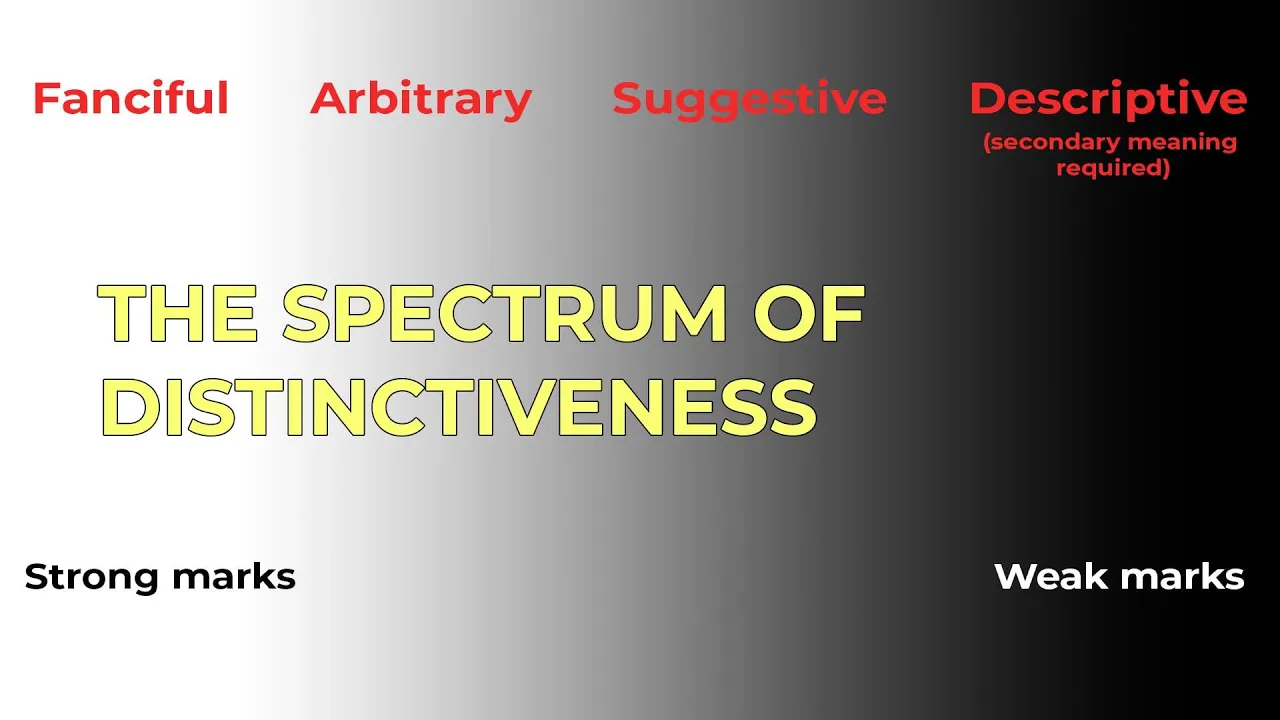
The spectrum of trademark distinctiveness (fanciful, arbitrary, suggestive, descriptive, and generic marks) and how protectability is established.
The basic concepts of trademark registration, geographical boundaries, and the distinction between common law (™) and federally registered (®) marks.
Advanced affirmative defenses in trademark litigation, such as nominative fair use, descriptive fair use, and parody.
The legal mechanics and strategic calculation of remedies, including injunctions, profits disgorgement, treble damages, and attorney's fees.
International trademark law and enforcement, specifically navigating the Madrid Protocol and cross-border counterfeit disputes.
Practical brand management and active policing strategies, including utilizing watch services and drafting effective cease-and-desist letters.
14.7K views109likes29:43Original Release: 2011-05-27
welcome to today's presentation on trademark infringement what it is and how to deal with it I'm Eric Belton along with Mark Donaghy we're of Eric M Pelton & Associates a boutique trademark law firm in Falls Church Virginia and were fresh back from the international trademark Association conference last week in San Francisco which was a wonderful educational experience and one topic that certainly has discussed often anytime you get trademark attorneys together is trademark infringement and various issues related to trademark infringement situations both as a plaintiff and as a defendant so we're glad to be here today to share some of that information with you let me get some preliminaries out of the way this is not formal legal advice there's no attorney-client relationship created if you have anything if you have any specific if you have any specific legal questions we highly recommend that you contact an attorney so two to review those questions sorry about the telephone interruption there and if anybody just joined us this is Eric Felten and we are beginning our presentation about trademark infringement and we're glad you're with us today so what exactly is trademark infringement well the Huichol standard of trademark attention we'll get into it a little bit has many factors and variations slightly depending on whether you're under federal law or whether you're at the US Patent and Trademark Office or what Circuit or what court you're in front of but as a practical matter what trademark infringement is is when somebody else is using a protected trademark without permission of course that trademark could be a word or a logo it could also be a slogan or sound or than a shape or any type of protective trademark it does not have to be a registered trademark it just has to be protected and that protection can come just from having used it in commerce of course that protection is generally enhanced by having a federal trademark registration and as we'll see when you have a federal trademark registration it gives you additional benefits in dealing with trademark infringement situations there's two main categories of infringement the traditional one is likelihood of confusion and the by far most common and prevalent situation is likelihood of confusion and again that's just really just comparing two trademarks and marks going to go into more details in a minute as to whether or not there's confusion among the public and and who was first the second type of infringement situation is dilution and that's where you have a famous brand under the law which is entitled to some additional scope of protection and we'll get to that as well so with that let me introduce mark to think about likelihood of confusion right likelihood of confusion deserve said that's your your typical trademark infringement claim the purpose of protection of this form of protection against infringement is to prevent the public from being confused or by someone who's using a confusing or deceptive mark that'll make people make a mistake about who's offering one goods are enough you know one type of goods or another the purpose of trademark law in general is to allow consumers to find the goods they're looking for and so it creates an action for people to protect their brand reputation by going after other people who are or taking action that'll confuse consumers and make it harder for them to find what they want to get and so the likelihood of confusion standard the likelihood of confusion standard has several factors the most important threshold issue is priority 2 to make a claim of infringement you have to have rights that are superior to someone else's and that generally comes from use of a mark before they have started using the mark or yo end and that's also aided by say having a registration for the mark before they have a registration if they have a registration at all but other important elements I mean the analysis generally revolves around every single time how closely related the goods or services are at issue and how similar the marks being used are so for example if two people are both offering say automotive parts under marks that are similar that it looks like initially a very strong case for trademark infringement the junior user the second guy to use it might be it might have a problem there but if it's a situation where say delta faucets attempts to sue Delta Airlines the marks are very similar identically but the goods are so different that is a weaker case in fact the goods can be so different in many cases that no infringement could be found under a likelihood of confusion theory other factors though important factors to consider is how famous is is the plaintiff that person how famous is the mark of being asserted by the person claiming likelihood confusion you know how who are the consumers of the goods are the consumers the same or the goods or services offered to different groups are the consumers investigated there there are many you know once you get on the beyond those first factors there are many different varieties of the test and all the tests balance you know more on ten or more different factors and so it's often a very important thing to have legal counsel who's you know who's got an intuition for these and contingent compared one case to another to figure out how strong a claim that's I've other significant factors how strong or weak ready trademark gets the plaintiffs trademark is right absolutely we've talked before in these videos about the spectrum of weak marks and strong marks and so a weaker or descriptive mark like Virginia Auto Parts or something like that it's going to be harder to enforce maybe even impossible to enforce against a someone who's got Northern Virginia Auto Parts and maybe what they're saying is true if they sell auto parts and run yeah the purpose of the law isn't to prevent people from being able to use descriptive term whereas a more creative or even made-up word is going to be entitled to a broader range of protection and then also when comparing marks a lot of times when people call up they'll point out that them that the two names are not identical maybe one has corporation or LLC on the end or some other very common warning and really that has almost no legal significance when you're comparing two marks it's the most distinctive parts and the most memorable parts on consumers that are going to be the core of the analysis so if you are comparing Polycom which is the name on this phone versus Polycom telephone company the fact that the other brand has telephone company added on to the Davinia's almost seems significant because that wording is so generic and so common and so and we've mentioned the benefits of we've mentioned that it strengthens a case if you have a registration a federal registration grants you many evidentiary presumptions when you go to enforce your mark and it also entitles you to certain remedies like damages in some cases that wouldn't otherwise be available to you but remedies in likelihood of confused cases well the ways that you can assert your assert your rights under a likelihood confucian claim is you could oppose someone's trademark application so prevent them from receiving a trademark registration that you believe is likely to be confused with yours you could cancel an existing trademark registration if you've got superior rights to that you know you can get an injunction that prevents them from using confusingly similar marker on particular goods or or also prevents them from importing those goods into the country and and like we said in some cases you can get damages either from the profits they've made using the confusingly similar mark or or compensation for the damages that it's caused to you and say lost sales because people were confused and then with a federal trademark registration you may be entitled to some additional statutory damages or tripling of the mortgages or recovering the attorneys fees in exceptional cases but there are defenses likelihood of confusion is you know trademark rights are not absolute and there are a lot of uses that will not will not be found confusing because they're permissible say under fair use or or other sort of I think it's the uses the public that benefit the public for example but we can get into those further decision yeah we're going to talk now about dilution and and as with dilution as with likely it'll confusion there are no black and white tests unfortunately there is a lot of gray area and trademark law there are a lot of balance and factors a lot of possible defenses and so it's very hard to give a quick impression or hypothetical as to whether or not two things equals an infringement or not because there is such a variety of factors I mean some cases yeah you you can feel stronger about them initially but there's always a possibility that the underlying mark is weak or that priority is an issue and many other gray factors in dilution in order to qualify for protection for dilution and mark must be shown to be famous and to be famous it must be well known you know throughout the country really almost well known in in the media in mind there must be media coverage of us have a high volume of household name yeah where you know a great majority of people if you refer to that name know exactly what you're talking with regardless of geography regardless of gender regardless of age ever marks that everyone knows and you can probably think of some right now so the courts initially began to create this dilution protection and then Congress enacted it into law and it entitles brands that meet this level of Fame which is out of all the rings in in the country a very very small percentage but and out of all the very well-known brands you know a much higher percentage those that qualify for doshu protection are protected against other marks that would blur or tarnish the quality of the famous market really what that means is that anything that's quite similar to it regardless of the industry could be a dilution so a very well-known soft drink maker for example that advertises on TV all of the time might be able to stop somebody from using the same name for car parts under dilution protection even though from a strict length we head of confusion analysis it's unlikely that somebody in the car parts store seeing a brand name could associate that with a soft drink manufacturer but dilution because that mark may achieve such a level of Fame would allow it to have an extra degree of protection that prevents somebody from using it really for any good or service for almost any further service but it is hard to qualify it it's hard to prove it is again only truly very well known very famous very profitable brands where that end up qualified for dilution the remedies other than some of the damages issues the remedies are similar they if if a more qualifies for dilution protection they may be able to stop other markets from becoming registered they may be able to get injunctions against the use of other marks that would be as I said blurring or tarnishing that protective mark and in one one important distinction is yeah likelihood of confusion is a confusion based remedy is to protect people who are confused a dilution protects the mark owner even when no one is confused by the by the infringing use even when no one would think that car Pepsi car parts come from Pepsi you know Cola but we in and because so few companies qualify for it the reason we're bringing it up on this call is because okay it few people can utilize it but many many people have to be concerned about it when they apply for a trademark or start using a mark because you may be in a completely different industry from another mark but if there is a truly famous mark out there even even if you're so far away that you're not going to be confusing you may have to deal with a dilution so it's always something you need to be looking out for a relatively recent case on dilution was Chuy Vuitton where there was a dog product up with his dog toys that was a play on Louis Vuitton and I don't think that many people questioned that anybody in a pet supply store seeing Chuy Vuitton would think that it was endorsed by or came from the same people who made the love handbags and other items but despite that they were enjoined from using that mark any further by the courts because we levy Vuitton was found to be protected under the delusion law and there was some controversy over that decision but that's the way it came back so moving on what do you do when you find out that someone may be infringing their mark you've got your trademark you've been using it hopefully you have a federal trademark registration that you know gives you presumptive rights throughout the United States and you see that someone's maybe importing counterfeit or infringing goods or maybe someone's just starting up a business that maybe doesn't even though you're aware isn't even aware of your rights how do you proceed you know first of all given the complexities of everything we've described it's always a good idea to have an attorney at this point to help you know but you know the first step generally is notifying the other side of your rights making them you know making it clear that that you believe what they're doing is infringement establishing communication putting them on notice that you know any further action may be you know action may be in violation of your rights it's also creates an opportunity for you and to investigate the facts further once you've established contact with the other side and this could be you know through a letter or through a phone call again advisedly through your attorney you know it allows you to inquire about their uses and maybe you'll find that you were mistaken or maybe you'll find out that the truth is worse than you imagined but but it's very important early on to figure out what the facts are and figure out how best to proceed and so making contact the most important fact when it comes to that it's a priority we don't want to choose somebody else of infringing your trademark when if if it's possible that they were first right and then those tables could be reflect exactly if you've already written to them and acknowledged that you believe that they're very similar and then it turns out that you were not the first one to use it you've now dug yourself a pretty deep hole it's hard to turn that your birthday so another thing to do once you've established contact is determine settlement options you know it may be that if you're not using the exact same mark and you're not using it on the exact same goods or services maybe there's things the two of you can do to cooperate to make sure that no one's confused you know maybe you know the junior user would you know will promise only to use the mark in certain ways certain goods in a limited geographical area maybe there are ways to establish a licensing agreement between the two so that so that the side with you know prior trademark rights will be able to maintain some control and ensure that no confusion occurs you know oftentimes it comes down to just the junior user having to discontinue use for phasing out use over a period of time but there are a lot of ways to resolve these disputes when you have two good-faith parties who are out there trying to you know trample on one of those rights and so it's important to follow those leads because litigation is expensive and time-consuming for everyone but you know if you need to take legal action you have several options if you've got solid trademark rights and federal registration you can oppose a pending trademark application that someone might have applied for that's on its way toward registration you can cancel a registration if they've already got one you can sue for damages in some cases and getting an injunction against you further use of the mark or importation is very strong where there's a domain name at issue that incorporates mark similarly there are options for filing claims for cybersquatting under some circumstances that you know could help you capture that domain name back from a user who's got that intent and maybe even recover some damages as well and also if someone's posting infringing content on online that is you know that's it's confusing consumers there are situations where you can have those taken down as well for example a lot of trademark owners file takedown notices with eBay to take down auctions of infringing products like counterfeit products for example and so those are you know pretty common remedies some of those are very very quick remedies but generally your litigation based remedies are you know they take the action of the courts and they're there things that you know certainly having an attorney involved have mandatory for all of these is a very wise choice and generally the sooner you act the better once you've done that investigation because the longer an infringer is invested in building their brand and building their company spending money on advertising or signage or whatever it is that they're doing to photos in their good faith you know they they know that they're infringing yeah that you know the more invested they are the harder it's going to be to convince them to give it up and therefore the more protracted and expensive the dispute is likely to be the quicker you can deal with it the greater chance in general that you can settle it relatively quickly relatively easily one other caution is when you know about infringement or when you should know about infringement and you don't do anything you may be forming your rights in the future after a certain period of time it may be much more difficult or impossible to assert your rights against somebody because you've coexisted or you've even you know sort of implicitly blessed their use of it and also if you allow one or two others to use something that's a little bit similar and then you know some others come along and they're a little bit you know maybe a little bit more different but they come along you know and then all of a sudden you've got a handful of people that are using something similar to your trademark it may be difficult to stop any of them or all of them because they're all going to point to or towards each other and say that you've never policed your trademark in the past and if these two are confusing then how could those two be confusing and so on and so forth it's noble yeah snowball exactly yeah in terms of your options disappearing for example if you try and sue someone in federal court for something that you've known about for a long time good luck convincing the court that you deserve a preliminary injunction that their that their use needs to be stopped right away until the court figures out whether or not there's truly an infringement if you permitted it for a number of years the courts going to say well what's wrong with a couple of years more a while to figure it out so yeah there's a lot of reasons to take action swiftly consult an attorney on the flip side if you've been accused of infringement whether it's by a letter or by receiving a complaint or even a phone call very advisable to talk to an attorney you have you know there are a lot of options in every case is unique but the first thing you want to do is investigate the facts of valuing to how much merit the claim has evaluate whether there are the same type of settlement opportunities that that mark discussed before some of that you know may depend on in one manner your approach that they approach you in a manner that was open to talking about settlement or did they approach you you know in a very strong handed manner that seemed to indicate that they didn't care about what your position was or or whether you were interested in settling but you know in general you want to respond because doing nothing is opening the door - really - a lot in my opinion because if they've if they've contacted you and correspondent with you and invited you to communicate back if they don't hear back from you again because now they're on notice that you're in their minds infringing it they may feel obliged to seeing through to fix that problem in some way and if they're not communicating with you their only other option may really be to go to court if they go to court you're now looking at having less leverage in settlement negotiations of spending more money and you know and having a bigger situation to deal with so whether you believe their claim has some merit that's worth discussing or whether you believe it has no merit it's almost always a good idea to respond and to respond with the advice of counsel to a demand letter of course as we mentioned in the flip side there are often many defenses that can be raised again there's a lot of gray area but debt you getting sued for infringement doesn't mean that you are infringing it means that you have a difficult decision to make about how to defend it and how strong your case is and what the cost-benefit analysis is of defending it a comment that again comes down to how much is invested in this brand then again why if you're a potential plaintiff you want to act quickly one other some other interesting more aggressive defensive maneuvers could be attacking the registration you know that the plaintiff relies on if there's a problem with it if it's fraudulent or if it's descriptive or very weak or if if it's been abandoned if they're not using it correctly there's there a lot of options there and sometimes it requires an investigation but generally you need to you need to be asserting those counterclaims early otherwise you might lose the option to bring the middle and another aggressive defense is if you receive a demand letter there's a potential sometimes to actually be the initiator of the litigation to seek what's called a declaratory judgment of non-infringement and then you know you turn the tables a little bit and you can control the venue the location of the lawsuit more in that case which can also help reduce the costs if litigation is indeed inevitable but that is also you know upping the ante and maybe closing the door or you know maybe not all the way but closing the door at least partway on a quick settlement or resolution and there are legal thresholds that that must be met to be to be allowed to sue for declaratory judgment but that's something that defendants should consider another thing not really separate from actually defending the claim in court or in communication with the other party but in addition to it that's become more prevalent in the last two years is using social media and using publicity to garner support and put pressure on the plaintiff a well-known case of this was when North Face went after a teenage clothing company on the line called South but that was essentially a parody of North Face by getting some cheap or free media attention and thousands of social media followers within a matter of days the teenager was able to put huge pressure on North Face to back off basically paid to settle the matter relatively quickly and relatively harmlessly then the terms of the settlement are not public so we don't know if that's what happened but the teenager is still operating yeah language major and actually another thing to consider in reading and how you handle your case as a plaintiff is that North's race brought a lot more attention to this trademark problem that they viewed that otherwise never would have existed I mean sometimes you have to you know measure whether you know whether your tactic is right and whether on how you handle it because you may be bringing attention to something that's really not impacting you your bottom line of course you have to worry about your legal protections as well but yeah but there's you still have to do business and you're still operating in a broader world you don't want to alienate customers yeah it's its trademark is all about reputation to start with and you don't want to do anything and then forcing your trademarks that undermines the oldsman goal well should we do some questions before and while we wrap up and then take questions in case the questions to work or had some difficulty for those on the line so yeah so next month's topic is how to use your trademark for maximum protection and value will be we'll be doing some do's and don'ts on that next month and we'll put the schedule out for that you can contact us you can find us on the web TM for small viscom you can also just search for air compel them they'll come up pretty easily we're also on Twitter Facebook got a blog as well I felt at wordpress.com and again who I emphasize you know that what we talked about today is not specific legal advice it's it may not apply to your specific situation if you've got a particularly legal problem we highly suggest seeking legal counsel to get a specific opinion for whatever issues you may have and finally this presentations copyright era Kevin Pelton associates PLLC 2011
Up Next
2:24
Trademark Law: Commercial Use of Landmarks and Legal Boundaries
@TomScottGo
6.7M views•2015-11-02

4:27
US Secondary Sanctions Impact on EU Businesses and Blocking Legislation
@Bureauvandijk
1.6K views•2019-03-20

5:27
Forensic Phonetics: Speaker Identification in Legal Cases
@nptel-nociitm9240
539 views•2025-03-19

24:42
Police Interrogation Tactics: False Confessions & Legal Reform
@LastWeekTonight
7M views•2022-04-18
Related Study Plans & Knowledge Roadmaps
Structured learning paths in Law
law
Self-Defense Law: Imminence & Castle Doctrine
01Foundations of Self-Defense Law
02Imminent Threat & Reasonable Belief
03The Principle of Proportionality
+ 3 more learning modules
12h6 modules
Explore Roadmap
law
Defamation Law: First Amendment & Actual Malice
01Introduction to civil torts and the First Amendment
02Elements of Defamation: Libel and Slander
03Public Figures vs. Private Individuals
+ 2 more learning modules
8h5 modules
Explore Roadmap
law
Hearsay Rule: Trial Evidence & Exceptions
01Introduction to Trial Evidence & Courtroom Basics
02Demystifying Hearsay: The Core Definition
03Non-Hearsay: Exclusions Under FRE 801(d)
+ 3 more learning modules
14h6 modules
Explore Roadmap
law
Medical Malpractice: Law, Liability & Care
01Foundations of Tort Law and Civil Liability
02The Four Elements of Medical Malpractice
03Defining and Proving the Standard of Care
+ 2 more learning modules
12h5 modules
Explore Roadmap