




![[사마귀 유체역학] 15. 유체에 Newton's Second Law를 적용할 때](https://i.ytimg.com/vi/JiBuniCmeq0/maxresdefault.jpg)



![Energia kinetyczna #4 [ Energia mechaniczna ]](https://i.ytimg.com/vi/xmmOW4R0KEA/maxresdefault.jpg)









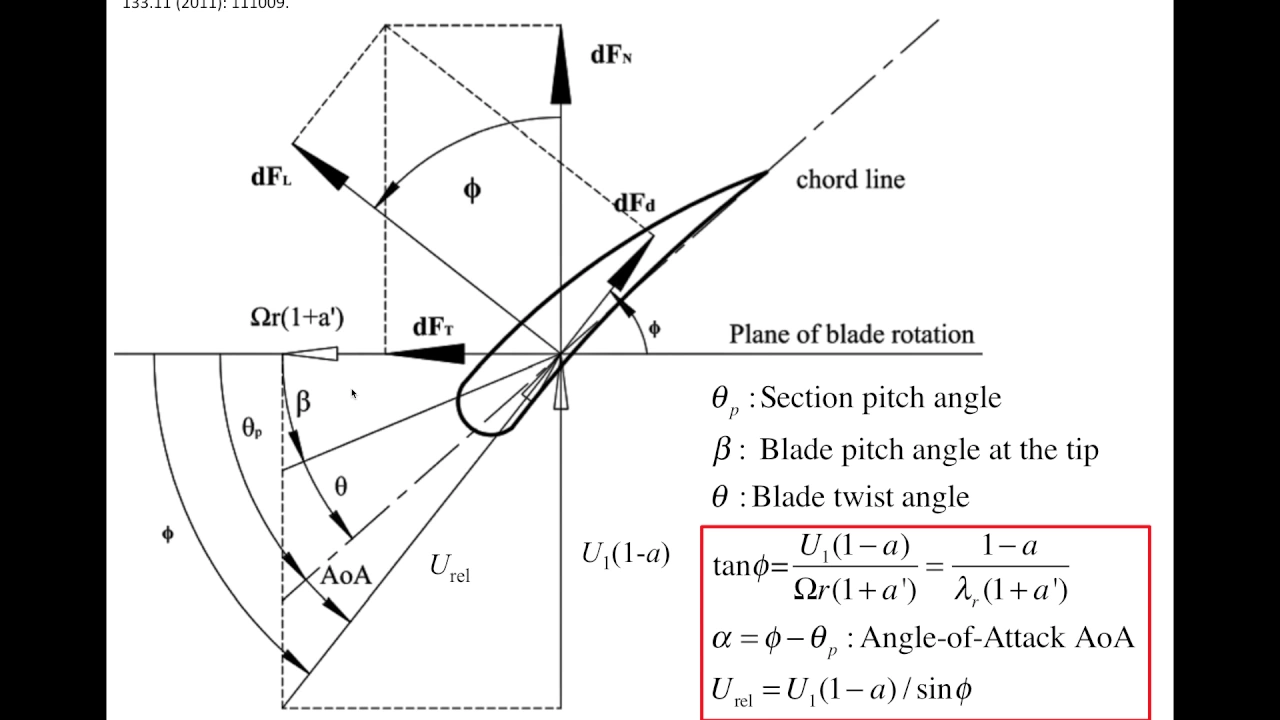

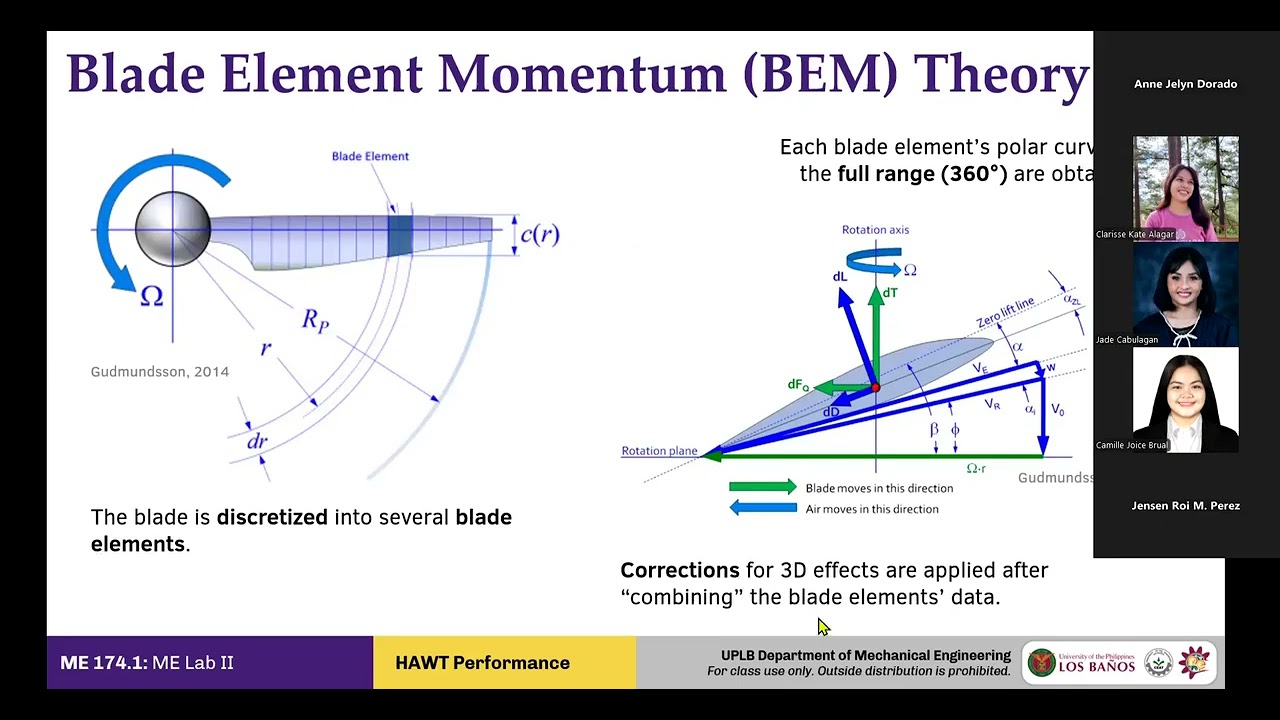




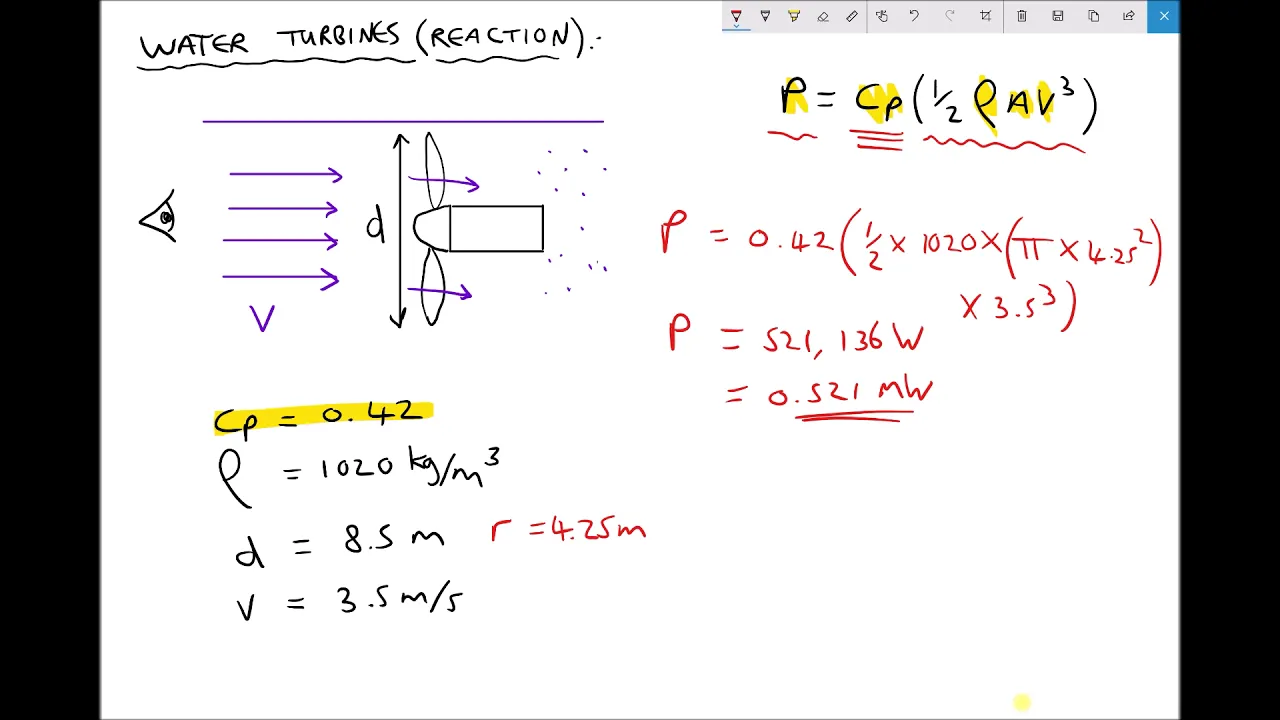


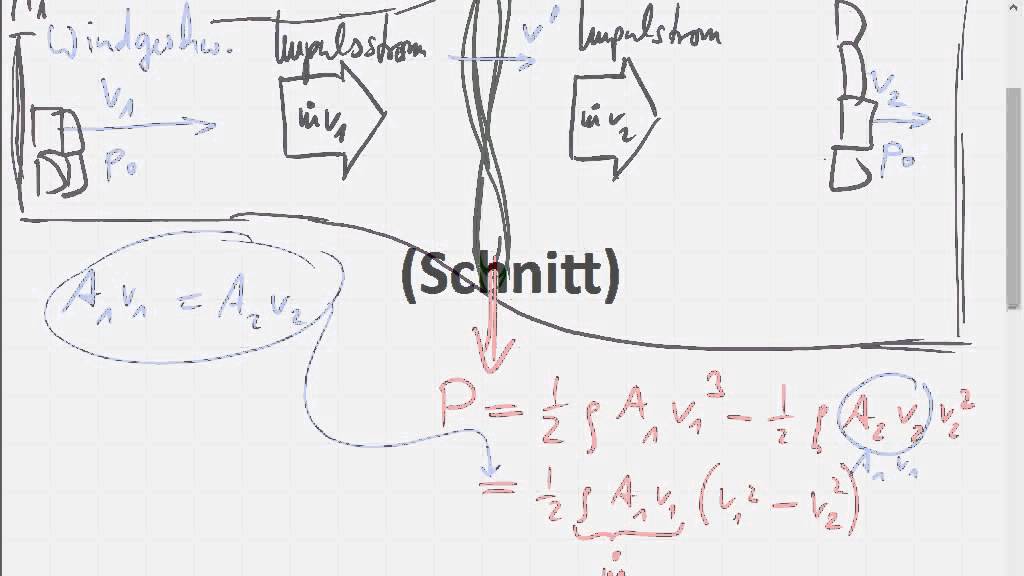
Betz's Law, formulated by German physicist Albert Betz in 1919, states that the maximum theoretical efficiency of a wind turbine in converting kinetic to mechanical energy is 59.3%. This limit is derived using an actuator disc model, where the turbine is represented as a hypothetical flat disc through which air flows. The derivation involves applying the continuity equation (constant volumetric flow rate), Bernoulli's equation, and calculating power input and output. By defining efficiency as the ratio of power extracted by the turbine to the power available in the upstream wind, and then maximizing this efficiency function using calculus, the critical point occurs when the downstream velocity equals one-third of the upstream velocity, yielding the maximum efficiency of 16/27 or approximately 59.3%. This fundamental principle remains accepted today as the absolute upper bound for wind turbine efficiency regardless of blade design or technology advances.
Betz's Law: Maximum Efficiency of Wind Turbines (59.3%) Derivation
Added:hello my name is Evelyn baitman I'm a junior in Energy Engineering and I recently completed em 303 fluid mechanics in energy and mineral engineering I've been working on an honors project for the class that is an application and Analysis of bets's law for wind turbine efficiency in summary bets's law states that the maximum theoretical efficiency that a wind turbine can achieve is 59.3% conversion of kinetic to mechanical energy in this presentation I will derive the equation that proves bet law and hopefully shed some light on a few topics that are explored in EM 303 so a little bit of background on bets's law before we dive in in 1919 German physicist Albert Betts published what would be known as bets's law bets's calculations are based on the kinetic energy of wind passing through an actuator disc or a hypothetical model of an ideal turbine and we'll talk more about that later but what we're going to end up doing is deriving bets's efficiency coefficient of 0.59 now while this process might seem a bit daunting what we'll find is that the calculation can be perfectly understood from our knowledge of fluid mechanics from em 303 okay so let's get started with the problem this is the model that we will be looking at throughout the calculation what we have is a perfectly flat idealized actuator dis in the middle that will represent the turbine for which we are finding the maximum efficiency the air flow is represented by the curve above the turbine and we have several variables represented here as well first we have our Upstream and downstream velocities U sub U and U subd the corresponding area of the flow is written as a sub U and a subd the pressures for upstream and downstream of the turbine are equal and are written as P infinity or ambient pressure finally we have U subt and a subt representing the constant velocity of air through the turbine and the area of the disc P1 is the pressure directly Upstream of the turbine and P2 is the pressure directly Downstream of the turbine now that we've defined our variables for the calculation we'll start with a basic continuity identity we'll Begin by assuming a constant volumetric flow rate across the system and that is to say that Q which is the velocity times the area of the current is equal at each of the three locations so continuity is something that we're familiar with from class and we'll be exploding this identity later on in our calculations so as you can imagine we have this air current hitting our idealized actuator disc and coming to a stop at the base of the disc this sudden change in velocity of the air current exerts a force on the disc and experiences a change in momentum the force can be calculated by multiplying the mass FL rate of air times the change in velocity and so I think a quick unit analysis here is helpful we know mass flow rate is in units of kilog per second and velocity is in units of meters per second and so the resulting product is a kilog a/s squ which is a Newton now we can relate this Force on the turbine in terms of the variables defined we can say that a force is equal to a pressure time an area and in this case a change in pressure across the disk P1 minus P2 times the area of the dis a and substituting in for the right side of the equation m dot is equal to the density of air time the volumetric flow rate which is au * uu and notice we're able to pick an arbitrary point for the mass flow rate expression because we assume continuity and finally we multiply our mass flow rate by the change of velocity across the turbine uu minus UD now for the next step we're just going to divide at to the other side to get an equation for the pressure drop across the turbine all right now we're already going to apply our continuity equation and swap out the Au * uu in the first equation for a t * UT shown in the second equation and what we'll find is that the a cancels out leaving us with the final equation that I'm going to label equation one because we'll be back to it later The Next Step here shouldn't be a surprise to anyone in fluid mechanics we're going to apply br's equation between the Upstream flow and the turbine flow and between the turbine flow and the downstream flow and we're assuming here that elevation changes are negligible so there's no Z term so the next step we're going to do is add these two equations together so there are two things to notice the first is that P infinity or the ambient atmospheric pressure is going to cancel out on both sides of the combined equation as well as the 1/2 row ut^ 2 term so what we'll be left with is this equation and writing the equation in terms of the pressure drop across the turbine we end up with equation two which we'll be referencing later on so at this point I want to touch on a slightly different approach from what we've done so far and it helps to explain the shape of the flow depicted in our diagram or in other words why air expands through a turbine so we know that turbines convert some of the kinetic energy of fluid flow into mechanical energy if we WR Boli's equation from Upstream to Downstream we remember from class that the energy due to a turbine is negative on the Upstream side of the equation or can alternatively be written as a positive value on the downstream side of the equation so essentially the energy of the air on the downstream is equal to the energy of air on the Upstream minus the energy taken by the turbine since we assume that pressures far upstream and downstream of the turbine are equal they will cancel out on each side of the equation from here it is apparent that the downstream velocity D must be smaller than the Upstream velocity because of continuity the smaller velocity means a greater area of flow on the downstream side or expansion through a turbine so this analysis is just a different and perhaps more familiar approach from what we've done in class and again it shows why the air flow has the shape that we see in the diagram so moving on we had equations 1 and two written in terms of the pressure drop P1 minus P2 setting these equations equal leads to the following expression and the next step is to solve for the velocity through the turbine or UT and what we'll notice is that the expression can be simplified and so we will divide here by uu minus U and we will end up with the following equation which I will label equation three so all of these equations should start to come together now we'll Define efficiency Ada as the ratio of power out of the system over the power into the system our job now is to find expressions for the power out of the system via the turbine and the power into the system as the energy of the Upstream air we'll start with the easy part by writing an expression for the power into the system or the rate of energy in the incoming Upstream air the first equation states that power equals 12 m. v^2 and this equation is very similar to the kinetic energy equation 12 mv^ 2 the only difference is that we're looking at a mass flow rate rather than a mass and this should make sense because power is equal to energy over time now once again we've defined m dot as the density of air the volumetric flow rate or the area time velocity and putting these equations together gives an equation for the power of the Upstream current for the purposes of this calculation we're going to make the assumption that the velocity of air Upstream of the turbine is equal to the velocity of the air through the turbine substituting UT for uu gives us an extra uu term and results in a uu cubed Factor this is the equation we will use in our efficiency calculation now to calculate the power we get from the turbine or the power out so this part of the calculation is very mathematical so it's helpful to pay attention to the algebra and then by the end we will tie everything together we've already discussed that the velocity and momentum change when the air hits the disc results in a force we can write this Force as a function of Power by multiplying it by a velocity and once again a unit analysis tells us that energy is a Newton time a meter and power is energy per second so the resulting units are a Newton * a m/s or a force times a velocity we'll substitute the force term for pressure drop so P1 minus P2 * the area of flow through the turbine we're finally ready for equation one substituting equation one into the P1 minus P2 term above gives another expression for the power out which we will see here now it's time to utilize equation three which I've listed again substituting equation three into the power out equation above results in this equation for power out here we're squaring uu plus UD so let's take only one of The UU plus UD terms and multiply it by The UU minus UD term this will give uu^ 2 minus u^ 2 and the other uu plus u term remains now we're going to do some factoring of the two velocity terms first we're going to factor a uu^ 2 out of the uu^ 2 minus UD squ term then we're going to factor out a uu term from The UU plus UD term the final result is a uu cubed term and a polinomial that we will simplify in the next few steps finally we can plug our expressions for power out and Power in into our efficiency expression and we'll see a few things happen first a quarter over a half becomes a half and second row a subt and uu cubed all cancel out and what we're left with is this equation for Ada to make the math simpler we're going to make a substitution we'll set a variable B equal to the downstream velocity over the Upstream velocity plugging B into the final equation from the last slide gives a much cleaner version of the polinomial that we can foil to get this final expression for efficiency so now we're down to the real task at hand which is to evaluate the maximum theoretical efficiency for a wind turbine using an actuator dis model and we're set up to do this now that we have an equation for Ada so to maximize this equation we're going to take its first derivative with respect to B and simplify to maximize Ada we'll set its derivative equal to zero and find its critical points fortunately the derivative is a binomial so we can apply the quadratic formula and we'll find that B has two Roots - 1 and POS 1/3 if you plug bal1 into our equation for Ada you'll get an efficiency of zero which doesn't make physical sense so we will use another root Bal 1/3 plugging 1/3 into the equation for Ada gives a value of 16 27 or 59 9.3% efficiency this is the value that bets calculated back in the 1920s and it is still accepted as the maximum theoretical efficiency of a wind turbine in the conversion of kinetic to mechanical energy that concludes our calculation I hope you enjoyed my presentation and learned a little bit about the Practical applications of fluid mechanics and Energy Engineering
Up Next

Localized Surface Plasmon Resonance (LSPR): Optical Sensing & Computing
@EmergingTechInsider
339 views•2025-05-10

21cm Hyperfine Transition in Neutral Hydrogen: Radio Astronomy Basics
@AaronRobertParsons
12.4K views•2011-10-13

NMR Spin Physics I: Zeeman Effect, Resonance Condition & Larmor Frequency
@nptel-indianinstituteofsci8064
2.3K views•2024-01-17

Entropy and the Second Law of Thermodynamics Explained
@veritasium
27.5M views•2023-07-01
Related Study Plans & Knowledge Roadmaps
Structured learning paths in Physics