



![Infinite Geometric Series & Intro to Limits in Calculus - Part 1 - [18]](https://i.ytimg.com/vi/a61SUx6EtM8/maxresdefault.jpg)







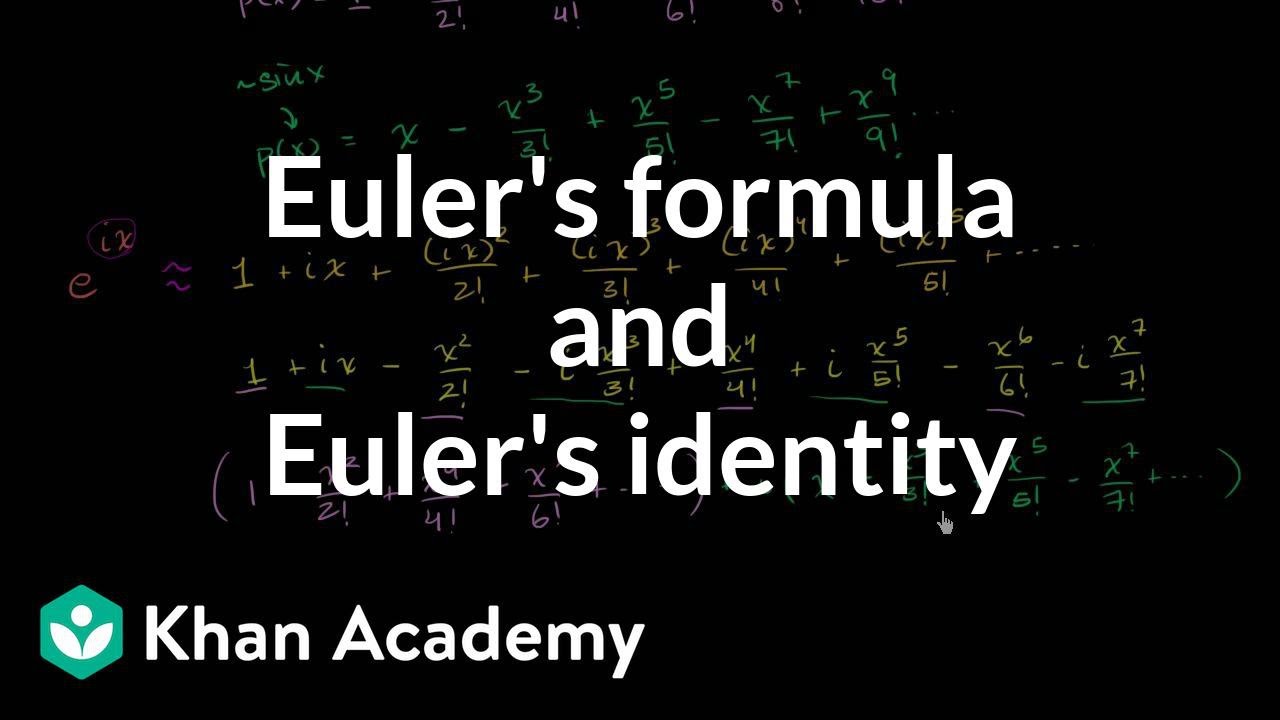

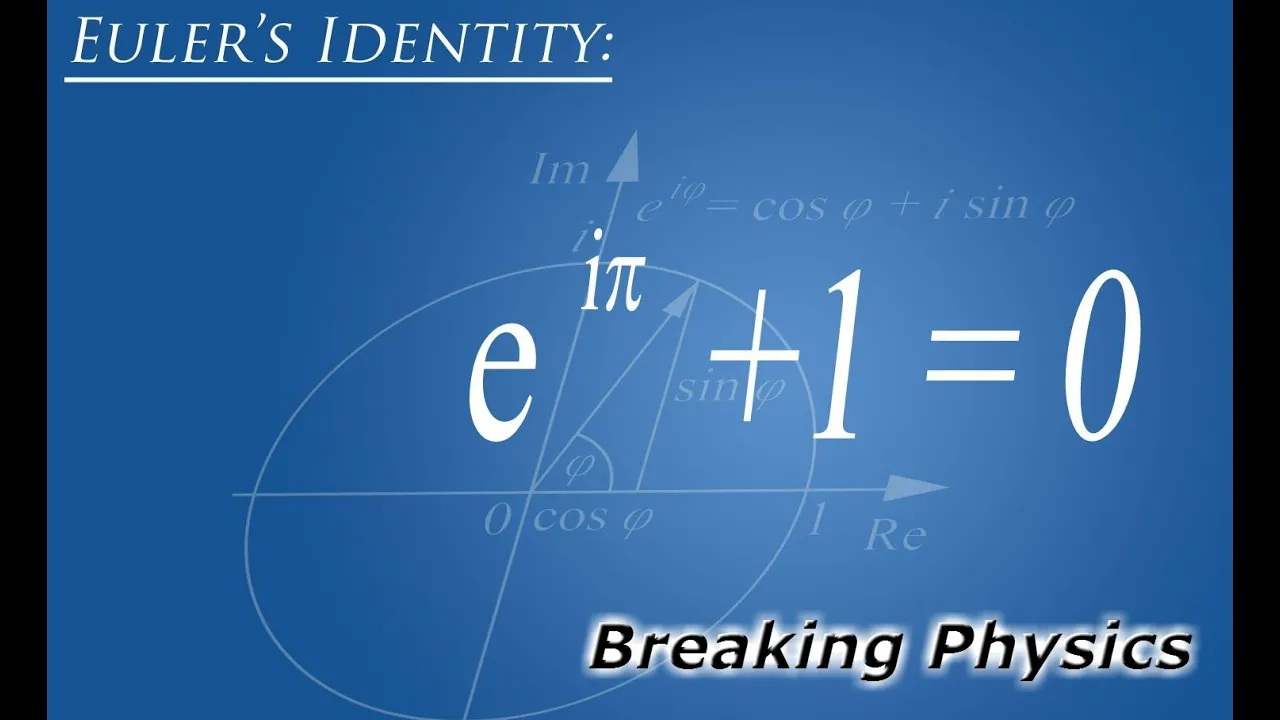


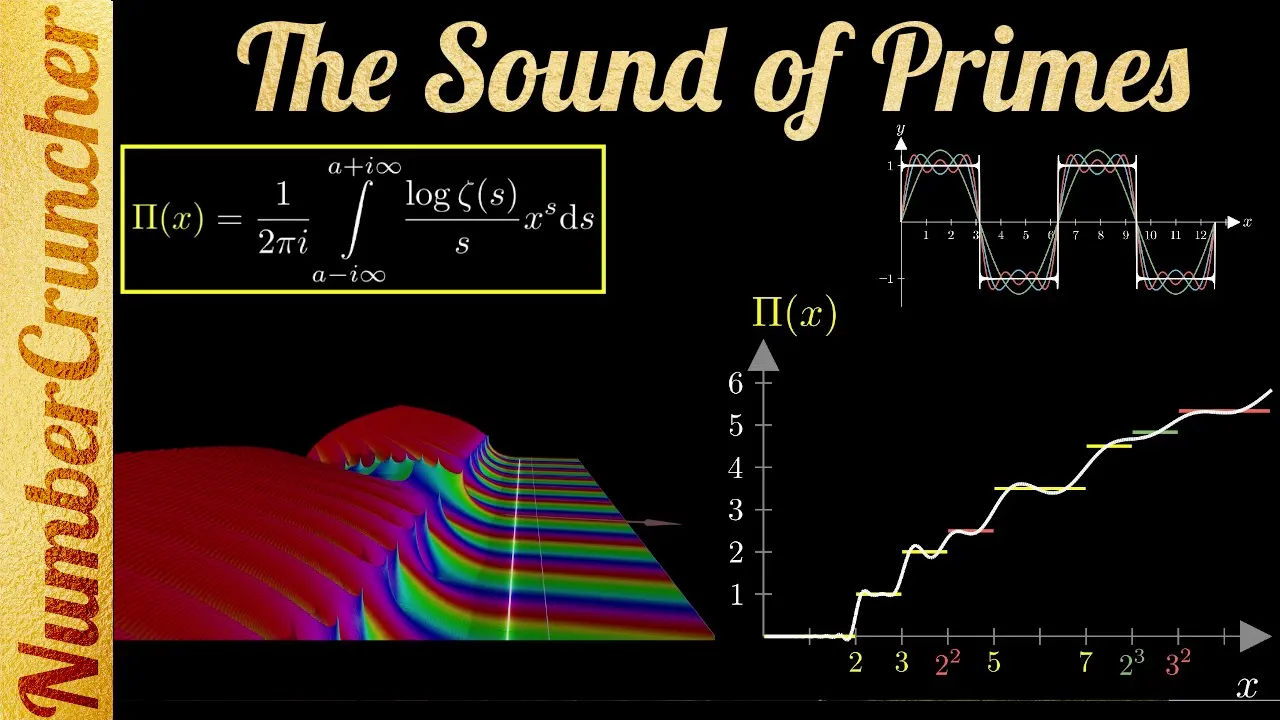






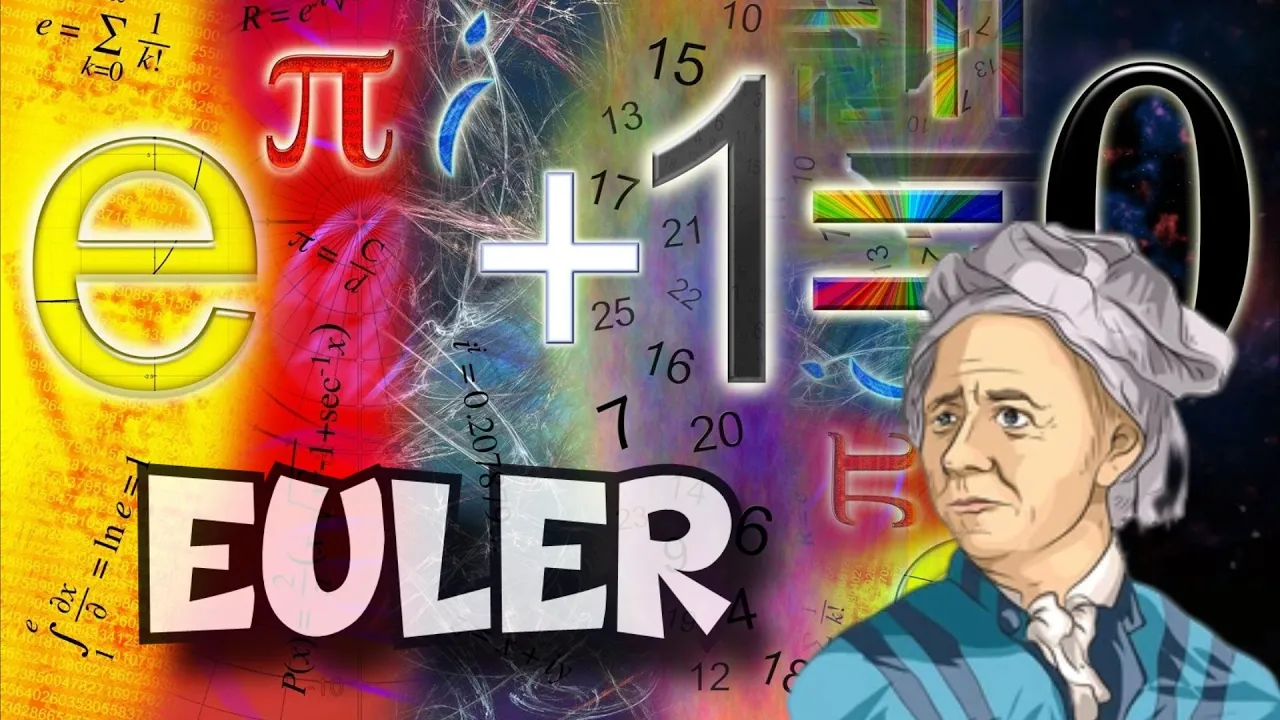


This video showcases multiple mathematical contributions attributed to Leonhard Euler, including Euler's formula e^(ix) = cos(x) + i sin(x), proven using differential equations and the Picard-Lindelöf theorem; Euler's proof that e is irrational using its series expansion; Euler's solution to the Basel problem showing Σ(1/n²) = π²/6; the Euler-Lagrange equation in calculus of variations; the Euler product formula for the Riemann zeta function; and Euler angles for 3D coordinate transformations. These diverse topics demonstrate Euler's profound influence across mathematics, from complex analysis to number theory to physics.
Mathvengers: Euler's Game Math Collaboration
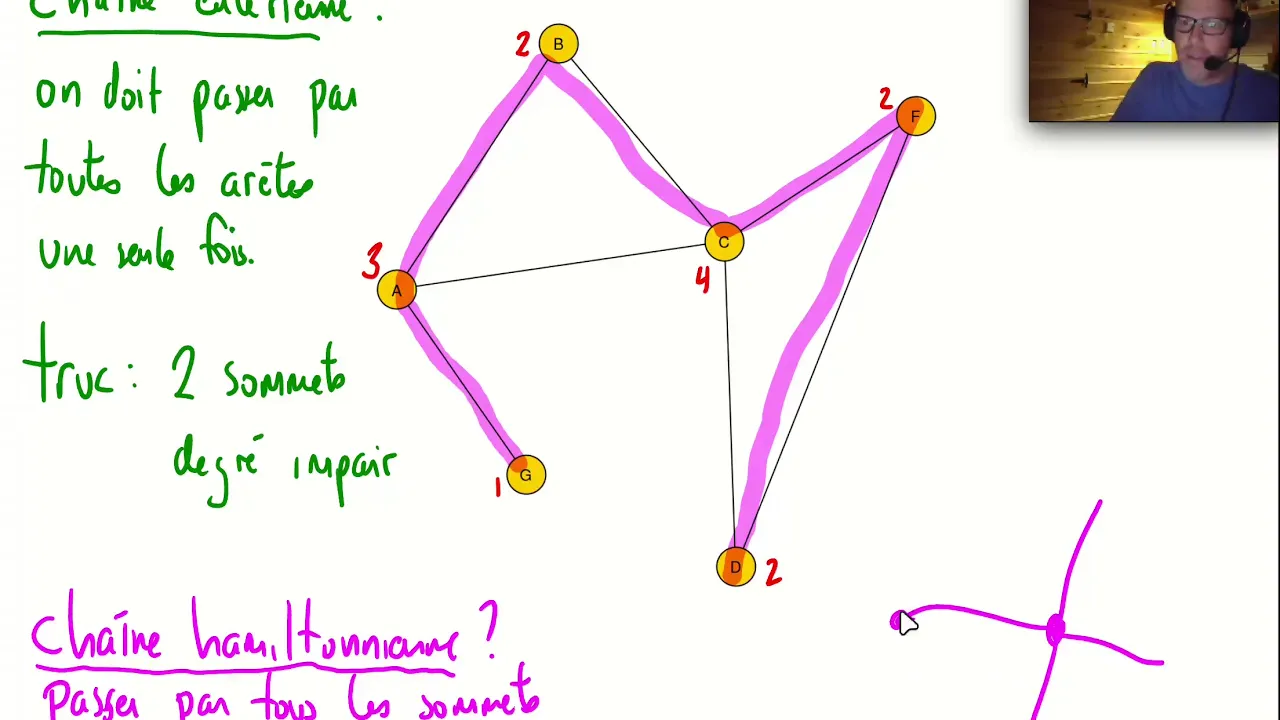
Added:Fundamental concepts of Graph Theory, specifically vertices, edges, and basic pathfinding.
An understanding of Infinite Series, convergence, and the limit concept.
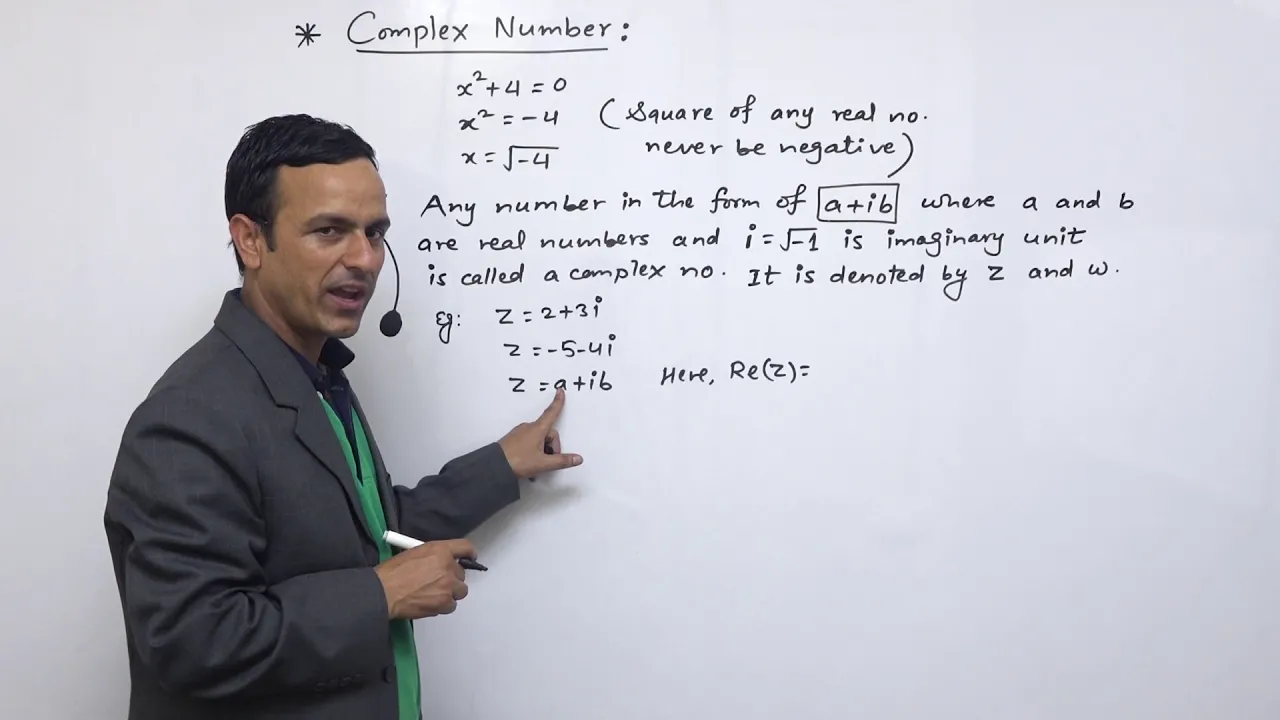
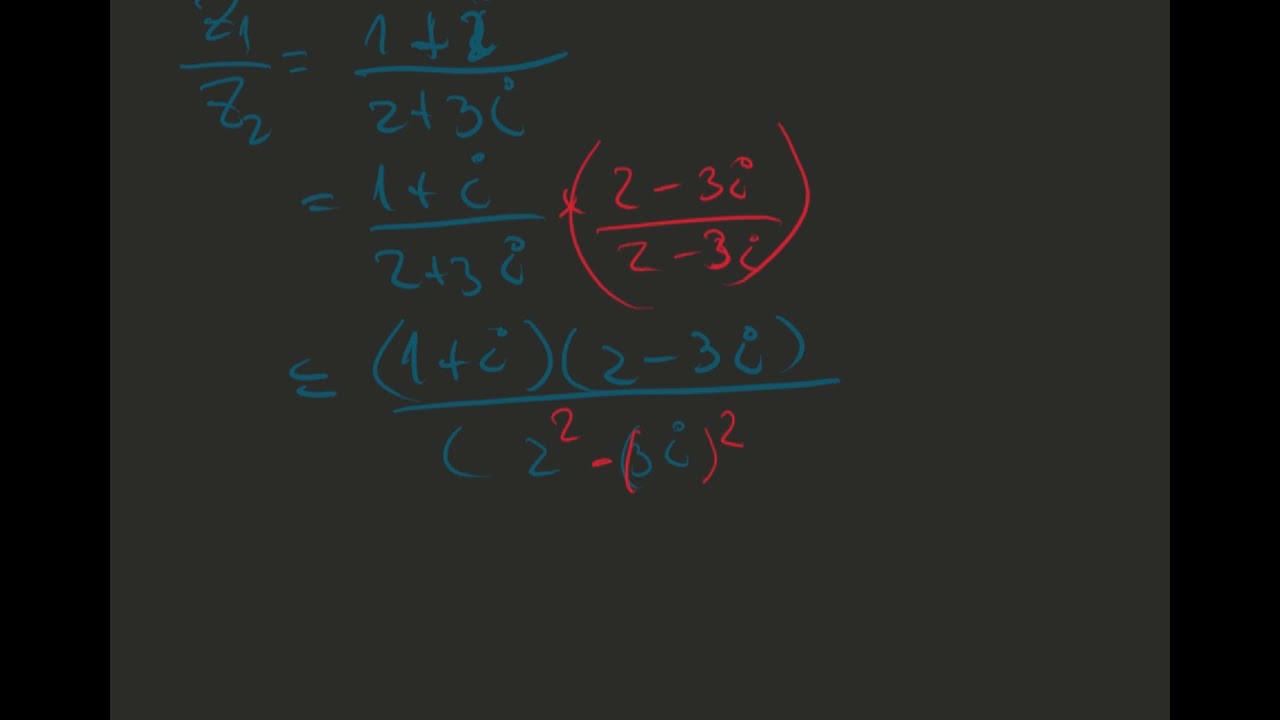
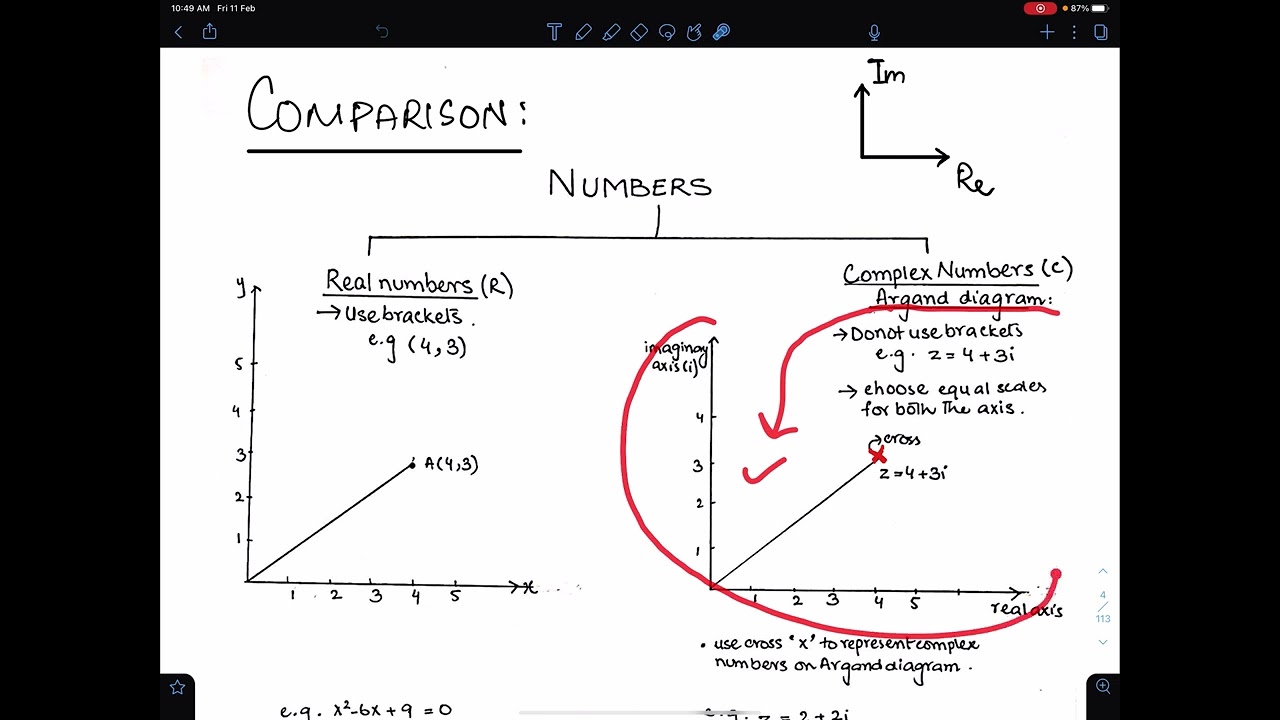
Basic complex numbers, including the imaginary unit (i) and representations on the complex plane.
Introductory calculus, particularly Taylor series expansions and basic integration.
Advanced Complex Analysis, exploring the deeper implications of Euler's formula and Euler's Identity.
Analytic Number Theory, specifically the Euler Product Formula and its connection to prime numbers.
The Riemann Zeta Function and its modern relation to the Riemann Hypothesis.
Network Science and Topology, building on Euler's foundational work in graph theory.
74.8K views4.1Klikes48:31Original Release: 2019-12-24
oh that's hot that's hot [Music] hello i am flammy stop you violated the law wheeler we are in the end game now mr euler i do not feel so good oh good morning fellow mathematicians welcome back to another video it's kind of the last time this year that we are going to calculate something on this channel and i want to thank you guys for all your support over this whole year this right here is vengeance euler game and you might have seen it in the introduction some people from last year are gone this is like symbolically meant with the thanos snap that some people from last year do not participate anymore from some people i don't know if they can still bring in their submissions etc but for the most part this thing right here settled and i'm so glad that so many people are participating matt parker did it this year thank you matt parker ah such an honor to have you here on this show and yeah we are going to dive right in this is my avengers euler game everyone has to say something about euler in some way so it really doesn't quite matter no real rules here and yeah what else should i say the first sport number one sport is going to take my good friend john because well he's doing such a great job on his channel and subscribe to him he's he's quite a small math channel but he's doing such a [ __ ] great job um also subscribe to all the other people who participate here met matt parker um probably andrew johnson whatsoever please do so and now i thank you guys for watching and i'm wishing you guys a nice show see ya hey check it out it's euler's equation let's prove it no not like that let's define the function f of x to be e to the ix now maybe i don't know much about this but i can say a couple of things first of all if i plug in zero that's just e to the zero so that's one and another thing i could say is that this should probably uh follow the chain rule so we'll say that f prime of x is i e to the i x okay cool well then we can view this as a sort of differential equation this satisfies the differential equation y prime equals i y and it satisfies the initial value y of zero equals one now by a little theorem called picard lindelof named after some some dead guys this theorem when its conditions are met just says that given a differential equation and an initial value of the solution there is a unique solution so if we can show that cosine x plus i sine x is also a solution to this differential equation and initial value we win okay well let's see let's let g of x be cosine of x plus i sine of x okay now first of all let's handle the initial condition g of zero cosine of 0 is 1 sine of 0 is 0 so we have the initial condition that's meant now let's take the derivative derivative of cosine is negative sine derivative of i sine x is i cosine x now this negative is a negative 1 so i can write that as i squared sine of x plus i cosine of x and we factor out an i and that is indeed the function we started with so that tells me that this function g of x also solves the same differential equation coupled with the initial value therefore by picard lindelof these functions are the same f of x equals g of x and so we can say that e to the ix equals cosine of x plus i sine of x so that's euler's equation proven through differential equations using the picard lindelof theorem now a lot of you may be thinking that picard lindelof is a pretty big result and it's kind of overkill to use it to prove euler's equation but you know i say overkill can be pretty fun sometimes [Music] so [Music] euler's number is irrational oil approved it so there is no debate [Music] euler's number is irrational and it's about 2.718 leon hot euler was the first one to prove it and use the simple continuity fraction expansion to do it but we will do it now in another way following a proof which was first introduced by fourier and the series 1 over n factorial will be our starting point as the definition of e where n starts at zero and goes to infinity and now let us see what happens if there would be an integer p and a natural q such that e equals p over q okay since we've had all natural numbers in our zero with just a few we must at some point find our q let's subtract everything up to this point and if you do not multiply by the factorial of q then right at the start you might already see q factorial over q must always be an integer since you can cancel out q and canceling out is what we are gonna do with the rest of these fractions because we can see the whole denominator will now always be content inside the numerator so we can say this cancels out and leaves an integer okay and we can now conclude for the left hand side it must always be an integer all right [Music] euler's number is irrational euler proved it so there is no debate [Music] euler's number is irrational and it's about 2.718 and if we now take a look at the right hand side we will again see factorials which we have to divide only this time the numerator factorial of q is contained in the denominator which leaves you with one over a product and there you can see this product just gets longer and longer and if we observe every single factor is bigger than q so every single factor must be at least two then we know if every time we only write two the denominators we have to get smaller so you know the whole fraction has to be bigger right now but for this series i'm just gonna show you how you can visually see what this has to be just take a half and a quarter and an eighth and see how it gets closer and closer to one so you know this series converges to one but didn't we show that our right hand side must be smaller which is tough because we stay greater than zero if we add positive stuff but there clearly is no integer between zero and one so this is the point at which we have one because this contradiction right here shows you why no matter which p and which q you would try it can never work and therefore we see e can be rational qed euler's number is irrational oil approved it so there is no [Music] debate euler's number is irrational and it's about two point seven one eight two eight one eight two eight four five nine zero four five two three five three six zero two eight seven four seven one approximately by now i'm sure you've learned that the sum of the reciprocal of positive integer squared is equal to pi squared over six there's quite a few different ways to prove this but here i'm going to focus on exactly how euler himself figured this out so let's get started the first thing that euler did was he wrote down the taylor series for sine of x then dividing both sides by x we obtain the taylor series for sine of x over x now here's the part where euler comes in euler used the fact that you can write any sufficiently nice function as a product of polynomials with the same roots as the original function so for sine of x we have roots at x equals 0 plus or minus pi 2 pi and so on now this fact actually has a name it's called the wire strauss factorization theorem you might be wondering why wire strauss himself didn't use this to solve the basal problem well that's because wire stress factorization theorem wouldn't be proven until about 100 years later because euler is euler so dividing both sides by x we obtain an infinite product for sine of x over x we can then expand this infinite product term by term collecting the various powers of x for reasons we'll see in a second we're just going to focus on the term in our expansion that's quadratic in x we can then set the coefficient on this term equal to the x squared coefficient in our series expansion which is one over three factorial or six multiplying both sides by pi squared and we i mean euler have solved the basic problem hey everyone in today's video i want to provide an introduction to calculus of variations and show how we derive the euler lagrange equation and hopefully give some visual intuition for it but we need to start with something that you might find a bit more familiar optimizing single variable functions from single variable calculus you may recall how we find the local maxima and minima of functions given some function f x a local minimum or maximum can occur at any point where the slope of its tangent line df dx is equal to zero this should make intuitive sense since we're just saying that a step in any direction will basically take you nowhere this is a very key idea at a local minimum or maximum any small change in your input to the function will return a value further away in the same direction from your previous output in calculus variations we're not concerned with finding fixed points of functions but rather fixed points of functionals the types of functions we had just looked at had a very specific set of properties they had a domain and range of the real numbers essentially you can kind of think of these functions like a machine you put a real number in and you get a real number out functionals are a little different though with functionals you input a function and get a real number out to help distinguish between functions and functionals we typically put their inputs around square brackets as opposed to parentheses there's a crucial change happening here and i hope you don't miss it since a functional takes a function as an input our value can depend on any function of x y and its derivatives more information is fundamentally encoded in it we're going to spend the remainder of this video looking at a specific form of functional j of y of x equals the integral of f of x y and y prime dx if we're given a curve y f just becomes a function in terms of x and when we integrate over it we're essentially summing all of its values over the curve y of x while this may seem a little pointless now it ends up being a very important idea now that you've gotten a sense for functionals let's take a look at the central problem of the calculus of variations for two points a x naught y naught and b x one y one there are an infinite number of curves that pass through them what we want to do is find the curve that is the stationary point of j of y fundamentally we're finding a curve between a and b that minimizes the integral of f over it we're going to solve this in a similar way to how we solve the one-dimensional problem we're going to consider what happens when we add a small change to our input but in this case any small change to our input would be a function let's say that y is an extremal of j of y we let y bar equal y plus epsilon times eta of x here epsilon times eta is the small change in the function to ensure that y bar still fits our boundary conditions we need to let eta of x naught equal eta of x one equals zero notice that j of y bar is now just a function of epsilon j of epsilon since epsilon equals zero is an extremal of j we know that j prime of epsilon at epsilon equals zero equals zero let's pay attention to simplifying dj d epsilon from leibnitz rule we can rewrite this as the integral of partial f partial epsilon from x naught to x1 dx using the multivariable chain rule partial f partial epsilon becomes partial f partial y bar times partial y bar partial epsilon plus partial f partial y bar prime times partial y bar prime partial epsilon referring back to our definition of y bar we can simplify this again as partial f partial y bar times eta plus partial f partial y bar prime times e to prime i now want to draw your attention to this term partial f partial y bar prime times eta prime we can use integration by parts to break up this integral even further we let u equal partial f partial y bar prime and dv equal e to prime dx then du equals d on dx of partial f partial y bar prime and v equals the integral of e to prime which is just eta by the rules of integration by parts we can then rewrite this integral as partial f partial y bar prime times eta from x naught to x one minus the integral of eta times d on dx of partial f partial y bar prime dx from x0 to x1 notice that the first term becomes zero since e to the x naught and e to the x one both equal zero if we plug this back into our original integral and factor out the eta in both terms we get the integral of partial f partial y bar minus d on dx partial f partial y bar prime times eta for our integral to be equal to zero generally we need this term to be equal to zero this leaves us with the euler lagrange equation it is arguably one of the most important equations ever and it completely revolutionized mathematics and physics next up is me the papa this head seriously sucks we are going to do something older now who would have thought that we are going to do something regarding oil and now it's called the so-called euler product and i would like to present you this beauty this major result in analytic number theory using the riemann setup function okay so riemann zeta function you know the drill ugly theta as always of s is nothing other than the summation reciprocal of all the naturals added together to the s power meaning it's one over one to the s power plus one over two to the s power plus one over three to the s power plus delta dot up until somewhere infinity okay and riemann theta converges for the real part of s being strictly greater than one okay this is for what it converges if you put one into here well you are just going to get infinity or you have to analytically continue this [ __ ] boy now we would like to turn this into an infinite product and it's going to be something really surprising i haven't done a video on that up until now we are going to go with the intuitive route just because the abstract stuff is kind of hard to understand there was a lot of um estimations etc we're going to go the intuitive way here so i would like to multiply riemann's theta function by 1 over 2 to the s power please note that 2 is the first prime number okay has something to do with prime numbers okay analytic number theory distribution of bribes yeah okay so 1 over 2 to the s power riemann theta of s it does nothing other than so if you have 1 over b to the s power times 1 over a to the s power this is 1 over a times b to the s power meaning we can just distribute the 2 into everything so we get 4 to the s power 6 to the s power et cetera so 1 over 2 to the s power plus 1 over 4 to the s power plus 1 over 6 to the s power plus 1 over a to the s power plus that up until infinity you might see something those down here are all the even numbers okay it does make sense if you multiply some number by two it's going to give you the even numbers and since we have all naturals here it's going to give you all the natural numbers the even natural numbers in this case now we are going to subtract this thing from this thing so theta of s minus 1 over 2 to the s power set of the set of s is a common factor leaving us with 1 minus 1 over 2 to the s power theta of s sperm of s it does okay 1 over 1 to the s power is going to be preserved then we are going to get rid of this thing 1 over 3 to the s power is going to be preserved plus okay 1 over 4 to the s power is going to cancel out but then we have 1 over 5 to the s power plus 1 over 7 to the s power plus started up up until infinity all the even things are going to cancel out you might recognize this as something we are going to continue this process we are going to multiply this thing by one over three to the s power the second prime number so one over three to the s power times one minus one over two to the s power times theta of s it does nothing either all of those multiplied with one over three to the s power one over the sum gives us three to the s power plus one over nine to the s power plus one over fifteen to the s power plus data up and infinity and now you might already see where we are going to go now we are going to subtract this from this we are going to have this part so the first prime number captured as a common factor meaning we can factor it out on both of those leaving us with 1 minus 1 over 3 to the s power times 1 minus 1 over 2 to the s power theta of s it's going to give us okay this is going to cancel out we're going to get 1 over 1 to the s power this and the 9 that we are going to get are going to cancel out so 1 over 5 to the s power plus 1 over 7 to the s power then we are going to have 1 over 11 to the s power and so on a lot of stuff is going to cancel out this has a certain name this what we are doing here is basically nothing other than the prime number c we are going to leave out all the prime numbers one after another and do you see one thing one over one to the s power is nothing other than one what happens if we are going to see forward infinitely many all the prime numbers that there are well at the end if we repeat this process infinitely many times we are just going to end up with one we are going to sieve out all the prime numbers one after another so so we are going to get rid of all the composite numbers just leaving us with the prime numbers one over five to the s power as the next one multiply it by this sub subtract it by this thing then and yeah you are going to get rid of all the factors that have five in it we are going to continue this process infinitely many times like i said this can be made serious this process okay this this is nothing um yeah kind of hand wavy it's an intuitive thing the only thing you need to take care of is the conversion stuff so we are going to have infinitely many factors right here then somewhere in the middle we have one over p to the s power this is just some prime number okay up until one minus one over two to the s power times theta of s if thus one over one to the s powers just one now here comes the fun part this thing right here is simply an infinite product over all the prime numbers so this thing right here is going to be an infinity grill okay where p is prime so our running index goes over all the prime numbers two three five seven eleven blah blah blah times okay uh we have one minus one over p to the s power that's our running index that's why i wrote everything out theta of s being equal to one and now under the condition that everything converges drag the limit to the outside blah blah blah divide both sides by this part and then yeah you can collect all the terms yet again meaning sata of s it does nothing other than the product of the reciprocal of all of those p is prime and we have one minus p to the negative s power to negative one power and this is the euler product of the riemann theta function one kuving the riemann zeta function is the directly l series with a unique differently character modulo one what this is going to mean we are going to see at the end of the video i'm going to do one more we are going to calculate an amazing infinite double product basically to calculate our boy pie okay even though we can't have blue free brew and brown and here just this time we still can do something with a pi creature one thing i want you guys to notice is that we can in a certain region r express each and every converging directly l series so with the character here okay it's going to look like this just like the riemann zeta function g of k over k to the s power s an euler product okay this is the point right here where it runs over all the primes i'm not going to make a proof on that it's quite complicated okay so one minus here of p over p to the s power to negative one power you can express each and every directly in a series like this we're going to need this at the end i hope you did enjoy my submission and now for the next one what's going on smart people my experimental nuclear physics professor always liked to say that infinities only exist in the minds of theorists and you don't actually measure them so it's problematic that in quantum field theory you get divergent integrals and infinities from the simplest of processes thankfully there is a way of systematically removing these infinities through the process of regularization and renormalization so for my part i'm going to show you a training wheels version of this that just highlights the thought process behind renormalization then i'll show you it in the context of actual field theory and finally we will betray euler here we have the first integral that we've ever learned how to evaluate in first semester calculus where it's just power rule the integral of x to the n with respect to x one over n plus one x to the n plus one and we can't forget our constant c and we can use power rule so long as n doesn't equal minus one that gives us one over zero if n equals minus one we just remember that it's the natural logarithm for some reason uh what i'm going to be suggesting is that you actually still can use power rule for n equals minus one you just have to contradict yourself a little bit and be careful and choose c such that it also diverges to to counteract this one over zero that you get for the one over n plus one so what i mean with this is if we choose c equal to minus one over n plus one and we eventually let n go back to minus one then if we substitute this into the integral we have i sub n equal to this common factor pulled out x to the n plus 1 minus 1.
now what kind of witchcraft did i just do well let's see what happens with this what you're seeing now is a plot of the actual natural logarithm in blue and then we're also plotting this function out for different values of n and as we can see as we let n get closer and closer to minus one this integral actually converges to the natural logarithm so when introducing this diverging what's called a counter term we've removed the divergence in the actual integral and recovered the finite the well-behaved function the natural logarithm so this is the same thought process that goes on in renormalization sure we're dealing with more complicated infinite series and integrals than this but it's exactly the same concept where we want to systematically remove the infinity so that we can get a finite result at the end now in quantum field theory which is often done in d dimensions typical integrals that you do produce gamma functions and gamma functions have poles which are characterized by this two over epsilon which is in terms of the dimensionality of the problem when d equals four this blows up and then we have an additional term the oily macaroni constant and other terms as well and just as in the previous example we learned that we can subtract the infinities and end up with a finite result there's a renormalization scheme known as minimal subtraction where you just subtract the divergent term we get rid of this 2 over epsilon but what happens to the oily macaroni constant well as it turns out it's kind of useless though it shows up in these integrals all the time when it comes to calculating actual observables in physics it always cancels so there's what's known as the modified minimal subtraction scheme or ms bar where we also get rid of the oily macaroni constant before pi and add an additional mass term to make this dimensionless so in quantum field theory you're dealing with people who subtract infinities on the regular dimensional regularization and the oily macaroni constant just becomes collateral damage but we still love e hello it's me matt parker from stand up maths and number file for this year's math vengers euler's game i'm going to calculate euler's constant and i'm going to use the identity that it equals the sum of the reciprocals of the factorial so if i just add all of these terms together or at least enough of them until i get bored i'll get e i'm going to do them by hand which isn't so bad because i just work out the first one now divide that by one to get the next one divide that one by two divide that one by three and so on today i'm actually in working at the royal institution here in london this year the christmas lectures are on mathematics so whenever i get a break from working i'll calculate a few more terms of my identity of e [Music] [Music] foreign [Music] [Music] so [Music] is [Music] so there you are i got e to be 2.718 stuff and the correct value of e is 2.718 stuff that's pretty good so in a pinch if you need euler's number you can just use the first seven terms of the sum of the reciprocals of the factorials if anyone would like this piece of paper i'll put it on ebay and all the money will go to charity so there you are that is math find your matt parker out hi everyone tibi's here i'm hoping that someone else has already covered e euler's number and if we display e to the x in cartesian coordinates we get this graph but if we put it in a polar coordinate system we get a logarithmic spiral the logarithmic spiral can be constructed from equally spaced rays by starting at a point along one ray and drawing a right angle to a neighbouring ray as the number of rays approaches infinity the shape approaches the smooth spiral the equation of the logarithmic spiral is r equals a e to the b theta where r is the distance from the origin theta is the angle from the x-axis and a and b are constants the logarithmic spiral was first studied by descartes and jacob bernoulli it is a pattern that appears in many places in the natural world jacob bernoulli was so fascinated by the spiral that he wanted one engraved on his tombstone but by error an archimedean spiral was placed there instead so let's tie this back to euler another member of the bernoulli family johann bernoulli jacob's brother was an important influence on young leonard euler giving him weekly math lessons in his youth and recognizing his talent so merry christmas and happy new year and get prepared for at least one person you know to send you this picture right here most unsolved problems in math i can't understand however this one pretty much anyone can understand and it's got the name oiler in it so it's cool now what we have here is a break a rectangular prism and i've labeled all the side lengths a b and c i've also labeled all the diagonals x y and z or the diagonals of the faces now what makes this brick an euler brick is if all of these values are integers however finding integers that makes this work is not easy for example if we were to try like three four and five for the side lengths well that's fine here three and four have a diagonal of five that works that's an integer but three and five yield a non-integer diagonal so that doesn't work now this is not the unsolved part though so the next question would be what's an example of an oiler brick what's the smallest oiler brick that exists give that some thought but not really because it's going to take you a while just finding these first few integers is not easy but i memorized them for this video here we have it the first euler brick so the side lengths a b and c are 44 117 and 240 respectively and then if you do the pythagorean theorem with each of those pairs you get these numbers like 44 and 117 give you 125. do it with 44 and 240 you get 244 and then these two give you 267.
so we can keep going from there but again this is the first oil to break now the equations that represent this are called diophantine equations which are just polynomial equations that only have integer solutions and in this case those look like this so we have three pythagorean theorems and any integer solutions to these equations yield an euler brick now the unsolved part of this comes in when we add a fourth diagonal one that goes from the bottom left corner to the top right i'll draw that in and i'm just going to call that d if you can find an a b and c such that everything here is an integer you have found a perfect euler brick however the question of does a perfect oiler brick exist is still unsolved that's the part we don't know it's actually a perfect oil or brick is unsolved when we add in that fourth equation which would be a squared plus b squared plus c squared equals d squared the diagonal then we don't know if there are integer solutions that satisfy these four equations however through the use of computers and just number theory we have found out a lot about the properties of these numbers if an euler brick does exist for example just from the wikipedia page we know if a perfect euler brick exists the smallest edge must be greater than 5 times 10 to the 11th we know one edge two face diagonals and the long diagonal would be odd we have a bunch of divisibility rules and so on that's about it though solving just those three diophantine equations is not meant for a quick video like this so it wasn't much i even could go into depth on but i love unsolved problems and this was an easy one to talk about hey math crazies let's talk about euler angles what are euler angles here we go again who's euler anyway a mathematician that lived during the 1700s but aren't you a physicist yes but there's lots of math is useful in physics none of this matters where was i again right euler angles say we wanted to transform from one set of three-dimensional cartesian coordinates to another the most useful transformation would involve a consistent set of rules that's where euler angles come in they represent three separate rotations first we rotate around the z-axis which gives us a new x-axis and a new y-axis this new x-axis is sometimes called the line of nodes for some reason second we rotate around that new x-axis which changes the y-axis and z-axis third we rotate around the new z-axis which changes the x and y-axes again this gives us the orientation of the second set of coordinates i i know that's not as clean as say one rotation but it is consistent and that's what we wanted it makes writing out the rotation matrices really easy one z-axis rotation one x-axis rotation then another z-axis rotation as long as you do them in the correct order you're good where do we actually use these oh all over the place you can attach a coordinate system to anything like maybe elliptical orbits for example in our own solar system planets asteroids and comets orbit the sun approximately but it's not like all those orbits line up they all have different orientations in three-dimensional space even the eight planets which orbit roughly in the same plane aren't perfectly in the same plane you might have heard of orbital inclination but there are actually three parameters that determine an orbit's orientation in 3d space inclination the longitude of the ascending node and the argument of the periapsis which happened to just be the euler angles surprise i'm sure you remember from earlier that euler angles represent a transformation which means there should be two sets of coordinates the second set is attached to the orbit but we'll need a consistent reference to start from and we're human so of course that references us the initial xy plane is the earth's orbital plane the initial x-axis is directed towards something called the first point of aries which was in the constellation aries thousands of years ago but has since drifted into pisces the x-axis is just the line where the equatorial plane intersects the orbital plane that's it all right let's say you wanted to know the orientation of pluto's orbit starting from our reference coordinates you'd rotate first around the z axis by an angle we call the longitude of the ascending node you'd think they'd come up with less complicated names for these things next we rotate around the new x-axis by an angle we call the inclination and finally we rotate around the new z-axis by the argument of the periapsis the periapsis being the point of closest approach to the sun periapsis just means close arch so there you have it the orbit of pluto perfectly oriented relative to earth all thanks to euler angles one z-axis rotation one x-axis rotation then another z-axis rotation piece of cake as long as you do them in the correct order you're good and remember it's okay to be a little crazy leonard oiler was one of the great polymaths of his time and we could spend hours talking about how he contributed to math and science and even music without barely scratching the surface including how he starts using the symbol pi to represent the ratio of a so-called circumference to its diameter while less known to the public than folks like einstein or newton one of his greatest accomplishments was actually correcting newton and his theory of light and his work championed the wave theory of light helped lead us to a more modern understanding and set the stage for einstein's theory of relativity and arguably quantum mechanics itself i'd encouraged to learn more about him and his work euler was one of the greatest minds of the 18th century and a fascinating fellow besides we are already at the end like i said in the beginning i'm the substitute for free blue and brown even though we can't have the pi creature here i can still involve pi in the surfing okay has something to do with euler products that again d clay l series order product and we're going to dive right in i want you guys to remember that i have proven in an improvised session okay this has been improvised that pi over four is exactly the series right here it's called the lightning series or something like this now we would like to turn this thing into a directly l series or just simply a difficulty series in general one thing you should notice is that our running index goes from one here on a directly series but here we have zero so we have to find ourselves a directly character he of n such that such a series is justified okay now what could this character possibly be it has to be alternating it needs to represent negative one to the nth power i want you guys to notice something now our dirichlet character consists of three parts all we do is cover the odd integers down here or positive integers meaning our directly character is exactly zero on each and every even n because we do not have one over two for example one over four we only have one over one one over three etcetera so every time our direct lace series goes to 2 for example it's going to be zero because we do not have those parts in here now the other two cases are that we have one and negative one now when should our delegate character be equal to one well this is always when we have even yeah even um exponents basically okay now even exponents we have one okay starting here on each and every n which is congruent to one modulo four i want you guys notice that our one negative one and zero is cyclic in four okay it takes on three cycles and then we are at four yet again and this makes it modulo four now on the even end won't matter so two modulo four doesn't matter four modulo four also doesn't matter meaning the only part that's left is n being congruent to three modulo four okay that's kind of um complicated just try thinking through it and then write out this thing right here and you are going to see that it's indeed equal to this right here okay it's it's just what it is okay it's kind of easy actually it's not too hard also i want you guys to notice our s is exactly one right here meaning we can rewrite our pi over four as being nothing other than this directly series where k or n whatsoever starts from one of our directly character of n over n okay this is just pi over four rewritten using this directly character i'm i'm doing this quite slow because it's yeah kind of hard for beginners to see where this does come from now we would like to make use of this property we are going to turn it under the condition that everything converges in a certain region it does okay it converges absolutely and uniformly this thing right here we can turn it into this euler product meaning pi over 4 is nothing other than our euler product where p is prime of 1 minus here of p over p to the s power but s is one to negative one power and now we can distinct between three states every time we have an even prime number it's going to be zero there's only one even prime number two so three doesn't quite matter this right here is going to vanish on this one it's just going to be one product times one okay it's going to vanish so we got rid of this then we have the state where all prime numbers one so prime numbers congruent one modulo four are indeed one and then we have all prime numbers congruent three modulo four are equal to negative one we're going to split this up into two products so pi over four is thus nothing other than on the one hand we have all primes congruent one modulo four and our directly character becomes one on this one so one minus one over p one over pp to negative one to power and then times the product we are going to split this product up into the next one where p is congruent three modulo four and this exactly makes our delay character go to negative one negative one negative one becomes positive one so one plus one over p to the negative one power and now we are going to write it a little bit differently so we have one minus one over p okay this right here is a super particular sum or i don't know what is called something like this then p over p so we have p minus one over p to negative one power meaning taking the reciprocal of this thing gives us p over p minus one and kind of analogously here we are going to be left with p over p plus 1.
and now we can write out the first few terms such that you can see what our product kind of looks like okay let us write out the first few prime numbers the first few prime numbers are okay two doesn't matter okay in our constellation so we have three we have five we have seven we have eleven we have thirteen and so on meaning three is three modulo four okay meaning we are going to get three over four then five is one modulo four so five over four times five over four seven is one uh no it's it's three modulo four meaning it's going to give us seven over eight next one eleven is three modulo four it's going to give us eleven over twelve and 13 is one modulo 4 is going to give us 13 over 12 and so on and now you can get yourself pi by itself if you multiply both sides by 4 meaning pi it's nothing other than this four and this was going to cancel out three times okay three hey this this is cool so this thing right here this tail is a bit more than one basically then five over four so that's the times seven over eight eleven over twelve thirteen over twelve and so on until infinity and this concludes me vengeance euler's game what else is there to say there's nothing more to say basically i hope you did enjoy this video if you did please like and subscribe to everyone here once again i would like to thank each and every one of you for bringing growth to this channel for just making my youtube experience also your youtube experience for just staying with me over the course of this whole year we we we gained a lot of new family members and i'm so glad i was working together with so many great people this year and and it's just such a blessing to be here on this platform it's so much fun interacting with you guys and i hope you are still going to support this channel right here also in 2020 if you want to support this channel you know how you can do so and up until the next video i'm wishing you guys merry christmas happy new year and also a flammable day ciao hi there just a quick flammable merry christmas and happy new year from down under wishing you many amazing maths adventures in 2020 merry christmas and a happy new year
Up Next

10:52
Riemann Zeta Function: Convergence (Part 1) | Complex Analysis Tutorial
@MrYouMath
87.9K views•2012-03-08

4:43
Elliptic Curve Cryptography Explained: ECC, ECDSA, ECDH
@PracticalNetworking
28.5K views•2024-10-21
23:02
Riemann-Stieltjes Integral: Integrating x with respect to x²
@PapaFlammy69
89.7K views•2024-07-20

6:00
The Mathematical Impossibility of Accurate World Maps
@Vox
23.3M views•2016-12-02
Related Study Plans & Knowledge Roadmaps
Structured learning paths in Mathematics
mathematics
Tensor Calculus: Vectors to Riemann Curvature
01Mathematical Foundations: Linear Algebra & Calculus
02Covectors, Dual Spaces, and Tensor Basics
03The Metric Tensor and Index Gymnastics
+ 2 more learning modules
40h5 modules
Explore Roadmap
mathematics
Gödel's Incompleteness: Logic, Proofs & Limits
01Introduction to Formal Systems & Hilbert's Dream
02Set Theory, Cardinality, and Cantor's Diagonal Argument
03Arithmetization and Gödel Numbering
+ 2 more learning modules
14h5 modules
Explore Roadmap
mathematics
Galois Theory: Fields, Groups & Solvability
01Foundations of Abstract Algebra: Groups & Fields
02Polynomials & Field Extensions
03Splitting Fields & Symmetries
+ 2 more learning modules
24h5 modules
Explore Roadmap
mathematics
Non-Euclidean Geometry: Models & Geodesics
01Euclid's Fifth Postulate and the Birth of New Geometries
02Hyperbolic Space and the Poincaré Disk Model
03Geodesics: Defining Straight Lines in Curved Spaces
+ 2 more learning modules
15h5 modules
Explore Roadmap