









![PHILOSOPHY - Mind: Personal Identity (The Narrative Self) [HD]](https://i.ytimg.com/vi_webp/lcIqoN9oRgo/maxresdefault.webp)
















The self is fundamentally narrative in structure, meaning that being a self involves having a story-like organization that extends through time, rather than being a static entity; this narrative approach accommodates the complexity of human identity including change, conflict, and incoherence over time, while still maintaining a sense of unity through biological and social constraints that interact to form our sense of self.
Philosophy of the Self & Personal Identity | Marya Schechtman
Added:John Locke's memory-based theory of personal identity and the psychological continuity view.
The metaphysical distinction between numerical identity (being the exact same entity over time) and qualitative identity (sharing identical properties).
Derek Parfit's reductionist view of personal identity (Relation R) and his challenge to the unified self.
Standard philosophical thought experiments regarding identity, such as the Ship of Theseus and brain transplant scenarios.
Galen Strawson's critique of the narrative self, specifically his defense of the 'episodic' way of experiencing life.
The application of narrative identity theories to bioethics, particularly in understanding agency and identity in patients with dementia or severe memory loss.
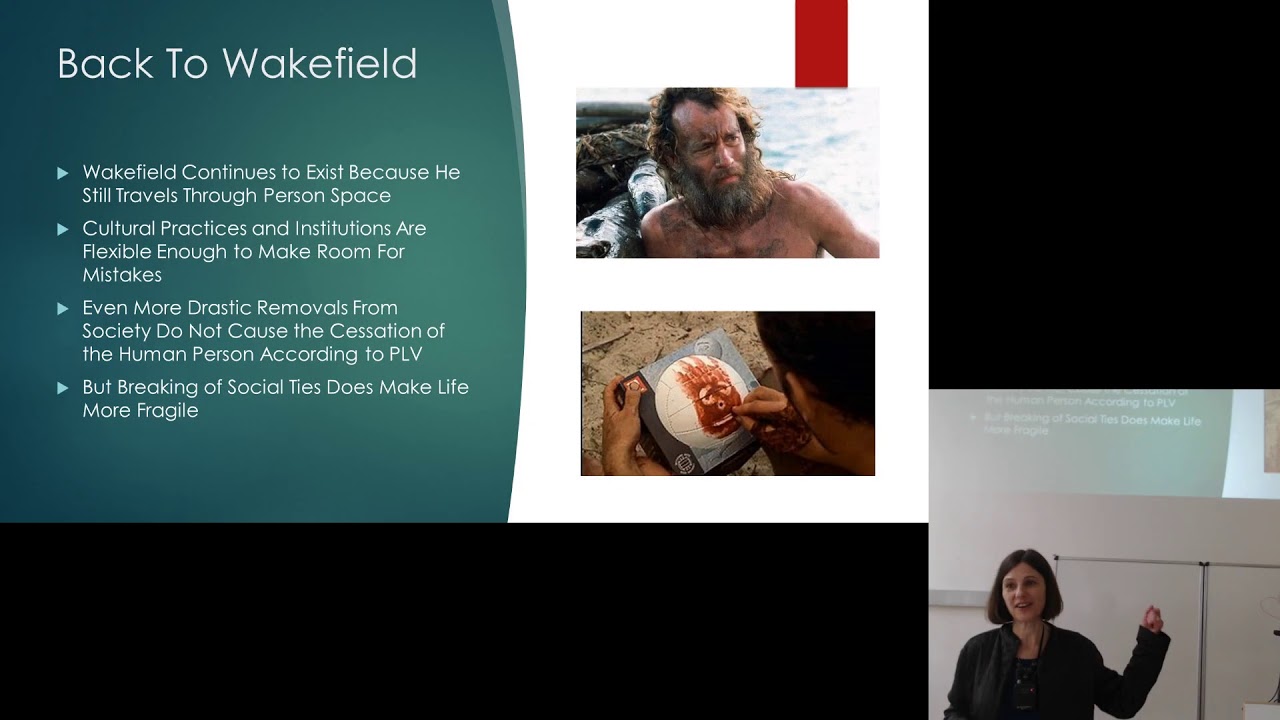
Marya Schechtman's later 'Person Life View' from her work 'Staying Alive', which integrates biological, social, and narrative elements.
The relationship between narrative selfhood, moral responsibility, and how we attribute praise or blame over a person's lifespan.
1.4K views63likes1:10:51Original Release: 2023-02-09
hello everybody Welcome to a new episode of Duty Center I'm your host as always Ricardo lops and today I'm Jen by Dr Maria schechtman she is an Les distinguished professor of philosophy as well as a member of the laboratory of Integrative neuroscience at University of Illinois Chicago her main areas of interstar personal identity practical reasoning and bioethics she is the author of books like the constitution of selves and staying alive so Dr shackman welcome to the show it's a pleasure to everyone thank you so much for having me so let's start perhaps with the most basic even though it's probably complicated question here what is the self that is an excellent question and I do not have an answer but I have thought about it quite a lot so um you know studying the self is really difficult among other reasons because that word means so many different things and gets used in so many different ways because self is so fundamental we have a lot of everyday meanings of self philosophers study the self sociologists study the self psychologist study the self-economist study the cell right and so on um so I think somebody recently there are people who count the number of uses of self right and there's usually an adjective the economic self the moral self the social self right people talk about their past selves and their future selves so I think the last count there were over 50 uses of self or kinds of Self in current academic use um and so it's really difficult and and it's really paradoxical because in everyday thought right yourself is something it's what you are right so you can't get away from yourself we have these things like wherever you go there you are and and yet you can lose yourself and you can find yourself and you can somehow not be yourself um so finding some tidy definition of what it is um is basically impossible I think and so what is interesting I found is to um first of all think about are there some really basic things that we think about the self that maybe pervade all of these other ideas of self or um inform them right I don't think we're gonna find like three things that are common to all elements of self or all conceptions of self but you know sort of where are we starting from intuitively when we think about the self and there I just think um that the idea of the self as something sort of private and mental and um you know my inner there's something inner about the self um now whether it can be completely inner or whether it's something that needs to be expressed socially or can only exist in Social circumstances that's another question um whether it's something that's transparent to you so for some people like myself is my Consciousness it's my you know the self is a subject of experience and whatever experience that's you know myself for others right in psychoanalysis many parts of the self may be hidden so exactly what it means for it to be inner or subjective but it has something to do with the subjective um nature of who I am and sometimes that's about experience like I said sometimes it's about my most fundamental traits who I am most truly uh and then I will just conclude by saying and of course there are and have been for Millennia people who say there is no such thing as the self that it's an illusion um and often a pernicious one so I think there's there's a lot of room to work here and just thinking about what are some of the different important ideas of the self and and how do they interact because I think these different facets of the self support one another in important ways what is the self the same as personal identity and if not what's the relationship there yeah so again depends who you ask um and you know that I guess the the real question would be is the self the same as the person and is the identity of the self the same as the identity of the person right um because that can get complicated too sorting that all out so John Locke who really sort of sets the tone for a lot of philosophical discussion of self but but particularly of personal identity um that continues to this day he sees self and person as the same entity so he says you know look if you want to know what personal identity is you have to know what a person is he says a person is a thinking intelligent being that can consider itself as the same self over time so it's a a thinking reflective being that's aware of itself that knows itself to Contin or knows or experiences itself to continue over time and then he says a little bit later and wherever a forlock man finds what he calls himself there I think another may say is the same person so at least the way I read Locke um what he says is basically that self and same thing just one is from the first person point of view and one is seen from the outside so myself is what I take myself to be what I experience myself as and others can know I have a self by seeing the way uh that I act and by interacting with me then they know I'm a person in some sense to be a person is to be a self in this way and for him that's very connected um to moral responsibility and interactions with other people the self is a kind of being that can be a moral agent that can be responsible for what it does that's why it's important in some sense it's important that I be able to know when I'm the same self so I can do things like keep promises or be loyal to friends and it's important for other people to know when I'm the same person and it's also important that we all be on the same page about about that so for those people personal identity in the self are the same for other people they can come apart and a self is something more fundamental than a person a self is something basic so some philosophers say look being a self is just being an experiencing subject we're experiencing just being able to have experience being the kind of thing and not any deeper Rich kind of experience just experience pain pleasure hot cold um we ourselves animals that have experienced ourselves people with dementia ourselves infants ourselves and to be a person is something more complicated than that to be a person requires all this other cognitive ability that allows you to reflect the things that lock talked about to reflect and reason and engage with others as a moral agent so right for the the lock people being a self is having all that the cognitive bells and whistles and and having those abilities to engage with others to other people there's a distinction um and there's no consensus so um and the is the self a narrative because this is something that sometimes we hear from uh cognitive scientists but also philosophers of mind right yes um well so I hold the question is the self a narrative right that's a tough one because uh partly there's just this big divide over those who think that a self is sort of entity-like right you know myself is a thing that can go myself can survive the death of my body myself might go to a different body it's thing like um you might think it's something like an immaterial soul but you don't have to to think that you know to think that it's some kind of and others just think being a self is a property um that some other kind of thing might have like humans have the property of being selves or having themselves we sometimes say um and so the question I mean I think if if you have any idea of the the self as thing like I wouldn't describe that by saying the self is a narrative because then you have to say well what kind of thing is a narrative um does it have to be written down does it have to be spoken right but I would say the self is narrative and structure that to be a self is to be a creature that's narrative and structure in a way that you you would say to be a story is to have a narrative structure a story can be told a story can be lived a story can be written it can be on film um but what makes it a story is that narrative structure and I think that that's true of cells so the part that I really like from Locke is this idea that the self is something that has to be extended in time which is controversial and more to say about why I think that the self is narrative and structure but they're right there are a lot of complicated questions that arise if you want to defend that view um obviously so maybe um you can tell me what you'd like to hear more about with regard to it okay so you mentioned to things there that I think are interesting to explore a little bit more so is the self unitary yeah so um if you had gotten me I've just been working on a you know sort of introductory thing on the self and if you had gotten to me before I wrote it I would have said absolutely yes that's an important feature of the self that it be unitary right but now I think that's a more complicated question I mean partly it depends what what do you mean by unitary and so I mean it seems clear that for instance if you're thinking of the self so that maybe the first thing to do is make a distinction between people who are thinking of the self as sort of an experiencer a conscious subject of experience and people are thinking of the self in a more um moral social uh psychological sense where you know myself or my you know who I am right who am I I want to find myself that's not usually when people say that they don't mean I want to be able to find myself a subjective experience they want to know what do I really believe what do I really value what do I really want to do what are my deepest characteristics that are expressive of who I am so there's sort of this you might say true self and experiencing self dividing to begin with um and then each of these would have to be unified in a different way if we're talking about the self as being Unified so about the you know experiencing self he would say well does there have to be a sort of unified subjective experience am I right uh perspective on the world that's that's unified somehow which is a very intuitive and as it turns out very mysterious idea I need to try to articulate what that is uh and if you're asking about the self in terms of um characteristics and true self moral self kind of self then the question is do you have to have a sort of coherent set of values and commitments and characteristics to be yourself and if you think that self is narrative dramatic unity and you know that sort of thing uh and I think that in both cases there's some kind of unity that the self does have to have but it may be a looser more complicated form of unity than we tend to think so people who say that there is no self very often they're either just saying that there is no you know sort of immaterial subject there's no soul stuff there's nothing more than this uh but often they're also saying something about the nature of our experience which is that although we sort of think of it as a unified coherent perspective at any time in an ongoing unified unbroken flow it's actually not really like that at all so okay it's difficult to explain how your experience could not be like you think it is but there are things that can be said about it there are ways that you can get people to attend uh to their experience and see that it's not always completely unified and they're simple examples like when you're driving a well-known route home talking to a visitor and deeply engaged in conversation and you do all the things you have to do to drive and you're not unconscious of them in many you know in many cases it doesn't make real sense to say you're unconscious of the things you attend to you're not on autopilot you can correct and adjust and there's a lot of flexibility but you're not really attending to it and then if suddenly something comes up you can switch your attention so your attention at least is divided in ways that it's not clear that you have a completely unitary form of experience um and then there are various you know sort of pathological conditions in which there are splits that some of them very rare like multiple personality notes associative identity disorder or cases where you know the connections between the two hemispheres the cerebrum are um cut to treat epilepsy and in weird experimental conditions I mean I can talk more about those if those are of interest but they're also very common forms of um strangely disunified experience that are more like a dissonance between the emotional experience and the perceptual experience that people have in in things like deeper you know instances of depersonalization where people can perceive quite well but the there's an affect of flatness that makes it seem as if somehow they aren't really having the experience entirely so there are a lot of different ways in which you know the unity of of conscious experience can get troubled and then there's a lot of neurological evidence that people have liked to bring up suggesting that there's sort of no place in the brain where different aspects of experience get unified so right right now I feel like I'm having a single experience it's I'm hearing things I'm seeing things I'm feeling things I'm noting the temperature of the room I'm aware of my body all of these things seem to be bundled up in one experience so I've got one overall experience but connected to the forms of disunity people can you know phenomenologically or experientially you know have that I was talking about depersonalization split attention and all that uh correspondingly in complicated ways that as I'm sure you know are still being studied there's evidence from the brain that it's you know that there's information being processed all over and it can be pulled together in different ways as needed but it's not like there's some obvious place where all of this comes together to make a single conscious experience so all of this has you know complicated the notion of what it means to have Unified experience as itself but and then I will end this part and I can go to the other part unless you have questions about this but it's also true that I'm having Americans and you're and there's a real difference between my knowing the whole all the numbers of the you know Locker combination and five different people who are spread out each knowing one number I can open the lock in the one case and not the other so there's some sort of unity it's maybe not as tight as we just sort of presuppose it to be sort of unreflectively and I think determining what that is is really one of the most interesting questions of the self and especially over time because I think when people in the personal identity debate you know what locks final you know view is for the person or self to continue you need continuity of Consciousness over time and I think a lot of us have this idea we want our Consciousness to flow on it would to you know have this flow of Consciousness stop and somebody else have delusions of being me you know that were quite accurate as for me to really continue right there's a real difference between whether my Consciousness continues or not turns out it's pretty difficult to say what that means because we all know that Consciousness is gappy we go to sleep we forget things so what that means is really hard to say so um that's the unity of experiencing subject and and its complexity I don't know if you have anything you want to ask about that or if I should move to the other question uh yeah I was just going to say I I mean right now at the very end of what you're of what you were saying you mentioned one aspect that I was about to touch on that was when it comes to the unity or the supposed Unity of the self I would imagine that other things that are relevant here to this discussion is that even across our life I mean our memories are not perfect we forget lots of things and even in our very early years I don't think that anybody can remember anything from their first at least three years of life or something like that so and then also I guess that's another thing that you usually we usually attach to a sense of selfies having for example coherent values and preferences and I mean people even if they don't suffer from from any sort of mental condition or neurological Condition it's not that rare that we feel very conflicted and in different situations different contexts apparently manifest different values and preferences and all of that so is that also relevant to this discussion it's very relevant um so so I had said you know there's the self is experiencing subject and then I think people you could imagine that that could be Unified um without there being this coherence of value and so on um maybe without even memory but that's more controversial because right we can know that our values changed we can be sad that our values change so you might think well that doesn't require that kind of coherence but there's this other notion of self who I am right most fundamentally which is being a self is more than just having experience being a self is is something is having characteristics it's having essential traits it's having defining features and you know so that the personal identity literature in analytic philosophy would say well but that's a different question because right if my children go on and have the same values and orientation to life and so on that I had after I die that doesn't mean I lived that's a metaphorical sense of living on that's different whereas if I change my values I can still be alive I'm a person who's continuing to live and has changed my values so you might put it that way I actually think there's more connection of the sort that you described and I'll try to say why in a minute then on the other side um the kind of position that you described about you know having continuity and coherence of values and remembering things and you know relationships and projects long-term projects that you carry out to be a self is to you know do things in the world that is a very popular view Less in you know that the subject thing is in what would be called the metaphysics of self what kind of thing is the self what is necessary for it to persist the other thing is is more about um sort of value and ethics and you know very broadly understood okay let's just say that you exist right if you have a if you're a human being continuing to live how do you make a self out of a human being how does an animal become a human self and there is where we talk about values and commitments and traits people who talk about that tend to think that um you need a very strong form of coherence right and we do talk about people becoming someone else when they change in really fundamental ways so it could be you know one instance where we talk about it is people who have suffered a trauma and they change a great deal and so you know there's a lot of I looked through a lot of stories of people who talked about you know loved ones who came home from active combat and said you know my son husband brother or daughter sister didn't come back you know a different person came back that can also happen when people's lives change in good ways right she's just you know someone else and she got out of that bad relationship or now that he's quit that horrible job and whatever right so there's that and then also when people's values change they become a different person there's a lot of there's now a branch of philosophy called experimental philosophy where basically the methodology of social science research is used to test philosophical questions so what you learn at least is what people think about these questions and a lot of work has gone on asking people giving people a variety of scenarios to to ask when does someone you know has someone become their true self or have they lost their self in this situation and really robustly across the board and uh not as cross-culturally as one would hope but fairly cross-culturally people seem to identify the true self with the best self so for instance if you say if you tell a story let's say of a um you know an assassin who has decided that being an assassin is a terrible thing and he's gonna quit doing it but then under pressures you know Financial pressures or something he takes another job as an assassin people will say oh he was weak of will he didn't do what he really wanted to do he lost himself if you tell them the story of an assassin who loves being an assassin and thinks it's great and takes a job and goes out and just can't pull the trigger when you know it's a cute little kid or something they'll say his true self came through and stopped him from doing it and there's a lot of different versions of these kinds of scenarios and they keep suggesting that people think that the true self is the good self I think that's pretty context relative I don't think people always think that right we also have lots of novels and movies and years of you know psychoanalytics stuff that suggests there may be parts of the self that are unlovely and you have to acknowledge them so it's a complicated question but really in most instances what all of these different kinds of considerations suggest is that there has to be some core stability there's some core set of facts that just stays the same and if they change there's some you know essential you even in the the Pixar movie Inside Out There is a story about the core the islands of personality and if they collapse that's it you're someone else and and I mean I think probably one of the clearest pictures of this is while people think the true self is the good self and talk about isifying themselves people also talk about conversion religious conversion especially as becoming someone else a discontinuity a rebirth you take a new name you were born again and so on so it's like you've become a different self so there is a view and then I'm going to try to articulate the sort of where I stand on all this what I think and the reason that I really like The Narrative Approach to personal identity is I think it's too simple and too strong to say that you need that kind of coherence in order to be a self and you talked also about conflicts people think that a lot you know if you have sort of deep conflicts you must resolve them to be a well-formed self right you can't be torn like that I actually don't believe that I think it's sort of characteristic of selves like us to change sometimes quite a lot over time and to um be conflicted in sometimes very deep ways and and I also think um it's important to recognize the forms I mean they're just not random they're they're sort of carbon types of conflict that make us who we are and it's important to not think you just become a different self or fail to be a self if there's that level of tension or incoherence and and uh I think that's how we act right if if the people who say you know my daughter went off to war and a different person came back I mean they don't really think it's a different person in some level right this is still somebody they're trying to reach in a way that they wouldn't try to reach just any uh combat veteran with PTSD let's say right there's something special about their relationship to this person and it's painful um that this person is so is in such bad shape precisely because she's that same little daughter that they loved and who was so carefree and who used to be so happy and you know who is so excited about going off to you know so so I think we have to um accommodate somehow in our sense of self both the sense that there really is a single self here but also a sense that there are some kinds of Divisions and conflicts that are especially tragic difficult um Jermaine to the self and I think narrative can do that and I can say why but maybe you want to ask a question when I no I was just wondering I mean if even if people sometimes have these conflicts I mean if they really matter that much to people I mean because of course uh philosophers and people who are interested in philosophy like myself can think about these questions if the self should be this or that but I was just wondering if people generally speaking and even the philosophers themselves or people who perhaps think a little bit more about these kinds of questions uh if we really need to have that sort of coherence for us to function properly psychologically speaking I mean if we even to start off with pay attention to that I mean because sometimes it just feels to me that even talking about myself that perhaps many times I contradict myself but I don't really pay that much attention to it or don't even notice it and so that doesn't really matter that much again I'm not sure if what I'm saying makes sense or not no I I completely agree that you know we expect sort of fluctuations and I mean so now if we're talking about sort of robust human cells um we expect some ambiguities and some incoherence and I think it's one of the things that makes human selves really interesting that there's more to them that meets the eye right so people have hidden depths and you learn things about them that surprise you sometimes and you learn things about yourself that surprise you sometimes uh and and I think we also have to learn to live with a lot of today I feel this way and yesterday I felt that way there are obviously conflicts that are um deep and disturbing for people right they're like fundamental uh you know I'm thinking of leaving the religion that has been the center of my life um you know I've immigrated with my family and I want to assimilate and they don't I mean there are things where it's really you have to make some choices and it's difficult and there are people who can compartmentalize and should be addressing the fact that you know you can't be the the you know guard of the concentration campfire day and play with your kids you know you should there should be some dissonance there that shouldn't make you question your values but I don't think that that prevents you from being a single self and so the question is where does the Unity come from then right because there is such a thing as Unity of the self uh there might even be such a thing I guess as total disintegration of the self I'm not sure about that uh we can't think about that so the question is where the uni comes from and here is where I think that narrative can help a lot um because one of the things I always think you know in many of the venues where I read it's common for people to say that something like a religious conversion is you know someone becoming a new person or a new self and I just think that's wrong right and the reason I think it's wrong uh there are a lot of them but one is that that the person on the other side of the conversion it's critical to understanding who they are that they have this history that you know the convert who you know sees the light was someone who lived a completely different life before right so the Buddha is the Buddha right because the Buddha wasn't always the Buddha and Enlightenment was found and you know uh Paul is pauler Augustine is Augustine because they had this transformation and the transformation is part of who they are now so if the you know if the person who is a convert and says I used you know I used to be a sinner that's important for them if they just say but I'm not anymore like that has nothing to do with me that's irrelevant right actually when you read the accounts people give of their conversion the way they used to live the burden of it the you know possibility of it's returning at any time that's all a deep part of whatever their spirituality is now um someone who is you know was an addict and has been sober for 30 years right if they go to a 12-step program at least they start out by saying I am an addict because there's a sense that you know this is a Critic you know it's a critical part of who I am now sober that I have this history even if there's been a big change and so I also think that so so that's one that's over time people who change and then for inner conflicts um you know I think we do try to understand the self through people's um characteristics through their core characteristics but that it can be a core characteristic of somebody that they're conflicted in particular ways right that I mean many protagonists of novels right their whole thing is this conflict that they're living out and working through over the course of their life so to see that you know as as some people do and you have to resolve that in in order to be a well-formed self I think you're a perfectly well-formed self you're a self who's grappling with this conflict and you know trying to decide you know can I reconcile it do I just have to live with it if I live with it what kind of compromises do I have to make that's all part of being a self and it's something that takes place over time so I do think um you know the way that I I currently am try think about how this all works is basically and there are a lot of things in here um about sort of the temporality and sociality of the cell so I'll say it and then you can follow up on the parts you want that being a self is in my mind something I don't think it's a total social construct but it's something we do with other people it involves certain kinds of interactions with others and that's important and and sustains us as selves but also allows us to be self through expressing ourselves to others and I just think the way it works with humans is in our social interactions at some fundamental level we see others as single being single cell single people throughout their whole human life we know that there can be a lot of change we know a lot of things can happen but if you know my daughter comes home from war and I don't recognize anything about her personality I still think that's my daughter and look what they've done to her right so so my feeling is we we see people as uh single beings over their whole life in Social contexts and our infrastructure and this is you know there's a lot of cultural variability about what that looks like so you know in some cultures the we has a much right being the self as part of a we as a much more prominent role than others um in some you know cultures your personal human history is more important than others and some your ancestral history is more important than others so there's a lot of you know details to work out but I do think that it's some fundamental level and for probably good biological and selective reasons right we take a human life as a as an important unit but there is a lot of change over human life and some of it is predictable and some of it isn't so what I think is that the task of being a self is negotiating that right that throughout your life you're always negotiating that your history is there and it's something that you have to have some kind of relationship to and your future you hope is there and you have to have some kind of relationship to that and whatever you think about your relationship to your past other people might think differently and you have to take that into account so you just think of something like you know all these cases of people or they've been living exemplary lives but it turns out that they did something horrible in their past [Music] um you know other people see that as something you did and so in some sense it's something you did it's going to affect what happens to you you have to own it in that way you're expected to own it to take responsibility for it and then think about how you can incorporate it going forward so my view is roughly that the Unity comes from the biological and social constraints put on us that interact but that it's a funny kind of unity because subjectively and in our actions we're always having to try to sort it out and turn it into a coherent story and then last thing I'll say is just but if you read literature some people always say coherent story you know people who don't like the narrative view it's like that's too simple lives aren't that simple they aren't that tidy but what I say is well if you read literature instead of say you know pop boiler detective stories or romance novels stories can be pretty complicated and they can have more than one theme and they can you know protagonists certainly of stories can undergo immense changes I mean a static protagonist would be really boring in a in a novel so thinking of Our Lives as narratives in that way and of the self is narrative in that way and as uh being a self is sort of simultaneously being author character and uh and critic sort of pulls all that together so digging where you will yeah when you mentioned the social aspects I was thinking that perhaps at least when it comes to that sort of uh sometimes of course not all the time but sometimes we feel that need of having a coherent self couldn't it be the case that at least I'm not saying that all the time but at least a good chunk of the time we feel that need because we feel the need to justify ourselves to other people like for example someone points out something that is incoherent or apparently incoherent and we feel the need to justify that or they say that we are a particular kind of person and we don't like the so the sort of social connotation that is attached to that label for example and so we maybe are forced to rethink about how we will talk about ourselves to other people or present ourselves to other people and I mean of course perhaps this is more evident in for example Eastern than Western cultures but um at least in cultures like Japan China Korea and places like that in the self seems to be more relational than individualistic let's say I mean again I was just commenting generally on the uh the social aspects of this self and I don't know if the what I just said makes sense or if it's something that you also think about or not no very much so and and I think that the self is more relational in the west than people right so absolutely I mean they're sort of two aspects to it I mean one is I I think you're absolutely right um something I haven't touched on at all in this conversation is self-knowledge and self-deception uh so part of what you're saying is um I mean well yeah so I agree with you completely that sometimes we feel the need for coherence because if someone calls you out on being incoherent um you feel that you need to I agree with you that we take that as a criticism and we feel we need to give some answer and explain how it all fits together maybe something like this is that what you mean or do you mean yeah because I mean at least I think this is true if not please tell me but I think that it's um much easier for us to feel like we are in trouble and then we need to justify ourselves if it's other people pointing those issues then ourselves just to ourselves yeah it depends who you are and how internally so flatulated you are but yeah yeah so right so I I agree so here maybe is a kind of example of the kind of thing you're thinking about um I think I'm a really considerate friend and I think of myself as a great friend but maybe a lot of people can point out to me um circumstances in which I was not particularly considerate and I can try to rationalize them but at some point right I might just have to say you know they've brought up a lot of cases where I did not really act where my conception of myself was not really what I thought it was and or was I mean my conception of myself is what I thought it was but my conception of myself was not accurate to what I was doing I was not um living the way I think that I am so maybe I'm not as considerate as I thought I was um and then maybe then I have to you know do something like either say who cares you know I want to be considerate but if I'm not whatever or I have to think I really have to be more careful or I really have to think why I'm behaving this way I really have to bring my behavior in line with my value something like that is that what you have in mind or yeah yeah yeah yeah yeah because I I was thinking that yeah I mean there are situations where we take criticisms from other people more or less seriously perhaps it depends on the sort of consequences that being a particular kind of person would have I mean if it's some just minor thing that for some reason someone doesn't like perhaps we just don't care at all about it I mean if I'm dialect that who cares it doesn't have any important consequences but perhaps if it's something that already has to do with character traits and particularly if they are connected to perhaps some um moral or no or normative stuff then that's perhaps where we pay more attention to it or think it's more important to pay attention to it yeah I mean I I completely agree um and there's so much to say there I'm really trying to think of where to start I mean one of the things that I'm thinking which maybe takes us too far afield but but let's see if it will work is that when I teach introduction to philosophy you know one of the first things I've come to realize over the years is that the activity of philosophy is a strange one and students coming out of high school here have not really been prepared for it and so I used to go through all these arguments and objections and stuff and then after a couple years someone finally you know just they said that they were completely confused because I'd say something and then I'd say it was false and then I'd say something else and then I just think well when are we going to learn the stuff that isn't false and I was like well no it's not like that so now I always start and and you'll see how this connects to what you said now we start by saying well in philosophy we have arguments but they're not like fights and they're more like legal arguments um but they're not and they're aimed at answering questions giving an answer to a question is it like this or is it like that but they never answer the questions they may say they answer the question but there's always a million holes in the argument I mean we can't answer questions like science does insofar as science doesn't you know but there are some things like you know the atomic number of gold you can just find that out um we we can't do that so what are we doing and the example I always give them is kind of an example of the kind of um situation you're talking about I say suppose you have a couple and they're fighting because one says you're so insensitive you hurt my feelings all the time and the other one says you're just too sensitive you're oversensitive I'm really nice and I say supportive things all the time and you're oversensitive and my you know claim is I don't know if they believe me or not that in most instances it may be that in some cases one of them is right and the other one is wrong um but in a lot of instances there's something right about what they're both saying there's something wrong about what they're both saying and saving the couple is not going to involve determining who's right and who's wrong it's going to be each of them coming to understand why the other one sees things the way they do and so expanding their own perspective a little bit and so I think a lot of the kinds of um things you're talking about not all but a lot where other people are teaching me about myself are that kind of negotiation right that there is you know people can make it clear to you when you're not living up to your conception of yourself and your values or the societal conception maybe you hadn't even thought about it but they're just saying hey look you know I mean whatever it is you know they might just say you know you realize you're being really racist and they're like oh I never thought about it's like oh look look at the jokes you tell look at that you know look at the decisions you make about who to hire look at right I mean there's a lot of work on that kind of thing and um somebody's saying that to you can open your eyes to a bunch of things about your behavior on how it looks to other people that you either didn't bother to think about or weren't able to think about or were rationalizing to yourself or whatever um and help you see yourself from a broader perspective and and a sort of more comprehensive and accurate ones you you learn things but in the best of these kinds of exchanges I think um you know even if the other person is right that you're being racist this business of just going around and labeling people and saying you're bad and you need to own this tends not to be very effective right so the other person um maybe learns something about what you were you know how the world looked to you when you were acting that way that me in no way justify you're acting that way but gives insight into who you are right um and so I think the social construction of identity is in that way and the social aspects I don't think it's thoroughly some people of course do think that identity is is just a social construct and that can mean a lot of different things uh there is no self there there's just you know the performances of certain social ideas of of a self or how other people see you I don't think that but I think there's an important social component unless you're getting that give and take with other people um you can't develop it so I mean part of I mean there's sort of two things going on and the connection between them I don't know the stuff I was saying before about incoherence um or not needing complete coherence what I had in mind there is just something like you know you go to a wedding and there are people from all the phases of the bride and groom's life and they give toasts and tell stories and some things you hear and you're like oh that's him that's her yeah I recognize that others are like that's really surprising I had no idea that you know you were doing this or that and at the end of it you might say of the person wow I don't even know how that all fits together you know she's really complicated and that's not an insult saying she's really complicated saying that somebody's you know multifaceted and complex and enigmatic right that's not necessarily saying there's something wrong with them that makes them you know intriguing I mean depending on the details so there that was what I meant by you know we have to tolerate a certain amount but I absolutely agree with you there are some kinds of incoherence that are really disturbing especially having to do with you know important values and behaviors um and there are some uh forms of self-deception that are really common um and and also I just think like our values are not always fully formed right we have values but they're kind of in co8 and it's only in going out and trying to live them and having people give you feedback on it that you can sharpen them and understand better what it is you're after and that that helps right make you coherent so I think because of the social aspect and also I think for psychological reasons but probably also related to the social aspect there are some there are always pressures to try to understand how it all fits together um and to resolve some kinds of incoherence so it's yeah so I mean I don't know if if this is just making it too complicated but I think it's compatible to say a certain amount of incoherence and ambiguity is just part of the human condition and being a self involves tolerating that being a mature self and to say but there's this whole system in place to try to enforce coherence in certain domains right a certain level of coherence in certain domains and contexts and so on right so uh one last question then can we develop self ourselves in Virtual Worlds that is a great question and it's when I've thought a tiny bit about uh and it's something I don't know a ton about because I don't spend time in Virtual Worlds a lot um because if I if I started I would never come out so I know myself that well right but but I did once write a paper on this and it was a million years ago and it was on Second Life which I don't even know if it still exists anymore but there were a lot of things that I thought about in that context um that I think are really sort of relevant to what I was just trying to say and I'll just say a few of them and then try to pull them together one of the most interesting to me was someone was talking about and we were sort of just talking about this before we started in terms of you know these conferences that are on four continents and stuff is that you can virtualize space but not time and so um you know the thing about being a self in a virtual world is the first thing to notice is as I understand it people are only selves in Virtual Worlds that have a kind of Rich complicated social structure within them so it involves other people so I mean I'm thinking of you know immersive stuff I'm not social media so much that maybe is a different question but social media has social in the title so uh it's also a rich in some sense social world I mean that's a another big question that I think we're going to have to answer um so the The Importance of Being able to virtualize space and not time is that it made it impossible for people to just be in this other world and live there because they also lived in the world that they were in and it might be the middle of the night or it might be the time your kids are coming home for you know like to to match up the times so that you could have a social world with people who are in all different time zones was very complicated so there's that and there's also the idea that there is a sort of larger structure within which all these online cells um have to live right um they have to and this is the same thing that I say about dissociative identity disorder right you can't have multiple selves in a single human life that are like typical selves because they're going to have to have lost time because they won't be able to hold a job right because their finances are going to be a total mess because some of them are are buying things that other ones can't afford right I mean so so I think um there's something you can be in these sort of you know immersive VR contexts you can be something very like a self but there's always a background of a broader self that this has to find its way into you have to eat right you have to do all these other things and so my thought about that is it's sort of Grist for my narrative Mill that you can be mult in some sense multiple different cells within being a single self because there's an overarching story about it but just sort of two thoughts um one was what was really interesting to me when I was reading about second life I mean I never I I tried to try it out but I was incompetent and couldn't do it um is that there were all these disputes right there was a lot of crime apparently in Second Life and a lot of sort of viciousness and there was really a different understanding I mean there were all these disputes where people were writing and one person would talk about you know how they were assaulted in Second Life and they wanted they wish they could bring criminal charges and you know somebody should be put in jail and the other person wrote back and said it's a game you were playing a game but it was clear that some people they very carefully built up their avatars they invested a lot of time and money and fashioning them and giving them a life and you know starting businesses and doing all these things and to the other person it was a game so for one person that was them you know in some sense and to the other person it wasn't or at least they said it wasn't and so I think there's a really complicated story and in so far it selves are social things how this all develops um going forward I think maybe there will be a way to have virtual selves I can't completely imagine it but that's that's something that's going to be negotiated and in terms of you know social media and online um personae right and catfishing sort of stuff to me that doesn't yet seem like a different self it seems like a self trying to you know use tools to do um things in the real world but but I don't know because I don't live in that world so I may not understand it entirely and then final thing on on just sort of virtual stuff is that I have wondered though and this is a thing this is a project on which I'm just embarking really so a while ago I wondered since I have this narrative View and think that being a self is having a narrative sense of how your life is going um I wondered when people start just posting random events and not selecting them in any way now I'm eating this now I'm going to the store right whether that was going to ultimately change our sense of of how to think about our lives and what I'm thinking about now because I've been working a lot recently on memory and self um but I haven't yet thought about memory Technologies so I mean my first thought when I heard about life logging where you just record everything is well that's not How uh how memory and identity are connected just seeing everything you did all day from your perspective memory is selective and it's reconstructive but that's part of the work of building a self right that it's not just recapitulating the past it's contextualizing it in terms of what's happened since and and where we are now so it's never really bothered me that memory is reconstructive I mean obviously in a courtroom or something you need to to know sometimes you really need to know but otherwise I think that's the work of building a self is to keep updating your memories and contextualizing them and and so what's interesting me to me now is while I don't do any social media I do have a smartphone that gives me albums of all the you know it makes albums out of my pictures for me according to some algorithm that you know somebody came up with and they are not necessarily pictures I would put together but I I reckon you know something happens to me when I view them and so it seems like some of the work of selection and interpretation is now going on on our phones and elsewhere um in terms of our memories and how to put them together and think about them and how to group people and what that's going to do eventually to the sense of self I think is really interesting right so just before we go would you like to tell people where they can find you and your work on the internet so yeah um I am just at the UIC website I really am kind of a lot out in this way the only website I have any website um some of my work I mean certainly on all the usual academic um you know Google Scholar um and so on uh you can find lists of my work uh and my email is available there and on the UIC philosophy Department website and so while I am not good about posting my work I'm always happy to send it so I'm you know happy to and maybe the thousands and thousands of people who want my work it gets overwhelming then I'll start posting it okay so I will be leaving some links to that in the description box of the interview and Dr shackman thank you again so much for taking the time to come on the show and it's been a real pleasure to talk to you oh it's really been fun thank you so much for inviting me it really is great and uh yeah I'll be interested to see how it turns out [Music] great and uh yeah I'll be interested to see how it turns out [Music] hi guys thank you for watching this interview until the end if you like what I'm doing and to keep the channel sustainable please consider supporting me on patreon or PayPal all of the links are in the description box of this interview otherwise and if you like what I'm doing please share it leave a like and hit the subscription button the show is brought to you by an enlights Learning and Development then differently check the website at nlights.com I would also like to give a huge thank you to my main patrons and PayPal supporters Karen lipska and Blanchette Pergo Larson laborero Francisco and Frederick Sundar Ricardo vladimiru Craig Healy Adam Castle all of Alex Jonathan and whistle Jack of clingby Matthew Wittenberg Arnold wolf Tim Hollister Enrique Lenny John Connors Paulino Baron Philip first Connolly Jerry Mueller Herbert ginturvos or weingard Rebecca newberger Goldstein then the Metro Robert windegar in rcos Susan Pinker Bernard everyone Simon Columbus Georgia speed near Phil kavana Corey Clark Mark Blythe Roberto Juan zumikal stormy Eric Neumann Samuel Andre of the Agnes bernardini Alexander danbauer Fargo cousin even bothering Paul erzog Don Ross Jonathan Labyrinth Haslam bullet Nathan Lee instantly Eric Heinz Mark Smith JW jeanway Tom Hummel Davidson Wilson yes [Music] Nicole Barbaro Adam hunts Catherine and Patrick Tobin alert is Guy Madison Gary G Hellman Jones Nick golden Paul tolentin Jean proposed Jules price Edward Hall Edinburgh Franco bortolotti Gabriel pans Cortez Dennis Cook Scott Zachary fish Tim Duffy all Shackleford Sunny Smith and John wissman my producers is our web Jim Frank Lucas stephaniek who is Captain Tom Wagner then Curtis Dixon John liners Benedict Mueller veggie these are those friends Thomas Rumble and noon welder and my executive producers Michelle rojevski Rosie James Pratt Matthew lavender sagic Adrian and Bogdan knives thank you for all
Up Next
9:43
Hume's Bundle Theory & Parfit on Personal Identity (Philosophy 20)
@crashcourse
1.4M views•2016-07-11

164:01
John of Damascus on Holy Images: A Theological Defense
@BannedBooks
139 views•2026-04-25

60:39
Jonas Olson on Ethics, Moral Error Theory, and Nihilism
@TheDissenterRL
1.2K views•2023-01-19
4:57
The Myth of Sisyphus: A Greek Legend of Eternal Punishment
@TEDEd
8.6M views•2018-11-13
Related Study Plans & Knowledge Roadmaps
Structured learning paths in Philosophy
philosophy
Frankfurt School: Critical Theory & Culture
01Foundations of the Frankfurt School and Critical Theory
02Horkheimer & Adorno: The Critique of Instrumental Reason
03The Culture Industry and Mass Deception
+ 2 more learning modules
12h5 modules
Explore Roadmap
philosophy
Philosophy of Language: From Frege to Austin
01The Linguistic Turn: An Introduction to Language in Philosophy
02Gottlob Frege: Sense and Reference
03Early Wittgenstein: The Picture Theory of Meaning
+ 3 more learning modules
15h6 modules
Explore Roadmap
philosophy
Feminist Epistemology: Standpoint & Injustice
01Introduction to Epistemology and Feminist Critiques
02Sandra Harding and Standpoint Theory
03Donna Haraway and Situated Knowledges
+ 2 more learning modules
12h5 modules
Explore Roadmap
philosophy
Environmental Philosophy: Ethics & Deep Ecology
01Foundations of Environmental Ethics & Anthropocentrism
02Biocentric Individualism and Animal Liberation
03Ecocentric Holism and Deep Ecology
+ 1 more learning modules
10h4 modules
Explore Roadmap