













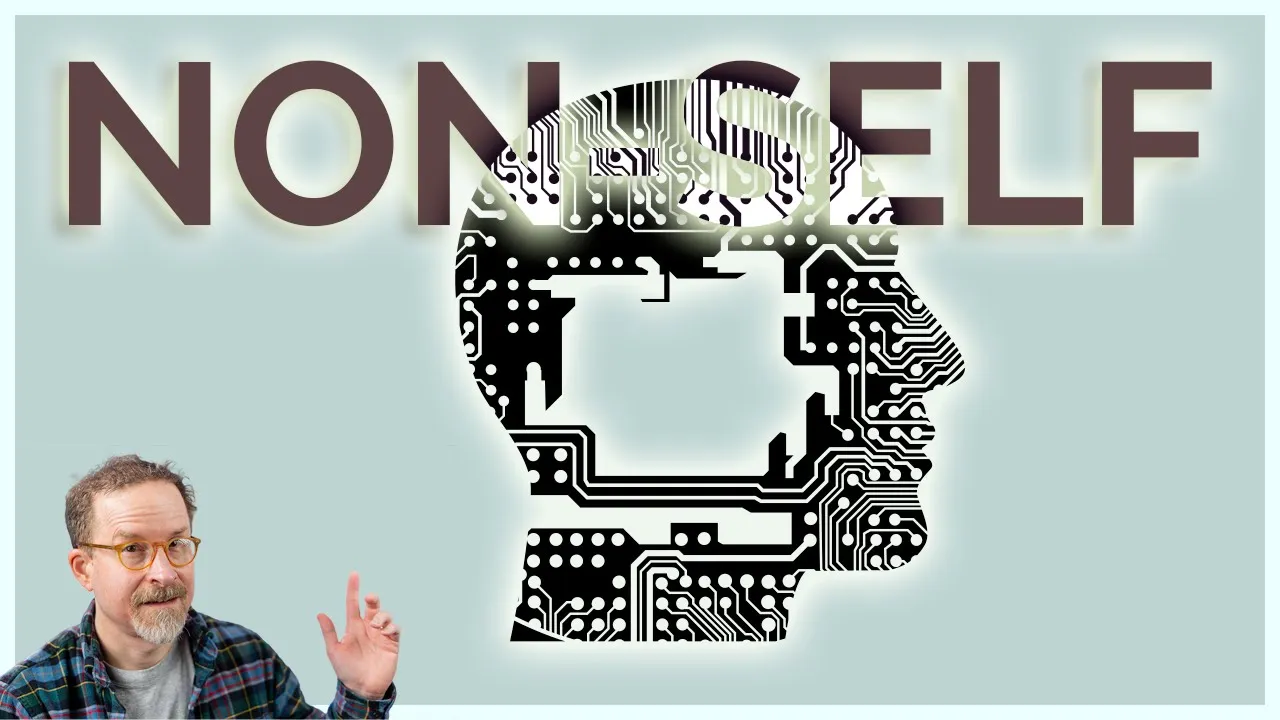





This video explores philosophical arguments against the existence of a permanent, unchanging self, presenting David Hume's bundle theory—which posits that the self is merely an ever-changing collection of impressions (body, mind, emotions, memories) without an underlying essence—and Derek Parfit's theory of survival through psychological connectedness, which argues that while no single self persists over time, personal identity continues through overlapping chains of psychological links that connect past, present, and future selves, explaining how promises and responsibilities can still hold meaning despite our constant transformation.
Hume's Bundle Theory & Parfit on Personal Identity (Philosophy 20)
Added:The philosophical problem of personal identity: Understanding the persistence question (what makes a person the same over time) and the distinction between qualitative and numerical identity.
Humean empiricism: Knowing David Hume’s epistemological framework, specifically his assertion that all genuine ideas must be derived from sensory impressions.
John Locke's psychological continuity theory: The foundational concept that personal identity is tied to memory and consciousness rather than an underlying physical or spiritual substance.
Cartesian dualism: René Descartes' concept of the soul as a unified, indivisible substance (res cogitans), which serves as the primary view that Hume seeks to deconstruct.
The ethical implications of Parfit's reductionism: Exploring how the absence of a fixed identity affects notions of moral responsibility, praise, blame, and long-term self-interest.
Buddhist philosophy of Anatta (non-self): Comparing Parfit's psychological connectedness and Hume's bundle theory with Eastern metaphysical traditions that reject a permanent ego.
Narrative identity theory: Investigating how contemporary philosophers (e.g., Marya Schechtman) argue that we construct a 'narrative self' to function practically in the world.
Neurophilosophy of the self: Examining how modern cognitive science and neuroscience explain the brain's creation of a unified ego-consciousness as an evolutionary illusion.
1.4M views29.1Klikes9:43Original Release: 2016-07-11
Crash Course Philosophy is brought to you by Squarespace.
Squarespace: share your passion with the world.
In your day-to-day life, you probably assume a whole bunch of different identities.
You might be a sister to your brother, a daughter to your parents, a colleague to your co-worker.
A mentor to the kids you teach.
Or you might think of your identity as being based on your interests, your skills, or things like your gender or ethnicity.
Whatever they are, I’ll bet that you think of your identities as being pretty fixed.
Stable. And you like ‘em that way.
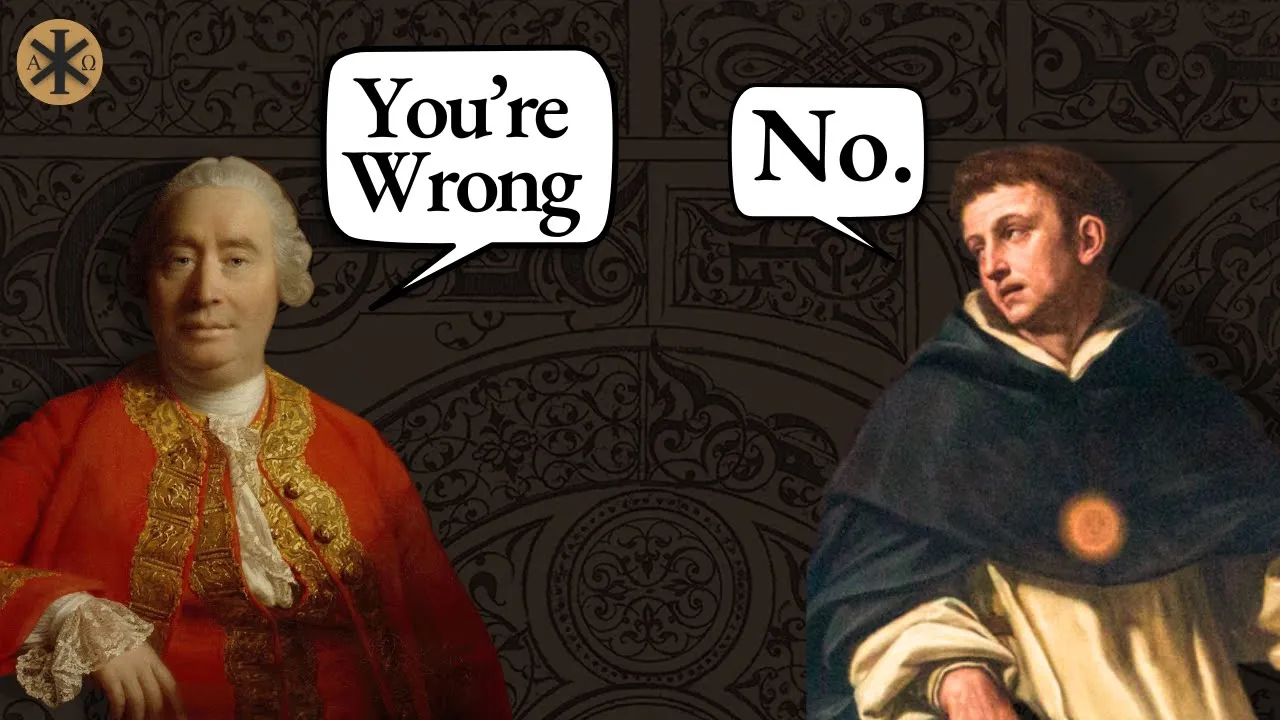
And if that’s the case, I’d like you to meet this guy: 18th century Scottish philosopher David Hume.
Because, he says you’re wrong.
Hume argued that the idea of the self doesn’t persist over time.
He said there is no you that is the same person from birth to death.
He said the concept of the self is just an illusion.
This could be either liberating or terrifying, depending on how you look at it.
I mean, if you don’t have an identity, you don’t have to worry about identity theft.
But what does it mean for my understanding of myself, and for the people I love, if there is no single, constant me?
If that’s the case, then the person I’m married to is literally not the person I fell in love with, or made those vows to.
Which would suggest that I don’t need to keep those vows, and neither does she.
And what about personal responsibility?
How can you hold someone accountable for their actions, if they’re not the same person now that they were before?
And how can you be responsible for something that you did, if you’re always changing?
This is gonna get dicey.
[Theme Music] If you joined me last time when we talked about personal identity, you’ll remember that we considered two main possibilities for what might preserve “you” as the same person over time.
One approach was the body theory, the sort of go-to view of things, which holds that you remain “you” over time, because you just occupy the same body from birth to death.
And the other was John Locke’s memory theory, the view that your memories are what makes you the same person over time: I’m me, because I remember being me in the past.
But both of these models have some problems.
No matter how much we want the idea of permanent, persistent selves to be a thing, David Hume said that they just aren’t.
For him, it was really a no-brainer.
If having a certain identity means possessing the same set of properties, he said, then how could anyone really maintain the same identity from one moment to the next?
I clearly don’t share all the same properties as my childhood self – or even my self before I shaved today – so Hume would say that it’s silly to pretend I’m still me.
But I feel like me. So what did Hume think was going on?
Hume said that the so-called “self” is just a bundle of impressions, consisting of a zillion different things – my body, my mind, emotions, preferences, memories, even labels that are imposed on me by others.
Think of a box – and say it’s marked “Hank” – and then put in that box everything that makes me who I am.
My DNA, mannerisms, political leanings, my glasses, the relationships I have with others, the various roles I hold.
Then, you take away the box.
Hume’s point is, the “self” is just shorthand for all the junk in the box.
And the fact that there is no box points out that there’s no single underlying thing that holds it all together.
And meanwhile, some of the stuff in the bundle goes away, and new stuff shows up.
So, if you look at the bundle that is me now, and compare it with the bundle that my mom and dad brought home from the hospital, they would be almost completely different.
So Hume said we’re all just ever-changing bundles of impressions that our minds are fooled into thinking of as constant, because they’re packaged in these fleshy receptacles that basically look the same from one day to the next.
To explore this some more, let’s bounce over to the Thought Bubble for some Flash Philosophy.
Contemporary British philosopher Derek Parfit, probably after watching a Star Trek marathon, posed this thought experiment.
Imagine a machine that breaks you down atom-by-atom, copies all of that information, and transmits it to Mars, at the speed of light.
Once that information gets to Mars, another machine uses it to re-create you, atom by atom, using copies of the same organic stuff that you were composed of here on earth.
The person who wakes up on Mars has all the same memories and personality as you did – and that person thinks it’s you.
So here’s the question – is this space travel?
Did you travel to Mars?
Is the transported person really you?
Or was a new being created that just happens to correspond to you, atom by atom, thought by thought?
Now, consider this: What if a new version of the machine is created, so that now, instead of destroying your body, it can simply be scanned, and all the information can be re-created on Mars, but the you here on earth still exists.
Now did you travel? Or were you just replicated?
If you’re here on earth, are you also on Mars?
Wow…uh, yeah, thanks, Thought Bubble… I think.
Parfit agrees with Hume that there isn’t such a thing as personal identity over time.
So, he says, in either case, you didn’t travel through space – that’s just a new you that shows up on Mars, whether the old you was destroyed or still exists.
And you know what?
Even if you hopped on a spaceship and flew to Mars the old-fashioned way, it’d still be a new you that arrives, because you would’ve experienced all sorts of changes during the trip.
But the thing is, Parfit thought Hume missed a really important point.
Even though there isn’t a singular you from birth to death, Parfit says that each of us has a psychological connectedness with our selves over time.
Think about your life as being like a piece of chainmail.
The mesh that is your personal identity is made up of lots of separate chains, and those chains intersect at certain points, to make up the chain mail.
As you follow the timeline of one particular set of links, new links are being created that add to the chain.
And as time passes, the links that are farther back in your past slowly start to drop off, as they lose their psychological connection to you.
So, when you stopped loving Dora the Explorer, that link dropped away.
And when you discovered that you totally love philosophy, a new link was created.
But some chains intersect with that other chain, and they have links that persist for a long time, like the love you have for your parents.
So Parfit says that, sure, I’m not the same person that I was in elementary school.
And I won’t be the same person when I die.
I’m not even really the same person I was when I started this sentence, because every experience changes us, at least a little.
But parts of me survive the passage of time, because they’re psychologically connected to my previous selves.
And survival is what’s important, for Parfit.
As long as enough of the elements of you persist, you see yourself as relevantly the same.
But not for a whole lifetime. Parfit would say none of the you that existed at birth is still around – your physical matter is almost all different, and you have no memory of that time, and your preferences have completely changed.
Baby You has not survived. But some of Last Year You probably has.
And Parfit seems to have hit on an important insight here.
Think about what you do when you catch up with an old friend.
The first thing you do is ask what’s happened since you last spoke.
What you’re doing, without really thinking about it, is recognizing that you both have changed.
If the changes are big, then your friend could seem like a stranger at first.
So, when it’s someone you care about, you take the time to reacquaint yourself with this new person.
Because, you recognize the need to always know the most updated version of that person.
But the opposite can also happen.
Think about that aunt you only see at Christmas, who still pinches your cheek and gives you a new American Girl doll every year.
She probably knew what you loved when you were 10.
But she doesn’t know the current you.
The version of you she’s shopping for at Christmas doesn’t exist anymore.
But since you rarely see each other, and you haven’t made the effort to know the new yous, you’re both looking past each other in that painfully awkward way that makes holidays with relatives so special.
So now let’s think back to the question we discussed earlier – if I’m not the same me over time, how do I make sense of promises, obligations, and responsibilities?
Parfit’s theory gives us an answer! Your degree of responsibility and obligation corresponds to your degree of connection to the person who made the promise or incurred the responsibility.
So, if you were a kindergarten bully who grew up to be a totally sweet guy who would never bully anyone, you don’t need to feel any guilt.
You’re not that person anymore – you don’t bear responsibility for his actions.
Likewise, if you and your childhood bestie pinkie-swore to be each other’s maids of honor when you grew up, but now the two of you have nothing in common, you’re off the hook for that promise.
Now about those marriage vows?
Well, a promise that lasts a lifetime doesn’t really make sense, in Parfit’s view.
And there are actually people, using this line of reasoning, who argue that marriage contracts should be temporary, with the option of renewal – kind of like a cell phone plan.
But others have said that marriage vows can actually stay relevant, even after a lifetime of changes.
Over the years, you and your spouse both change, and become different people.
But, these thinkers point out, you may be constantly reaffirming the promises you made on your wedding day.
So, a wedding vow isn’t a promise you made years ago, when you were a completely different person.
It’s a promise you made this morning, when you took out the trash and cleaned up the hairball the cat left on the rug.
Why is it always on the rug?
So clearly, we’re not talking about Batman, or science fiction, or hypothetical trips to Mars anymore.
We’re talking about how philosophy can teach you about yourself, and the people you care about, and how you can continue to know them and be close to them over time.
Today we continued our exploration of personal identity, learning about Hume’s bundle theory and Parfit’s theory of survival through psychological connectedness.
Next time, we’re going to address a term that we’ve been taking for granted throughout this whole discussion: person.
This episode is brought to you by Squarespace.
Squarespace helps to create websites, blogs or online stores for you and your ideas.
Websites look professionally designed regardless of skill level, no coding required.
Try Squarespace at squarespace.com/crashcourse for a special offer.
Squarespace: share your passion with the world.
Crash Course Philosophy is produced in association with PBS Digital Studios.
You can head over to their channel and check out a playlist of the latest episodes from shows like PBS Game / Show, The Good Stuff, Gross Science.
This episode of Crash Course was filmed in the Doctor Cheryl C. Kinney Crash Course Studio with the help of these awesome people and our equally awesome graphics team is Thought Cafe.
Up Next
70:08
Cosmic Skeptic on Consciousness, Death, and the Self | Philosophy Podcast
@shutuplmtalking
208.4K views•2025-11-16

164:01
John of Damascus on Holy Images: A Theological Defense
@BannedBooks
139 views•2026-04-25
9:20
How Can We Talk About Nonexistent Objects? | Philosophy
@crashcourse
872.8K views•2016-09-27
4:57
The Myth of Sisyphus: A Greek Legend of Eternal Punishment
@TEDEd
8.6M views•2018-11-13
Related Study Plans & Knowledge Roadmaps
Structured learning paths in Philosophy
philosophy
Frankfurt School: Critical Theory & Culture
01Foundations of the Frankfurt School and Critical Theory
02Horkheimer & Adorno: The Critique of Instrumental Reason
03The Culture Industry and Mass Deception
+ 2 more learning modules
12h5 modules
Explore Roadmap
philosophy
Philosophy of Language: From Frege to Austin
01The Linguistic Turn: An Introduction to Language in Philosophy
02Gottlob Frege: Sense and Reference
03Early Wittgenstein: The Picture Theory of Meaning
+ 3 more learning modules
15h6 modules
Explore Roadmap
philosophy
Feminist Epistemology: Standpoint & Injustice
01Introduction to Epistemology and Feminist Critiques
02Sandra Harding and Standpoint Theory
03Donna Haraway and Situated Knowledges
+ 2 more learning modules
12h5 modules
Explore Roadmap
philosophy
Environmental Philosophy: Ethics & Deep Ecology
01Foundations of Environmental Ethics & Anthropocentrism
02Biocentric Individualism and Animal Liberation
03Ecocentric Holism and Deep Ecology
+ 1 more learning modules
10h4 modules
Explore Roadmap