
















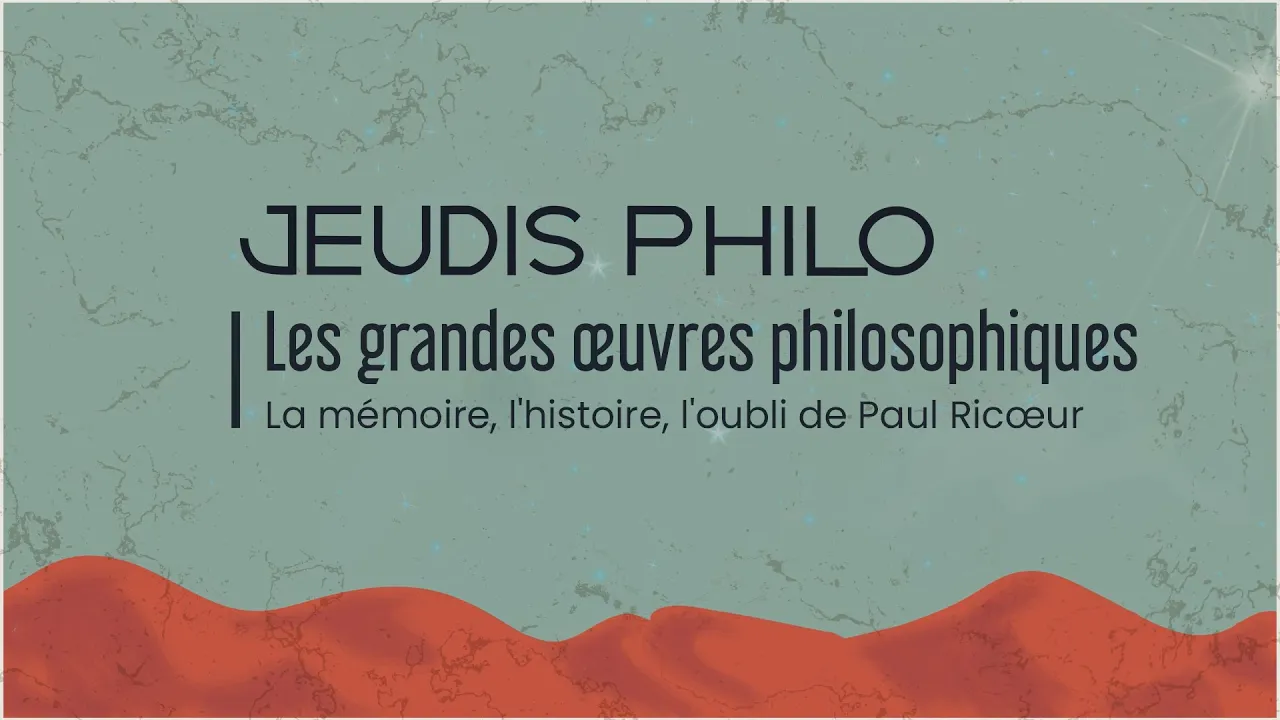

French philosopher Paul Ricoeur argues that personal identity should be understood through narrative rather than substance, distinguishing between 'edem identity' (sameness over time, involving character and memories) and 'ipsaity' (selfhood, involving the dialectic of self and other), with keeping one's word serving as the key phenomenon where selfhood and sameness diverge; Ricoeur proposes that narrative identity balances the continuity of character with the dynamic, forward-looking nature of selfhood.
Ricoeur's Narrative Identity | Personal Identity in Oneself as Another
Added:The classical philosophical debate on personal identity, particularly John Locke's psychological continuity theory and David Hume's bundle theory of the self.
Basic principles of phenomenology and hermeneutics, especially how they relate to human subjectivity and the interpretation of experience.
The distinction between qualitative identity (having identical properties) and numerical identity (being one and the same entity over time).
An introductory understanding of Paul Ricoeur's philosophical background, specifically his transition from existential phenomenology to hermeneutics.
Ricoeur's ethical framework in 'Oneself as Another', focusing on how narrative identity forms the foundation for ethical responsibility toward the 'Other'.
Practical applications of narrative identity in narrative psychology and narrative medicine, examining how individuals reconstruct selfhood during trauma or illness.
Galen Strawson's critique of narrative identity (e.g., 'Against Narrativity') to understand the philosophical arguments against the necessity of a unified life narrative.
Ricoeur's later works on collective memory and history, analyzing how societies construct and negotiate shared narrative identities.
46.6K views1.6Klikes10:08Original Release: 2022-11-18
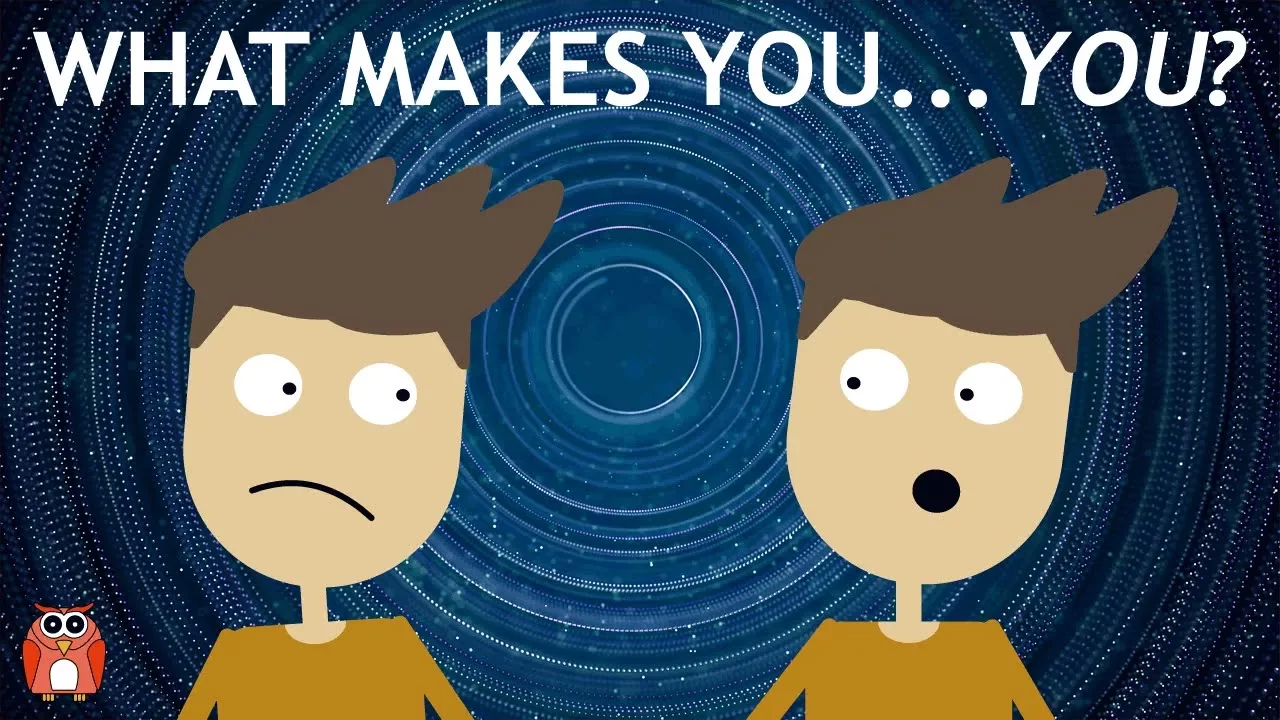
today I'm going to talk about Paul recurr's theory of identity especially narrative identity as he describes it in his book oneself is another uh I would also recommend checking out my podcast overthink which you can find on any of the platforms that you listen to podcasts on and then also checking out our other videos in this channel so now on to work for are you the same person that you were when you were a baby how about five years ago five minutes ago sure you have the same DNA the same name you likely remember much of your past but can any of these features really encapsulate who you are and if you're constantly changing how can you say that you're the same person over time philosophers call questions such as these questions of personal identity they puzzle over continuity and re-identification but a French philosopher Paul recurr finds many of these puzzles misguided key things that we tend to conflate two very importantly different concepts of personal identity sameness and selfhood and he thinks that in particular the history of philosophy tends to focus on the first one the question of sameness or the issue of sameness and to ignore the second and arguably more important faceted personal identity which is self-fund he uses Latin terms to designate these two types of personal identity sameness is edem identity it is identity as identical and selfhood is ipps-a identity which involves a dialectic of self and other that is constitutive of itselfhood as such but you won't find this notion of ipsaity or selfhood in many debates around personal identity especially in anglo-american philosophy because he thinks the debate between what are known as qualitative and quantitative accounts of personal identity only treat edem identity and so you might think about the question of permanence in time right how do I know that I'm the same person now that I was five years ago do I Define that in terms of a quantitative sense of personal identity I am one person then and no same person or in terms of qualitative identity do I have enough of the same attributes now that I had then or enough of the same memories Etc to identify me as the same person recurr's notion of anxiety or selfhood is important to read against the background of 20th century French philosophy out of which he's working especially the tradition of phenomenology where one of essential contentions is that human consciousness is fundamentally different from the way of beings of things in the world you might think about Heidegger's notion of dazine for instance ipsaity or selfhood for recur has to do with our relation to our own possibilities irreducible to qualities he says that authentic selfhood actually involves moments of self-dispossession and that this is part of what is at work in ipsaity because dialectic and is relational instead of thinking about the self as a thing that is either the same or not over time the ontology of selfhood must begin on the ground of acting selfhood is an existential for recur and in this he's deeply influenced by Heidegger and Aristotle now the system to say that there's no role for edem identity for recur he thinks that edem identity is important for sameness it's just that it is not the only form of identity and as I mentioned before arguably not the most important and so we need to investigate both edem identity and ipsaity or Ipsy identity sameness and selfhood one of the ways that recur wants to characterize edem identity is in terms of character for him Edom identity cannot be a matter of a category of substance because selfhood is not a thing like other things are in the world and that's even true V dumb identity it's not just true of obsidi he says that character is the set of distinctive marks which permit the re-identification of a human individual as being the same or a set of lasting dispositions that characterize the self right um ways that a person is recognized and so character uh relates to the way that others are seeing me right how they're recognizing me or what they're ascribing to me and in character even though he does associate with edem identity he says that there's almost a a kind of a full overlapping of edem identity and obsidi he says this is a quote from page 121 of the text that character is able to constitute the limit point where the problematic ipsay becomes indiscernible from that of edem and where one is inclined not to distinguish them from one another that's actually pretty succinct Poe from refer but I will just note that recurs are very interesting thinker not a very good writer at least and especially I would say in in this text one cell does another is kind of a challenging text read it's very dry um but any case character for him is second nature and to say that second nature is actually to say it is me myself it is Ipsy announcing itself as edem so it almost seems as if over time through repeated actions and this is pretty Aristotelian the self is establishing a certain character through habits through behaviors through actions through being recognized as such by others and um that is making the self into as close as a thing as it's going to get even though as we said before it's it's not going to be a thing ultimately if etom identity and ipsa identity almost completely overlap in the question of character there's another really crucial aspect of selfhood that just where does where that does not happen and that is the act of keeping one's word keeping a promise keeping one's word is a phenomenon that recurses as unique to Ipsy identity he says that it is in keeping one's word that selfhood and sameness cease to coincide keeping one's word pertains to self-constancy it's an expression of self-constancy that is solely in the dimension of the who so another way that you might think about the difference between idiom and Ipsy is that Edom pertains to the self as a what and that Ipsy pertains to the self as a who as fundamentally different from a what and self-constancy through keeping one's word is a big part of this actually and um self-conferencing involves uh self-constancy over time right if character is the result um and still ongoing for sure but to some degree the result of sedimented past actions that have created the self into some sort of recognizable not quite thing but almost then ipsaity is something that really projects us radically towards the future and is fundamentally oriented to to time in its multi -directional character now we can think about how this relates to recur's notion of narrative identity he thinks that a narrative theory of personal identity and as I mentioned this is um what he's really known for in this taxes and and elsewhere he writes about this elsewhere as well but this uh Association of recur with narrative identity theory is pretty well established he thinks that the dialectic of Edom and ippsay is best figured by a conception of personal identity that is not rooted in material or substance over time but is rooted instead in narrative now just in a simple sense of like telling my life story right but having as it's task he writes in this text balancing the immutable traits that this identity owes to the anchoring of the history of a life and a character and other side of the balance those traits which tend to separate the identity of the self from the sameness of character and so if there's a dialectic going on between edem and ipps-a identities which Brooker thinks that there is there are also multiple other dialectics going on including the dialectic between the self and others but any case if we wanted to Justice to that dialectic then we're also going to need to find a theory of personal identity that balances the way that e-dem and upside identities overlap but also the way that they're fundamentally different and that's what he sees narrative identity as doing because what narrative identity does is bring together action and character right telling a story means to say who did what and how by spreading out in time the connection between these various viewpoints and so anytime we're telling a narrative there's both a certain kind of continuity right we have a sense of who the character is over time we have a sense of their setting Etc but there are also Dynamic changes throughout the course of the narrative that is needed in order for the narrative to move along and in particular these Dynamic changes have to hinge on the actions of the character or characters involved and so there's novelty it's not just a matter of constancy so narrative for recur is not a simple matter of just telling your life story and that's who you are right like I'm the Great American novelist or something like that it is actually being able to trap the dynamic relations of character and action over the course of the life as always there is a lot more to say here I would recommend checking out once up as another and slogging through its uh dry Pros because it's a quite quite interesting text especially the second half of it where recurr is really getting into the the meat and potatoes of his theory which I've just very briefly touched on here so check it out thank you
Up Next

21:10
Derek Parfit on Personal Identity: The Bundle Theory Explained
@GordonPettit
950 views•2024-03-04

164:01
John of Damascus on Holy Images: A Theological Defense
@BannedBooks
139 views•2026-04-25

12:38
Merleau-Ponty: Phenomenology of Perception Explained
@OverthinkPodcastPhilosophy
204.2K views•2022-06-10
4:57
The Myth of Sisyphus: A Greek Legend of Eternal Punishment
@TEDEd
8.6M views•2018-11-13
Related Study Plans & Knowledge Roadmaps
Structured learning paths in Philosophy
philosophy
Frankfurt School: Critical Theory & Culture
01Foundations of the Frankfurt School and Critical Theory
02Horkheimer & Adorno: The Critique of Instrumental Reason
03The Culture Industry and Mass Deception
+ 2 more learning modules
12h5 modules
Explore Roadmap
philosophy
Philosophy of Language: From Frege to Austin
01The Linguistic Turn: An Introduction to Language in Philosophy
02Gottlob Frege: Sense and Reference
03Early Wittgenstein: The Picture Theory of Meaning
+ 3 more learning modules
15h6 modules
Explore Roadmap
philosophy
Feminist Epistemology: Standpoint & Injustice
01Introduction to Epistemology and Feminist Critiques
02Sandra Harding and Standpoint Theory
03Donna Haraway and Situated Knowledges
+ 2 more learning modules
12h5 modules
Explore Roadmap
philosophy
Environmental Philosophy: Ethics & Deep Ecology
01Foundations of Environmental Ethics & Anthropocentrism
02Biocentric Individualism and Animal Liberation
03Ecocentric Holism and Deep Ecology
+ 1 more learning modules
10h4 modules
Explore Roadmap