









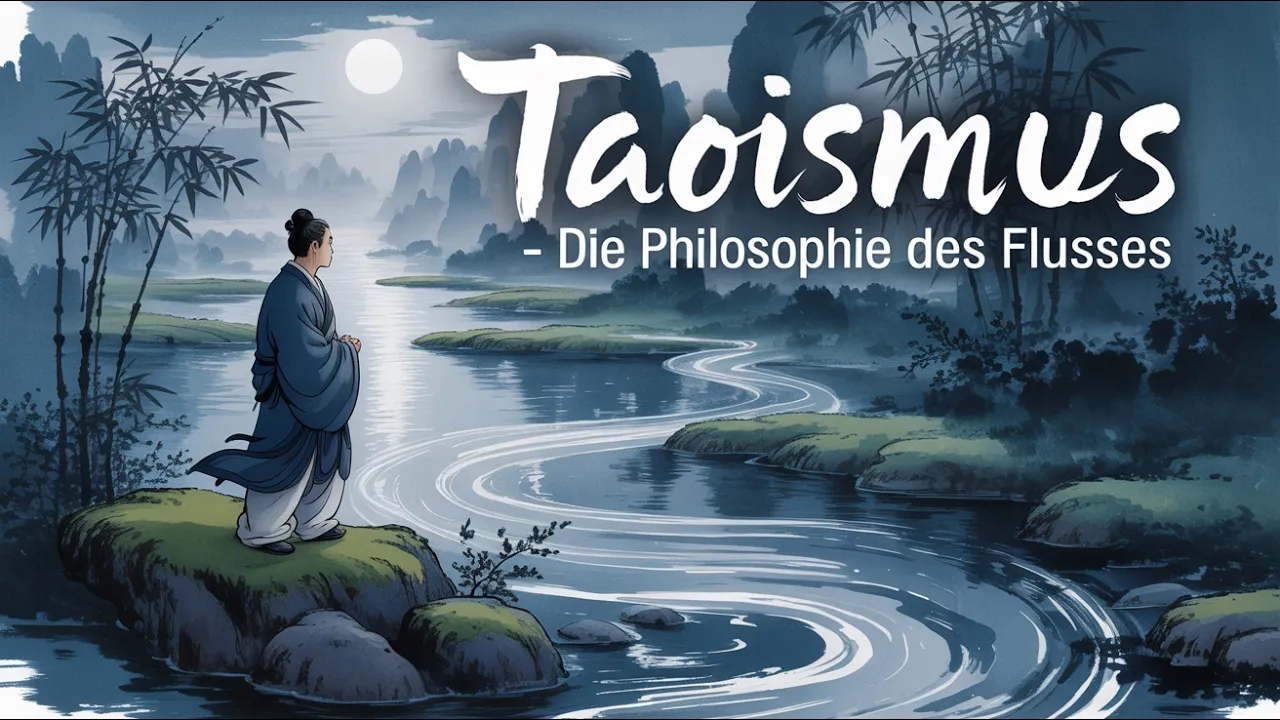









Wuwei, a core Daoist concept meaning 'non-action,' represents the art of effortless action through alignment with the natural flow of the universe. Rather than forceful intervention, Wuwei involves yielding like water around a stone, trusting that following nature's patterns leads to desired outcomes. This philosophy applies across personal conduct, parenting, and governance, emphasizing flexibility, spontaneity, and authenticity over deliberate striving. The concept acknowledges that perceived obstacles may actually serve a greater purpose, and that doing nothing in the right way often achieves more than active interference.
Wuwei in Daoist Philosophy: The Art of Non-Action Explained
Added:Introduction to the concept of the 'Dao' (The Way) as the fundamental, indefinable principle that source-orders the universe in Chinese philosophy.
The historical context of the Warring States Period in ancient China, which prompted the emergence of Daoism and Confucianism as competing schools of thought.
Familiarity with key classical Daoist texts and figures, specifically Laozi (the putative author of the 'Daodejing') and Zhuangzi.
The concept of Yin and Yang, representing complementary cosmic forces and the dynamic balance inherent in nature.
The concept of 'Ziran' (naturalness or self-so-ness) and how it serves as the ultimate state of being achieved through Wuwei.
Daoist political philosophy, specifically how 'Wuwei' translates to minimalist governance, non-interference, and the concept of the Sage-King.
Interdisciplinary connections, such as comparing 'Wuwei' to the modern psychological concept of 'Flow State' (optimal experience) developed by Mihaly Csikszentmihalyi.
The historical synthesis of Daoism and Buddhism in China, which directly influenced the development of Chan (Zen) Buddhism and its emphasis on sudden enlightenment and spontaneity.
Practical applications of Wuwei in internal martial arts (such as Tai Chi) and Daoist meditative practices (Neidan/Internal Alchemy).
171.2K views8.1Klikes12:17Original Release: 2022-12-18
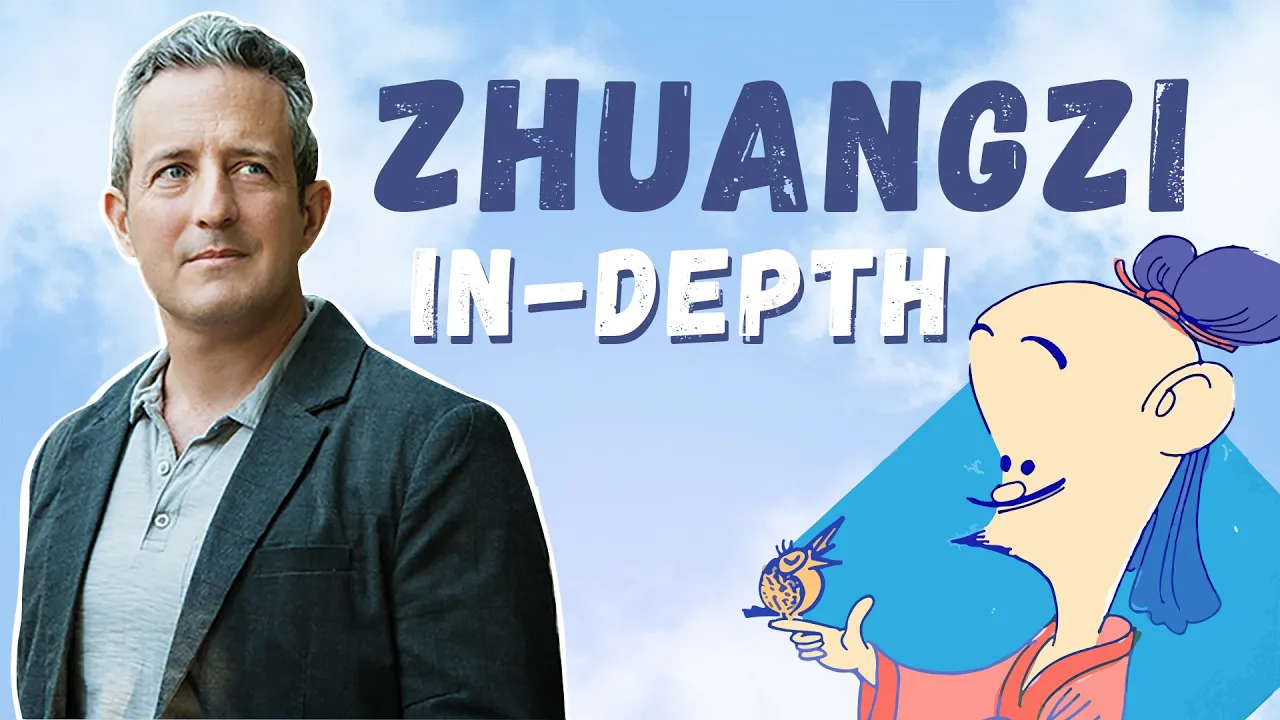
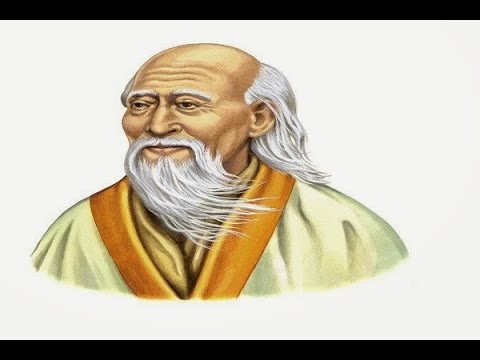
sponsored by wondriam Winnie the Pooh is the ultimate Taoist Sage at least according to the author Benjamin Hoff in his best-selling book on taoism and Winnie the Pooh according to Hoff Winnie the Pooh with his Carefree effortless way of floating through life exemplifies the Taoist concept of Wu way wui can be translated in a lot of different ways actionless action non-action inaction non-deliberate action or non-interference we briefly mentioned Wu way in our intro to taoism video which you can watch here but today we'll be diving much deeper into the concept but hold on some of these translations are confusing right isn't actionless action a paradox how can something be both acting and not acting and how have different Taoist writers defined this elusive concept for the sake of convenience I'll generally use non-action as the English translation of Wu way we can see hints of Wu way as a general concept emerging out of What's called the Spring and Autumn period of Chinese history but between the 700s and 400s BCE we may even see hints of the concept in Confucianism but the word comes from the central Taoist text the Dao to Jing if you remember from our intro video the data Jing is a collection of short sayings compiled of the course of a few hundred years following the 4th Century BCE and it's attributed to the probably mythical philosopher lautsu this text describes Wu way as a characteristic of the Dao which can be thought of as Ultimate Reality and how it manifests in everyday life the daojing says the Dao does not act and yet there is nothing it does not do thus Scholars describe the Dao as an organic process that just moves along naturally and spontaneously in other words it does not act but at the same time there is nothing it does not do it is the process through which the entire universe unfolds but all of this is very abstract is there a way to make this more practical well we can be a personal moral Philosophy for how you should conduct yourself through life the text says the sage manages his Affairs through non-action and conveys his instruction without speaking thus you can act non-actingly in business relationships or even parenting The Scholar Olivia Cohn uses the example of a parent not being too overbearing and instead allowing their kids to make their own discoveries develop their dominant talents and grow at their own rate in other words a Dao of the non-helicopter parent but wue was especially thought of as a way for how government should function a political philosophy of non-action the scholar Karen lay argues that the ideal Taoist government refrains from using force and domination violence and weapons as they prevent the people from being spontaneous the Taoist political ruler should on one hand refrain from coercive policies and practices but also Implement policies that nurture an environment where individuals are not subjected to the imposition of artificial conformist Norms but that's just how the Delta Jing uses the term different Dallas thinkers in later centuries offered different interpretations the other foundational Taoist texts called the juansu uses it to mean things as diverse as non-mind non-emotion and a state of harmony with nature and the Dao and the hwai nonsu a western Han text with strong Taoist influences uses it to mean not to act out of character or without an awareness of one's circumstances and even this is glossing over a lot of nuance this is one of the reasons why you'll see Wu way translated so many different ways or not even translated at all early taoists and other philosophers did not use it to mean the same thing but there's a lot of overlap between these definitions since each text is in conversation with the previous texts endows over the later centuries focused on just a few interpretations which we'll focus on here specifically non-action as doing nothing non-action as not striving but harmonizing your actions with the Dao and non-action as natural or spontaneous action let's start with non-action as doing nothing by this Taoist meant not altering actions to challenge or confront obstacles in your path one of the best metaphors for understanding this interpretation of Wei is to imagine a rock in a stream the dowaging says that which is of all things most yielding can overwhelm that witches of all things most hard that is how I know the value of action that is actionless hear that which is of all things most yielding refers to water and that which is of all things most hard is Rock imagine a big stone that falls into a stream the water doesn't push against the stone trying to move it it bends around it but even as the water bends around the stone the water continues to flow Downstream eventually the stone will erode away but the water flows as it did before during and after the Stone's existence non-action can also involve not striving for what you want things like Fame wealth and power but also even peace or social harmony instead you should let your actions follow the natural patterns of the universe we often describe this as being in harmony with the Dao both the doubted Jing and the John serve praise those who strive for nothing and yet obtain what is needed in other words if you pattern your actions according to the Natural laws or principles of the universe you will effortlessly arrive where you should be returning to the water and stone analogy we see again that the water is not striving to remove the Stone from its path and yet ultimately the stone is cleared away so if you're in harmony with the Dao then following your natural course will not only result in getting what you need but ultimately will result in removing or overcoming any supposed obstacles in your way I say supposed because what you perceive as an obstacle might not actually be one consider a parable from the huainansu about a lost horse in the story a family skilled and fortune telling loses their horse so the family's neighbors offer their condolences the family just lost a very expensive asset but the father of the family cautioned the neighbors don't be so quick to offer your condolences who's to say this won't quickly change to Good Luck several months later the horse returned with a whole herd of horses now the neighbors praised the family's good fortune but the father again warned that their luck could change again sure enough while riding one of those horses his son fell and broke his leg another stroke of bad luck but wait the next year Nomads raided the border and all those who were able went off to fight and died in battle but the sun with a broken leg was left behind and survived the war once again what seemed like bad luck was actually good luck this story highlights why taoists think Wu way is critical both as a state of being and as a way of conducting yourself you have no way of knowing if your actions will ultimately help or hinder you even if you act with good intentions you still can't be sure there won't be unintended negative consequences thus non-action as an action prevents harm while non-action as the state of being in harmony with the Dao ensures you will live out the number of years Heaven has allotted you and thus avoid a premature and usually violent death taoists aren't big on living fast and dying young it's all about that longevity and immortality the third way to understand Wu way that we'll examine here is as natural action which is probably the most common use of the term returning yet again to laozzo's Metaphor of the water and the stone the water does not change its nature or become something else now that the stone is there the stone erodes away precisely because the water only acts like itself for people it's helpful to think of the difference between reaction and reflex from the Taoist perspective reflex is non-action and reaction is action a reflex is innate unconscious and effortless it's devoid of emotion and happens spontaneously in the sense that it seems to happen of its own accord modern knowledge of physiology notwithstanding a reaction is the opposite even though reaction might seem automatic it's a product of the mind it can be something learned and practiced another idea that early taoists associate with non-action is the concept of uselessness you can see that in the parable mentioned before the sun's broken leg made him useless to the Army but preserved his life the principle of uselessness is also commonly taught using the example of a gnarled and Crooked Tree useless for building things but precisely because of its uselessness the tree is never cut down and lives a long life as a tree which is what nature intended moreover the tree is only situationally useless when used for shade or shelter the tree is useful it's useless only if you mistake it as a tree for Timber or fruit the data Jing also Associates non-action with the virtues of flexibility and passivity arguably Wu way is a form of action that encompasses both of these depending on the situation returning again to the analogy of a stone in the Stream we can see both of the virtues present in non-action the water demonstrates flexibility by bending around the stone but it also demonstrates passivity by not challenging or confronting the stone in early Chinese thought these are feminine virtues and it's clear that the philosophical strands of the text Embrace a positive view of the feminine overall in contrast to most of its contemporary thinkers so whether you understand Wu way in terms of reflex uselessness flexibility or spontaneity it's important to remember that there's not a one-size-fits-all answer an effortless and authentic existence will vary depending on who or what you are so too is non-action equally dependent on the person and situation one of the most famous stories from the dronsu illustrates what this means once when Johnson was fishing in the Pooh River the king of chews sent two officials to him and announced to him I would like to trouble you with the administration of my realm Johnson held onto the fishing pole and without turning his head said I have heard that there is a sacred tortoise and chew that has been dead for for three thousand years the king keeps it wrapped in cloth and boxed and stores it in the ancestral Temple now would this tortoise rather be dead and have its bones left behind and honored or would it rather be alive and dragging its tail through the mud the two officials responded it would rather be alive and dragging its tail in the mud Johnson said go away I will drag my tail through the mud this means that for the turtle being dead but highly honored was worthless when compared with its unglamorous but natural way of living for Johnson serving in government would have been equally unnatural and therefore worthless yet for the king of chew who was born to rule refusing to do so and instead going off to spend his days fishing would have been unnatural and thus not Wu way so to return to the beginning Wu way can be translated a lot of different ways because it means different things depending on the context and the philosopher who's using the term it's something you do or don't do it's a character heuristic of the Dao it's a state of being that reflects the patterns of the cosmos it's being flexible and passive it Embraces spontaneity effortlessness and authenticity it's doing nothing not striving and natural action thanks to one dream for sponsoring this video One dream is an online learning platform featuring a ton of educational video content want to learn more about Chinese philosophy how about how to play the piano or maybe epic engineering failures no matter what you're interested in you can find a tutorial documentary or lecture series on wandrium they're always adding new content too as an academic who studies early Christianity I'm particularly excited about their newest series searching for the historical Jesus in 15 episodes you get an in-depth look into the historical context of Jesus of Nazareth the series features amazing cinematography from Key archaeological sites around the Sea of Galilee like the ancient city of sephorus located near Nazareth and in the final episodes you'll also learn about the growth of Christianity around the Roman Empire if you'd like to watch this series and more one dream is offering the religion for breakfast audience a free trial just head on over to onedrium.com religion for breakfast or click the link in the comments below thanks everyone thanks for watching
Up Next

24:50
Zhuangzi: The Sage of Uncertainty and Daoist Philosophy
@LetsTalkReligion
429.2K views•2020-12-13

164:01
John of Damascus on Holy Images: A Theological Defense
@BannedBooks
139 views•2026-04-25
16:15
Yin and Yang Symbol Meaning: Taiji Philosophy History | Religious Studies
@ReligionForBreakfast
315K views•2023-02-10
4:57
The Myth of Sisyphus: A Greek Legend of Eternal Punishment
@TEDEd
8.6M views•2018-11-13
Related Study Plans & Knowledge Roadmaps
Structured learning paths in Philosophy
philosophy
Frankfurt School: Critical Theory & Culture
01Foundations of the Frankfurt School and Critical Theory
02Horkheimer & Adorno: The Critique of Instrumental Reason
03The Culture Industry and Mass Deception
+ 2 more learning modules
12h5 modules
Explore Roadmap
philosophy
Philosophy of Language: From Frege to Austin
01The Linguistic Turn: An Introduction to Language in Philosophy
02Gottlob Frege: Sense and Reference
03Early Wittgenstein: The Picture Theory of Meaning
+ 3 more learning modules
15h6 modules
Explore Roadmap
philosophy
Feminist Epistemology: Standpoint & Injustice
01Introduction to Epistemology and Feminist Critiques
02Sandra Harding and Standpoint Theory
03Donna Haraway and Situated Knowledges
+ 2 more learning modules
12h5 modules
Explore Roadmap
philosophy
Environmental Philosophy: Ethics & Deep Ecology
01Foundations of Environmental Ethics & Anthropocentrism
02Biocentric Individualism and Animal Liberation
03Ecocentric Holism and Deep Ecology
+ 1 more learning modules
10h4 modules
Explore Roadmap