




![NARCOTIC [1933] Classic Drug Exploitation Film | Full Movie](https://i.ytimg.com/vi/scBuVLizFcI/hqdefault.jpg?sqp=-oaymwEmCOADEOgC8quKqQMa8AEB-AH-BIAC4AOKAgwIABABGGIgYihiMA8=&rs=AOn4CLABN8rCP8KW1zGKrwl5HdNzsvz2lw)








![Ultimate Guide to Scene Transitions – Every Editing Transition Explained [The Shot List, Ep 9]](https://i.ytimg.com/vi/TKXBAaQB03U/maxresdefault.jpg)



Continuity editing (invisible editing) maintains seamless narrative flow through techniques like establishing shots, shot-reverse-shot, cutting on action, the 180-degree rule, and the 30-degree rule, while discontinuity editing intentionally breaks continuity using jump cuts, non-diegetic inserts, repeated shots, and freeze frames to create artistic or experimental effects.
Film Editing Explained: Continuity vs Discontinuity | Lesson 5.2
Added:An understanding of basic film terminology, specifically the structural distinction between a frame, shot, scene, and sequence.
Familiarity with standard shot scales and camera angles, such as close-ups, medium shots, establishing shots, and over-the-shoulder framing.
The concept of screen direction and spatial orientation, including how a viewer's brain constructs a cohesive 3D space from a 2D screen.
An awareness of the classical Hollywood style of filmmaking, which historically prioritized 'invisible' storytelling to keep the audience immersed.
A deep dive into historical film movements that weaponized discontinuity, such as Soviet Montage (e.g., Eisenstein's intellectual montage) and the French New Wave.
Study of the Kuleshov Effect and the cognitive psychology behind how viewers derive meaning from the juxtaposition of shots.
Advanced transition techniques that bridge continuity, such as graphic matches, action matches, and thematic match cuts.
The role of sound design in continuity, specifically how J-cuts, L-cuts, and ambient room tone are used to smooth over visual edits.
Practical application of these rules and rule-breaks within Non-Linear Editing (NLE) software to control narrative pacing and character perspective.
11.4K views232likes9:34Original Release: 2022-02-20
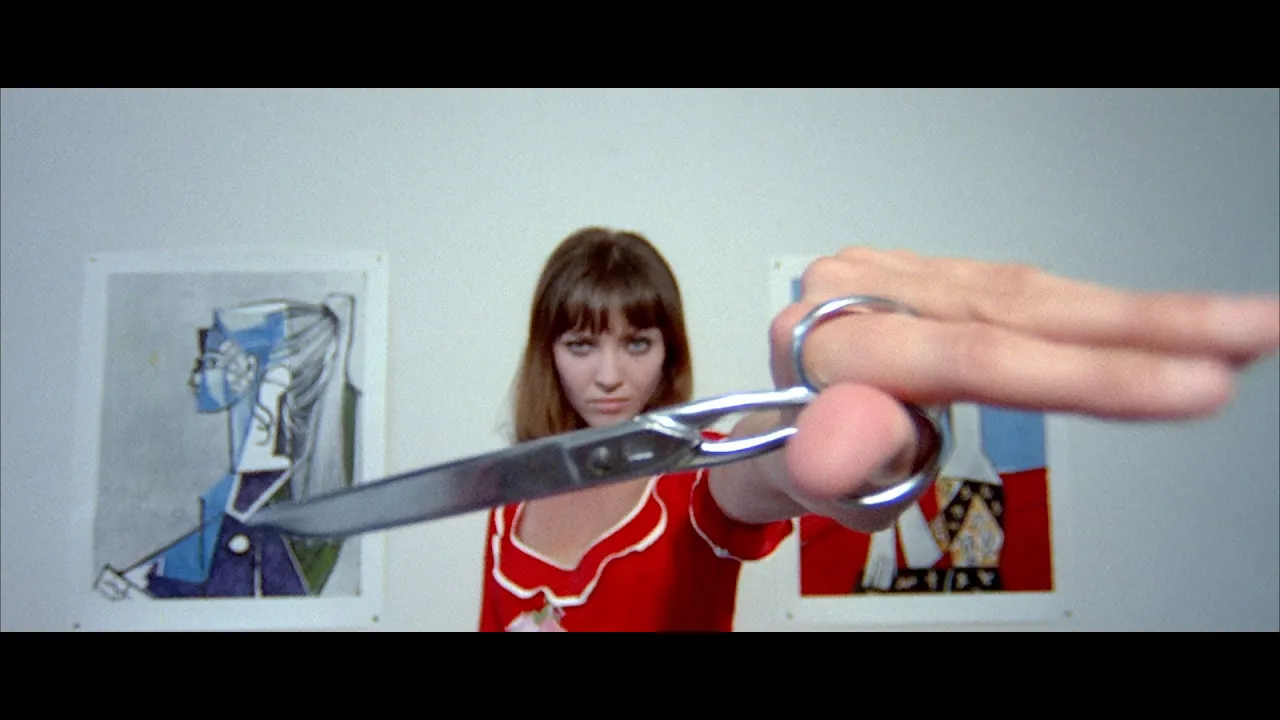
hey everybody it's mr mark levitz here again to bring you another lecture video today we are continuing our unit on editing we're talking about lesson two continuity editing and discontinuity editing so let's jump right into it now with continuity editing also referred to as invisible editing you're trying to maintain a clear and continuous narrative action remember in the last lecture video i talked about the epiphany that i had while watching office space as a teenager and realizing that what i was seeing wasn't a single setup shot with multiple cameras but multiple setups shot with a single camera and then edited together to make it look like it was all happening in that moment that is an example of continuity editing you're not supposed to see the cuts you're not supposed to see the edits that's why this is referred to as invisible editing again if the script supervisor and if the editor are doing their job properly then there's just supposed to be this continuous narrative action and continuity editing can be achieved by following all of the different guidelines that i have bulleted here on the board so let's go through it first when you're filming a scene or a sequence you should always start with an establishing shot now with an establishing shot it's typically the first shot in the scene that sort of orients the audience to the setting and once you have your establishing shot set you can start to cut in or get your singles using the shot reverse shot technique shot reverse shot involves two characters in the same scene who are filmed separately using different camera angles another way to hide your edits or preserve continuity is to cut on the action or match the action let's say you have a character swinging a baseball bat and you start on a wide shot or a full shot and then you cut into a medium shot of them doing that same action well you're going to want to make your cut while they're mid swing you don't want to cut from the wide to the medium before they swing and you don't want to cut to your medium shot after they've already swung you want to cut right in the middle of that swing because cutting on action or matching the action is going to hide that edit and help you preserve continuity another guideline to follow in order to preserve continuity is the 180 degree rule now with the 180 degree rule let's say you're filming a scene with two or more characters engaged in some sort of dialogue the first thing you're going to do is draw an imaginary line right down the middle of those characters this is called the axis of action and then you're going to commit all of your camera shots to only one side of that line notice that in this scene from mean girls the camera always stays on the close side of the table because if the camera were to jump to the far side of the table and get the reverse angle it would break continuity and it would look weird to the audience you can also have the 30 degree rule the 30 degree rule states that if you're filming a subject and you want to cut to a new shot of that same subject the camera has to move at least 30 degrees left or right of the initial setup in order to preserve the continuity if you don't move that 30 degrees you run the risk of jumping which we're going to talk about when we get down to discontinuity editing there's also an eye line match now with an eye line match you know if you have a character who appears to be looking at something the next shot in the sequence is probably the thing that they're looking at and we're going to see several examples of that in this week's film psycho you also have discontinuity editing an editing style that breaks the continuous narrative of the action this can be in the form of jump cuts now a jump cut is anytime the camera cuts between shots with nearly identical composition and subject matter these can be done on purpose like we see in this example from breathless accidental like in this example from the royal tenno bombs or you can use jump cuts as a visual effect like we see in this very early example from george mellier we see the actors on set then melies would have everyone freeze quickly adjust the set start rolling again without moving the camera and now it looks like that woman just disappeared i don't know what the asb students are doing next door but it sounds like they're trying to vacuum but every time they turn the vacuum on they immediately shut it off and it's annoying and i'm dying to know what they're actually doing over there but i'll never know put your comments down below what do you think they're doing next door could be anything anyway so getting back to melie he was using jump cuts as magic tricks we also have non-diegetic inserts now last unit we talked about non-diegetic sounds sounds that the audience could hear but theoretically the characters in the film couldn't well you can also have non-diegetic shots shots that the audience can see but the characters in the film wouldn't be able to in the movie fight club we see an example of a non-diegetic insert when the narrator's hand is burning and we cut to a definition of the words seer and flesh again we can see those images but he can't so again that's an example of a non-diegetic insert and it's just sort of commenting on the action of the film you can also have repeated shots repeated shots where you know the filmmaker might show you the same shot multiple times in this example from life of an american fireman we see the firemen carrying a woman and a small child out the window of this burning building and then a minute later we see the exact same action except this time from the outside of the house of the firemen carrying the woman and the small child out of the burning building this is an example of where the editor could have cut on the action but instead showed you the entire action from two different angles it's probably a mistake but nevertheless it's a repeated image and you can also have freeze frames where just the film stops right where the film pauses on a single frame a very popular example would be the last shot of the film the 400 blows although there are certainly you know examples and countless films so there you go now i understand that yeah this is just a lot of terminology and definitions but it's important to note that you know if you're a filmmaker and you're trying to tell a clear and continuous story well there are guidelines that you and the script supervisor and the editor need to follow that will help preserve that continuity and if you're feeling a little rebellious and you want to you know wow us with your discontinuity edits try some jump cuts try some non-diegetic inserts maybe a repeated shot or two and always end on a freeze frame but i'm actually not done yet uh your lab assignment for this week guys is to record a video with two characters passing an object back and forth and the goal here is to preserve continuity so you're going to start with a master shot that shows both characters and the object that they're passing back and forth it doesn't matter what it is and then you're going to cut in to at least two different single shots a medium close-up of character a a medium close-up of character b and then you're going to edit these three shots together in order to maintain continuity i don't want to see character a start with the ball throw it to character b and then cut into a shot where character a is holding the ball that doesn't make sense that's going to break continuity i want to see character a start with the ball throw it to character b cut to character b now holding the ball throwing it to a and seeing that ball back and forth back and forth without any breaks and continuity and your film for this week we should probably be watching something from the french new wave but uh instead we're gonna watch psycho from the early 1960s it's a hitchcock film it's probably hitchcock's most famous film but uh you know i do recognize that this is a horror film and even though you know it's probably not as scary or as gory as some contemporary horror films it it still has the power to frighten some people so do consider that when making your decision whether or not to watch this film or not but yeah there you go continuity editing discontinuity editing i hope you learned something hopefully if not talk to me in class or email me all right that's all i have for you today guys thanks for watching i'll see you later bye [Music]
Up Next
6:00
Kuleshov Effect in Film Editing: Psychology & Technique
@nofilmschool
145.6K views•2019-01-30

23:14
Visual Analysis Essay: How to Analyze Graphic Novels in College Writing
@nataliepleimann5941
1K views•2020-10-14
4:55
Film Blocking Techniques for Directors: Space, Shapes, Lines
@StudioBinder
1.9M views•2018-07-23

4:00
Evolution of Darth Vader: Anakin Skywalker's Animated Journey Across Star Wars Films
@TellItAnimated
13.4M views•2019-03-30
Related Study Plans & Knowledge Roadmaps
Structured learning paths in Film Analysis
film-analysis
Sensory Cinema: Foley, Haptic Sound & Texture
01Introduction to Film Sound and Foley Artistry
02Micro-Sounds, Textures, and Extreme Amplification
03Haptic Audition and Film Phenomenology
+ 1 more learning modules
12h4 modules
Explore Roadmap
film-analysis
Breaking the Fourth Wall: Mockumentary & Satire
01The Invisible Wall: Basics of Cinematic Illusion
02Looking at the Lens: Direct Address & Character Glances
03The Mockumentary: Satire, Realism, and Complicity
+ 2 more learning modules
12h5 modules
Explore Roadmap
film-analysis
Analyzing the Long Take: Cinema, Space & Ethics
01Foundations of Film Grammar: Montage vs. The Long Take
02Choreography and Mechanics of the Simulated One-Shot
03Phenomenology of Film: Real-Time Spatial Continuity
+ 1 more learning modules
14h4 modules
Explore Roadmap
film-analysis
Anachronistic Music: Period Drama & Subversion
01Foundations of Film Sound and the 'Needle Drop'
02Traditional Authenticity vs. Revisionist History
03The Rise of the Anachronistic Soundtrack
+ 2 more learning modules
12h5 modules
Explore Roadmap