






![[音楽理論]ドッペルドミナントについて解説します♪](https://i.ytimg.com/vi/rl_QfoCCoGA/maxresdefault.jpg)





![[LIVE Kajian Ba'da Subuh] Kajian Kitab Adabul 'Alim Walmuta'allim - Ustadz Adi Hidayat](https://i.ytimg.com/vi/U55ZScPAcGg/hqdefault.jpg)






This lesson compares four related Arabic maqamat (Bayati, Hijaz, Kurd, and Saba) by examining their shared and unique characteristics. Bayati, Hijaz, and Kurd share common elements including nahuwand and rust intervals on the fourth scale degree, and the ajam on sixth scale degree, making them musically similar and often difficult to distinguish. However, each maqam has unique characteristics: Hijaz and Kurd share nekris on fourth, while Bayati uniquely features hijaz on fourth, and Saba is distinguished by hijaz on third, ajam on sixth, and hijaz on third. The lesson demonstrates how these maqamat can pivot between each other through octave relationships, particularly between Bayati and Kurd, and explains how the fourth scale degree serves as a crucial differentiator between Bayati and Saba.
Maqam Unit 2 Review: Comparing Bayati, Hijaz, Kurd, Saba
Added:so this is part three of a three-part review of where we are so far in the macan lesson series uh thanks so much for everyone who's been watching this series so far um and thanks especially to those who've been supporting me on patreon your support has gone a long way to helping me feel encouraged to make these videos and also to keep making them free for everyone who cannot afford to support so if you can support please check the link below so we're going to compare the makamat that we covered in what i'm calling unit 2 of the macan lesson series unit 1 was up through lesson 12 where we got the basic structure of what macabre is through the lens of mohammed rust and the ejnast that make it up and then we compared in lesson 12 five songs in that mukham that used the same aznas and the same pathways to really understand what was mahamrast and that was connected to the book inside arabic music so after we finished that i started building up to compare for makamat that are related that have a lot of things in common and hijaz and i'm going to start by comparing those for ajnas we did in part two we compared those for ajnas on three different keys in the key of g the key of d the key of e we're going to start everything is going to be in the key of a or a is going to be our tonic key so i'm going to start by comparing the edge ejness in that key and then after that we're gonna look at this little handy chart that see that okay there we go so we're gonna compare the upper edge nas used in uh this macam and i'm gonna share this chart with uh everyone on my patreon page not just the supporters i'm going to make it publicly available so if you want to go to my patreon you can get that chart to follow along with this lesson um but so let's start by comparing those nas on a [Music] name [Music] so this is our tonic this is going to be one throughout the entire remainder of this lesson one so let's let's really get that in our ears [Music] and that's the two of bayati four three two one four and four is going to be an important note through these makama all except for saba where it's going to be lowered but four is going to be the mass of hijaz four three two one [Music] and let's sing a few melodies [Music] [Music] now i'm going to switch to hijaz yeah [Music] six five four three four six five four three four taste of naholand we'll get to that in a bit four three two four four is very important four three two one so that's his jazz on a b flat [Music] notice the three changes four three two four three two one seven two [Music] sometimes you get that change too [Music] notice the hovering on three so three is a decent candidate for zamasu in sabah one two three four three two three three four three four three three four three two seven one two nine [Music] just by changing the fourth scale degree of sabbah so let's go back to bayanti and start comparing what is in the upper edge nas okay let's chart one more time and if you notice i want to start by comparing you notice in the top column um we have which are the um sorry let me move this over a little bit here oops a little too far um i've shown you the lessons that things are in so in the top column you notice i'm comparing on the on on the left each ginse as that occurs as a secondary ginseng and i'm telling you which macam it occurs in so we're going to start with naholandon4 and we're going to see it in the context of bayati kurd and hijaz but we're not going to see it in makam saba so this is four two three four and here's nahuwand on four of bayati yeah [Music] now i can easily make it nahuwan in the context of hijaz just by changing the bayeti to hijaz yay [Music] m [Music] hijab now let's make it good [Music] oh so now if you want more time reviewing uh gins now on you can go to lesson number three and if you want to review it in the context of this makama you can go to see lesson 17 lesson 21 or lesson 14 where you will see that nahant occurs in those three mukamat doesn't occur in makam saba mahandan 4 at least so let's go to the next one rust also as you can see it occurs in all three makamat here similar to nahuwand and that move between the hollande and rust is very common that's why i just immediately jumped there [Music] nae [Music] i'll let you look at my face for a moment so you see it easily goes back and forth between the bayati and the uh hijaz with rust uh pivoting so the rust on four works for both easily [Music] jazzy [Music] um now we can also do it in court mario yak [Music] yak it ends in rust [Music] is [Music] that occur on the fourth scale degree of all three of those will come out hijaz bayati and kurt we also get the hosseini melody that i covered in lesson 22 which is it's within both rust and hawaiian but it suspends the fifth scale degree so let's recall where we are going back to bayati one two three four [Applause] four five and then resolves five down to four so let's hear that briefly you'll get to hear more of that in lesson 22 on husseini but yeah [Music] five four [Music] using the rust intervals but suspending on this five so husseini the husseini melody in the context of rust yeah let's go up and hit jazz now let's do the husseini melody in hijaz [Music] one three four five one two four five five six five four five six five four three two one three [Music] [Music] so again the rust suspended second scale degree down to the tonic of rust that's again the hussaini melody before resolving down to hijaz and of course the same thing in bayati yeah [Music] spending on five years [Music] me [Music] on the bottom on this tonic [Music] so those three upper edge nas are really two nahuwand and rust with the husseini melody animating either of them really are so common in these three makhan hijaz and bayati that a lot of what happens in those is almost the same and it's often difficult to tell them apart just if you look at those things and in fact in the songs you're gonna find that it just goes back and forth uh between them so you'll see those uh as nas in lessons one three and twenty two and obviously the mccomb lessons there on the top so those are three huge commonalities let's start to get into some of the differences and necris on four is something that we get only in makam hijaz and makam chord we don't get in bayati or saba notice i'm skipping some of what's happening with sabah because i want to see commonalities first so nekri's on four here we were on four and four remember four is super important as our gamaz for this whole family almost [Music] four five six seven eight four five six seven eight [Music] [Music] [Music] [Laughter] [Music] hijabs [Music] now we have nikris again in the context of but that doesn't mean that it immediately goes to it [Music] to get back to the curt here we were [Music] but in the context of the macam we can still use it right in could i can then go up to the octave and i can jump to this jinzhu jazz car on eight okay i'm gonna illustrate that next because i wanna go there and then we're gonna start to see some of the other things eight seven six seven eight and i can easily resolve that downhill jazz karnickris hijacked and that would be maham hijazkar or the hijaz kharser within hijaz if that makes sense to you just watch the makam hijaz lesson number 17 and all of that is clear in that lesson remember this is a review we're jumping around a lot uh we'll have a separate lesson from hijaz car by itself farther down the line and of course mokamede jascar could but if we're on hijab's car eight yeah [Music] and we go to decrease [Music] [Music] we can easily jump up to the octave and get hijaz car right away [Music] and i illustrated that with uh song um [Music] for that [Music] so those are those similarities between kurt and hijaz we don't have the hijaz car or the nikris on four in mukhambayati let's look at that so where do we want to go to next so we did so here we were hijacked car eight and nikri's four those two were connected in these two makhamad now i want to jump we're not going to go up to the top yet we want to jump back down to the sixth scale degree and see this ajamon six because it compares across mukhamkur bayati and sabah here we were in mohammed [Music] octave so let's sing eight seven six eight seven six this is jin's ajim oshairan we got to it from current but we can just as easily use it to pivot to makam bayati ayah [Music] m [Music] [Music] in the context of bayati sing with [Music] eight seven six five six eight seven six five six you can hear the sixes the tonic but what if i do this six five four six five four three two one three i have just done what do you think i have resolved from six five four three two one from the oshiman six to saba oh yeah you know ajam in the context of bayati great example of this is um song uh the third verse is really in bayati uh yeah uh uh [Music] [Music] [Music] [Music] between the bayati and and ajam nahar and then suddenly goes to the jazz on three uh three four five six so that's the hijaz on three and i'm i'm now jumping there to illustrate that it's connected this ajam which resolves down on [Music] [Applause] let's just count down with the scale degree numbers counting down in by at these 6 5 four three two one six five four three two one versus counting down saba six five four three two one six five four three two one so you see that four makes all the difference but in both cases you have the uh [Music] [Music] [Music] seven six five four three and then it goes so that's the hijaz on three three four five six three four five six six five four six five four now i've noted that this hijaz on three occurs in lesson two and nineteen which is a lesson from the makhan because it's not exactly a typical hijaz it doesn't really behave exactly the way that hijaz does in other contexts so i i treated the special nature of hijaz and sabah in lesson 19. so let's see we reviewed this ajum 6. let's continue with saba so we see the other component of it and also other than this ajam nothing else occurs shared between sabah and the others so we had ajam on six yeah [Music] is [Music] [Music] resolving down [Music] [Music] you hear the quoted there even though the overall context is mukambayati for that phrase in neck i know i'm jumping around this is a review lesson if anything seems too fast go to the lessons in question i talk about baida neck in the macam lesson for bayati lesson 14.
so you get to hear that part so we actually have covered most of this chart already uh we haven't done hijaz on four on bayati so let's go there because that's fairly unique to bayati it does happen sometimes and could uh but much more rarely you do have a flat five in hijaz and in could but it's different than a true hijaz on four so that would be we were just there [Music] seven six seven eight seven six five four seven six seven eight seven six five four you hear the jazz eight seven six five four eight seven six five four [Music] so for more of that hijaz on four of bayati let's just sing a couple phrases but you'll get more of it in lesson 14 yeah yeah [Music] yes [Music] [Laughter] [Music] [Laughter] [Music] [Applause] so that is hijaz for in the context of bayati um the only thing we haven't talked about is this uh octave stuff now really in truth i could add a few more lines to this chart and just acknowledge that could on eight could occur actually on the octaves of all of these baethy on all of these hijaz could occur on the octave of all of these could you know all four of them could occur on the octave of one of the others and frankly as i've already said all four could occur on the root tonic of the others but there's something very special in particular about this interesting thing between macam could and mukhambayeti where in makam could it's almost more common or it's especially common to have bayati on the octave of kurt and it's especially common to have could on the octave of bayati but in truth you get both so what i'd really like to highlight about this chart is this one let's make it bold let's make it bold okay and then this one let's make this one bold also as being extra special uh we could even give it a little bit of a color let's make it a little we'll make it like uh yeah how about that make it this color so you see that there's something a little bit different right it's special that baeti occurs on the octave of could and could occurs on the octave of bayate [Music] so in that masha here we are in kurds [Music] you can see how the nine is turned to into a a quarter flat note 8 9 10 11 10 9 11 10 9 8 that's the beat on the octave of eight seven six five four three two one and the other examples in macam code that i gave imthus um [Music] old uh and in fact the semi could of do [Music] [Applause] dagger every single tesleem begins with bayati [Music] now sometimes it's actually subba [Music] so you get saba on the octave of kurt in both samaikura duggar and the nimta zaman if you recall imta zeman ilko [Music] one two three right if one is the octave and then you get saba with um [Music] [Music] and even saba on the octave of code allah well let's look at this other x code on the octave of bayati this one is less strongly a true code what this really is is it's the connection to the ajamond six and here's what i mean [Music] [Laughter] [Music] [Applause] [Music] in so here we have eight seven six eight seven six you feel the odds of there pretty strongly seven six sorry six seven eight nine six seven eight nine but this nine is the same as the second scale degree of current [Music] ah my screen's going dead i'll show you my pretty face one more time [Music] [Music] so that's the cut it's now on the root tonic but you hear the kurdish connected to the asham [Music] so if i were to improvise a little bit in in bayati here and i start let's work our way up so we get this [Music] hit [Music] [Music] me [Music] [Music] a [Music] to get to the ocean so there's the kurt [Music] and there the kud is almost appearing on the fifth scale degree of the nahuwand the one uh kurdish is often on the fifth scale degree of of uh naholand we haven't done that mukam yet but here it can occur on the fifth scale degree of the nahon five four three two one or can occur on the third scale degree of the ocean three two one which is where we're thinking of it but here it is the octave of one two three four five six seven eight nine ten so it has that relationship to both the na london four and the hijaz uh pardon me and the ajim on six so i'm going to show you the chart one more time so what i'm saying here is that this bayati on eight sorry this could on eight of mukhambayati has a relationship to ajamon six and it has a relationship to nahandon iv and i'm gonna illustrate that let me actually just sing it while i'm moving the little cursor [Music] on six [Music] could've done there's the relationship between could have done eight and ottoman six [Music] eight nine ten nine so anytime i'm above the eight i'm engines could eight nine ten nine eight and then eight seven six is in ginsajon 9 10 11 kind of a could phrase by itself but it could be quoted in the context of ajam [Applause] here i went from the could back to the ajim or from the could down to the na wand yeah [Applause] [Music] that's the octavian down to on four eight seven six five four eight year nine [Laughter] [Music] he so let's look at this chart for one more minute and just like i really want you to think for a moment what is this comparison here okay we see a lot of similarities among these ejness sorry there's my cursor this whole nahuwan and rust thing is super common and most of the melody you hear is going to be there right so these makha mata are super common and in fact the ajamon six is common also to be etienne kurt so baethian could have a lot in common and only that second scale degree from the scale point of view is different but it does end up with certain differences right you don't have the hijaz car in on nekris and bayati when as soon as you get now you could have a song in mukhambayati or especially a long one or even one of abdul habs compositions where later one verse goes to hija's car of course you can do that you can do whatever you want everything that i'm showing you in these lessons is what's common what is expected in the repertory i'm paying you a picture of expectation you can of course do whatever you want but if you are in a song in makambayatin you hear nakris on four or hijaz kharan 8 it really feels more like a modulation to mokham hijaz and hijab's car and you get that as like just a flavor i think it's abdulhab song fentari fame that is in makambayati and does a verse in hijaz car so it's not expected to do a verse in hija's car and a song on vayetti and it's quite rare but it will happen and it will give you that feeling of muhammad jaz or mahm kurt and of course that hijaz car melody occurs in makamkurd and makam hijaz kharkhud which is where it's really linked and then in hijaz so then we have these couple unite unique things which are the hijab on four of bayati i've acknowledged yes we can get a little bit there and could i think that's what they call tarzan but there's no song that really does it um i've heard it more in improvisations um and there probably is a song i'm probably wrong but i haven't encountered one johnny and i couldn't find an example of that um or two examples which was the standard we used for the examples we put in inside arabic music so this hijaz on for the bayati shuri melody is unique to mukhambayati in this family and then the other unique thing is all of the pathways from makam saba the hijas on three the anja months pardon me the decrees on six the hijaz on three right those are unique to sabah and this is unique to bayati but almost everything else well really everything else is shared in one way or another what happens on the octave obviously the use of hijaz car is shared at least among these two so there's a lot of commonality in these four with saba being the outlier but it belongs next to those four partly because of the ajamon six uh and partly because of the the just the sh the relationship of the jinse itself to jinspayati that that four that goes back and forth between them so maybe that's how we should end this lesson uh no i'll play for you that alternation between the fourth scale degree of uh sabah and bayati just to to see how similar and how close they are maybe i'll we'll have a taste of that anja moshiron uh but before we go a huge thanks to the patreon supporters thanks to everyone who's watched this video so far um i really appreciate i can't even say how much i appreciate how many people are watching these and telling me about what they're doing and commenting on youtube and i appreciate the opportunity for commenters so please do comment because it gives me an opportunity to answer your question for um a large number of people so don't be shy to ask questions in the comments you know i've been getting questions over email for decades and i i often will end up repeating myself in those questions so yes you can email me you can dm me on instagram or facebook um and i'll try to answer your question but if you're willing to put your question in front of the public and put it on youtube then i'll be able to share my answer with everybody else so i appreciate that patreon link is below instagram link is below um and of course you're already on my youtube but please subscribe if you haven't yet so let us hear this saba and [Music] as opposed to [Music] [Music] [Music] [Applause] [Music] [Music] eh [Music] i'm going to show you the chart while i finish playing [Music] [Applause] six [Music] because you get the flat four [Music] [Applause] [Music] um [Music] i was going to tell you about the chart when i got lost right here is the four three so this is feeling that nah wand i'm really feeling there right which sets us apart between bayati and sabah right there's no nahuwan on four of sabah because you don't have that note in sabah three four instead so i'm feeling this now on [Applause] [Music] [Applause] [Music] see how quickly i leave the naholand by giving you the flat form [Music] right i'm pivoting from the six ajam five husseini to the four right the six five could go for so i'm showing you the difference between six five four and six five four between bayety and saba right that's how when we're on ajma shairan we resolve down [Applause] [Music] [Applause] [Music] ah
Up Next
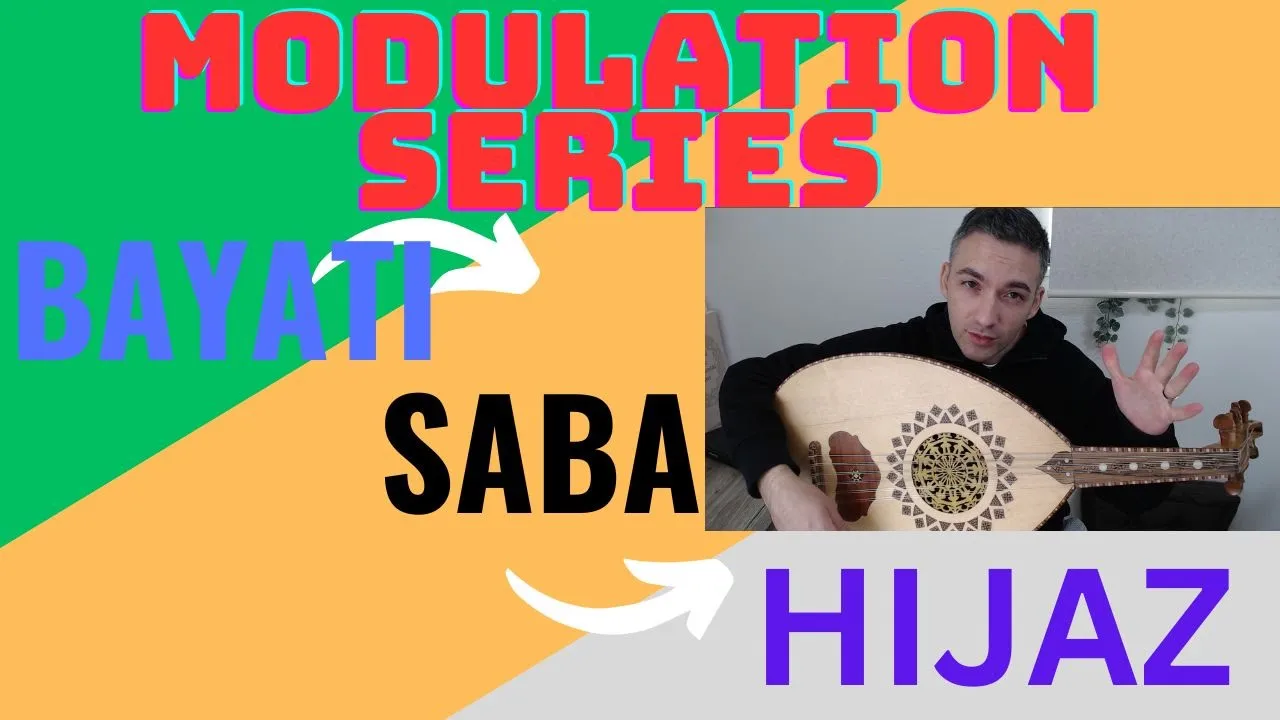
Modulation Techniques: Maqam Bayati to Saba to Hijaz
@OudforGuitarists
2.8K views•2024-03-18

Mozart's Musical Dice Game Explained: History, Rules, & Fun
@webpianoacademy
5K views•2023-03-13

Understanding Diatonic 7th Chords in Major Keys | Music Theory Tutorial
@GracieTerzian
54.7K views•2022-03-02
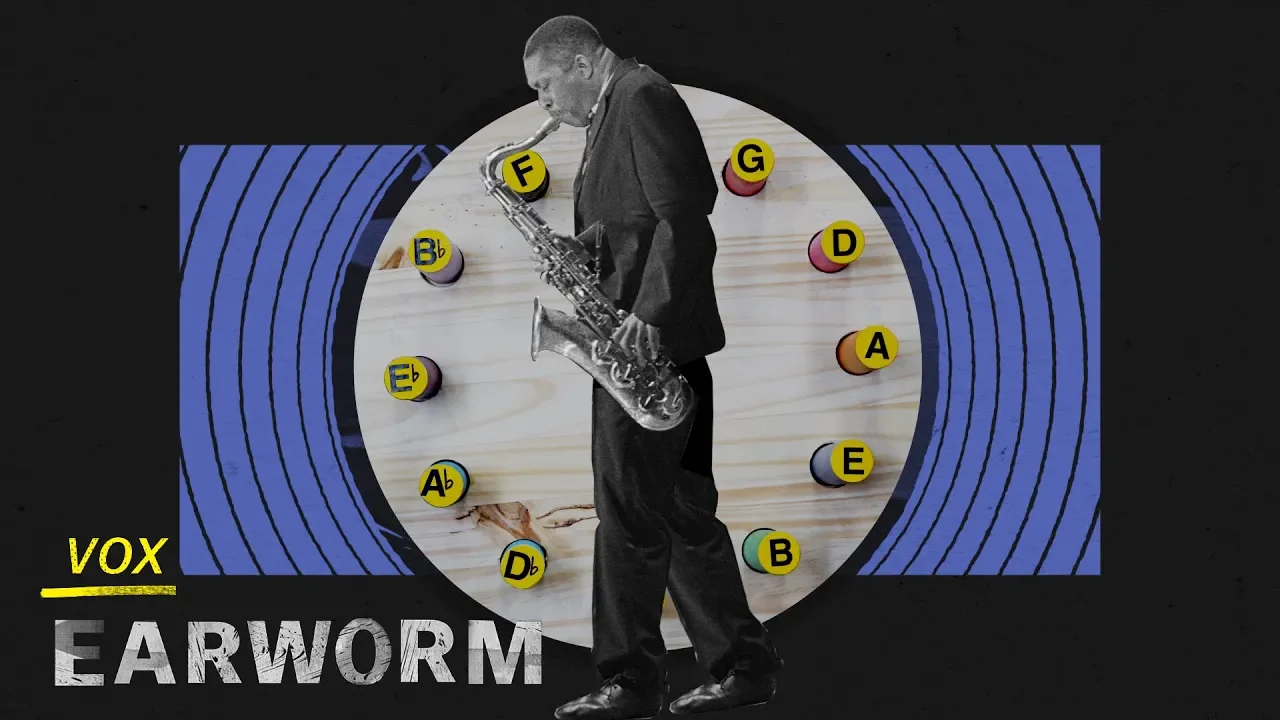
Understanding John Coltrane's Giant Steps: A Music Theory Analysis
@Vox
10.4M views•2018-11-12
Related Study Plans & Knowledge Roadmaps
Structured learning paths in Music Theory