This video demonstrates a complex modulation sequence in Arabic music theory, showing how to transition from Maqam Bayati to Maqam Saba and then to Maqam Hijaz, with the instructor explaining that the Hijaz note can be either flattened or kept sharp depending on musical context.
Modulation Techniques: Maqam Bayati to Saba to Hijaz
Added:Deep Dive
Understanding of basic Arabic maqam theory, including the concept of Ajnas (trichords, tetrachords, and pentachords) as the building blocks of melodic modes.

الأجناس . مفتاح تكوين المقامات
2.6K
In Arabic music, a 'Jins' (جنس) is a group of four consecutive notes that create a specific taste, feeling, and characteristic. Each Jins consists of four notes that follow each other in sequence. Since a complete Maqam (scale) consists of eight notes, each Maqam is formed by combining two Jins. Arabic music is built upon nine fundamental Jins: Al-Usim, Al-Rast, Al-Nahawand, Al-Bayati, Al-Kurd, Al-Hijaz, Al-Sabab, Al-Sikah, and Al-Aqd al-Nawath. These nine basic Jins serve as the foundation for all Maqamat in Arabic music.
Click to watch →

Arabic Music Maqam System: An Introduction with Layth Sidiq
9.5K
Maqam is the central pillar of Arab music traditions, serving as a melodic framework composed of building blocks called jins that creates specific moods through learned phrases and microtonal neutral tones; combined with the concept of tahrir (musical ecstasy) and the 1932 Cairo Congress's formalization of notation, these three pillars—maqam, tahrir, and neutral tones—unify the diverse musical traditions across the Arab world.
Click to watch →

12 ARABIC MAQAMS OUD AND KEYBOARD)
263K
This video demonstrates 12 traditional Arabic maqam (musical modes/scales) including Bayati, Saba, Sikah, Hijaz, Hijaz Kar, Kurd, Nawa, and others, performed on the oud and keyboard to teach Arabic classical music theory and practice.
Click to watch →

شرح الاجناس الموسيقة | جنس الاصل وجنس الفرع | وتطبيقه على مقام نهاوند الكردى
852
A musical scale (makam) consists of eight notes connected by seven intervals. The scale is built from seven sequential notes plus one 'answer' note. A 'Jins' (genre) is a fundamental unit of four consecutive notes connected by three intervals. These concepts form the foundation for understanding musical modes in Arabic music theory.
Click to watch →

Maqam Lesson 01: Jins Rast دروس في المقام - جنس راست
49.9K
Jins Rast is one of the fundamental modes (jins) in Arabic maqam music, characterized by its specific interval structure and emotional mood. To master this mode, learners should practice through multiple methods: first, learn the basic melodic vocabulary by repeating phrases and paying attention to melodic rhythm; second, identify the tonic (the note melodies resolve to) and the gamma (the second most important note), which together define the five-scale-degree structure of Jins Rast; third, practice melodies that emphasize each individual scale degree to understand their unique tension and resolution qualities; fourth, focus on developing muscle memory for the intervals between notes; fifth, correlate theoretical understanding with actual musical repertoire by listening to and singing along with traditional songs like 'Vanillishua' and 'Sari'; and finally, practice in different keys to recognize that the interval relationships and melodic vocabulary remain consistent. Embodiment—singing and playing the material—is essential for developing both ear training and muscle memory, whether as a vocalist or instrumentalist.
Click to watch →
Deep Dive
Familiarity with the specific interval structures, tonic notes, and scale degrees of Maqam Bayati, Maqam Saba, and Maqam Hijaz individually.

مقام البيــات / البيّــات Bayat maqam
67.7K
The Bayati Maqam scale consists of two main genres: Bayati (on Dohja degree) and Nawa (on Nawa degree). The maqam can be entered from multiple points including Rast, Juhri, or Nawa degrees. A common characteristic across all maqamat is that entry typically begins from Rast, the fifth degree, or the fourth degree. The musician has freedom of choice in entry points, but must ultimately arrive at Dohja as the stable degree. After establishing the maqam, the musician focuses on the first genre (root genre) before transitioning to the second stage characterized by the Fakh or Nawa genre.
Click to watch →

تعليم عود - شرح مقام الصبا على علامة ( ري ) و ( لا ) تقديم الأستاذ جاسم العيادة learn to play oud
340K
Maqam Saba is a sorrowful and passionate Eastern musical mode that begins from the note 'Re' on the third string, with the characteristic note being 'Sol' with 'Be'; it can also be performed starting from 'La' (common in the Arabian Gulf) or 'Jawar', with the scale structure varying accordingly while maintaining the distinctive 'Sol-Be' note that defines this maqam.
Click to watch →

تعلم تقسيمة مقام بياتي ( ري)-فيديو(6)- للتواصل الرياض - 0540700462
128.8K
The Bayati maqam, an Eastern musical mode containing a quarter tone and based on the note 'R' with transformation notes 'Mi' and 'Fa', is divided into four stages: (1) Istilah (establishment) to establish the Bayati note's character, starting from notes like Do, R, or Sol; (2) Middle section ascent from Sol to explore the scale's central area; (3) Jawab section ascent from La to reach the answer note; and (4) Return to the stable note for the final cadence.
Click to watch →

شرح مقام البياتي والسلطنة الجميل بكل سهولة - Maqam Bayat Lesson
49.5K
Maqam Bayati is a powerful Eastern musical mode that combines sadness, tenderness, and joy, making it the most versatile mode used by Quran reciters for both opening and closing their recitations. The scale begins on Ra (D) and ends on Ra (D), containing the notes: Ra, Mi, Fa, Sol, La, Si, Do, Re, Re, Do, Si, La, Fa, Mi, Re. It features two conversion marks: Si becomes Mi and Si becomes La. The total interval sum equals 6 semitones, following the fundamental rule that the sum of intervals in a musical mode equals 6. A famous example is the poem 'Hina yuhdi al-subh ashraq sunna' by Sheikh Nasr al-Din Tabar.
Click to watch →
سلسلة تعليم المقامات للرواديد وقراء القرآن ح1 مقام البيات ج1
65.4K
The Maqam Bayat scale is a musical scale that differs from the standard scale. While the standard scale is Do-Re-Mi-Fa-Sol-La-Si-Do, the Maqam Bayat scale uses different symbols: Re (instead of Do), Dohe (instead of Re), Mi, Si (instead of Mi), Jihar (instead of Fa), No (instead of Sol), and Hussein (instead of La). The Maqam Bayat scale begins on the Re degree and ends on the Re Jihar degree. The scale is: Re-Mi-Fa-Sol-La-Si-Do-Re-Do-Si-La-Sol.
Click to watch →
Deep Dive
Practical ability to execute and identify microtonal intervals (quarter tones), which are essential to the scales of Bayati and Saba.

الربع تون والنصف تون فى الموسيقي - الابعاد النغمية والمسافات الصوتية | Tone and Quarter tone
19.1K
Musical intervals are the distances between notes, measured in whole tones (200 cents), half tones (100 cents), and quarter tones (50 cents). A whole tone equals 9 commas in Arabic music theory, while a half tone equals 4 commas. The quarter tone is half of a half tone and is essential for playing Arabic music modes like Bayati, where it creates the characteristic microtonal sound by lowering notes by 50 cents.
Click to watch →
الشرح المبسط للمقامات الموسيقية -1- اساسيات ومصطلحات | مع عبدالرحمن طاحون من تونس |مهرجان دريم سيتي
7.2K
A tone (تون) is the interval between two adjacent notes on a piano keyboard, whether white or black keys. A semitone (نص تون) is half of a tone. The 12 notes of the musical scale are: Do, Do#, Re, Re#, Mi, Fa, Fa#, Sol, Sol#, La, La#, and Si. Each adjacent note is separated by one semitone. A quarter tone (ربع تون) is half of a semitone, equal to one-quarter of a full tone. This interval is unique to Arab music and is essential for constructing modes like Bayati, Rast, Sikah, and Saba. Understanding these intervals is fundamental to comprehending how musical modes are constructed.
Click to watch →

El Glitch de las Escalas | Arquitectura de las Escalas - PODCAST Episodio 3.
134
The Maqam system (Arabic musical tradition) fundamentally challenges Western assumptions by introducing quarter tones (1/4 tone intervals). While Western music divides the octave into 12 semitones, Maqam uses microtonal intervals that fall between standard piano keys. This microtonality was theoretically calculated by philosopher Alfarabi in the 10th century, nearly 1000 years before Europe standardized modern piano tuning. Maqam is not simply a list of allowed notes but a modular system built from 'ajnas' (melodic atoms) - small groups of 3-5 notes with specific emotional characteristics. A complete Maqam is created by combining two 'hins' (lower and upper melodic sections), like assembling structures with Lego pieces rather than melting everything into one mold.
Click to watch →

مراجعة | التربية الموسيقية - الهارموني والمقامات للصف الثاني عشر
1K
Bayati Maqam begins from the third degree of Rast (Jirqa) with intervals 3-2-4. The quarter tone appears between the third and fourth degrees. Note names include: Root=Jirqa, Third=Naw, Fourth=Husayni, Fifth=A, Sixth=E', Seventh=M. The quarter tone creates the distinctive Bayati sound. Understanding this maqam requires recognizing the interval pattern and note names, which determine its emotional character and musical function.
Click to watch →
6 Mini Scales That Create Maqam Music
210K
Jins Saba is the sixth fundamental maqam scale. Unlike any scale found in Western music, it is characterized by very small steps or intervals between each of the notes. When starting on C, the notes are C, D quarter flat, E flat, E natural. This scale demonstrates the microtonal nature of Middle Eastern music, where quarter tones create subtle but significant differences in pitch that are essential to the authentic sound of maqam music.
Click to watch →
Deep Dive
A foundational grasp of pivot notes and common tetrachords used to transition between different melodic modes.

Armonía Modal
31.2K
When transitioning between modes, pivot notes (notes common between modes) enable smooth transitions. For example, moving from D Dorian to F Lydian, B natural serves as a pivot, becoming the sharp 11 of F Lydian. However, shared characteristic notes between modes (like the sharp 11 in both Lydian and Mixolydian) create ambiguity requiring careful attention to melodic direction. Pedal points (sustained notes) maintain central clarity while allowing harmonic movement. Different modes have characteristic pedal point progressions: D Dorian uses 11-4, F Lydian uses 11-2, Mixolydian uses flat 7, and Phrygian uses flat 2. The same note behaves differently depending on its modal context—for example, B natural in C major (as the sixth) tends to move downward, while the same note as the sharp 11 in F Lydian tends to move upward. Understanding this helps create effective modal melodies.
Click to watch →
🎹 El truco olvidado para entender los modos: los tetracordes
733
Playing only white piano keys produces seven distinct modes, not just C major. Context determines whether music is modal or tonal, relating to tension and resolution conventions rather than psychoacoustic foundations. A pedal point (constant note) establishes the tonal center and modal color. A tetracord is a set of four notes, not an extended chord. Historically, music began with tetracords in Gregorian chant, and scales were built by stacking them. The major tetracord has the structure: tone, tone, semitone. Two major tetracords stacked form a complete major scale. The minor tetracord has the structure: tone, semitone, tone. The harmonic minor tetracord has: semitone, augmented second, semitone. The chromatic tetracord consists of four notes separated by semitones.
Click to watch →

INITIATION À L'ANALYSE MUSICALE
135.7K
Pivot notes are the specific notes that must be altered to move from one tonality to its neighboring key. For a major key, these are the fourth, fifth, and seventh degrees. By raising the fifth degree, you reach the relative major; by raising the fourth degree, you reach the dominant key; by lowering the seventh degree (leading tone), you reach the subdominant key. For C major, these pivot notes are F (fourth), G (fifth), and B (seventh).
Click to watch →

Las notas pivot AGRANDAN lo que tocamos
11.2K
A pivot note is a note that repeats multiple times within a musical phrase, creating tension and interest by generating unusual intervals; this technique can be applied to simple pentatonic melodies by intercalating the root note, or to blues progressions by placing the pivot note at either the lowest or highest position of the phrase, and can be adapted to different chord progressions by changing the pivot note for each chord.
Click to watch →
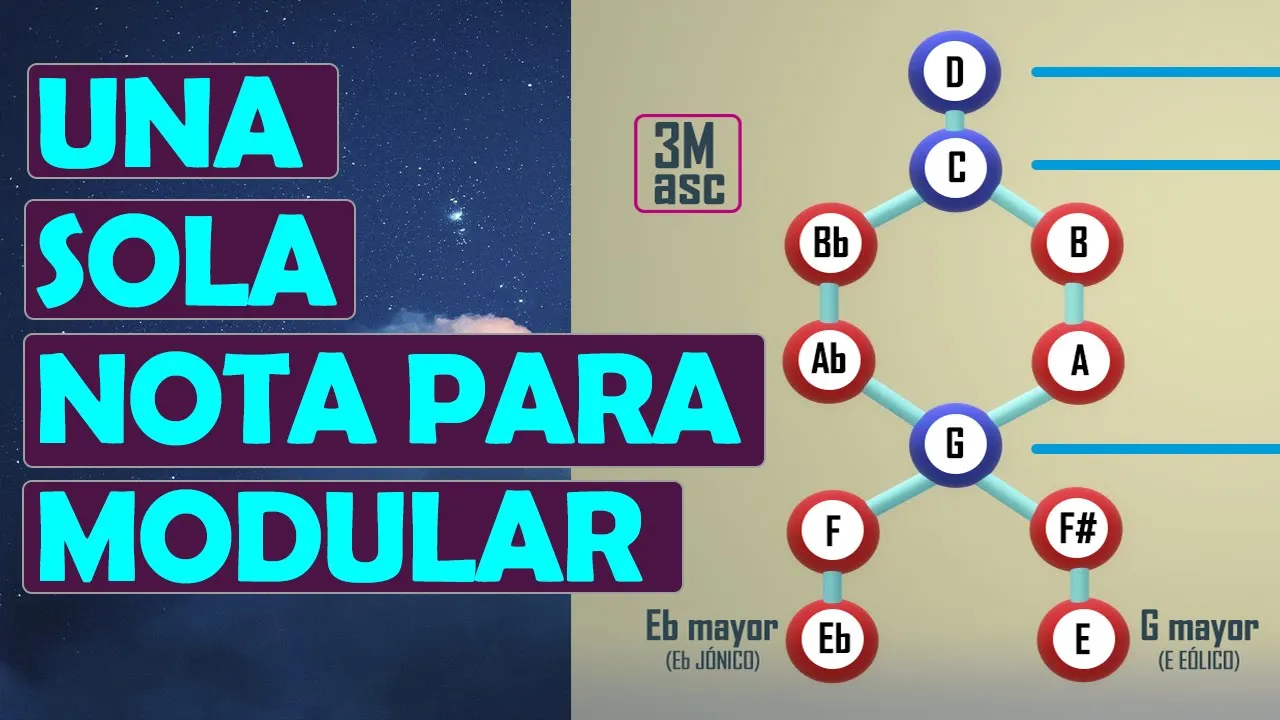
Modulando a través de UNA ÚNICA NOTA
721
In the chromatic system of 12 notes, each musical note belongs to seven different tonalities, creating a shared musical vocabulary across keys. A pivot note is a melodic note that exists in multiple tonalities and can be used to transition smoothly between them. The video demonstrates this concept through a practical example of modulating from Do Minor to Mi Minor using Sol as a pivot note. When analyzing common notes between minor tonalities, examining their relative major counterparts (Mi Bemol Mayor for Do Minor and Sol Mayor for Mi Minor) reveals the shared notes: Sol, Do, and Re. Any of these three notes can serve as a pivot for modulation between the two tonalities.
Click to watch →
Prerequisite Knowledge
- Concept 01Understanding of basic Arabic maqam theory, including the concept of Ajnas (trichords, tetrachords, and pentachords) as the building blocks of melodic modes.
- Concept 02Familiarity with the specific interval structures, tonic notes, and scale degrees of Maqam Bayati, Maqam Saba, and Maqam Hijaz individually.
- Concept 03Practical ability to execute and identify microtonal intervals (quarter tones), which are essential to the scales of Bayati and Saba.
- Concept 04A foundational grasp of pivot notes and common tetrachords used to transition between different melodic modes.
Subsequent Learning
- Step 01Application of the Bayati-Saba-Hijaz modulation pathway within a formal, unmetered improvisation (Taqasim).
- Step 02Study of more complex or distant modulation pathways, such as transitioning from Saba to Maqam Rast or Nahawand.
- Step 03Analysis of classical vocal and instrumental compositions (such as Muwashahat or Samai) that utilize these specific modulations.
- Step 04Advanced exploration of regional stylistic variations, ornamentation, and microtonal shading during modal transitions.
Modulation
Modulation
0:00Playing Section
- 1
Demonstrates a complex modulation from Bayti to Saba to Hijaz.
- 2
Shows pauses and note variations for smooth transitions.
- 3
Explains options to flatten or keep notes sharp.
The Oral-Intuitive Sayr Tradition vs. Analytical Jins-Based Modulation
Traditionalists and master educators in Arab music critique highly analytical, step-by-step approaches to maqam modulation that rely on formulaic transitions (such as shifting from Bayati to Saba to Hijaz based on overlapping tetrachords, or 'ajnas'). They argue that reducing maqam practice to modular, academic rules strips the music of its emotional and spiritual core, known as 'tarab'. In the traditional oral methodology, modulation is guided by 'sayr'—the organic, idiomatic melodic pathway unique to each maqam—and intuitive feeling ('sami'ah'), rather than academic recipes. Opponents of the highly structured, Westernized academic method argue that teaching intermediate students rigid transitional formulas risks creating sterile performances. They emphasize that authentic maqam expression relies on improvisational spontaneity, microtonal nuances, and regional aesthetic variations that cannot be fully captured by schematic modulation tutorials.
Deep Dive
Application of the Bayati-Saba-Hijaz modulation pathway within a formal, unmetered improvisation (Taqasim).

Maqam Lesson 31: Maqam Huzam and Awj Iraq دروس في المقام: مقام هزام و اوج عراق
1.2K
The Hijaz jins (3-4-5-6) is a primary pathway in Hozam, with the fifth scale degree featuring a raised fourth (4+) under five. Bayati and Hijaz often occur together on the same tonic, happening on the third scale degree of Sika. Bayati can resolve to Sika directly or through Hijaz first. The Rust jins occurs on the sixth scale degree underneath the Sika tonic, creating a distinctive 'upper rust' pathway. This section allows for improvisation (irtel) by singers.
Click to watch →

Amazing Oud! A New Improv by Mustafa Said
134.6K
Maqam Bayati is an Arabic musical mode that begins with a Bayati tetrachord on the first note and a Nahawand tetrachord on the fourth note (the dominant), with secondary ajnas including Ajam trichords on the third and sixth notes, which are commonly used for modulation; this maqam is best learned through listening to master improvisers like Mustafa Said demonstrate its structure in real-time performance.
Click to watch →

أسرار وتحويلات لمقام البياتى..
2.5K
This section demonstrates the practical application of Bayati's internal transformations during musical improvisation. The instructor shows how to ascend to C Minor (Si Bimol) through a specific note progression: Do, Si, Do, Si, Si Bimol. The lesson emphasizes that the challenge in Bayati improvisation lies in creating transformations with musical meaning and emotional impact, rather than arbitrary note movements. Musicians can apply these transformations when playing with other instruments, performing solo improvisations, or creating musical phrases. The instructor demonstrates how to navigate between different note combinations like Si Bimol and its variations, showing how to move from the taksim section back to the main Bayati structure. This practical demonstration helps musicians develop their improvisational skills within the Bayati mode.
Click to watch →
تمارين عمليّة لمقام الصبا | تقسيمات مبتكرة على الكمان 🎻 #تعليم_اونلاين
5K
Maqam Saba allows modulation to other maqamat by changing the root note. You can modulate to Hijaz (Fa-Do), Bayati (Sol-Be), or Kord (Sol-Be) while maintaining the Saba foundation. After modulation, you can return to Saba by changing the root note back. This demonstrates the flexibility of maqamat and how they can be connected through root note changes, creating musical variety.
Click to watch →

تقاسيم عود مقام بياتي Taqasim maqam Bayati
353.2K
This video demonstrates a traditional Oud performance featuring Taqasim (improvisational solo playing) in the Bayati Maqam, a fundamental mode in Arabic classical music characterized by its distinctive emotional depth and melodic structure.
Click to watch →
Deep Dive
Study of more complex or distant modulation pathways, such as transitioning from Saba to Maqam Rast or Nahawand.

الأستاذ أحمد مصطفى كامل فارس القرآن 10
74.1K
Quranic recitation uses specific musical modes called maqamat. Maqam Nahawand (also called Maqam al-Sahli in North Africa) is named after the Iranian city of Nahawand, where women historically sang at weddings. Maqam al-Gharib (the strange mode) was named because North Africans found it unfamiliar. Maqam Rast and Maqam Sighat are related modes - when reciting 'the earth,' reciters transition from Sighat to Rast by descending one step, symbolically representing the earth. Once a reciter enters a mode, they must stay within it without deviating to other notes.
Click to watch →
The Secret to Playing Taqsim
59.7K
Jins Rast (a four-note melodic sequence of whole step, 3/4 step, 3/4 step) serves as a fundamental tool for modulating between different maqams in Arabic music; by strategically pausing on specific notes from Jins Rast sequences (such as G, C, or F), musicians can smoothly transition between maqams like Nawa Athar, Hijaz, Saba, Sika, Kurd, Hijaz Kar, Jiharkah, and Ajam, as many traditional maqams contain hidden Jins Rast patterns that facilitate authentic-sounding modulations.
Click to watch →

انتقالة من مقام الرست الى النوى أثر ثم رست وقفلة بالبيات وتلاوة لم أجد لها مثيل
87.7K
This video presents a classical Quran recitation featuring a sophisticated musical transition from the Rast maqam to the Nahawand maqam, demonstrating advanced vocal techniques and interpretive artistry in Islamic sacred music.
Click to watch →
تعليم عزف الاورج_ مقدمة (فكروني) ام كلثوم . لحن محمد عبد الوهاب
16.2K
This segment covers the fundamental concept of transitioning between maqamat in Arabic music. The song 'Fakrouni' begins in Maqam Nihavand and ends in Maqam Rast. The instructor explains that the same melody can be played from different starting notes within the same maqam system without problems. The demonstration includes the initial melodic structure, voice entry patterns, and the qanun's role in adding melodic divisions. This shows how Arabic music creates variety through maqam transitions while maintaining melodic coherence.
Click to watch →
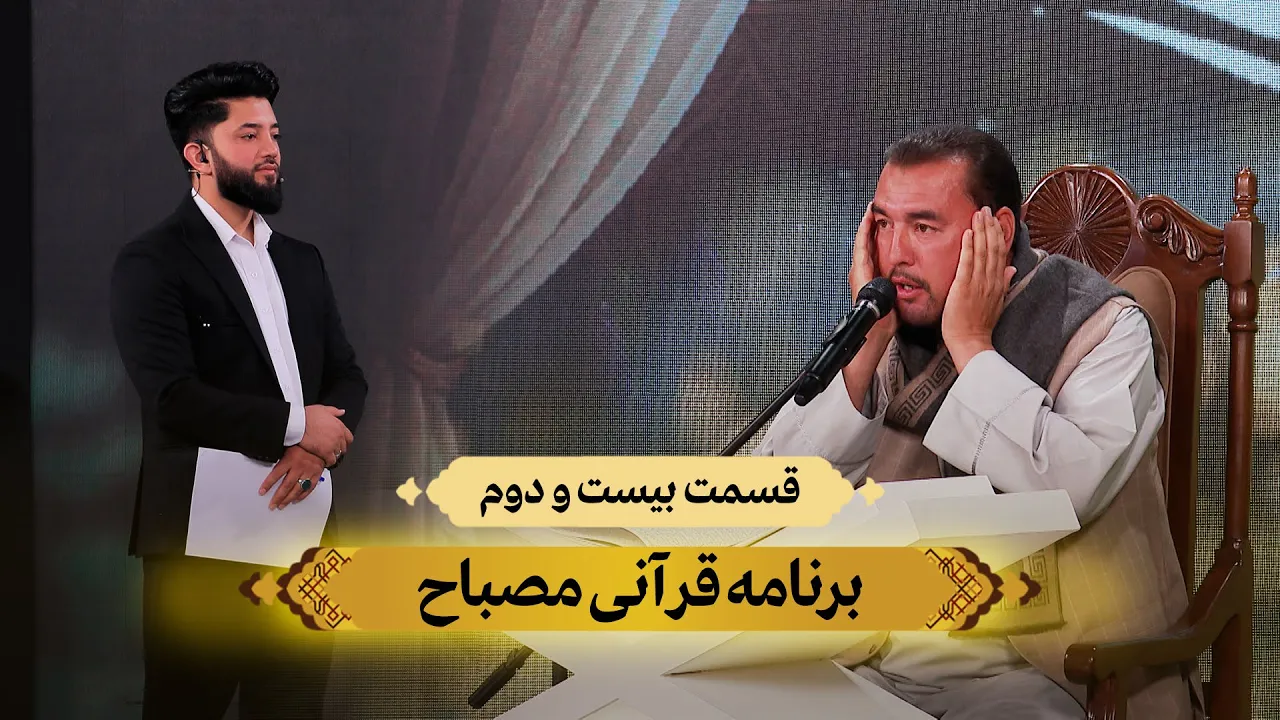
آموزش علمی قرآن کریم | مصباح (قسمت بیست و دوم) _ 1404/10/24
107
This section demonstrates modulation from Rast to Segah Maqam, which involves moving up one and a half notes (1.75 cents). In Rast Maqam, the third note is 'Dha' (د). Moving to Segah Maqam involves moving from this note to the next note, which raises the pitch by one and a half notes. The section provides practical examples of Quranic recitation showing how to execute this modulation, demonstrating the transition from Rast to Segah and back. This modulation is commonly used in Quranic recitation to create vocal variety and correct pitch issues.
Click to watch →
Deep Dive
Analysis of classical vocal and instrumental compositions (such as Muwashahat or Samai) that utilize these specific modulations.

Cours d'harmonie - 1.12 - Les modulations
143.3K
Modulation is the fundamental technique in classical tonal music (from Monteverdi to Wagner) where a piece changes its tonality during its course. Even small pieces like Mozart's menuets contain modulations, representing a 'promenade' or journey through different tonalities. The piece begins and ends in its principal key (tonalité générale), but the intervening section explores various tonalities. This creates a sense of geographic movement, similar to wandering from a sunny meadow into a darker forest, with major keys feeling bright and minor keys feeling somber.
Click to watch →
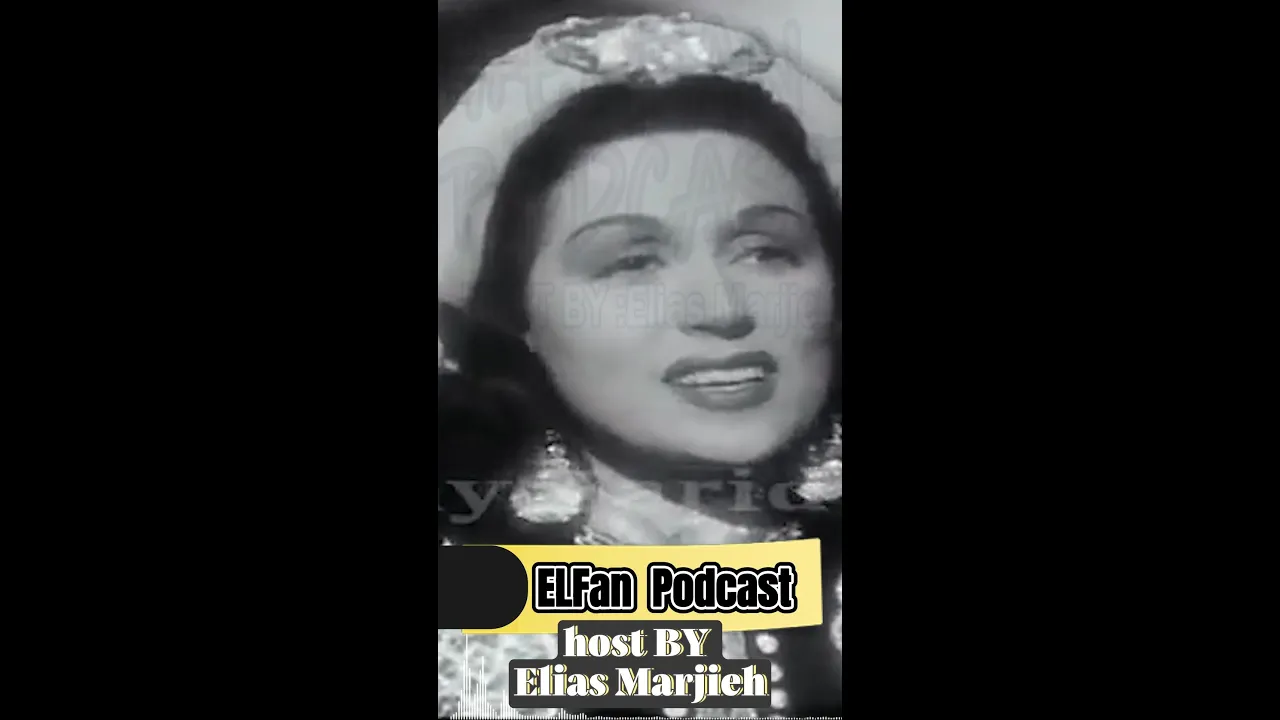
موشح ملا الكاسات وسقاني | الفن بودكاست حلقة 4
36K
Muwashahat is a traditional Arab musical form with debated origins attributed to Persia, Al-Andalus, or the Levant. The term derives from the Syriac word 'Mushkhta,' meaning 'rhythm' or 'chanting from the Psalms,' reflecting its influence from Syriac church music. The piece 'Mal al-Kasat wa Sakan' begins and ends in Rast maqam with improvisations on Sikka and Bayati, featuring an 8/10 'sama'i thqil' rhythm. First performed by Egyptian singer Abdu al-Hamuli, it spans 1333 vocal degrees—the maximum natural range of male choirs. To overcome high vocal challenges, male choirs strategically pause and allow female voices to take over when notes exceed natural capabilities, demonstrating sophisticated vocal management in traditional performance.
Click to watch →

Samai Ibrahim Al-Aryan - Layth Sidiq
26.7K
This video features Samai Bayyat, a traditional Arabic musical form composed by Ibrahim Al-Aryan, performed with the violin tuned one step down from standard tuning, demonstrating how the composer interprets this famous Samai that never gets old.
Click to watch →
![Sami Yusuf - En al-Ándalus [جادك الغيث] #classicalcrossover #worldmusictraditions](https://i.ytimg.com/vi/HZ_j9qlmdSI/maxresdefault.jpg)
Sami Yusuf - En al-Ándalus [جادك الغيث] #classicalcrossover #worldmusictraditions
3.6M
The muwashshah is a traditional form of classical Arabic music characterized by intricate poetic structures, complex melodic patterns, and sophisticated vocal arrangements that blend lyrical beauty with deep emotional expression, often exploring themes of love, spirituality, and human connection across cultural boundaries.
Click to watch →

Joyas de la Música Culta Árabe. Abdel Karim Ensemble
2.9M
Classical Arabic music employs a sophisticated modal system called Maqam, which uses quarter-tones and complex rhythmic patterns (wazn), allowing musicians to improvise (taksim) while maintaining strict adherence to traditional scales and poetic forms like Muwashaha, demonstrating how this ancient musical tradition developed parallel to Western classical music.
Click to watch →
Deep Dive
Advanced exploration of regional stylistic variations, ornamentation, and microtonal shading during modal transitions.

Reel Synth by Party Bag Plugins (No Talking)
150
The video suggests exploration of modal and microtonal possibilities through the use of non-Western tuning systems and scales. The performer accesses pitches and intervals outside traditional Western equal temperament, demonstrating how different tuning systems create unique sonic colors and emotional qualities. This illustrates the diversity of musical scales and tunings across global traditions.
Click to watch →

Advanced Reharmonization Techniques: 7 Beato Basics Explained
74.7K
Modal interchange involves exchanging regular modes for more exotic sounding modes over the same chords. For example, instead of using D Dorian over D minor 7, you might use D Phrygian. Instead of G Mixolydian over G7, you might use G altered dominant. This creates more interesting and exotic harmonic colors while maintaining the same chord progression.
Click to watch →
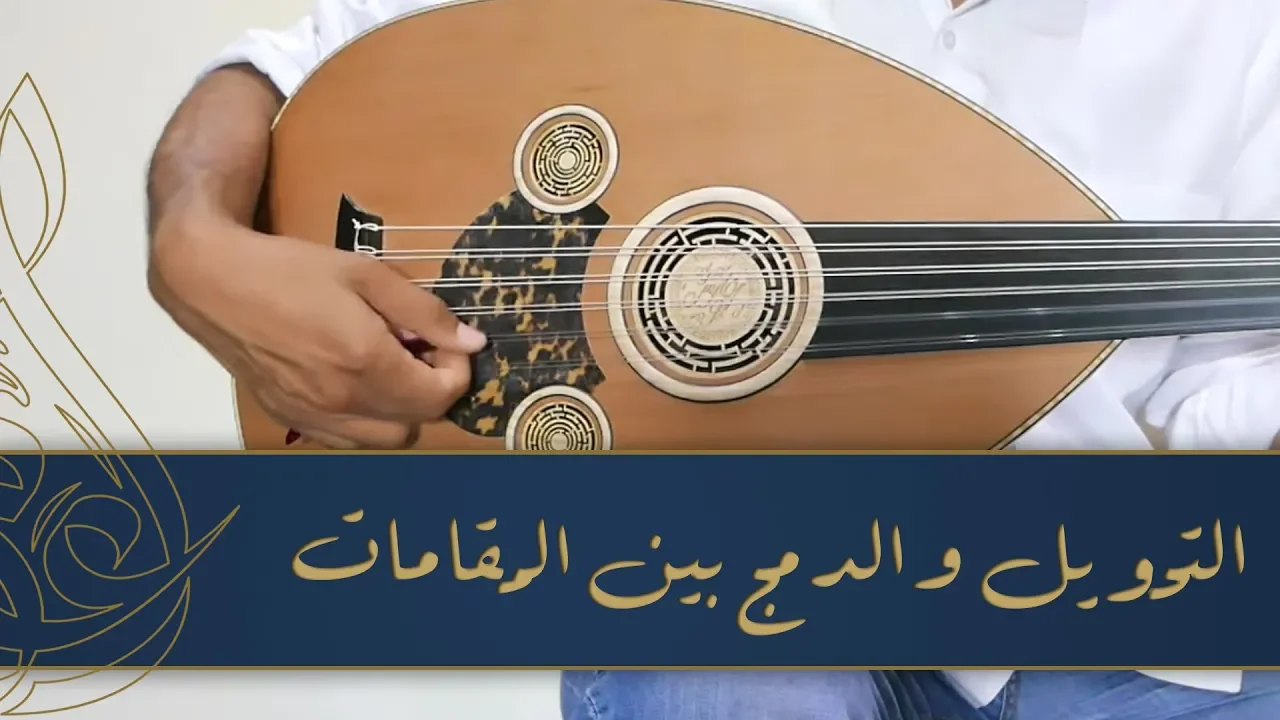
شرح أسلوب التحويل والدمج بين المقامات
99.8K
Modal transition involves moving between musical modes without disturbing the listener. Three main methods exist: (1) Using the second gender (fifth note) as a bridge to other modes, demonstrated through transitions from Hijaz to Bayat; (2) Using root notes by briefly stopping on specific notes before transitioning, shown through Raast to Sabah transitions; (3) Using deception by playing unexpected phrases that surprise the listener. Different modes share common notes (like Raast and Ajam sharing Doh, Re, Mi, and Fa), which serve as connection points. Each mode has a distinct personality determined by its structure and most prominent note. Understanding these shared notes and mode personalities allows performers to create smooth transitions by using them as bridges.
Click to watch →

Beautiful Moments with Trout Mask Replica
33.5K
Advanced harmonic techniques in Trout Mask Replica include chromatic baselines, cluster chords, and modal exploration. Chromatic baselines move by half steps rather than whole steps, creating tension and movement. Cluster chords involve closely spaced notes that produce dense, dissonant sounds. In Hair Pie, guitar right strums fourths (A# and D#) then rises a half step to B and E, while guitar left accents this half-step rise with fourths (C# and F#), creating clean little clusters. The Perfect Koda demonstrates modal exploration within the same key center: guitar right plays pentatonic lick in F natural minor while guitar left uses notes from F melodic minor. This creates a unified yet varied harmonic palette. The altered dominant sound features dominant seventh chords with raised or lowered extensions, such as C augmented 7 sharp 9 resolving to F minor 11. Adding a G# tone colors the F minor 11 by adding a ninth, creating a lush, open sound that is difficult to achieve on a single guitar.
Click to watch →
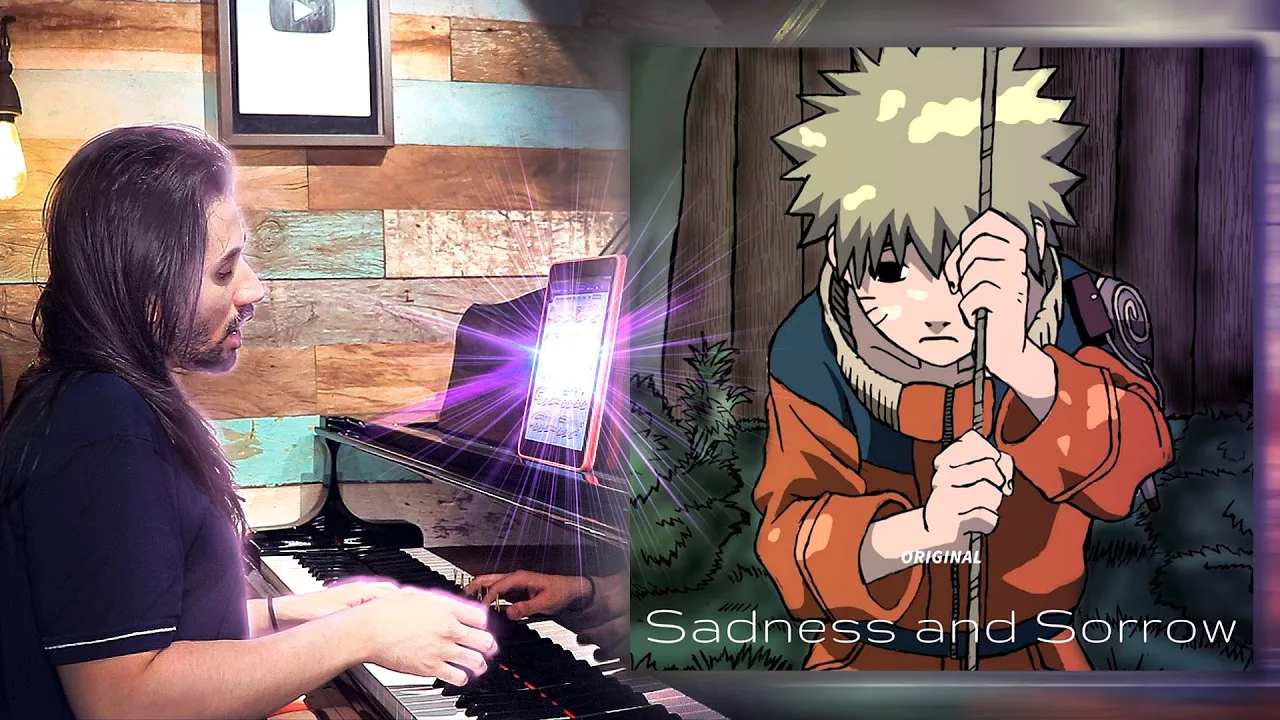
Melhorando Música de ANIME | Naruto Sadness and Sorrow - Franz Ventura
13K
This segment explores advanced musical expression techniques including modal scales, ornamentation, and ligature. The instructor discusses how modal scales create exotic or ancient sounds but may not suit all musical contexts. The segment emphasizes the importance of proper ornamentation and ligature in creating musical expression, noting that the original piece lacked these elements. The instructor also addresses harmonic analysis techniques, demonstrating how to group fragmented notes into coherent chords and discussing the use of chromaticism. The segment concludes with the instructor's personal preference for diatonic harmony over modal approaches in this particular piece.
Click to watch →
Modulation
Modulation
0:00- 1
Demonstrates a complex modulation from Bayti to Saba to Hijaz.
- 2
Shows pauses and note variations for smooth transitions.
- 3
Explains options to flatten or keep notes sharp.
The Oral-Intuitive Sayr Tradition vs. Analytical Jins-Based Modulation
Traditionalists and master educators in Arab music critique highly analytical, step-by-step approaches to maqam modulation that rely on formulaic transitions (such as shifting from Bayati to Saba to Hijaz based on overlapping tetrachords, or 'ajnas'). They argue that reducing maqam practice to modular, academic rules strips the music of its emotional and spiritual core, known as 'tarab'. In the traditional oral methodology, modulation is guided by 'sayr'—the organic, idiomatic melodic pathway unique to each maqam—and intuitive feeling ('sami'ah'), rather than academic recipes. Opponents of the highly structured, Westernized academic method argue that teaching intermediate students rigid transitional formulas risks creating sterile performances. They emphasize that authentic maqam expression relies on improvisational spontaneity, microtonal nuances, and regional aesthetic variations that cannot be fully captured by schematic modulation tutorials.
Understanding of basic Arabic maqam theory, including the concept of Ajnas (trichords, tetrachords, and pentachords) as the building blocks of melodic modes.
Familiarity with the specific interval structures, tonic notes, and scale degrees of Maqam Bayati, Maqam Saba, and Maqam Hijaz individually.
Practical ability to execute and identify microtonal intervals (quarter tones), which are essential to the scales of Bayati and Saba.
A foundational grasp of pivot notes and common tetrachords used to transition between different melodic modes.
Application of the Bayati-Saba-Hijaz modulation pathway within a formal, unmetered improvisation (Taqasim).
Study of more complex or distant modulation pathways, such as transitioning from Saba to Maqam Rast or Nahawand.
Analysis of classical vocal and instrumental compositions (such as Muwashahat or Samai) that utilize these specific modulations.
Advanced exploration of regional stylistic variations, ornamentation, and microtonal shading during modal transitions.
2.8K views103likes3:08@OudforGuitaristsOriginal Release: 2024-03-18
hey this is naid from udas today I'm going to show you another modulation this time it's going to be a complicated one it will be from makam bayti to makam Saba to makam hij and back or some combination of this see how we do this we start by playing m Bay bti [Music] [Music] [Music] and go straight into there pause on the F through it to [Music] subba you can then from the e you can then get to hij and you can flatten it or you can keep it the same nice and sharp that's fine [Music] [Music] [Music] fine let's see if I can do this again a little bit more clear [Music] [Music] [Music] the [Music] [Music] if you enjoyed this video please make sure you click the Subscribe button and you'll see another one of these next week you'll also hear about good opportunities to learn more of these types of modulations thanks for watching and see you next time
Up Next

73:20
7 Levels of Learning Maqam: Oud Masterclass
@OudforGuitarists
8.7K views•2021-02-15

10:20
Mozart's Musical Dice Game Explained: History, Rules, & Fun
@webpianoacademy
5K views•2023-03-13
5:19
Quartertones in Persian, Arabic, and Turkish Music: A Comparative Guide
@OudforGuitarists
198.1K views•2015-05-16
10:49
Understanding John Coltrane's Giant Steps: A Music Theory Analysis
@Vox
10.4M views•2018-11-12
Related Study Plans & Knowledge Roadmaps
Structured learning paths in Music Theory
music-theory
Composing Galant Music: Partimento & Schemata
01Foundations of Figured Bass and Keyboard Harmony
02The Rule of the Octave (Regola dell'Ottava)
03Galant Schemata: The Building Blocks of Form
+ 2 more learning modules
30h5 modules
Explore Roadmap
music-theory
Decoding Overtone Series: Tuning & Drone Music
01Acoustic Foundations: The Physics of the Overtone Series
02Tuning Systems: Equal Temperament vs. Just Intonation
03Microtonality and Spectralism: Beyond Standard Pitches
+ 2 more learning modules
24h5 modules
Explore Roadmap
music-theory
Impressionist Harmony: Scales, Planing & RPGs
01Foundational Music Theory: Keys, Intervals, and Seventh Chords
02Impressionist Color: Chord Planing and Parallel Harmony
03Whimsical Textures: Pentatonic Cascades and Whole-Tone Scales
+ 1 more learning modules
14h4 modules
Explore Roadmap
music-theory
Negative Harmony: Axis Reflection in Indie Pop
01Music Theory Foundations: Scales, Intervals, and Triads
02Functional Harmony and the Circle of Fifths
03Demystifying the Negative Harmony Axis Reflection
+ 2 more learning modules
16h5 modules
Explore Roadmap