


![AI영화 [스토리와시나리오]](https://i.ytimg.com/vi/qgMuxM1_X24/sddefault.jpg)




![La magia del montaje (2004) Castellano [HD 1080p]](https://i.ytimg.com/vi/t1-bBjdAqGE/maxresdefault.jpg)






![Daily Review | The Grey Fox [1982]](https://i.ytimg.com/vi/MT3Gfet3p4M/maxresdefault.jpg)
Edwin S. Porter revolutionized early cinema by developing fundamental narrative techniques including parallel action (cross-cutting) and camera movement (pan and tilt), transforming films from simple attractions into sophisticated storytelling mediums; his 1902 film 'Life of an American Fireman' introduced parallel action, while his 1903 masterpiece 'The Great Train Robbery' combined this technique with innovative camera movements and dramatic point-of-view shots, establishing the foundational grammar of narrative film that subsequent directors would expand upon for decades.
Film Language and Edwin S. Porter: Crash Course Film History #5
Added:Understanding of early cinema's 'cinema of attractions' phase, characterized by the Lumière brothers' actualities and Georges Méliès's theatrical trick films.
Familiarity with the concept of a 'shot' as the basic unit of film and how early films were typically comprised of single, unedited takes.
Basic awareness of the transition from non-narrative recording of events to narrative storytelling in the late 1890s and early 1900s.
Concept of 'film grammar' or 'film language', referring to how visual elements are structured to communicate meaning to an audience.
The expansion of Porter's techniques by D.W. Griffith, who formalized parallel editing, the close-up, and dramatic pacing in narrative cinema.
The emergence of Soviet Montage Theory in the 1920s, exploring how filmmakers like Sergei Eisenstein used editing to generate intellectual and emotional responses.
The development of the Classical Hollywood Style and the rules of 'continuity editing' designed to maintain spatial and temporal coherence.
Analyzing modern applications of parallel editing and cross-cutting in contemporary thrillers and action films to trace the legacy of Porter's innovations.
412.5K views8.1Klikes9:29Original Release: 2017-05-11
The earliest days of film are full of self-taught artists, doing lots of experimentation, and stumbling across many a happy accident. And some sad accidents, probably.
Nobody really knew what they were doing.
They were making it up as they went, and audiences went along for the ride.
At first, people was impressed by the sheer technical marvel of moving pictures.
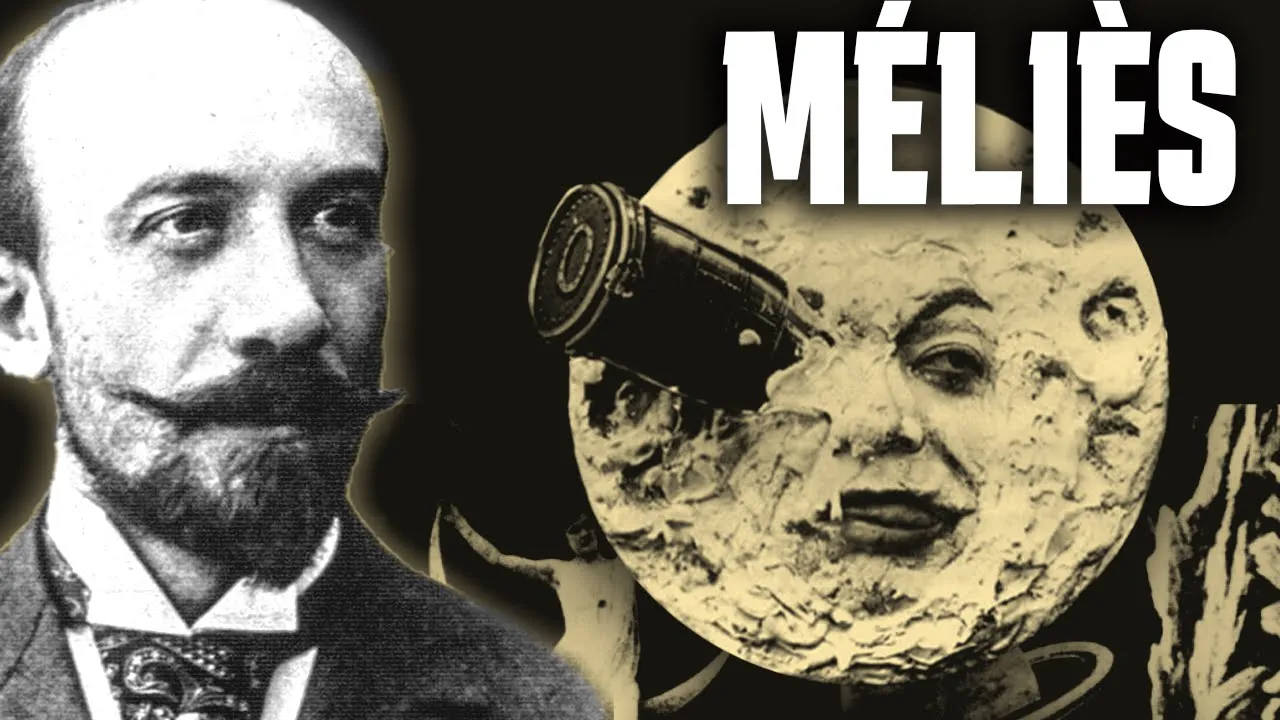
But thanks to Georges Méliès’ passion for to dazzling illusions and tricky editing, film began to emerge as a new medium for stories.
As filmmakers started to experiment with narrative film, they began to establish a language through different editing techniques and camera movements.
And with any language comes rules – things like grammar, syntax, and punctuation – which can help artists and storytellers communicate their ideas in clear and interesting ways.
But before rules can be followed, or broken, or mastered, they have to be discovered by someone.
And for film, that someone was Edwin S. Porter. And for Eagle Punching, that's me.
[Opening Titles Play] Georges Méliès was a stage magician whose whole approach to entertainment was to wow an audience with illusion, extravagance, and surprise.
So it makes sense that his films, as impressive and influential as they were, operated as performative spectacles.
This type of filmmaking is more interested in presentation than representation.
We’re supposed to sit back in slack-jawed amazement at the mysterious feats occurring before us, instead of empathizing with characters or “finding ourselves” on screen.
The film scholar Tim Gunning calls this the “Cinema of Attractions,” and offers it as a way to think about the entire first decade of film – where the novelty itself of film is enough to keep people buying tickets.
You’ve probably experienced this concept at some point: a new technology comes out, and at first we’re all just marveling at what it can do.
Like, posting shaky vertical videos of your cat online for everybody to see.
Or wandering around outside throwing virtual Pokéballs at virtual Pokémon. Speaking of... GOT 'EM!
But eventually, the newness wears off, and people want something more.
I havn't played Angry Birds in many months.
That’s what was happening in 1903, as mainstream films started to focus more on narratives designed to engage the viewer, rather than simply astonish them.
And that’s exactly when Edwin S. Porter entered the filmmaking scene.
Born in 1870, Porter worked as a sign painter, telegraph operator, and minor inventor, before becoming a touring projectionist.
He travelled from South America to Canada exhibiting films for a device called the Projectorscope – one of Edison’s competitors.
Part of Porter’s job was to assemble the various actualités and short films into longer feature programs.
He picked the order, created transitions between the films, and arranged for any musical or spoken accompaniment.
Now, this feels like a good place to make a point about silent films.
Because there was no such thing!
WHAT!?!?!
I mean, even in the Golden Age of Silent Film, movies were almost never shown in actual silence.
We call them “silent films” because the technology to record synchronous sound hadn’t really been invented yet.
But that doesn’t mean that folks gathered in theaters, church basements, or barns and watched films in pin-drop silence.
Larger venues employed full orchestras, bands, or organists to accompany their films.
Smaller spaces might have had a piano player or a phonograph.
Or a guy who went, "la la laaaa"... probably not that though.
Some films were even released with scripts to be performed by actors, or voice-over narration to be read along with the images.
So in 1899, after his stint as a travelling exhibitor of not-so-silent films, Porter returned to New York.
He eventually became the head of production at one of Edison’s film studios, responsible for setting the stories, operating the camera, directing the actors, and assembling the final films.
Wore a lot of hats, that guy.
This is where his time as a touring projectionist came in handy.
Not only did he have a good idea what kinds of stories and techniques played well in front of an audience, but he’d also spent a lot of time cutting together different pieces of film.
In doing this rough kind of “editing,” he stumbled upon a bunch of techniques and effects he would put to use in his own multi-shot films.The most influential of these is called parallel action or cross-cutting.
It’s an editing technique so powerful, and which occurs in so many films and TV shows today, that you probably don’t even think about it.
Basically, parallel action is the idea that a film can cut back and forth between two or more events that are happening simultaneously within the world of a film.
Even though you’re seeing these scenes in sequential order, your brain understands that they’re actually happening at the same time.
Like, imagine two parallel lines.
Each one represents the timeline of an event, and both events are occurring at the exact same time.
Now, imagine slicing those two lines up, and stitching a few alternating pieces together into a single new line.
If I were to show you that final assembly of film, your brain would intuitively understand that these events were happening at the same time.
Cool, right?
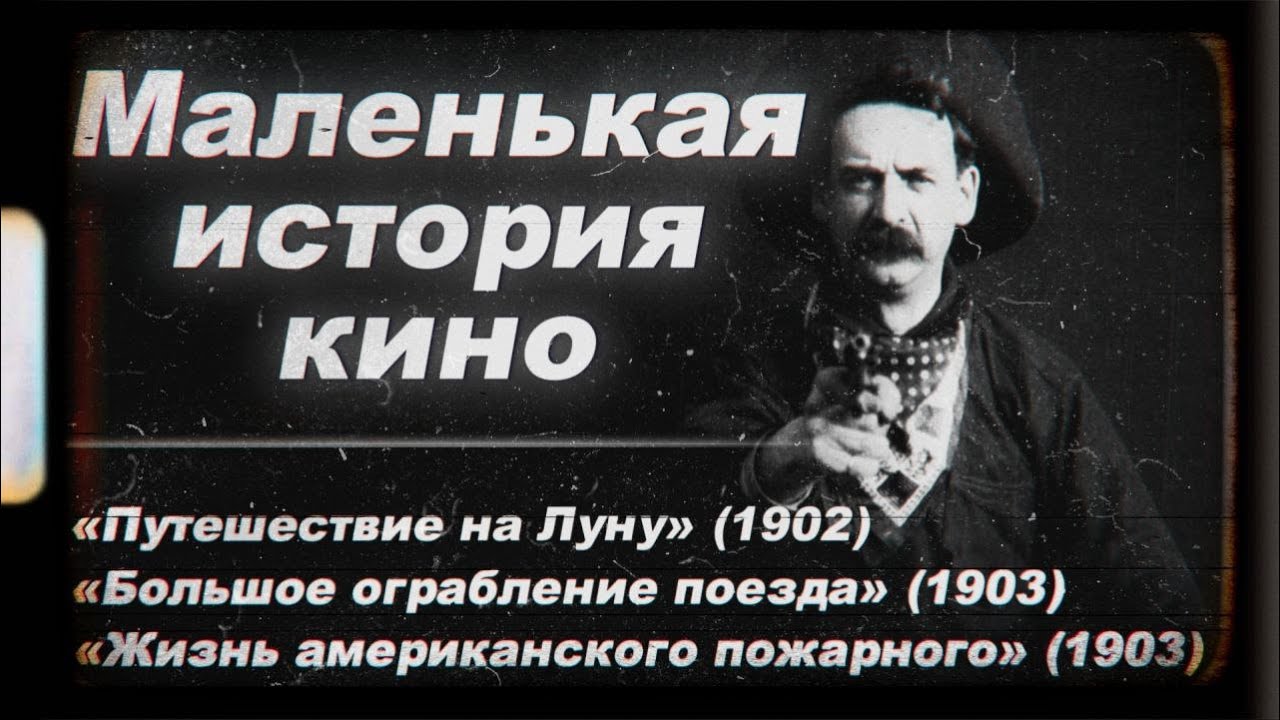
The first film that we know utilized parallel action successfully was Edwin S. Porter’s Life of an American Fireman, made in 1902 and inspired by Méliès’ A Trip to the Moon.
The story follows – spoiler alert – an American fireman, who rescues his wife from a burning building.
The film begins with a napping fireman dreaming about his wife and child going to bed at home.
I love napping.
After a fire alarm is pulled, and the firemen race to the house on fire, we cut inside the building to see the wife and child carried out of their smoke-filled bedroom.
Then, the film cuts back outside the building, and we watch the same firemen enter the same building and emerge once again with the wife and the child.
Even though this innovation seems small, it contributed to film grammar in ways we still see to this day, and affected what filmmakers thought was possible as they constructed their stories for the screen.
Now, in 1903, Porter released his most successful film: The Great Train Robbery.
Some scholars argue that The Great Train Robbery doesn’t use parallel action in the same way that The Life of an American Fireman did.
But I think a close reading of the film shows a sophisticated understanding of how a filmmaker can manipulate time by cutting between simultaneous scenes.
In the film, a railroad engineer is knocked out and tied up by a group of bandits bent on hijacking a train.
The heist plays out in a traditional, linear fashion: Each scene is one uninterrupted shot after another, including a really long shot of the thieves lining up the passengers and stealing their stuff.
Then, a remarkable thing happens... and I'm gonna remark on it.
Once the heist is complete, the film cuts back to the railroad office, as a young girl discovers the unconscious engineer, revives him, and sets him free.
We then cut to a group of law enforcement officers at a dance, where the engineer busts in and alerts them to the heist.
And finally, we cut to the criminals riding horses through the woods, being chased by the law enforcement officers.
At this moment, the two time streams that were happening simultaneously – the railroad engineer’s and the criminals’ – suddenly merge.
And the rest of the film plays out in another linear scene in which the offers gun down the criminals, dispensing the kind of frontier justice that would make Clint Eastwood proud.
Contemporary films use cross-cutting all the time.
Take the final sequence from The Godfather, for example.
70s but, contemporary.
In it, director Francis Ford Coppola cuts back and forth between the baptism of Michael Corleone’s godson and the slaughter of his enemies – church to bloodbath and back again. Fun.
This kind of parallel action not only shows us events that are happening simultaneously, but also connects them thematically and symbolically.
Michael is consolidating his power as head of a major crime family through both violent and peaceful means, in ceremonies both sacred and profane, juxtaposing life and death.
Not every use of parallel action is as profound as that, though.
Comic book blockbusters like The Dark Knight or Captain America: The Winter Soldier cross-cut during action sequences to heighten tension, while thrillers like The Fugitive and The Silence of the Lambs juxtapose the pursuer and the pursued.
And every romantic comedy that ends with a race to the airport cuts back and forth between the would-be sweethearts, daring us to consider the possibility that they won’t live happily ever after.
All of that starts with Edwin S. Porter and his experiments with parallel action.
Porter was responsible for a few other innovations in The Great Train Robbery that made it one of the most influential movies of the early silent era.
Before The Great Train Robbery, most films consisted of static shots.
The camera was set up, someone turned the crank, and the scene played out before the lens.
Porter was among the first filmmakers to begin moving the camera during the shot.
And that’s how we got the pan and the tilt.
A pan occurs when the camera is turned left or right on a horizontal axis from a fixed point, like the top of a tripod.
And a tilt happens when the camera is moved up or down on a vertical axis from a fixed point.
Porter used both in The Great Train Robbery, including one remarkable pan as the escaping criminals hop over a stream and scurry through the trees.
The camera pans left with them to discover… horses: their means of escape!
The film and the filmmaker are playing a trick on us.
They know more than we do, and Porter is revealing narrative information in a camera move, instead of just showing us everything!
He’s using the camera to tell the story. Amazing!
Here’s another chance to put yourself in the shoes of an audience member: one who’s only seen films where the camera never moved, and all the story information was right there in the shot.
Then imagine seeing a film where that information was withheld and given to you piece by piece, keeping you on your toes.
You’re suddenly watching an exponentially more sophisticated film.
Lucky you.
Not to mention, the last shot of The Great Train Robbery was unique in its own right.
It’s a medium close-up of one of the bandits, much closer than any shot we’ve seen so far – from about navel up – and he’s looking directly at us.
He raises his pistol, aims at the camera – at us! – and fires.
The size, scale, and direct gaze of this shot was startling at the time, and influential enough that Martin Scorsese stole it for a key moment in Goodfellas.
And if it’s good enough for Marty, it must be pretty good. Marty, if you're watching? Can I call you Marty?
Let me know in the comments.
No single filmmaker did as much to shape narrative film grammar in the first decade of motion pictures as Edwin S. Porter.
He uncovered a series of tools and techniques – the first rules of narrative film language – that subsequent directors would use, modify, and expand upon for decades to come.
Prior to The Life of an American Fireman and The Great Train Robbery, films were almost all constructed in a strictly linear fashion – complete scene followed by complete scene. BORING!
But after Porter, filmmakers became more adept at telling stories, using shots and cuts to engage the audience and keep them coming back for more.
And in many ways, film has never looked back.
Today we learned about Edwin S. Porter, whose experiments with editing helped establish the language of narrative film, and expanded the horizons of what filmmakers thought was possible.
We introduced the idea of cross-cutting, and how our brains can understand when a film cuts between simultaneous events.
Then, we discussed how Porter innovated even more storytelling tools, like moving the camera in pans and tilts.
And now that the foundation has been laid, next time, we’ll talk about even more developments in film language and the emergence of the feature film.
Crash Course Film History is produced in association with PBS Digital Studios.
You can head over to their channel to check out a playlist of their latest amazing shows, like PBS Space Time, The Good Stuff, and Blank on Blank.
This episode of Crash Course was filmed in the Doctor Cheryl C. Kinney Crash Course Studio with the help of these nice train robbers and our amazing graphics team, is Thought Cafe.
Up Next
2:56
Cross-Cutting in Film: History, Techniques, and Notable Directors
@Mou5eBoy
29.7K views•2017-02-09

23:14
Visual Analysis Essay: How to Analyze Graphic Novels in College Writing
@nataliepleimann5941
1K views•2020-10-14
12:06
Melodrama in 19th-Century Theater: Origins & Impact
@crashcourse
227.5K views•2018-09-07

4:00
Evolution of Darth Vader: Anakin Skywalker's Animated Journey Across Star Wars Films
@TellItAnimated
13.4M views•2019-03-30
Related Study Plans & Knowledge Roadmaps
Structured learning paths in Film Analysis
film-analysis
Sensory Cinema: Foley, Haptic Sound & Texture
01Introduction to Film Sound and Foley Artistry
02Micro-Sounds, Textures, and Extreme Amplification
03Haptic Audition and Film Phenomenology
+ 1 more learning modules
12h4 modules
Explore Roadmap
film-analysis
Breaking the Fourth Wall: Mockumentary & Satire
01The Invisible Wall: Basics of Cinematic Illusion
02Looking at the Lens: Direct Address & Character Glances
03The Mockumentary: Satire, Realism, and Complicity
+ 2 more learning modules
12h5 modules
Explore Roadmap
film-analysis
Analyzing the Long Take: Cinema, Space & Ethics
01Foundations of Film Grammar: Montage vs. The Long Take
02Choreography and Mechanics of the Simulated One-Shot
03Phenomenology of Film: Real-Time Spatial Continuity
+ 1 more learning modules
14h4 modules
Explore Roadmap
film-analysis
Anachronistic Music: Period Drama & Subversion
01Foundations of Film Sound and the 'Needle Drop'
02Traditional Authenticity vs. Revisionist History
03The Rise of the Anachronistic Soundtrack
+ 2 more learning modules
12h5 modules
Explore Roadmap