Cross-cutting (parallel editing) is a film technique that alternates between two or more scenes happening simultaneously in different locations, creating tension and emotional impact; pioneered by Edwin S. Porter in 'Life of an American Fireman' (1903), popularized by D.W. Griffith in 'The Birth of a Nation' (1915), and later used by George Lucas in 'American Graffiti' (1973) and Christopher Nolan in 'The Dark Knight' (2008) to manipulate audience expectations and create dramatic climaxes.
Cross-Cutting in Film: History, Techniques, and Notable Directors
Added:Deep Dive
Basic continuity editing principles, including the 180-degree rule, match-on-action cuts, and eye-line matches.

Introduction to EDITING THEORY | Continuity Editing, Montage, the Rule of Six, and MORE!
13.2K
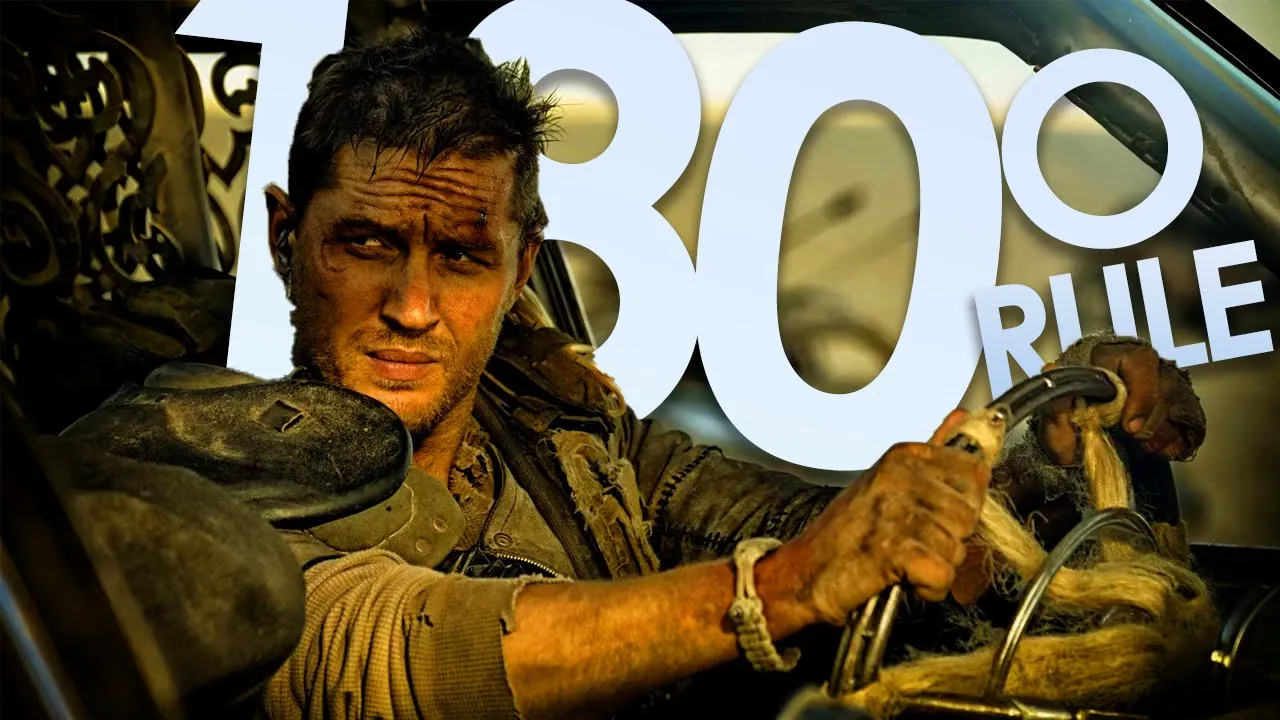
Continuity editing forms the foundational grammar of video editing, functioning like sentence structure in writing. It maintains viewer immersion by following five key principles: eye line (ensuring subjects appear to look at each other), eye trace (directing viewer attention to important information), matching action and cutting on action (creating seamless transitions), continuity of objects (preventing objects from disappearing/reappearing), and the 180-degree rule (maintaining spatial orientation). These rules must be understood before intentionally breaking them for dramatic effect.
Click to watch →
What is Continuity Editing?
34K
Continuity editing is a Hollywood filmmaking technique developed in the 1910s that transmits narrative information smoothly by making cuts functionally invisible through adherence to spatial and temporal principles, including the 180-degree rule (keeping the camera on one side of an imaginary axis between characters to maintain consistent left-right spatial relationships), shot reverse shot sequences, eyeline matches, point of view shots, establishing shots, and match on action cuts that splice different views of the same action together to create seamless visual flow.
Click to watch →

How to Analyse Editing | Insiders Film School
11.3K
Continuity editing creates linear, immersive narratives through invisible cuts. Key techniques include: establishing shots provide context at scene beginnings; match on action disguises cuts through continuous physical movements; eyeline matches show character perspectives; shot reverse shot handles dialogue exchanges; and the 180° rule maintains consistent spatial orientation. These techniques work together to guide viewers intuitively through scenes, developed during silent cinema when 'show don't tell' was essential and remaining dominant in mainstream films today.
Click to watch →

Editing in Egoyan's Adoration
206
Continuity editing is the most important and long-lasting editing tradition in film history. It creates maximum order in spatial, rhythmic, graphical, and temporal relations from shot to shot. The goal is to construct the illusion of continuously existing time and space in the story world, minimizing disruptive editing effects by subordinating form to story content. Key techniques include: establishing shots (first shots establishing spatial layout), eyeline matches (imaginary lines connecting character gazes), match on action (cuts during movement), point of view shots (camera in character's perspective), and the 180-degree rule (staying on one side of an imaginary line). These techniques work together to create the illusion that viewers are not watching a movie but are directly present in the story world with the characters.
Click to watch →

Film Editing Explained: Continuity vs Discontinuity | Lesson 5.2
11.4K
Continuity editing, also called invisible editing, maintains a seamless narrative flow where viewers don't notice cuts. Key techniques include: starting scenes with establishing shots to orient audiences; using shot reverse shot for two-character dialogue; cutting on action (mid-action cuts like mid-swing) to hide edits; following the 180-degree rule (axis of action) by keeping all camera work on one side of an imaginary line between characters; applying the 30-degree rule by moving the camera at least 30 degrees between similar shots; and using eye line matches where characters look at something and the next shot shows their focus. These guidelines require collaboration between script supervisors and editors to preserve narrative coherence.
Click to watch →
Deep Dive
The fundamental concept of spatial and temporal relations in cinema—how films establish when and where action is taking place.
Editing: Spatial and Temporal Relations
15.4K
Film editing creates meaning through spatial and temporal relations: spatial relations use establishing shots and the Kuleshov effect to imply connections between separate images, while temporal relations employ techniques like overlapping editing (extending action duration) and elliptical editing (compressing time) to control narrative pacing and audience interpretation of time and space.
Click to watch →

Concepts of Editing- II (CH-02)
339
Cuts establish space and time in film narratives. Editors use multiple shots before entering the main narrative - showing entire scenes first, then closer segments, then specific characters. Shots of sunset, sunrise, or daily activities establish time (morning, evening). Empty or busy roads, markets, and spaces establish location. These establishing shots provide context before the main narrative begins, helping audiences understand where and when the story takes place.
Click to watch →
کات؛ فصل چهارم(قسمت اول)
9K
Films require clear temporal and spatial context to establish their setting and meaning. When films lack clear temporal and spatial markers, viewers cannot fully engage with the narrative. Establishing when and where a story takes place is fundamental to creating immersive and coherent cinema. Time in film serves as a narrative element that should be deliberately manipulated to serve the story. When time is used arbitrarily or without clear purpose, it undermines the narrative structure. Effective films use time as a deliberate tool to enhance storytelling.
Click to watch →
I 5 concetti fondamentali del LINGUAGGIO DEL CINEMA
2.2K
L'inquadratura è la prima nozione fondamentale del linguaggio cinematografico, rappresentando ciò che percepiamo quando guardiamo un film. Deriva dal verbo 'inquadrare' e indica una delimitazione che riguarda sia lo spazio che il tempo. La delimitazione spaziale include due aspetti: il bidimensionale (margini laterali) e il tridimensionale (profondità di campo). La delimitazione temporale, indicata con il termine 'take', si riferisce alla porzione di tempo compresa tra l'attacco e lo stacco dell'inquadratura.
Click to watch →
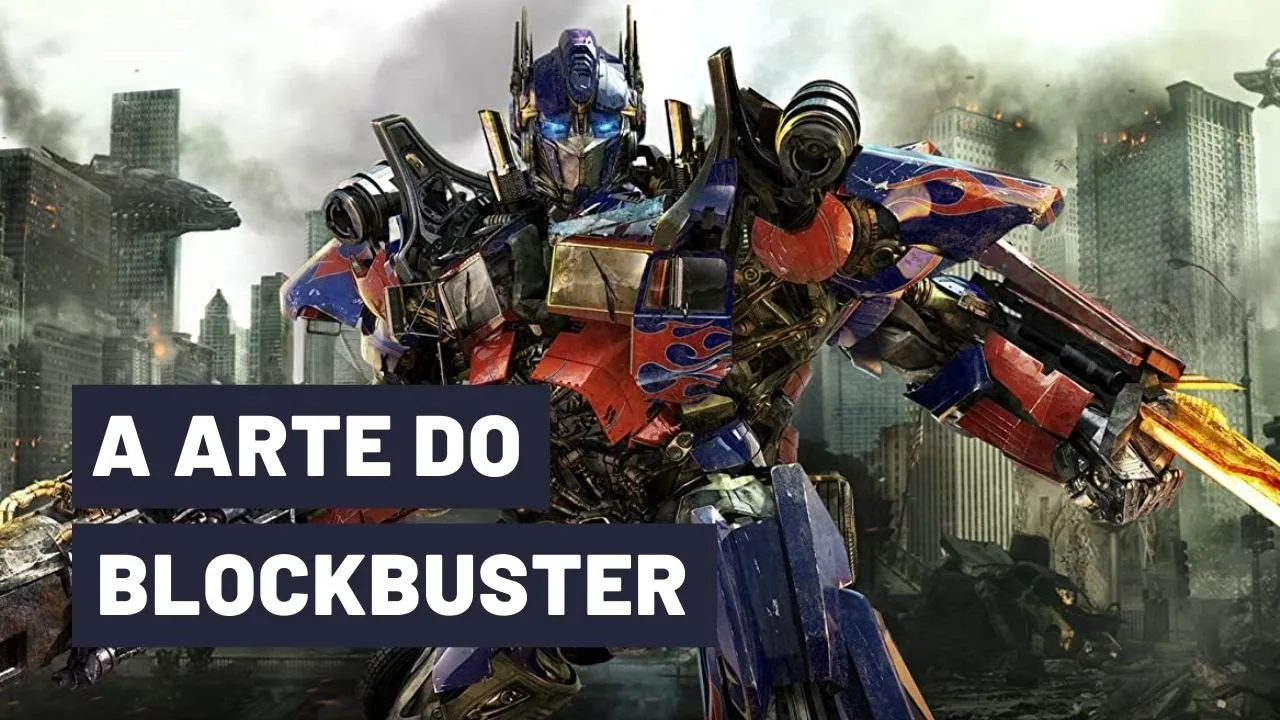
A arte do blockbuster
6.1K
Films by Michael Bay and Tony Scott 'annul' the relationship between space and time in favor of the sensory force of action elements. Viewers experience a mixture of gunfire, explosions, fights, flying cars, and faces, all combined with rapid cuts, camera shakes, and editing effects. This creates a collage-like experience where traditional spatial and temporal continuity is sacrificed for sensory impact.
Click to watch →
Deep Dive
An overview of early silent cinema history, particularly the transition from single-scene actualities to multi-shot narrative structures.

EarlyfilmNarration 1
5.3K
The early cinema period (1895-1906/1907) was characterized by non-narrative filmmaking where the camera simply recorded actualities or staged performances from a static position without editing or joining shots together; narration in cinema technically requires the process of connecting images or scenes through editing, which only began to emerge around 1906-1907 when filmmakers started using multiple reels and cutting scenes, transitioning from the static, tableau-like compositions of early cinema to the dynamic, multi-perspective storytelling of modern narrative film.
Click to watch →

HUM 224 Introduction and History of film
126
Early films were single shots using long shots, with the Lumiere brothers filming everyday activities as early documentaries. 'The Watering Trough' (1895) is considered the first comedy or narrative film. George Méliès built his own camera in 1896 and founded the Star Film Company in 1897, creating narratives with trap doors, sliding backstages, and total control. He became the first master of mise-en-scène, an editing innovator who stopped the camera to adjust elements, creating longer narratives with single camera positions and cuts. His 1902 'A Trip to the Moon' (15 minutes) demonstrates this evolution. As films became longer, narrative form became the dominant commercial style. World War I restricted international film flow, allowing Hollywood to emerge as the dominant industrial force. Los Angeles' climate permitted year-round shooting in diverse locations. In the 1910s-1920s, smaller firms merged into major companies: Paramount, MGM, 20th Century Fox, Warner Brothers, and Universal. The studio system divided tasks among specialists overseen by producers managing budgets and scheduling. D.W. Griffith developed crosscutting techniques and focused on subtle facial expressions. His 1915 'Birth of a Nation' was the first American feature-length film at 3 hours, lauded for technical virtuosity but problematic for its racist subject matter.
Click to watch →

The Evolution of Narrative (Georges Melies) - II
110
Early motion picture cameras like the kinetograph were bulky and required performances to be brought to the studio. The cinematograph was more manageable and accessible, allowing filmmakers to move with the equipment. This technological advancement enabled filmmakers to capture life as it was (actualities) and eventually transition to creating narrative stories. George Méliès, a professional magician who attended the Lumière brothers' first paid screening on December 28, 1895, recognized the potential of using the camera for magic tricks and illusions.
Click to watch →
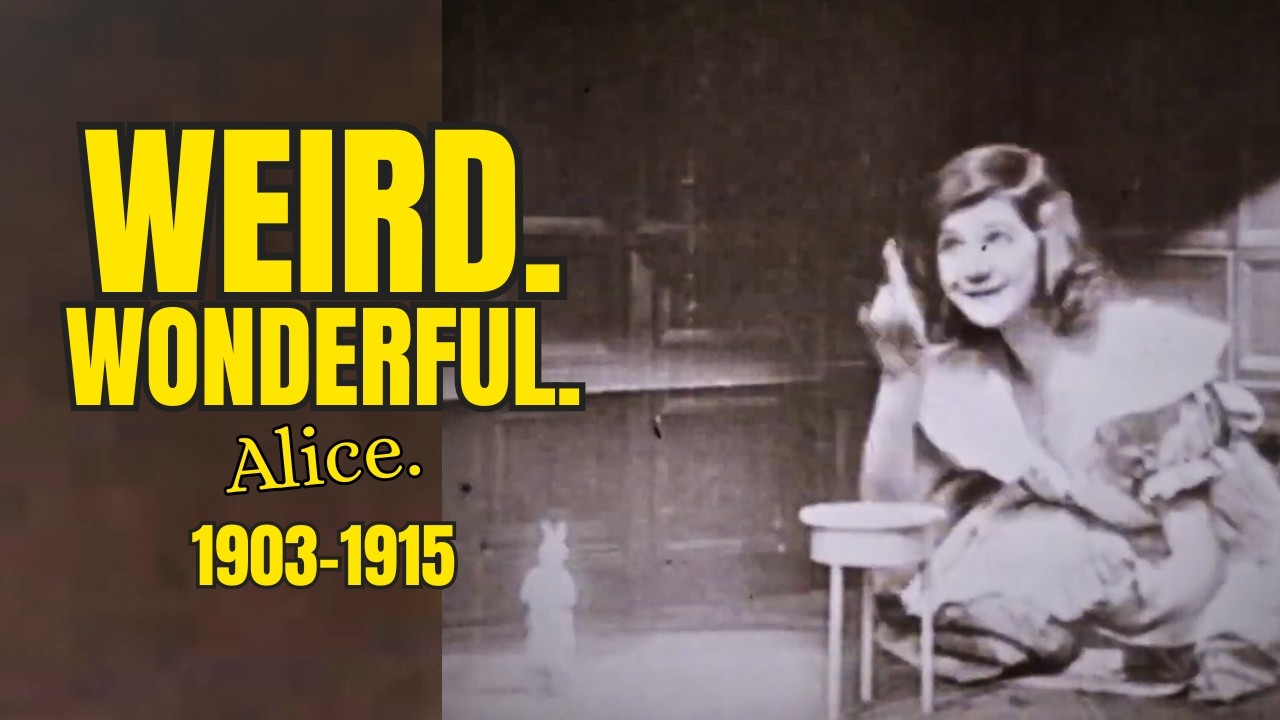
Alice in Wonderland: Silent Cinema's Strangest Obsession
398
Early cinema (1890s-early 1900s) developed two main traditions: Lumiere brothers' reality-focused 'actualities' and George Melies' fantasy trick films. Cecil B. Hepworth's 1903 Alice exemplifies this transitional period, using intertitles to provide scene checklists before the film begins. The film pioneered multi-perspective storytelling, showing the same action from multiple angles rather than moving linearly through time. Size-changing illusions served narrative purposes, letting audiences share Alice's disorientation. The Cheshire Cat was portrayed as a real cat captured on film, combining natural wonder with cinematic manipulation. This evolution from spectacle to narrative storytelling laid groundwork for modern cinema.
Click to watch →

Trailer: G. Cameron Romero's "The Screening"
7.8K
Early cinema pioneers like Robert W. Paul created short films called 'actualities' around the turn of the 20th century, which were documentary-style recordings of real events; these films were so significant that they were even screened during Luther's trial, representing an important historical record of early filmmaking's role in documenting reality.
Click to watch →
Deep Dive
The Kuleshov Effect and the psychological power of montage to generate meaning through the juxtaposition of shots.
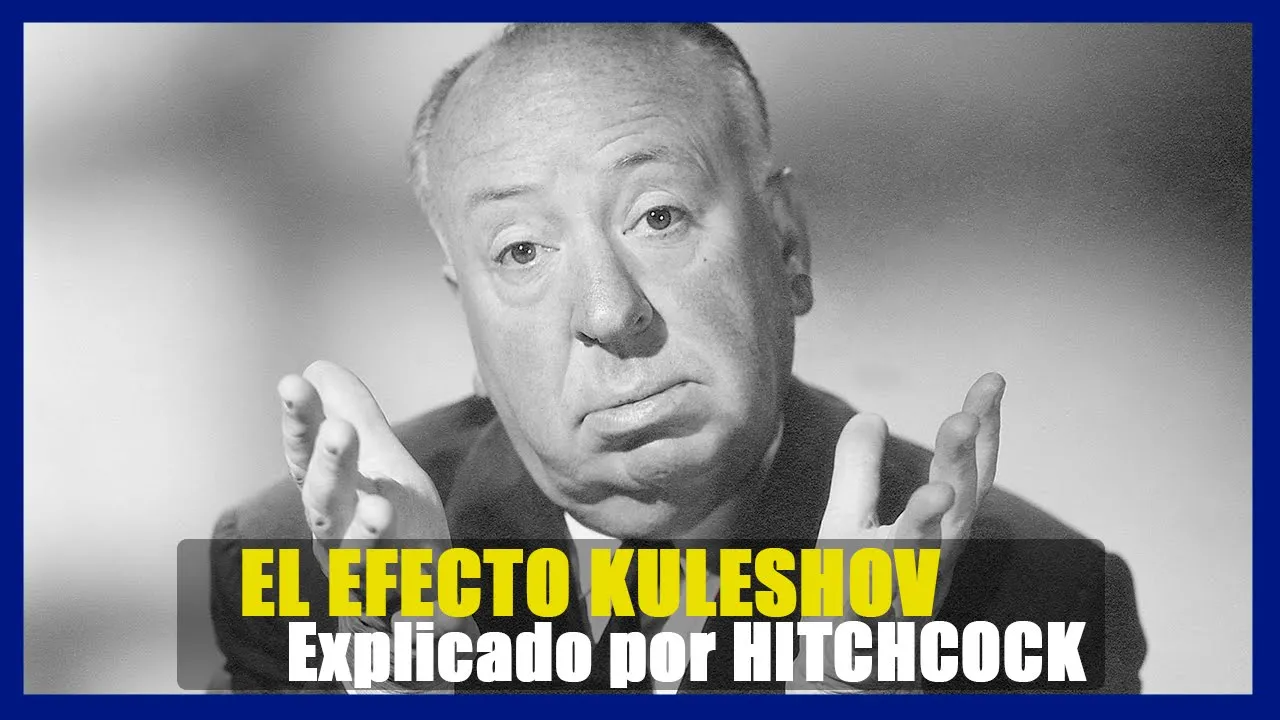
EFECTO KULESHOV 🎥 Hitchcock y el montaje ✂
15.9K
The Kuleshov Effect demonstrates that the meaning of a film shot is not inherent in the image itself but is created through its juxtaposition with other shots; Alfred Hitchcock illustrates this principle through examples from Psycho, showing how the same close-up of a man smiling can convey different character traits (kindness or perversion) depending on what image is placed before it, and how the size and arrangement of film pieces can create emotional impact and narrative meaning.
Click to watch →
The Kuleshov Effect
742.6K
The Kuleshov Effect, developed by Soviet filmmaker Lev Kuleshov in the early 20th century, demonstrates that meaning in cinema is created not by individual shots but by their interaction and juxtaposition; when audiences see a neutral face followed by images of war, food, or children, they perceive the face as expressing corresponding emotions (sadness, hunger, worry), proving that the editor's choice of what to cut between and when fundamentally shapes narrative meaning and audience interpretation.
Click to watch →
Editar o ser editado - El Poder Narrativo de la Edición Audiovisual.
44.3K
Lev Kuleshov, a Soviet film theorist, conducted experiments that demonstrated the power of montage. He showed that when two different elements are united through editing, they create a third meaning that is stronger than the sum of its parts. This 'Kuleshov Effect' demonstrated that the meaning of a shot is not inherent but is created through its relationship with surrounding shots. This principle became fundamental to all editing practices and continues to be used today.
Click to watch →
1925: How Sergei Eisenstein Used Montage To Film The Unfilmable
243K
The Kuleshov effect is one of the earliest theories of montage developed by Soviet filmmaker Lev Kuleshov. He demonstrated that the meaning of individual shots could be altered by the surrounding shots. Using the same shot of an expressionless face, Kuleshov cut it with various other shots—a bowl of soup, a coffin, and a girl—to show how audiences perceived different meanings from the original neutral shot. When paired with soup, viewers saw hunger; with a coffin, they saw sadness; with a girl, they saw love. This experiment proved that meaning is created through the relationship between shots rather than within individual frames.
Click to watch →
![6 Ways to Edit Any Scene — Essential Film & Video Editing Techniques Explained [Shot List Ep. 10]](https://i.ytimg.com/vi_webp/FVR8zz8ci2k/maxresdefault.webp)
6 Ways to Edit Any Scene — Essential Film & Video Editing Techniques Explained [Shot List Ep. 10]
1.6M
Intellectual montage puts seemingly unrelated images together to create a certain feeling or idea. This technique utilizes the Kuleshov effect, which refers to creating meaning through cinematic juxtaposition—taking a performer's expression and assigning it different meanings based on what image follows it. In Lucy, intellectual montage combines separate scenes to create single ideas, such as showing a character walking into a trap. In Don't Look Up, the technique emphasizes global disaster scale by juxtaposing massive cityscapes with microscopic organisms. This experimental approach evokes emotion and meaning from shots that individually wouldn't carry such weight.
Click to watch →
Prerequisite Knowledge
- Concept 01Basic continuity editing principles, including the 180-degree rule, match-on-action cuts, and eye-line matches.
- Concept 02The fundamental concept of spatial and temporal relations in cinema—how films establish when and where action is taking place.
- Concept 03An overview of early silent cinema history, particularly the transition from single-scene actualities to multi-shot narrative structures.
- Concept 04The Kuleshov Effect and the psychological power of montage to generate meaning through the juxtaposition of shots.
Subsequent Learning
- Step 01Advanced non-linear storytelling structures and hyperlink cinema (multi-narrative films with intersecting storylines).
- Step 02The physical and psychological mechanics of suspense generation in editing, drawing on Alfred Hitchcock's theories of audience engagement.
- Step 03Practical execution of parallel editing in post-production software to control pacing, tension, and thematic contrast in a student's own film projects.
- Step 04A deep-dive aesthetic analysis of Christopher Nolan’s complex temporal cross-cutting structures in films like 'Inception', 'Interstellar', and 'Dunkirk'.
Core Technique
Modern Masters
Core Technique
0:00Playing Section
- 1
Cross-cutting, also parallel editing, links simultaneous scenes across locations.
- 2
Called out early innovators Edwin Porter and D.W. Griffith.
- 3
Analyzed emotional tension via parallel storytelling in early cinema.
André Bazin’s Theory of Spatial Unity and the Long Take
While cross-cutting is a celebrated technique for building tension and implying simultaneous action, film theorist André Bazin and proponents of cinematic realism offer a major counterpoint. Bazin argued that heavy editing, including cross-cutting, artificially fragments reality and manipulates the audience's perception. Instead, he championed the use of the 'long take' and 'deep focus' cinematography (exemplified by directors like Jean Renoir and Orson Welles). This perspective posits that preserving spatial and temporal unity within a single, continuous shot respects the complexity of reality and grants viewers the cognitive freedom to explore the frame, rather than having their emotions and attention forcibly directed by rapid cutting.
Deep Dive
Advanced non-linear storytelling structures and hyperlink cinema (multi-narrative films with intersecting storylines).

Top 10 Films with Masterful Narrative Structures
1.6M
Hyperlink cinema represents a more complex narrative structure where multiple storylines run simultaneously, weaving and intersecting like ten different domino sets all running at once. Unlike linear domino chains where one event knocks over the next, hyperlink cinema traces networks of causal chains rather than single causal chains. This structure speaks to human interconnectedness and interdependency, showing how narratives are irreconcilably intertwined. Pioneered in films like Amarcord, Kanchenjunga, Nashville, and Shortcuts, modern masterpieces include Babel, Amores Perros, 21 Grams, and Paris, je t'aime. Ajami exemplifies this by presenting violence as something that could have been avoided until revealing the wide causal web where collision courses were set far too early for easy blame assignment.
Click to watch →
Happy Endings 2005 Comedy/Romance Full Movie Facts & Review | Lisa Kudrow, Laura Dern, Jason Ritter
1.3K
Hyperlink cinema is a narrative structure where multiple storylines are interconnected through characters who are associated with each other. In Happy Endings, three stories of Los Angeles natives are linked linearly by people associated with each other. Story one follows Mommy, a psychologist at an abortion clinic who secretly aborted a pregnancy 19 years ago from her stepbrother Charlie. Story two follows Charlie, who is gay and managing the family restaurant. Story three follows Otis, a young man working at the restaurant and in a band. The interconnected nature of these stories creates a complex web of relationships and secrets that drive the narrative forward.
Click to watch →

Learn about hyperlink cinema | what is a hyperlink
324
Hyperlink cinema is a film genre characterized by non-linear, interconnected storytelling where multiple storylines involving separate characters are woven together, with connections between these disparate narratives slowly revealed to the audience; the term was coined by Elissa Court in 2005 and popularized by Roger Ebert, featuring elements like split-screen, captions as footnotes, flashbacks, and flash-forwards, with early pioneers including Robert Altman and Jean Renoir, and notable examples including Alejandro González Iñárritu's films and works like Traffic, Syriana, and City of God.
Click to watch →
Super Deluxe Movie Reaction 1/3 | Vijay Sethupathi | Fahadh Faasil | Samantha Ruth Prabhu
25.9K
A hyperlink movie is a narrative structure where multiple storylines exist separately but eventually converge or interconnect. The movie Ludo is cited as an example where different storylines are initially separate but come together. This structure allows for complex storytelling with multiple perspectives and plot threads that ultimately resolve into a unified narrative. The term 'hyperlink' suggests that the storylines are connected like links in a chain, where each part relates to others but maintains its own distinct identity before the convergence.
Click to watch →

🔴10 Best Non-Linear Movies That Play With Time💥
104
Cloud Atlas demonstrates an advanced form of nonlinear storytelling through its complex multi-timeline structure. The film encompasses five distinct narratives spanning different historical periods: a lawyer slowly poisoned by his doctor during a 19th-century Pacific voyage; an aspiring composer writing letters to his lover in early 20th-century Britain; a reporter investigating corruption in 1970s San Francisco; a British publisher trapped in a nursing home in 2002; and a clone rebelling against the system in futuristic Seoul. The narrative cuts between these timelines, presenting moments of action centuries apart as though occurring simultaneously. All character lives are intricately intertwined—the composer reads the lawyer's journal, the journalist discovers love letters belonging to her informant's ancestor, and the fugitive clone becomes a deity to future tribesmen.
Click to watch →
Deep Dive
The physical and psychological mechanics of suspense generation in editing, drawing on Alfred Hitchcock's theories of audience engagement.

How Hitchcock Creates Suspense
283.6K
Alfred Hitchcock defines suspense as requiring complete audience awareness of all facts involved; without information, suspense cannot exist. His 'Bomb Theory' distinguishes shock (unexpected events causing brief reactions) from suspense (providing information about impending dangers). When audiences know threats exist, they become active participants anticipating outcomes, transforming passive viewing into emotionally invested engagement. This foundational principle explains why Hitchcock's approach revolutionized cinematic storytelling.
Click to watch →
"Наука Саспенса" или как создаются напряжённые сцены в кино?
93.8K
While Alfred Hitchcock is most associated with suspense, he was not its original discoverer. The first clear mechanism of suspense can be traced to the film 'The Cabinet of Dr. Caligari.' Hitchcock's unique contribution was treating the art of audience manipulation as a science and developing an extensive theory of suspense. He pioneered the systematic approach to creating tension and fear in cinema, establishing principles that remain influential in filmmaking today.
Click to watch →
CINEMATOLOGY: HITCHCOCK: Suspense قواعد ال
44K
Alfred Hitchcock pioneered the suspense formula where the audience knows more than the characters about an impending threat, creating tension through information asymmetry; this technique is demonstrated in films like 'The Birds' and 'Psycho' where viewers anticipate danger that characters cannot perceive, building suspense through strategic camera angles and editing that reveal threats gradually while maintaining audience awareness.
Click to watch →
![[#티전드] 아닌 밤중에 UFO🛸 외계인과 교류하던 미국 대통령이 있었다?! 모든 미스터리를 찾는 사람들 ㄷㄷ | #유퀴즈온더블럭](https://i.ytimg.com/vi/IdFb-DKhlBo/maxresdefault.jpg)
[#티전드] 아닌 밤중에 UFO🛸 외계인과 교류하던 미국 대통령이 있었다?! 모든 미스터리를 찾는 사람들 ㄷㄷ | #유퀴즈온더블럭
1.3M
Alfred Hitchcock developed a theory of suspense that emphasizes the importance of audience knowledge versus character knowledge. In his view, suspense is created when the audience knows something that the characters do not, such as a bomb ticking under a table. This technique creates tension and anticipation, making the audience more engaged with the story. Hitchcock's approach influenced countless filmmakers and remains a fundamental principle of suspenseful storytelling.
Click to watch →

Alfred Hitchcock - Masters of Cinema (Complete Interview in 1972)
716.8K
Alfred Hitchcock explains that suspense in filmmaking requires giving the audience complete information before the story begins, allowing them to experience genuine emotional tension as they anticipate what will happen next; he distinguishes this from mystery stories, which are intellectual puzzles audiences solve mentally, whereas suspense involves the audience's physical and emotional response to knowing the stakes while watching events unfold.
Click to watch →
Deep Dive
Practical execution of parallel editing in post-production software to control pacing, tension, and thematic contrast in a student's own film projects.
Limerence - Film Studies AS level coursework - extract from a film, sequence using parallel editing
146
Parallel editing is a film technique that intercuts between two or more simultaneous storylines to create tension, build suspense, or reveal thematic connections; in this AS level coursework example, the technique is demonstrated through a dramatic classroom scene where the teacher's dialogue about student absences and work concerns is intercut with the student's emotional resistance, creating dramatic tension and highlighting the power dynamics in the teacher-student relationship.
Click to watch →
Wicked: For Good | A Look Behind the Camera with Alice Brooks
40.5K
Parallel editing is a film technique where two or more storylines are intercut to create thematic contrast. In this sequence, the wedding scene (characterized by weightlessness, lens flares, and soft pink-yellow light) is intercut with the secret prison scene (where Alphaba descends stairs). This technique clearly distinguishes the two worlds and their contrasting emotional tones, allowing viewers to simultaneously experience both narratives and understand their fundamental differences.
Click to watch →

Film Lecture 5.3 - Parallel Editing
2.7K
Parallel editing (also called cross-cutting or inner cutting) is a film editing technique where the action cuts back and forth between two or more scenes, typically happening simultaneously, to increase tension and suspense; this technique requires maintaining screen direction—ensuring characters move consistently from left to right or right to left across different shots—to preserve continuity and make the narrative coherent.
Click to watch →

TURMA DA MÔNICA JOVEM: REFLEXOS DO MEDO | A que ponto chegamos...? 🤢 | CRÍTICA
47.1K
Effective film editing allows for pauses, breaths, and dramatic tension to build. Rapid cutting that eliminates all pauses and breaths destroys the natural rhythm of scenes. In suspense sequences, abrupt cutting that removes the elements building tension eliminates the suspense itself. Similarly, humor relies on proper pacing to allow jokes to land effectively.
Click to watch →

Building a Scene Part 2 - Tension Suspense Through Editing 2020
117
This extensive section covers how editing tempo creates emotional responses in audiences, with fast editing creating excitement and drama. Parallel editing (cross-cutting) shows two or more scenes happening simultaneously, creating tension and suspense as demonstrated in 'Way Down East', 'Back to the Future Part 3', and 'Inception'. Alfred Hitchcock's techniques are explored, including impressionistic editing in 'Psycho' (78 pieces of film in 45 seconds) and using image size to create shock. The 'show don't tell' principle is emphasized - if an item is important to the story, filmmakers should use close-ups. Student films often fail because they film important moments in wide shots, making elements seem unimportant.
Click to watch →
Deep Dive
A deep-dive aesthetic analysis of Christopher Nolan’s complex temporal cross-cutting structures in films like 'Inception', 'Interstellar', and 'Dunkirk'.
Nolan's Twisted Time...and Tenet
41.9K
Christopher Nolan consistently places time as the central motif in his films for over 20 years. He employs various time manipulation techniques including time inversion in 'Tenet', different dream time flows in 'Inception', and time dilation in 'Interstellar'. A key advantage is creating narrative urgency through limited time constraints. Nolan uses non-linear storytelling structures like the zigzagged format in 'Memento' where color segments play in reverse while black and white segments play chronologically. He also employs cross-cutting to visualize simultaneously occurring incidents, as seen in 'Dunkirk' where the entire film is one giant crosscut.
Click to watch →
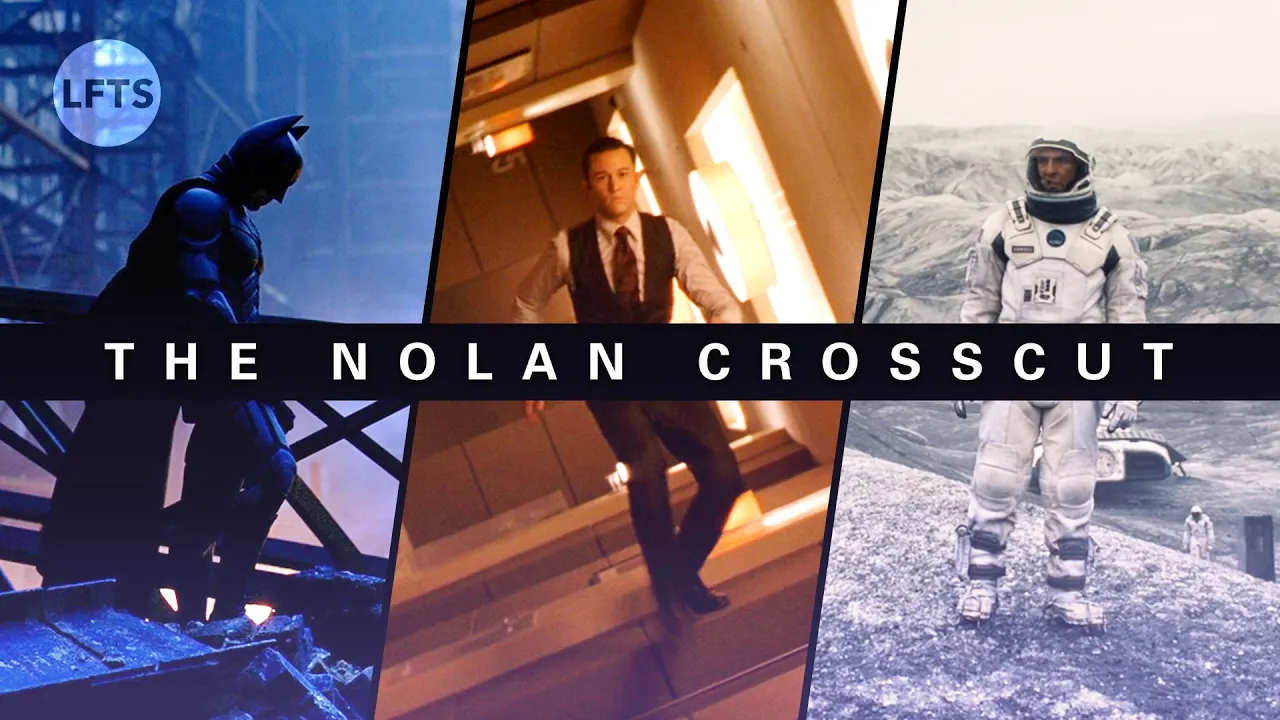
Christopher Nolan vs. Interstellar — The Nolan Crosscut
392.4K
This video analyzes Christopher Nolan's cross-cutting technique across 'The Dark Knight,' 'Inception,' and 'Interstellar.' Effective cross-cutting requires three elements: (1) Clear and comparable stakes across all story threads, (2) Equality of urgency where all threads face immediate threats, and (3) A unified dramatic question connecting all threads. 'The Dark Knight' succeeds because all three threads (Harvey Dent's revenge, the ferries' dilemma, and Batman's intervention) directly relate to 'Will the Joker win the battle for Gotham's soul?' 'Inception' works because all dream levels share the same stakes (trapped in limbo) and face the same deadline. 'Interstellar' fails because the earthbound thread lacks comparable urgency—the audience doesn't understand how urgent Tom's return is or how long Murph has to solve the equation. Without these underlying elements, cross-cutting creates a disjointed experience.
Click to watch →
Joe Rogan Discovers the GENIUS of Christopher Nolan & Dunkirk
95.5K
Christopher Nolan's Dunkirk employs a unique three-storyline structure (land, air, and sea) operating on different time scales (one week, one hour, and one day respectively), combined with a 'shepherd tone' musical technique that creates an infinite ascending effect, which together heighten audience anxiety and create a unified narrative experience that explores war as survival.
Click to watch →

CHRISTOPHER NOLAN; analisis de su filmografía| ESTO ES CINE con Guille Aquino y Navaja Crimen
68.1K
Dunkirk (2017) is structured around three simultaneous timelines: land (one week), sea (one day), and air (one hour). This creates a unique temporal experience where the audience perceives all three timelines simultaneously while they are actually relative in duration. Tenet (2020) represents Nolan's most complex narrative, involving time inversion where events move both forward and backward simultaneously. The film's structure is so intricate that even Nolan's collaborators reportedly did not fully understand it. Both films challenge traditional storytelling conventions by presenting narratives that defy linear comprehension, requiring multiple viewings to fully appreciate.
Click to watch →

Inception (A Origem, 2010) - Crítica: o labirinto de sonhos de Christopher Nolan
20.2K
Christopher Nolan's 2010 film Inception revolutionized dream cinema by subverting traditional dream aesthetics through realistic visual design, establishing exponential time dilation as a narrative device, and creating a complex multi-layered structure where each dream level operates on different temporal scales. The film's success stems from its sophisticated technical execution, including practical effects over CGI, innovative editing that manages simultaneous dream levels, and a metalinguistic narrative that mirrors Hollywood filmmaking itself. Nolan's approach demonstrates how complex narrative structures can be made emotionally engaging through character development, particularly the protagonist's psychological trauma, and how technical innovation serves thematic exploration of dreams as mappable, projectable spaces.
Click to watch →
Core Technique
Modern Masters
Core Technique
0:00- 1
Cross-cutting, also parallel editing, links simultaneous scenes across locations.
- 2
Called out early innovators Edwin Porter and D.W. Griffith.
- 3
Analyzed emotional tension via parallel storytelling in early cinema.
André Bazin’s Theory of Spatial Unity and the Long Take
While cross-cutting is a celebrated technique for building tension and implying simultaneous action, film theorist André Bazin and proponents of cinematic realism offer a major counterpoint. Bazin argued that heavy editing, including cross-cutting, artificially fragments reality and manipulates the audience's perception. Instead, he championed the use of the 'long take' and 'deep focus' cinematography (exemplified by directors like Jean Renoir and Orson Welles). This perspective posits that preserving spatial and temporal unity within a single, continuous shot respects the complexity of reality and grants viewers the cognitive freedom to explore the frame, rather than having their emotions and attention forcibly directed by rapid cutting.
Basic continuity editing principles, including the 180-degree rule, match-on-action cuts, and eye-line matches.
The fundamental concept of spatial and temporal relations in cinema—how films establish when and where action is taking place.
An overview of early silent cinema history, particularly the transition from single-scene actualities to multi-shot narrative structures.
The Kuleshov Effect and the psychological power of montage to generate meaning through the juxtaposition of shots.
Advanced non-linear storytelling structures and hyperlink cinema (multi-narrative films with intersecting storylines).
The physical and psychological mechanics of suspense generation in editing, drawing on Alfred Hitchcock's theories of audience engagement.
Practical execution of parallel editing in post-production software to control pacing, tension, and thematic contrast in a student's own film projects.
A deep-dive aesthetic analysis of Christopher Nolan’s complex temporal cross-cutting structures in films like 'Inception', 'Interstellar', and 'Dunkirk'.
29.7K views122likes2:56@Mou5eBoyOriginal Release: 2017-02-09
hello guys today I me my partner Chris will be teaching you about film technique known as cross time cross cutting also known as parallel editing it's a technique of automating two or more scenes that often happen simultaneously but in different locations if the scenes of simultaneous they occasionally culminate in a single place where the relevant parties confront each other one of personal uses of cross cutting was an Edwin s porters life of an American fireman and injured a woman inside classes of heat exhaustion during a house fire while firefighters are written to put out the fire outside Porter was using the technique to create time and space between two separate acts DW Griffith later popularized it in a book and blossoms and the birth of the nation and one particular scene of Brooking blossoms the character of battling burrows using axe break into the closet that Liesl is hiding in the use of cross cutting here wasn't build emotional sympathy for losing on the audience [Music] American Graffiti directed by George Lucas miss cost us an unconditional minute to tell four stories as if they were happening in real time they call a multiple characters lip this hurts a high school graduate unsure of the future Terry the toad a narrative buying district girl even Laurie who built or rich to conflict me in John a drag racer who is accompanied by success every character Molly [Music] not many people mention cross-cutting the technique simply because it's something people don't really notice one director no it's famous for using cross custom still and name is Chris Coleman Christopher Nolan uses cross cutting in many of its movies such as The Dark Knight and interstellar I know but I don't want in the Dark Knight Batman Nolan uses cross cutting to trick the viewers thinking that Batman is going to save Harvey Dent's girlfriend when the two scenes finally comes together to the climax it turns out that Batman is actually going to go save Harvey Dent leaving hardly dense girlfriend to die oh okay right off have it okay alright listen [Music] from DW Griffith to George Lucas and finally the Christopher Nolan's cross-cutting has been a huge product cinemas history with Easter realizing it from our own style you
Up Next

6:03
Mastering Match Cuts: Animation Meets Physical Media
@Skymography
377.9K views•2024-03-06

23:14
Visual Analysis Essay: How to Analyze Graphic Novels in College Writing
@nataliepleimann5941
1K views•2020-10-14
4:55
Film Blocking Techniques for Directors: Space, Shapes, Lines
@StudioBinder
1.9M views•2018-07-23

4:00
Evolution of Darth Vader: Anakin Skywalker's Animated Journey Across Star Wars Films
@TellItAnimated
13.4M views•2019-03-30
Related Study Plans & Knowledge Roadmaps
Structured learning paths in Film Analysis
film-analysis
Sensory Cinema: Foley, Haptic Sound & Texture
01Introduction to Film Sound and Foley Artistry
02Micro-Sounds, Textures, and Extreme Amplification
03Haptic Audition and Film Phenomenology
+ 1 more learning modules
12h4 modules
Explore Roadmap
film-analysis
Breaking the Fourth Wall: Mockumentary & Satire
01The Invisible Wall: Basics of Cinematic Illusion
02Looking at the Lens: Direct Address & Character Glances
03The Mockumentary: Satire, Realism, and Complicity
+ 2 more learning modules
12h5 modules
Explore Roadmap
film-analysis
Analyzing the Long Take: Cinema, Space & Ethics
01Foundations of Film Grammar: Montage vs. The Long Take
02Choreography and Mechanics of the Simulated One-Shot
03Phenomenology of Film: Real-Time Spatial Continuity
+ 1 more learning modules
14h4 modules
Explore Roadmap
film-analysis
Anachronistic Music: Period Drama & Subversion
01Foundations of Film Sound and the 'Needle Drop'
02Traditional Authenticity vs. Revisionist History
03The Rise of the Anachronistic Soundtrack
+ 2 more learning modules
12h5 modules
Explore Roadmap