











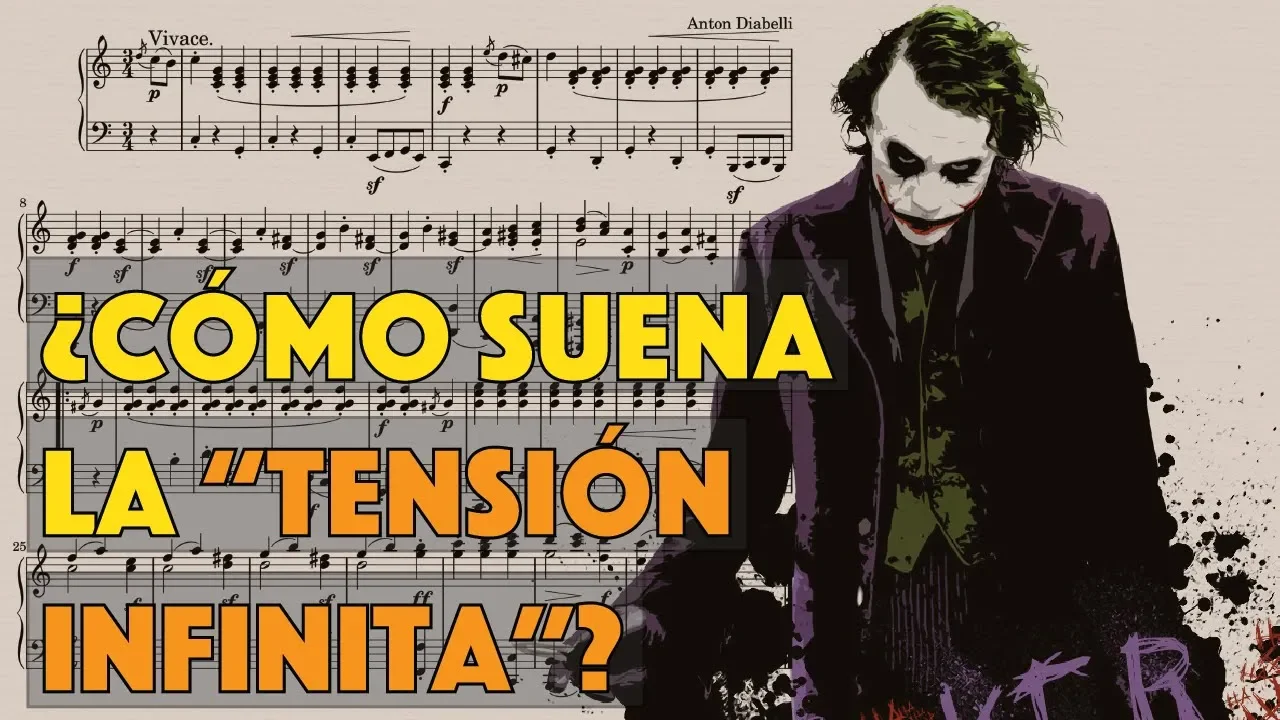








Effective cross-cutting sequences in film require three interconnected elements: clear and comparable stakes across all story threads, equality of urgency where all threads face immediate threats, and a unified dramatic question that connects all threads. Christopher Nolan's 'The Dark Knight' exemplifies this technique by intercutting three parallel story threads (Harvey Dent's revenge, the ferry dilemma, and Batman's intervention) that all directly relate to the question 'Will the Joker win the battle for Gotham's soul?' In contrast, 'Interstellar' fails to create the same narrative power because its cross-cut sequence lacks a unified dramatic question and the stakes and urgency are not comparable between the space-bound and earthbound story threads, resulting in a disjointed viewing experience.
Understanding Christopher Nolan's Crosscut Technique in Film
Added:(keyboard clacking) - [Michael] Hi, I'm Michael.
This is "Lessons from the Screenplay".
(keyboard clacking) Christopher Nolan films have an amazing sense of momentum.
Whether it's Batman racing to save Gotham, the evacuation of Dunkirk, or a set up for the ultimate magic trick.
- Are you watching closely?
- [Michael] Nolan's use of cross-cutting between various story threads can create suspense and prime us for cathartic twists.
(door thudding) (building explosion booming) But there's one particular crosscut sequence that has always bothered me.
It's in "Interstellar", when the story thread of Cooper and his team is intercut with that of his daughter back on Earth.
This sequence is as gorgeously shot as any of his films, the music is evocative, there are strong performances.
Yet there's something about this sequence that I think doesn't quite work.
So, today, I want to briefly look at "The Dark Knight" to uncover the elements of an effective Nolan crosscut.
To test these elements in similar sequences in both "Inception" and "Interstellar", and to ultimately discover why the narrative power of this "Interstellar" sequence falls short of what we usually expect from one of our most ambitious modern filmmakers.
Let's take a look at the Nolan crosscut.
(suspenseful music) In addition to being almost universally beloved, "The Dark Knight" is filled with excellent examples of the Nolan crosscut, so let's start by examining one sequence to discover the elements that make it so successful.
As the film hurtles towards its conclusion, the audience is following three parallel story threads.
Harvey Dent wants to punish Commissioner Gordon by targeting his wife and children, two ferries have been rigged with explosives, and the only way for the passengers on board to save their own lives is if they each blow up the other ferry.
And if they don't, the Joker will blow both up both ferries unless Batman can stop him.
Across all three threads, there are clear and comparable stakes.
We understand that people's lives are in danger.
But it's not just that their lives are in danger, they're in danger right now.
- [Barbara] He has the kids!
- [Michael] Dent has taken Gordon's family hostage.
- Harvey?
Where's my family?
- [Harvey] Where my family died.
- [Michael] And the other two story-threads feature literal ticking clocks counting down to midnight, the Joker's deadline for his ferry experiment.
So we also understand that there's an equality of urgency.
All of their problems need to be dealt with immediately.
But this sequence goes one step further.
To quickly define a term.
The dramatic question of a film is the central question that effectively summarizes what a story is about and is what keeps the audience watching.
And in this case, the dramatic question of "The Dark Knight" could be phrased, will the Joker win the battle for Gotham's soul?
All three story threads in the crosscut sequence directly relate to this question.
Batman is literally trying to stop the Joker, the people on the ferries must resist playing his twisted game, and Harvey Dent becoming Two-Face is the Joker's doing.
- You need an ace in the hole.
Mine's Harvey.
- [Michael] All three threads pertain to a unified dramatic question.
So now that we've cracked the code of an effective Christopher Nolan crosscut sequence, let's test our theory against similar sequences in "Inception" and "Interstellar".
Both "Inception" and "Interstellar" feature extended crosscut sequences at the end of their second acts.
Both bring the characters to a moment of apparent defeat, setting up the final acts of the films.
But do they both contain the underlying dramatic elements that are so effective in "The Dark Knight"?
Let's find out.
First up, clear and comparable stakes.
In "Inception", a dream thief named Cobb and his team must descend through three levels of an elaborate dream world in order to implant an idea in their target's mind.
During the final stage of this mind heist, the film crosscuts between parallel lines of action in all three dream levels.
This cross-cutting creates suspense because the audience understands what's at stake in each line of action.
As the film explains several times, during this heist if they die in the dream world, they will be trapped in limbo, instead of simply waking up.
- So what happens when we die?
- We drop into limbo.
- Are you serious?
- [Michael] And this is a problem because there's an army of subconscious security forces trying to kill them in all three dream levels.
- So now we're trapped in Fischer's mind battling his own private army.
And if we get killed, we'll be lost in limbo until our brains turn to scrambled egg?
- [Michael] So in all three crosscut story threads, the characters face these clear and comparable stakes.
In "Interstellar", a farmer-astronaut named Cooper leads a mission to find a habitable planet for humankind.
While his daughter, Murph, struggles to solve a gravity equation that would enable the evacuation of Earth.
The crosscut sequence begins when a stranded scientist, Dr. Mann, also known as surprise Matt Damon, betrays Cooper.
(Cooper yells) Intending to maroon Cooper and his team on an uninhabitable planet by stealing their ship.
- [Cooper] Dr. Mann, please respond.
- [Michael] In this space-bound thread, the stakes are absolutely clear.
- If he takes control of that ship, we're dead.
- [Michael] If Mann boards their ship, he will strand them, and potentially doom all future human life.
This thread is crosscut with Murph's earthbound story, where the stakes are trickier to pin down.
- Do you have an idea?
- A feeling.
- [Michael] Murph has a feeling that the solution to the gravity equation lies in her childhood bedroom, and that it has something to do with her ghost.
- If there's an answer here on Earth, it's back there.
Somehow in that room.
- [Michael] So I would say the stakes of Murph's overall goal in this sequence are comparable.
If Murph doesn't solve the gravity equation, human life on Earth will end.
But most of the earthbound thread we see during this sequence is only indirectly related to that goal.
Instead, the thread is primarily concerned with the mechanics of distracting her brother, Tom, so she can gain access to her childhood bedroom and evacuate his family whose health is in danger.
And while the lives of Tom's family are important, they are not equal to the fate of humanity.
- He'd maroon us?
- He is marooning us.
- [Michael] So the overall stakes for Murph are high, but her immediate concerns are not comparable for the audience right now, which connects directly to the equality of urgency.
As in "The Dark Knight", the team in "Inception" is racing against a ticking clock.
They must complete the mission before Yusuf initiates the kick in the uppermost dream level.
Once he does, the characters at each lower-level need to simultaneously create the sensation of falling in order to wake themselves up.
But in "Inception", time progresses differently at different dream levels.
- Yusuf's 10 seconds from the jump.
(van tires screeching) Which gives Arthur three minutes.
- Hey! - That's him!
- Which gives us what?
- 60 minutes.
- [Michael] So does this count as equality of urgency?
Well, urgency depends not just on how much time you have to do something, but also what it is you have to do in that time.
In each dream level, the characters' tasks are scaled such that they barely have enough time to complete them.
- No, it's too soon.
- [Michael] Moreover, they all face the same exact deadline.
(van thudding) So as it approaches, the urgency only continues to grow.
(avalanche rumbling) In "Interstellar", the space-bound story thread is constantly ratcheting up the urgency.
(glass cracking) (Cooper screams) First, Dr. Mann attacks Cooper and cracks open his helmet, so Brand must race to his rescue before Cooper suffocates.
- Cooper, we're coming.
Hang in there, don't talk.
- [Michael] Then, Mann attempts to dock with their ship, creating a new kind of ticking clock as Cooper and Brand try to stop him.
- Do not attempt to docking.
I repeat, do not attempt to docking.
- [Michael] Every moment of this space-bound thread is a race against time.
Back on Earth, there is also a sense of urgency, but it's unclear why the situation is so urgent.
Before Murph arrives at the farm, she indicates that time is of the essence.
- We're running out of time.
- [Michael] But in this case, she's referring to time for humanity as a whole.
Once they get to the farm, Murph's doctor friend Getty examines the family.
All of the dust in the air is causing respiratory issues.
- It's bad. They cannot stay here.
- [Michael] If the family stays, presumably this would mean death for them, but not right at this very moment.
The most urgent threat facing Murph is her brother.
- Let me make something abundantly clear, you have a responsibility.
(fist thudding) - Oh, Jesus!
- [Michael] Who stubbornly refuses to let his family leave and keeps Murph from investigating her childhood bedroom.
- Get out and don't come back.
- [Michael] So Murph decides to light the farm's crops on fire, knowing this will distract her brother long enough to allow her to get the family out and to finally access the bedroom.
Here, the threat of Tom's return does seem to be urgent.
- Go get in the backseat.
Get in the backseat, now!
- [Michael] But it's not clear how urgent it is.
This is because we don't understand what exactly Murph needs to do to solve the equation, nor how long she has before Tom returns.
In "Inception", the task is clear, get Fischer into the strong room.
And occasional shots of the falling van, as well as expositional dialogue, continually update the audience on the looming threat.
- Arthur has a couple minutes, we have about 20 minutes.
- [Michael] In the space-bound sequence of "Interstellar", we follow Mann as he progresses toward the ship he's trying to steal.
We know he must be stopped and we can see that time is running out.
But back on Earth, our only reference for how much time they have left is how concerned Getty is at any given moment.
So unless the viewer knows exactly how long it takes to douse a corn crop fire and decode the messages a ghost sent you 23 years ago, it's hard to feel the urgent threat of Tom's return.
Ultimately, this means that in this sequence, Cooper gasping for breath on a distant planet while Brand races to save him is intercut with Murph pouring gasoline on corn.
Both situations are urgent, but I think it would be hard to argue that there is an equality of urgency.
And part of this urgency problem is directly connected to the lack of a unified dramatic question.
In "Inception", all three story threads are tied together by a fairly simple dramatic question.
Will Cobb's team pull off the mind heist in time to escape?
And the crosscut scenes are not just commenting on one another, they're quite literally affecting each other.
When Yusuf initiates the first kick too early, Arthur loses gravity and has to find a new way to drop the dreamers.
All while Cobb and the rest of the team race to complete the mission before the second and final kick.
So every crosscut is giving us relevant information because each thread directly affects all the others.
To be fair, not every movie can be "Inception", where the external forces in one crosscut thread literally affect all the others.
And the threads of "Interstellar" do eventually connect to the same dramatic question.
Will the human species be saved?
- [Cooper] I repeat, do not attempt docking. Please.
- But the problem is that at this point in the movie, we don't yet know how these threads are connected.
And we won't know for a while.
The last image we see from the earthbound thread in this crosscut sequence is Murph finding the watch her father gave her.
The rest of the sequence then focuses on Mann's attempt to dock with the ship, his failure and death, and Cooper's badassery as he manages to save himself and Brand from certain doom.
This effectively ends the crosscut sequence, as it completes the dramatic action that began when Mann decided to try to kill Cooper.
Once onboard the ship, Cooper and Brand take stock of the situation, make a new plan, go their separate ways, and Cooper flies into a black hole and into act three.
And only after that, 16 minutes later, do we pick up where we left off with Murph, and begin to understand how these two story threads pertain to the same dramatic question.
In "The Dark Knight" and "Inception", the crosscut sequences work so effectively because their lines of action are ultimately unified in their stakes, urgency, and dramatic question.
Without these underlying elements, cross-cutting can create a disjointed experience for the viewer.
(dramatic music) Christopher Nolan's films have redefined what a modern blockbuster can be.
They're not afraid to challenge mainstream audiences with labyrinthian plots and heady thematic ideas.
But most of all, Nolan's films display a distinct cinematic language, embodied in the thrilling momentum of a crosscut sequence.
By investigating when these sequences work best, we can better apply those techniques to our own stories, and perhaps even better appreciate the next Nolan crosscut.
Hey guys, hope you enjoyed the video.
Last month, we announced a new video series all about video game storytelling called "Story Mode".
The first episode on "The Outer Worlds" premiered on this channel and the second episode on "Outer Wilds" is available on Nebula.
Today, where we're releasing our third "Story Mode" video on one of my absolute favorite games "Horizon Zero Dawn".
In the video, we talked to the narrative director of the game, John Gonzalez, about how to create a protagonist that is deeply connected to the game's story world.
And you can watch that video today on Nebula.
If you're not familiar with Nebula, it's a streaming service developed by creators to be a place where we can house our content ad-free and experiment with original content, just like "Story Mode".
Nebula features a lot of great creators, including Lindsay Ellis, Just Write, Patrick Willems, and tons of others.
So how do you sign up for Nebula?
Well, we partnered with CuriosityStream, the best place to find documentaries on the internet, to create a bundle deal.
When you sign up for CuriosityStream using the link in the description, not only will you get access to CuriosityStream, but you'll also get a Nebula subscription per free.
And for a limited time, CuriosityStream's offering 26% off their annual plan.
That's less than $15 a year for both CuriosityStream and Nebula.
So head to the link in the description, and you'll get both CuriosityStream and Nebula for 26% off.
Or you can go to CuriosityStream.com/LFTS.
You'll be helping to support other educational creators getting CuriosityStream and there are thousands of documentaries, and access to all the episodes of "Story Mode", including our latest on "Horizon Zero Dawn".
Thank you as always to the patrons for making this channel possible.
And thanks for watching.
Up Next

Eternal Sunshine: Memory, Destiny, and the Philosophy of Love
@thefilmessay9832
607.9K views•2016-08-19

Unfriended (2014) Screenlife Horror Film Analysis and Review
@theboredcyborg
372 views•2019-08-20
Memento Screenwriting Analysis: Reverse Chronology Explained
@LessonsfromtheScreenplay
671.3K views•2017-08-22

Evolution of Darth Vader: Anakin Skywalker's Animated Journey Across Star Wars Films
@TellItAnimated
13.4M views•2019-03-30
Related Study Plans & Knowledge Roadmaps
Structured learning paths in Film Analysis