





![Книжный клуб. Глава 57. [Форрест Гамп. Уинстон Грум]](https://i.ytimg.com/vi/oujP4aB8f1g/maxresdefault.jpg)

![[NCS] 영상촬영 21 영상편집하기](https://i.ytimg.com/vi/_edMmLiQFEQ/maxresdefault.jpg)








Christopher Nolan's Memento demonstrates that reverse chronological storytelling is not merely a gimmick but a narrative technique that immerses audiences in the protagonist's experience of short-term memory loss by withholding information from viewers in the same way it is withheld from the character, using a three-tier question system (central questions, polaroid notes, and scene-specific questions) combined with a dual narrative structure of color scenes moving backward and black-and-white scenes moving forward to maintain audience engagement while revealing the complete story.
Memento Screenwriting Analysis: Reverse Chronology Explained
Added:Understanding of classical three-act narrative structure and traditional linear storytelling.
The distinction between story (the chronological sequence of events) and plot (how those events are organized and presented to the audience).
Familiarity with the literary concept of the 'unreliable narrator' and how character limitations shape audience perception.
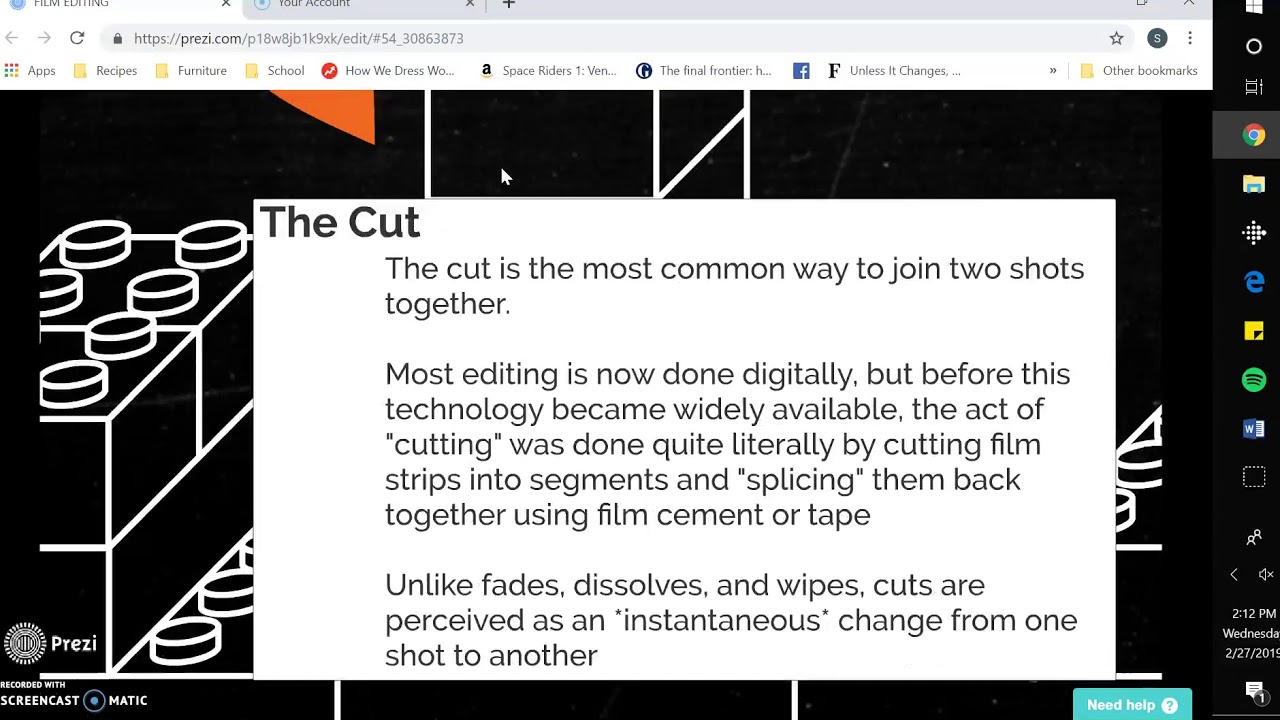
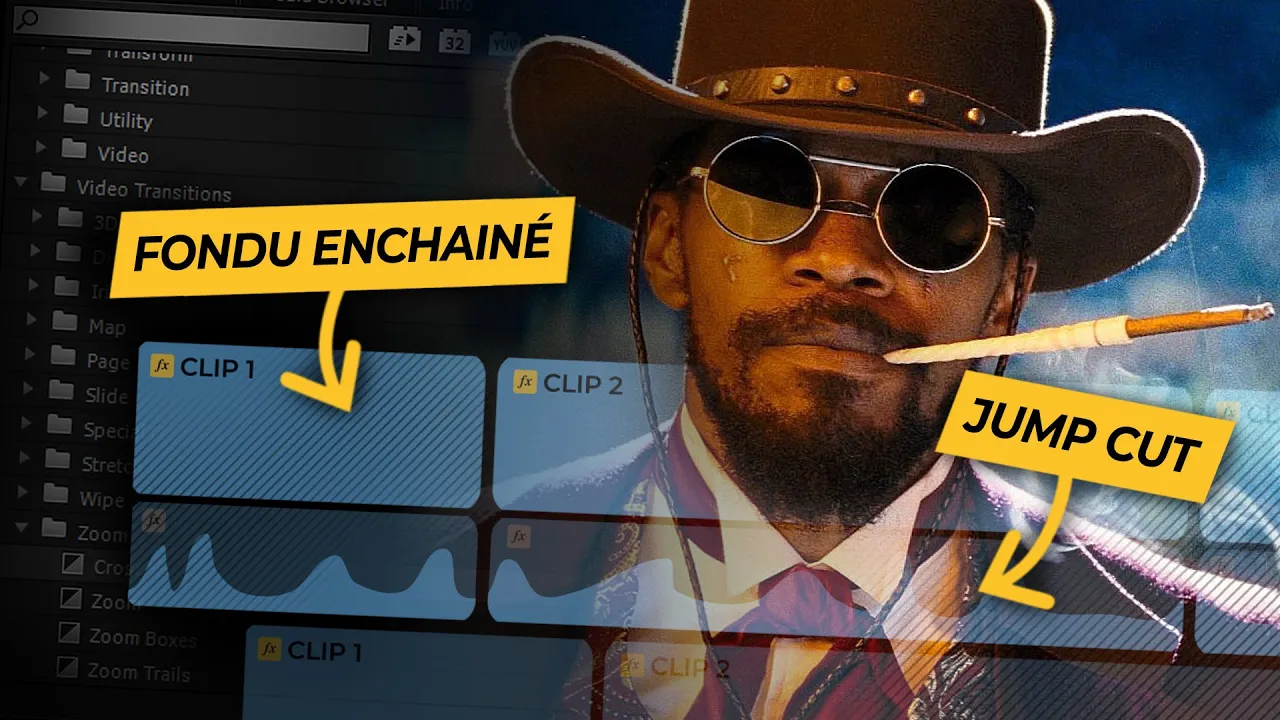
Basic cinematic editing concepts, particularly how transitions and sequencing establish temporal relationships.
Advanced study of non-linear narrative frameworks, such as hyperlink cinema, nested frame narratives, and temporal loops.
Exploration of Cognitive Film Theory, specifically how the human mind reconstructs fragmented chronologies and maintains narrative immersion.
Practical screenwriting techniques for outlining, tracking, and formatting scripts with complex, non-chronological timelines.
Analyzing the use of color theory, aspect ratios, and subjective cinematography to visually segment distinct timelines in film.
671.3K views26.3Klikes10:20Original Release: 2017-08-22
(backwards voice) Hi, I’m Michael.
This is Lessons from the Screenplay.
I would describe the premise of Memento as follows: “A man with short-term memory loss seeks revenge on the person who killed his wife.” This premise is fine on its own, and probably enough to pique one’s interest, but seventeen years later, most people don’t remember Memento because of its premise or the details of its story.
What makes Memento memorable is the way the story is told.
The plot of the film is often described as telling the story backwards, in reverse-chronological order, so that the film begins at the end of the story, and ends at the beginning.
But in truth, it’s actually more complicated than this, and what Christopher Nolan was able to pull off is more impressive than simply telling a story backwards.
So today I want to look at how the decision to use reverse chronological order was more than a simple gimmick.
To examine how he holds the audience’s attention while telling them a story where they almost never know what’s going on.
And analyze how he was able to create a satisfying linear narrative while including so many nonlinear components.
Let’s take a look at Memento.
Cinema has a long history of using techniques that one could consider gimmicks.
Some have to do with how the story is told, like a film that appears as if it were in realtime or one continuous shot.
Others have to do with how it’s presented, like 3D, smell-o-vision, or even the recent “D-BOX enhanced theaters” where the seats shake you while you’re watching a movie.
Ultimately, I think the test of whether or not something is a gimmick is if it truly enhances the audience's experience of the story.
If it's just tacked on, or an integrated part of the storytelling.
The idea of telling a story backwards could have been simply a gimmick to get people into the theaters.
But in the case of the Memento, the story didn’t come from the structure, the structure came from the story.
“I spent months banging my head against the wall."
"Trying to come up with how do you give the audience the experience of not being able to remember things?"
What Nolan was looking for is something that John Truby calls “the designing principle.” In his book, "The Anatomy Of Story," Truby writes... "The designing principle is what organizes the story as a whole."
"It is the internal logic of the story, what makes the parts hang together organically so that the story becomes greater than the sum of its parts."
"It is what makes the story original."
Essentially, the designing principle is how you choose to tell your story.
And because the protagonist of Memento can't remember things, "Since my injury I can't make new memories. Everything fades."
Nolan wanted to find a way to give that experience to the audience as well.
"...one day I came up with this notion that if you withhold the information from the audience that’s withheld from the protagonist, then you’re doing quite a good job of putting them in his head."
"The way to do that is to structure the story backwards.” This is Memento’s designing principle.
"Okay, so what am I doing?"
By structuring the story backwards, the audience never knows what is going on at the beginning of a scene and is constantly disoriented... "Oh, I'm chasing this guy."
Just like the protagonist.
"No...he's chasing me."
So how did Christopher Nolan go about telling a story backwards in a way that would keep an audience engaged?
The main way these reverse chronological scenes work is by presenting the audience with lots and lots of questions.
I want to separate the kinds of questions the film presents into three tiers.
The first tier contains the central, overarching questions that drive the film.
These are introduced in the first few scenes of the film, when we see Leonard, the protagonist, murder a man named Teddy.
"No!"
The circumstances surrounding this murder make us wonder: Why did Leonard kill Teddy?
Was he really the man that murdered Leonard's wife?
And what secrets could Leonard be hiding from?
"You don't know who you are."
The second tier of questions span several scenes, and have to do with the polaroids.
"Something to remember you by."
Leonard takes a photo of everyone he meets, and writes brief notes about them on the back.
So later, after he's forgotten who the person is, he has some notion of his relationship with them.
Once we, the audience, are aware of this mechanic, we want to know the story behind each of the notes.
For example, the polaroid of Natalie has a note on it that says "She has also lost someone, she will help you out of pity."
We first see this note on page seventeen, and it's not until page forty-three that we see the context in which he wrote it.
But there is still something scribbled out, which makes us wonder what it says and why it was crossed out.
Could Natalie be hiding something?
We find out on page seventy, when Teddy warns Leonard that Natalie is untrustworthy and manipulating him.
"Take my pen, write this down, do not trust her."
But as soon as Teddy leaves, Leonard looks at the note he wrote about Teddy... "Don’t believe his lies."
So again we wonder why Leonard wrote this and want the explanation.
The final tier of questions occur on a smaller, scene-to-scene scale.
Because each of the scenes takes us further back in time, certain elements of normal scene construction had to be adjusted.
In most movies, the conclusion of each scene tries to make the audience wonder “what happens next?” But in Memento, the color scenes begin with a question.
Instead of “what happens next?” it’s “what just happened?” And as each scene plays out, the questions from the preceding scene are answered.
For example, one scene begins with Leonard sitting in the bathroom of a motel with an empty bottle of alcohol.
"I don’t feel drunk."
So we wonder, “how did he get here, and why does he have a bottle of alcohol?” In the next color scene of the film, we see that Leonard broke into the room in order to get the jump on a man who was chasing him.
He grabs the bottle to use as a weapon, hides in the bathroom, and because of his memory condition, promptly forgets what he’s doing there.
"I don’t feel drunk."
In this way, each color scene asks a new question, and answers a previous one.
By constantly withholding information, Nolan keeps these reverse chronological scenes intriguing, despite us knowing what happens next in the story.
But an entire film made up of only this structure could get fatiguing pretty quickly.
This is why Nolan chose to include the story of Sammy Jankis.
Memento is constantly cutting between the color scenes that move backward in time, and the black and white scenes which move chronologically forward in time.
Leonard spends most of these scenes on the phone with an unseen and unheard person, telling them the story of Sammy Jankis.
Shown as flashbacks, Leonard recounts his interactions with Sammy, a man with the same memory condition as him, who he met in his past life as an insurance investigator.
The Sammy Jankis story provides relief for the audience, because it’s something familiar to return to and follow throughout the film.
As Christopher Nolan says… "When Stephen Tobolowsky came in to talk about Sammy, he was the first guy who really understood that Sammy’s the backbone of the whole story…" "He totally grasped how Sammy would hold the story together and keep it moving forward."
These scenes are also important because without them we wouldn’t understand Leonard’s character arc.
It’s here we get to see glimpses of who he was, the choices he made that help define his character, and how he views the world.
And the story of Sammy Jankis plays a critical role in understanding the finale of the film, when we finally get all the answers that we've been waiting for.
"He said Sammy. How does he know about Sammy?"
This is, in my opinion, the most impressive aspect of Memento.
That Christopher Nolan designed the plot so that we'd be learning about Leonard's backstory in the black and white scenes, following his current journey beat-by-beat and backwards in the color scenes, and still experience a huge revelation at the end of the film.
I want to briefly illustrate how tricky this was.
Let’s say that this is a timeline of all the scenes in Memento if they were put together in chronological order.
The left half is all the black and white scenes, the right half is all the color scenes.
Christopher Nolan had to craft the color scenes so that when watched in reverse chronological order they remained engaging and led up to a satisfying conclusion.
Meanwhile, the black and white scenes have to provide necessary exposition and lead up to the beginning of the color scenes.
So essentially, the climax of the film happens in the middle of the story.
The fact that the film makes as much sense as it does is a very impressive feat.
Memento was the film that first drew attention to Christopher Nolan, and introduced the world to his love of non-linear storytelling.
Its unique use of time shows once again that how you tell your story is as important as the content within it.
That the work of writing isn’t just coming up with cool ideas for a film, but figuring out how to convey them in a compelling way.
And it demonstrates how with a bit of creativity, a familiar revenge story can be turned into a uniquely cinematic experience.
"Now, where was I?"
If you’re in the mood for more film analysis, then I highly recommend you check out the channel Wisecrack.
They have a ton of great content, like the Earthling Cinema series, which is a fun blend of analytical insight and clever humor.
I also love their Wisecrack Edition series, analyzing the “Philosophy Of” different films and shows.
They recently released Part One of The Philosophy of Christoper Nolan.
It’s a unique and fascinating approach to examining Nolan’s work, and you should definitely head over to Wisecrack and check it out by using the link in the description and be sure to subscribe while you’re there!
If you’ve been enjoying Lessons from the Screenplay and want to help me make more videos, please consider supporting the channel on Patreon.
I try to share some fun exclusive content with my Patrons whenever I can— like a bunch of deleted scenes for this video that ended up getting cut, but that I think are still interesting and give you some insight into the process of making a video essay.
If you want to support the channel you can do so by clicking on the link below.
Let me know in the comments what films you think I should do for future videos, and be sure to check out Wisecrack and their video on The Philosophy of Christopher Nolan.
Thanks for watching.
Up Next
78:05
Knives Out Genre Analysis | Beyond the Screenplay Film Breakdown
@BeyondTheScreenplay
5.8K views•2021-04-16

23:14
Visual Analysis Essay: How to Analyze Graphic Novels in College Writing
@nataliepleimann5941
1K views•2020-10-14
15:36
Understanding Christopher Nolan's Crosscut Technique in Film
@LessonsfromtheScreenplay
392.4K views•2020-08-31

4:00
Evolution of Darth Vader: Anakin Skywalker's Animated Journey Across Star Wars Films
@TellItAnimated
13.4M views•2019-03-30
Related Study Plans & Knowledge Roadmaps
Structured learning paths in Film Analysis
film-analysis
Sensory Cinema: Foley, Haptic Sound & Texture
01Introduction to Film Sound and Foley Artistry
02Micro-Sounds, Textures, and Extreme Amplification
03Haptic Audition and Film Phenomenology
+ 1 more learning modules
12h4 modules
Explore Roadmap
film-analysis
Breaking the Fourth Wall: Mockumentary & Satire
01The Invisible Wall: Basics of Cinematic Illusion
02Looking at the Lens: Direct Address & Character Glances
03The Mockumentary: Satire, Realism, and Complicity
+ 2 more learning modules
12h5 modules
Explore Roadmap
film-analysis
Analyzing the Long Take: Cinema, Space & Ethics
01Foundations of Film Grammar: Montage vs. The Long Take
02Choreography and Mechanics of the Simulated One-Shot
03Phenomenology of Film: Real-Time Spatial Continuity
+ 1 more learning modules
14h4 modules
Explore Roadmap
film-analysis
Anachronistic Music: Period Drama & Subversion
01Foundations of Film Sound and the 'Needle Drop'
02Traditional Authenticity vs. Revisionist History
03The Rise of the Anachronistic Soundtrack
+ 2 more learning modules
12h5 modules
Explore Roadmap