Nanoparticles are particles that are one billion times smaller than humans, ranging from 10 to 1,000 times larger than oxygen molecules; they naturally exist as ultra-fine dust in ambient air and can increase dramatically during combustion events. Scientists have developed methods to produce various types of nanoparticles for creating nanomaterials with unique properties applicable in transportation, healthcare, energy, and construction. The controllability of nanoparticles varies by state: powder form disperses easily through air requiring precautions, liquid suspension offers better containment, while solid integration provides stable incorporation. Ongoing research investigates whether these engineered nanoparticles may pose health or environmental hazards by studying conditions under which they might break away from materials and disperse.
Nanoparticles & Nanomaterials Explained: Size, Types, and Dispersal
Added:The metric system and scientific notation, specifically understanding the scale of a nanometer (10^-9 meters) relative to micro and macro scales.

Metric prefixes are multipliers or fractions of measurement units expressed using decimal notation. For multiplication: kilo (1000), mega (1000000), giga (1000000000), tera (1000000000000). For division: milli (1/1000), micro (1/1000000), nano (1/1000000000), femto (1/1000000000000000). Conversions use scientific notation: 1 meter = 10^3 millimeters = 10^6 micrometers = 10^9 nanometers = 10^15 femtometers. The nanometer scale measures particles from 1-100 nanometers. Scientists study nanoscale materials because they exhibit unique properties different from bulk materials. The macro scale (visible to naked eye) and micro scale (visible with microscope) have constant properties regardless of size. At the nanoscale, properties change dramatically.

This section explains the three scales of measurement: (1) Macro scale includes objects visible to the naked eye (people, furniture, animals), measured in meters; (2) Micro scale requires microscopes and is measured in micrometers (10^-6 meters), including cells and bacteria; (3) Nano scale is even smaller, measured in nanometers (10^-9 meters), including viruses, nanofibers, and DNA. Nanotechnology involves working with objects at the nanometer scale using special tools like microchips, with applications in computer chips and medicine.

This lecture introduces three scales of measurement: macro (everyday objects we handle), micro (100 nanometers to 1 millimeter), and nano (less than 100 nanometers). A micron equals 10^-6 meters or 1 micrometer. Examples include gears at the micro scale (8 microns wide) and gold dots on cantilevers at the nano scale (50 nanometers across). The instructor explains that nanotechnology involves objects less than 100 nanometers, while microtechnology spans from 100 nanometers to 1 millimeter. Understanding these scales helps develop intuition for what 100 nanometers or 1 micron actually means in physical terms.
A nanometer is a unit of length equal to one billionth of a meter (10^-9 meters), and scientific notation is used to represent very small numbers like nanometers by expressing them as a coefficient between 1-10 multiplied by a power of 10, making calculations and comparisons much easier; for example, 400 nanometers equals 4 × 10^-7 meters, and 500 nanometers equals 5 × 10^-7 meters.

This segment introduces the nanometer (نانومتر) as a unit of measurement for extremely small distances. The content explains that nanometers are used to measure things at the molecular and atomic level, where traditional units like meters are too large. The segment demonstrates how scientific notation helps express very small numbers, making it easier to work with measurements at the nanoscale.
Basic atomic and molecular structure, including the concept of atoms, chemical bonding, and how molecules aggregate into bulk materials.

Atoms are the smallest neutral particles of an element, belonging to only one element. They are extremely small (measured in nanometers). Most elements exist as molecules (groups of bonded atoms) rather than individual atoms. Molecules can be monoatomic (one atom, like noble gases) or polyatomic (multiple atoms, like O2, H2O). The atomicity indicates the number of atoms in a molecule. This structure explains why we observe molecular behavior rather than individual atomic behavior in most substances.

An atom is the smallest unit of any element that cannot be divided further. All matter is composed of atoms consisting of electrons (negatively charged, orbiting), neutrons (neutral, in nucleus), and protons (positively charged, in nucleus). The atomic number (protons) defines element identity. Atomic mass is the nucleus mass, measured in atomic mass units (amu) or Daltons. Isotopes have same atomic number but different masses due to varying neutrons. Electronegativity is an atom's tendency to attract electrons. A molecule is an aggregate of atoms held by chemical bonds. The octet rule states atoms combine by sharing/transferring valence electrons to achieve 8 outer electrons. Covalent bonds (strongest in biological systems) form by sharing electrons: single (1 pair), double (2 pairs), triple (3 pairs). Single bonds have one sigma bond, double bonds have one sigma and one pi bond, triple bonds have one sigma and two pi bonds. Polar bonds form when electronegativities differ, creating partial charges. Key parameters include bond length, bond angle, bond enthalpy, and bond order. Resonance structures represent molecules with delocalized electrons.

An atom is the smallest particle of matter, composed of subatomic particles including electrons, protons, and neutrons. A molecule consists of two or more atoms bonded together, which may be atoms of the same element or different elements. These atoms are chemically bonded in a fixed ratio, forming stable molecular structures. This foundational understanding of atomic and molecular structure is essential for comprehending chemical behavior and reactions.

A molecule is defined as a group of atoms united through chemical bonds. Hydrogen atoms consist of one proton and one electron, and when two hydrogen atoms approach each other, their opposite charges attract them until they form a covalent bond by sharing electrons. Different atoms have different bonding capacities: hydrogen forms one bond, oxygen forms two bonds, carbon forms four bonds, while argon rarely bonds. Despite individual atoms having limited bonding capabilities, molecules can become remarkably large—water has three atoms, glucose has 24 atoms, proteins can contain half a million atoms. Scientists use space-filling models to visualize molecular surfaces and ball-and-stick models to emphasize atomic connections.
Atoms are the fundamental units of matter, composed of a central nucleus containing protons (positively charged) and neutrons (neutral), surrounded by orbiting electrons (negatively charged). The number of protons determines an element's identity, while the number of electrons determines its chemical behavior. Atoms combine to form molecules through chemical bonds: covalent bonds involve sharing electrons between atoms, while ionic bonds involve complete transfer of electrons creating oppositely charged ions. Molecules further interact through intermolecular forces including dipole-dipole interactions, hydrogen bonds, and London dispersion forces, which determine physical properties like boiling point and solubility.
Fundamental phases of matter (solids, liquids, gases) and the behavior of mixtures, such as suspensions, colloids, and solutions.

Matter is classified into pure substances and mixtures. A mixture combines two or more substances without chemical bonding, retaining original properties and separable by physical means. Mixtures are classified as homogeneous (uniform composition throughout, like solutions) or heterogeneous (visibly different phases). Solutions consist of a solvent (largest amount) and solute (smallest amount), existing in three forms: liquid-in-liquid, solid-in-liquid, and gas-in-liquid. Suspensions contain large particles (>10^-5 cm) that settle out over time, while colloids have smaller particles (<10^-5 cm) that remain uniformly distributed indefinitely.

Dispersion and mixing are synonyms in chemistry. Mixtures are classified as homogeneous (solutions) or heterogeneous. Heterogeneous mixtures are further classified by particle size: true solutions (<1 nm), colloids (1-1000 nm), and coarse dispersions (>1000 nm). Solutions can be solid, liquid, or gaseous based on their phase of aggregation.

This section covers the three states of matter and mixture classification. Solids have definite shape and volume with limited particle movement and highest density. Liquids have definite volume but no definite shape, with particles that flow and medium density. Gases have neither definite shape nor volume, with particles far apart and lowest density. Mixtures are classified as solutions (homogeneous, uniform properties), colloids (particles scatter light, like fog), and suspensions (particles settle over time, like sand in water). Each type has distinct characteristics based on particle size and behavior.

When substances are mixed, they form three types of mixtures: solutions, colloids, and suspensions. Solutions are homogeneous mixtures where components are equally distributed, like sugar dissolving completely in water. Suspensions are heterogeneous mixtures where components are not equally distributed, like pudding with nuts and fruits. The key difference lies in particle size: solutions have particles <1 nm, colloids have particles 1-1000 nm, and suspensions have particles >1000 nm. Solutions are stable and cannot be distinguished visually, while colloids and suspensions are heterogeneous. Solutions pass through normal filter paper, colloids pass through normal but not ultra-filter paper, and suspensions cannot pass through any filter paper.

Mixtures are classified into suspensions and solutions. A suspension is a heterogeneous mixture where solid particles spread throughout a liquid without dissolving. A solution is a homogeneous mixture formed when a solute dissolves in a solvent. Solutions have particles of individual atom or molecule size, appearing uniform with no visible boundaries. The solvent is the major component while the solute is the minor component. Solutions have a single uniform phase, cannot be separated by filtration, and are stable mixtures. Solutions exist in all three physical states: gas-gas (atmosphere), liquid (solutions with solid, liquid, or gas solutes), and solid (alloys).
The concept of surface area-to-volume ratio and how it mathematically increases as particle size decreases.
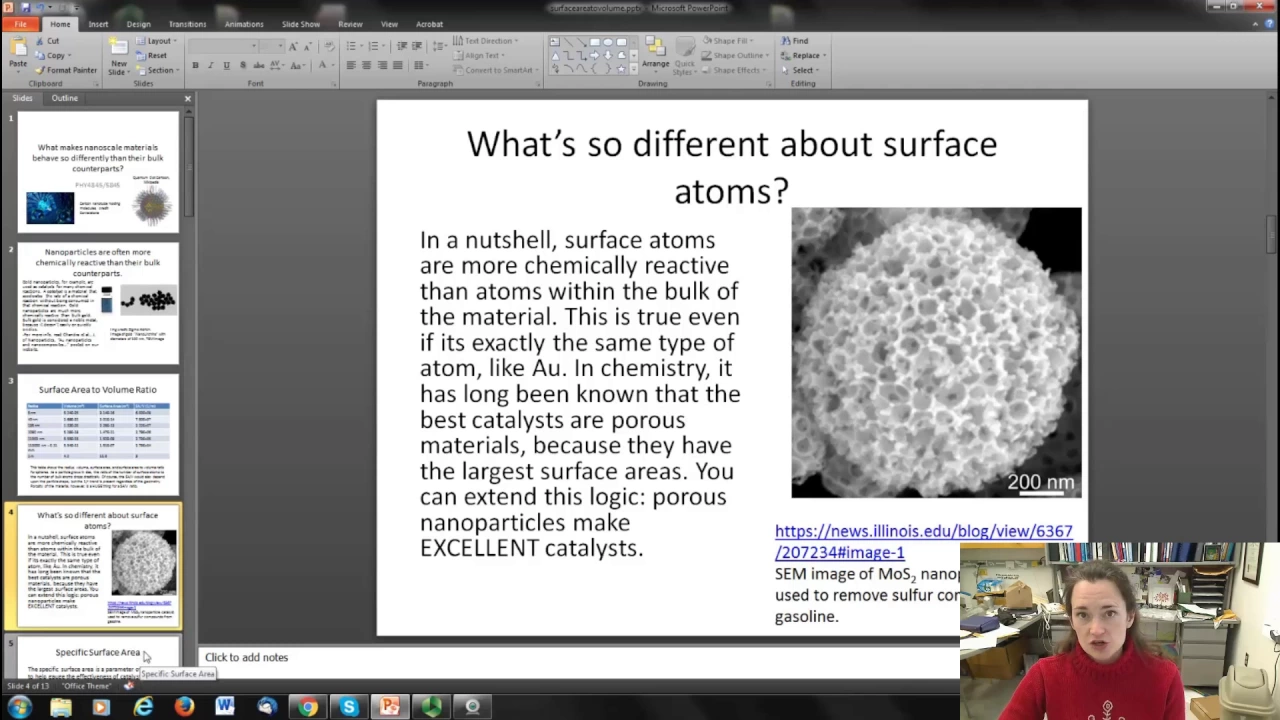
The surface area to volume ratio increases dramatically as particle size decreases. For spheres ranging from 5 nanometers to 1 meter in radius, the surface area to volume ratio changes from approximately 10^8 to just 3. This means that as particles become smaller, the proportion of atoms located at the surface relative to the total number of atoms increases substantially. The relationship follows an inverse linear pattern where smaller particles have proportionally more surface area available for interaction.

As particle size decreases, surface area to volume ratio increases dramatically. Example: 1 cm³ cube has SA/Vol = 6; 10 cm³ cube has SA/Vol = 0.6. Increasing size by factor of 10 decreases SA/Vol by factor of 10. This explains why nanoparticles have such different properties from bulk materials.

Surface area to volume ratio increases as particle size decreases. Using a cube example: a 2mm cube has surface area 24 and volume 8, giving a ratio of 3; when cut into eight 1mm cubes, total surface area becomes 48 while volume remains 8, giving a ratio of 6. This increase means more material surface is exposed to the environment, enabling greater interaction with surroundings and enhanced catalytic activity.

As particle size decreases, surface area to volume ratio increases. For example, a 2mm cube has a surface-to-volume ratio of 3, while a 1mm cube has a ratio of 6. This increase occurs because smaller particles expose more surface area relative to their volume, leading to greater interaction with surrounding materials and enhanced catalytic activity.

As particle size decreases, the surface area to volume ratio increases dramatically. For a cube of side length 'a', surface area is 6a² and volume is a³, giving a ratio of 6/a. For a sphere of radius 'r', surface area is 4πr² and volume is (4/3)πr³, giving a ratio of 3/r. This means smaller particles have proportionally more surface area relative to their volume. In bulk materials, most atoms are inside with fewer on the surface. As particle size decreases, the fraction of surface atoms increases dramatically. At nanoscale dimensions (around 1 nm), more than 99% of atoms are on the surface because the number of surface atoms becomes comparable to or exceeds the number of atoms in the bulk.
Prerequisite Knowledge
- Concept 01The metric system and scientific notation, specifically understanding the scale of a nanometer (10^-9 meters) relative to micro and macro scales.
- Concept 02Basic atomic and molecular structure, including the concept of atoms, chemical bonding, and how molecules aggregate into bulk materials.
- Concept 03Fundamental phases of matter (solids, liquids, gases) and the behavior of mixtures, such as suspensions, colloids, and solutions.
- Concept 04The concept of surface area-to-volume ratio and how it mathematically increases as particle size decreases.
Subsequent Learning
- Step 01Advanced characterization techniques used to analyze nanomaterials, such as Scanning Electron Microscopy (SEM), Transmission Electron Microscopy (TEM), and Dynamic Light Scattering (DLS).
- Step 02Synthesis methodologies of nanomaterials, comparing 'top-down' physical approaches (like milling) to 'bottom-up' chemical approaches (like chemical vapor deposition).
- Step 03The field of nanotoxicology, which studies the environmental, health, and safety risks associated with nanoparticle exposure and dispersal in biological systems.
- Step 04Real-world applications of nanotechnology, including targeted drug delivery in nanomedicine, high-efficiency solar cells, and advanced catalytic materials.
Nanoparticle Basics
0:00- 1
Defines nanoparticles as billion-times smaller than humans.
- 2
Explains their natural presence as ultra-fine dust in air.
- 3
Notes combustion can increase their number 100 to 1000 times.
Nanotoxicology and the Precautionary Approach to Nanomaterials
While mainstream materials science focuses on the beneficial applications of nanoparticles due to their unique size and reactivity, the field of nanotoxicology offers a critical counter-perspective. It argues that the very properties making nanomaterials useful—such as their high surface-area-to-volume ratio and mobility in fluids—also make them highly hazardous. Because of their minute size, nanoparticles can easily bypass biological barriers, entering cells and organs to cause oxidative stress, inflammation, and DNA damage. Critics highlight that traditional chemical safety and regulatory frameworks are inadequate for assessing nanoscale risks, as substances behave differently at this scale than in bulk form. This critical viewpoint advocates for the Precautionary Principle and 'Safety-by-Design,' emphasizing that the environmental, health, and containment risks of nanomaterials must be rigorously addressed before widespread synthesis and dispersal.
Advanced characterization techniques used to analyze nanomaterials, such as Scanning Electron Microscopy (SEM), Transmission Electron Microscopy (TEM), and Dynamic Light Scattering (DLS).
This lecture covers key characterization techniques for nanomaterials: UV-visible spectroscopy detects surface plasmon resonance to determine nanoparticle size and shape; zeta potential measurement (ideally above ±30 mV) assesses colloidal stability based on particle charge; dynamic light scattering (DLS) measures hydrodynamic diameter in solution (0.6 nm-6 μm) by analyzing Brownian motion-induced light fluctuations; transmission electron microscopy (TEM) provides high-resolution (0.1 nm) images of thin samples for morphology and crystallography; scanning electron microscopy (SEM) offers 3D surface topography imaging with secondary electron detection; and atomic force microscopy (AFM) monitors tip-sample interactions in contact, tapping, or non-contact modes to image surfaces at atomic resolution without requiring conductive coating.

This video explains three key characterization techniques for nanomaterials: Scanning Electron Microscopy (SEM) uses an electron beam to scan specimen surfaces, detecting secondary electrons for topographical imaging with resolution up to 1 nm; Transmission Electron Microscopy (TEM) transmits electron beams through thin specimens to reveal internal structures at resolutions down to 0.1 nm; and Atomic Force Microscopy (AFM) measures atomic forces between a sharp tip and sample surface to generate 3D topographical images without requiring vacuum, making it suitable for insulating and biological samples.
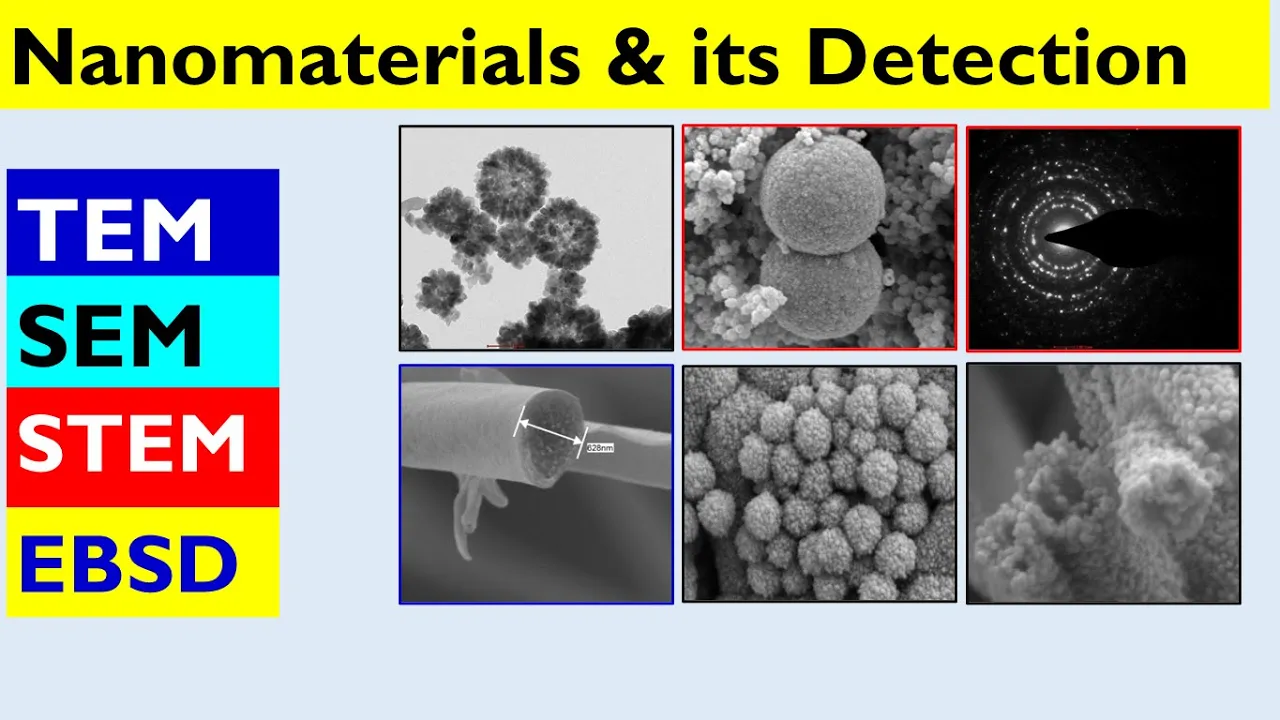
Nanomaterials are defined as materials with at least one dimension below 100 nm, and they can be classified into zero-dimensional (nanoparticles), one-dimensional (nanofibers, nanorods, nanotubes), two-dimensional (nanosheets), or three-dimensional based on their dimensional characteristics; common characterization techniques include Scanning Electron Microscopy (SEM), Field Emission SEM (FESEM), Transmission Electron Microscopy (TEM), and Scanning Transmission Electron Microscopy (STEM), which allow researchers to visually confirm and measure the nanoscale dimensions of synthesized materials.
Various techniques characterize nanomaterials: (1) SEM (Scanning Electron Microscopy) - shows surface morphology, (2) TEM (Transmission Electron Microscopy) - reveals internal structure, (3) AFM (Atomic Force Microscopy) - measures surface topology and roughness, (4) XRD (X-ray Diffraction) - determines crystallographic structure, (5) FTIR - identifies chemical bonds and molecular structure, (6) Raman Spectroscopy - reveals vibrational modes and composition, (7) UV-Vis Spectroscopy - studies optical properties and band gap, (8) TGA (Thermogravimetric Analysis) - measures thermal stability, (9) Zeta Potential - determines surface charge and colloidal stability, (10) XPS (X-ray Photoelectron Spectroscopy) - analyzes surface chemical composition.
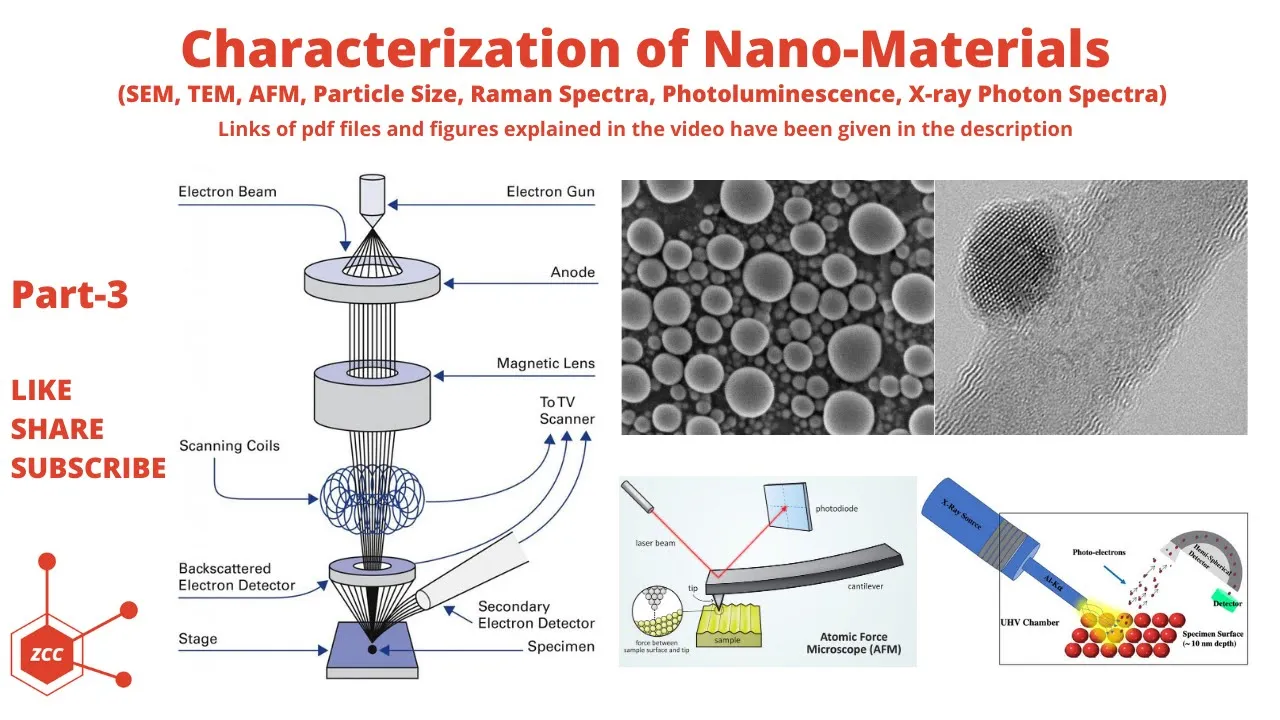
Nanomaterial characterization employs multiple analytical techniques to confirm successful synthesis and understand material properties: Scanning Electron Microscopy (SEM) provides surface topography up to 10 nm with Energy Dispersive X-ray Spectroscopy for composition analysis; Transmission Electron Microscopy (TEM) achieves 2 nm resolution revealing internal crystal structure, morphology, and stress; Atomic Force Microscopy (AFM) maps individual surface atoms using a sharp tip and cantilever system; Particle Analyzers determine particle size distribution through laser light scattering angles; FT-Raman Spectra distinguishes single-walled from multi-walled carbon nanotubes; Photoluminescence Spectra determines chirality through fluorescence and phosphorescence analysis; and X-ray Photoelectron Spectroscopy (XPS) reveals electron states, oxidation states, and atomic structure of surface atoms. These complementary techniques collectively provide essential information for exploiting nanomaterial properties in applications.
Synthesis methodologies of nanomaterials, comparing 'top-down' physical approaches (like milling) to 'bottom-up' chemical approaches (like chemical vapor deposition).

Three main synthesis methods exist: (1) Top-down - breaking bulk material into smaller particles (mechanical milling, lithography); (2) Bottom-up - building from atoms/molecules (chemical vapor deposition, self-assembly); (3) Sol-gel - hydrolysis and condensation reactions forming gel networks. Each method offers different advantages for producing specific types of nanomaterials with controlled properties.
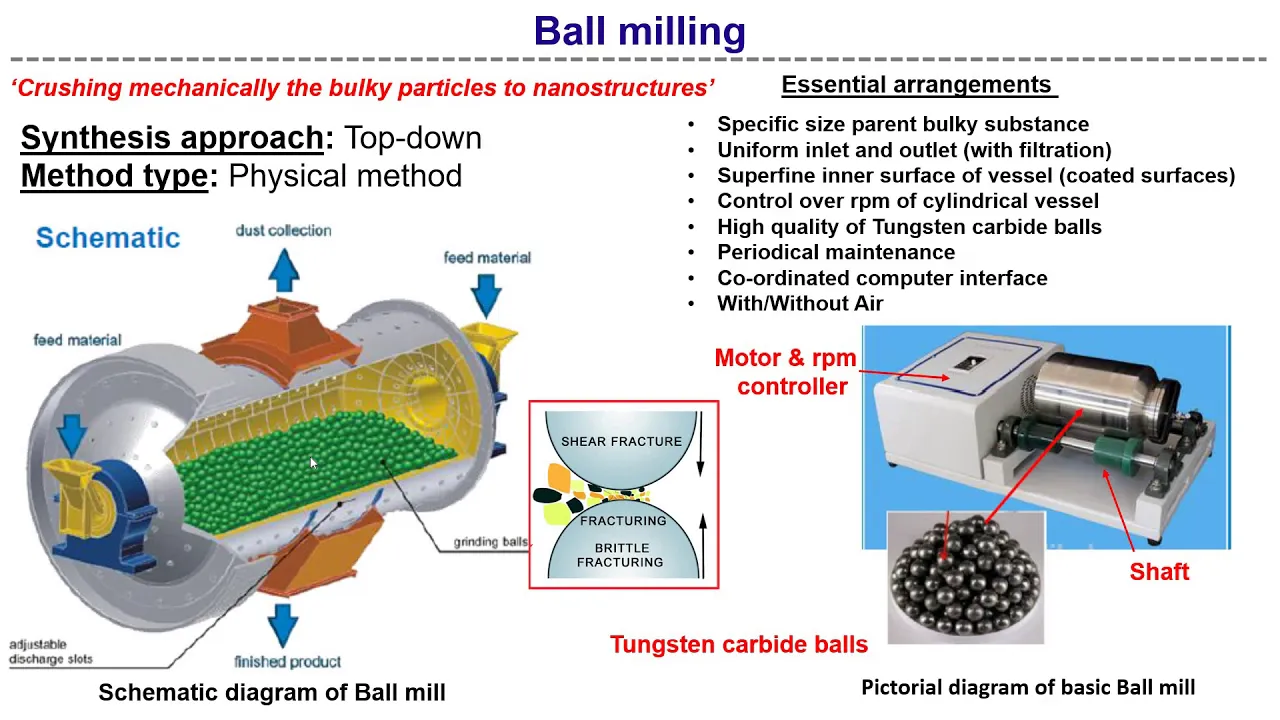
Nanomaterial synthesis follows two fundamental approaches: top-down and bottom-up. Top-down breaks bulk materials (millimeters) into nanoscale pieces through mechanical processes. Bottom-up assembles atoms/molecules from atomic scale to build nanometric structures. Physical methods include ball milling (top-down), CVD, PVD, ALD, PLD, MBE, and MOVPE. Chemical methods include chemical etching (top-down) and sol-gel, spray pyrolysis (bottom-up). Hybrid methods combine both approaches.

Nanomaterials can be synthesized through two fundamental approaches: top-down methods that reduce bulk materials to nanoparticles using mechanical processes like ball milling or lithography, and bottom-up methods that build nanoparticles atom-by-atom or molecule-by-molecule through chemical processes such as co-precipitation, sol-gel processing, and vapor-phase deposition techniques including PVD, CVD, and ALD.
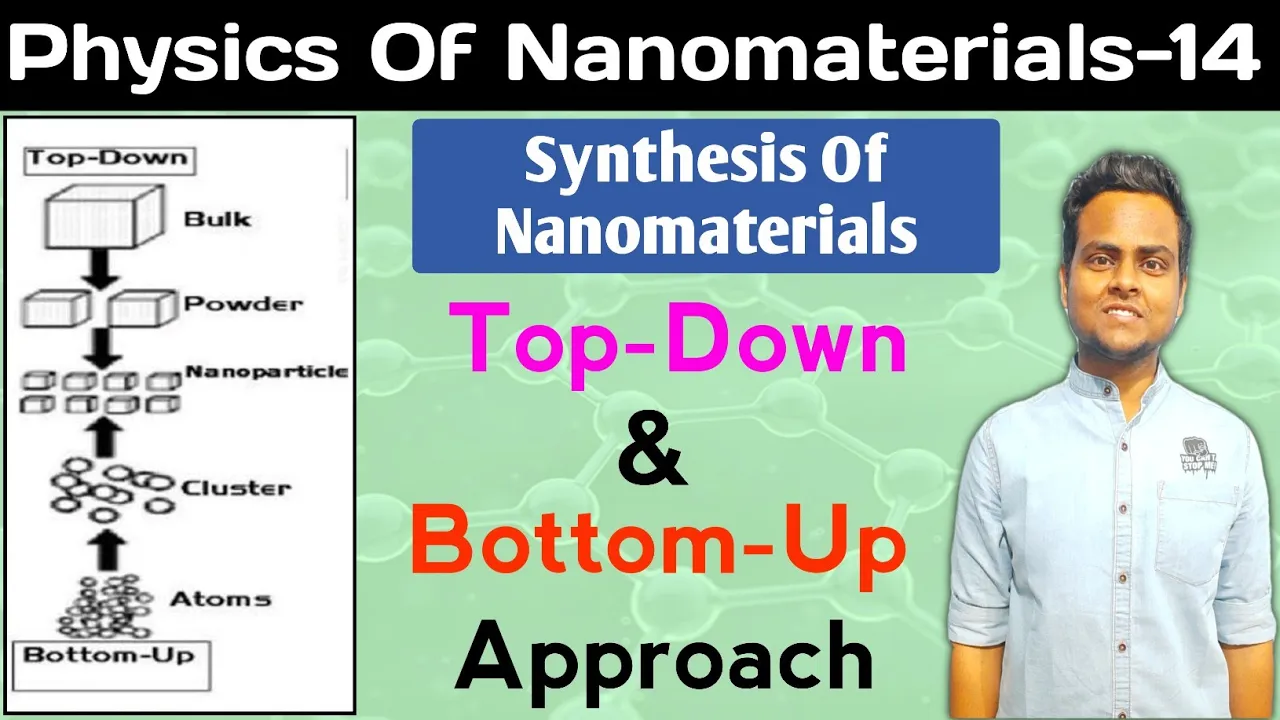
Nanomaterials can be synthesized using two primary approaches: the top-down approach involves breaking down bulk materials into smaller pieces through mechanical or physical methods (like sculpting a statue from a large stone), while the bottom-up approach constructs nanomaterials by assembling atoms, molecules, or nanoparticles from the smallest components upward; the top-down method creates crystal defects that alter material properties and generates significant waste, whereas the bottom-up approach offers better control over material characteristics but requires precise assembly conditions.

There are two major approaches to synthesizing nanomaterials: top-down and bottom-up. Top-down approaches reduce bulk materials to nanoscale through mechanical deformation (ball milling, lithography). Advantages include large production yield and simplicity. Disadvantages include inability to achieve uniform particle size, requirement of same starting material, significant wastage, and inability to use with thermally unstable or hygroscopic materials. Bottom-up approaches build nanomaterials atom by atom (chemical precipitation, sol-gel, biosynthesis). Advantages include minimal wastage, precise control over particle size, and ability to synthesize diverse materials. Most nanomaterial synthesis methods are bottom-up approaches.
The field of nanotoxicology, which studies the environmental, health, and safety risks associated with nanoparticle exposure and dispersal in biological systems.
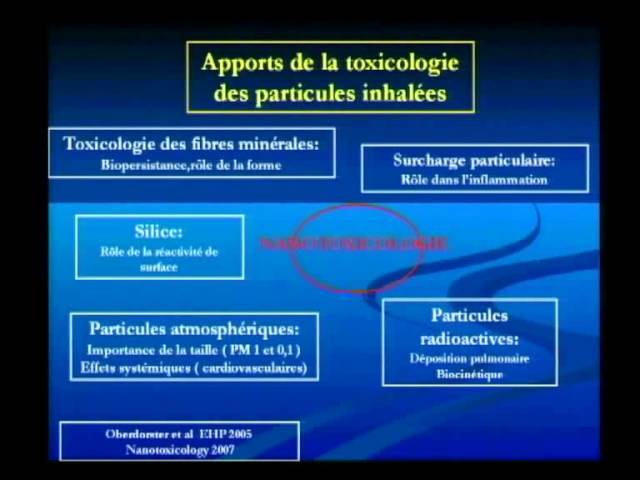
Nanotoxicology emerged approximately 7-8 years ago as a distinct scientific discipline, prompted by concerns that manufactured nanoparticles might pose similar dangers to established hazardous particles like asbestos, silica, and diesel exhaust. This field builds on decades of research on atmospheric ultrafine particles (PM1 and PM0.1), which epidemiological studies have linked to premature mortality, respiratory disease, and cardiovascular effects. Particle toxicity depends on multiple characteristics including shape (asbestos fibers cause mesothelioma), surface reactivity (silica triggers inflammation), and size. Radioactive tracers helped establish how particles deposit and distribute in biological systems. Nanoparticles exhibit fundamentally different behaviors compared to larger particles, with unexpected accumulation in nasal passages and upper airways rather than just alveolar regions.

Nanotoxicology is a scientific field that studies the potential negative impacts of nanomaterials on living organisms, human health, and the environment. Unlike conventional toxicology where dose-response relationships are relatively straightforward, nanotoxicology is more complex because nanoparticle toxicity depends on multiple factors including particle size, shape, agglomeration state, surface properties, solubility, and crystallinity. Nanoparticles can enter the body through unique pathways, such as directly crossing the blood-brain barrier via the olfactory nerve, and can cause cellular damage including organelle injury, apoptosis, and membrane disruption. A systematic testing framework for nanotoxicology involves four stages: complete characterization of physical and chemical properties, stability assessment in biological media, in vitro cellular testing, and in vivo testing on living organisms.

Nanotoxicology is the scientific study of nanoparticle toxicity in humans and the environment, examining how nanoparticles' unique physicochemical properties—including high surface area to volume ratio, electrical and magnetic characteristics, and ability to penetrate biological barriers—can trigger cytotoxic and genotoxic responses through interactions with proteins, enzymes, and genetic material; nanoparticles enter the body via inhalation, ingestion, injection, and skin penetration, potentially causing dysfunction at cellular, subcellular, and protein levels, while environmental concerns include improper disposal leading to water and soil degradation, necessitating further research to develop structure-activity relationship models for predicting health and ecological impacts.

Nanomaterials are materials at the 1-1000 nanometer scale where properties become significantly different from bulk materials. They are classified as natural (proteins, viruses), incidental (accidental human-produced contaminants), or synthetic (intentionally manufactured). Nanomaterials are widely used in commercial products like sunscreens, cosmetics, and food supplements, but create environmental concerns when discarded. Currently, there is no legislation requiring manufacturers to disclose nanomaterial content, creating regulatory gaps. Nanotoxicology studies how nanomaterials affect biological systems and the environment, with objectives including understanding cellular alterations, correlating physicochemical properties with biological effects, and designing safer nanomaterials.

Nanotoxicology is the scientific field evaluating nanomaterial effects on biological systems, crucial for nanomedicine and nanotechnology applications. Nanomaterials (1-100 nanometers) are ubiquitous in daily products: sea salt contains nano-plastics, infant formula has titanium dioxide and zinc oxide nanoparticles, and sunscreens use nanoparticles for UV protection. Many nanomaterials are incidental contaminants from industrial processes like gasoline combustion. These materials enter our bodies through food, water, and air, making nanotoxicology essential for understanding health impacts. The field correlates physical-chemical properties with biological activities to predict effects and support evidence-based regulations.
Real-world applications of nanotechnology, including targeted drug delivery in nanomedicine, high-efficiency solar cells, and advanced catalytic materials.
Nanotechnology has applications in medicine: early disease diagnosis, imaging, targeted drug delivery (still under research). In agriculture: bacterial detection in food, food preservation, new pesticides and medicines. In energy: nanosilicon solar cells (more efficient than traditional by reducing thermal loss), hydrogen fuel cells (high efficiency, low cost for space applications). These applications demonstrate nanotechnology's potential across multiple fields.

Nanotechnology, the science of manipulating matter at the 1-100 nanometer scale, enables unique properties that transform medicine through targeted drug delivery, cancer treatment, advanced diagnostics, and regenerative medicine, while revolutionizing industry through stronger materials, efficient energy solutions, advanced electronics, environmental remediation, and enhanced aerospace and automotive technologies.

Nanotechnology transforms medicine through targeted drug delivery in cancer therapy, protecting drugs from degradation while increasing tumor cell selectivity and bioavailability; nanoparticles also enable gene delivery. Biomedical applications include safe, biocompatible implants and dentures, with magnetic iron oxide nanoparticles serving as biosensors modified with biospecific ligands. In electronics, carbon nanotubes create flexible, transparent circuits that maintain properties when bent, while the GMR effect (Nobel Prize 2007) enables atomic-density data reading on hard disks. Zinc oxide nanoparticles power UV emitters and piezoelectric devices. Energy applications include nanowire-based solar cells achieving 15x efficiency improvement over traditional cells, and silver nanoparticles provide antibacterial properties for surgical instruments and water purification systems.

Nanotechnology transforms medicine through three major applications: (1) Targeted Drug Delivery: Nanoparticles carry chemotherapy directly to cancer cells, minimizing damage to healthy tissues and reducing harmful side effects like hair loss; (2) Neuroprosthetics: Carbon nanotubes and nanowires bridge severed nerve connections, enabling paralyzed individuals to control external devices through thought; (3) Brain-Computer Interfaces: Ultra-fine nanosensors detect neural signals, translating thoughts into commands for prosthetic limbs or computer systems; (4) Biofuel Cells: Mimic cellular respiration using biological catalysts to oxidize glucose, generating continuous electrical power from the body's natural metabolic processes without external battery replacement. These applications demonstrate how nanotechnology enables unprecedented precision in medical treatment, rehabilitation, and sustainable implant power generation.

Nanotechnology in pharmaceuticals enables targeted drug delivery by manipulating drug particles at the nanoscale to deliver therapeutic agents precisely to specific body sites. Key applications include: (1) Targeted cancer treatment - nanoparticles can be engineered to specifically target cancer cells while sparing healthy tissue, delivering higher concentrations of chemotherapy directly to malignant cells; (2) Inhalation therapies - nanotechnology enables development of aerosolized medications that can reach deep lung tissues effectively; (3) Pediatric formulations - nano-suspensions allow administration of poorly soluble drugs to children who cannot tolerate injections; (4) Controlled release systems - nanoparticles can be designed to release medication gradually over extended periods. This precision targeting reduces side effects and improves therapeutic effectiveness compared to conventional delivery methods.
Nanoparticle Basics
0:00- 1
Defines nanoparticles as billion-times smaller than humans.
- 2
Explains their natural presence as ultra-fine dust in air.
- 3
Notes combustion can increase their number 100 to 1000 times.
Nanotoxicology and the Precautionary Approach to Nanomaterials
While mainstream materials science focuses on the beneficial applications of nanoparticles due to their unique size and reactivity, the field of nanotoxicology offers a critical counter-perspective. It argues that the very properties making nanomaterials useful—such as their high surface-area-to-volume ratio and mobility in fluids—also make them highly hazardous. Because of their minute size, nanoparticles can easily bypass biological barriers, entering cells and organs to cause oxidative stress, inflammation, and DNA damage. Critics highlight that traditional chemical safety and regulatory frameworks are inadequate for assessing nanoscale risks, as substances behave differently at this scale than in bulk form. This critical viewpoint advocates for the Precautionary Principle and 'Safety-by-Design,' emphasizing that the environmental, health, and containment risks of nanomaterials must be rigorously addressed before widespread synthesis and dispersal.
[Music] hello everyone and Welcome to our studio today we're going to discover together the Mysterious Universe of nanop particles and to do so we're fortunate to have as our guest Pierre a nanotechnology specialist so Pierre what is a nanop particle well it's a particle that's a billion times smaller than we are the size of a nanop particle compared to an orange is like the size of an orange compared to the planet Earth nanop particles are extremely fine but they're still 10 to a thousand times bigger than a molecule of oxygen for example and where are these nanop particles found they've always been found all around us as ultra fine dust in the air for instance really let's just double check that with our special correspondent Nano who's now on location in the ambient air yes Kathleen as you can see in the air there's a very large number of nanop particles continually moving about they keep bumping into each other binding together and reforming the number is constantly changing and when combustion takes place watch the number can increase 100 to 1,000 times amazing but Pierre what is actually new about this in the past few years we've learned how to produce different types of nanoparticles which can be used to develop nanomaterials that sometimes offer very interesting properties the question today is whether these nanop particles are a hazard to health and the environment right but first of all what can these nanomaterials be used for well they can be used in several areas Transportation environment Health Care New energies buildings and so on interesting but for now let's get back to Nano in a laboratory to see how things actually work in the field Nano tell us for instance can these Nano particles really be controlled well Kathleen it all depends on what state the particles are in in the powder State they can easily be dispersed by air movement so precautions must be taken in handling them here however as you can see they're quietly stain put in the liquid they're much easier to contain and in a solid nanomaterial they're very well integrated within the structure thanks so much Nano for your valuable report so Pier it would appear that the particles are firmly attached inside the materials is that right that is the question research is underway to try to determine for which materials and under what conditions nanop particles could break away and spread into the environment thank you Pierre for your explanations in the next episode we'll take a closer look look at the applications of nanomaterials thank you for tuning in and see you soon [Music]
Up Next

Surface-to-Volume Ratio in Nanomaterials | Nanoscience Part 1
@kalyanjyotideori
1.9K views•2020-05-03

Frances H. Arnold Nobel Lecture: Directed Evolution in Chemistry
@NobelPrize
109.5K views•2018-12-08
1H NMR: Determining Number of Peaks from Structure
@MSJChem
59.2K views•2017-04-06

Edible Water Bottles: A DIY Guide to Sodium Alginate Spherification
@ryan
10.5M views•2019-06-21
Related Study Plans & Knowledge Roadmaps
Structured learning paths in Chemistry