

















Democratic regimes are systems where political power resides with the people, exercised through participation, competition, and liberty. There are three main models: parliamentary systems (where the prime minister is elected from the legislature and can be removed by vote of no confidence), presidential systems (where a directly elected president holds executive power with fixed terms), and semi-presidential systems (where power is divided between a directly elected president and an indirectly elected prime minister). Electoral systems include plurality/majority systems (winner-takes-all, typically producing two-party systems), proportional representation systems (seats allocated based on vote share, enabling small parties to win), and mixed systems combining both approaches. Civil rights promote equality (free speech, fair trial, privacy), while civil liberties promote freedom, both protected by the rule of law.
Democratic Regimes in Comparative Government: Institutions & Systems
Added:hello welcome to another lesson in ap comparative government today we're going to be covering democratic regimes our objectives for today are to define democracy and explain its components to compare various explanations regarding why democracy has emerged in some cases and not in others to compare executive legislative and judicial institutions and their constitution and degree of power to distinguish among parliamentary presidential and semi-presidential democracies and to evaluate the differences between the benefits of plurality majority and proportional electoral systems the agenda for today is to talk about institutions of the democratic state democratic systems then we're going to move forward to political parties we're going to talk about different electoral systems and we're going to finish with civil rights and liberties democracy comes from the weak words demos meaning the common people the first thing that we have to do is to understand democracy when we talk about a democracy we have to understand the basic principles that make a democracy what a democracy is when we talk about a democracy we're going to be ensuring some basic freedoms and rights we're going to be ensuring some civil location we're going to be ensuring free and fair elections and we're going to be ensuring that the people are heard in the electoral process as well democracy comes from the words demos meaning the common people and krathya meaning power or rule it's based on this origin we can define democracy at its most fundamental as a system in which political power resides with the people political power is exercised either directly or indirectly by the people through participation competition and liberty we go back to ancient greece to find the roots of democracy they basically allowed the public excluding women children foreigners and slaves to participate directly in the affairs of government they chose policies and made government decisions based on the power of the people the people were the state in contrast we have the roman empire which laid out the concept of republicanism which emphasized the separation of powers within a state and the representation of the public through elected officials as opposed to the unaccountable power of the monarchy or the direct participation of people so we have the creation of a republic today's form of democracy is going to merge the two it's going to merge the ideas of a direct democracy using the popular vote and it's going to be merging the ideas of a republic by creating those systems of powers and checks and balances within the the current uh democratic systems there are two main forms of democracy uh we can talk about direct democracy again which in which the public participates directly in governance and policy making historically it's found in small communities such as such as ancient greece we also have an indirect democracy where the public participates in directly through its elected representatives the prevalent form of a democracy in modern age we have to jump forward to the 13th century where english nobles forced king john to sign the magna carta this is a document that curved the rights of the king and laid the foundation for an early form of legislature and a key element of republicanism in addition the magna carta asserted that all three men at the time only male members of the aristocracy should enjoy the due process before the law this assertion set the stage for the idea of liberty so we have the first sentence of liberty through the magna carta although the magna carta was limited in its goal and application it presented the idea that no individual nor even the king was about the law this was incredibly important uh for governing governments across time so what the magna carta implies is that we have this concept of rule of law and nobody's going to be above rule of law and in terms of a democracy we need that rule of law to protect all people equally regardless of if you're a king or if you're a peasant now jumping forward in time we're going to be moving through the industrial revolution and we're going to be seeing the rise of the mother state this came with a modernization of democracy modernization is associated with better education a weakening of older traditional institutions that stress authority and hierarchy we have greater gender equality and the rights of a middle class to sum up again we're going to be using modernization theory like we talked about in the first presentation uh modernization theory suggests that as societies become better educated and more economically sophisticated they need and desire greater control over the state to achieve and defend their interests central to modernization theory is that the idea that a middle class is essential for democratization a significant segment of the population with the economy resources necessary to advance and demand their own rights this is what we call the middle class while elites were keen consolidating democracy the rising pressure of the middle class was monumental for the change into the modern state more political participation developed into a civil society defined as organized life outside the state civil society is a fabric of organizations it doesn't necessarily have to be political but they're created by people to help define their own interests whatever they may be so we might have environmental organizations or churches or sports teams or fraternal organizations uh anything of the like under the right circumstances these are associations serve as a vehicle for democratization by allowing people to articulate promote and defend what is important to them this is when we see also the rights of political parties modernization resulting from foreign invest investment globalization and trade also push democratization forward civil society too can be strengthened by the transmission of ideas across borders by education media and non-governmental organizations these practices and culture because became a defining factor for western democratic individual and governmental practices so because we have all that education we have that civil participation we have that those new structures of hierarchies within society then we're going to be able to travel and enjoy those different structures elsewhere because those are gonna be replicated across different countries again due to globalization uh due to that internationalism that we see during uh after world war one and it's gonna be combining all those western democratic ideals into what we call western democracy overall we're going to move forward with talking about institutions of the democratic state these are basically the branches of a government we're going to have the executive branch the constitutional court or the judicial branch and the legislative branch the executive is composed of a head of state or a head of government it can be parliamentary presidential or semi-presidential we're going to go over each one later on in terms of the constitutional court or the judicial branch it's going to determine the constitutionality of laws and acts that are passed by government and it's going to establish judicial review and we're going to cover that concept in a little bit finally in terms of the legislative branch we're going to have law making the creation of laws and it's either going to be unicameral or bicameral again we're going to be seeing that in terms of the six states that we're going to be uh talking about the executive branch is the branch that carries out the laws and policies of the state the executive comprises two distinct roles the first is a head of state a role that symbolizes and represents a people both nationally and internationally embodying and articulating the goals of the regime conducting foreign policy and waging war are also sometimes considered parts of the heads of head of states duties in contrast the head of government deals with the everyday task of running the state such as formulating and executive domestic policies alongside a cabinet of ministers who are charged with specific policy areas we have a minister of education and minister of agriculture or in mexico we have a secretary of education secretary countries combine or separate these two roles to different degrees heads of government are usually referred to as prime ministers they serve as the main executive over the ministers in the their cabinet they may serve alongside a head of state who may be a monarch or a president the legislature is typically viewed as the body in which national politics is considered and debated it is charged with making or at least passing legislation as with executives legislatures vary in their political powers and construction the major distinction is between bicameral myocaral and unicameral systems as you might guess from their names bicameral systems are legislators that contain two houses whereas unicameral systems are those with one house most liberal democracies are bicameral in liberal democracies however constitute constitutional power is central to maintaining what we refer to as the rule of law the sovereignty of law over the people and elected officials for this reason judicial institutions are essential most but not all liberal democracies have some form of constitutional court ensuring that legislation is compatible with the institution this is a relatively new development in the 1950s only a third of liberal democracies provided a judicial review whereas now 90 percent do judicial review can take different forms most specifically concrete or abstract in concrete review courts can consider the constitutionality of legislation only when a specific court case triggers this question for example in the case of a separate appellate or a constitutional court a case before a court of appeal may be forwarded to the constitutional court if the court of appeal believes there is a constitutional issue at stake when we have um brown versus board of education this becomes a state issue that is transferred over to an appellate court and later to the supreme court because they're not following the separate but equal clauses that had been established before by judicial review and so when we talk about education in the united states in the 1950s there are no equal facilities for african americans as they are for white americans and so brown versus board of education establishes a judicial review and and basically this proves uh the the positioning of the state in legislating against uh the quality of education and so that's why brown vs board of education is key to understand the way that a concrete review happens in abstract review a constitutional court may rule on legislation without a specific court case such rulings are typically initiated upon request by one or more elected officials such as members of the national or local legislatures courts can also differ in the timing of the review uh the case for example for the legalization of gay marriage in the united states in 2017 in 2015 speaks to this abstract review our next item on the agenda is going to be models of democracy we have three main models the parliamentary semi-presidential and presidential model the parliamentary mod formulates legislation and domestic and international policies it serves for an unfixed term and may be removed by a vote of no confidence the queen of england might might also remove the prime minister and establish a new government system in a semi-presidential system it is uh there's a directly elected president and an indirectly elected prime minister who share power the president helps that policy while the prime minister executes it the president also manages foreign policy and whatever office holds more power it depends on the country in terms of a presidential model there is going to be a directly elected president which holds a majority of executive power as head of state and government it directs a cabinet which he chooses and formulates he or she and formulates the legislation and international domestic policies uh most presidents serve for a fixed term however there's re-election measures and in the case of of president vladimir putin he has been elected multiple times as president and he has also served as prime minister parliamentary systems can be found in most of the democracies around the world parliamentary systems comprise two basic elements first prime ministers and their cabinets the other ministers who make up the government come out of the legislature and second the legislature is also the instrument that elects and removes the prime minister from office so the legislative branch is going to be the highest branch of power within that system the overwhelming majority of power resides with the head of government the prime minister in contrast the head of state may be the be maybe a president who is either directly elected by the public or indirectly elected by the legislature or a monarch who has inherited the office this is what the cabinet looks like in terms of the balance of power between the different houses of commons within the british parliament the prime minister is elected from the legislature and therefore reflects the balance of power between parties in the legislature typically they are the head of the party in the lower house that holds the largest number of seats this tight connection between the executive and the legislature means that although these two branches of government separate power certain responsibilities the prime minister is elected from the legislature and therefore reflects the balance of power between parties in the legislature typically they are the head of the party in the lower house that holds the largest number of seats this tight connection between the executive and the legislative means that although these two branches of power separate uh of the although these two branches of power are separate they share the same powers and responsibility a party with a majority of seats in the legislature can choose its own prime minister and and cabinet with little concern for other parties however when a party holds a plurality of seats that is more seats than any other party but fewer than 50 of them it must commonly forge a coalition government with more or one or more parties within that system so because we have multiple power parties in place we do have to have a majority to choose the the head of state um the sorry the head of government which is going to be the the prime minister and so the prime minister is going to be elected by the large majority of parties or by the ruling party in the parliament yet prime ministers can often be removed relatively easy through what is known as a vote of not no confidence uh parliaments typically retain the right to dismiss a prime minister at any time simply by taking a vote of no confidence in such a vote the absence of majority support for the prime minister will bring down the government depending on the constitution this outcome may trigger a national parliamentary election or a search for a new government and prime minister from among the parties prime ministers also hold the right to call elections so a prime minister can set down at a given time the prime minister can be asked be asked to step down by the queen or uh the government itself the parliament can uh establish a vote of no confidence and then we have to have a change in government and a change in prime minister as well in parliamentary systems the idea of checks and balances is subordinated to a concentration of power that guarantees greater political autonomy in addition the fusion of the prime minister's power with that of the lower house and the weaknesses of the upper house means that fewer opportunities arise for real constitutional conflicts that would empower constitutional courts so because a lot of a lot of things are established by the majority of the government then therefore there's no such thing as a clash between the ideas and ideologies within that government so some a quick evaluation of the parliamentary system we're gonna have benefits uh basically the prime minister can usually get legislation passed because uh most of the of the government is on his side uh the prime minister may also be more easily removed by the legislature through a vote of no confidence and some drawbacks are going to be that the public does not directly select the prime minister and may feel that it has less control over the executive and the passing of legislation because everything is concentrated within that parliament moving forward with presidential systems we're going to be talking about both the precedent and the legislature serving for fixed terms those are typically between four and seven years however in mexico for example president andres manuel lopez obrador only serves for six years as a directly elected executive the president is able to draw on a body of popular support in a way that no member of the of a legislature or even a prime minister can because it's a it's more of a direct democracy if you have a popular vote as a head of state and the government the president serves as an important national symbol as well as the overseer of policy finally the president is able to choose a cabinet many or perhaps all of whom are not members of the legislature since the president is directly elected minority parties lack the kind of influence over the executive and that can be found in parliamentary systems especially in a coalition government we don't have coalition governments in a presidential system within the system there is a strong uh there's a strong system of checks and balances between all of its branches when we talk about its benefits and drawbacks the president is directly elected and can draw on a national mandate to create and enact legislation we have executive orders in terms of drawbacks the president and the legislature may be controlled by different parties leading to divided government we see that in the united states right now we we don't see that in mexico because both the legislature and the president are both from arya both from the same party office does not allow for power sharing and the president may not be easily removed from office except through elections we do have a fixed term in mexico and there's no chance of re-election the final system is a hybrid between parliaments and presidencies in semi-presidential systems power is divided between the head of state and the head of government a prime minister and are directly elected presidents both exercise that power precedence enjoy fixed terms while prime ministers remain subject to the to the confidence of the legislature and in some cases the confidence of the president as well in some cases the prime minister is relatively independent from the president the president exercises important powers but has limited control over the prime minister in other cases the prime minister is beholden to both the legislature and the president thus giving the president greater authority over the selection removal and activity of the prime minister semi-presidential systems tend to reflect the old distinction between reign and rule that existed under monarchies presidents will often set for policy but expect the prime minister to translate those policies ideas into legislation and ensure that those ideas are passed presidents will also take the lead in foreign policy and serve as commander-in-chief of the army representing the country and international relations in terms of the benefits and drawback of semi-precedent semi-presidential system uh the benefits are going to be that you have a directly elected president and an indirectly elected prime minister with your power and responsibilities so you have two figures that share power and are going to be checking each other uh you have the creation of both a public mandate which is a presidency and an indirectly elected office that may be supported by by the coalition of parties which is a prime minister again and the drawbacks there might be conflict between the prime minister and the president over powers and responsibilities and uh there might there may be also a sense of puppetry between one and the other so obviously when we form a government we have those members creating civil societies and those members are going to be creating specific ideologies and so they're going to be proposing them as political peace these parties are important organizations that bring together diverse groups of people and ideas under the umbrella of an ideological mandate these organizations serve two functions by bringing different people and ideas together they help to establish the means by which the majority can rule without parties the political process would be too fragmented this heterogeneity helps limit a tyranny of the majority which basically allows us to have a more complex and diverse political environment parties in liberal democracies are thus homogeneous enough to create majority rule but too weak to facilitate a tyranny of the majority so long as open and regular elections create the opportunity to turn the ruling party out of power political parties also create the means for the electorate and fellow political elites to hold political politicians accountable voters are able to evaluate politicians on the basis of their fulfillment a fulfillment of a party's policy platform usually when a person does not match that political party anymore they are expelled from the party or they simply move to another party or they even create a new party as andres manuel lopez obrador did in mexico one factor that accounts for the diversity in party politics however is the diversity and electoral systems all democracies divide their populations geographically into a number of electoral districts or constituencies each geographic area that an elected official represents so again key concept here is going to be an electoral district or a constituency these constituencies are allocated a certain number of legislative seats the total number of constituencies varies widely from country to country in nigeria for example we have 360 constituencies elect members of country's lower house how governments draw electoral boundaries can have a huge impact on who gets elected and these boundaries are often a source of greater contention in new and all democracies so again when we talk about political uh systems we're going to be seeing some key major ones in mexico for example pan paris perez now we also have mourinho in in the uk the labour party the green party the ukip the liberal democrats and the party of wales in the united states we have the democrats and the republicans our next item on the agenda are electoral systems one of the most basic ways in which the public participates in public is through voting and elections essentially three broad forms of electoral systems are being used in liberal democracy city the first the first is made up of plurality and majority systems often called single member systems cdcmd systems and the second is proportional representation pr systems many use a mix of cmd and pr systems a minority of democratic countries around the world including the united kingdom canada and the united states india nigeria and several other british colonies rely on rule one of the most basic ways in which the public participates in politics is through the voting and elections essentially three broad forms of electoral systems are being used in liberal democracies today the first is made up of one of the basic ways in which the public participates in politics is through voting and elections essentially three broad forms of electoral systems are being used in liberal democracies today the first is made up of plurality and majority systems often called single member district systems smd and the second is proportional representation pr many use a mix of the two a minority of democratic countries around the world including the united kingdom canada the united states india nigeria and several other former british colonies rely on plurality-based smd systems also called first-past-the-post systems in the systems as in all smd systems constituencies are single member districts which means that each constituency has only one representative in pro plural in plurality-based smds the candidate who receives the most votes whether a majority of our plurality wins the seats the votes cast for other candidates are effectively wasted that is if a candidate from whom a boat is cast does not win his or her votes do not count towards any other candidate electoral bid this is a winner takes all approach so again let's just go over smd systems the candidates run for a specific seat in a specific geographic district okay so we're going to be splitting up the country into those districts and candidates are gonna be running for a single seat the candidate with the most votes wins it usually results in a two-party system and it silences minority voters okay just not a lot of countries use this type of systems the second type of system is going to be the pr system voters cast their valids for a party rather than for a candidate and these percentage of votes a party receives in a district determines how many of the district seats the party will gain so a lot of parties can compete for seats and depending on the amount of boats they receive each party is going to get a specific number of seats pr enables even a small percentage of the vote to win representation political parties draw up in advance a list of their candidates for each electoral district often proposing as many candidates as there are seats if a district has 10 seats and a party wins 50 of the vote in that district the party will send the first five candidates on the party list to legislature pr voters are therefore more willing to vote for small parties since they stand a better chance of winning at least some seats in the legislature so again let's go over a pr systems the country is not necessarily divided into constituencies but it's single is seen as a single one and because it's seen as a single one uh there's gonna be multiple seats for each of the the the states or the different levels of government within it the voters are going to be choosing a party and the party that gets the most votes forms the government this is called the first pass the post system the smd system is called the winner take all system so that's the main difference between the two electoral systems in the mix system boots are cast both for parties and for individuals some seats might be filled by individual races some others might be filled by party outcomes mexico uses what is known as a mixed electoral system that combines poor plurality or majority smds with pr voters are given two votes one for a candidate and the other for a party these two votes can be divided on one ballot paper itself or voters may participate in two separate elections one for the pr candidates and one for the smd candidates so when you go vote in mexico you have a choice you can either vote for an entire party and so all the all the uh positions within that vote are going to be given to the what whichever member of that party is representing that position uh you can also vote for individuals so for example you know don't necessarily want to vote morena for both congress and the president so for the president you're going to be voting for a specific individual and for the congress you're going to be voting for morena so it depends on how you want to distribute your vote and you can make it simple or make it more complicated as you please depending on who you want to vote for or what party you want to vote for so a quick overview again for single member districts votes cast for individuals for proportional representation systems both are cast for parties and in the mix system both boats are cast for both parties and individuals in single member systems the candidate will with the largest share wins the seat or majority in proportional representation seats are the divided among parties uh on basis of share of votes and in mixed systems some seats might field by individual races some by a party outcome in smd systems we're going to have fewer and larger parties in pr systems we're going to have a lot of small parties and in mixed systems we're going to have a mixed outcome why am i going over this so much because it this is the hardest for me to understand and i think it's kind of difficult to understand these terms if you haven't actually voted yet so that's why i'm going over it multiple times voters may also participate in political decision making through referenda and initiatives although voting is typically used to choose parties or candidates for office many countries over the public voters may also participate in political decisions voters may also participate in political decision making through referenda and initiatives although voting is typically used to choose parties or candidates for office many countries over the public the opinion the option voters may also participate in political decision-making through referendum initiatives although voting is typically used to choose parties or candidates for office many countries offer the public the option of voting directly on particular policy issues right now for example new zealand new zealand is holding a referendum for both euthanasia and the legalization of marijuana referenda allow the public to make direct decisions about any single type of policy a clear example is a scottish referendum to separate great britain in some countries the citizens themselves may collect signatures to put a question to a national vote in what is known as an initiative such direct participation can help legitimize the democratic process but some are concerned that national votes place too much power in the hands of an uninformed public thus weakening representative democracy so again if you have a person that is just collecting signatures for a specific legislature and they convince you to do so even if you don't really know what that implies then we're gonna have an issue with uh the actual initiative finally we're gonna have civil rights um civil rights is the last component of a liberal democracy which is liberty itself civil rights typically refers to the promotion of equality where civil liberties refers to the promotion of freedom though the two overlap so again let me go over that civil rights refers to the promotion of equality whereas civil liberties refers to the promotion of freedom civil rights and liberties include free speech and movement the right to religious belief the right to public assembly and organization equal treatment under the law the prevention of inhumane punishment the right to a fair trial the right to privacy and the right of people to choose their own government our rights and liberties depend on the rule of law on legal institutions that all rulers and ruled are subject to and that uphold the law supporting liberty again we emphasize two basic kind of rights individual rights are considered the primary vehicle of democratic rights and their rights are defended from intrusion by the state and other individuals the other kind are democratic rights and they are seen as institutions created and defended by the state thus some democratic institutions now sorry some democratic constitutions particularly those of social democratic regimes speak at length about social and economic institutions as rights such as universal education health care and retirement benefits so sometimes we have a lot of democratic institutions that are going to be helping us survive within the state the state is going to be providing those democratic institutions and so they're called democratic rights in mexico for example we have uh universal health care well it's not the best but we still have it as a basic rate we also have a basic right being education we have free and non-religious secular education for our entire lives for even for a higher level and so that's going to be on democratic right as well in terms of individual rights we have the right to life we have the life the right to own property and so those are going to be individual rights that the state can rarely interfere under so again thank you so much to patrick o'neill so uh for providing this fantastic book essentials of comparative politics and we hereby recognize the authors of all media content in the presentation thank you for listening
Up Next
Brazil's Judicial Corruption: A Warning for the West
@PragerU
182.6K views•2024-01-29

Donna Haraway's Cyborg Manifesto Explained: Key Ideas
@TheoryPhilosophy
39.8K views•2020-09-26
Government Surveillance Methods: 10 Ways You May Be Watched
@BeAmazed
1.6M views•2017-04-09
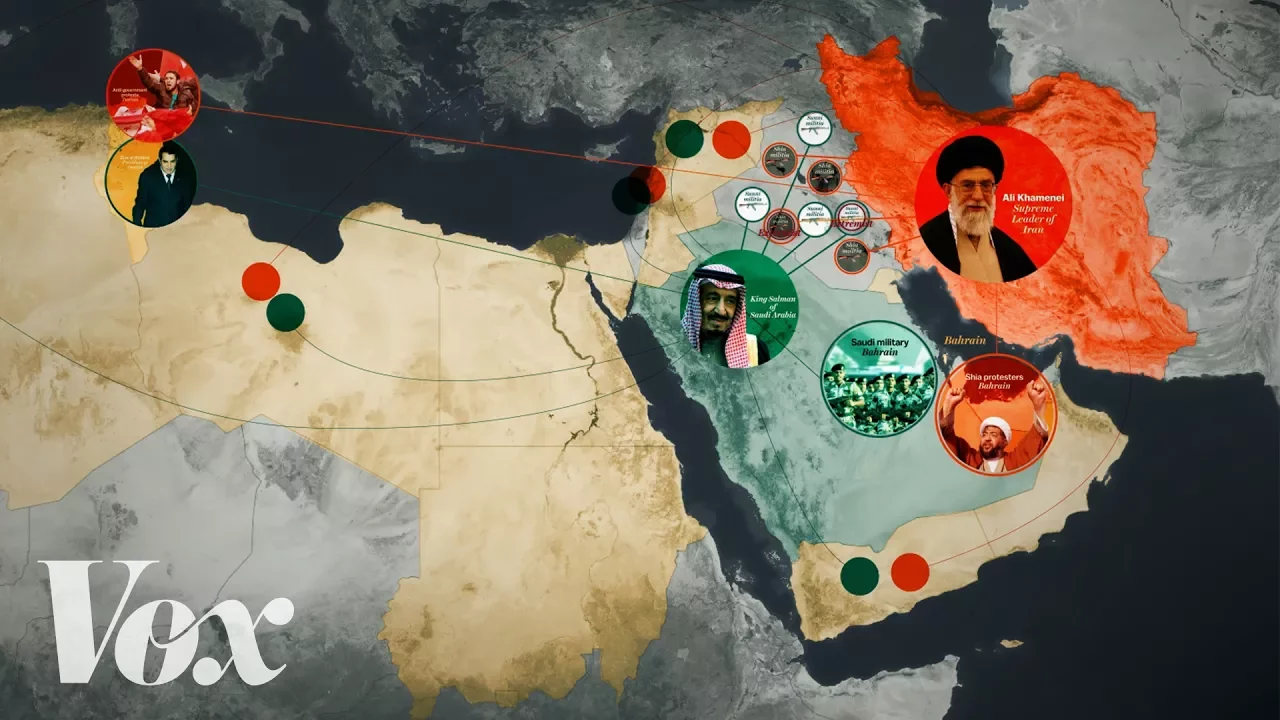
Explaining the Saudi-Iranian Proxy Conflict in the Middle East
@Vox
18.2M views•2017-07-17
Related Study Plans & Knowledge Roadmaps
Structured learning paths in Political Science