

![Constitutional Law: Supremacy Clause & Preemption [LEAP Preview]](https://i.ytimg.com/vi/ZYA6t99zNG0/maxresdefault.jpg)
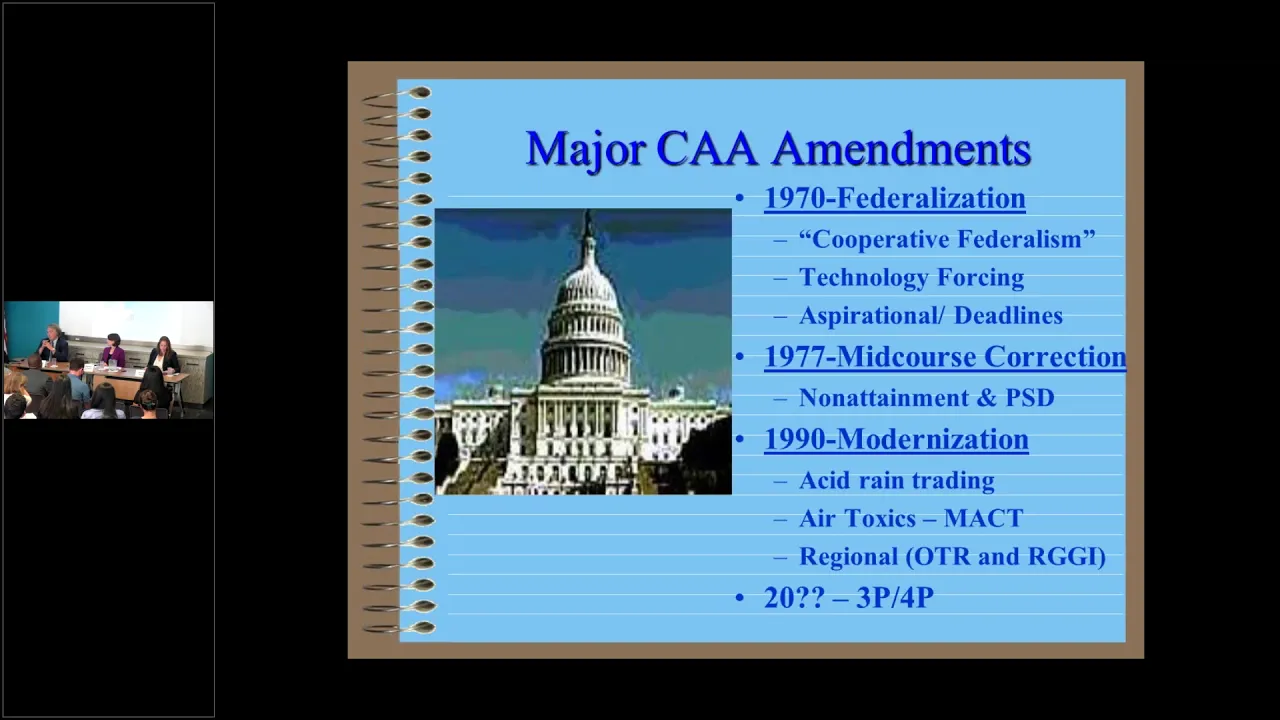



















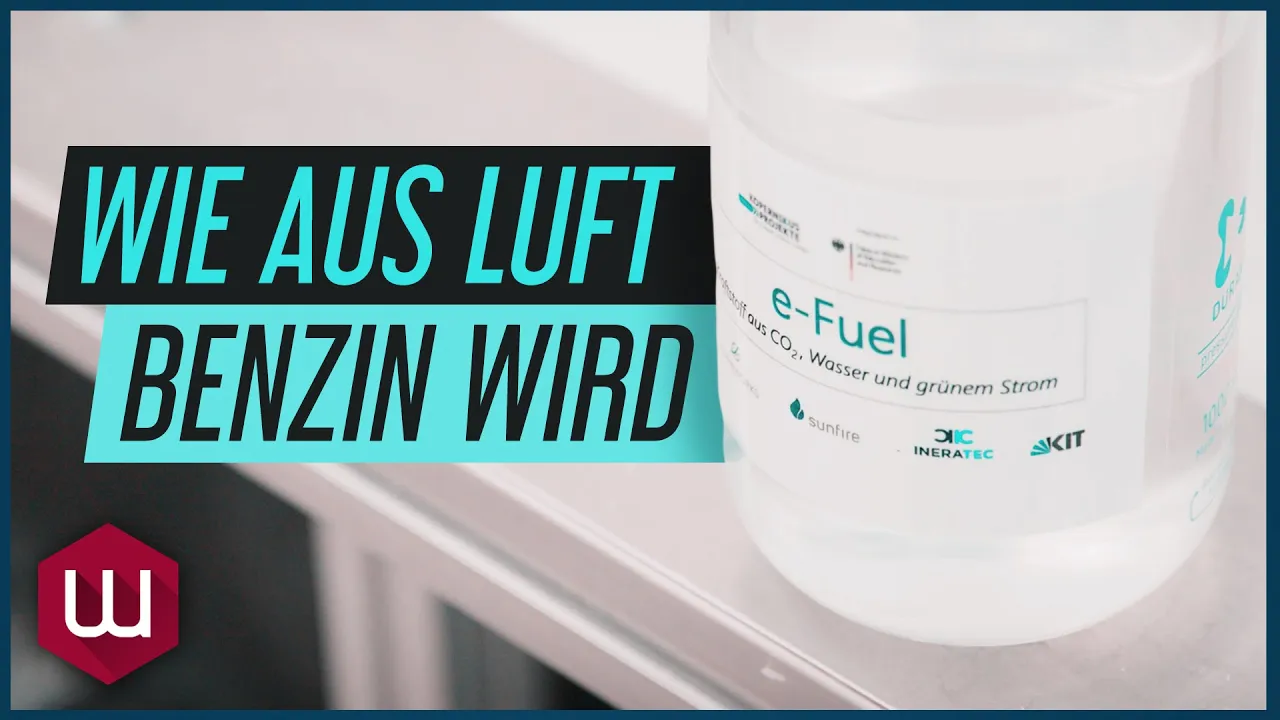

HR 4117 is a House Resolution that would preempt state-level emissions regulations by eliminating state authority to set fuel blends, greenhouse gas standards, and tailpipe emission requirements, thereby standardizing fuel regulations nationwide and potentially reducing gasoline costs while limiting state environmental regulatory power.
Understanding HR 4117: Emission Standards and Fuel Regulation Reform
Added:The constitutional division of power between federal and state governments in the United States, particularly regarding environmental regulation and the Clean Air Act.
The scientific principles of vehicle emissions, how combustion byproducts contribute to smog, and the historical role of periodic emissions testing ('smog checks').
The basics of fuel chemistry, including how standardizing fuel blends (like ethanol-gasoline mixtures) affects engine performance and emission levels.
The role of the Environmental Protection Agency (EPA) in setting and enforcing national air quality and automotive standards.
Evaluating the economic and environmental impacts of removing state-level emission checks on regional air quality and public health outcomes.
The legal doctrine of federal preemption and how federal environmental laws can override stricter state-level regulations (such as California's emissions waivers).
The lobbying dynamics and influence of the automotive, fossil fuel, and environmental advocacy sectors on federal legislative drafting.
Advanced fuel alternatives and transition pathways, such as synthetic e-fuels, hydrogen power, and electrification policies.
39.6K views3.2Klikes8:11Original Release: 2025-07-05
What is up, guys? Welcome on back to TK's Garage, and I hope you had an awesome Fourth of July. We are into the weekend. I know it's Fourth of July weekend. A lot of people aren't going to be uh tuning in, but you'll probably catch up with this after the after the weekend going into Monday. And I wanted to do a a followup. I I've had multiple people ask me about the new House Resolution 4117 and could there be other emissions uh amendments or legislation done through reconciliation?
And yes, um but that's probably not going to happen until right before the midterms. But this bill looks like it has bipartisan support. What does that mean? Means it's going to pass.
[Music] Perfect.
[Music] So, what is up, guys? Welcome on back to TK's Garage. In today's video, we are talking about house resolution 4117.
4117, right? Um, I believe that's the number. But, um, of course, of course, as soon as I start deciding to film a video and pour down rain.
Anyhoos, so um, a couple of things have been clarified on this bill.
um as in what just happened with the big beautiful bill.
We saw um the ability like for California to set different fuel blends and other stuff get stripped get pulled back. This bill takes it even further. It also takes it further in terms of energy. California has been trying to keep these coal fired plants from being able to fire back up.
Done. This bill would get rid of that as well. But this the the biggest part about this bill is it gets rid of and it specifically says it. It's not up for interpretation like some of the stuff in the big beautiful bill. This specifically targets these fuel blends, greenhouse emissions, and everything else that California and other states are trying to regulate.
Um now I've had people say, "Well, well, who's in support of this bill?" Well, you'd be surprised.
So, Slotkin is a middle-of the road, I guess, Democrat, uh, newly elected in the state of Michigan. Uh, Senator Moreno, obviously Ohio, nobody expected him to win. Uh, big automotive industry guy. And it's just it's in it's it's strange bedfellows to see a few Democrats and Republicans working together. Now, there's some Republicans that are not for the bill. Um, which I I don't get it. It's only one, but whatever. Um, but I don't think it's going to be a problem. If if you have bipartisan support, meaning if you have two or three Democrats that are going to support this bill, you can lose uh, you know, a Republican that's not going to vote for it. not an issue at all. So, I think it's a I think it's a huge net positive and it will do a couple of different things.
This will end the different blends of fuel that you have in different areas, right?
They'll they'll have a a set standard which should bring down costs of gasoline, right? That should make gasoline uh exponentially just cheaper, like just down. It also keeps states from trying to regulate or put in their own things in place to regulate greenhouse gases and emissions like from tail and they specifically put tail pipes I believe in the title of the bill.
So what does that mean? It would pull the ability for states to do small checks unless the federal government gave them authority to do so.
It is the specific exact bill that you need to basically put an end to all of the crap in North Carolina and Pennsylvania and California with California Air Resource Board. But I mean there's other bills that could make a difference in terms of California Air Resource Board like the Stop Car Act. Um but this one is very targeted and very specific towards fuels regulations on greenhouse uh gases and emissions from tailpipes and and I think that is a bill that needs to be focused on and pushed.
Now, I got another update video talking about CAFE standards and why you're seeing a push with these with like a revival of V8 stuff coming from General Motors and Stalantis.
And that's because of the government's policy now and the fact that you might not have to pay a fine moving forward if your fleet if your vehicles don't meet the standard, right? like they pulled the teeth out of uh that regulation. So, that's huge news. But, um let me know what you guys think in the comments section down below. Well, I would tell you this, if you if you want to make a difference on this bill, you know, contact your House representatives cuz they have their, you know, they have that version, but also contact your US senators because um they are going to have a a similar version of that in the Senate. Like I said, I talked about it already with uh Slotkin and um and Marina, but if the House gets done with theirs first and just pushes it over, you know, the the Senate will do whatever amendments or whatever other stuff they want to do to it and then they'll just push it to the president. But this is one of the most consequential bills when it comes to emission standards, emissions, um you know, uh different fuel blends, all of that crap. If you care about that stuff, this bill is one to definitely keep your eye on. Uh and it's very simple, very simple to find it. just type in HR 4117 um 2025 and it will pop right up. You can click on it, read the bill. Um now you're going to see that it's in committee and there's there'll be changes as it is in committee and they do different things with it. So if you want to follow it, I recommend you go through congress.gov to see it. I will publish updates as things change uh and that bill moves its way through the Congress. And I know it is consequential bill. If you don't think the oil and gas industry are all over that, you're out of your minds. They're going to push that. You can best believe they're going to lobby the crap out of that to get that bill done. So, it's not going to languish like some of the other bills that we care about that have been sitting. So, let me know what you guys think in the comment section down below.
Be sure to give the video a big thumbs up if you like what I do. Hit the subscribe button if you haven't already.
And as always, stay petty, my friends.
Yeah.
Heat.
Up Next

50:16
Lord Conrad Black on Alberta's Identity & Confederation
@manningcentre
20.4K views•2025-09-25

24:30
BRICS Pay and de-dollarization: A New Financial Order Emerges? | 55 chars
@DannyHaiphongYT
164.6K views•2024-10-22
7:33
Government Surveillance Methods: 10 Ways You May Be Watched
@BeAmazed
1.6M views•2017-04-09
10:19
Explaining the Saudi-Iranian Proxy Conflict in the Middle East
@Vox
18.2M views•2017-07-17
Related Study Plans & Knowledge Roadmaps
Structured learning paths in Political Science
political-science
Economic Statecraft: Sanctions & Chokepoints
01Foundations of Geoeconomics and Economic Statecraft
02The Mechanics of Weaponized Interdependence
03International Sanctions: Types, Implementation, and Efficacy
+ 2 more learning modules
12h5 modules
Explore Roadmap
political-science
Central Bank Independence: Politics & Policy
01Foundations of Central Banking and Monetary Policy
02The Time Inconsistency Problem & Inflation Bias
03The Delegation Model and Designing Independence
+ 2 more learning modules
12h5 modules
Explore Roadmap
political-science
Consociationalism: Power-Sharing & Stability
01Democratic Dilemmas in Divided Societies
02Introduction to Consociational Democracy
03The Four Pillars of Consociational Design
+ 2 more learning modules
12h5 modules
Explore Roadmap
political-science
Rebel Governance: Legitimacy, Economy & State
01Foundations of Rebel Governance and Statehood
02Establishing Political Legitimacy and the Rebel Social Contract
03Wartime Economies and Rebel Resource Management
+ 2 more learning modules
14h5 modules
Explore Roadmap