


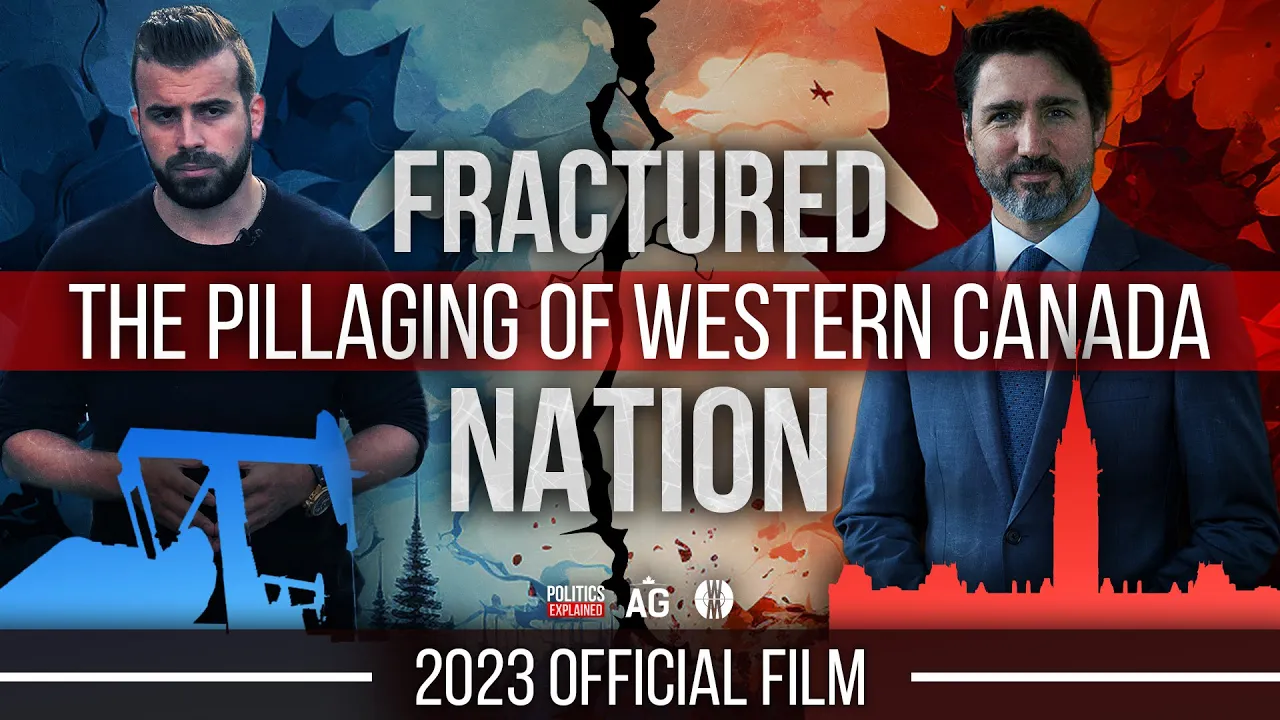
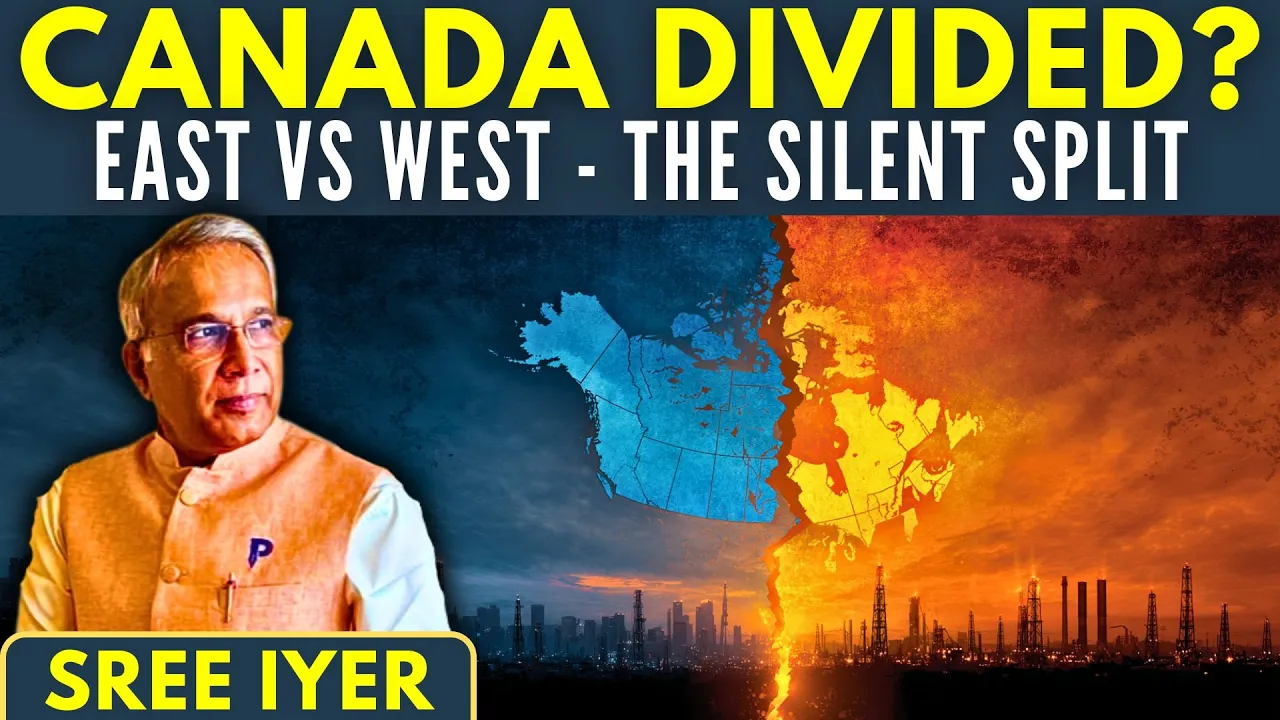












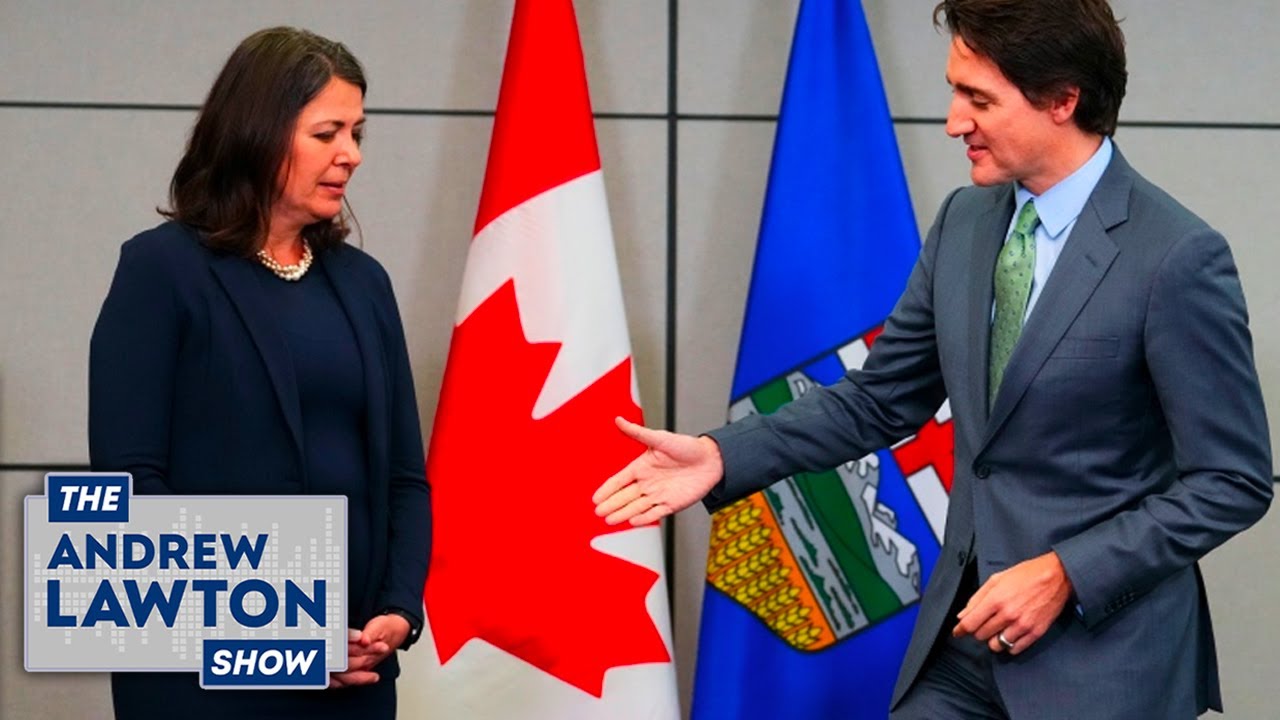


Alberta possesses a unique position in Canadian confederation due to its resource wealth and economic contributions, yet faces challenges from federal policies such as equalization payments that transfer wealth from resource-rich provinces to others. The province's oil industry has made it economically self-sufficient, raising questions about its continued participation in the Canadian federation, particularly if federal policies continue to favor other provinces over Alberta's interests.
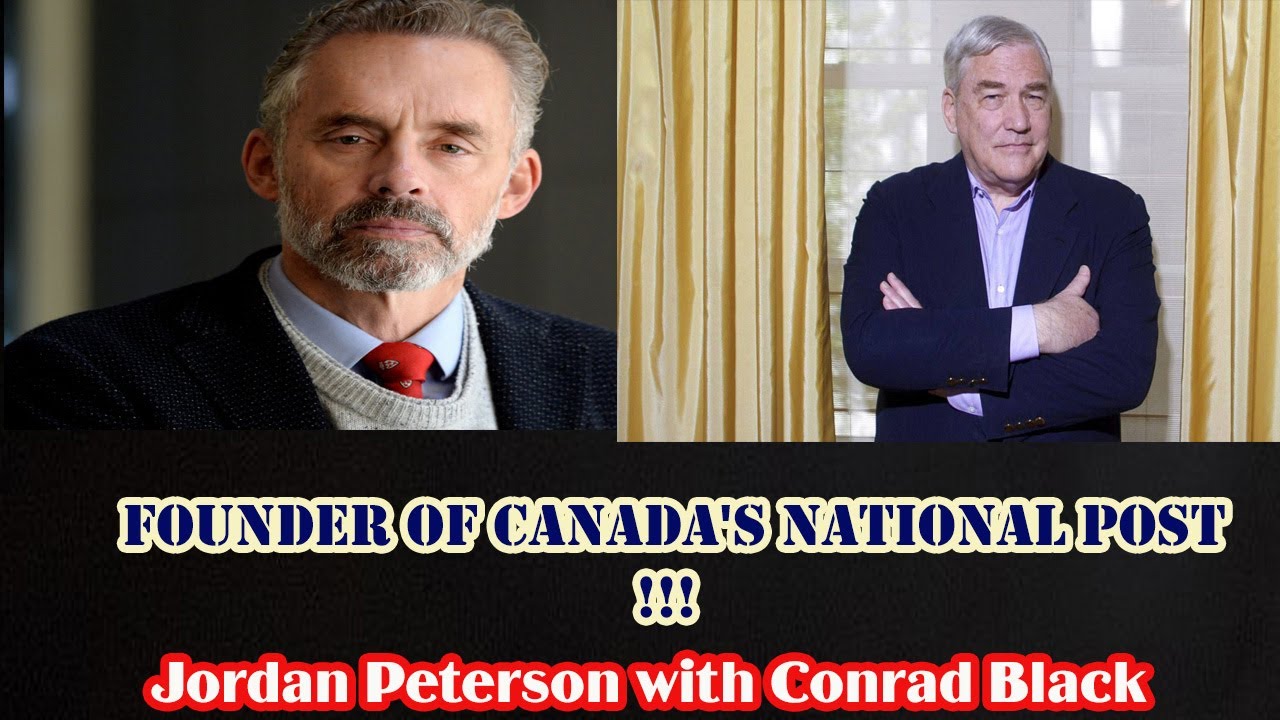
Lord Conrad Black on Alberta's Identity & Confederation
Added:Understanding of Canadian Federalism, specifically how constitutional powers are divided between the federal government and the provinces.
The history of Western alienation in Canada, particularly the economic and political friction between Alberta and Ottawa, including historic policies like the National Energy Program.
The constitutional history of Quebec's distinct status, its nationalist movements, and how Quebec's political leverage has historically shaped Canadian Confederation.
A basic familiarity with Conrad Black's background as a Canadian-British historian, author, and conservative commentator to contextually frame his political perspectives.
In-depth analysis of the 'Alberta Sovereignty Within a United Canada Act' and modern legislative attempts by Western provinces to assert autonomy.
A comparative study of fiscal federalism, specifically focusing on the Canadian equalization payment formula and how it drives regional economic debates.
Exploration of the constitutional amendment processes in Canada, analyzing why structural reform remains exceptionally difficult since the Patriation of the Constitution in 1982.
Examination of the future of Canadian resource policy and how the global transition to green energy intersects with regional identities and provincial-federal jurisdiction.
20.4K views685likes50:16Original Release: 2025-09-25
[Applause] Thank you all very much. Thank you John for your kind introduction. I have been tasked with um making a comparison of the relations of our provinces and the status of Alberta at the moment and indeed of our confederation and invited to give a bit of the history to justify the comments that I make. It is because it's rather complicated. I have a challenge to not be too laborious and and inflict obscurities on you. So, I hope you'll be patient with me. Um, when the initial settlers, Europeans, arrived here in this country at the beginning of the 17th century, it took a great deal of vision to imagine that the land they arrived at would achieve the status that it now enjoys.
Indeed, it's famous that uh when Jacques Cartier saw the north shore of the Gulf of St. Lawrence. He said it was the land God gave to Cain, but it became more inviting uh as he proceeded up the St. Lawrence and into the Great Lakes. But or his followers did. But in order for these things to have happened and for the history of this country to have unfolded as it has, a number of events which were unpredictable and objectively unlikely to happen had to happen and they have happened. It had to start as a French uh entity and and remain so for 150 years because otherwise it just would have been administratively joined to the American colonies. Not a bad thing, not a pitiable fate, but no independent Canada would ever arise from such an arrangement. Um ultimately it had to cease to be French and become British because the strategic uh dispensation in Europe was that France was the greatest power. It had the largest army and and was unconquerable. Had the largest army for a number of centuries until the unification of Germany um in in the late 19th century. But it could not maintain that army and challenge Britain at sea at the same time. And the British from King Henry VIII up until the beginning of the Second World War had the largest navy in the world. And they didn't really need an army to defend the home islands. Um they they did not have a serious invasion for many centuries of the home islands. And uh they had some colonial forces but they were very as we in Canada know adept colonists and they could govern a huge number of people with relatively few Britain actually doing it in the British Indian Empire uh about 80 years ago near the end of their status there which extended at that time from Pakistan to Burma and from Nepal to Sri Lanka there were 400 million people and fewer than 100,000 British civilians and military in the area and it functioned well. Um and it had to become British. Canada did at the time that the Americans ceased to be British otherwise again we would have been assimilated by the Americans.
uh and all of this happened and all of the principal figures in that period, the colonial period leading up to and beyond the American Revolution in this country, uh detected a sort of what I call in my history of Canada a thread. They had a vision for what Canada could become. It is astonishing to read that Champlain, who founded Quebec City in6008, uh, convinced several of the most intelligent and successful, but as you would expect, most cynical French statesmen of this vision of a mighty northern empire, which would be French. And um uh King Henry IV, Henry of Navar, I said cynical, he was the man who changed religions when he saw that if he did so he could become king of France and said Paris is worth a mass. And Cardinal Rishlia, King Louis I 13th's chief minister who despite his religious occupation was certainly a worldly man.
And when he died, the pope, Urban VI, I think it was, said, "If there is a God," and this is the Pope, they're normally fairly unconditional about that question. If there is a God, the cardinal will have a lot to answer for. If there is not, he was a very great man. Well, these people Champlain actually managed to convince that Canada would become an immense, prosperous, advanced country. and and Rishia himself founded the company of 100 associates and invested in it. Um the first outstanding British governor, Carlton, Lord Dorchester, um he he came in very shortly after the uh Battle of the Plains of Abraham. And the first Americans who arrived from New York and Boston claiming to represent the British Empire interest in newly liberated from the French Canada, he found to be just a bunch of crooks and scoundrels. And he liked the French Canadians. And as governor, he took a leave of absence for four years lobbying in London for the passage of the Quebec Act. And it was passed one year before the American Revolution began. And as many of you would know, it guaranteed the religious rights and the language rights of the French Canadians and and the continuation of the French civil law.
The French wanted to be rid of the French criminal law, which was quite barbarous compared to the British. And uh and in exchange, the French Canadians promised loyalty to the British crown.
And both sides upheld the bargain. And if they had not, we could not have sent Benjamin Franklin and the then loyal revolutionary Benedict Arnold packing from Montreal in 1774.
And we could not have resisted the Americans in the War of 1812, which was of course the last time we had to deal with an invasion. uh now out of this uh out of this let us call it a thread it became Champlain's French vision it became Carlton's Anglo French vision a bicultural country and uh and it uh it needed to to uh stay in order to be an adequately functioning jurisdiction it had to stay a breast of the people the rights of the people of Britain and America and um as we all know the United States produced tremendous mythos with its revolution if you I mean I am no disrespecttor of the origins of the United States and and of course it's an extraordinarily successful and powerful country but it also has and has always had a talent for showmanship that generally includes a fair bit of exaggeration and Um, for example, when Jefferson wrote uh that we hold these truths to be self-evident that all men are created equal and yet he was a slaveholder and he had five children with one of his slaves, Sally Hemings. And I may add that Sally Heming's biological father was also the father, legitimate and biological father of Thomas Jefferson's wife. So it was a complicated arrangement at Montichello and for the sage of Montichello to make some of the speurious comments he did about the virtues of the French Revolution and his own role in the emancipation of the of the chained masses of the world when he conducted his personal life as he did is a bit rich but you know you get these anomalies but in the American presentation of itself There was something, and there I think always has been something slightly frightening and slightly distasteful to most Canadians, although most Canadians would know as well as anyone what a magnificent country the United States is in many ways. Um, and and how successful it's been. Uh so this added to the thread which was growing into a bit of a rope to link us intergenerationally as we tried to build our ancestors did this country. Um we had to resort to some what amounted to Gilbert and Sullivan nonsense to make our way and and this is a feature of Canadian history. I mean absurd things happen to all countries but we've had more than our share of them. Uh and and indeed in contemporary times there have been no shortage of those either. But um um because Americans and British citizens had what was called responsible government. It was a very restricted electorate. They did elect their own legislators and and uh and and they were by the standards of the time 18th century they were functioning democracies um the um early 19th century sorry and so Canada couldn't revolt the way the Americans did because if they had expelled the British the Americans would have taken over Canada. So what we had were these two Gilbert and Sullivan rebellions by William Len McKenzie and Louis Joseph Papino which were absurd and easily put down. And uh the McKenzie's was just a bunch of drunken Scotsmen going out and firing guns into the air until they were all arrested or chased across the Niagara Falls. Uh the French wrote sort of as if delusionally thinking that they were continuing the French Revolution. Papino and his colleagues wrote these astoundingly fllorid treatises to King George III in replicating Danton Robispier and these people. I mean it's hilarious to read them and of course they were read with great amusement by the French and the British. But uh all of that was cleared away. But the British the British government saw um look the the there was a revolt in each province.
So um there is some discontent. We better look at this. And and they were put down. The people were loyal to us.
So we've got to we've got to be loyal to them. Uh and and so they sent Lord Durham to find out what had happened.
and he produced the completely inexplicable conclusion that the problem in Canada was not a demand for responsible government. It was that the French had to be relieved of what he thought to be the ownorous burden of being French. He actually thought that what the French had to do was be more or less bullied into learning English and then they'd be happy people. Now, any of you who has any familiarity with Quebec knows that the French Canadians have have an obsessive preoccupation with not being assimilated. It it was the most uh uh catastrophically mistaken report and um he was shortly recalled for exceeding his authority. But what did happen was for the first time the political leaders of English and French Canada collaborated with each other.
Robert Baldwin and Louis Epolit Lefonten and then John A. Macdonald and George Eten Cartier and they they worked closely together. one point Baldwin was elected a representative of Quebec lower Canada and and uh in a in a different election Lafon and these men didn't speak very much of the other's language he was elected in Ontario when the official machine defeated him in Quebec uh and and and this relationship of trust developed between the leadership of those two provinces uh though whom Dur Durham united into the so-called United Province of Canada.
Complete fiasco. A and the result of it was our confederation. Now in 1867 on the first day of our country, July the 1st, the minister of defense and militia at the time, George at Cartier had to position 50,000 soldiers and reser is a country of 2 and a half million. 50,000 was a lot of armed men in uniform. And you know, the present minister of defense of this country couldn't send 50,000 armed uniformed men who were I don't mean bus drivers. I mean serious soldiers uh to the American border easily. It wouldn't be like falling off a log now in a country of 41 million to pro to prevent an invasion of this country by Fenians who were Irish who'd immigrated to the United States to escape the famine in Ireland and hated the English so much the only way they could get back at them was to attack Canada. So there was a sentiment of which Macdonald in particular persuaded the British political leaders Israeli and Gladston and Queen Victoria uh should be dealt with by establishing Canada which it deserved to be anyway as a effectively independent from the British so that whatever grievances anyone had in the United States against Britain and they were considerable at the end of the Civil War because the British had allowed they built and and allowed to sail a number of ships that were merchant raiders that sank Union ships during the war on behalf of the Confederacy. And at this point, remember uh the United States had been reunited.
It had the greatest army in the world and the greatest generals in the world.
And they if they had attacked Canada then the resistance, no matter how brave, would not have lasted very long.
General Grant and General Sherman's army of 500,000 men who just won a war of four years in which 750,000 Americans died. It was a terrible war.
This again fed into the uh Canadian view of what we were trying to do with this country. And we wanted a more peaceful country than the United States. Uh we didn't have a revolutionary tradition. So, we didn't have a constitutional right to bear arms. I mean, in fairness to the Americans, I understand that since they founded the country by taking their guns off the walls and going out and and shooting the British, uh, they felt that this tradition had to be respected in the constitutional documents that they approved.
um that they by this time having ended the civil war successfully uh the United States emerged as one of the world's most powerful countries and of course it advanced very quickly after that. Uh it moved from 31 million people in 1865 to 91 million people at the start of World War I in 1914. And at the beginning of the 1880s, Britain, Germany, and the United States all had similar uh gross domestic products. And the United States put up 8% growth every year with practically no inflation. And they just kept moving up and and by 1910 and ever since then, that country has operated on a scale that the world had never imagined to be possible. Now we all know that uh but that was the sequence of it and in these circumstances the question of where Canada was somewhat in the backwash of this rising power was an urgent public u you know public discourse matter and um and I think we have given ourselves insufficient credit for the fact that although we do not rival or seek to rival the Americans in the fanfare and publicity and hoopla celebrating what we do and their star system of elevating a huge miscellane of people from scoundrels and charlatans up to some of the greatest figures in the history of the world like Abraham Lincoln. uh we don't rival that but we did keep pace with their growth and it was an astounding achievement and in some ways not in quantum a greater achievement but in the difficulty of doing it a greater achievement than what the Americans achieve themselves because we had to admit immigration on an extraordinarily heavy scale attracted to start with a and and admit it and for example in 1912 if my memory serves uh we admitted a little over 400,000 immigrants to Canada, which had a population of only a little over 6 million. So the equivalent uh today would be admitting over over uh about 3 million people in in one year.
It or in the United States it would be uh you know what about 25 million. I mean you know it was an extraordinary number. Now, the lot of Alberta uh as as the country was being built was that, you know, the federal government took the most of the land of in Alberta over from the Hudson's Bay Company and um parcled it out much much of the country from middle of Ontario all the way out to the west coast, attracting immigrants and bringing them on Canadian ships to Canada and on the Canadian Pacific Railway out to the west and from all over Europe and you know good solid people who who made Alberta the extremely rich agricultural country that it is. And um and that project by McDonald was the first of a series of things in in in a gesture that has since been recognized quite widely as a method of rallying diverse people. A big project that inspires the country. The Canadian Pacific Railway was one of the wonders of the world. Unlike the American transcontinental railways, a lot of it had to be built over the Canadian shield north of Lake Superior.
I mean, it's one thing to lay track on land like there is between here and Winnipeg. You know, it's a lot of work, but it's land you can deal with relatively easily. But driving uh driving spikes to hold rails into rock is is it's it's hard to do and we did it. And it was doubly a miracle because we did not have capital markets that were mature enough to pay for such a project. and um and we were being sandbagged in the New York and London capital markets because they were building competing railways in the United States. So Macdonald prevailed upon Parliament to assist in completing the railway and he did it by the brilliant maneuver of bringing soldiers swiftly out in the railway to suppress the Realel Rebellion, the second one, and then greatly publicizing the fact that if it had not been for the railway, Realel would have succeeded in taking the center of Canada out of the country and joining the United States and and destroying our transcontinental design and uh and so the he used one crisis to solve another and the solution of that crisis to solve the first crisis. It it was very talented leadership and uh and and Canada did get through that era of very swift growth, very successful and we preserved the characteristics we were trying to do. Um let me um let me move now bring us forward to something uh you know a lot closer to home here. The um we added as I say our our need to keep pace with the Americans and our wish to resist the violence. And in fairness, we had a less complicated sociology than the United States. Uh because uh we don't have tropical agriculture in this country, particularly cotton and with slight exception tobacco. There was no economic argument for slavery. And despite the attempts of former Chief Justice McGlaclin and others to claim that this was a slaveolding country, it wasn't. The French had a system of slavery, but there were less than a hundred slaves, and they could work their way out of it. And there was no element of perceived racial inferiority.
They're just people who were economically suffering from bad luck and had inferior or often menial positions, but there was none of this racist business that you got in slavery in the United States and some other places. And uh and the first governor of Upper Canada, now Ontario, John Graves Simco, took it upon himself in 1791 to say that no slavery would be tolerated there and that anyone who was a slave who set foot in Upper Canada was automatically emancipated. Now, this was 40 years before the British Empire abolished slavery and and another what 35 years beyond that when it was abolished in the US and and we never had the kind of segregation the Americans had up until 1965 in the South. So, and we had an excellent record before the US Civil War admitting 40,000 fugitive slaves and and receiving them as free people uh unrestrained in their freedoms. And uh indeed, we were thanked by President Lincoln for um breaking up some Confederate plots that were being hatched in Canada to try and um cause mischief in the northern states during the Civil War. So this was all part of the country we were we were building.
U the key message that I have for you is I think that Alberta putting it very succinctly has been shabily treated lately and has been quite patient about it. I think your hour is coming and the two key provinces on the issue of the status of confederation today and where it may go are, as you might think, both Alberta and Quebec.
Now, the case of Quebec obviously is quite a different one where you have a distinct ethnic group there who have shown a rugged ability to survive culturally uh that that is quite renowned in the world. uh Arnold Toinby the famous historian said they would be the last surviving distinct race. that may be flattering them a bit, but they have been quite tenacious. And um um the way Quebec developed, it couldn't it couldn't realistically aspire to independence for a long time because it was too vulnerable a jurisdiction and it didn't have a sufficiently sophisticated cadre of trained people in the professions and in public administration. And it it was for it really approved of confederation because it was a method of associating with a English majority but not so prepundonderant a majority that it would be assimilated whereas if it if it succeeded it would ultimately be occupied and assimilated. It was feared by the United States and they got to be a modern state by recourse to political methods that were not modern. And this was chiefly the work of uh Maurice Jupy who was their longest serving premier for almost 20 years.
He prayed upon the paranoia of the Roman Catholic clergy and said all of the personnel in the French education and health care systems have to be clerical.
Um otherwise the atheists are going to take over everything. And I didn't particularly believe this, but it was a good method of getting that sector of absolutely vital employees working hard, diligently, successfully for a minimal cost to the to the taxpayers. And he used the budget of the province for infrastructure and and for expanding education and spec specifically uh professional and um skilled work education. And uh when he died in 1959, he had built 3,000 schools and all the university campuses in the province except McGill uh and um the auto roots. And when he came in as premier in 1936, the road was cleared in the winter between Quebec City and Montreal and Montreal and Ottawa and Cornwall, but that was it. Beyond that, you had to either take a railway or a sleigh, it it was it was a backward place. and uh despite the very rich English enclave there and he changed that and then uh he said that the French Canadian nationalists were as he put it like a 10 pound fish on a fivepound line and you have to let them out slowly and bring them in slowly and he said that he shut them down for 10 years by giving Quebec a flag. So he had this method of doing symbolic things that didn't cause any economic or political problems. He said, "And I'll do it for another 10 years by opening an office in Paris." He said, "I I wouldn't have done it with the fourth republic. They changed premers every 3 weeks, but now that de Gaulle is there, we can do it." And and then he said, "And then we'll have a world's fair." And that was expo in Montreal in 1967, which is a great success. Although de Gaulle graciously came and told Quebec to secede from Canada, which is not what he was invited for. But um um when he died and his two chosen successors, Paul Soove and Daniel Johnson also died in office. But Dupli died after nearly 20 years in office. So had only been three months and Johnson two years. The nationalist torch in Quebec passed to the left and Renee Levak and they were not conservatives and they were not hesitant to advocate the independence of Quebec. But in the two referendums Quebec held, one with Levec as premier and one with Pariso, uh you may have remember that they were trick questions. They were um authorization to negotiate sovereignty and association. So, do you authorize the government of Quebec to eat our cake and still have it in front of us? This was it, you see. And and they they almost passed the second time, but not but they didn't. And um and that and that's where things stand. I mean, technically Quebec has not ratified the present constitution of Canada. And the polls in Quebec show that there there's a majority for parties that claim to be separatist. But in my opinion, the problem they have is that after they secularized the province, the birth rate collapsed. and in order and you will have noticed perhaps that the percentage of members of parliament coming from Quebec has steadily come down uh because the population with immigration I mean no one no one else in Canada cares where the immigrants come from but but Quebec is concerned about people speaking French so they uh they prevail upon Ottawa to make it a joint jurisdiction and the government of Quebec itself pads around to places like Haiti and Morocco and Lebanon and Vietnam urging people to move to Quebec and that's how they maintain the French population at a certain level without it becoming insignificant in the country as a whole. Now the quality of French these people speak is a something else again but the um uh but but that's where they are but these people don't care a fig about Quebec nationalism. Somebody who's moved from Saigon or Beirut or Casablanca or Porta Prince doesn't you know care about Quebec having as Jean Drappo said at a goal um you know hung its nationalism on the barn door for 250 years they they think they're moving to a basically English-speaking continent but a French-speaking place so they can speak French but they're they're not interested in disrupting anything or getting into political controversy. So, it's going to be hard for Quebec to win that referendum.
Uh, and and instead what they do as a consolation prize to themselves is continually oppress the English language, which you know is, let us let us be frank, that is just an absolutely absurd thing to do in a continent where 95% of the people north of the Rio Grand River speak English. I mean, why are you doing that? and uh and and as often happens in these things as happened with Lord Durham for example um the the result is the reverse of the one that has been sought because the English Quebecers I mean I'm an English Quebecer and I went to a French university and I I speak French I'm happy to speak French it's a wonderful language but what I was not happy to do is be told it was a privilege to speak English um and Uh what's happened is that the English Canadians in Quebec who didn't speak French and and and it's it's not easy to learn a language to the point of being really fluent in it and comfortable in it. Uh most of them have left moved to Toronto or Ottawa or wherever California but um some of them here in Alberta. But uh the ones that are left are the ones who do speak English and speak French and they are kind of an elite. They have they have a uh an advantage, a competitive advantage in their career, whatever it is, that the French-speaking population of Quebec, all of whom except the elites that that run the professions and the big companies and the government don't speak English. They just speak French.
they don't have that advantage. So what what the Quebec nationalists have done is create an indispensable elite for themselves that happens to be uh English- speakaking and strongly federalist. I I in the end I don't think it'll work. But that they they're going to they're going to try and make it suspenseful for us. I think now let me end on a happier note by finally getting to what I think is what I'm mainly asked to talk about. That's the state of Alberta. I'm a little hesitant to be too declarative about it because I assume virtually all of you are Albertans and therefore you know more about it than I do. So I'm I'm just putting out some tentative thoughts here. But I think that um it was obviously a tremendous and providential thing when oil was discovered here. I believe in 1949. And the oil industry grew quickly and and uh it added a tremendous second string to the bow of Alberta as an agricultural place, both ranching and uh farming. And it was, and this ties into the Quebec business.
It was only a few years after that discovery, Leuke, I believe. Excuse me a moment here.
when um again Duplexie who had been warning the federal government for 20 years that under the British North America act income taxes direct taxes were shared co-equal concurrent jurisdictions between the federal and provincial governments and the federal government was not permitting any province to collect a provincial income tax. So Jupiti said, "We're not having any more of that. I'm imposing a income tax in Quebec.
And if you," he said to Mr. Salaron, with whom his relations were excellent, there were old style Quebec lawyers and distinguished lawyers who got on well personally, but they're gentlemen. But if you do not allow Quebec provincial income tax paid by Quebecers to be deducted from their income for the purposes of calculating their federal income tax, I will call an election on this issue and we will see we'll see what Quebec thinks of it. And everyone knew Duplesi would win that. I mean, he he he he he's the only person in history to be elected five times premier of Quebec. And he knew where the voters were, and he knew how to bring them. And he had a very powerful political apparatus. And um all the old Montreal Canadians, Rocket Rashard, Boom Boom, Jeffon, and Jean Bon, all these, they all campaigned for him all the time. He he he really had the place organized. And um so Mr. Salarov backed up to allow the income tax which was then emulated by other provinces and and as a consolation prize the federal government gave itself what I I don't doubt or regarded in Alberta as an absolutely beastly uh remedy the equalization payments.
Now, in theory, these began as payments to uh provinces with less than the average income per capita to ensure equality of services, basic services in all parts of Canada. And I think that's a defensible concept. But it quickly um as as these programs do I think it's called bracket creep in the United States or mission creep they become more and more officially ambitious and it it began to be compensating areas in the country with a comparative lack of resources with transfer payments of cash from resourcerich parts of the country such as Alberta.
But I mean I really Alberta, British Columbia and Ontario paid almost all of it uh for decades. And um uh I mean I think that if you have an inequality of per capita income because of the distribution of resources, the people move to the resources, not the other way around. But you know who am I anyway? uh that uh that program became more and more ambitious and comprehensive as the separatist threat grew in Quebec. And under Pierre Trudeau, uh huge transfers were made basically to Quebec with a fig leaf going to the Atlantic provinces to buy federalist votes in Quebec. Now, it worked. And I think up to a point, as long as you keep in mind what you're doing and why you're doing it, it can be justified. And I remember the arguments Peter Lahed had with with Trudeau. I knew both of them fairly well. And and um and I thought Peter held up Alberta's interest well while still being a conscientious Canadian. I I admired him. Um but you people were carrying water on both shoulders to keep the whole country going and and we we did our part in Ontario too. But um uh times have changed. Quebec is not a have not province and it's frankly been much better fiscally administered uh than than Canada as a whole has for some years. And as I wrote in a newspaper not long ago, I I would like to have the film rights when the Quebec Minister of Finance is presented with Ottawa's demand for Quebec's contribution for equalization payments to other provinces, having been the chief recipient of it.
the uh present premier Francois LGO who's uh you know he's sitting in a deck chair on the Titanic he's at 17% in the polls but a few years up until a couple of years ago he's comparing himself to General de Gaulle he's this great figure and you you we all know wherever you are you get politicians with a terrible vulnerability to unbelievable delusions of grandeur but that was one of the worst cases I moment, but uh he said at a federal provincial conference uh we don't want your dirty oil. So I mean they they have the effronttery in Quebec to import oil from Venezuela and the Middle East when they should be buying it from you and we are a chump in the world as a country because of this. We look like fools and we are fools on that point. Uh my friend Doug Ford, the premier of Ontario said, "Well, you're happy enough to take our dirty money."
which shut him down for a while. But um this won't do and we we've got to do something about it. Now the the latest wrinkle in these things is that despite the problems that I've very sketchily summarized and which you all know as well as I do anyway, this was a very successful country until about 10 years ago. But in the last 10 years, we've had net capital outflows, capital generated in Canada leaving the country exceeding outside capital being invested in the country of over $300 billion.
We have slept several paces in the scale of per capita income. It used to be when I was young, which I admit was quite a while ago now, but even when I was middle-aged, we were quite the Australians and ourselves were neck andneck with each other and just behind the Americans. I'm I'm leaving out the the pro states and the tax haven states.
I mean, the per capita income and Monte Carlo and Luxembourg and Kuwait and so on has nothing to do with it. We're talking about integrated economies here.
And um uh and now we're we're you know we're only uh the Americans are 150% of ours. We've we've fallen badly and countries have passed us like the Netherlands. I mean when the Canadian army liberated the Netherlands in 1945 uh they had bravely blown the dikes to try and inconvenience the Germans. They they they were starving, water logged, and and and what wasn't underwater was a rubble heap. They have no resources.
It's a tiny country, and they have a higher standard of living than we do. I mean, what excuse do we have for that?
We don't have one. Except we should elect better politicians. And uh just in the last few years, we've been losing ground. If present trends continue, we're we're going to be passed by the South Koreans.
When when the armistice or the ceasefire at least was signed in South Korea in 1953, they did not manufacture anything. The the war, the Korean War had gone from Busan and the extreme south to the Yellow River of the extreme north.
Everything in Korea had been leveled.
There were hardly 10 buildings in the whole country that were actually permanent structures that were left. Uh there were there have been over a million killed in this war in a smalish country and they did not manufacture anything. They eaked out a living as best they could in primitive agriculture. And now you see them.
They're one of the greatest ship builders in the world. Their cars are all over our roads. And they're they're if present trends continue, they're going to pass us in in per capita income. That's just bad management by us. Canadians aren't lazy. We're just not electing the right people to govern us. And uh Israel is going to pass.
Israel, which when the state of Israel was founded was to I believe this is a quote from Pontius Pilate, it was a land of sand, camels, and Jehovah. It didn't have anything. They made the the desert bloom. and and and I mean the wars are unfortunate and in my opinion not basically Israel's fault, but uh but despite all of that, it's howling success as a country. It should inspire us. Um and there's nothing wrong with Canada.
It's a great country, but we've slipped.
Now, that's not permanent. It's relatively easy to deal with, and there's nothing that a bit of good government won't do, and we'll get back on track. We haven't slipped very far. And compared to the terrible crises that some other countries, including some that I've mentioned, have had to go through, uh, we are, as always to be envied, our position. I mean, we sometimes have complaints about the Americans, but I don't think historically we would like to change places with Poland between Hitler and Stalin, for example. But um we have gone on to this in my opinion insane trip of wokeness and self-reroach.
Uh I put it to you to all of you that it is difficult to think of an ostensibly serious country which in the living memory of any of us in this room has done anything quite so asinine as lower the flags on its public buildings everywhere in the world including all its embassies for six months out of publicly declared beared guilt at the surreptitious burial of minority children who died because of negligence or at worst violence when it is now the case as has been established that there are no such graves. None.
Please don't take that as a slur on the native people. I think we have not done well with them. We've got to do better.
We're doing our best. But we the attempt to portray this country as in any sense one ever inspired by genocidal ambitions including cultural genocide which doesn't exist. It's called assimilation.
And the United Nations for once correctly doesn't recognize its existence. anyone trying to do that is is conducting a uttering a blood liel against the founding races of this country. It's an absolute outrage.
And if we go any further appeasing the native victimhood industry, I'm not talking about helping serious natives better their lot. I'm all for that. I mean, the native victimhood industry defaming this country.
Uh, we're we're finally going to persuade them to put down the mask and say this was their country. We had no business being here. We invaded it just the way Hitler and Stalin invaded Poland and they want it back and we should all go. Now, there were 200,000 natives in the 3 million square miles of what is now Canada in when the French and British and others started arriving here. They didn't they were nomads. 95% of them were nomads. Uh and and they had a stone age, you know, civilization. And they were terribly talented. They had as good a life expectancy as the Europeans. They were wonderful canoists and woodsmen and things. I'm not disparaging his people, but it was a primitive civilization and it wasn't their country. They haven't move around in it, but they hadn't occupied it and they didn't govern it.
And uh we we we've got to just read facts to ourselves and then start again from there in a lot of these areas. But let me I have a ghastly feeling I've spoken too long.
I I don't know. I'm on Eastern time.
It's getting too confusing for me.
Anyway, I I'll um I will subside in a moment, but let let me explain why I think this is Alberta's hour.
Uh I believe every incoming leader deserves a honeymoon and I as best I can done my part to give one to the new prime minister. But on his past record, I am prepared to fear the worst. And if he proceeds with any significant part of his green agenda, it will be an escalation of the war against the oil and gas industry in Alberta.
And if he does that, and it pains me to say this because I'm Canadian federalist, but if he does that, if I were you in what I understand is likely to be a referendum next year, I would vote to leave. You would be it.
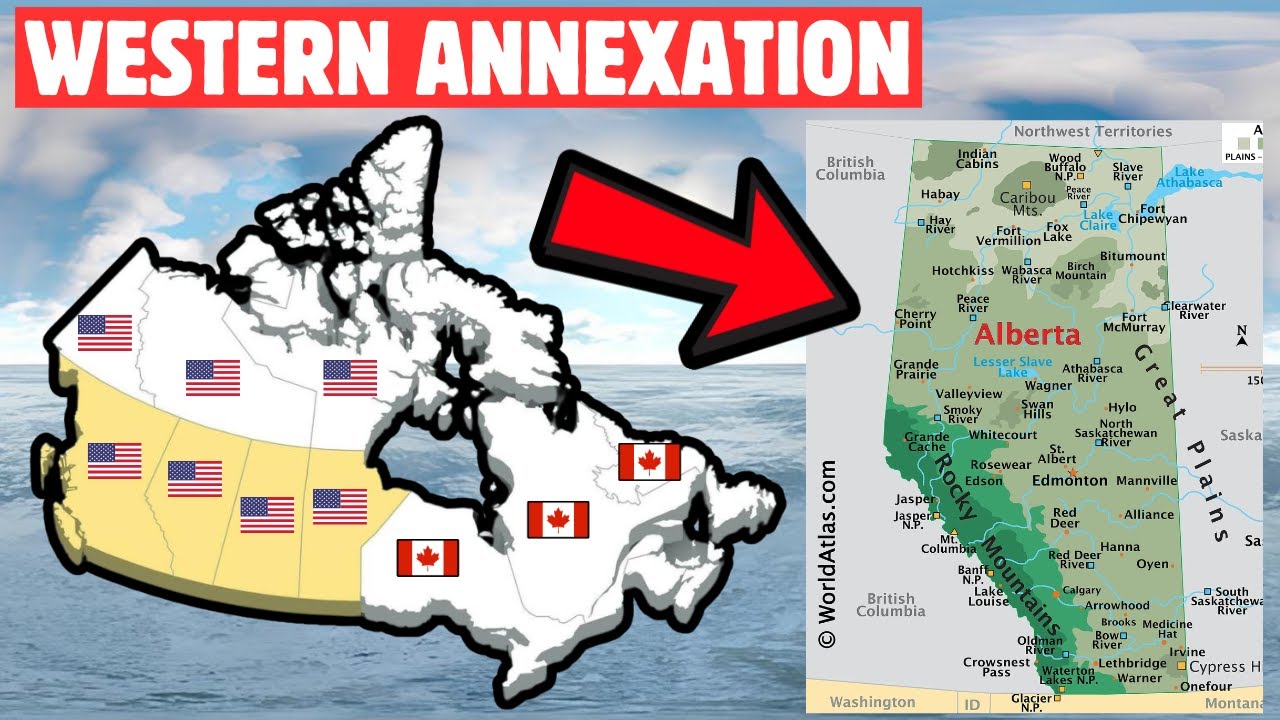
And I don't think anyone's talking about a Republic of Alberta. I think in fact what you do is negotiate with the Americans and be a sort of special territory and and you know keep Alberta gun laws and discourage residential immigration. You don't want America's 10 worst 10 million worst welfare cases flooding into Calgary and Edmonton. Uh but the Americans would accept Alberta on any basis you wanted and that would be the end of Canada. If Quebec seceded, all the rest of us could make something out of what was left. It would still be a country of over 30 million people and frankly Quebec would take a lot of problems with it. We they take a lot of good things, too. I think they enrich the country and it's an advantage to have two great civilizations as official languages, but they have been an awful nuisance to federalists for a long time.
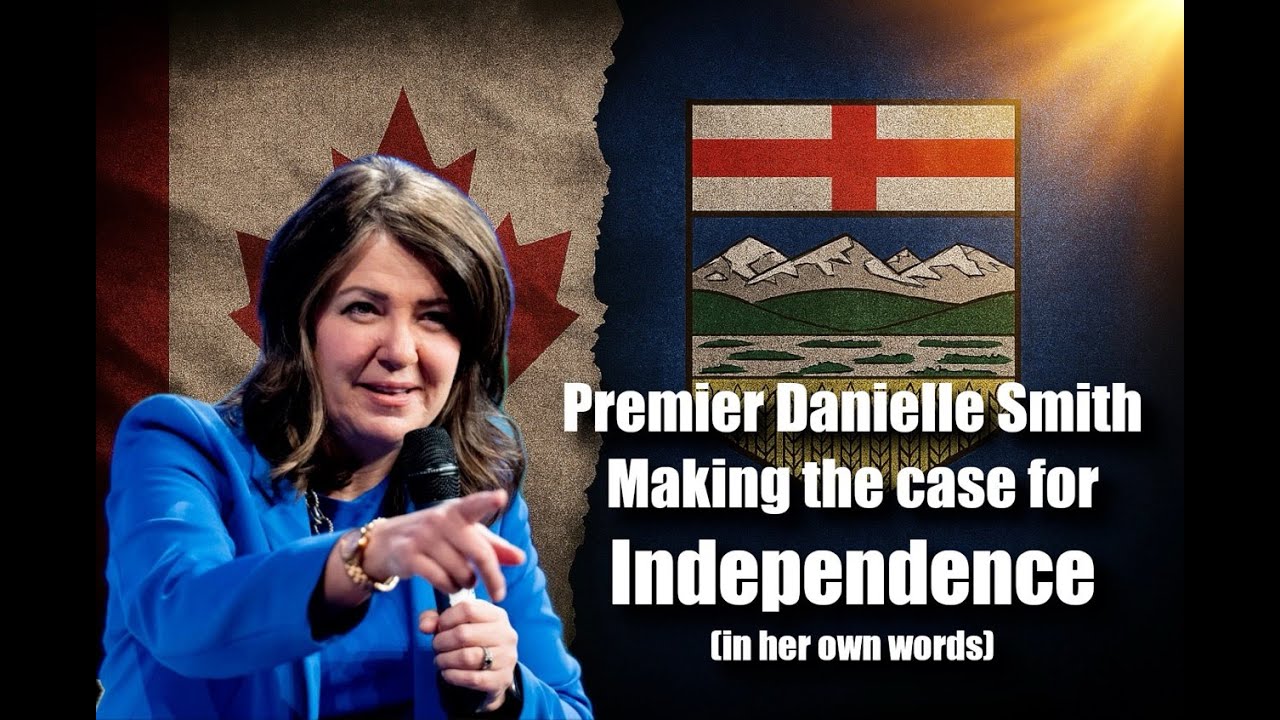
But Alberta would be something else. And that power rests within the hands of the voters of Alberta. And I think your premier has played it extremely well because she says, as I understand it, I'm a federalist.
But I will do what the people of Alberta want. And if there is this vote and if they vote to secede, I'll have to respect that. She's not going down with a ship in elevation.
So my, if I may, it's a horribly presumptuous thing to say. This is my message after all I've said about the inflated status of the clergy in other places. I don't want to sound like one, but um my intuition and my guess for what it's worth is that you people are going to have an enormous influence very soon on the future of this country and you'll basically be able to write your own ticket and you deserve it. So, good luck to you. Thank you.
Up Next

100:20
Cooperative Federalism: India Governance Forum 2022
@SKOCHTV
1.4K views•2022-05-15

24:30
BRICS Pay and de-dollarization: A New Financial Order Emerges? | 55 chars
@DannyHaiphongYT
164.6K views•2024-10-22

7:33
Government Surveillance Methods: 10 Ways You May Be Watched
@BeAmazed
1.6M views•2017-04-09
10:19
Explaining the Saudi-Iranian Proxy Conflict in the Middle East
@Vox
18.2M views•2017-07-17
Related Study Plans & Knowledge Roadmaps
Structured learning paths in Political Science
political-science
Economic Statecraft: Sanctions & Chokepoints
01Foundations of Geoeconomics and Economic Statecraft
02The Mechanics of Weaponized Interdependence
03International Sanctions: Types, Implementation, and Efficacy
+ 2 more learning modules
12h5 modules
Explore Roadmap
political-science
Central Bank Independence: Politics & Policy
01Foundations of Central Banking and Monetary Policy
02The Time Inconsistency Problem & Inflation Bias
03The Delegation Model and Designing Independence
+ 2 more learning modules
12h5 modules
Explore Roadmap
political-science
Consociationalism: Power-Sharing & Stability
01Democratic Dilemmas in Divided Societies
02Introduction to Consociational Democracy
03The Four Pillars of Consociational Design
+ 2 more learning modules
12h5 modules
Explore Roadmap
political-science
Rebel Governance: Legitimacy, Economy & State
01Foundations of Rebel Governance and Statehood
02Establishing Political Legitimacy and the Rebel Social Contract
03Wartime Economies and Rebel Resource Management
+ 2 more learning modules
14h5 modules
Explore Roadmap