














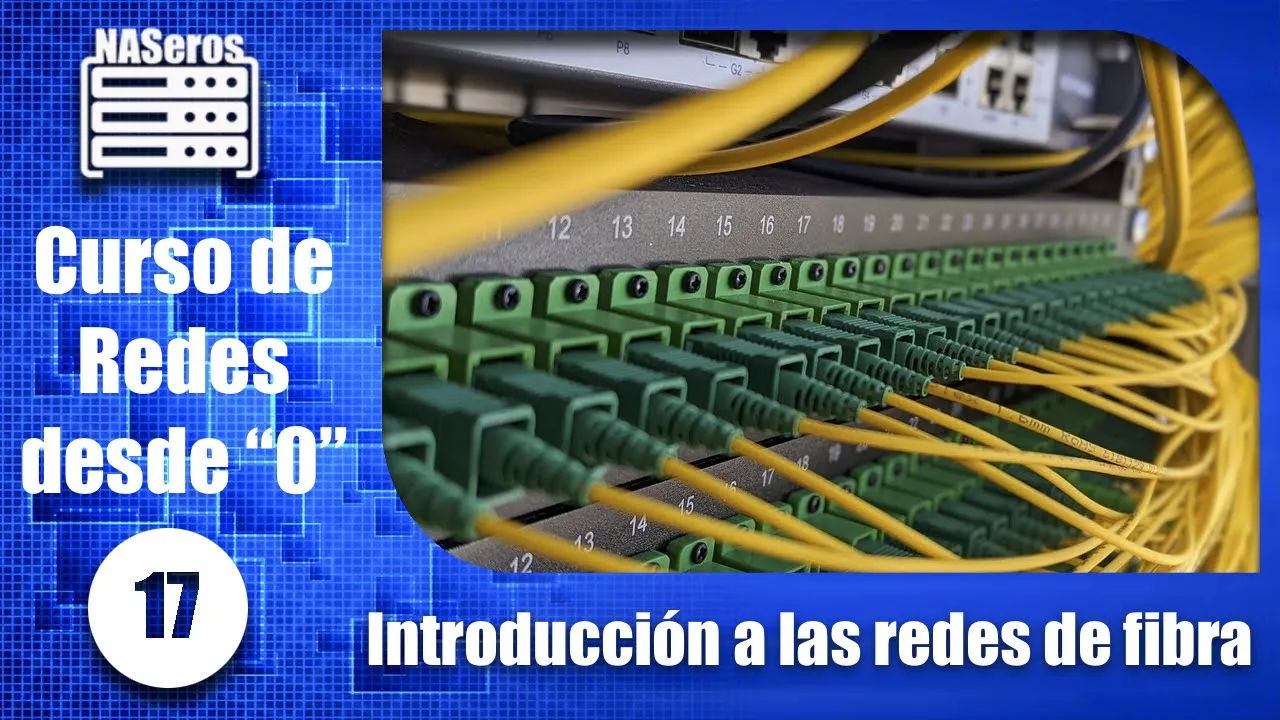








Fiber optics transmit internet data through glass strands using pulses of infrared light (not visible light), where digital information is encoded as binary signals (1s and 0s) that travel through a glass core surrounded by cladding, with modern systems utilizing wavelength division multiplexing to send multiple data streams simultaneously across single or multi-core fibers.
How Fiber Optics Work: Light, Glass, and the Internet
Added:The physics of refraction, reflection, and the concept of Total Internal Reflection (TIR).
The electromagnetic spectrum, specifically the characteristics and position of infrared light.
Basic digital communication concepts, including how information is translated into binary code (1s and 0s).
The fundamental properties of light, such as speed in a vacuum versus speed through different medium materials like glass.
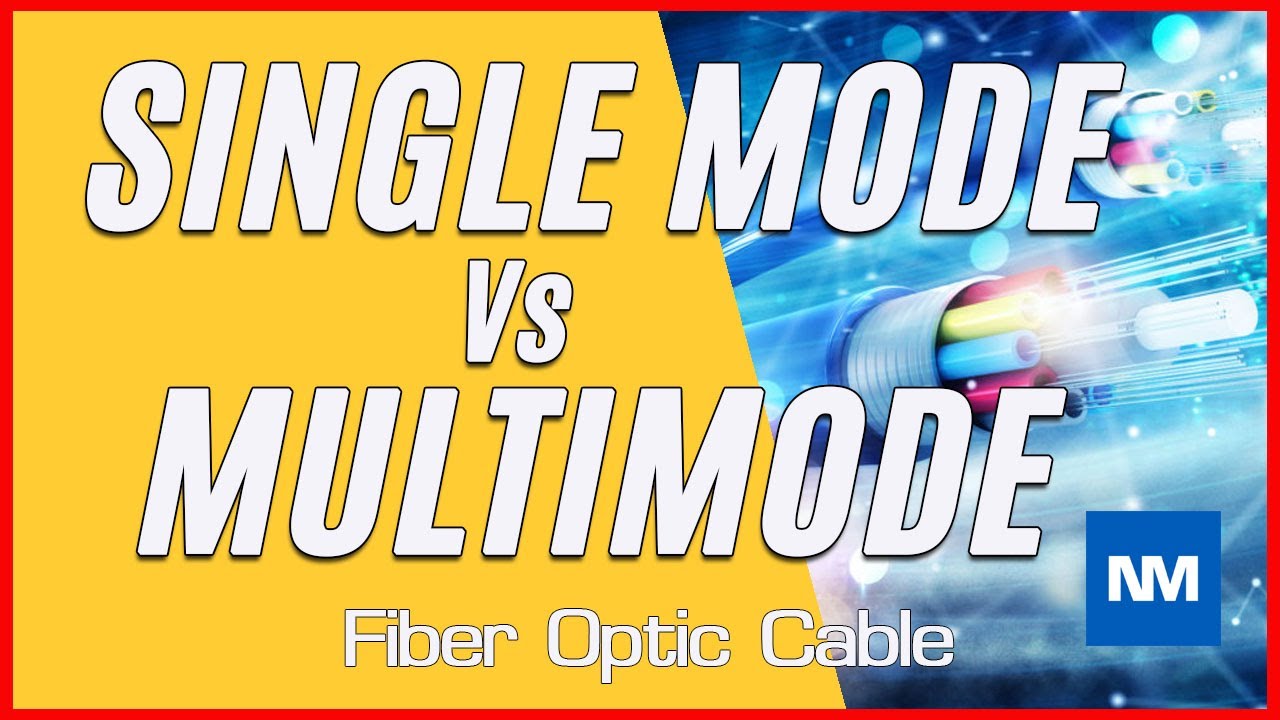
The distinction between Single-Mode and Multi-Mode optical fibers and their specific applications.
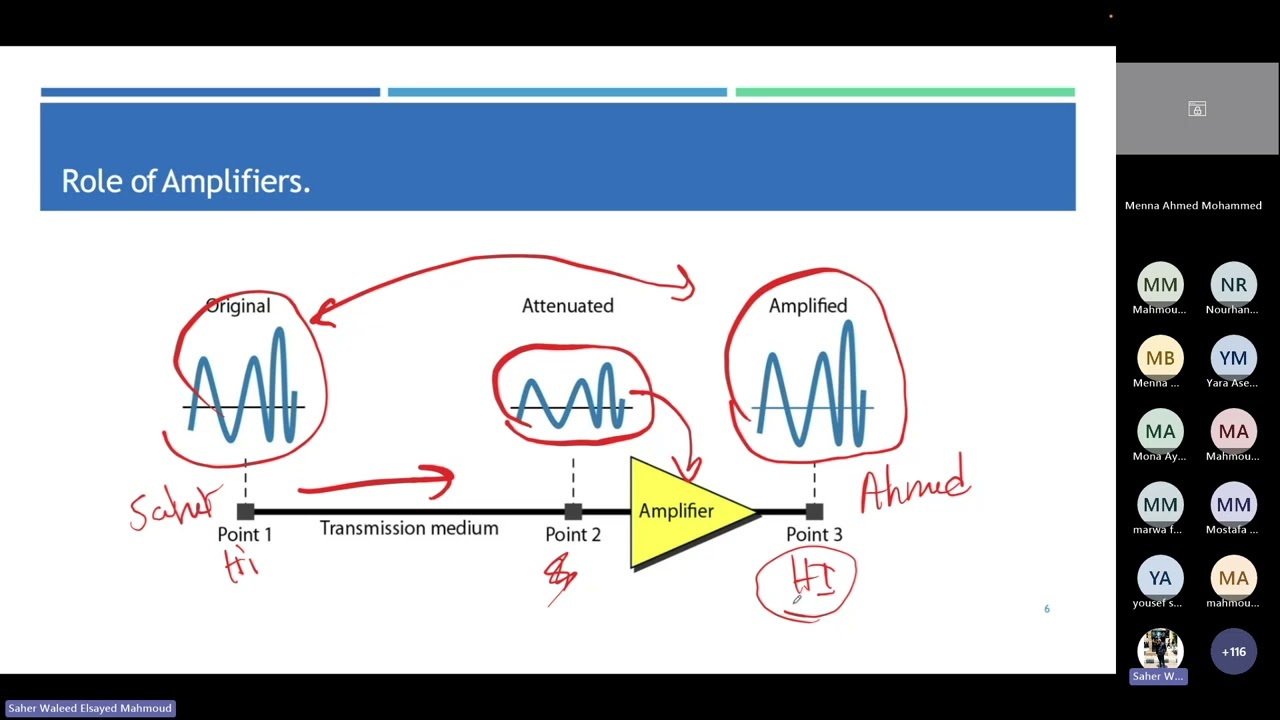
Signal degradation phenomena, including attenuation and dispersion, and how optical amplifiers resolve these issues.
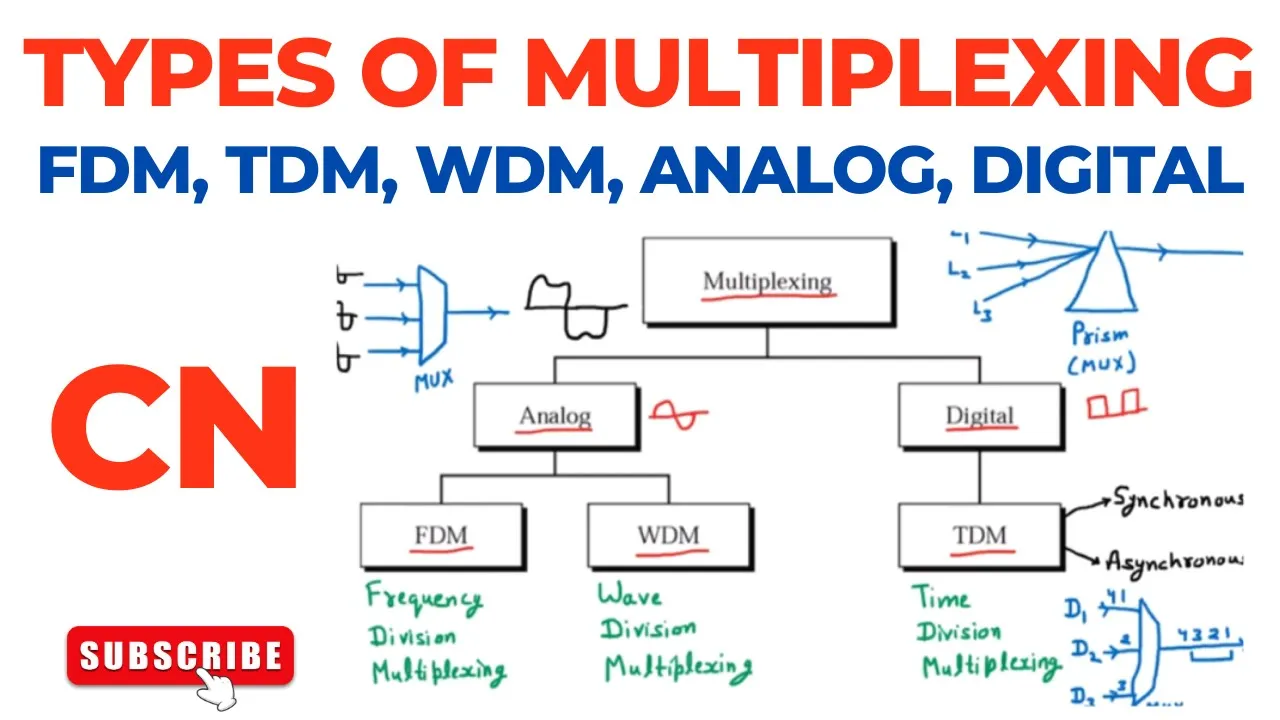
Wavelength Division Multiplexing (WDM) and how it allows multiple data streams to travel through a single fiber simultaneously.
The design and deployment of global internet infrastructure, such as undersea fiber optic cables and Fiber-to-the-Home (FTTH) systems.
496.1K views3.8Klikes5:28Original Release: 2017-02-17
[MUSIC PLAYING] NAT: Hey, there.
Welcome back to "Nat & Lo."
I am Nat.
And you may notice that Lo is not with me today.
But that's because she is climbing mountains in Colombia.
I will insert this picture into the video now so you can be very jealous along with me.
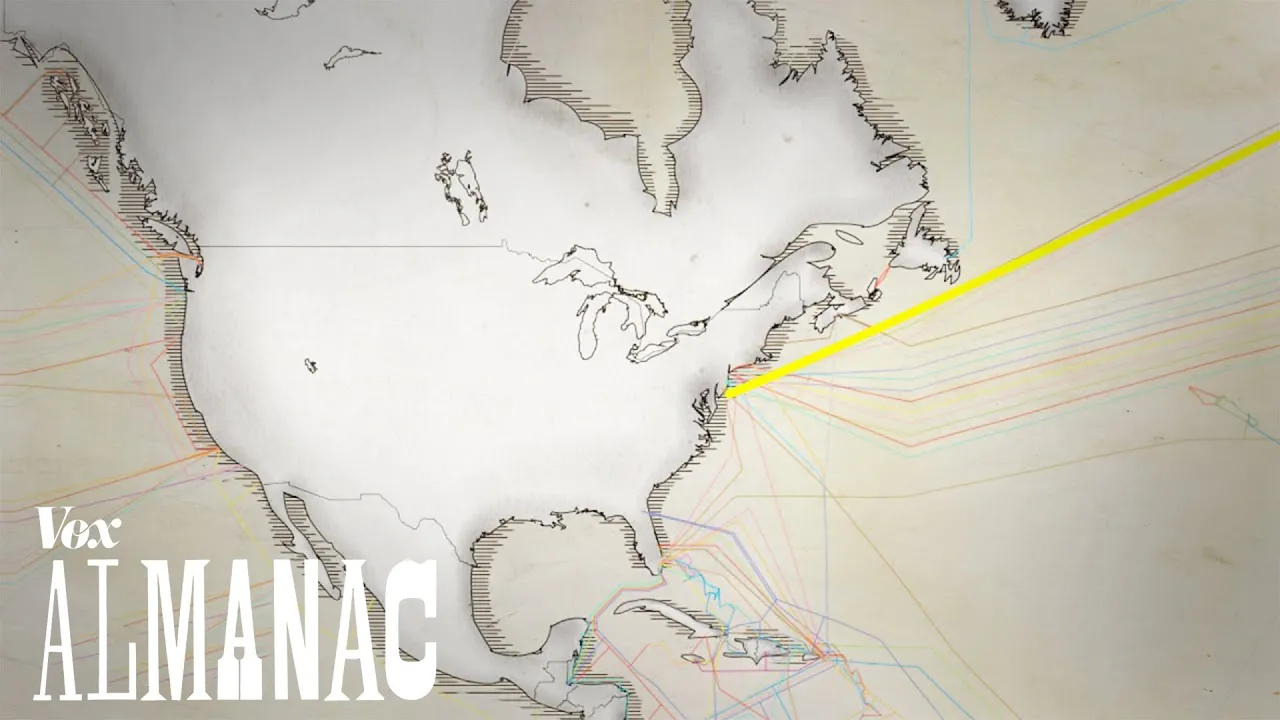
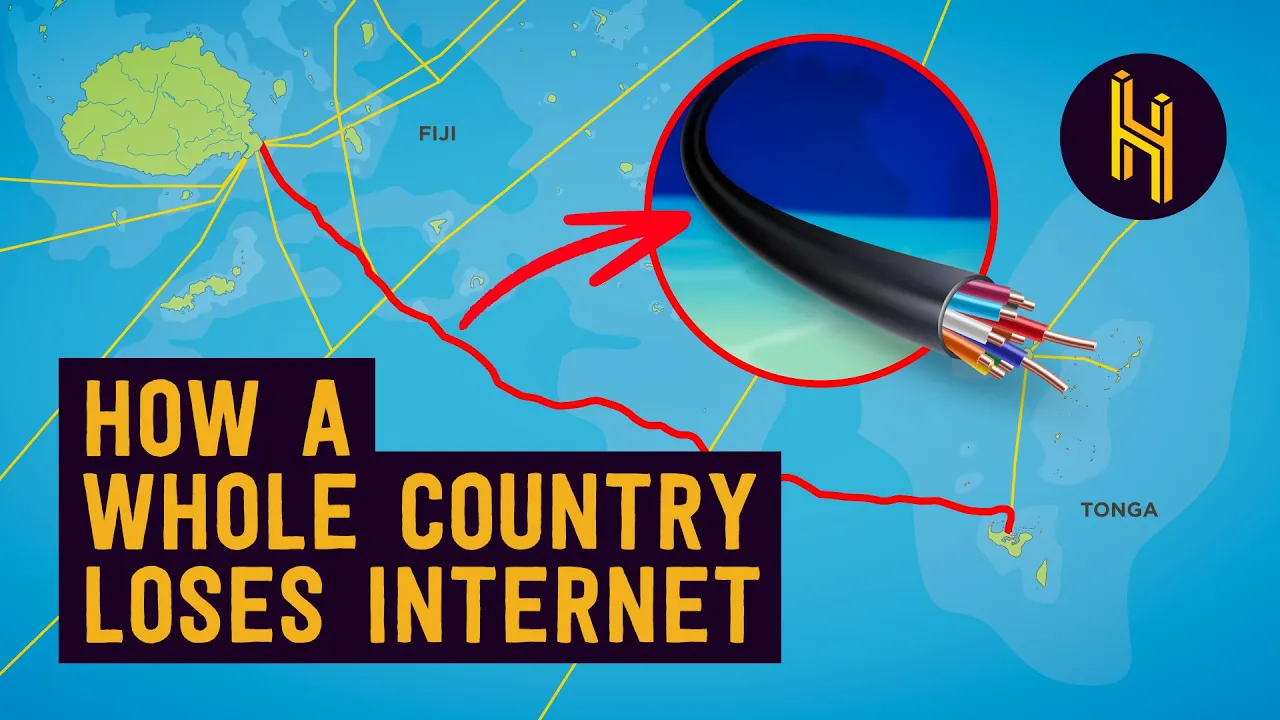
Moving on, a couple of months ago, we got to go aboard a ship and tour a factory to see how underwater internet cables are made and installed at the bottom of the ocean.
We learned how these cables use tiny fiber-optic strands the size of a hair to send your photos, videos, and web pages.
VIJAY: As little pulses of light over which you impose your digital information.
[CRICKETS CHIRPING] NAT: Does this look like the face of someone who fully understands what they've just heard?
Something that takes years of studying to truly comprehend-- pulses of light?
I kept wondering, what's really going on here?
I wanted to know, how do fiber optics actually work?
So I did some more research, double-checked everything with Vijay, our friend at Google, who's a fiber optics expert.
And in this video, I'm going to try to answer the question, how can light plus glass equal the internet?
Light is an accurate but also somewhat misleading word when it comes to fiber optics just because it makes us think of the light we know best, which is visible light.
But this light is just this small handful of wavelengths on the full electromagnetic spectrum, all of which x-rays, microwaves, radio waves, even Wi-Fi waves are technically light.
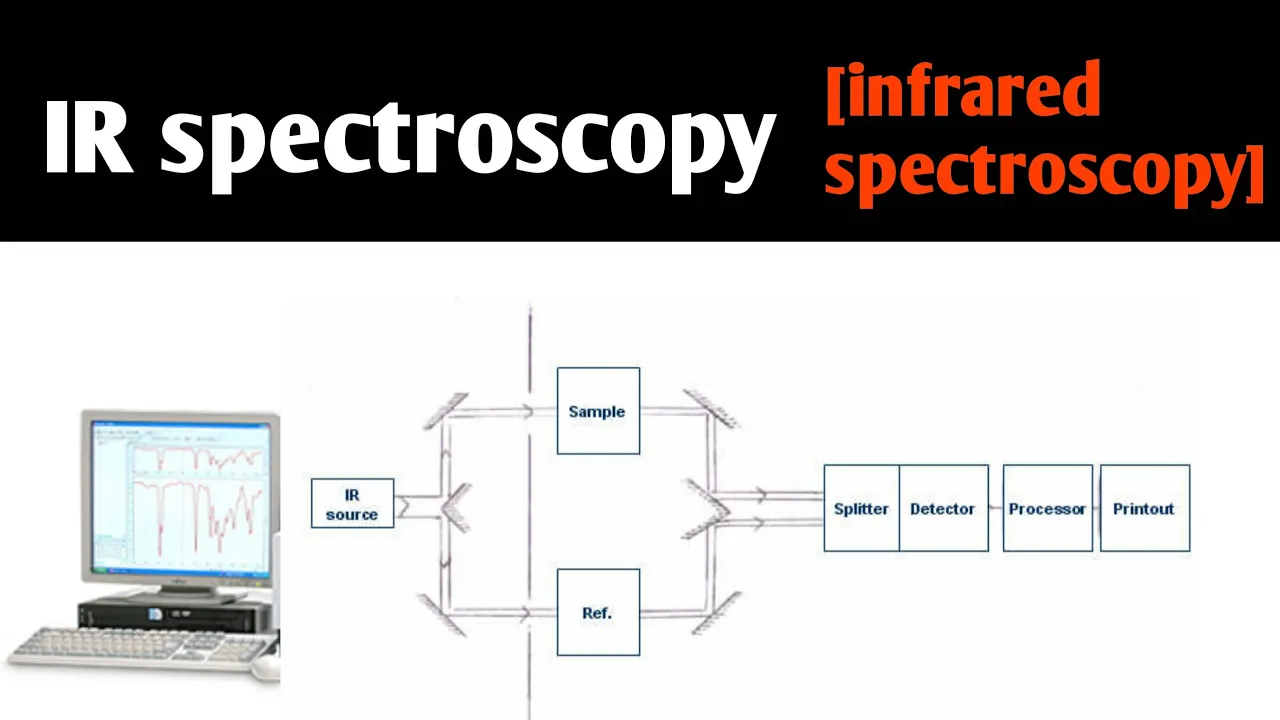
The light that zooms through these fiber-optic cables are infrared wavelengths-- invisible to our eyes, but for the sake of this video, represented by these little light blobs.
What also makes this light different is that it's made by Light Amplification by Stimulated Emission of Radiation, or in other words, a LASER.
But this isn't your average laser pointer or techno dance party laser.
The beam it produces is extremely narrow and directed, meaning even though the laser itself is only the size of a grain of salt, its beam is powerful enough to blind you.
So for these reasons and many others, it travels through protected glass tubes, more pure than any glass you've ever seen.
For example, if you were on a boat and the water below you was as clear as optical fiberglass, you would be able to see miles down to the bottom of the ocean, just because any little piece of dust or other impurity could disrupt this light from traveling through it.
What's amazing to me is that when I look at this glass, it looks like just one little piece.
But really, it's made up of several parts.
There's a glass core surrounded by a glass cladding, and then you have a plastic buffer to protect it.
So depending on what type of fiber it is-- is it going thousands of miles under the bottom of the ocean, a few hundred miles on land, maybe just a few hundred feet-- all this affects how big the various parts are and how the light travels through it.
For example, let's say someone comments "FIRST" on this video.
And I guarantee you someone will comment "FIRST" on this video just because I said that.
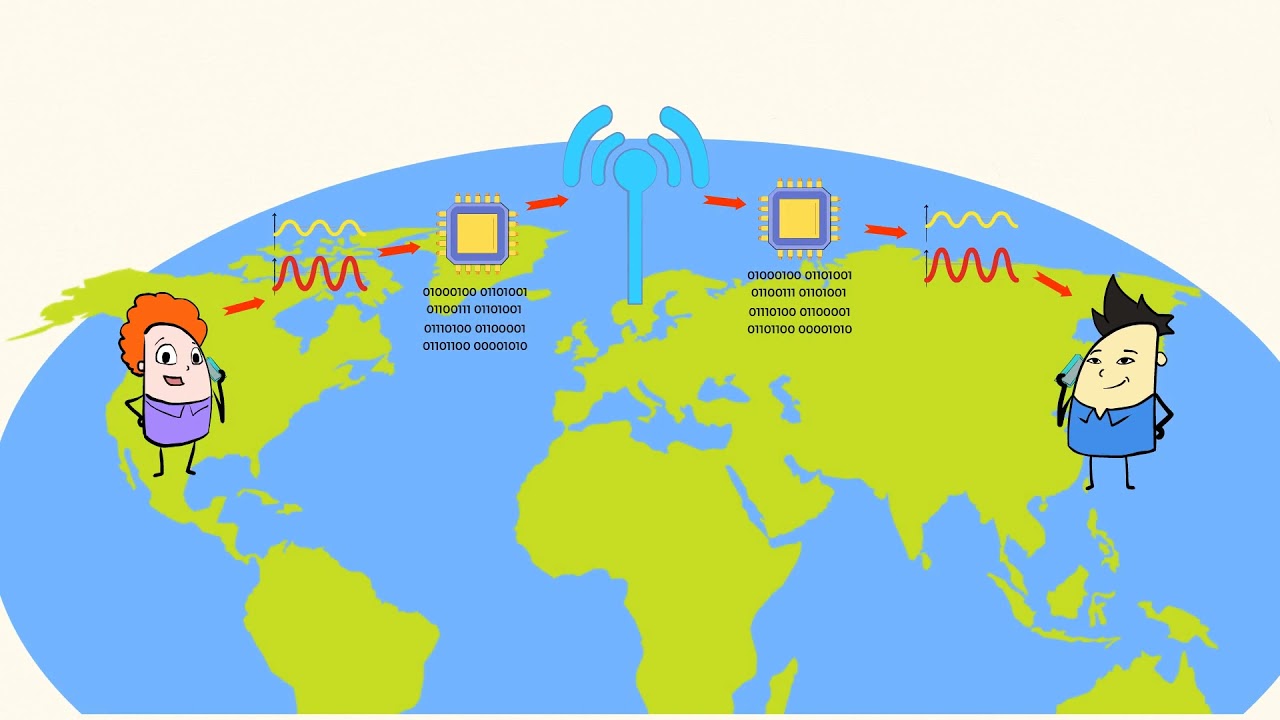
That comment starts off as electronic 1's and 0's.
So to translate those into light, if the fiber is just a few miles long, a laser pulse is on and off, on and off 10 billion times a second, an on equaling a 1 and an off equaling a 0.
And these light 1's and 0's then race through the core, bouncing off the cladding, zigzagging their way through to be, literally, "FIRST."
But for these underwater internet cables, the light has to go really long distances, so it's a bit more complicated.
The laser is actually left on the entire time.
And then an external device, a phase modulator, adjusts it 100 to 200 billion times a second.
And it doesn't bounce around because the core it's traveling through is only the size of a red blood cell, making it essentially a straight shot.
But here's the thing.
It's actually far more complicated than even this description.
To see what I mean, we need to strap on our infrared goggles and slow things down a bit.
You see, each glass strand can actually handle not just one, but 100, different infrared wavelengths traveling through it at the same time, meaning it's not just one highway with one lane.
It's like a highway with 100 lanes with bumper-to-bumper traffic whizzing by at 450 million miles per hour.
And that's not even all because right now, researchers are developing new techniques to make fibers with not just one core, but seven, meaning that's like seven highways, all with 100 lanes, all inside one tiny little piece of glass.
So while the internet is still a massive physical network with large infrastructure, computers, and data centers, and ships installing heavy steel-wrapped cables, the more I kept zooming in, the more I realized how the real massiveness of the internet is at the microscopic level, the level beyond human perception.
Just touch some of your hairs right now and realize something that small-- that's all it takes to send anything you want to anybody in the world.
Thanks for watching.
And if you have any more questions about how fiber optics work, leave a comment below.
And Vijay has agreed to answer them.
[MUSIC PLAYING]
Up Next

21:47
ML Model Monitoring with Evidently AI: A Practical Guide
@DataProfessor
26.7K views•2021-08-21

87:26
Introduction to Secure Multiparty Computation with Yehuda Lindell
@fhe_org
7.7K views•2021-02-04

4:55
HTTP Requests Explained: GET, POST, PUT, DELETE
@codecademy
103.1K views•2021-10-07
19:25
Enigma Machine Mechanics: WWII Encryption Explained
@JaredOwen
13.2M views•2021-12-11
Related Study Plans & Knowledge Roadmaps
Structured learning paths in Computer Science
computer-science
Container Runtimes: Namespaces, Cgroups & Go
01Linux Systems & Go Programming Foundations
02The Core of Isolation: Chroot and Filesystems
03Linux Namespaces: Process Isolation
+ 3 more learning modules
32h6 modules
Explore Roadmap
computer-science
Building a CHIP-8 Emulator: Rust & CPU Basics
01Computer Architecture Foundations (Bits & Bytes)
02Rust Programming for Systems Development
03CHIP-8 Virtual Hardware Specifications
+ 2 more learning modules
32h5 modules
Explore Roadmap
computer-science
Building BitTorrent: Go, P2P & Concurrency
01Go Fundamentals & Concurrency
02Networking Foundations & P2P Architecture
03Bencode Parsing & Torrent Metadata
+ 3 more learning modules
26h6 modules
Explore Roadmap
computer-science
Actor Models (C++ Concurrency & Lock-Free)
01C++ Multi-Threading Foundations
02Thread Pools and Task Scheduling
03Atomics and Lock-Free Queue Design
+ 3 more learning modules
45h6 modules
Explore Roadmap