
















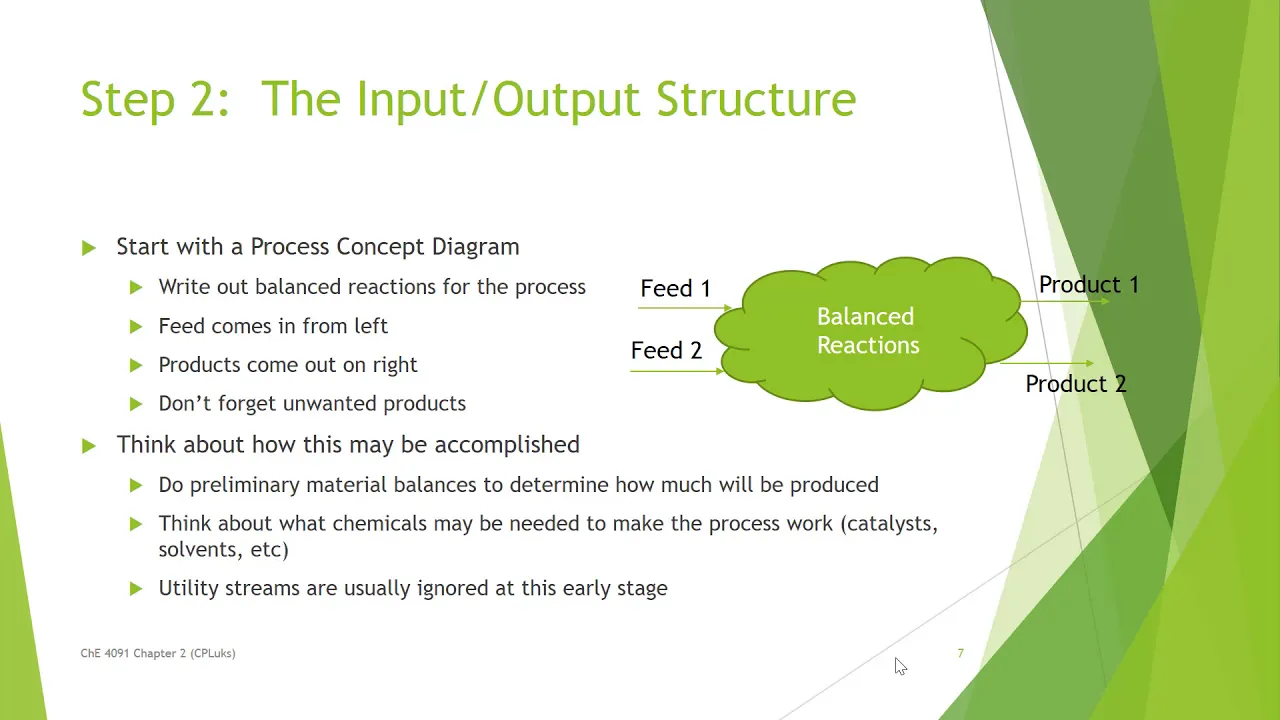


Perfusion bioreactors are continuous culturing systems that retain cells within the reactor while continuously harvesting the desired product, enabling higher cell concentrations and product yields through prolonged operation periods (weeks to months), reduced exposure to toxic byproducts, and milder operating conditions with less shear stress; however, these systems face challenges including high medium consumption, complex control requirements, limited commercial availability, and the need for well-characterized processes, making them particularly suitable for vaccine production and precision medicine applications despite requiring significant capital investment and operational expertise.
Perfusion Bioreactors: Continuous Cell Culture and High Cell Density
Added:Fundamental bioreactor operation modes, specifically the operational differences and limitations of batch and fed-batch cell cultures.
Basic mammalian cell biology and kinetics, including cell growth phases, viability, and metabolic waste accumulation (such as lactate and ammonia).
Principles of mass transfer in bioprocess engineering, particularly oxygen transfer rates (OTR) and nutrient diffusion in liquid media.
The concept of process intensification and the general economic and operational goals of modern biopharmaceutical manufacturing.
Cell retention technologies and devices, such as Alternating Tangential Flow (ATF), Tangential Flow Filtration (TFF), and acoustic settlers.
Integrated continuous biomanufacturing, focusing on how continuous upstream perfusion aligns with continuous downstream purification (chromatography).
Process Analytical Technology (PAT) and automated control loops required to maintain steady-state operations in long-term perfusion runs.
Regulatory considerations and quality-by-design (QbD) frameworks for continuous processing, including defining a 'batch' in continuous manufacturing.
12K views130likes9:56Original Release: 2021-11-09
you will see that in the last couple of years has been a trend towards going from big batch scale production smaller scale continuous production and this is for a number of reasons first of all because we are moving more towards precision medicine so we will see that we've kind of started taylor pharmaceuticals for specific things and because there have been advances in the field of continuous culturing and they actually make sure that we can get a higher yield and also lower their costs and one of these types of innovation has to do with perfusion bioreactors and this technology first came up in the 1980s where people were looking at production of unstable proteins because if you would be dealing with a batch based system you wouldn't be able to store it for a longer period of time whereas if you do continuous culturing you're obviously continuously taking something out of your medium such as what you do in a perfusion bioreactor so that helps to combat the stability that you've got in the system so essentially what you do is you work with a system where even though you harvest what you want it to have so for instance your pharmaceuticals or your other metabolites but you don't harvest the cells itself and i said you can either retain the cells within the bioreactor using specific membranes which is quite a complicated technique or you can use things such as for instance certain filters so you can kind of recirculate it and because you're doing this you can really achieve a quite high product yield and as i said because you can keep on doing this for prolonged periods of time this also helps to kind of lower the costs and make it a more attractive option in the previous slide i'll show you like an example the kind of general scheme and you will see that there is a device in there which will help to retain your cells now here you see another example where i've showed for instance the type of filter so a settler that works on a specific angle which would allow you to keep the cells within the system so the typical characteristics of a perfusion bioreactor is that you can do this for for weeks up to months for quite prolonged periods and what also helps is that you get less exposure of the cells of toxic by-products so for instance if you work with something like a production of yeast and you might start producing certain compounds in ethanol some of these compounds that are produced they overall inhibit the cell growth so and especially if you want to do something for weeks at a time then you start to get a build up of these toxic products which will lower the cell viability so by doing it in a perfusion bioreactor there's less exposure to these toxic byproducts and again this will help to increase your yields besides less exposure to toxic product the conditions overall are milder too so the cells will experience less shear and that's important because this is that you need in general use shear for mixing as well so it can be beneficial to work under high shear conditions but a lot of cells because particularly mammalian and plant-based systems they are very sensitive to shear so if you have milder conditions it might be very beneficial for these mammalian and plant-based cell lines because of less shear you get a more consistent yield and as i said before this will also help to boost your productivity now key killers heal so far so what happened that you know these perfusion bioreactors were actually proposed in the 1980s and it didn't really take off because at the time there was a lot of incentive to improve batch processing now the achilles heel really has been the retention-based systems that you need to use for these perfusion bioreactors so i've shown here the example of the settler you could have these capillary fibers within your reactor or you can use some time of filtering centrifugation and actually until when they started improving those systems and i will show you some commercial examples this is when these perfusion pyraxis became a more appealing option and one area in bioreactors where you might consider such a perfusion-based system might be for the production of vaccines so obviously because of the covert vaccination we've seen a lot around us now but vaccine production is typically one where it is definitely a drive to go towards continuous culturing and the main reason for that is because it would really boost the yields that you've got so particularly when you look at scale up and you want to look at efficiency this is a very appealing option when you use specific bioreactors you will impose quite a high strain on the cells so the particular reactor that i've shown here actually doesn't use mechanical mixing which is your typical type of mixing where you have agitation using an impeller now we know there are options if you look at my alternative biodesigns reactor where we can look at for instance mixing in an of the reactor where you've got different velocities of the fluids but actually you would also find that there are some bioreactors where you do mixing based on magnetic drive impeller so that's another kind of reason how you could reduce the shear stress that the cells experience now the system here that we've got is around 2 25 liters so you can look this up and see how this works and actually what they do even though i can imagine this is still quite small scale in this reactor there's a very very high surface area so that's another kind of clever way if there's more for the cells to grow so it's another way of actually boosting the productivity now what you will see that this technology is really on the rise so you could look up and you know every year as we go along so in a few months you'll find other examples of this and here i've just given a few uh of the proteins that are actually produced using these perfusion bioreactors and you can look up these systems and you can see that you can go to much larger scale volumes like which goes to the thousands of liters rather than the 25 liter one that i showed to you before now in general because there is more awareness of the technology and also how we kind of control the system which is not as easy as your traditional bioreactor you will see that this technology is on the rise and the main reason for it is that as i said you can drive the course town and you have much milder conditions that you work with now there has been improvement in the systems for cell retention which will make this a much more appealing option and the key key reason why you would want to use this is that the cell density so the yield that you can achieve has been much higher and you can find more and more papers that are clear reporters and compare them against each other also you can work with much lower infection rates and you can get much better and reliable results so these are definitely reasons why you would want to kind of move your system in that direction in this video i really kind of wanted to give you some of the advantages why you might want to consider perfusion bioreactors rather than for instance the standards to a tank or for instance an airlift reactor or a membrane but obviously because this is still like a relatively emerging technology and for instance batch batch processes are much better understood you have to imagine that there is some reluctancy from the industry to move all towards this type of reactors so there's a lot of challenges that come with it and particular things that you might want to think about is the flexibility so once your facility is there it's not so easy to just switch to something else whereas if you've got like and and here you have this concept of skill in versus scale out so for instance there is a drive towards just having lots of different reactors that can produce on a small scale and a big advantage when you work with battery access where your capital investment is actually less is that you can quite easily switch towards another product and you have a lot more flexibility in your system and particularly in the pharmaceutical market you probably want to start looking at other products and having that extra flexibility might be good when you want to move with the markets it's still a very limited number of commercial reactors that you can look at but another key thing that you have to consider is that when you do this you work with very very high dilution rates so there's not that many cells that you actually have in your reactor there's a lot of medium and you constantly need to replenish this medium so a big cost that you will get when you start operating it and the control is difficult is that you need a lot of medium to work with so a lot of these um people that actually look at perfusion reactors they would look at companies that can also produce mediums and big quantities because they would need that to operate their reactor then besides that factor you've got the medium which is a complication and then operating retention systems it's not that easy as well but also the downstream processing has a bit of challenges so you would see that when you work with these perfusion bioreactors you need to have a process which is quite well characterized so you don't have to start from scratch and investing into and you have an emerging reactor an emerging type of processing techniques and then perhaps also a cell retention process that you are not familiar with in a bioreactor playlist we've got a lot of other videos and similar topics so for instance if you want to know more about agitation sheer you can have a look at the the recommended video which talks about different impeller types or you can have a look at other designs that you can use in bioreactors so hopefully in this video you will have learned what are some of the trends in bioreactors why perfusion bioreactors might be an interesting alternative but what are also the challenges that you're going to deal with if you use such a system
Up Next
54:30
Transcriptional Mechanisms of Drug Addiction | NIH Lecture 2009
@NIHVideoCast
9.3K views•2012-08-30
14:12
Quantitative Real-Time PCR (qPCR): Principle, Method & Data Analysis
@animatedbiologywitharpan
129.2K views•2023-09-06

13:24
Case Study: Downstream Processing of Monoclonal Antibodies in Bioreactors
@MarloesPeeters
8.9K views•2022-12-22
16:04
CRISPR and Genetic Engineering: How Gene Editing Works and Why It Matters
@kurzgesagt
30.5M views•2016-08-10
Related Study Plans & Knowledge Roadmaps
Structured learning paths in Biotechnology
biotechnology
AAV Production: Transfection, Prep & qPCR
01Introduction to Gene Therapy and AAV Biology
02Mammalian Cell Culture: Suspension HEK293 Cells
03Upstream Bioprocessing: Triple-Transfection Optimization
+ 2 more learning modules
18h5 modules
Explore Roadmap
biotechnology
Building Gut-on-a-Chip: PDMS, Cells & TEER
01Foundations of Microfluidics and Gut Anatomy
02Cleanroom Fabrication & PDMS Soft Lithography
03Epithelial Cell Culture and On-Chip Seeding
+ 2 more learning modules
26h5 modules
Explore Roadmap
biotechnology
Optimizing CFPS: E. coli Extract & Yield
01Fundamentals of Molecular Biology and Translation
02Introduction to Cell-Free Protein Synthesis (CFPS)
03Preparing E. coli Crude Lysate (The Extract)
+ 2 more learning modules
19h5 modules
Explore Roadmap
biotechnology
Haematococcus PBR: Design, Stress & Astaxanthin
01Biology and Life Cycle of Haematococcus pluvialis
02Bench-Scale Photobioreactor (PBR) Design and Engineering
03Culture Media Formulation and Inoculation
+ 2 more learning modules
15h5 modules
Explore Roadmap