


















![Sten R. Sörensen, Cereno Scientific 🇸🇪 | Drug Repurposing, Retail Investors | E52 [Sponsored]](https://i.ytimg.com/vi/8-X1D05QoCc/maxresdefault.jpg)






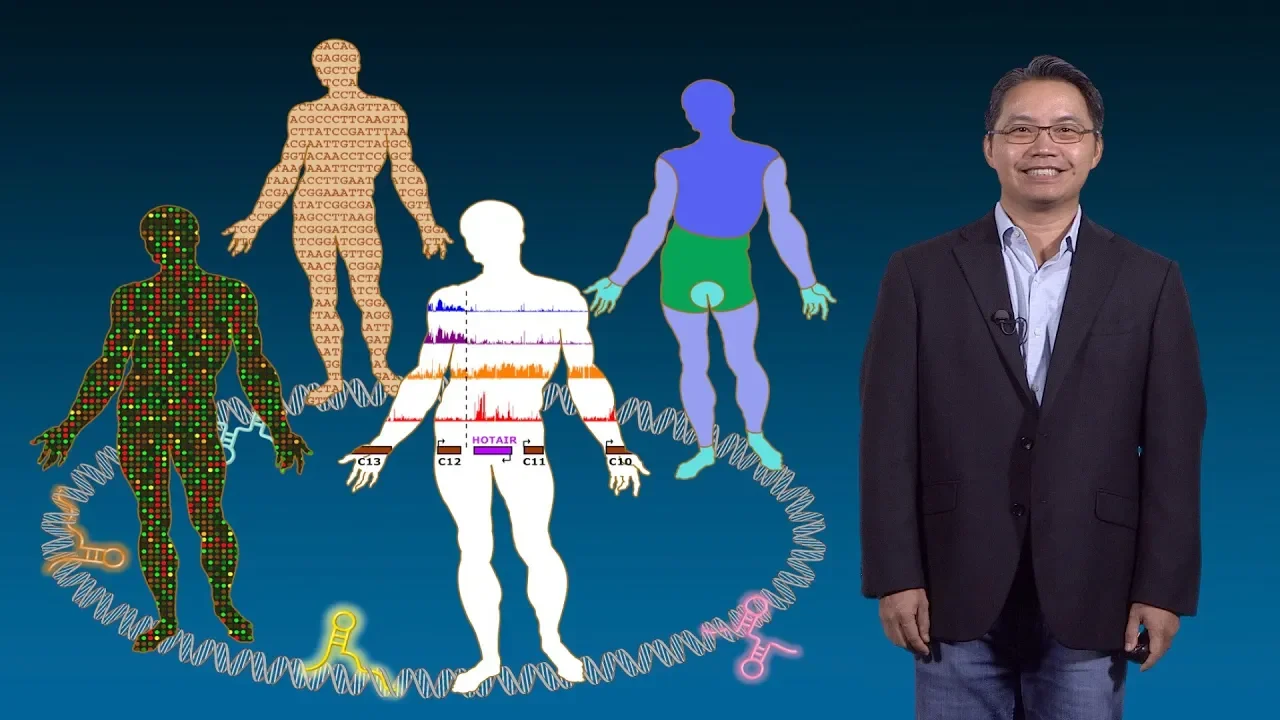






Addiction is a form of drug-induced neural plasticity where repeated drug exposure produces stable changes in gene expression through transcription factors like Delta FosB, which accumulates in the nucleus accumbens and regulates target genes to produce long-lasting behavioral adaptations; this process involves chromatin remodeling that modifies histone acetylation and methylation patterns, creating a molecular switch that distinguishes acute drug effects from chronic addiction states.
Transcriptional Mechanisms of Drug Addiction | NIH Lecture 2009
Added:Basic principles of eukaryotic gene transcription and the role of transcription factors in regulating gene expression.
The structural organization of chromatin, including nucleosomes, histones, and the basics of epigenetic modifications.
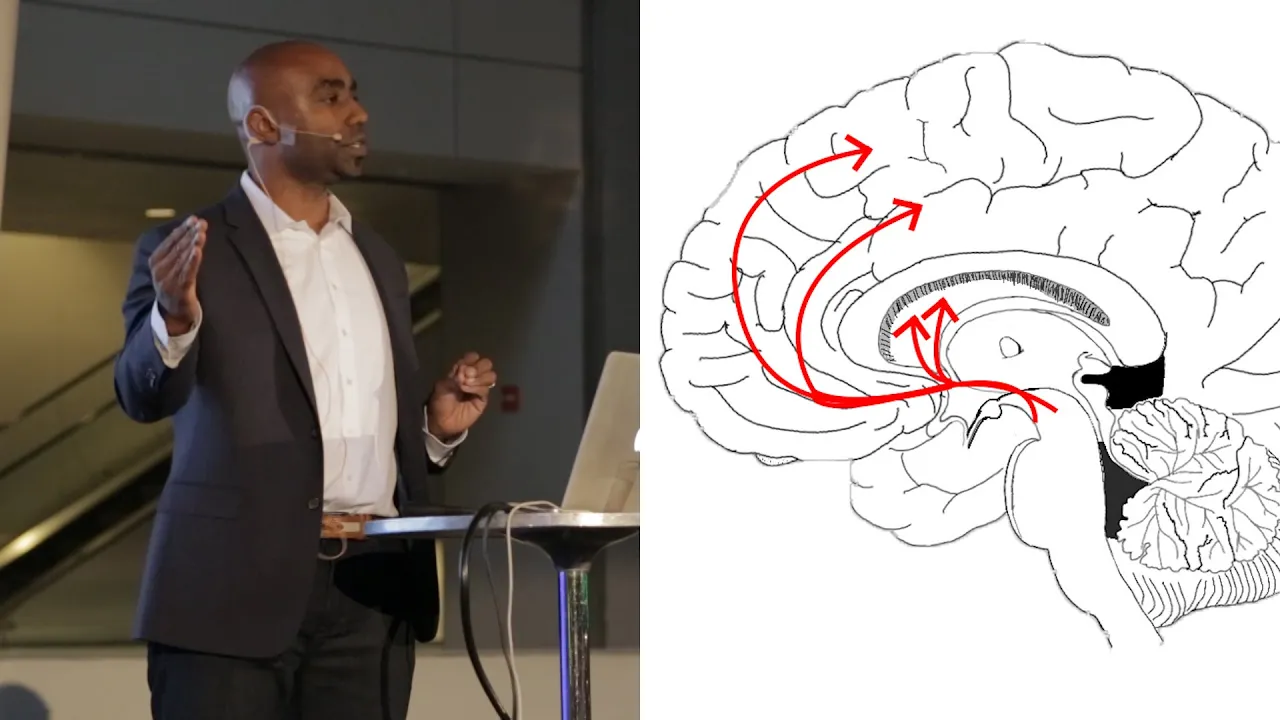
The neuroanatomy and pharmacology of the brain's reward system, particularly the mesolimbic dopamine pathway.
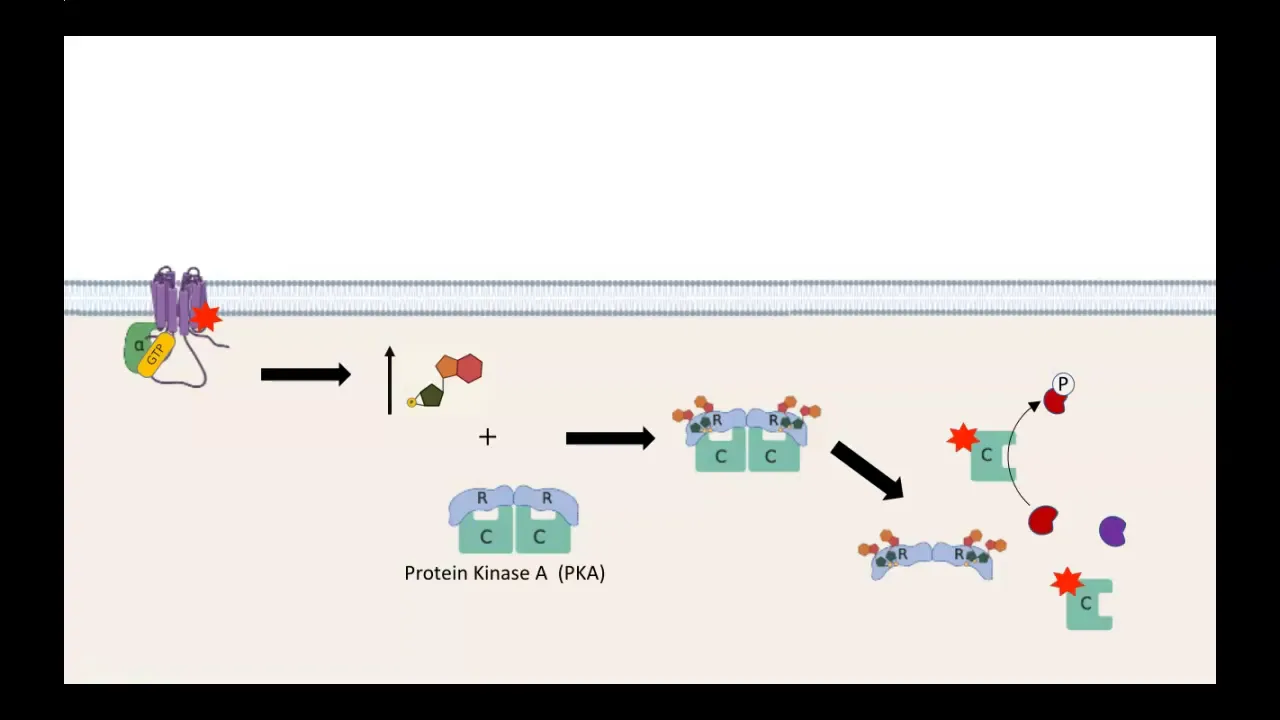
Intracellular signal transduction pathways, specifically GPCR signaling and the cAMP/PKA cascade that activates CREB.
The study of epigenetic-based therapeutics, such as HDAC inhibitors, as potential treatments for substance use disorders.
How stable chromatin remodeling translates to long-term synaptic plasticity and structural changes in neurons (e.g., dendritic spine density).
Advanced molecular techniques used to map epigenetic landscapes in the brain, such as ChIP-seq and ATAC-seq.
The role of other epigenetic factors, such as microRNAs and DNA methylation, in the persistence of drug-seeking behavior and vulnerability to relapse.
9.3K views60likes54:30Original Release: 2012-08-30
uh good afternoon um everybody it's a pleasure to be here uh today and for those of new of you that don't know me I'm I'm Nora vov and I represent the National Institute on drug abuse and the speaker today is uh one one of our most accomplished investigators in the F in the field of substance abuse research as well as mental health uh Eric nestler and um he has an standing career he was trained both in Pharmacology in the laboratory of Paul greengard uh when he was at jail as well as a medical as I got his MD also at JL University then went on to do his training residency training in Psychiatry at JL and um started as an assistant professor in 1987 and rapidly um made major contributions to the field that uh led him to be nominated into the Institute of medicine in 1998 in the year of 2000 he left the jail to go to the University of Texas Southwestern in Dallas as a chair of the Department of Psychiatry and rapidly transformed that uh Department into one of the powerhouses in terms of research in Psychiatry and in mental illnesses the work of uh then then he left in 2008 so he's now established in New York City as of 2008 at Mount Si where he's chair of um the department of neurosciences and head of the brain Center at Mount siai and his work uh has been remarkable and I sort of hard to when you identify an individual that has the capacity to do transformative work that whose work changes the perception of a field if I can think of someone I would think of Eric nesler and what Eric has done is actually by focusing on molecular targets he has been able to identify the process that occur within the cell that differentiates the acute effects of drugs from those that occur with repeated Administration uh it's very different in for those of you that are not familiar with the substance abuse field the effects of drugs when an individual is not dependent to them or addicted are very distinct to those that occur when a person is addicted and that transition from drug experimentation to addiction has been a big challenge in research and Dr nestler work um through this very elegant and systematic analysis of molecular changes differentiating acute from chronic has been able to identified key transcription factors in the cells that if modified in the animals dramatically affect the responses to acute and repeated Drug Administration and as Visionary as he is he has gone into the next step and started to investigate and map out the epigenetic modifications that lead to that transcription changes that then affect cell function on brain function and behavior so it's a pleasure to have Eric here speaking to us and I welcome you thanks thank you very much Nora it really is a great pleasure to be here although I had to take time out of writing my simulus grants to give the lecture but I'll come back to that in a few moments the um what I'd like to focus on today is some of our work on the molecular basis of addiction as Norah had mentioned and I'll start by uh reviewing the way we view the addiction process which as as a form of drug induced neuroplasticity so the idea in the field is that when an individual takes a drug of abuse it gets into the brain binds to its initial protein targets we now know the targets for most of those drugs uh drugs buy to receptors reuptake proteins or ion channels um but that um addiction is a form of drug induced plasticity because addiction requires in most cases repeated exposure to a drug whereby repeated binding of a drug to these targets produces changes inside of the nerve cell and because the behavioral abnormalities that define an addicted State can be very long lived we all know that people remain at increased risk for relapse despite years of abstinence in most cases um our group and many other groups have focused on a role for gene expression in this process whereby repeating rep exposure to a drug by repeatedly binding to these acute targets produce changes inside of nerve cells that gradually signal to the neuron cell nucleus where uh drug induced changes and transcription factors and many other types of nuclear proteins produce stable alterations in the expression of specific Target genes which somehow underly the very stable long lasting changes in the functioning of individual nerve cells that summate to cause an addiction syndrome I think one of the remaining challenges in the field of drug abuse and this translates to all of Neuroscience is to understand how it is at a circuit level that alterations at the level of individual nerve cells lead to behavioral abnormalities and that's something that's going to require a more sophisticated circuit analysis of the nervous system that's not yet available today what I'll do is to focus on one protein called Delta fosb that we've been interested in uh Delta f b is one of many important proteins in the addiction process but by focusing on it I'll be able to illustrate for you how it's been possible to relate something as reductionistic as a single transcription factor to something as complex as a state of addiction in order to carry out this research we relied on Decades of work by many people in the field that have defined regions of the brain that are important in the addiction process the field has identified so-called brain reward regions areas of the brain where all drugs of abuse converge despite their very different initial effects to produce their acute rewarding actions and by analogy where presumably they produce some of their longer lasting adaptive changes plastic changes to underly addiction these reward circuits include dopaminergic neurons in the midbrain in the vental tegmental area and the lyic regions in the front part of the brain to which these neurons project areas such as the nucleus succumb which is the ventral part of the striatal complex regions of prefrontal Cortex amydala hippocampus and several others today I'll Focus solely on transcriptional changes that occur within the nucleus succumbent recognizing the importance of extending this work to many other circuits as well now one might ask why does the brain have these targets for drugs of abuse the idea is that these are uh very fundamental survival Pathways that are critical to regulate an individual responses to Natural Rewards in the environment like food sex and social interaction uh in fact rudiments of using dopamine to regulate an individual's responses to Natural Rewards go back as far as worms and flies in evolution so these are extremely fundamental crucial survival Pathways that are corrupted by drugs of abuse and the idea is that drugs change these Pathways and in the extreme change a person's entire motivation to seek drug and take drug at the expense of other more healthy Natural Rewards and the question is how do those changes occur our interest in Delta B goes back almost 20 years ago now when uh many people in the field of Neuroscience were using C fos as a measure of identifying nerve cells that were affected by a wide range of stimuli uh and not surprisingly perhaps at that time there in the early 90s now our group several other groups including Mike adola here at NIH showed that when an animal is given in a single dose of a drug of abuse and this phenomenon was seen pretty much with every drug of abuse um alcohol and and Other Drugs that um when that a single dose of a drug caused a very rapid induction of seos in the nucleus cumbent also in the dorsal striatum so it's a phenomenon seen throughout the striatal complex uh and that somewhat delayed from that was the induction of several related fos family proteins such as fosb fra 1 and fra 2 all of these proteins are highly unstable so that within 6 to 12 hours they're back to Baseline Bruce hope in the lab at the time found essentially a third wave of induction of a fos family transcription factor which we later showed was uh due to stable isoforms of Delta fos B and these isoforms were different from all these other fos family proteins in two key ways first in response to a single drug exposure only a small amount of Del of this stable Delta fos B is generated and I think that's why probably other groups had not seen this protein secondly unlike all these other proteins that are highly unstable Delta fos B seemed to be highly stable and that meant that when an animal was given repeated exposures to a drug of abuse the small amount of Delta fos B induced with each drug exposure gradually accumulated to the point where it became by far the prominent fos family transcription factor in these nerve cells and we had hypothesized at the time with no data that this high level Delta fos B then somehow fed back and repressed expression of these other fos family genes created what we called at the time a molecular switch uh this um shows that phenomenon from an early Western blot using an antibody actually from madola that was generated against all fos family members uh this is looking at nucleus succumbent tissue from an animal that had gotten single or repeated doses of cocaine and what it shows is the very rapid induction of all ownn fos family members uh after acute cocaine Administration Delta fos B is this very low-level protein again probably why other uh groups had missed it but that after chronic exposure the pattern of induction is quite different now is there's the accumulation of these modified isoforms of Delta fos B and the relative desensitization of induction of these other proteins so Delta fos B represented an interesting molecule that could um sustain changes in gene expression in nucleus succumb long long after an individual stop taking drug in recent years we've obtained evidence to um as to what is the biochemical basis of Delta fosp stability some of those data are summarized in this cartoon Delta fosb is a product of the phosp gene which also encodes full length phosp the two proteins differ only by uh the cleavage of a c terminal region from F length fos B and Delta fos B uh both of these proteins have to dimerize with June family proteins to form AP1 diers or AP1 complexes the active transcription factor and we we found over the years is that both this C terminal truncation and phosphorilation of Delta fos B explain its stability and I'll show you some more details of that this is a cartoon of the primary structure of these two proteins again uh Delta fos B and full length fos B are identical except for the fact that the terminal 101 amino acids are cleaved from Delta f must be through alternative splicing Tiffany Carly in the lab a couple of years ago demonstrated two Degron domains present within this cleaved sea terminal region one targets the uh full length protein to ubiquit anation and Rapid degradation in the proteosome and the other Degron domain targets the protein to another proteolytic process we have not yet identified importantly these two Degron domains are highly conserved among all phos family proteins absent uniquely in delta fosp in addition Paul ulery and more recently AJ Robison have identified two searing residues at the inter Terminus of Delta fosb that are phosphorilated by several protein kinases such as casing kinas 2 and we think PKA more recently we have data for camcas 2 being involved as well and we have evidence that this these phosphorilation events further stabilize Delta fos B when one takes into account both of these mechanism in tandem uh they together enhance the stability of Delta fos B by two orders of magnitude in cell culture and by even more in Vivo and thereby seem to fully account for the enhanced stability of Delta fos B that we've observed in our studies now the other thing that makes uh Delta fos B interesting is what induces it so since our initial reports several groups along with our group has shown that Delta fos B is induced in the nucleus succumbent in fact within a particular cell type within the nucleus of combin by chronic administration of pretty much every drug of abuse that's been studied to date uh the prior slide showed that induction by Western blotting this is now showing the induction by imunohistochemistry and it's a robust phenomenon a three to fourfold induction of the protein now I mentioned earlier that um this nucleus ofum reward circuit is implicated in regulating an animals response to Natural Rewards and that's given some uh credence to the idea that mechanisms of drug addiction might have something in common with mechanisms of so-called natural addictions addictions to other rewards in the environment like pathological overeating um uh pathological gambling uh sexaholics and so on and this is where I'll bring up the stimulus uh package again extramural scientists like myself have begun to lever press for stimulus money and in fact we're really it's not even cerebral enough to call it lever pressing we're pigeons pecking our beaks at a light okay enough of that um that might explain 20,000 proposals that you guys have just uh received we don't have an animal model for stimulus grants but we do have animal models for high levels of consumption of other Natural Rewards and Stefan beray and his colleagues at at the Carolin Institute have shown that rats and mice uh all run on a on a running wheel but certain individuals really run a great deal some of them some of the animals run 20 miles a day which is an extraordinary amount of running um most rodents if given the choice will uh drink large quantities of a sucr solution most will induce obesity in themselves of given free access to a high-fat diet um and then the final comparison we did was not quite as intricate we just studied animals male animals that were allowed to have sex uh versus the normally housed males that are not allowed to have sex interestingly in every single one of these cases we showed that high levels of consumption of a natural reward led to the induction of delta fosb in the same nerve cell type in nucleus succumbent where drugs of abuse induce the protein as well so Delta fos B is interesting in our point of view in terms of its temporal properties and in terms of what induces it and the question is what type of Behavioral change does it mediate to answer this question over the years we've used two general experimental approaches Max Kels and Jing Shan Chen in the lab made a series of bitransgenic animals that use the tetracycline gene expression system to um induce deltap fosp in striatum uh this is a two Gene system where the first Gene consists of a neural promoter driving expression of the tetracycline transactivator a tetracycline inhibitable transcription Factor not present in mamalian systems under normal conditions um the second Gene assist of the Ted op promoter normally activated by TTA when mice have these two new genes uh you can feed them doxic a tetracycline derivative it binds to TTA keeps gene expression off you remove doxic from an adult animal so allowing normal development and um that induces either Delta fos b or we also made mice that Express a dominant negative mutant of June which we call Delta C June and I'll describe that in just a minute however Delta BBY and Delta June are only expressed where TTA is expressed and we can control that by use of neural promoters so we were able to identify uh a bitransgenic mouse line that was able to Target Delta fosb not only to striatum but actually within the same nerve cell type within striatum where uh drugs and Natural Rewards induce the protein we did this in part by choice of a neural promoter the neuron specific enalas promoter but we obtained still greater spatial specificity by Crossing several founder lines of the nctta mice with several founder lines of the Ted Delta fos B Mouse and through enhancer trapping really by Serendipity obtained a mouse that targeted Delta fos B the way we wanted it and that's shown in this slide where two genetically identical littermates all M both raised on doicy one maintained on doicy gene expression remains off when the Lun mate was an adult we removed doicy a couple weeks later after doicy washes out of the system system Delta fos B then is expressed throughout the sadum it's not perfect specificity but it's pretty good the other approach we've used is viral mediated Gene transfer this was introduced into the lab by bill carloon and his colleagues in collaboration with Rachel Ney in this case we started out with herpes simplex virus vectors more recently we've moved to adno Associated viruses and what's shown here is the Exquisite spatial specificity possible with these viral vectors targeting even sub regions of nucle nule succumbent this is a coronal section of of a rat brain um so the viral treatments have much better spatial and temporal specificity but you have to drill a hole in the animal's head inject a virus induce a viral infection whereas the genetic approach uh avoids those but but doesn't have the same type of specificity so we've used both approaches in a complimentary way and this is a now a 10-year progress report of what we believe Delta fos B is doing when it's induced in the nuclear succumb in this one nerve cell type we are very confident in saying that induction of Delta fos B makes animals more sensitive to drugs of abuse we've demonstrated this in multiple behavioral assays and for multiple drugs a a bigger inference is whether Delta fos B also increases how much an animal wants a drug we believe that Delta fosb also increases incentive motivation um through assays like Progressive ratio test and nonreinforced responding uh and we've demonstrated this for cocaine this work was done in collaboration with David Self and his colleagues in Dallas and more recently in collaboration with several people uh Le kulin uh Bob misel uh and others uh di Wallace in my lab Stefan brune were able to show essentially equivalent functions of Delta fos B in regulating uh uh increasing the drive and consumption of Natural Rewards so 10 years later we have data that Delta fosb does indeed seem to provide to play this type of molecular switch role that might help initiate and then maintain a state of addiction due to the stability of the protein let me just give you some examples of the behavioral data that we've obtained and then move on to more recent transcriptional data this is an early experiment done by Max kills in the lab using the condition Place preference assay as an indirect measure of drug reward in this assay an animal learns to prefer an Environ a cocaine that's been uh prefer an environment that's been paired with cocaine normal animals or for example our bitransgenic animals maintained on doxic cycling to keep Delta fosy off show a dose dependent development of condition play preference as the increase uh as the dose of cocaine is increased whereas animals expressing Delta fosp are far more sensitive to those doses of cocaine so they're more sensitive to cocaine reward in that genetic model remember Delta fos B's Express throughout the striatum nucleus succumbent and dorsal striatum using viral vectors we can tease those apart van Zachariah in the lab using adno Associated vectors showed that overexpression of Delta fos B and nucleus succumb alone was sufficient to produce this enhan sensitivity to cocaine reward while overexpression of Delta fos being the CATE nucleus or dorsal stum had no effect and using Delta June antagonist we can provide the converse type of information Delta June is a is an artificial protein with an ENT Terminus of June cleaved the ENT Terminus is the transactivation domain of June proteins that means that these uh these um uh mutant Junes we call them Delta June proteins can still dimerize to Delta fosb and form an AP1 complex the complex can still bind to AP1 sites in responsive genes but the complex is physiologically inactive it cannot regulate transcription because June is lacking its transactivation domain so Marie Clare Pigman in the lab placed this Delta C June protein within our bitransgenic Mouse system and showed the opposite effect of Delta fos B whereas Delta fos B increased sensitivity to cocaine over expression of Delta C June selectively and striatum had the opposite effect and reduced cocaine reward now this effective Delta fosb this interesting behavioral phenotype of Delta fosb is presumably me ated through the regulation of other genes since sosop is a transcription Factor so over the last five or six years we've been focusing most of our efforts in understanding the target genes through which Delta fosb produces its effects in initial study done by Colleen mclung we um did carried out a genomewide analysis of gene expression in nucleus succumbent using aphim metric chips in mice treated with cocaine and also employing our bitransgenic Mouse models so for example she came up Colleen came up with the following data after a period of chronic administration of cocaine we were able to identify defined by these two numbers in the blue circle a set of genes significantly regulated by cocaine and ask ourselves what fraction of those cocaine regulated genes were the effects mimicked by overexpression of Delta fos b or were those effects of cocaine blocked by Delta C June and we were able to come up with the number of roughly 25% of all the genes regulated by cocaine could be accounted for through Delta FB telling us that Delta FB is important but by no means the only factor involved the other interesting finding from this study was that Delta fb's effects on Gene transcription were quite quite complex that Delta fosb upregulated some genes but downregulated others and this slide just lists two examples one of the genes that's induced by cocaine induced by Delta fos B is cdk5 cyc independent kyes 5 we were interested in that as a Target because cdk5 uh regulates neuronal growth and we have evidence that it helps mediate the ability of cocaine to alter the morphology of nucleus succumbent neurons and I'll come back to that in a little while an example of a gene that's downregulated by Cocaine downregulated by Delta B is C itself and we're interested in that phenomenon because it does provide evidence for the molecular switch that I described at the outset of my talk this this is where our uh studies were as of 5 years ago and any effort to study the mechanisms by which cocaine produce these effects or the mechanism by which Delta fosb regulates genes had to rely on studies in cell culture either cultured cells or cultured neurons because there was it was impossible to assess transcriptional mechanisms in the brain in Vivo and that made this level of analysis inherently unsatisfying to us because we knew that in cell culture looking at the regulation of a gene promoter by some stimulus that we could see many different types of effects even qualitatively different effects depending on the culture conditions used so for that reason as the as the field of cancer and developmental biologies taught us more about chromin structure in the regulation of gene expression we became very interested in assessing what we could learn from that new level of analysis so let me just digress for a moment and for those of you who are not chromin and afficionados tell tell you a little bit about what I mean uh of this level of analysis it became clear that DNA and chromatin exists on a broad spectrum of structure between two Extremes in the one extreme there's inactive or condensed chromatin and the Other Extreme is is active chromatin uh in inactive chromatin the DNA which is depicted here by these blue lines are wrapped around octomer of histone prot proteins depicted by these yellow spheres each of these units is called a nucleosome the nucleosomes are tightly packed and that tight packing is mediated by the methylation of certain cytosine uh nucleotides in the DNA itself or the methylation of certain lysine residues on the histone Tails both of these methylation marks are repressive and are sufficient to recruit to the chromatin many types of repressor or co-repressor proteins that further pack this DNA to the point where it's felt that genes present in this chromatin are inaccessible for Gene transcription at the other end of the spectrum there is a chromatin that is permissive where stretches of DNA are accessible to other proteins for example they can bind to traditional transcription factors like AP1 factors containing Delta fos B kreb glucocorticoid receptors and so on and The Binding of these transcription factors to these exposed regions of DNA provide some of the steric force to spread the nucleosomes further apart and also to recruit other co-activators of transcription for example transcription factors recruit two genes enzymes called histone acetal transferases which add acetal groups to the inter terminal histone Tails serving to further activate the chromatin there are other lysine residues at these histone tails that are also activational in St in Striking contrast to the repressive residues at at seen at other sites and the transcription factors recruit other co-activators for example s sniff factors these are complexes of proteins that contain atpa activity that are thought to provide the molecular motor to move nucleosomes across a span of DNA as it's being transcribed all of which then recruit a basil transcription complex containing RNA prelimin rase to the gene all told people have estimated in a eukariotic Cell a gene that is undergoing AC transcription might recruit a 100 proteins to its promoter to mediate that Gene Activation so this is an extraordinarily uh complex process it turns out that it's possible to take advantage of this level of information uh back to the drug addiction models because as genes are being transcribed or repressed they leave these various marks of chromin modifications which we can assess by chromin and imuno precipitation and ask how cocaine is inducing or ressing certain genes of Interest first work in my lab on this topic was done by Arvin Kumar and uh these are some of the studies the results that he obtained he analyzed the cdk5 gene promoter and studied the effect of acute and chronic cocaine on the association of the cdk5 promoter with the sated forms activated forms of histone H4 and H3 and as shown here what he found is that chronic but not acute administration of cocaine increased The Binding of acetylated H3 to the cdk5 gene promoter no effect on H4 animals that are self-administering cocaine show the same effect this was an exciting finding to us we knew that cocaine induced cdk5 mRNA but we had no evidence that it was transcriptionally mediated this is telling us that that induction of mRNA is indeed associated with marks of transcriptional activation we could use chromin and imuno precipitation to then assess the the role of Delta fos B in this effect so using antibodies to Delta fos b or full length fos B AR Arvin was able to show that after chronic not acute cocaine there's increased binding of Delta fos B not full length fos B again to the cdk5 gene promoter and there's also other signs of transcriptional activation not only histone associate uh histone ass cellation there's also the recruitment of other transcriptional co-activators for example brg1 binds to the cdk5 gene promoter after chronic cocaine brg1 is a swi sniff subunit whereas other swi sniff factors were not recruited to the promoter and we could obtain causal type of information by using our by transgenic Mouse system showing that when we simply induce Delta fos B in nucleus accumbens no exposure to cocaine Delta fos B binds to the cdk5 gene promoter perhaps that's not surprising but that it is sufficient to trigger the rest of the Cascade induction and of Delta fos B and binding of Delta fosb sufficient to induce recruitment of brg1 to the promoter acetalation of nearby histones and so on leading to transcriptional Activation so we are very excited about this level of analysis which is ongoing whereby we hope to gradually delineate the details of the transcription Factor complex that's recruited to the cdk5 gene or other activated genes as a result of chronic cocaine Administration we know that Delta fosb binds to an ap-1 site in the cdk5 gene promoter that's sufficient to IND uh to recruit histone acial transferases to recruit swi sniff factors leading to activation of the gene carrying out parallel studies will renthal in the lab was able to show very different consequences at the caos gene promoter at this promoter caos binds to a very similar AP1 site present in the gene but instead of recruiting activators for some reason Delta fos B recruits co-repressors one co-repressor is hdac one hdac stands for histone deacetylase it removes the his the acetal groups from histones and represses chromatin in fact Tiffany Carly showed that Delta fos B and hdac1 are direct binding Partners there's also the methylation at repressive sites of histones um at the caos gene promoter after chronic cocaine although we don't yet know the mechanism underlying that methylation now what's interesting is that Delta fos B binds to an AP1 site in the cdk5 Gene and induces it triggers a Cascade of transcriptional activation whereas when Delta fos B binds to a similar AP1 side in the C fos Gene it triggers a Cascade of transcriptional repression so we're very interested in understanding what differentiates that action of Delta fos B and that's something that we're uh interest that we're looking at genome wi as I'll get to in just a few moments up until this point I've we've been I've been describing studies which have utilized studies of Chromatin as a way to gain insight into how cocaine and Delta fosb regulate the expression of specific genes in I'd like to digress for a moment to tell you about some unexpected work unexpected results that have shown more much more Global changes in chromatin in response to cocaine Administration so what we found is that in addition to producing changes at specific genes cdk5 C fos and so on cocaine produ excuse me produces Global changes apparent by Western blotting and imun histochemistry not even looking at specific genes chronic cocaine increases histone acetalation decreases repressive histone methylation for example at lysine 9 of histone H3 and decreas increases DNA methylation all in the nucleus succumbent now what's interesting is that each of these Global changes would be expected to be associated with more gene expression it would be permissive for enhanced gene expression and we've shown that each is also associated with increases in behavioral responsiveness to cocaine I'll just show you one example we published a study on hdac 5 a year ago and I'll show you some data on this ly9 um Mark U now so Ian May in the lab found that after a course of chronic cocaine Administration there's a a global decrease in levels of methylation of histone H3 at lys9 again a mark of transcriptional repression it's a fairly robust effect and it's due to mediated by downregulation of a particular histone methyl transferase specific for lys9 which is called G9 so this shows downregulation of G expression by chronic nonacute cocaine it's really quite extraordinary in effect this shows the effect by this is Western blotting data this shows the effect by imunohistochemistry looking at nucleus succumbent looking at levels of lys9 methylation you can see a dramatic downregulation after chronic cocaine Administration now lys9 H3 methylation is thought to be a mark of heterochromatin truly condensed inhibited chromatin and it's really surpris surprising to think that doses of cocaine can actually cause the amount of changes the amount of heterochromatin in a neuron cell nucleus but in fact that's actually what happens so using dappy staining as a direct stain of heterochromatin we're now magnifying looking at a single nucleus from a nucleus aomin neuron representative of what's Happening throughout the tissue is that there's actually a decrease within individual nuclei of the man of heterochromatin as a result of chronic cocaine Administration we believe this effect too is mediated by Delta f b since um overexpression of delta fosb in our bitransgenic system is sufficient to mediate in the absence of cocaine this downregulation in lysine methylation and the repression of g9a this is behaviorally significant because we can manipulate levels of g9a which in turn manipulate levels of Lysine 9 H3 methylation in a variety of ways we can inject aav uh and adno Associated virus vectors um expressing cre recombinase or gfp as a control into flocked g9a mice these were obtained from Sasha turovsky at Rockefeller University and inject these vectors selectively into the nucleus succumbs we are we are reducing g9a expression selectively in the nucleus succumbs of adult animals showing that this results in enhancement of the rewarding effects of cocaine in a condition placed preference assay the same results are obtained with pharmacological Inhibitors of g9a Bix is a small molecule ianas injected it by osmotic mini pump directly into the nucleus succumbent that too enhances the rewarding effects of cocaine and the opposite effects are obtained when we overexpress g9a and enhance lys9 H3 methylation in this case using herp simplex virus vectors overexpressing g9a selectively in nucleus accumbens decreases in animal sensitivity to the rewarding effects of cocaine and it's due to the catalytic activity of g9a because the catalytically dead Mutant has no effect okay so in the last few minutes I'd like to tell you about uh the direction that we're taking this work um in currently and and looking forward in addition to looking at Global changes in these chromatin marks as I've just discussed and in addition to searching for cocaine and Delta fosb Target genes one at a time we'd like to take genome wide views of chromin Regulation using other assays such as chip chip assays where we would carry out chromin and imuno precipitation as I've described it for example with an antibody to acetylated histone H3 but instead of analyzing individual genes of Interest like cdk5 and C fos in the imuno precipitated DNA to analyze that DNA genome wide using a promoter chip we've used chips from nimblegen we are now using uh a uh different techniques that are called chip seek where we're analyzing that DNA simply by sequencing it uh slide here shows some analyzed chip chip data showing um the uh each hash mark is the magnitude of H3 acetalation across the span of chromosome 7 of a mouse mice treated chronically with cocaine or chronically with saline and it's possible to identify genes that show significant changes in histone a cellation so what we're trying to do is the following we'd like to Overlay these various types of gene array data we'd like to start with the older apetri chip data looking at changes cocaine induced changes in mRNA levels as depicted here genes for example that show increased levels of mRNA and other set that show decreased levels of mRNA and overlay on top of that chip chip or chip seek data where we are determining some information of the transcriptional mechanisms underlying that regulation for example a gene that shows an increase in mRNA as a result of chronic cocaine at least some of them should should be associated with transcriptional activational changes in chromatin increases in histone acetalation or increases in histone methylation at sites that mediate transcriptional activation other mrnas that are induced may be associated with decreases in repressive mechanisms there may be lower levels of methylation of histones where that methylation is repressive and there might be lower levels of DNA methylation itself and we'd like to overlay on top of that then chip chip or chipseek data for binding of various transcription factors like Delta fosb and others accounting for some of these changes this is a an enormous undertaking from a bioinformatic point of view and we are still working our way through it but the reason for doing this was twofold first I think those of you who have done G array uh analyses in any system would agree with me in saying that it's a challenge to know how to analyze a GNA array data set statistically we can apply different types of standardized statistical software to the same raw data and obtain Gene sets that might overlap by less than 20% Which is not very satisfying it's hard to know know what's a false positive and false negatives our hypothesis was by reducing the stringency of some of these initial screens to reduce false negative data but then by overlapping several sets of these platforms of of Gene analyses we would also reduce false positive data in and in areas of overlap have a much greater degree of confidence that we are looking at truly regulated genes and in fact that's what we've seem to who have succeeded in doing in preliminary analyses where we drill down into Gene sets that overlap a transcription Factor change uh a histone change and an mRNA change we can replicate those findings over 90% so we think that we have succeeded in improving the anal the analytical uh nature of these data and then not only do we have a greater confidence in which genes are regulated but we know something about the mechanisms of that regulation so let me just give you a brief progress report this is work done by Will renthal Arvin Kumar Matt Wilkinson quinley llan and Ian Ma and what's shown here now is comparing different types of Chromatin Mark in animals after chronic administration of cocaine all focusing on changes in nuclear succumbent the red circle shows genes that show increased levels of acetalation of histone H3 the yellow changes in acetalation of histone H4 the first conclusion was that there was actually very little overlap between these independent mechanisms of transcriptional activation there is even less overlap when one compared changes in histone is cellation and methylation so in the orange circle is now the sum of these two circles looking at a cellation of either H3 or H4 and genes that show changes in this repressive mark this lysine 9 mark on histone H3 virtually no overlap between these data sets remember I said that chronic cocaine and induced an overall decrease in lys9 H3 methylation yet look at the large number of genes that show an increase in this repressive methylation Mark so while the global changes are occurring there are clearly many genes that show enhance repression through this mechanism and one can overlay the Delta fos B binding data similarly so here's now a set of genes that show changes in his histone acetylation this repressive Mark of histone methyl again very little overlap between these two mechanisms and overlay the genes that show altered levels of Delta f b binding as a as a consequence of chronic cocaine Administration identifying genes that overlap with the methylation mechanism or with the acetylation mechanism finally to gain further validation of these data we're looking now genome wide across all the genes that show significant binding of endogenous Delta fosb to Gene promoters after chronic cocaine Administration and we're asking in the heat map how those genes were affected in our bitransgenic mice system at the MRNA level on aphim Metric chips and notice that the vast majority of genes that show significant binding of endogenous Delta fos B after chronic cocaine are the same genes that were up or down regulated upon ere expression of Delta fosp with generally opposite changes seen with the dominant negative antagonist Delta C June further validating these data sets so what we're doing now is drilling down into these areas over overlap and identifying families of genes in which we might be interested in further study for mediating the effects of cocaine and what became clear in analyzing these Gene sets is a large number of genes implicated in regulation of neuronal growth shown here and this was of interest to us because of some work done by Terry Robinson and Brian C now 10 years ago showing that chronic administration of cocaine or other stimulant drugs of abuse increased the dendritic arborization of nucleus commum neurons so our hypothesis was that perhaps Delta fos B through Med through um regulation of these Target genes was partly responsible for this regulation of neuronal of nucleus comum neuronal morphology and indeed that seems to be the case so very recently David Deets and Scott Russo and lab have used our Ado Associated viral vectors expressing Delta fosp or Delta junde D injected them into the nucleus succumbent these vectors also Express gfp which we use to quantify dendritic spine density you see the virus has very nicely labeled the entire cell and what we found is that uh in animals injected with a control virus expressing gfp only chronic administration of cocaine in increased the dendritic spine density on Nucleus accumbens medium spiny neurons this is about the same magnitude that Terry Robinson and his colleagues have reported overexpression of Delta fosp itself in the absence of cocaine was able to mimic this effect that's shown in this comparison here and importantly overexpression of the dominant negative antagonist Delta junde D completely blocked the ability of cocaine to induce this change in spine density so our hypothesis is that cocaine through induction of Delta fos B through induction of a range of of proteins involved in this dendritic uh reorganization uh pathway increases the dendritic arborization of nucleus cummin neurons and the increase in dendritic spine density and we're now systematically interrogating each of these targets to uh study their involvement in fact we've published studies now showing that Delta fos B induces cdk5 I've shown you a lot of the molecular data for that cdk5 then phosphates and inhibits another transcription Factor MEF 2 and we've shown that the um that the inhibition of MEF 2 is sufficient to induce thenur spine density increases we've also shown more recently that Delta fos B induces another transcription Factor NF capb and induction of NF Capa B also contributes to this induction of dendritic spine density and we're now studying these other targets our hypothesis is is that during a course of repeated drug exposure through Delta fos B and some of these targets there's an expansion in the arborization of nucleus Comm neurons and an increase in dendritic spine densities leading to sensitized behavioral responses there there are two key caveats to this hypothesis notice how I'm drawing innervation of these increased dendritic spines as a result of chronic cocane when in fact we really don't know yet whether the increased numbers of spines are functional we don't know if they're innervated or not and secondly while it may make some sense heuristically to think that enhanced synaptic activity of these cells would be associated with enhanced behavioral responses in fact we don't know that to be the case enhanced inovation might well lead to uh tolerance in a behavioral point of view so that's something that needs to be studied directly so to conclude then um I hope I've convinced that Delta fos B is an interesting transcription factor that plays a role in regulating an animals long-term responses to drugs of abuse and Natural Rewards we're using chromatin analyses now to better understand the range of Target genes that mediate the effects of Delta fos B in these behavioral models it's interesting that Delta fos B both activates and represses genes and we're using a bioinformatic approach genomewide now to see if we can ascertain something about genes that determine whether Delta fosb activates or oppresses them upon binding to that promoter I have focused my entire talk on Nucleus accumbens even though we know that chronic cocaine other drugs of abuse will induce Delta fosb to a smaller extent in certain other brain regions in particular areas of prefrontal Cortex so the same types of studies I've told you about today do need to be performed on these other very important reward circuits and the hope is to use this information to uh uh translate uh to the clinic in some ways and we've thought of several ways in which we might be able to translate some of this information first Delta FAS B and its Target genes do represent candidate genes that can now be interrogated for their contribution to influencing the inherent vulnerability of humans to addiction syndromes we would also love to develop small molecule ligans for Delta fosb uh which we possibly could use in brain Imaging studies as a diagnostic test or as investigational test in humans and perhaps even as novel uh treatment approaches although that's obviously a long ways in the future and this is my new home in New York and and with that um thank you very much for the kind invitation and I'd be happy to answer any questions thank you Nora ask we have looked at some inbred mice and rat strains with respect to their um inherent levels and inducible levels of Delta fos B and some strains that are more sensitive to drugs behaviorally do have higher levels of Delta fos B but not all so I suspect that Delta fos B might contribute to some strain differences but by no means all strain differences we have not yet compared strains at the level of Chromatin analyses that would also be something interesting to do yeah hi um if according to your model multiple addictions can feed into the same reward system would that suggest that for example addiction to cocaine might make one susceptible to addiction to sex there's a large amount of data in animals showing cross-sensitization among drugs of abuse a large literature showing that alcohol will sensitize animals to cocaine and morphine and conversely cocaine would sensitize animals to alcohol and morphine and so on there's less literature in animals crossing between drugs and Natural Rewards but there are some data and it's interesting it looks it looks like uh depending on the state of the addiction and the individual involved there are some cases where a drug of abuse might be associated with more consumption of a natural reward but what's T more typically seen clinically is less interest by the addict in Natural Rewards and a greater and greater focus on drugs of abuse I mean what is what one interesting phenomenon that we noted and I think others have seen this as well uh Le kolin for example has done some of this work with sex and stimulant drugs of abuse is that um in animals one can show that um that PRI prior exposure to um amphetamine does sensitize animals to more compulsive interest in sex and vice versa we've seen the same thing between sucrose drinking and sex so I think that type of sensitization does occur but at a human level there are also more complicated factors that result into a more specific syndrome of seeking that drug I have two questions one of them is I'm wondering the effects of circuit versus endogenous effects so when you looked and overexpressed Delta fosb in the nucleus accumbent were you able to find differences for example in the chromatin organization in these proteins and other areas where the nucle accumass is you know interacting with the second the second question that I have is also ini isue of uh I was curious about the genes that go up and down uh were you able to determine if the uh genes that are going down or up are in different cell types in the nucleus incumbents or the same cells right okay so let me answer the first question first which now of course I forgot circuit circuit we have not looked at um we have not looked at chromin changes in other brain areas and um it's something that clearly needs to be done and it may well uh it might well be interesting for example we're doing the following studies now we're infusing hdac Inhibitors into the nucleus succumbent htac Inhibitors would enhance hisone acetalation result in a in a state of more permissive gene expression and we're looking at changes in gene expression in other brain areas that innervate or are interated by the nucleus succumbent but we don't have data yet so I do think it's an interesting point but I don't have information and the second question which I also forgot yes we know it's extremely difficult to know that question uh to answer that question because it takes to carry out the kind of chip chip studies we talked about we need to pull nucleus accumbens tissue from eight mice to run a single chip so there's a long ways away from doing a cell cell analysis the only thing I can say is that the same cell that shows an increase uh I'm sorry the same cell that shows a decrease in a repressive Mark like a decrease in lysine methylation the same nucleus shows an increase in hisone H3 acetalation so some of those global changes we know because we can use him in his chemistry are occurring within the same nucleus but whether the same nucleus is inducing cdk5 and repressing c I think it is but we have no direct data for that great thank you very much w
Up Next

2:03
Learn DNA Engineering: Writing Genetic Code Step-by-Step
@thethoughtemporium
244.7K views•2023-02-05
14:12
Quantitative Real-Time PCR (qPCR): Principle, Method & Data Analysis
@animatedbiologywitharpan
129.2K views•2023-09-06

23:33
Microbial Degradation of Plastics: Biodegradation Pathways & Sustainability
@majeedhammad
2.9K views•2021-04-11
16:04
CRISPR and Genetic Engineering: How Gene Editing Works and Why It Matters
@kurzgesagt
30.5M views•2016-08-10
Related Study Plans & Knowledge Roadmaps
Structured learning paths in Biotechnology
biotechnology
AAV Production: Transfection, Prep & qPCR
01Introduction to Gene Therapy and AAV Biology
02Mammalian Cell Culture: Suspension HEK293 Cells
03Upstream Bioprocessing: Triple-Transfection Optimization
+ 2 more learning modules
18h5 modules
Explore Roadmap
biotechnology
Building Gut-on-a-Chip: PDMS, Cells & TEER
01Foundations of Microfluidics and Gut Anatomy
02Cleanroom Fabrication & PDMS Soft Lithography
03Epithelial Cell Culture and On-Chip Seeding
+ 2 more learning modules
26h5 modules
Explore Roadmap
biotechnology
Optimizing CFPS: E. coli Extract & Yield
01Fundamentals of Molecular Biology and Translation
02Introduction to Cell-Free Protein Synthesis (CFPS)
03Preparing E. coli Crude Lysate (The Extract)
+ 2 more learning modules
19h5 modules
Explore Roadmap
biotechnology
Haematococcus PBR: Design, Stress & Astaxanthin
01Biology and Life Cycle of Haematococcus pluvialis
02Bench-Scale Photobioreactor (PBR) Design and Engineering
03Culture Media Formulation and Inoculation
+ 2 more learning modules
15h5 modules
Explore Roadmap