
























Oxygen transfer from gas bubbles to microbial cells in bioreactors involves eight sequential steps: gas-phase transfer inside bubbles, crossing the gas-liquid interface, diffusion through the stagnant liquid film surrounding bubbles, transport through bulk liquid, diffusion through the liquid film at the cell surface, crossing the cell membrane, intraarticle diffusion within cell pellets or clumps, and transport to the cytoplasmic reaction site. The rate-limiting step is typically diffusion through the stagnant liquid film surrounding the bubble. The oxygen transfer rate (OTR) is calculated as KLAC*(C* - CL), where KL is the mass transfer coefficient, A is the interfacial area, C* is the saturation concentration, and CL is the actual dissolved oxygen concentration. Factors affecting oxygen transfer include bubble size (optimal 2-3 mm), gas holdup, agitation speed, antifoam agents, temperature, and the presence of cells and metabolites that can blanket the gas-liquid interface.
Oxygen Transfer from Bubble to Cell in Bioprocess Engineering
Added:[Music] So hello everyone. Today we'll be starting the next lecture that is oxygen transfer from bubble to cell. So basically this is extension of gas liquid mass transfer.
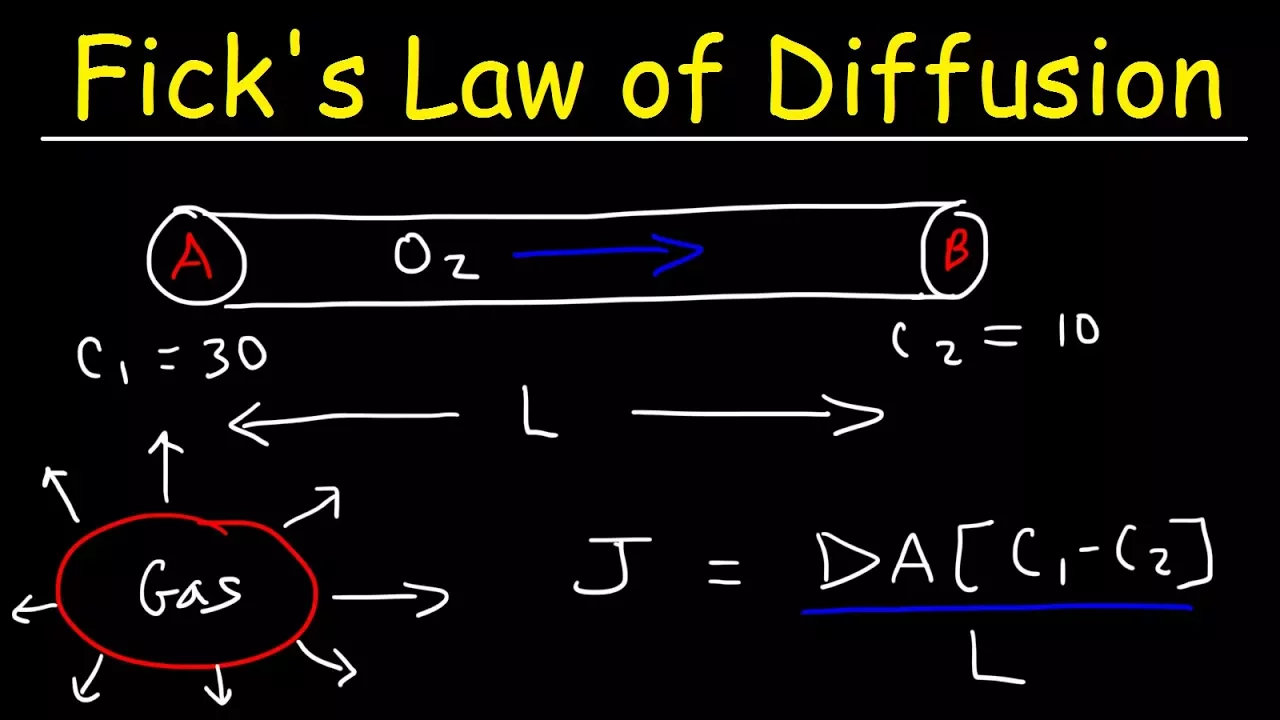
So if you remember the last lecture we discussed mass transfer theories particularly this molecular diffusion and film theory. So molecular diffusion the driving force is concentration gradient and for film theory the driving force is difference in the concentration and what are the application of mass transfer in biorocessing particularly in the aerobic fermentation it required oxygen and oxygen is coming in the gaseous form and it Should the gas are formed in form of bubbles and from bubble it should go to the cells.
Next is in the immobilized enzyme reactors.
Once it is immobilized your substrate should diffuse in as well as your product should diffuse out.
In case of liquid liquid extraction, we have only discussed that this the solute must diffuse through a thin solvent film between two emissible liquids.
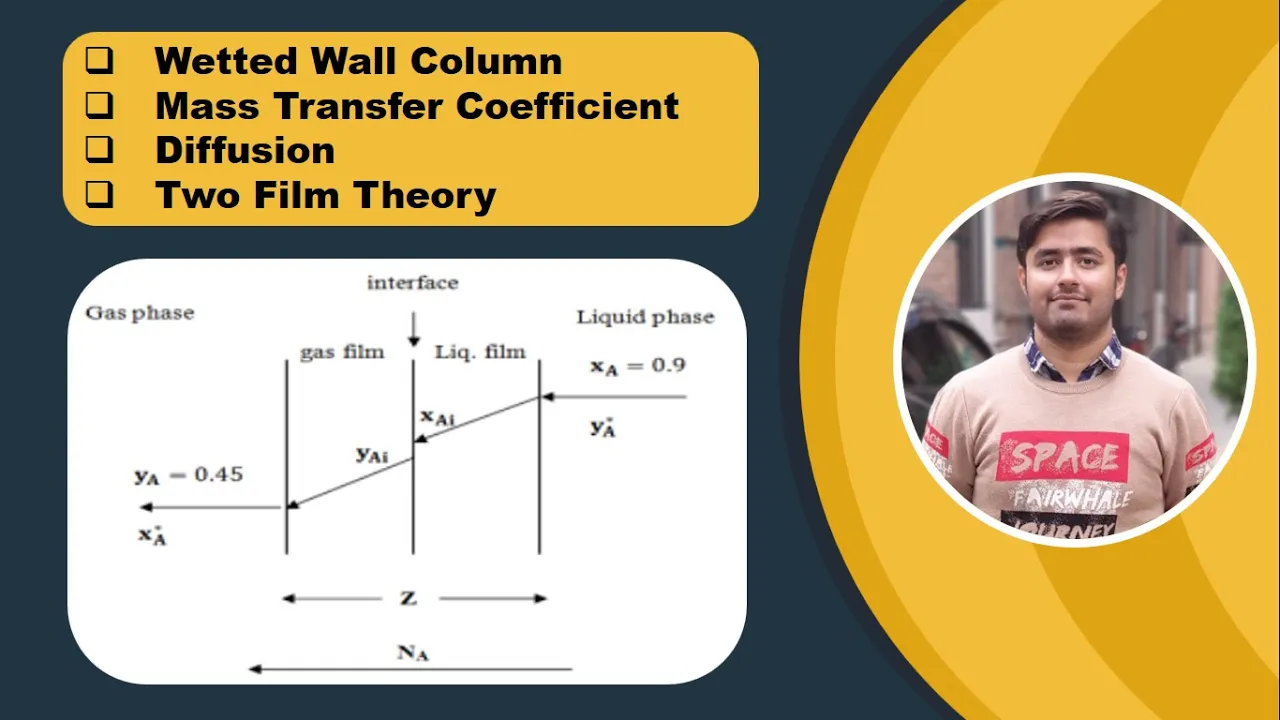
So if you remember when we discussed mass transfer across the phases then we discussed there is a interface and surrounding the interface there is a boundary layer. It can be either side or it can be both the sides.
Apart from there can be pelated shell culture then they also face this intraarticle diffusion or intrapallet diffusion.
So these are the broad application. So in that immobilized enzyme catalysis partly we have discussed in the applied enzyme catalysis module.
Here we are mostly going to discuss on this aerobic fermentation and our focus will be on the aeration as well as agitation or mixing. So today we are going to see what is erration then how oxygen transfer takes place from air to the cell and then what are the factor affecting the oxygen transfer.
The aeration as it the name suggest the process of introducing air to increase oxygen concentration in the liquid. It is going from gas phase to liquid phase.
Now it can be done by performing bubbling air through the liquid by sparging the liquid into air or agitating the liquid to increase the surface absorption.
So mostly we are going we will be focusing on aating the bubble that is mostly comes under the aeration and this agitating the liquid comes under mixing.
So this is the gas liquid mass transfer in the bioreactor.
So as we are saying this is a mass transfer.
So this should be transfer of nutrients from ecosphace into microbial phase.
And what other transfer is required?
There is should be requirement of oxygen transfer as well particularly in the aerobic fermentation. And this process is more complex because of the poor solubility of oxygen in the liquid medium while the nutrients are is much more soluble in the liquid medium.
Typically spurges are used for the oxygen transfer.
Now when we are saying oxygen mass transfer means there should be two terms. One is oxygen transfer rate that is called OR.
Oxygen transfer rate the rate at which oxygen is delivered into the biological system. And second is oxygen optic rate. O U R the rate at which oxygen is utilized by the biological system or microorganisms.
In addition, there is one more term we'll be discussing critical oxygen demand. The rate at which it is utilized by microorganism. So this is linked with oxygen uptake rate or oxygen utilization rate that we'll be discussing in the next slides.
So typically this oxygen transfer rate at a steady state it should be equals to the oxygen uptake rate and when this utilization rate is high it means the anorobic conditions prevails in a bioreactor and what then what is the typical flow rate of air it's huge in huge quantity it's about 0.5 to 1 VBm volume of air per unit volume of reactor per minute. So it require huge quantum of air supply.
So aerobic fermentation the primary method for production of most of the metabolites and the challenge here is the poor solubility of oxygen.
Typically if you just see the solubility of oxygen in the pure water is 8 mg per liter. While at the same time if you just see solubility of sucro is 600 g per liter.
Further there are environmental factor the sol like increasing the temperature or concentration of other solute further causes decrease in the oxygen solubility.
So we'll see this solubility of oxygen follows the henry.
We'll quickly have a look at what is hendila.
So what it highlights that the supply of oxygen is rate limiting state particularly in aerobic fermentation.
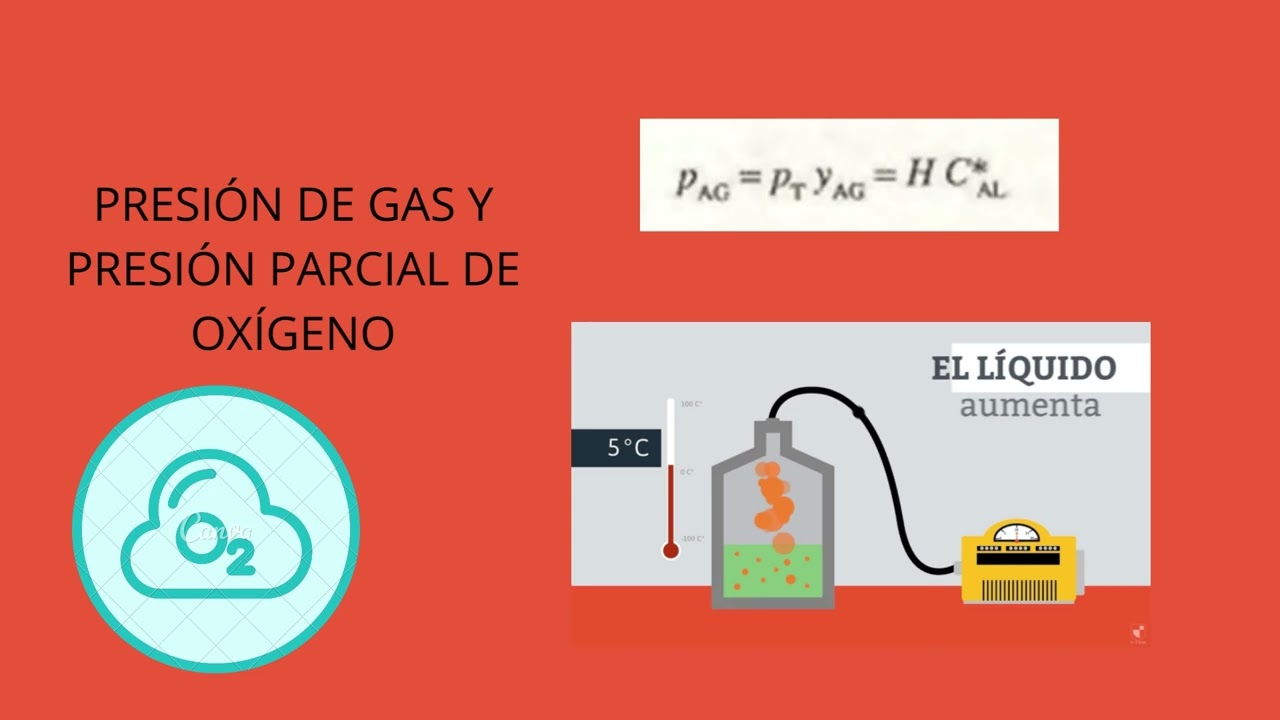
Now Henry law as I was discussing it says solubility of oxygen is directly related to the partial pressure. So it says solubility related to partial pressure divided by Henry constant and partial pressure is defined as total pressure into mole fraction upon h.
This is partial pressure. Henry is constant.
This is a mole fraction and PT is total pressure.
So now when we are supplying oxygen from the air what is the mole fraction in the air is 0 21 that's why when you are doing erration of course only 21% is the air and accordingly the solubility varies.
So let's say if you are supplying the oxygen through air and the solubility is 9 mg per liter and when you supply the pure air what will be the solubility?
So let's say C star is given as 9 mg per liter.
This is equals to total pressure assume one atmosphere we assume pts on atmosphere constant value. So it is 1 into y a 0.21 divided by henry constant h.
So from here we can get the value of henry constant as 0.21 and 21 divided by 9.
Now if I want to calculate the con solubility when I'm supplying the pure oxygen, pure oxygen means mole fraction is 1. So C star will be total pressure 1 into 1 divided by Henry constant. Henry constant is 0.21 21 divided by 9. So this will be coming out to be 43 mg per liter. So if uh one can supply pure oxygen, the solubility of oxygen can be enhanced. But again the challenge is the availability of pure oxygen on installing a separate plant to separate pure oxygen from the air.
Now when we are talking of the mass transfer first we'll see the oxygen transfer rate otr part.
So oxygen transfer rate per unit volume is defined as KA C* minus C. Cl is saturation or equilibrium concentration.
C is actual oxygen concentration in the broth or media. A is the interfacial area and C A L* minus C L is the driving force or difference in the concentration.
So we have already discussed this oxygen solubility is very less so close to 8 ppm and typically air sparging is done to maintain the oxygen supply. Now if you want to increase the oxygen transfer rate if you just see this expression first is we have to increase the KL either you can increase the KL you can increase the A or you can increase the CL star to increase the value of N. Right?
So what is objective here to optimize for efficient gas liquid mass transfer due to this low solubility of oxygen small driving force the difference is small and uptake rate is very high that we'll be discussing the specific oxygen uptake rate by microorganisms in the next slide. Further it is important that depending on the particular species that this is a microbial cell in microbial cell which type of micro this whether this is animal cell or plant cell the oxygen demand varies. Now whether it is in growth phase or stationary phase further because this oxygen is also utilized in the stometry reaction or you can say carbon metabolism. So what is the carbon source that also utilizes the oxygen requirement.
So oxygen uptake if you want to see how oxygen uptake varies that is increase in the cell concentration x and change in the specific oxygen uptake rate. So oxygen optic rate is defined Q is Q into X. This is the oxygen uptake rate. So if I want to increase the oxygen optic rate by if there is more more biomass or this is the characteristic of a particular microorganisms specific oxygen optic rate. So here you just see specific oxygen optic rate Q not and with the concentration how it varies. So with increase in the dissolve oxygen concentration it increases and reaches to plateau. They just see a concentration point that is called CRI at which the Q not is independent of dissolve concentration or it reaches to saturation value. So what it says critical oxygen concentration it is needed to avoid oxygen limitation and the typical value is 5 to 10% of air saturation and further critical also varies for different organisms.
Effect of dissolve oxygen as you see the x-axis is the effect of dissolve oxygen.
So if C is greater than C critical you'll see the Q not is constant and if it is less than C critical typically it is a linear here you can just see the linear profile further as I discussed in the last slide this is the effect of carbon source for example oxygen demand is higher with glucose than lactose and sucro.
So this depends on the degree of reduction as I have discussed earlier.
So depending on the degree of reduction there is a requirement of oxygen. If you remember in the stychometry based by balancing the degree of reduction we are we are able to calculate the oxygen requirement.
For example, if you are growing penicelline on glucose, the Q not value is 12 m per liter into hour. But if I'm growing on sucrose or lactose, it value is almost half 5.5 to 6.1 m per liter per hour.
So in addition as I told it varies by organisms. In fact this microbial cell have more oxygen requirement as compared to plant and animal cells. So this part we need to remember that typically Cal concentration of dissolve oxygen should be greater than C critical to ensure optimal metabolism.
So this is the table you can see these are list of various microbes and what is their Q not value and and oxygen uptake rate.
So Q not value is given in the mill mole per gram and also mill per unit cell and typical value of if you just see the capital Q not is in the range of starting with the five it is going up to 40 for the sacroiscy producing ethanol.
But if you just see the Q not value for the plant and animal, it is much much lesser than that of microbial cells. Now let's go ahead with the transfer of oxygen from the gas bubble to the cell.
So this is the gas bubble. So you can see from here gas bubble and the cell we have divided into eight different steps. 1 2 8 1 2 3 4 5 6 7 8.
What is the first step? The transfer from interior of bubble to the gas liquid interface.
Then second is movement across this interface. It is crossing this interface.
Third that is the most important at the interface there is a boundary layer or the liquid film.
Then it has to diffuse through the stagnant liquid film surrounding the bubble.
Then now from gas it has come to liquid.
So it has to transport through the bulk liquid. Then fifth is again sale and there is again a boundary layer or the liquid film. So it has to diffuse through the stagnant liquid film. Then it has to cross this interface. Six is the moment through the cell interface.
Then seven is the if cell or the flock clumps a solid particle then it will diffuse inside and finally it will transport to the cytoplasm to the site of reaction where oxygen is required.
So you just see oxygen transfer phenomena for all eight steps. So for the first step gas phase transfer inside the bubble it is a first process gas phase crossing the gas liquid interface it is also offering the negligible resistance and the third one is through this liquid film it offers measure resistance or typically the rate limiting step here then bulk liquid of transport usually offers a small resistance liquid. Fifth step from the liquid to the cell surface. Negligible across the membrane again negligible resistance and intraarticle diffusion. If there is a pellet or clump it is significant as we have discussed earlier in the case of intraarticle diffusion but many times the microbial cells are suspended cells and not in the immobilized or in the platform and then intraarticle diffusion to the reaction side this is transport in the cytoplasm it offers the negligible resistance. So majorly we focus on step three that is diffusion through relatively stagnant liquid film surrounding the bubble or you can say it is a gas liquid interface. So we know the equation for the gas liquid interface as we have discussed in the mass transfer theory particularly this conveictive mass transfer to film theory. So it says rate of transfer is equals to KL A C L* minus CL and that should be equals to the rate of oxygen utilization Q into X.
Now how we can increase the rate of transfer as I discussed briefly also you increase the KA this can be done by increasing the agitation. So this part how Cal is related with uh agitation that part we'll be discussing in the next lecture where we'll be discussing the power requirement in the agitation increase C increase Q not or increase in the CL star increase in the oxygen demand Q not or decrease in the CL. If you can decrease in the CL then also it if you decrease CL then this driving force increases.
It's very straightforward. You can see K should increase CL star should increase Q not should increase at the same time C to be decreased to increase the rate of oxygen transfer. Now following this last expression this set KA C* - C L= Q into X. So from here we can find the maximum shell density which will be supported by the given value of CL star.
So it can be done if you assume CL to be zero. So what will be the maximum transfer rate KA A into C* and this divide by Q not then X is replaced as X max.
Further we can also calculate what will be the KA critical.
So if as you know this uh critical we discussed here critical is on the x-axis and this is related with the C. So if you replace C with C critical then we can calculate what will be the critical value of KA. It says KL A into C L* minus C A L critical Q not into X.
From here we can find the value of KA critical. So it becomes K a critical q x divided by cl star minus c critical and typically this is the critical value of c is about 5 to 10% of the air saturation.
So we'll discuss uh couple of examples here. The first is uh a strain of EOT vector is being cultured in a 15 m cube state fermenttor for production of algenate.
The volutric mass transfer coefficient KLA under current operating condition is 0.17.
So, KA is given KL A as 0.17 second inverse. The solubility of oxygen is fermented broth is 8 into 10 ^ -3 kg per me cube. Now for part A says if a specific oxygen uptake rate is 12.5 m mole oxygen per gram of cell per hour then calculate the maximum cell concentration.
So for part a what you have to calculate is the x max cal star is given as 8 into 10 ^ minus 3 8 ppm pg per me cube and Q is given as 12.5 m per g per hour. The x max if you remember the formula it says k a c l star divided by q not. Now for part it says after the start of culture copper sulfate is accidentally added to the fermentation broth which is inhibiting the bacteria growth. inhibiting the bacteria growth means it is reducing the oxygen optic rate. So now it has become only three mill oxygen per g per hour. Then what will be the new maximum cell concentration that can now be supported with the same oxygen transfer. So first we'll solve the part A then part B only this Q not will be replaced by 3 mm mole oxygen per g per hour. The KA is 0.17 CL star is 8 into 10 ^ - 3 kg per me cube and this X max this is the we have to calculate so one option is we whatever solubility is given in the kg per me cube that we can convert into mole per me cube so divide by its molecular weight and kg multiply by,000 it become in the gram. So now it becomes.25 mole per me cube.
Similarly this Q not was in the mill mole per g per hour we can calculate many mole per g into per second. So we divide by this we have to convert into mole mill mole to mole divide by th00and and hour to second 3600.
So it becomes 3.5 into 10 ^ - 6 mole per g into second.
Then we can put this value here and get the value of x mark x max as 12 g per liter. So we're getting the biomass concentration as 12 g per liter. Now typically if we just see this it was 12 now it has decreased to three means close to four times decline in the Q not specific oxygen uptake rate. So we can repeat the same thing here. This specific oxygen uptake rate was three.
We can again convert into mole per g into second. Now it becomes 8.33 10 ^ - 7 mole per g into second. And if you put the value here x max as ka glar is divided by q not now we are getting 51 g per liter. So this was close to 12.
it's become more than four times higher.
So it says depending on the oxygen uptake rate we can tune the cell mass density or biomass concentration inside a bioreactor.
In the next subsequent slides we'll be discussing now the factors affecting the oxygen transfer in bioreactors.
So when you are supplying the oxygen typically done through the bubble and the how the bubbles are created through the spurgging steering and depending on the media property. So when you are sparging there should be first bubble formation then gas dispersion.
Many times we see these two bubbles are combining together. So bubble coalitions then it also depends transport also depends on the what is the viscosity of media what is this eststerary speed and gas flow rate further many times if you are seeing the aerobic fermentation there may be foaming so you may need to use antifoam agent that also affect the oxygen transfer rate for the temperature because with the temperature the solubility decreases.
In fact, this gas pressure and this oxygen partial pressure we have already discussed with the Henry law that how the solubility is affected by both mole fraction as well as the total pressure and in addition the presence of cells and other macro molecules because the cells have the specific requirement because as we have seen in the table the Q not vary for different cell types.
So first if you're talking of the gas bubble if there is a small size of bubble it increases the interfacial area. So if there is more area means there should be a more increase in the m transfer rate. The typical size of bubble is about 2 to 3 mm it forms a rigid surface. But when bubble size is more than three it forms a mobile surface. And if the bubble size is further very small size to increase the further area it becomes problematic in the viscous broth or it becomes kind of a nuisance in the bioreactor.
So if you just see the typical bubble diameter recommended is 2 to 3 mm to balance both the surface area as well as the m transfer rate.
Next term comes the gas holdup. Gas hold up is defined as VG volume of gas bubble in the reactor divided by volume of liquid in the reactor plus volume of gas in the reactor. And interestingly this interfacial area is related with gas hold up divided by average bubble diameter D B. So you just see the average bubble diameter is inversely affecting the interfacial area and it is also affecting the and this interfacial area is directly affected by the gas holdup and typical value of gas holdup in steel fermentation is about 0.1 to two. This is a typical value of the gas hold up. Further in when bubble formation is done the next is the sparging and steering.
So there can be different type of sparger porous orfish and nel and this affects the particularly the bubble shape and bubble size. Further if if mixing is done then there is impellar which causes the dispersion of bubbles. Here one thing we is important to understand that if gas flow rate is higher than the impellar dispersion capacity then we say there is a gas flooding means gas will go out of the bioreactor without getting dispersed inside the media.
Further the sparger location is critical because there should not be the dead zone or dead pocket in the bioreactor.
So you can see there is a bubble formation gas dispersion.
In addition there will be bubble collisions.
Viscosity is affect it causes the resistance to flow and what is the exterior speed and gas flow rate.
So this part the bubble formation you can have different type of spger porous spger of perforated pipe or esper nozzle spger.
So basically it controls the bubble size.
So different is spurger requirement that we'll be further discussing in in the subsequent lecture where we'll be discussing about the agitation requirement.
Agitation speed and gas flow rate. So typically if we just see this KA increases with ster speed and gas flow rate. For example, if I double the steer speed, there should be about five times increase in the K for the Newtonian fluid.
And if I doubling the gas flow rate, there's only 20% increase in the K value.
Further, the high gas flow rate, there is a risk of impellar flooding as I discussed in the last lecture.
And if there is excessive guessing, it can also cause the liquid blow out from the bioreactor.
However, in the case of non-newtonian fluid, the KA dependence on the sperior speed is a weaker and effect of gas velocity is similar to the Newtonian flow. So now when we are discussing the exterior speed and gas flow rate it depends on the fluid characteristics whether your media is behaving like a Newtonian as well as non-newtonian fluid.
Next we discuss is the antifformation agent. Many times particularly in the aerobic fermentation there is a formation of foam and that foam particularly it can go out of the bioreactor causing the loss of media loss of product. In addition it can have this contaminated risk outlet blockage loss of volume poor cell condition and cell damage. So for this we keep 20 to 30% heady space in the vessel to account for foam and gas hold up. Now typically we use silicon based chemical antifoam agent and they reduce the K value. So how basically it works it causes reduction in the surface tension. You just see if you increase the antifform concentration there's a decrease in the surface tension value and parally if you just see there is also decline in the KA value.
So apart from chemical antifform there are other options one can use mechanical foam breaker they are preferred to preserve the liquid property. So particularly they are high dis speed disc or centrifugal foam destroyer. So what they do with the force as soon as foam are formed they break the foam or they remove the foam. However it has a limited capacity high power demand to operate this mechanical foam breaker and if there is a heavy foaming they are less effective.
So most of the time this chemical antifforms are used in commercial bioreactor operations and this is the effect we have discussed and it adversely affect the KA value and how it works. It works by minimizing the surface tension value.
Next factor we have discussed is the temperature. So as we know if you increase the temperature the solubility decreases.
So if you increase the temperature the solubility decreases and if solubility is decreasing then delta C is also decreasing. It is a driving force.
Further this if you just see if temperature range is 10 to 40° centigrade K increase out solubility loss but as the temperature increases more beyond 40° the oxygen solubility drops sharply and there is a net decrease in the oxygen transfer rate that any typical bioreactor operation happens in the this range 10 to 40° centigrade. So the balance point is the optimum temperature maximize it should maximize the oxygen transfer without harming the microorganisms and when you are talking this temperature we can also discuss the gas pressure and oxygen partial pressure. So we have already discussed this Henry's law. It says this solubility is proportional to the partial pressure divided by the Henry constant and partial pressure is a function of total pressure into mole fraction.
And this also we have discussed. If solubility of oxygen from the air is 9 ppm then it will increase to 43 ppm if you are supplying the pure oxygen. This is in the air and this is in the pure oxygen.
Next we'll be discussing the presence of other cells and different metabolites.
So one option is the cell presence affect the oxygen transfer particularly through different organism morphology and the cell concentration because oxygen uptake rate is directly proportional to the cell concentration.
And if there is a complex morphology particularly for this fungus or mold growth they hinder with the bubble breakup and in addition when we are talking this interfacial blanketing the cells protein and other molecule they can attach at the or they can absorb at the g gas liquid interface.
So macroolelecule or smart particle on the bubble it reduces the interface mobility and lower the care value.
Further they may also reduce the collision in that case it can have a small positive impact. Effect of interfacial blanketing is a system specific and varies with broth composition and typically during the batch fermentation changing concentration of the sale substrate and product alter the viscosity and collision behavior. Thus it ka varies with time as this fermentation progresses.
So you just see the variation of ka in a 300 liter fermentation using estptomises species. So as the fermentation progresses the the Ka value also decreases because of the change in the substrate concentration, change in the sale concentration, change in the product, change in viscosity and collision behavior. So with this I will stop here. So, so today we have discussed aerration particularly it is a part of gas liquid moist transfer. So we discussed this what is oxygen transfer rate and what is oxygen uptake rate and importantly we discuss what is the critical oxygen demand and followed by that we discuss what are different key factors which affect the oxygen transfer. Thank you. Thank you so much.
[Music]
Up Next

Advanced Control Strategies for Sustainable Microalgae Bioprocesses
@BiocontrolSeminars
148 views•2024-11-27
Ultrasonic Transducers: Resonant Frequency Measurement and Horn Design
@imajeenyus42
229.9K views•2017-02-22
Polymer Environmental Degradation: Mechanisms & Stabilization
@iit
1.8K views•2012-07-10

How a Student's Question Saved a NYC Skyscraper from Collapse
@veritasium
22.8M views•2025-04-26
Related Study Plans & Knowledge Roadmaps
Structured learning paths in Engineering