





















![How We Became the Loneliest Generation [Documentary]](https://i.ytimg.com/vi/I19btmIBhx0/maxresdefault.jpg)

A Third Place is a public space distinct from home and work where people can socialize, relax, and build community connections, such as pubs, cafes, libraries, and community centers; however, car-dependent suburban development and restrictive zoning laws have nearly eliminated these essential community spaces in North America, leading to weaker social ties, reduced neighborly trust, and diminished community resilience, as evidenced by surveys showing only 56% of Americans now have regular community gathering spots compared to 65% in 2019.
The Decline of Third Places in Suburban Environments
Added:The sociological concept of 'Third Places' (coined by Ray Oldenburg) as spaces distinct from home (first place) and work (second place).
The history of post-WWII suburban sprawl and the systemic shift toward car-centric infrastructure in urban planning.
Basic principles of urban zoning laws, specifically the historical separation of residential and commercial areas (Euclidean zoning).
The definition of 'social capital' and how the physical built environment influences community trust and social interaction.
The design principles of 'New Urbanism' and 'Smart Growth' as modern movements to counteract suburban sprawl.
Policy and zoning reform strategies, such as mixed-use zoning, aimed at legalizing commercial third places in residential neighborhoods.
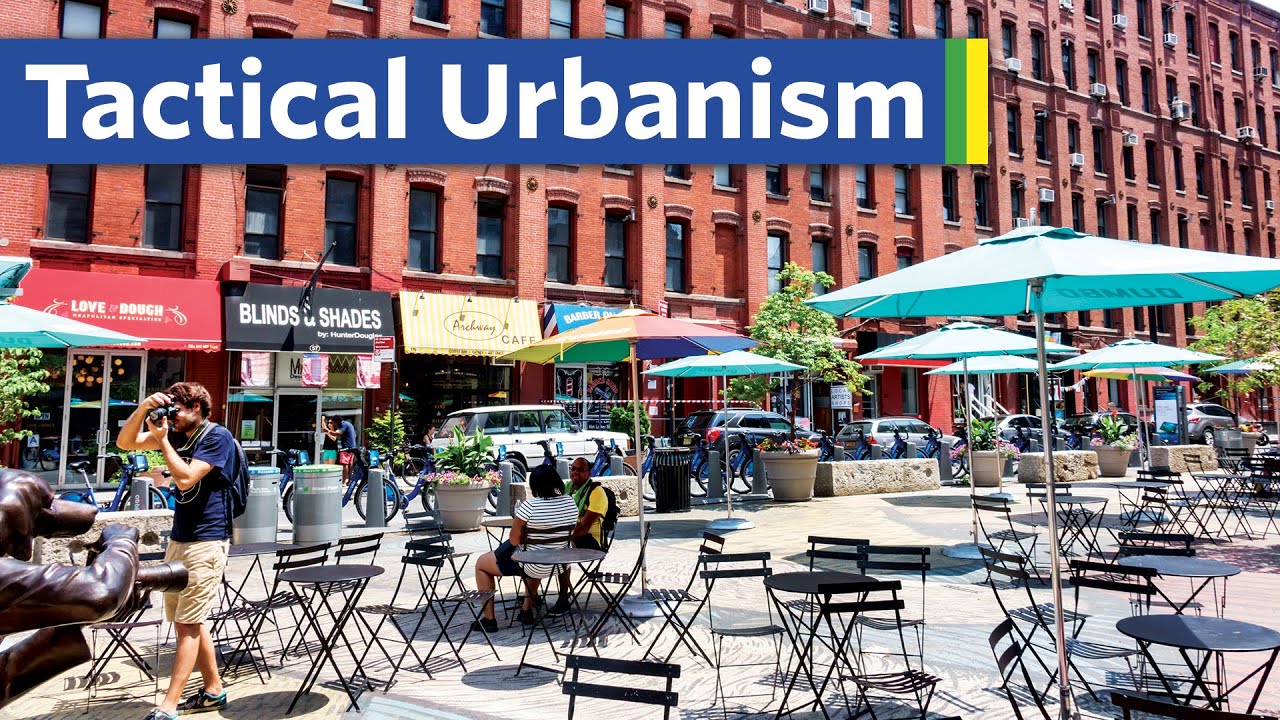
Tactical urbanism and community-led placemaking initiatives to reclaim public spaces for pedestrians and local communities.
The psychological and public health impacts of suburban isolation, specifically looking at the rise of the loneliness epidemic.
1.1M views49.5Klikes11:26Original Release: 2022-11-21
The pub.
The cafe.
The town square.
All of these things have something in common: They’re not home.
They’re not work.
They’re something else.
They're enjoyable public places where you can meet friends, socialize, or maybe just people watch, as long as you’re not being weird about it.
But these places are becoming more and more scarce.
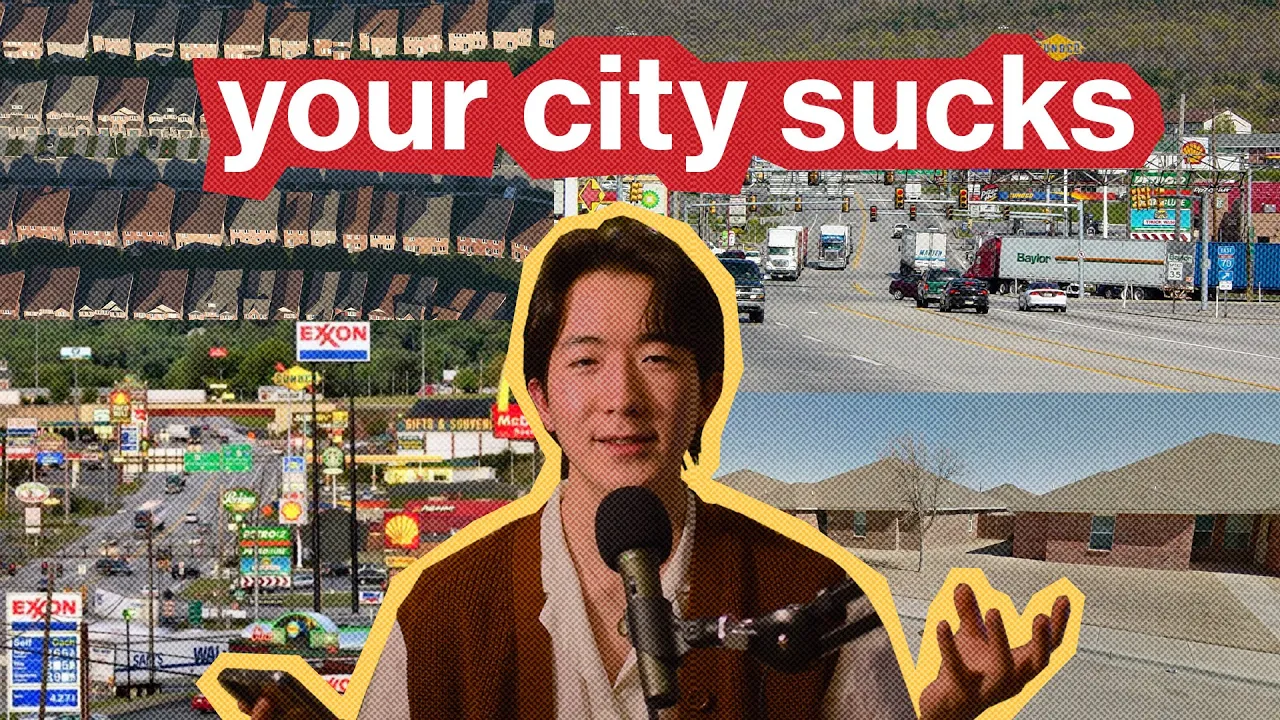
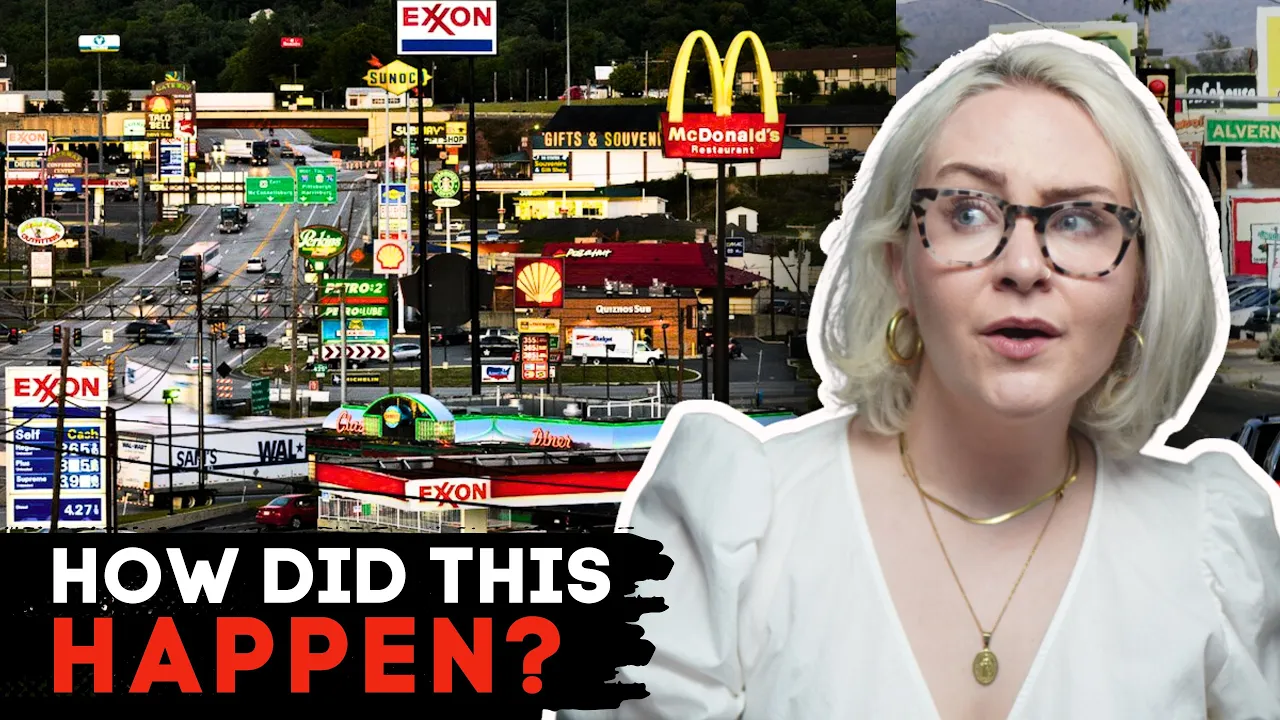
And in car-dependent suburbia, they've been erased almost completely... and that's a problem.
The Third Place is a free or relatively low-cost spot to hang out and talk.
Some classic examples of Third Places are French cafes Japanese bath houses libraries churches and community centres.
When we lived in Riverdale, in Toronto, Rooster Coffee was a very popular Third Place for the people who lived nearby.
The classic Third Place in the UK is the local pub, which most people just call their “local,” and I’ve had a “local” in most places I’ve lived.
Now, I’m not going to talk about my current local, because I don’t need you Internet weirdos showing up there every night, but this was our local, when we lived in central London.
Real London, not Fake London.
This place was a pretty typical British local.
A pub in the middle of a residential area, within easy walking distance of dozens of houses.
After going there for a while, we started to recognize some of the regulars, and there were even toys and a box of LEGO for the kids.
And since our flat was ridiculously small, because it’s all we could afford in central London, it was nice to have a different place to relax, and chat with the neighbours.
So we were gutted when the pub closed down and was turned into housing.
Which kinda sucked for us, but it could’ve been worse.
It could’ve turned into a Wetherspoons.
Yuck.
When you live in a city, you may opt for a smaller house or apartment, in order to live where you want.
After all, they say the three most important things in real estate are location, location, and … I forget the third one but it’s really important too.
Anyway, choosing a place to live that has everything you need nearby, accessible without driving, is one of the biggest benefits of living in a walkable city.
And one of the reasons that a smaller apartment is a viable option in a place like this, is because there are plenty of opportunities for leisure outside of the home.
This is where the Third Place comes in.
It’s a place where you can just be somewhere else, to relax, or chat with a friend, but it’s so much better than sitting in your suburban holding pen, I mean, backyard, because you can spontaneously meet up with other people, or get to know your neighbours.
If you’re my age, or if you just have good taste, you might remember a show called Cheers.
While the hairstyles haven’t held up, the show itself has, and it’s actually a really good depiction of a Third Place.
It’s a cheap bar with regulars from all walks of life, where people who might not ordinarily talk to one another can form relationships.
It’s a place where an erudite, blowhard psychiatrist like Frasier will hang out with a small-town country boy like Woody.
These guys have nothing in common, except their Third Place.
Third Places aren’t valuable just because it’s fun to hang out and chat (which, of course, it is).
But Third Places fulfil other vital social functions, too.
They create social cohesion by bringing groups of people together that wouldn’t ordinarily mix, which also improves the local economy.
For example, a mechanic could meet a financial advisor and exchange each other’s services.
Sociologists often talk about relationships that they call “weak ties,” or what us normies call “the people you kinda know.” One thing these researchers consistently find is that many people get jobs through their “weak ties.” It makes sense when you think about it.
I’ve heard about lots of job opportunities through acquaintances, but when I’m just hanging out at home with my kids, nobody pops in to discuss my career objectives.
Third Places also build neighbourhood unity and trust.
According to the American Community Life Survey, 81 percent of Americans who hang out with people they recognize in a Third Place say they trust their neighbours.
Only 66 percent of people with no Third Place trust theirs.
So a Third Place can make neighbours less suspicious of one another … kinda the polar opposite of the Nextdoor app.
Third Places are also the first spots that new residents in a city might make friends and social connections, and they’re essential points of connection for aging adults who lack social opportunities after retirement.
Another unexpected benefit of Third Places is their utility in an emergency.
As community hubs, they’re often the first places that can help after a disaster.
Baltimore and Minneapolis are two North American cities creating “resilience hubs” in trusted Third Places like civic centers and churches.
After a flood or fire, community members can access informal assistance at a familiar location faster than they’d be able to wait for national aid.
In much of North America, however, easily-accessible Third Places have almost completely disappeared.
One reason is that zoning makes it nearly impossible to build anything other than single family housing in huge swaths of the United States and Canada.
It’s hard to visit your neighbourhood pub when your neighbourhood isn’t allowed to build a pub.
Finding a Third Place is even harder if you live in a city with strict loitering laws.
Loitering is defined differently in different places, but the most broad definition is “lingering in a public place, for an extended amount of time, with no apparent reason.” In other words, hanging out.
Exactly the kind of thing you’d want to do outside of home, work, or school.
When I was a teenager, we’d get kicked out of public parks, so we literally just walked around suburban neighbourhoods, and competed to see how many “keep off, pesticide use” signs we could steal.
Yeah, I’m serious.
That’s literally what I did for several years of my life.
My Third Place was suburban grass lawns, recently sprayed with pesticides.
Lacking public spaces, many suburbanites try to recreate a Third Place, but in their own private fiefdom.
You might have neighbourhood barbecues in your backyard, join a private social club, or, god forbid, Build yourself a “man cave”.
And the kids will play on their own in your own backyard, instead of playing with other kids in your local park.
But all of these lack the important characteristics of a true Third Place.
You’re unlikely to run into anyone you don’t know, and you’re almost certainly not going to meet anyone who isn’t demographically similar to you.
Most suburban neighbourhoods in North America are built with all houses at about the same price point.
This means that all of the people you’d meet in your homemade hang zone are probably the same socioeconomic status that you are.
And one of the benefits of a Third Place is meeting people who AREN’T exactly like you.
And private re-creations of public places remove all spontaneity anyway.
There’s nothing wrong with planning to have friends over, but if it’s your only option for socializing, then you miss out on the chance encounters and “bumping into familiar faces”, like you’d get from your local.
Maybe you can drive to your favorite bar, but if you have to drive there, you’re probably not meeting people who live near you.
And a place where you go out with friends and never talk to anybody else, is very different from the neighbourhood pub where you run into the same people on a regular basis.
Plus, if you have to drive there, you can’t hang out all night getting absolutely sloshed.
Or at least, you shouldn’t.
North America has a lot of problems with drunk driving due to its insane zoning laws, but that’s a topic for a future video.
Of course the most famous suburban attempt at recreating a Third Place in suburbia is the shopping mall.
Whether you’re a teenager who can’t go anywhere without a driver’s license, or a senior who wants to go for a walk but your suburb has no safe sidewalks, the mall is the suburban alternative to the town square.
But we can’t rely on malls as Third Places either.
For one thing, a lot of malls are shutting down – up to a quarter of them will be gone soon, according to some estimates.
And their replacement, the Big Box store, is even worse.
But more importantly, malls don’t do what a Third Place does.
They are designed to be attractions that draw people from all over, not just from your local community, and therefore, they don’t build any kind of social cohesion.
You’re unlikely to recognize familiar faces at the mall unless you work there, and you’re really unlikely to strike up a conversation with any of them, unless you’re one of those pushy kiosk guys.
Some cities are trying to recreate Third Places themselves.
In Washington DC, office workers can reserve tables and chairs in certain public parks to work and socialize.
But again, this eliminates the spontaneity that is inherent to a Third Place.
You can’t just pop by and see the regulars.
It’s a whole thing that you have to plan.
Also, reserving a public table to do even more work on your laptop is kinda defeating the purpose of a place outside of work.
However, one interesting Third Place that’s still hanging on in many places in the US is the local barber shop.
This is common in many middle eastern cultures, but also in black and hispanic neighbourhoods in the US as well.
The barber shop can function as Third Places, where men can hang out and chat, even if they’re not there for a haircut.
Of course there are still historical walkable neighbourhoods in North America where Third Places are more accessible, but unfortunately, their numbers have been declining since the 2008 recession.
And the lockdowns during the pandemic accelerated this trend.
According to the same American Community Life Survey, in 2021, just 56 percent of Americans report having a “spot in their communities they go to regularly”.
That was nine percent lower than in 2019.
Unsurprisingly, the same survey showed that Americans who do have a local spot generally live in denser, walkable urban areas.
Not suburbia.
Ultimately, US and Canadian cities will never really have great Third Places as long as zoning stays broken.
As of right now, Third Places don’t exist in most new neighbourhoods in America, mostly because they can’t.
And trying to recreate their benefits in a world that is specifically designed to exclude them is always going to fail.
The concept of the Third Place can seem a bit nebulous at times, and it’s easy for people to dismiss it.
I’ve heard suburbanites say, “I’d much rather hang out in my basement with my friends than go out somewhere,” which may be true, but really I think that some of this sentiment comes from people who have never really had a good Third Place nearby before.
A place you can easily stop by whenever you want, without driving, and without taking a trip out of your neighbourhood.
Because once you try it, you don’t really want to live without it.
Ultimately, if a neighbourhood truly prioritizes Third Places, it’s going to be a better place to live in general, even when you’re not spending time in them.
A neighbourhood that plans for Third Places will necessarily be more walkable, more accessible, and a better place to live.
with the neighbours.
If you’d like to get your name in this lovely list of supporters, visit patreon.com/notjustbikes.
Up Next
14:29
Third Places Explained: Why Community Spaces Matter for Well-Being
@amandamaryanna
622K views•2024-02-13
54:57
Contemporary Sociological Theory: Micro, Macro, Integrative
@NaSESYNC
45.7K views•2016-02-17

19:23
How to Analyze Conversations Scientifically | Elizabeth Stokoe | TEDx
@TEDx
1M views•2014-12-04
9:41
What is Sociology? The Sociological Perspective Explained
@crashcourse
4.6M views•2017-03-13
Related Study Plans & Knowledge Roadmaps
Structured learning paths in Sociology
sociology
Celebrity Culture: From Hollywood to TikTok
01Foundations of Celebrity Sociology
02The Rise of Micro-Celebrity & Digital Platforms
03Parasocial Relationships & Algorithmic Intimacy
+ 2 more learning modules
12h5 modules
Explore Roadmap
sociology
Hostile Architecture: Space, Power & Control
01Introduction to the Sociology of Space
02Social Control and Surveillance in the City
03Hostile Architecture and Defensive Design
+ 2 more learning modules
12h5 modules
Explore Roadmap
sociology
Loneliness Epidemic: Third Places & Isolation
01Foundations of Social Capital and Community Cohesion
02The Death of Third Places and Urban Space Erosion
03The Privatization of Leisure and Atomization
+ 2 more learning modules
12h5 modules
Explore Roadmap
sociology
Sociology of Tourism: Gaze, Power & Heritage
01Foundations of the Sociology of Travel and Leisure
02John Urry and the 'Tourist Gaze'
03Staged Authenticity and Cultural Commodification
+ 2 more learning modules
14h5 modules
Explore Roadmap