






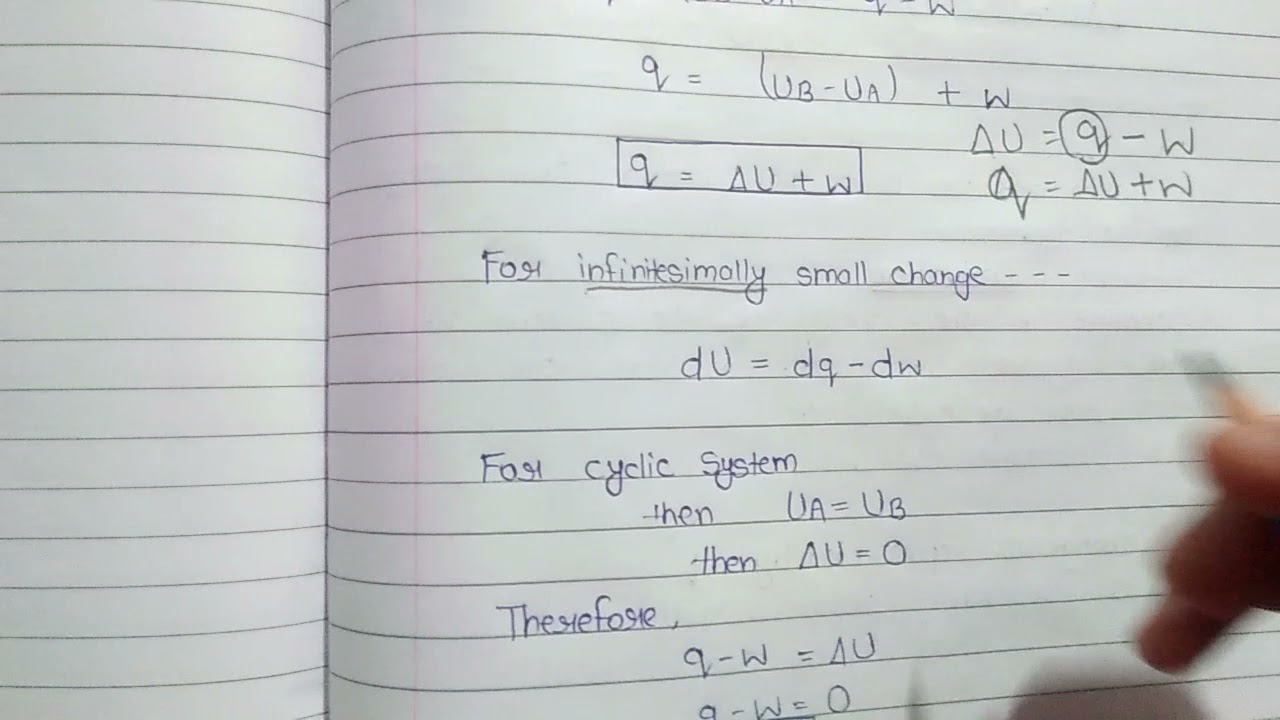
















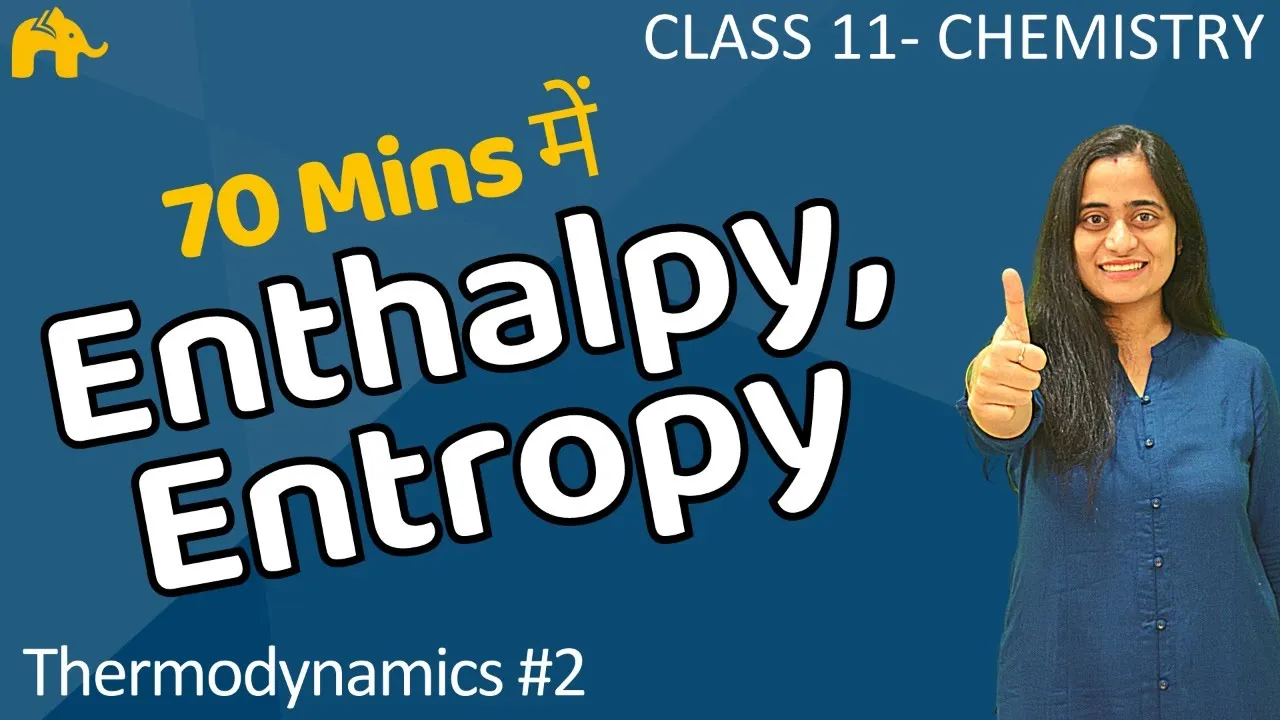


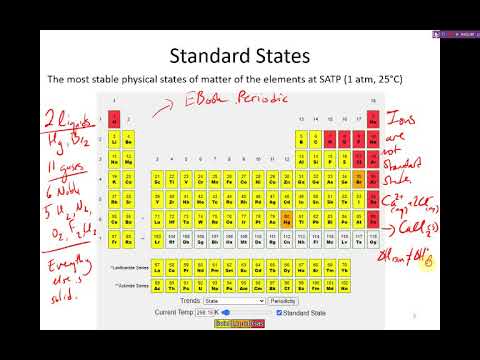


Enthalpy (H) is defined as the total heat content of a system, representing the sum of internal energy (U) and the product of pressure (P) and volume (V), expressed mathematically as ΔH = ΔU + PΔV. Unlike internal energy, which is the total energy of a system (kinetic plus potential energy), enthalpy specifically measures the heat absorbed or released during a process at constant pressure. Key properties include: enthalpy is a state function dependent only on initial and final states, not the path taken; absolute enthalpy values cannot be determined, only changes (ΔH) can be measured; and at constant pressure, the change in enthalpy equals the heat transferred (ΔH = q). For ideal gases undergoing isothermal processes, internal energy change is zero, making enthalpy change also zero. Enthalpy helps classify processes as endothermic (positive ΔH, heat absorbed) or exothermic (negative ΔH, heat released).
Enthalpy and Internal Energy Explained | Thermodynamics
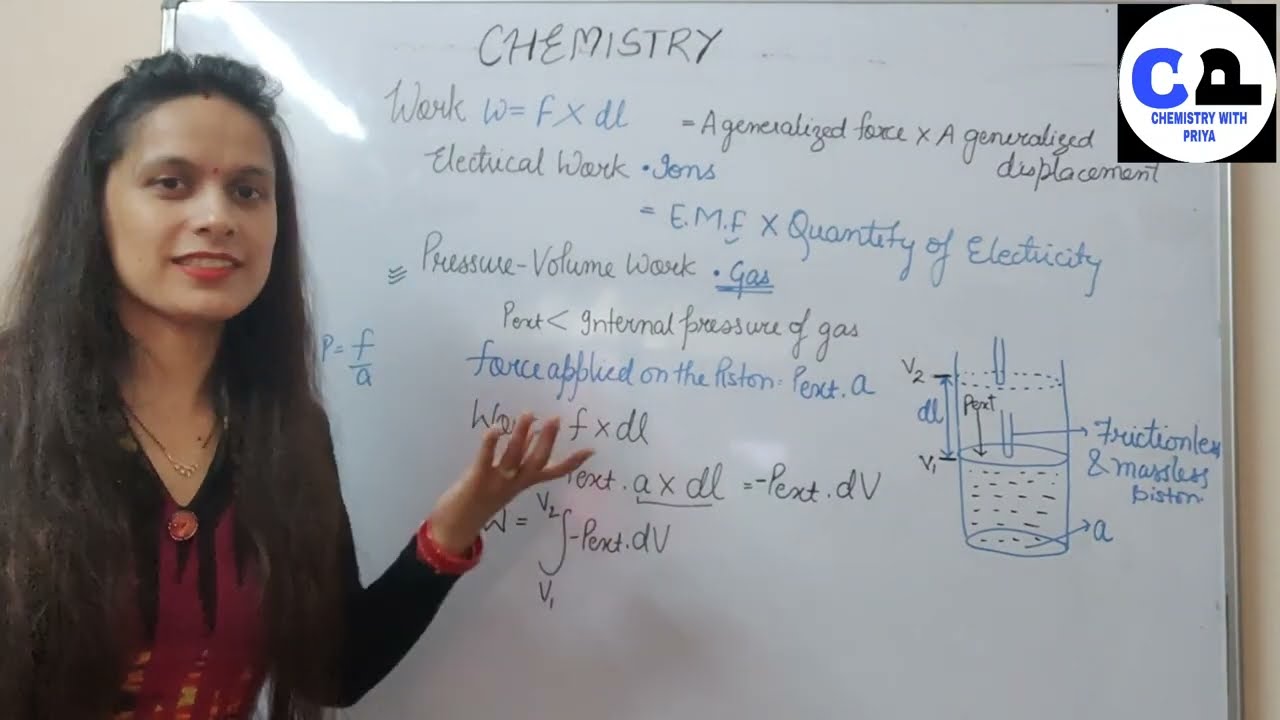
Added:enthalpy and thermodynamics well to learn the complete concept of enthalpy we must learn the concept of internal energy let's consider gas enclosed in this container we can see that the gas particles are constantly moving in all directions we already know that when particles are in motion they possess kinetic energy hence these case particles have kinetic energy secondly these gas particles interact with each other we know that when particles interact they possess potential energy hence these case particles also possess potential energy now let me ask you what is the total energy of these gas particles the answer is simple the total energy of these gas particles is kinetic energy plus potential energy now listen carefully this total energy of the gas particles is also known as internal energy I mean internal energy is the total energy of a system and it is equal to sum of kinetic energy and potential energy therefore we Define internal energy as the sum of all forms of energy of a substance is called internal energy let me repeat it the sum of all forms of energy of a substance is called internal energy just remember that internal energy is the sum of kinetic energy and potential energy now we will learn some important questions about internal energy can we find the absolute value of internal energy the answer is no we cannot find the absolute value of internal energy rather we can only find the change in internal energy like change in internal energy is equal to final value of internal energy minus initial value of internal energy secondly how can we change the internal energy of a system well we can change the value of terminal energy by two means either change kinetic energy of the system or change the potential energy of the system by these two ways we can change the value of internal energy for example consider gas enclosed in this container when we add some sort of heat to it as a result kinetic energy increases and internal energy of the system also increases thirdly what is the internal energy for ideal gas in isothermal process well in case of ideal gas remember that there is no interaction between particles hence potential energy for ideal gas particles is zero I write internal energy is equal to kinetic energy plus zero secondly an isothermal process temperature remains constant we know that at constant temperature kinetic energy is equal to zero I write internal energy is equal to 0 plus 0 I get internal energy is equal to zero just remember that for ideal gas in isothermal process internal energy is equal to zero hence noted down all these important points now what is enthalpy well consider the certain key because this is the poor animal who helps Humanity that's why I call it sir denki we know that certain key can only work for us if we give him some sort of food or energy this food or energy is the internal energy of cell denki using this internal energy this poor animal can do different work so there are two terms here internal energy and work done just remember that when there is internal energy it can do some sort of work let me repeat this important point when there is internal energy it can do some sort of work also remember that sir denki is the enthalpy which contains both internal energy and has the ability to do some sort of work now consider gas enclosed in this container let I add some sort of heat to it as a result the particle starts moving fastly and kinetic energy of the system increases we know that when kinetic energy increases internal energy of the system change I again some sort of more heat to this system this time the movable piston moves in upward direction we say that work is done on the system now listen carefully here heat content is doing to important jobs firstly it is changing the internal energy of the system when kinetic energy of particle increases secondly it is doing work on the system in contrast if we do not add heat to the system internal energy of the system will not increase and the burden on the system will be zero remember that this heat content is known as enthalpy let me repeat it this heat content is known as enthalpy this we say that enthalpy is changing the internal energy of the system plus it is doing some sort of work on the system let me repeat it enthalpy is changing the internal energy of the system plus it is doing some sort of work on the system are I write Del H is equal to Del U plus we know that Warden is equal to product of pressure and volume so enthalpy is equal to internal energy of the system plus the product of pressure and volume therefore we Define enthalpy as the amount of heat absorbed are released by the system to cause a change in the system is called enthalpy remember that if Del H is positive the process absorbs heat from the surrounding and it is said to be endothermic process if delh is negative the process releases heat to the surrounding and it is said to be exothermic process also remember that there are two ways to write enthalpy change at constant volume we write Del H is equal to Del U plus v into Del P while at constant pressure we write Del H is equal to Del P plus P into Del V we use this equation in most cases because atmospheric pressure is constant let's note it down all these important points now let me teach you some important points about enthalpy the first point is we cannot find the absolute value of enthalpy H rather we can only find the change in enthalpy Del h i mean we cannot find H but we can find Del h secondly enthalpy is a state function it only depends upon initial and final value it does not depend upon path that's why we write Del H is equal to HF minus h i e thirdly delh is always 0 and a cyclic process because the initial and final value is the same fourthly Delhi is extensive property I mean it depends upon the amount of substance the less is the amount the smaller is the tillage the greater is the amount the larger is the delayage hence noted down all these important points lastly let me teach you the relationship between enthalpy and first law of thermodynamics we have already learned that Del H is equal to Del U plus P Del V let this is equation number one now according to first law of thermodynamics Del U is equal to Q Plus w we know that word n is equal to minus P Del V here this negative sign means that work is done by the system I write Del U is equal to Q minus P Del V let this is equation number two no I plug in equation number two and equation number one I write Del H is equal to Q minus P Del V plus P Del V this and this term can sell out I get Del H is equal to Q thus we say that enthalpy delh is equal to amount of heat at constant pressure I put here P which means constant pressure just remember that Del H is equal to amount of heat at constant pressure finally let me teach you numerical problems of enthalpy change for example consider this numerical problem one mole of a non ideal gas undergoes a change of stats from this to this with a change in internal energy equals to 50 liter atmosphere find the change in enthalpy well I write the given data the change in internal energy is equal to 50 liter atmosphere the initial pressure is 3 atmosphere the initial volume is 5 liter on the other hand the final pressure is 6 atmosphere the final volume is 7 liter we are asked to find Del h we already know that Del H is equal to Del U plus Del P into V our delh is equal to Del U plus P2 V2 minus P1 V1 now I plug in all these values in this equation after calculation I get Del H is equal to 76 liter atmosphere does the enthalpy change is 76 liter atmosphere for this system I hope you learned all about enthalpy change
Up Next

Entropy and the Second Law of Thermodynamics Explained
@Mahesh_Shenoy
327.1K views•2024-11-14

21cm Hyperfine Transition in Neutral Hydrogen: Radio Astronomy Basics
@AaronRobertParsons
12.4K views•2011-10-13

NMR Spin Physics I: Zeeman Effect, Resonance Condition & Larmor Frequency
@nptel-indianinstituteofsci8064
2.3K views•2024-01-17

Entropy and the Second Law of Thermodynamics Explained
@veritasium
27.5M views•2023-07-01
Related Study Plans & Knowledge Roadmaps
Structured learning paths in Physics