







![[REPRISE] NOITE DA RECONSTRUÇÃO](https://i.ytimg.com/vi/lE8ffF1Lx6c/maxresdefault.jpg)


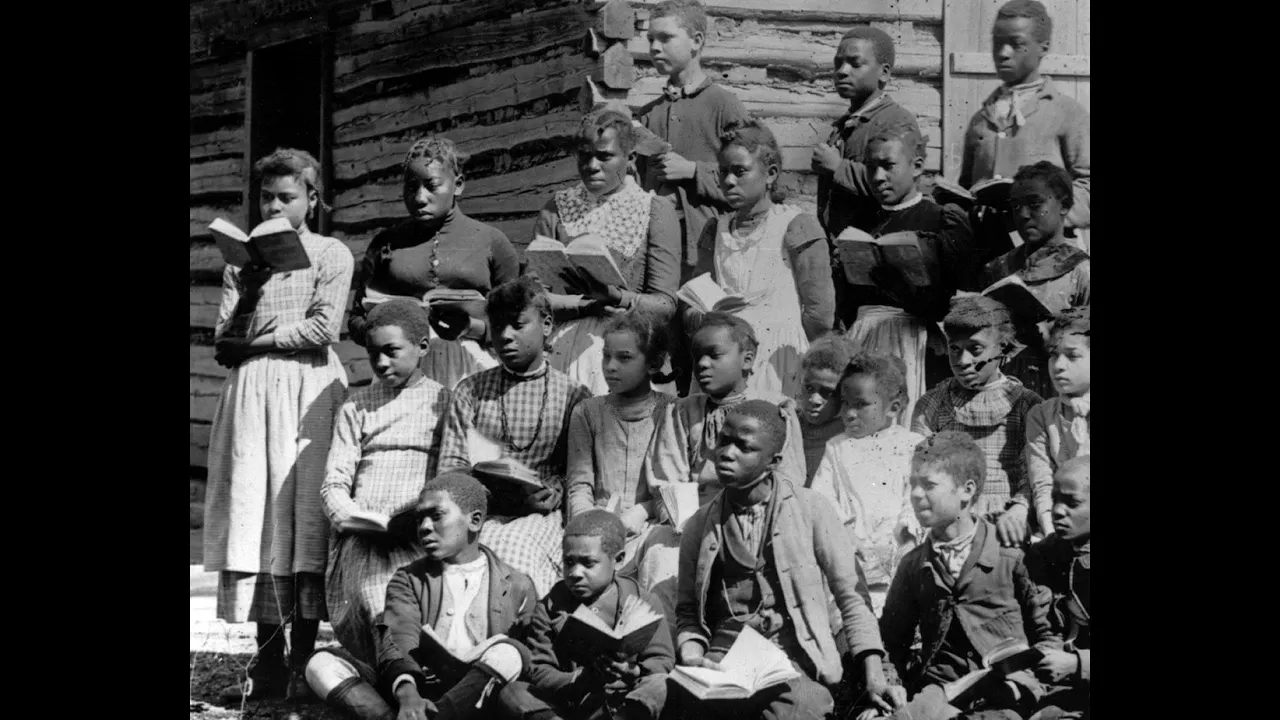










The Freedmen's Bureau, established after the Civil War to help transition from slavery to freedom, faced significant resistance from white Southerners who resented federal intervention in labor disputes and economic control, as exemplified by Captain Marshall Twitchell's experiences in the violent upper Red River region of Louisiana, where local veterans never defeated and deeply resented Yankee agents questioning their behavior.
The Freedmen's Bureau: A Yankee Agent in Post-Civil War Louisiana
Added:The Outcomes of the American Civil War: Understanding the Union victory, the abolition of slavery via the 13th Amendment, and the physical and economic devastation of the Southern states.
The Origins and Purpose of the Freedmen's Bureau: Knowing that the Bureau of Refugees, Freedmen, and Abandoned Lands was established by Congress in 1865 to provide food, housing, medical aid, and schooling to newly freed people.
The Concept of Reconstruction: Grasping the political tension between lenient Presidential Reconstruction under Andrew Johnson and the more punitive, civil-rights-focused Radical Reconstruction led by Congress.
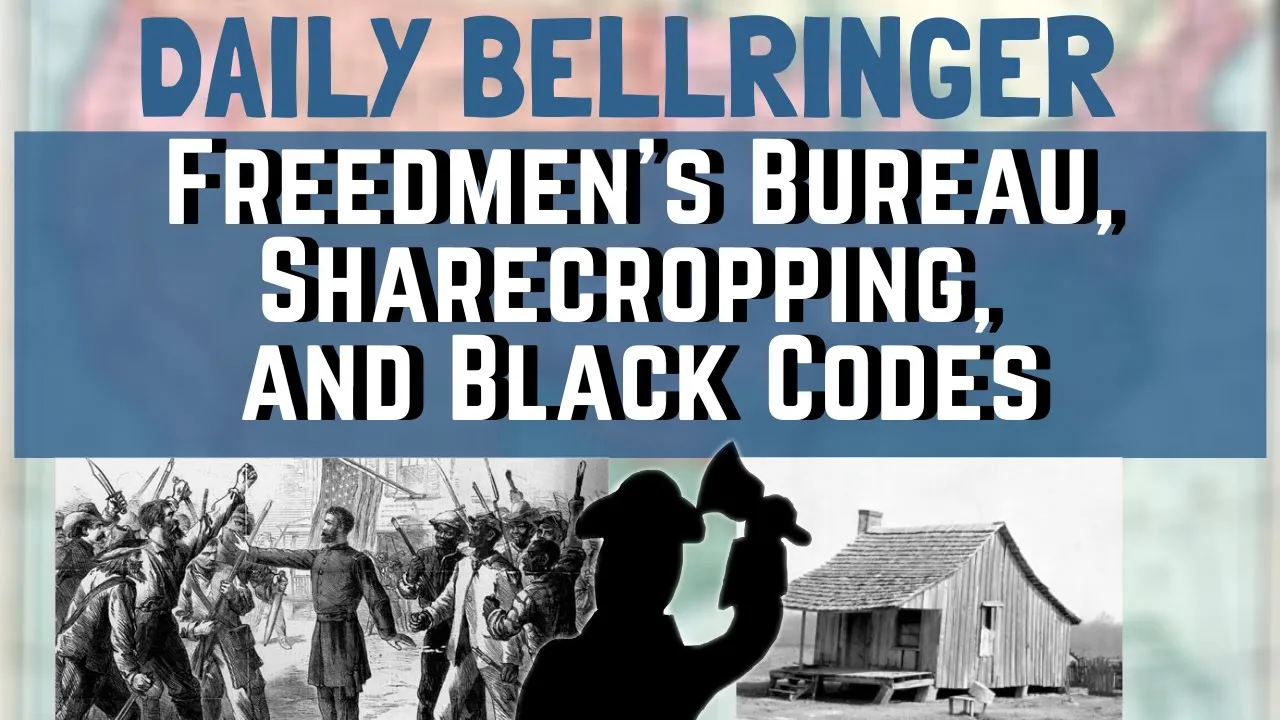
Southern White Resistance and Post-War Racial Hierarchy: Familiarity with the social dynamics of the post-war South, including deep-seated racial animosity and the emergence of Black Codes designed to restrict the freedom of former slaves.
The Evolution of Labor: Sharecropping and Debt Peonage: Exploring how the economic system in the South shifted from slavery to exploitative labor contracts that trapped former slaves in cycles of debt.
Paramilitary Violence and White Supremacist Organizations: Investigating the rise of groups like the Ku Klux Klan and the White League, and specific historical tragedies such as the Colfax Massacre in Louisiana.
The Compromise of 1877 and the End of Reconstruction: Analyzing the political deal that led to the withdrawal of federal troops from the South, effectively ending federal enforcement of civil rights protections.
The Rise of Jim Crow Laws and Disenfranchisement: Studying the long-term legal and social consequences of Reconstruction's failure, including the codification of racial segregation and voter suppression that lasted well into the 20th century.
85.7K views163likes5:03Original Release: 2013-12-18
that same fall nine black soldiers and their white Captain climbed aboard a sternwheeler in New Orleans and headed up River the captain Marshall twitchell was a career soldier from Vermont who had led black troops during the war he had fought at antito Fredericksburg the Wilderness and just about every other major battle in the East twitchel is one of those Union veterans who enlist in the first year of the war and stays the duration he's wounded several times he gets a mini ball right in his face it cuts a Groove around his face and exits behind his ear he'll have the scar for the rest of his life the war was over and twitchell was Restless in New Orleans he got himself a commission in the fredman's bureau in the chaotic postwar South the job of the fredman's Bureau agent was to smooth the transition From Slavery to Freedom the bureau built schools for the former slaves and fed and clothed War refugees black and white [Music] twitcher was posted to be enville Parish in Northern Louisiana a place he knew nothing about here he is on a Stern wheeler heading up the Red River this region had never been conquered so he's entering the last part of the Confederacy to surrender there it is dangerous exotic it's isolated and he doesn't know it but he is entering what is probably the most violent place in America it's no coincidence that harri beer Stow chose to put the final brutal ending of Uncle Tom's Cabin where Uncle Tom is beaten to death by Simon agree it's no coincidence that she puts it on the upper Red River it's a violent region I was without telegraphy Railway or water connections remembered twitchell if I had known beforehand what my position was to be I should have remained with my regiment at the courthouse in Sparta the county seat Captain twitchell set up office as the soulle fredman's Bureau agent for the parish he soon discovered his new neighbors were as hardened to battle as he was my great-grandfather had uh two brothers killed in the war and uh another wounded and and I'm named after one of them there wasn't a family here that didn't lose uh somebody to the war but in our little area these veterans were never defeated and that is a lot of the feeling here the war just ended and and so everybody went home and up into the mid of this came Tel the people in the area are weary they don't quite know what to expect but they quickly discover that this fredman's Bureau agent is somebody that they're going to have to deal with agents like twitchel had military authority to settle labor disputes and conflicts between former slaves and Masters platters certainly resented this intrusion into so sensitive an area they wanted direct control over black labors they didn't want some Yankee freedman's Bureau agent there questioning their behavior actually sitting them down and having them testified and for the fredman here was somebody that they could go to if they were mistreated he can't fundamentally change the economic lives of these people all I can do is try to be uh a mediator to give them some degree of Justice twitchell would soon learn that for a Yankee officer all alone in Northwest Louisiana even a degree of federal Justice might be too much
Up Next
12:54
Local Black Leadership & Churches in Reconstruction
@ColumbiaCTL
7.6K views•2015-04-27

33:02
The Great Schism of 1054: Causes and Consequences
@SacredCathedrals
113.5K views•2026-02-19
91:57
The Geopolitics of the Ukraine War and the Rise of Global Autocracy
@JordanHarbingerShow
468K views•2025-04-19
17:05
Understanding the Cold War: Superpower Conflicts and the Road to Détente
@OverSimplified
46.1M views•2019-01-24
Related Study Plans & Knowledge Roadmaps
Structured learning paths in History
history
Byzantine Iconoclasm: Theology, Art & Politics
01Foundations of Byzantium and Early Christian Images
02The First Iconoclasm: Leo III and the Crisis of Images
03Empress Irene, Nicaea II, and the Second Iconoclasm
+ 2 more learning modules
9h5 modules
Explore Roadmap
history
Iranian Revolution (Causes, Events & Legacy)
01The Pahlavi Dynasty and the Roots of Discontent
02The Spark of Rebellion and the Rise of Khomeini
031979: The Fall of the Shah and the Climax of the Revolution
+ 2 more learning modules
8h5 modules
Explore Roadmap
history
Mali Empire: Mansa Musa, Trade & Timbuktu
01Foundations of the Mali Empire
02The Trans-Saharan Gold and Salt Trade
03The Reign and Pilgrimage of Mansa Musa
+ 1 more learning modules
6h4 modules
Explore Roadmap
history
1947 Partition: Politics, Borders & Legacies
01Foundations of British India and the Divide
02The Political Negotiations and the Mountbatten Plan
03Drawing the Boundary: The Radcliffe Line
+ 2 more learning modules
8h5 modules
Explore Roadmap