
















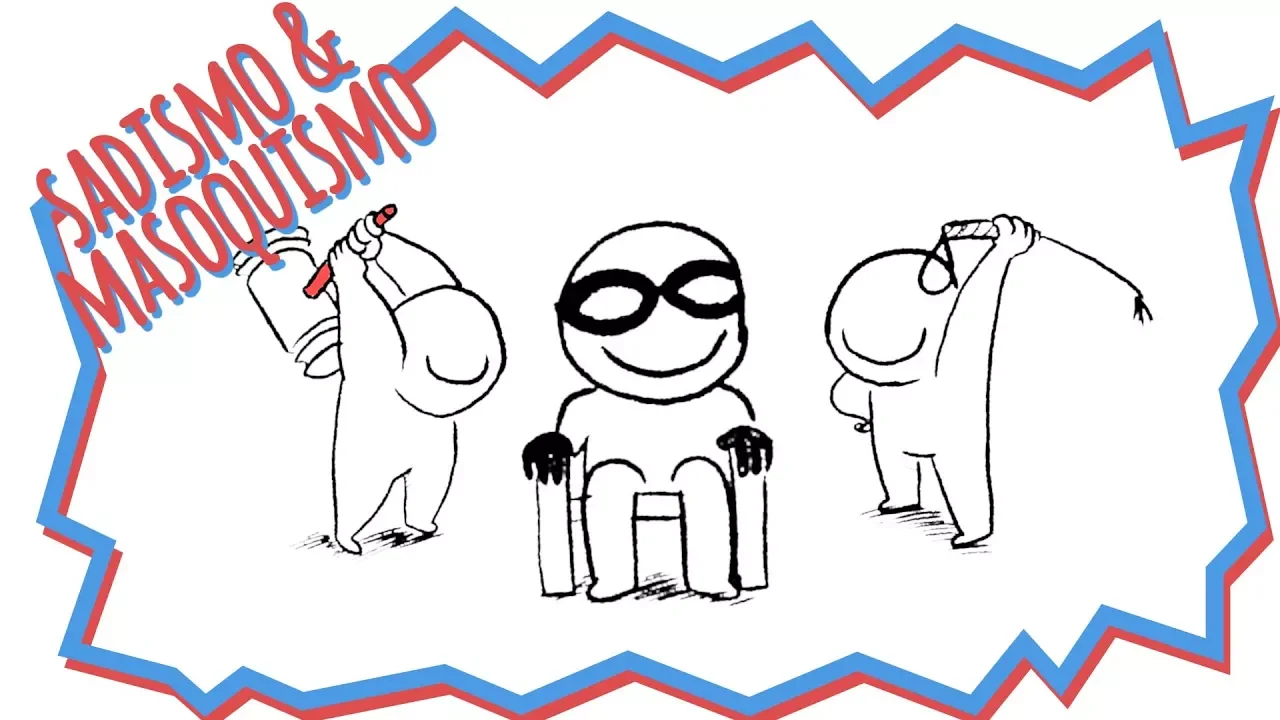
![Fetish vs. Kink: Whats the Difference? [BDSM]](https://i.ytimg.com/vi/c0SlfiXuNdw/maxresdefault.jpg)





The concept of sexual perversion has evolved from a purely medical and theological framework to a more nuanced understanding that recognizes these classifications as social constructions shaped by power dynamics, ideology, and political interests rather than objective scientific truths; this is illustrated through the historical treatment of exhibitionism, sadism, and homosexuality, where marginalized groups successfully challenged their pathologization through scientific research and political activism, demonstrating that labels of normalcy and abnormality are not inherent properties of behavior but are instead contested categories that can be transformed through collective resistance.
The History of Sexual Perversion: Psychiatry’s Power & Homosexuality Reforms | Gresham College
Added:An understanding of the Diagnostic and Statistical Manual of Mental Disorders (DSM) and how psychiatric diagnoses are historically established and revised.
The sociological concept of the 'medicalization of deviance,' where socially unacceptable behaviors are reframed as medical or psychiatric illnesses.
A basic historical overview of LGBTQ+ rights and activism in the mid-to-late 20th century, particularly in Western societies.
The conceptual distinction between essentialist views of sexuality (as innate and static) and social constructivist views (as shaped by historical, legal, and cultural contexts).
An in-depth study of the 1973 American Psychiatric Association (APA) vote to remove homosexuality from the DSM-II and the clinical debates that preceded it.
Exploration of Michel Foucault's philosophical theories on 'biopower' and how institutional discourses of psychiatry shape social norms and human sexuality.
Analysis of modern psychiatric classifications in the DSM-5, specifically how the manual distinguishes benign 'paraphilias' from clinically significant 'paraphilic disorders'.
An examination of contemporary global human rights issues related to the medical pathologization of sexual minorities, such as the ongoing legal and ethical debates surrounding 'conversion therapy'.
28.8K views410likes58:36Original Release: 2021-11-24
what do we mean when we talk about the perversions always in inverted commas of course who gets to decide what's normal what's abnormal the concept of perversion is fundamentally a medical one although of course it is grounded in theological notions of sin evil and immorality now it emerged from the late 19th century from the mid 19th century with the rise of psychiatry or what they used to call alienism the sexual perversions were linked to debates about the medicalization of deviance that is the practice of incorporating and expanding range of marginalized behaviors into a medical paradigm and in the period spanning the 1870s to the present sexual perversions have been classified under many different names including sexual abnormalities sexual deviations and paraphilias paraphilia power of course meaning deviation filia meaning attraction this shift that we can see from perversion to paraphilia was first made by psychoanalyst um wilheim seckel steckel in 1909. on the grounds he believed that it was a less judgmental term he also believed that this change in language would distance the discipline of psychiatry from religious precepts and moralism thus cementing its claims to the status of being a science well in the modern period the most influential manual on sexual perversions is this one the diagnostic and statistical manual of mental disorders the dsm the so-called bible of the american psychiatric association now i think it's really difficult to overstate the importance of the dsm which is published in different editions from 1952 until the latest version which was 2013 and it continues to be of central importance in contemporary psychiatry not only is the manual the obligatory authority on psychiatric discourse in the u.s it is also widely consulted in many other countries and is pivotal in pivotal in determining the diagnostic categories adopted by the international classification of disease the icd which is used in over 140 member countries of the world health organization so when in other words when the dsm designates an act or identity as a perversion not only medical practitioners gps to psychiatrists but not only do they listen but also so do jurists and juries insurance companies newspaper editors those labeled perverse and of course those who seek to distance themselves from that label so what i want to look at today is to ask sort of well what criteria did influential psychiatrists and their associates apply when designating a specific sexual activities or identities as forms of psychiatric deviance what was the role of law ideology politics morality and medicine in labeling something perverse after all there's actually no clear line between sexual perversions and sexual offenses as two psychiatrists observed in the 1970s not all sexual behaviors labeled abnormal within psychiatry were illegal i mean an example of would be um lasikism for example it's not a crime conversely not all illegal behaviors were regarded as psychiatrically abnormal for example in many u.s states when these psychiatrists were writing both homosexuality and fellatio even within marriage were prohibited by law fundamentally what is a mental illness now these big questions if you like are linked to broader debates within the history of psychiatry about societal constructions of mental abnormality even the authors of the various editions of the dsm were uncertain about how they were supposed to distinguish normal from ab normal as late as its 2000 edition they admitted that quote no definition adequately specifies precise boundaries for the concept of mental disorder they were nevertheless required to make some haphazard guesses about what they believed should be called abnormal now the most i think in my view the most influential early critique of this process was thomas sasser's 1961 classic the myth of mental illness it's really stood the the test of time this book for all it's it's it's problems he argued that mental disorders were not scientific entities they were value judgments containing strong political convictions and driven by the need to enforce societal norms now his insights have been echoed and elaborated on by dozens of other scholars working in the field such as irving goffman and thomas chef it was also of course most of us here will know is also one of the central arguments made by michel foucault in the history of sexuality and introduction 1976 when he insisted that the sciences of sex as they emerged in the late 19th and 20th centuries were not concerned with uncovering any um truth about sex or sexuality but with regulating and normalizing certain norms um about heterosexuality monogamy and the nuclear family now given the feverish excitability of the human imagination and desire it is of course not surprising then that the list of sexual so-called perversions seem to go on and on and on and they include exceptionally different acts and identities for example masturbation oral sex anal intercourse female fragility nymphomania and other arousal disorders have been historically sites major sites of anxieties leading to stigmatization ostracization incarceration and asylums or prisons and harmful treatments elaborate theories had to be developed to lend if you like scientific weight to what were moral ideological and political labels by the mid 1950s the dsm's perversions included acts and identities as different as homosexuality exhibitionism transvestism pedophilia fetishism and sexual sadism and today i want to focus on just three of these and the ones i've chosen are exhibitionism sadism and homosexuality now these are extremely different classifications but they think i've chosen them because i think they illustrate in turn the role of psychiatry in relation to policing exhibitionism in relation to masculinity sadism and in relation to morality homosexuality so first exhibitionism well exhibitionism of course was not always considered a perversion prior to the 19th century it was simply a criminal activity the act of exposing one's genitals to a non-consenting stranger was a crime it was punishable under a vast array of laws including the common law offense of outraging public decency vagrancy regulations and public order decrees prescribing acts that caused an obstruction annoyance or danger to the residents or passengers as the uk's town police clauses act of um 1847 buttered under 19th century legislation in other words men who exposed their genitals were placed in the same category as men who begged slept in public places or solicited prostitutes the law assumed that men who exposed their genitals were drifters they were vagabonds indeed prior to the 1870s the category of exhibitionist the exhibitionist did not even exist the term um was first used by charles la secure in 1877 and in the english language it first appeared the word exhibitionist first appeared in print in charles gilbert chadoc's 1893 translation of richard von krab ebbing's psychopathia sexualis of which i'm going to say more more later so in other words what we've got here is this shift in language from the legal term of indecent exposure to the psychiatric one of exhibitionism and this represented a major change a major shift from a sort of punitive response to the act of exposure to a medical response that focused more on the identity of the person doing the exposing the exhibitionist the person who exposed his genitals became a persona if you like in much the same way that foucault conceptualized the creation of the homosexual in the course of the 19th century foucault um contended the homosexual and i'm arguing the exhibitionist as well became a personage a past a cast case history and a childhood in addition to being a type of life a life form a morphology nothing that went into his total composition was unaffected by his sexuality so it was in the 19th century then that medical and psychiatric literatures first began propagating the idea that people who engaged in exhibitionist practices were not simply expressing their tastes but were a discreet category of human so once the idea that exhibitionists were mad psychiatric ill suffering from perversion not bad not simply vagrants began once this began gaining popular public support the precise nature of their pathology became the main issue so sheddock the man we we mentioned earlier who translated craft ebbing into english insisted that the act was so obviously silly and purposeless that it had to be the result of anomalous mental factors and he was naturally influenced uh um there's shadow there he was naturally influenced by craft ebbing's view that exhibitionists were in fact degenerates in the early years of the 20th century however a new generation of psychiatrists um were coming up and they were arguing that exhibitionists were not in fact degenerates they were suffering from an obsessive or a compulsive disorder such impulsive and obsessional behaviors made exhibitionists dangerous rather than merely silly for example a speaker at the international medical congress 1900 lamented the irresistibility of the need the anguish struggle between the morbid pleasure which commended it and the consciousness which appreciated and resisted it well other psychiatrists believed or started arguing that exhibitionists might be suffering from a compulsive pathology they called satorisis a male form if you like of nymphomania for physicians such as the author of insanity in the medical legal bearings in 1900 the victim of satirisis suffered from a compulsive urge to expose his person in public even if it ruined his reputation as a clergyman or dignified banker okay so this medicalization of the sex of a sex act the exposure of genitals to non-consenting person was important in cementing the psychiatric diagnosis of exhibitionism it provided if you like a rationale for the interventions of science into the lives of men previously characterized as nothing more than waste rules and low life they could now be clergymen or bankers psychiatrists however did not only distinguish between the vagrant degenerate and morally irresponsible and the medically ill they also believed that it was important to distinguish between as one psychiatrist put it between the voluntarily vulgar and depraved sensualist typically classed as aristocratic or upper middle class who possessed a sense of sexual entitlement from distinguishing them from ordinary middle-class sufferers whose involuntary exposure propensities and acts masked a naturally continent and virtuous life so to make these distinctions psychiatrists had to develop these really complicated um nostalgies elaborate classification systems which claimed to be able to evaluate the health of a person's inner mental world through an examination of outer signs many of which no surprise here many of which were related to class hierarchies racist profiling and religion in other words there's a huge talk i could give about jewish versus christian in these in these debates let me just just to give you a sample of you know what we're actually talking about here let me give you just one example um very prominent example in the early years of the 20th century um psychiatrist c.h hughes published an article in the very prestigious journal entitled the alienist the term for psychiatrists back then the alienist and neurologist really important journal in it he narrated the tribulations of charles cannon 60 year old widower prominent local lawyer active member of the trinity protestant episcopal church just remember that episcopal church canon's reputation had been destroyed when 17 young girls aged between 8 and 14 years accused him of exposing his penis he was found guilty hughes however well he brooded in extensive detail over this case he brooded about whether it was even possible for a prominent figure in the community to be guilty of such a debased crime he even speculated on whether canon was a victim of female morbid eroticism have i got it up there yes whether he was a victim of female morbid eroticism which is um a pathological state that predisposed women to make false accusations even if the explosion but other words he's accusing saying the women are the girls are the problem um even if the exposure had taken place hughes claimed that canon's whiteness economic respectability religiosity and conformity to dominant middle-aged masculine norms were sufficient to authenticate his moral innocence hughes was left with only one explanation for canon's behavior delusions arising out of the erotopathic perversions of neuro neuron disease degeneration so in this way of course what we see happening here is sympathy could be extended to the exhibitionist rather than the 17 young girls and social gender racial hierarchies retained i think this case also reveals the underlying ideology of this perversion within these texts in other words middle class white men were most easily slotted into the role of exhibitionists their impoverished black counterparts continued to be classed as indecent exposures exposers and imprisoned under vagrancy and indecency laws the exhibitionist label was also a rather convenient um diagnosis for the police and jurists the prognosis of cure of these men was admittedly um poor even the most distinguished psychiatrists are admitted that they were a lot more considerably a lot more considerably more skilled at diagnosing perversions than in treating them courts however were much more likely to refer exhibitionists to psychiatric services than um than they were to other sex offenders indecent exposure of male genitalia was consistent with this broader norms of masculinity exhibitionism was construed as an active male violation of the passive visual field of women and children i think it's also notable that the primacy given to the male sex organ by male exhibitionists was mirrored in much of the work um of or much of the work by male psychiatrists and sexologists for example 1950 nathan king rickles published what was to become actually the key textbook on exhibitionism of the period it was a psychoanalytical text that viewed exhibitionism as arising from unconscious infantile conflicts especially vis-a-vis mothers but rick what interests me in this is his book is that he infused exhibitionists with what he called a aura of mysticism and magical significance he believed that exhibitionists were unconsciously telling their victims that this a penis this is divine you may look and adore but you may not touch now anthony storm author of another very influential book called sexual deviations 1964 um was a little bit more unkind claiming that the typical exhibitionist believed that he possessed large impressive genitals and it was natural for him to think that women would be impressed by them too regrettably and i love this regrettably store continued women tended to treat the penis as an organ for use rather than for aesthetic admiration and so were seldom as impressed by its magnificence as men would like them to be so both rickles exaggerated sort of divine penis story and stores more blunt realist narrative did agree however that exhibitionism was a sad perversion the man who in rickles worlds symbolically shakes his penis at women as he might shake his fist particularly at symbolically dominated mothers and wives must always remain alert to possible encroachments into his power humiliation always lay in weight so discussions about the perversion of exhibitionism were infused with gendered class and raced views about power humiliation and the sexed body these views were taken to an extreme when we turn to sexual sadism the classic sexual perversion in the history of psychiatry the frequency with which this perversion is discussed is second only to homosexuality while debates about exhibitionism made distinctions between rogues and vagabonds inadequate masculinity requiring punishment and perverts insecure masculinity requiring discipline the sadist designation i think reveals really disturbing assumptions about the construction of normal and abnormal male sexuality in philosophy of the bedroom 1795 the marquis de sade reflected on a sexual perversion that 40 years later was going to be named after him sadism from its conception sadism was naturalized as integral to what it means to be a man to masculinity cruelty sad claimed is very far from being a vice because it is the first sentiment that nature injects in us all the infant breaks his toy bites his nurses breast and strangles his canary long before he is able to reason now while initially insisting that extreme aggression directed sexual aggression directed towards other people is natural to us all of course assad goes on to say that it's actually masculine sexual violence is wielded by the masculine half of humanity in his words the debility to which nature condemned women by which he means our weakness the debility to which nature condemned women incontestably proves that the design is for man who not only enjoys his strength but exercises it in all the violent forms that suit him best by means of tortures if he be so inclined or worse assad's explosive depictions of sexualized torture and texts such as justine philosophy in the bedroom juliet became an ism for the first time in the french text the dictionary universal the french language 1835 however the person most responsible for popularizing this perversion was 46 year old austro-german forensic psychiatrist richard von kraft ebbing of whom we have already heard his book psychopathia sexualis 1886 english introduced and disseminated words for the major so-called perversions in other words he was the one who invented exhibitionism sadism homosexuality between its publication and craft effing's death in 1904 psychopathy sexualists went through 12 editions the latest edition published in 2011 and the book was not only read by psychiatrists and lawyers but also by the lay public crap edding ebbing had not intended to popularize the term sadism he was writing for an elite audience whenever he gets anywhere near anything gruesome or sexual or vulgar or whatever he switches to latin even so reviewers tended to be disgusted 1893 the british medical journal reviewed the book with great reluctance questioning whether it needed to have been translated in the first place they noted that the entire text should have been rendered in latin and thus fielded in the decent obscurity of a dead language admittedly they conclude conceded many morally disgusting subjects have to be studied by the doctor and by the jurist but the less such subjects are brought before the public the better so what was it so disgusting that editors of of the british medical journal found in part it was because of course the book as we'll come to later also referred to homosexuality in great detail but craft dabbing also broke this really formidable taboo in in that he gave voice to people who reveled in these behaviors including sadists in his numerous case studies these perverts could be heard accounting for their deeds albeit in a language made available by craft debbie himself for craft debbie um sadists were degenerates psychopathic individuals people whose defect of moral feeling allowed normal masculine heterosexual cruelty to become unbounded craft heading illustrated the range of degenerative soils that led to this perversion sadists had mothers who suffered from mania menstrualis periodical menstrual armania or were hysterical neuroscenic their father's uncle's near relatives were insane drunken syphiliptic practice ownism that is they masturbated or experienced homicidal impulses sadis also according to him exhibited lombroso-like physical signs of degeneration such as being undersized and stooped having asymmetrical faces and as another prominent prominent psychiatrist put it at the time they suffered from speech impediments including finding it impossible to say methodist episcopal by the way i practiced that because i just thought oh my goodness with a speech impediment like mine i'm sure to pronounce it wrongly impossible to say methodist episcopal indeed kraft ebbing and his followers describe sadists in much the same way that they described exhibitionists and homosexuals crucially however craft devin regarded sadism as an extension of normal male sexuality as he put it sadism is nothing more than an excessive and monstrous pathological intensification or phenomena which accompanied the psychical vita sexualist particularly in males for him physiological conditions explained why monstrous sadistic acts are more common in men than in women he explained that and these things were repeated by dozens of other psychiatrists of the period he explained that in the intercourse of the sexes the active or aggressive role belongs to man women remains passive defensive it affords a man great pleasure to win a woman to conquer her under normal conditions a man meets obstacles which it is his part to overcome and for which nature has given him an aggressive character this aggressive character however under conditions may likewise be excessively developed and express itself in an impulse to seduce absolutely the object of desire even to destroy or kill it in statistic statistical sexual acts this normal heteromasculine quadrant of passion overheated exploded there were highly racist as well as classed aspects to craft ebbing's notion of the perversion since he believed that cruelty was natural to the primitive man while compassion was a secondary manifestation and acquired late in the ascent of mankind now there are two i think important components to um psych these early psychiatric debates about um this perversion first sadists were male and the most common statement was that while men possessed an inborn say inborn sadism women had an inborn masochism secondly it was an excess of male heterosexuality psychiatric books right up until the 19th so the 2010s listed sadism under headings such as heterosexual abner and um anomalies i should have practiced that one that's worse than um anomalies it was routinely pointed out that non-human males also courted the um the female of their species aggressively in havelock alice's studies in the psychology of sex 1903 he claimed that pain and sexual excitation were typical in animal cultures so it was hardly surprising to find that it in human male heterosexual heterosexuality now when the british medical journal originally reviewed psychopathic sexualism the reviewer concluded by admonishing physicians to ensure that the book was not left around for general reading however within 20 years of its publication english translation sadism had become an everyday word by the second world war and by the second world war the perversion called sadism had in fact drifted free from its psychiatric uh moorings in craft ebbing and what was previously called very problematically lust murder suddenly the concept started to be used to refer to everything from the innate sadism of modern comic books television programs films to vivisectionists teachers who resorted to corporal punishment schoolyard bullies men who enjoyed hunting war mongers even nurses the mid 20th century saw a shift from the status being regarded as a degenerate um to him being portrayed as ex exhibiting superficial white-skinned middle-class ordinariness that masked a vicious nature in a world reeling from the second world war they were the perennial nazis even within psychiatric circles sadism was being applied to a huge range of activities as a diagnostic category the label sadism was applied to serial rapists homosexuals exhibitionists [ __ ] psychiatrists use the concept to refer to everything from men with a compulsive habit to prowl the streets looking for vulnerable women to adolescent boys ashamed about spontaneous nocturnal emissions indeed at the same time that the british newspapers were headlining the horrific crimes of in 1946 of the sadist neville heath a psychiatrist writing under the banner a medical view of sadism bundles heats atrocities in the same category as bullies who take pleasure in teasing little girls importantly the psychiatric designation of sadism was increasingly applied applied to consensual s m practices not just non-consensual acts of cruelty a typical example can be seen in james conan's influential article entitled responsibility inactive algo philly that is the sexual enjoyment of inflicting or experiencing pain published in medicine 1903 this article confused consensual sadomasochism with non-consensual violent rape the lover who desires to give pleasure was made equivalent to the vicious rape murderer and this confusion continues to this day as in the character of christian in fifty shades of grey the sexual sadis becoming a cultural icon this confusion of tongues matters because eliding the difference between delight and distress or between consensual pain and non-consensual suffering defines the human encounter in terms of only one of the participants the aggressors by minimizing the harms of sexual cruelty it's as bad as teasing little girls it normalizes it indeed early psychiatrists regarded sadism as simply part of a con continuum of male sexuality now in contrast to this horrible story here in contrast to exhibitionism in contrast to sexual sadism homosexuality is an example of the way people labeled perverse have effectively challenged their status in society the late 19th century homosexuality had been labeled perversion before that sin evil believing believing to be believing it to be the result for example this is a huge other lecture example a result of some external damage harmful mothering inadequate fathering intrauterine or hormonal exposure or an internal defect into generational degeneration developmental immaturity and so on in the first dsm published 1952 homosexuality was classed amongst the sociopathic personality disorders 1968 dsm-2 it was reclassified within the diagnostic category of sexual deviations these diagnostic terms were largely based on psychoanalytical theories of sexual development in a typical statement from the early 20th century psychiatrist carl meneger argued that homosexuality was evidence of an impairment or immature sexuality due to either arrested psychological development or regression such views were used to justify stigmatization the use of psychopharmaceuticals electroconvulsive shock treatments lobotomy damaging psychoanalysis and aversion therapy okay this is not the time or place to rehearse the well-known history of psychiatric ideas about the etiology and treatment of homosexuality this job has been done extremely well by many dozen historians um rather i want to suggest that for sake of this talk that it's interesting to study historical arguments about whether homosexuality is a perversion for what it tells us about successful resistance to pathologization now some opposition to classifying homosexuality as a perversion emerged from scientific research particularly important were the works of alfred kingsley and evelyn hooker in kingsley's survey of the sexual habits of 12 000 american men published as sexual behavior in the human mail 1948 at least 37 um admitted to having a homosexual experience this is 1948 37 admitted to having homosexual experience and as an adult and one-fifth have had had just as many homosexual experiences as heterosexual ones hooker's research was equally important she revealed that there's in fact no discernible psychiatric differences between heterosexual and homosexual men it was no coincidence that the move to de-pathologize homosexuality took place as the apa the american psychological association um american psychiatric association moved away from psychoanalytical perspectives and towards a more bio-psychiatric model of psychiatric disorders and a shift this shift took place between dsm r2 and dsm 3 which is 1980.
however much more significant resistance to homosexuality as a sexual perversion emerged from within lesbian and gay communities an early example includes the mattachine society 1955 they published the metachean review which used the research of hooker to argue against homosexuality as a mental illness from the 1960s gay mobilization grew dramatically and by the end of that decade the gay liberation front and the stonewall riots saw protests against pathologization taking a more radical turn crucially these gay activists insisted not only that they were not mentally ill but they celebrated their sexuality in other words and this is really important in terms of the dsm um they um were no they were by no means distressed or impaired in social function this were these were the terms that many psychiatrists including robert spitzer who chaired the task force that produced dsm iii believed were crucial in constituting a disorder perversion and also they claimed they the gay community claimed that they possessed knowledge lay knowledges that trumped so-called scientific expertise so gay communities and their supporters through their energies into the fight to be regarded as normal and therefore entitled to the same rights the same responsibilities as other as heterosexuals and two very different models though emerged some gay psychiatrists and psychologists allied themselves with a psychiatric establishment seeking to provide scientific rejoiners to homophobic science they argue that labeling homosexuality a perversion was a scientific error the reform of which would strengthen the power of psychiatry one unfortunate consequence of this for this bid for respectability was the distancing of themselves from other gender non-conformist communities for example during bbc broadcast 1966 barbara gittings reassured listeners that there is no evidence that homosexuals wish to cross-dress any more than heterosexuals do in fact more transvestites are heterosexual and they even have their own organizations to investism this fundament is a fundamentally different phenomenon from homosexuality and must not be confused with or correlated with homosexuality so in other words homosexuals were on the normal spectrum of human sexuality trans people they were the ones who were perverse that was this was a far cry however from the politics of inclusion evoked within the more radical section of the movement many of these activists were profoundly influenced by anti-psychiatry in 1970 and 1971 these activists used guerrilla performative tactics to disrupt apa conferences they grabbed microphones they insisted on their voices being heard one gay activist entitled a paper he presented at a psychiatric conference stop it you're making me sick gay activists were also immersed in wider progressive politics for example the chicago gay liberation front made a powerful statement at the black panthers revolutionary people's constitutional convention in the nineteen seventies they maintained that the american medical profession is irrelevant to the needs of oppressed people because psychiatrists emphasize adjustment and conformity rather than liberation because they tell us to become good citizens rather than good revolutionaries because they favor individual solutions rather than social change we recognize that they are not the helpers of homosexuals or any oppressed people but serve as our oppressors so classic sort of anti-psychiatry kind of uh rhetoric there an anti-racist rhetoric and these radicals were effective 1973 a vote of the 10 000 members of the apa decided by a majority of 58 to accept the decision of the apa board of trustees to remove homosexuality from the manual of psychiatric diagnoses was this a revolutionary moment well yep many thoughts though yep absolutely um but even as the activists were celebrating one gay student sneered utopia at last the apa has waved its magic wand and cleansed us o joy of our dark and horrible sickness unfortunately the apa's decision did not mean that homosexuality was actually removed entirely from dsm diagnostic categories after all the change had nothing to do with so-called scientific evidence it was caused by a vote of members beliefs exposing the political ideological moralistic undergirding of psychiatric naming of perversions homosexuality continued to be seen as psychiatrically abnormal in an official statement 1973 the apa maintained that no doubt homosexual activist groups will claim that psychiatry has at last at least recognized that homosexuality is as normal as homosexuality they will be wrong in removing homosexuality per se from the nominal culture we are only recognizing that by itself homosexuality does not meet the criteria for being considered a psychiatric disorder we will in no way be aligning ourselves with any particular viewpoint regarding the etiology or desirability of homosexual behavior a new diagnosis was actually introduced at the same time called sexual orientation disturbance and then 1980 one for ego dystonic homosexuality seven years later this was in turn renamed sexual disorder not otherwise specified the most recent dsm published 2013 contains the diagnostic label gender disspora for people who are upset about their sexual or gender orientation in other words homosexuality had been reclassified not eradicated altogether as psychiatrists such as richard greene have pointed out if being unhappy while gay warranted a diagnostic category soch 2 should ego dystonic heterosexuality homosexuals continue to be pathopathologized under the gender identity disorders and as we all know gay reparative or conversion therapies especially for minors are still carried out in many countries just to conclude in this talk i focused on three widely debated and very different so-called perversions within 19 and 20th century psychiatry exhibitionism sexual status and homosexuality the categorization of these sex acts and identities as perversions were important in drawing disciplinary lines between moral legal and medical authorities the label perversion bundled together loving relationships gay and bdsm ones for example with acts of extraordinary cruelty the longevity of these medical characterizations along with their dissemination throughout society exposes the power of stigmatization and othering but it also shows the ability of political actors in solidarity to forge more equitable and fulfilling worlds there was no truth of sex or perversions to be identified they were always sustained by webs of knowledge and networks of power as every established order tends to produce the naturalization of its own arbitrariness this is as true of psycho psychiatry as in any field of knowledge and draws attention to the need to pay attention to history as well as to the political ideological and moral authority of psychiatrists and the people they seek to label and that's it for today just to um say please join me next one is 6th of january pornography thank you very much and i believe we have time for some questions yes um historically has nudism been associated with exhibitionism and if so when did they become separate really really good question yep nudism one um okay firstly we have to make a distinction where they're talking about male or female nudism because there are huge distinctions there um male nudism has been considered as one of the symptoms of being an exhibitionist female nudism into interestingly is considered to be much more natural to what it means to be a woman women are naturally exhibitionists women naturally love to show off their bodies a very convenient myth i think for for for for men um so has been less pathologized as part of that and of course the story i told about the uses of law laws against people who expose their genitals coming from laws about vagrancy about public disorder public offences i mean they were used of course to punish nudists the new nudist communities which is one of the real reasons why particularly in some work i've done in the 1920s through to the 50s um you know these nudist communities went to extremes to be seen as respectable so much so that they're probably more respectable than than you know non-nudists um precisely because of that stigmatization okay um and one more sadism and exhibitionism were also viewed as mental mental conditions in which ways were they treated if at all were the methods similar to the treatment of homosexuality in general they are treated in very very similar ways in other words whatever the main forms of treatment are at the time for sexual deviation were used to treat homosexuals were used to treat sexual sadists we used to treat exhibitionists so the answer to the question is it depends what period we're talking about but in that any particular period of time they are being treated in the same or very similar ways i think sexual sadism is a slightly different case because of the distinction between the consensual s m and of course rape murderers um which you know you just you know you just have to keep separate there um um but certainly consensual s m is treated similarly to exhibitionists and um and homosexuality um sexual status who are rape murderers of course um they are mainly imprisoned um good evening thank you very much um famously uh hard disentangle the the elements of play uh the morality the law religion medical science uh the way the way they connect into connecting in these particular this particular field is it's hard to get to grips with and i wonder if uh um if you had a view whether looking at a primitive so-called primitive or pre-monotheistic societies was revealing to you about how attitudes to to some of these you know so so-called paraphilias or perversions uh you know were viewed before medical science came along before christianity came along and and you might argue perverted themselves our feelings about say sadism or expressionism or homosexuality yeah i think um i think that's a really important question and it's difficult to answer because it leads into problems of what do you do in exploring previous societies that don't have a name for what we are exploring okay so you know if you're looking at these very very early um pre-modern societies um you know if they don't have a name for what particular acts like for example exhibitionism okay let's just take that as as as one then what are we doing when we look for we look for that in that period so we really can only um use their own languages and the concepts that they use and if they don't actually have that concept then there's nothing i mean one is that loss of what to do so for example um in there's some really interesting work that i heard spoke being spoken about um which was looking at japan in i think it was 13 14th century and the person was interested in questions of you know exhibitionism okay but when she was reading accounts of men whose genitals were on public display there was no sort of public there was no outrage about it so there was nothing really she could say about it because that the society didn't have a sense of outrage or a sense of anything about that it was just a man who was dressed inappropriately um and that's all she could say about it so i think that's the problem that we face when trying to do trying to postdate predate a lot of the work that i do [Music] so you know so what i can what i do is i say well when does it become an ism when does exposing genitals become exhibitionism and then i can explore well what was it before that and before that it was a crime it was loitering it was vega vagabonds and that that gives me an n but um this research that this other person did she had no in for that i don't have that well it does understanding of a a world a society a time in which a a group of people might include homosexuality or rape or sadism or exhibitionism as normal problems or they just might have it might not have occurred to them as it occurs to us well yes i mean sorry there's a vast literature in terms of homosexuality in terms of that um you know there's there's entire civilizations where it's not not an issue it's normal behavior it's um yeah absolutely vast literature of that um not in terms of the other two that at least that i'm aware of not in terms of exhibitionism and and sexual sadism um yeah yeah but homosexuality is a really good example of precisely that you know okay i'm afraid we have to draw to a close there thank you so much again professor burke for a fantastic lecture and for your generosity in answering all the questions and thank you all for attending both in person and online let's thank professor burke one more time [Applause]
Up Next

9:58
Labeling Theory Explained | Deviance in Sociology (Chegg)
@chegg
64.7K views•2016-02-13
54:57
Contemporary Sociological Theory: Micro, Macro, Integrative
@NaSESYNC
45.7K views•2016-02-17
19:23
How to Analyze Conversations Scientifically | Elizabeth Stokoe | TEDx
@TEDx
1M views•2014-12-04
9:41
What is Sociology? The Sociological Perspective Explained
@crashcourse
4.6M views•2017-03-13
Related Study Plans & Knowledge Roadmaps
Structured learning paths in Sociology
sociology
Celebrity Culture: From Hollywood to TikTok
01Foundations of Celebrity Sociology
02The Rise of Micro-Celebrity & Digital Platforms
03Parasocial Relationships & Algorithmic Intimacy
+ 2 more learning modules
12h5 modules
Explore Roadmap
sociology
Hostile Architecture: Space, Power & Control
01Introduction to the Sociology of Space
02Social Control and Surveillance in the City
03Hostile Architecture and Defensive Design
+ 2 more learning modules
12h5 modules
Explore Roadmap
sociology
Loneliness Epidemic: Third Places & Isolation
01Foundations of Social Capital and Community Cohesion
02The Death of Third Places and Urban Space Erosion
03The Privatization of Leisure and Atomization
+ 2 more learning modules
12h5 modules
Explore Roadmap
sociology
Sociology of Tourism: Gaze, Power & Heritage
01Foundations of the Sociology of Travel and Leisure
02John Urry and the 'Tourist Gaze'
03Staged Authenticity and Cultural Commodification
+ 2 more learning modules
14h5 modules
Explore Roadmap