













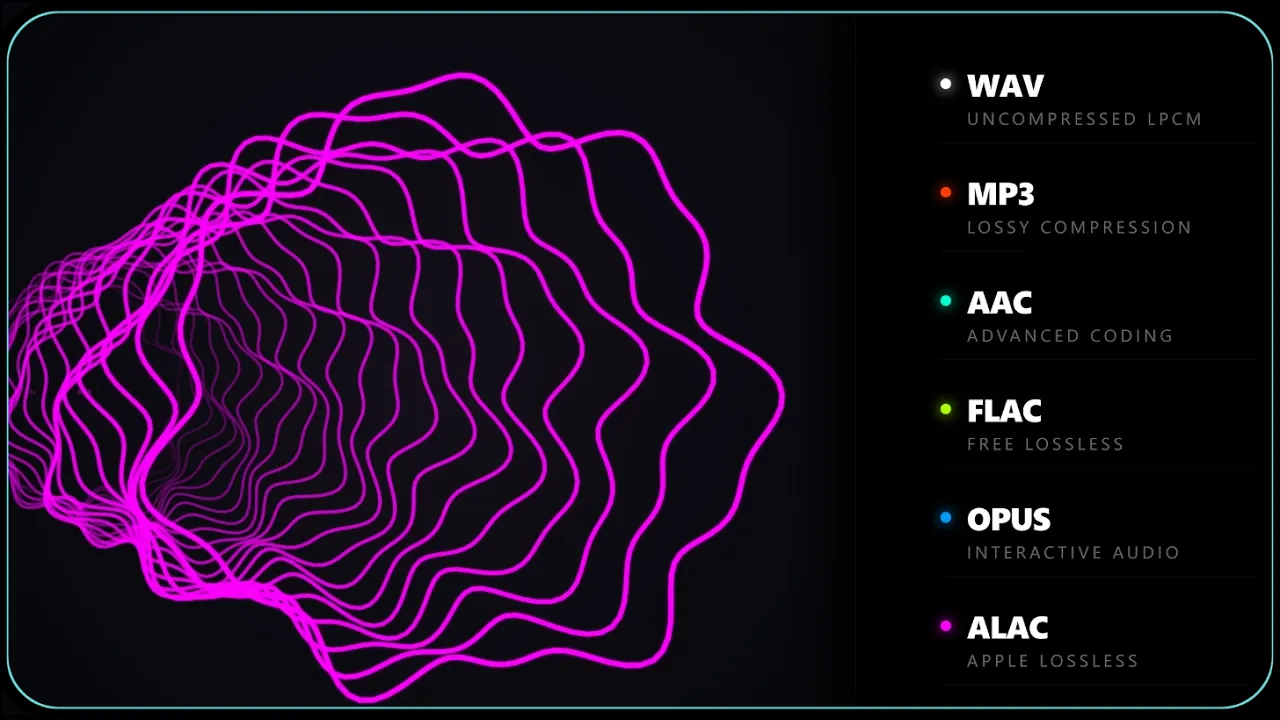
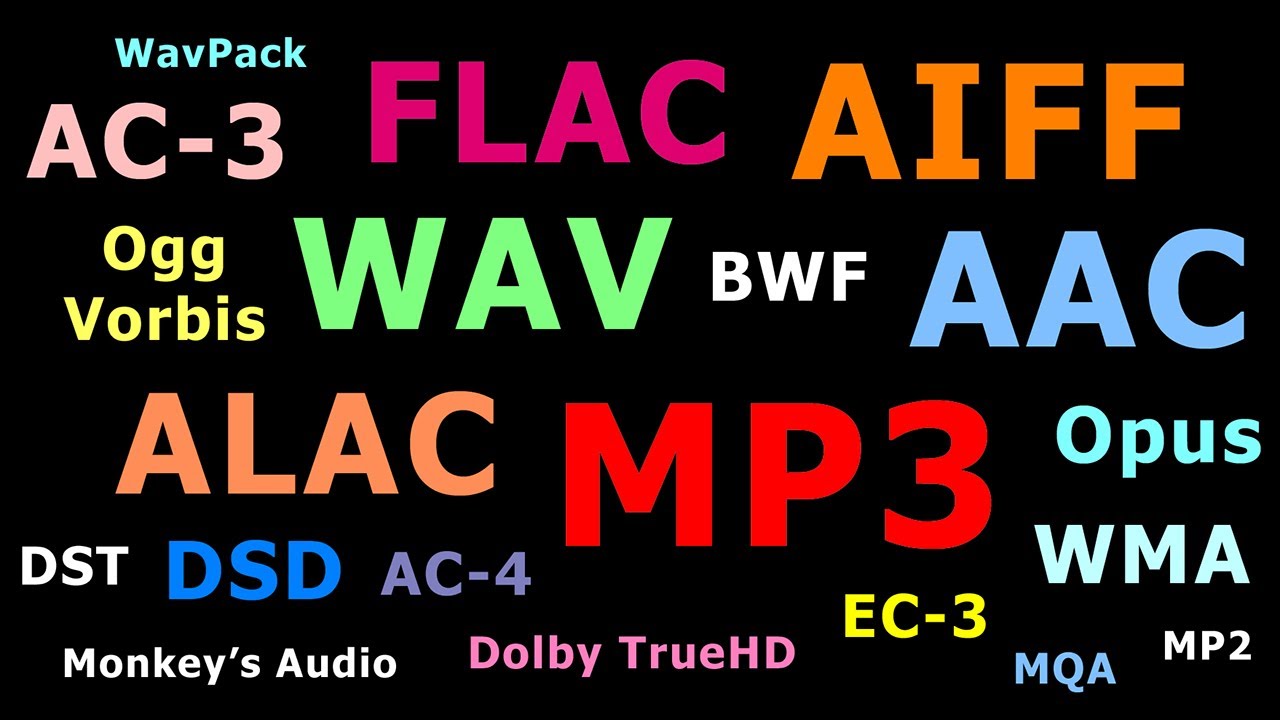




Audio file formats differ primarily in their compression methods: lossy formats like MP3, AAC, and Vorbis discard imperceptible audio data (sounds too quiet, too high-pitched, or too close together in time) to achieve smaller file sizes, while lossless formats like FLAC and ALAC preserve all original audio data by efficiently encoding redundant information, resulting in file sizes roughly half of uncompressed equivalents; common formats include MP3 (most familiar), AAC (higher quality at lower bitrates), Vorbis (open-source), FLAC (lossless), ALAC (Apple lossless), Dolby True HD/DTS-HD Master Audio (professional home theater), and Dolby Atmos (spatial audio).
Comparing MP3, AAC, WAV, and FLAC: Digital Audio Formats Explained
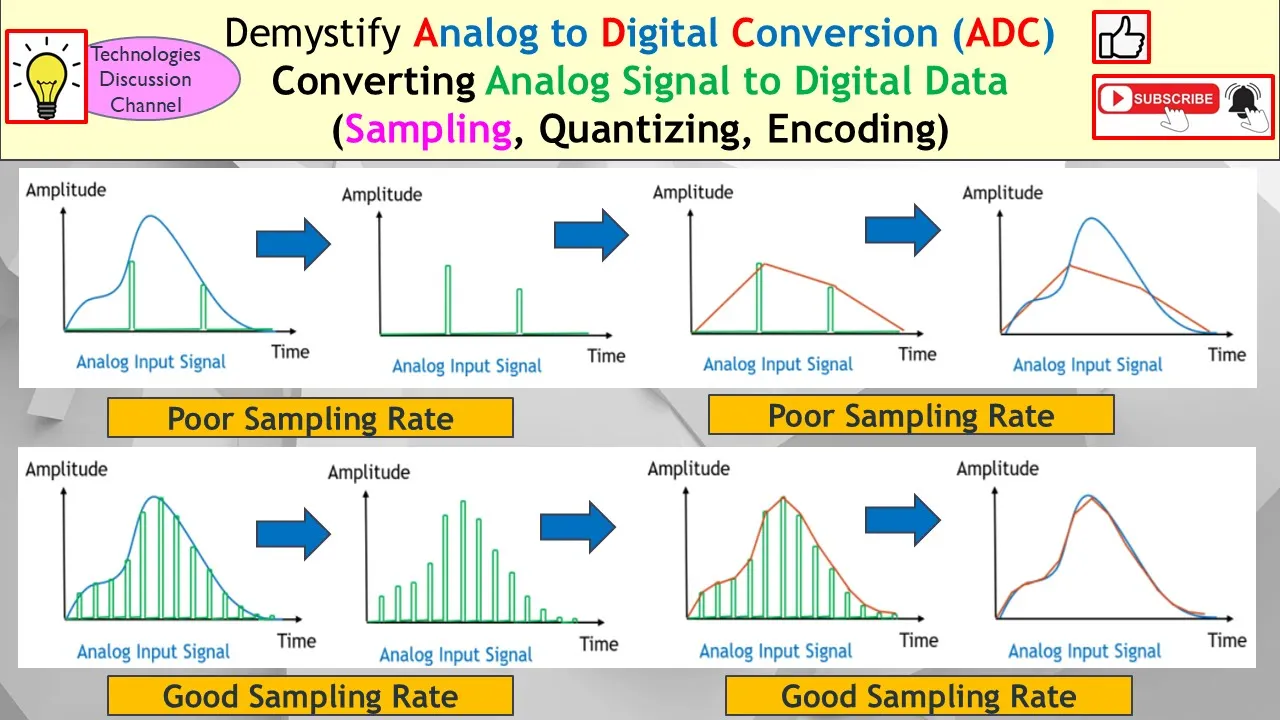
Added:Basic understanding of analog-to-digital audio conversion (ADC), specifically how physical sound waves are converted into binary data.
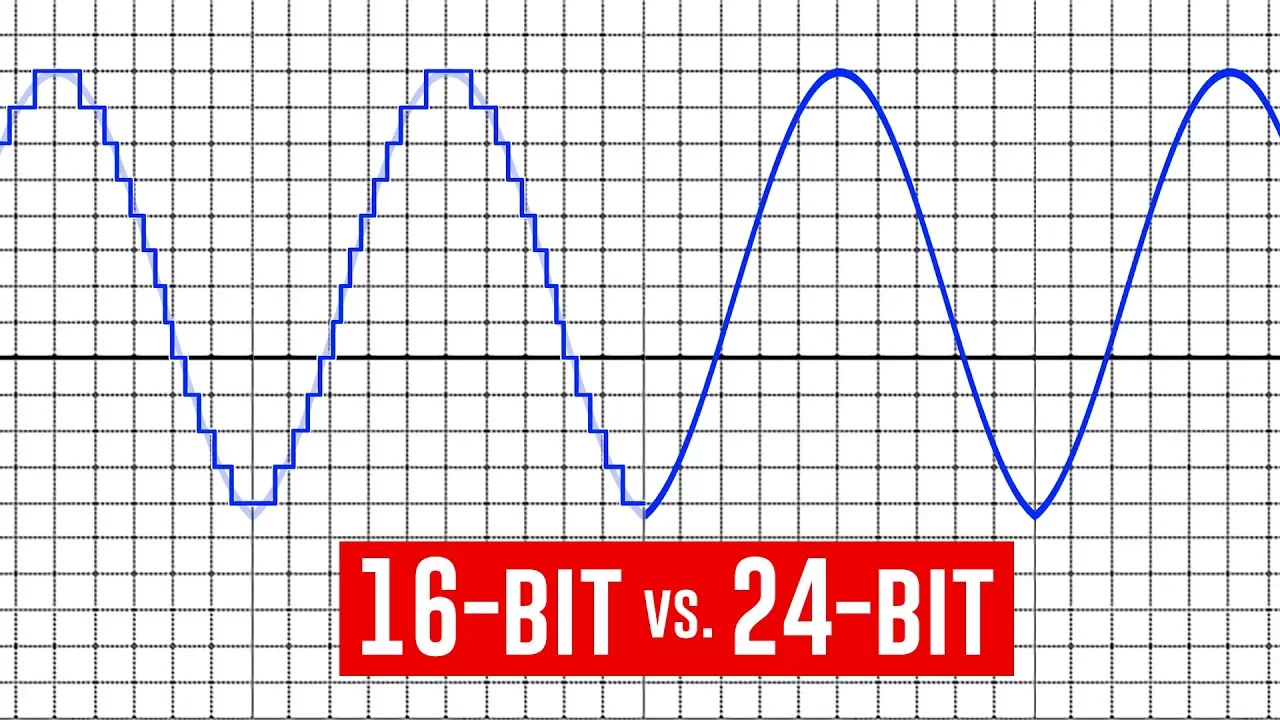
The core concepts of sampling rate (e.g., 44.1 kHz) and bit depth (e.g., 16-bit or 24-bit) in digital audio representation.
Fundamental principles of computer data compression, including the general concept of reducing file size to optimize storage and bandwidth.
An introductory awareness of psychoacoustics, particularly the frequency range of human hearing (20 Hz to 20 kHz).
In-depth study of psychoacoustic modeling, including simultaneous and temporal masking algorithms used by lossy codecs like MP3 and AAC.
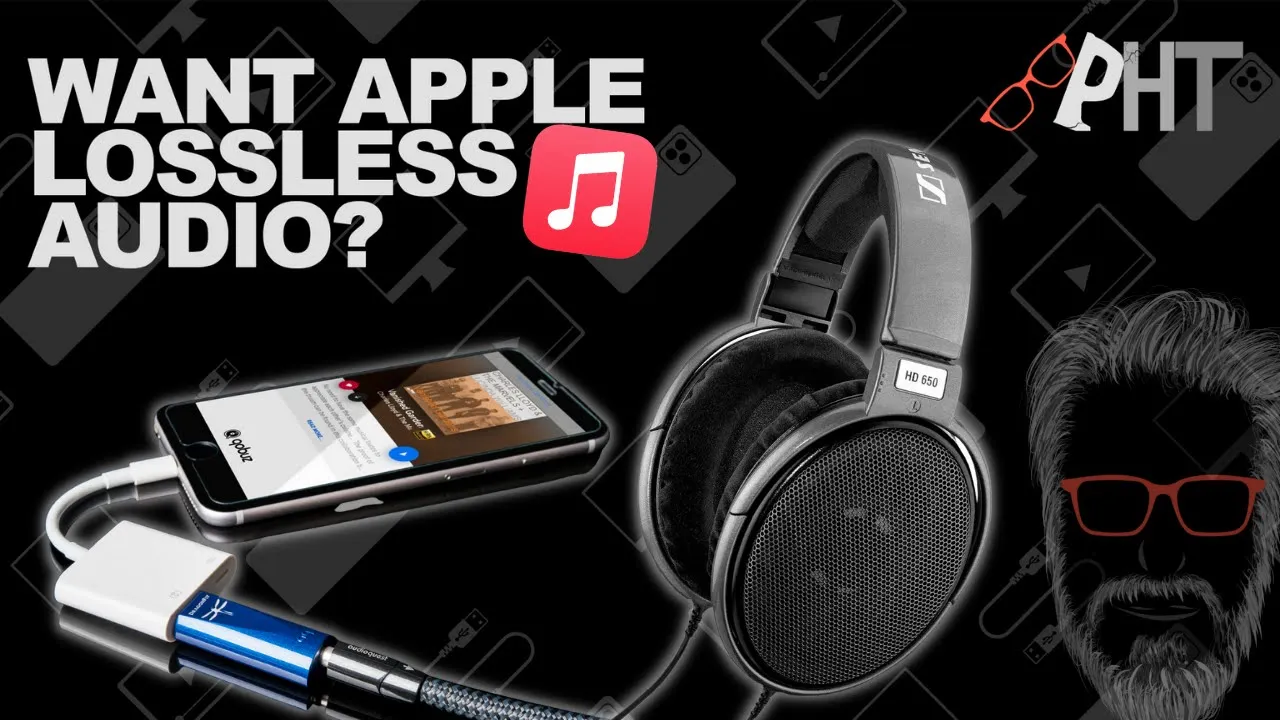
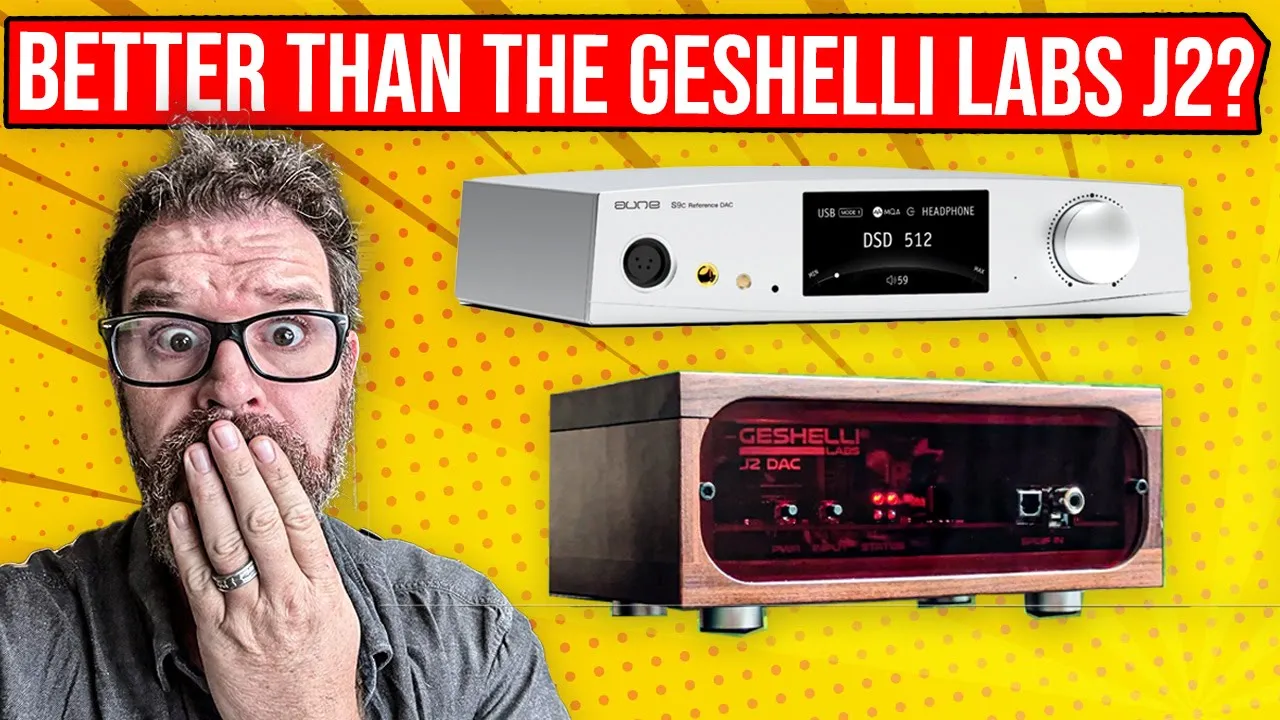
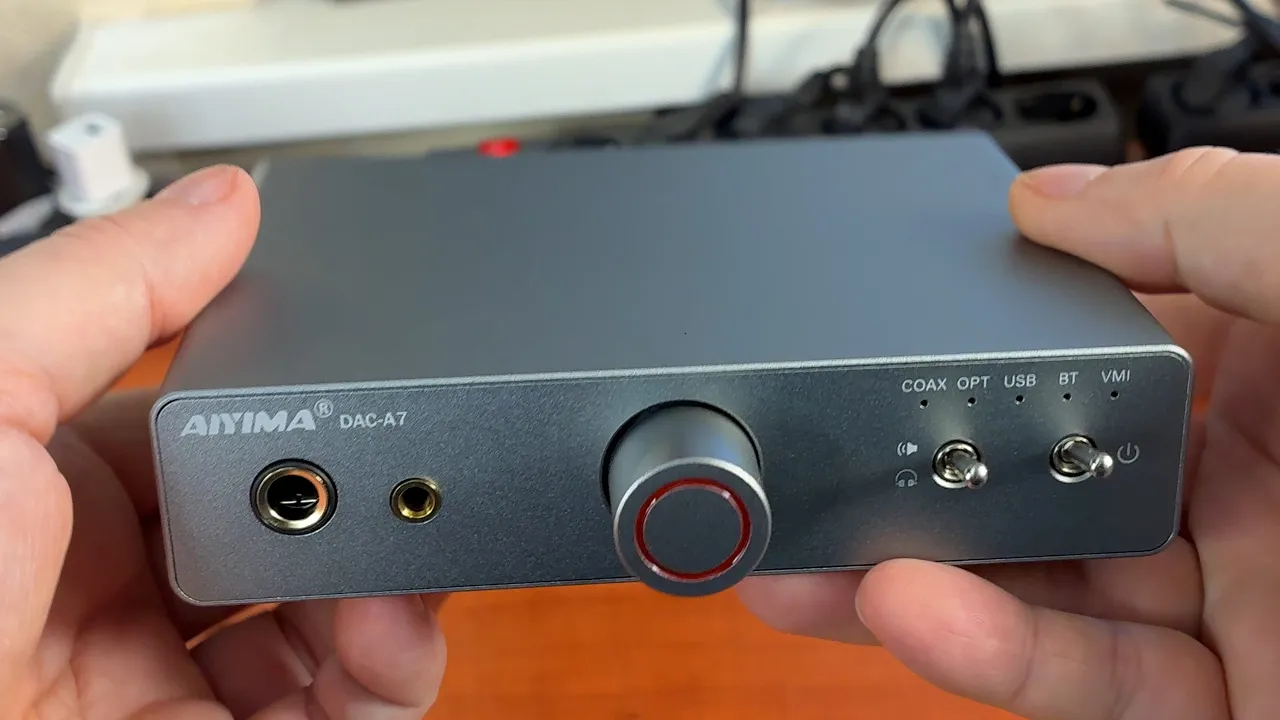
The role of Digital-to-Analog Converters (DACs), amplifiers, and headphones/speakers in reproducing the nuance of lossless audio.
Emerging next-generation audio codecs such as Opus and Ogg Vorbis, and their applications in modern low-latency streaming and gaming.
The distinction between audio container formats (such as M4A or WebM) and the actual audio codecs housed within them.
1.5M views46.3Klikes6:16Original Release: 2017-06-20
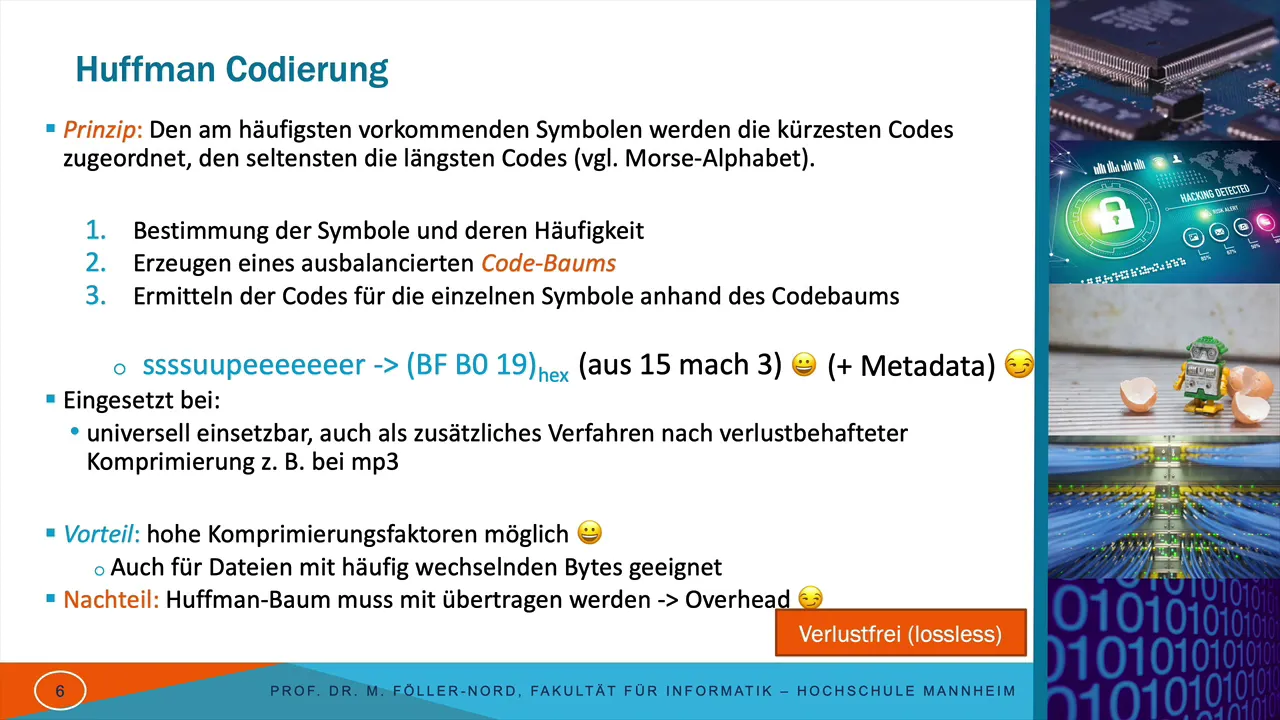
get your 160k Aug vorbis on Spotify get your 256 AC on iTunes get your lossless Flack on title well if you're one of the two dozen people that has a title subscription that is boy if you're into music it might seem like there are just way too many audio formats to choose from can't we all just use MP3 no no we can't there's a very good reason for all of the madness different audio formats make things more optimized for different types of users electronic music artists home theater enthusiasts or just straight up bass [Music] heads let's start by looking at common formats used by average listeners MP3 AAC and vorbis these all store audio using lossy compression which means these formats are often defined by the fact that they discard some information from the original audio Source well hold on now is is that like an MP3 of Don't Fear the Reaper doesn't include the cowbell I got to have more cowbell not exactly you see most people simply can't hear much of the information in the uncompressed audio files you'd find on a retail CD we're talking sounds that are so low in volume so high in pitch or so close in time to other sounds that the vast vast majority of people can hardly perceive them so lossy formats just cut them out oh and they also save space by using a different bit rate you see when a song gets digitally recorded in a studio the recording equipment takes samples of the analog sound waves coming out of a guitar or a singer's mouth and stores them as digital bits just standard ones and zeros on an uncompressed CD the audio you hear is typically stored at a bit rate of 1,411 kilobits per second but lossy compression discards a lot of these bits to make the file often many times smaller for example a 4minute uncompressed song that takes up about 42 megabytes would only be about 8 megabytes as a relatively high quality 256 kilobits per second MP3 and although MP3 is probably the most familiar lossi format others are widely used for different reasons such as AAC which pitches higher quality at lower bit rates due to to a fancy compression algorithm and Aug vorbis which is completely open source and patent-free unlike MP3 but some folks aren't satisfied with the level of quality you get with lossi audio especially audio files who want to get the most out of their high-end headphones and speakers and instead they turn to formats like flak or AAC which offer lossless compression these files contain all of the original audio data but with smaller file sizes if that sounds like magic it's not lossless compression is accomplished by looking for ways to more efficiently store redundant data so this string would be expressed this way instead and by predicting what sound should come next lossless codec can store only the difference between the predicted data and the actual data which takes up much less space and because formats like flak and AAC are specifically designed for audio they can compress sound Clips much more than general purpose compression schemes like Zip in fact a typical audio file with lossless compression will only take up about half as much space as an uncompressed equivalent and if you're wondering about the difference between flak and AAC you'll need to use the ladder if you want to listen to lossless music in iTunes and yeah that's about it but there are also other lossless codecs like Dolby true HD and D TSH HD Master audio for both home theaters and commercial multiplexes that have proved popular with movie studios so look out for these logos when you're out buying Blu-rays if you're a home theater Enthusiast even more interesting is Dolby Atmos which incord each sound in a movie soundtrack spatially meaning it can scale to a huge number of speakers because the audio is mapped in space instead of being coded for just one speaker you can learn more about that right up here but despite the popularity of compressed formats keeping audio in uncompressed form does have its advantages uncompressed files stored in wave or AF format are not only compatible across a huge range of devices because they undergo very minimal processing from the original audio signal but they also contain all of the information that was originally converted from analog to digital they're easier for audio editors and creators to fine-tune as much as they'd like all of that being said at the end of the day if you just like listening to music pick a format that you think sounds good or whatever the format the music already comes in and be sure not to judge other people too harshly because their library is full of 128 kilobyte rips from YouTube racing against the clock as a freelancer challenging yes but with the growth of the internet there's never been more opportunities for the self-employed to meet this need check out freshbooks cloud accounting software designed for the way you work it is a simple and easy way to be more productive organized and most importantly get paid quickly create and send professional looking invoices in less than 30 seconds set up online payments with just a couple clicks and get paid up to 4 days faster see when your client has seen your invoice and put an end to the guessing games freshbooks is offering a 30-day unrestricted free trial to our viewers to claim it go to freshbooks.com tequ and enter Tech quickie in the how did you hear about a section thanks for watching watching guys if you liked this video like it if you disliked it dislike it get subscribed hit the little bell to see all the videos on techie get subscribed again uh and then press it again so that you're actually subscribed that would be three times resulting in a subscription unless you're already subscribed then I would want you to press it a fourth time so you would actually be subscribed and I'll see you next time
Up Next
98:42
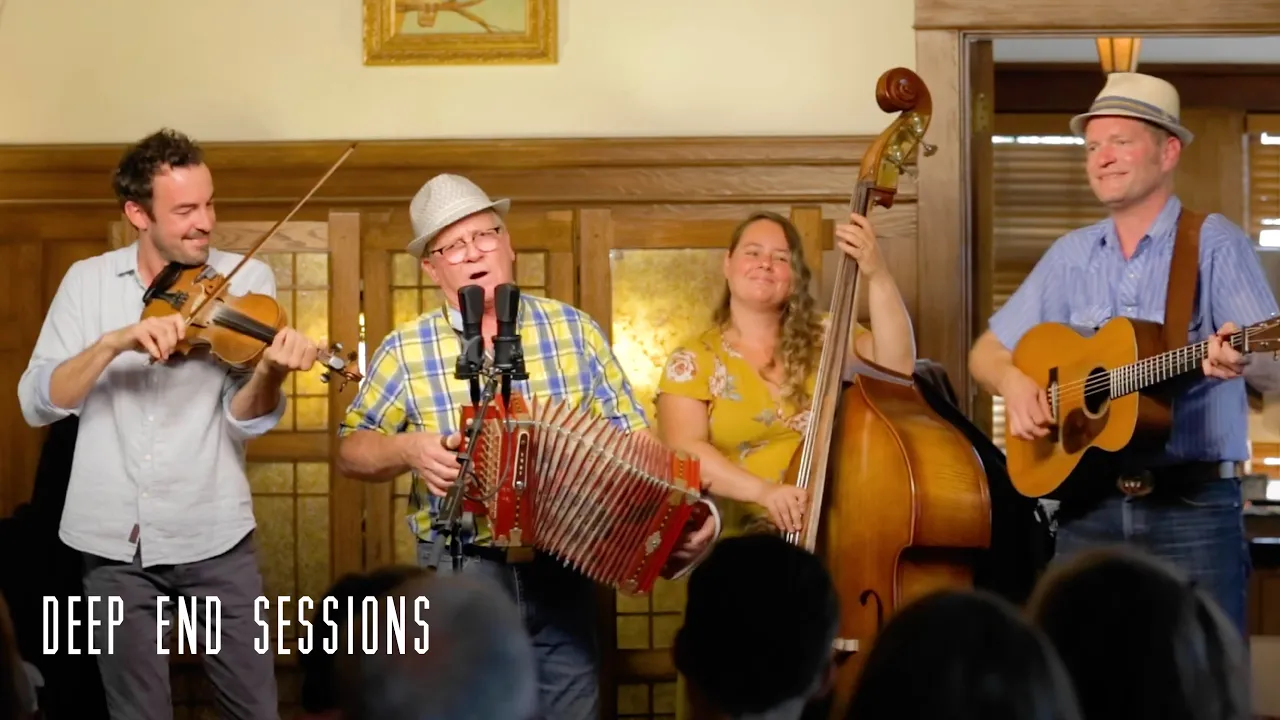
Cajun Country Revival Full Concert Film: Louisianan Folk Music
@DeepEndSessions
447.9K views•2019-06-24

12:54
Triumph of Orthodoxy Icon: Byzantine Art & History Explained
@BenCallan
2.1K views•2024-08-06

9:49
FastAPI vs Flask vs Django: Choosing the Right Python Web Framework
@TechWithTim
302.5K views•2024-05-26

1:42
Game of Thrones Opening Credits: A Cinematic Analysis
@gameofthrones
46.3M views•2011-04-18
Related Study Plans & Knowledge Roadmaps
Structured learning paths in General & Interdisciplinary Studies
general-studies
Elevator Engineering: History, Physics & Cities
01From Hoists to Safety Brakes: The Dawn of Vertical Lift
02Hydraulic vs. Traction: The Engineering Physics of Elevators
03Modern Speed, Safety, and Algorithms
+ 2 more learning modules
12h5 modules
Explore Roadmap
general-studies
Rubber: Material Science, History & Geopolitics
01Origins of Natural Rubber & Mesoamerican History
02The Chemistry of Natural Rubber & Vulcanization
03The Geopolitics of the Rubber Boom & Colonization
+ 2 more learning modules
12h5 modules
Explore Roadmap
general-studies
Containerization: Evolution, Logistics & Trade
01Ancient Trade & Bulk Cargo: Amphorae to Barrels
02The Industrial Revolution & Cardboard Packaging
03The Containerization Revolution: Malcom McLean
+ 2 more learning modules
12h5 modules
Explore Roadmap
general-studies
Textile Tech: Evolution, Labor & Global Impact
01Pre-Industrial Textiles: Handloom & Cottage Industry
02Mechanization: The Spinning Jenny to the Power Loom
03The Factory System & Global Labor Transformation
+ 2 more learning modules
10h5 modules
Explore Roadmap