









![3 Ways To Use 1st INVERSION Triads On Guitar [The Songwriter's SECRET Weapon]](https://i.ytimg.com/vi/29BdhUU5pSM/sddefault.jpg)










This tutorial explains the fundamental I-IV-V chord progressions (tonic-subdominant-dominant) in chorale style (SATB), covering how to identify keys by chord quality (minor keys have minor tonic and subdominant chords, while major keys have major tonic and subdominant chords), proper voice leading techniques including avoiding parallel fifths and octaves, ensuring smooth voice movement between all voice pairs (soprano-bass, soprano-alto, soprano-tenor, alto-tenor, alto-bass, tenor-bass), and the critical role of the raised leading tone rising to the tonic in authentic cadences.
Chorale Style Voice Leading: I IV V Chord Progressions (SATB Tutorial)
Added:Understanding the SATB (Soprano, Alto, Tenor, Bass) vocal ranges and standard grand staff notation.
Basic triad construction and Roman numeral analysis to identify I, IV, and V chords in major keys.
Identification of harmonic intervals, particularly perfect fifths and octaves, to recognize voice-leading errors.
Standard chord voicing guidelines, including spacing limits between voices and doubling rules for root-position triads.
Voice leading with inverted triads (first and second inversions) to create more melodic bass lines.
Introduction of minor key harmony, including the application of the harmonic minor scale for dominant (V) chords.
Incorporating secondary triads (ii, iii, vi, and vii°) and dominant seventh chords (V7) into the harmonic progression.
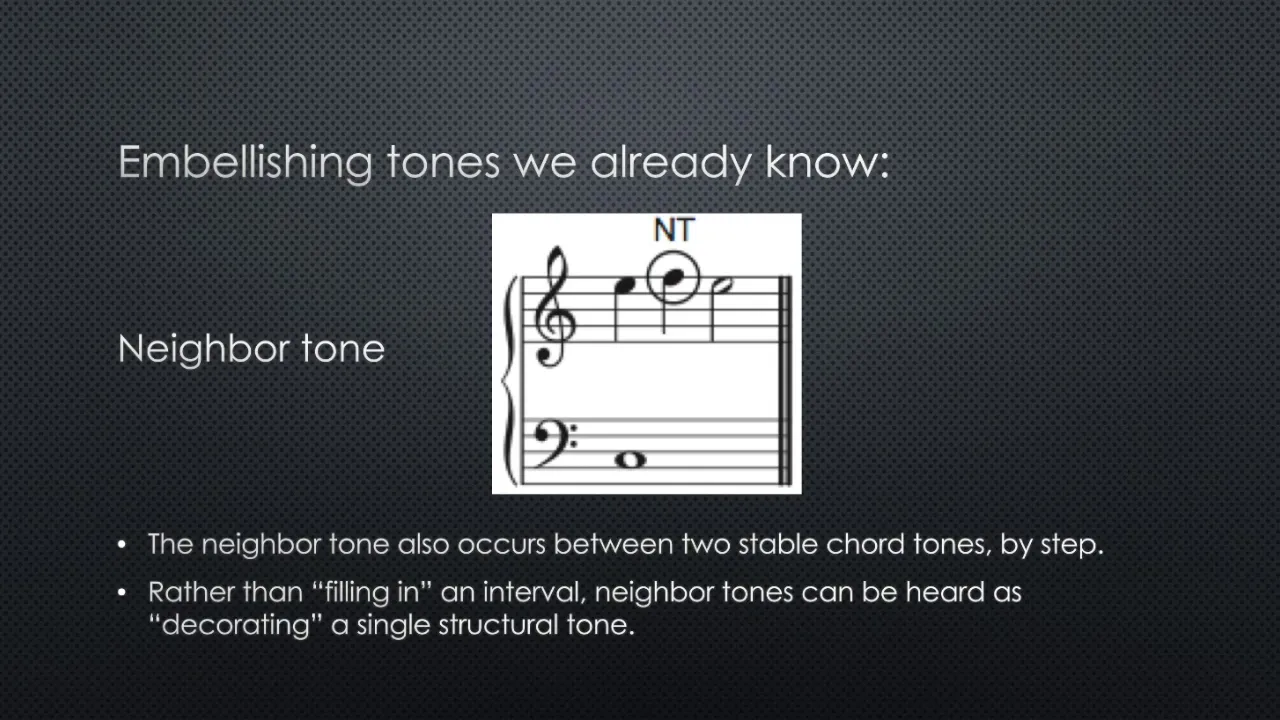
Utilizing non-chord tones such as passing tones, neighbor tones, and suspensions to embellish the texture.
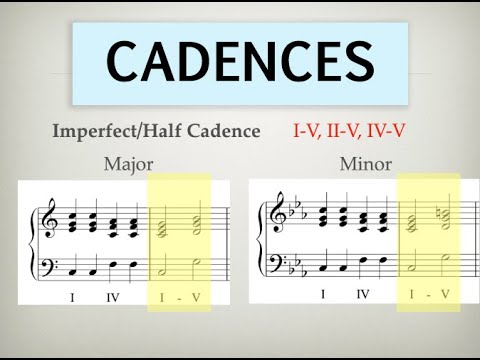
Analyzing and harmonizing complete four-part J.S. Bach chorales using authentic, plagal, and half cadences.
3.5K views32likes9:11Original Release: 2023-04-22
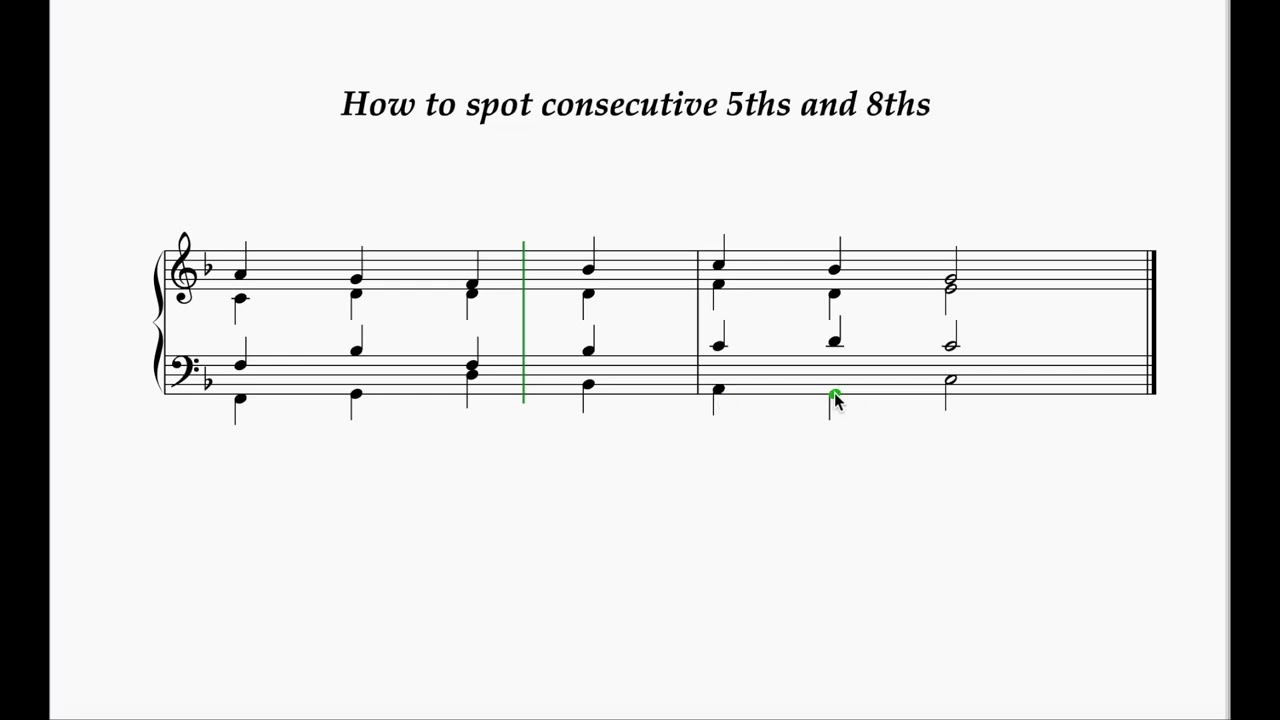
hi there this is a short tutorial on the function of the 1 4 and 5 chords or also known as the tonic subdominant and dominant chords and also how to write various patterns um using Chorale style or also known as satb or soprano Alto tenor base this is a supplementary short assignment to um support unit 3 of the rural Conservatory celebrate Harmony level 9 materials so let me just go over and share my screen and I've got a handy dandy stylus pen here what I'm going to do is work through a couple of the different exercises together in this first page what we have is we have various exercises in which we need to notate the chord progressions um just using a whole notes would be fine but also to recognize which key we are in as well now of course in a minor key the 1 and the four chord are also known as the tonic and subdominant chords are minor chords and in a major key the tonic and subdominant chords are major chords in a minor key the dominant chord is major and in a major key the dominant chord is also a major chord so let's take a look at this first example and we are in the key of F minor because you can see here the clue is the lowercase tonic chord technically we could also be in the key of A flat major but in order to write in that key we would need to have Capital tonic chords in this example we do not so what I'm going to do is first of all what you want to do is fill in the base notes and I'll do my best to draw this neatly so you have an F for the tonic chord A C for the dominant chord and then an F now let's see maybe we could put an F in the soprano and then we also want to put the raise leading tone in the soprano and then you can see how we have then the raised leading tone rising up to the tonic that's a very important part of especially of authentic cadences or five one cadences because we want to make sure that the raised leading tone in a minor key or the leading tone in a major key always Rises up if possible it can also drop down a third to the fifth of the tonic chord but it's the best option is to try to have that leading tone rise to the tonic now we have the outside voices filled in maybe what we can do now is put the third which is a flat in the one chord in the alto voice and then we'll put C in the tenor and then put a g here and then put an A flat here so you can see here we have root root third fifth then we have root third fifth here so we could put a root here to make that look really successful something that is a possibility if you want could P to put a g here but that creates parallel fifths between the tenor and the bass in this chord and in this chord so I would suggest not doing that here we can put a common tone basically all the way across so now a way to organize and edit or or just check your homework to make sure that the voice leading is successful is to always check to make sure The Voice leading is successful between each set of chords in the soprano and bass soprano and Alto soprano and tenor and Alto and tenor as well as the alto and bass and you would do that even though there's a lot of yellow lines here you would do that same process for every two chords so you would do that for the first chord and then the second chord then it would start off again and do the same thing let's use green this time you can see where we can fill this in it will get very very full but just for the sake of demonstration look at all that and all that interesting all that interesting checking now what we can do is erase all of that just to make it look better a couple of voices disappeared so let's fill those back in the way we want them raise leading tone especially so essentially when we're looking at analyzing um and writing in the certain parts for a Cadence such as this you want to make sure that you fill in all the voices and think of voice smooth voice leading as best as possible now on this page there are some search and practice questions where in some cases the chord progression is written in sometimes the chord progression is not written in and sometimes this happens in in our homework where we'll see either the base note is given or the soprano is given uh the baseline or soprano line and sometimes there are chord progressions sometimes there are not so it's up to us to do some slew thing to see what key we are in in this case what you also want to do is make sure that if there is one of the outside voices missing you want to write that in or at least think about the way that that musical line will go which direction it will go and then also which chords correspond if we look at this example here we are in the scale of a major so we can fill that in and here we have the one chord going to the V chord going to four and then here's a five chord going to one now let's fill in the soprano now here this is a fifth you could potentially go from B down to a but then we have to watch out because there could be a perfect fifth here the parallel fifth so we've got to watch out for that maybe we'll put in a d way down to a b and then over to an a the trickiest part about doing um Chorale writing is when we have chords like the four going to five progression in which there are sip to completely different notes between the two chords in that case there could be the possibility for parallel intervals and it's always good to watch out for those especially parallel fifths and octaves then what we can do is then fill in the rest of the notes making sure to again check for voice leading that's successful and also make sure that the smooth voice leading occurs where sometimes if there's a occasion to to write a giant a large leap in the same voice you might want to reconsider the groupings of notes so that there's always smooth voice leading as much as possible so I do hope this tutorial was helpful for you and all the best as you continue to work through the level 9 Harmony take care for now
Up Next

84:11
Harmonic Progressions in Tonal Music: Chord Sequences and Voice Leading
@EricLandonStarling
2.3K views•2021-03-19

10:20
Mozart's Musical Dice Game Explained: History, Rules, & Fun
@webpianoacademy
5K views•2023-03-13

47:36
Understanding Diatonic 7th Chords in Major Keys | Music Theory Tutorial
@GracieTerzian
54.7K views•2022-03-02
10:49
Understanding John Coltrane's Giant Steps: A Music Theory Analysis
@Vox
10.4M views•2018-11-12
Related Study Plans & Knowledge Roadmaps
Structured learning paths in Music Theory
music-theory
Composing Galant Music: Partimento & Schemata
01Foundations of Figured Bass and Keyboard Harmony
02The Rule of the Octave (Regola dell'Ottava)
03Galant Schemata: The Building Blocks of Form
+ 2 more learning modules
30h5 modules
Explore Roadmap
music-theory
Decoding Overtone Series: Tuning & Drone Music
01Acoustic Foundations: The Physics of the Overtone Series
02Tuning Systems: Equal Temperament vs. Just Intonation
03Microtonality and Spectralism: Beyond Standard Pitches
+ 2 more learning modules
24h5 modules
Explore Roadmap
music-theory
Impressionist Harmony: Scales, Planing & RPGs
01Foundational Music Theory: Keys, Intervals, and Seventh Chords
02Impressionist Color: Chord Planing and Parallel Harmony
03Whimsical Textures: Pentatonic Cascades and Whole-Tone Scales
+ 1 more learning modules
14h4 modules
Explore Roadmap
music-theory
Negative Harmony: Axis Reflection in Indie Pop
01Music Theory Foundations: Scales, Intervals, and Triads
02Functional Harmony and the Circle of Fifths
03Demystifying the Negative Harmony Axis Reflection
+ 2 more learning modules
16h5 modules
Explore Roadmap