![Senior ONE / Chapter 3 (Mixtures) / [Final Revision]](https://i.ytimg.com/vi/dgdHyiafU38/maxresdefault.jpg)

















![[MDCAT/ECAT] Chemical Kinetics in One Shot (PMC Syllabus - 2022)](https://i.ytimg.com/vi/_HH_u3_X0V0/maxresdefault.jpg)




Ammonia causes organic materials to turn black through two distinct chemical mechanisms: a reversible pH-dependent reaction where ammonia deprotonates anthocyanin pigments in red fruits, temporarily shifting their color absorption spectrum; and an irreversible enzymatic reaction where ammonia disrupts cell structure, allowing phenolic compounds to oxidize and polymerize into dark brown/black pigments via polyphenol oxidase, similar to the browning reaction in cut fruit.
Ammonia Fuming: The Chemistry of Blackened Fruit & Wood
Added:Basic acid-base chemistry, specifically understanding ammonia (NH3) as a volatile weak base and its behavior in gaseous form.
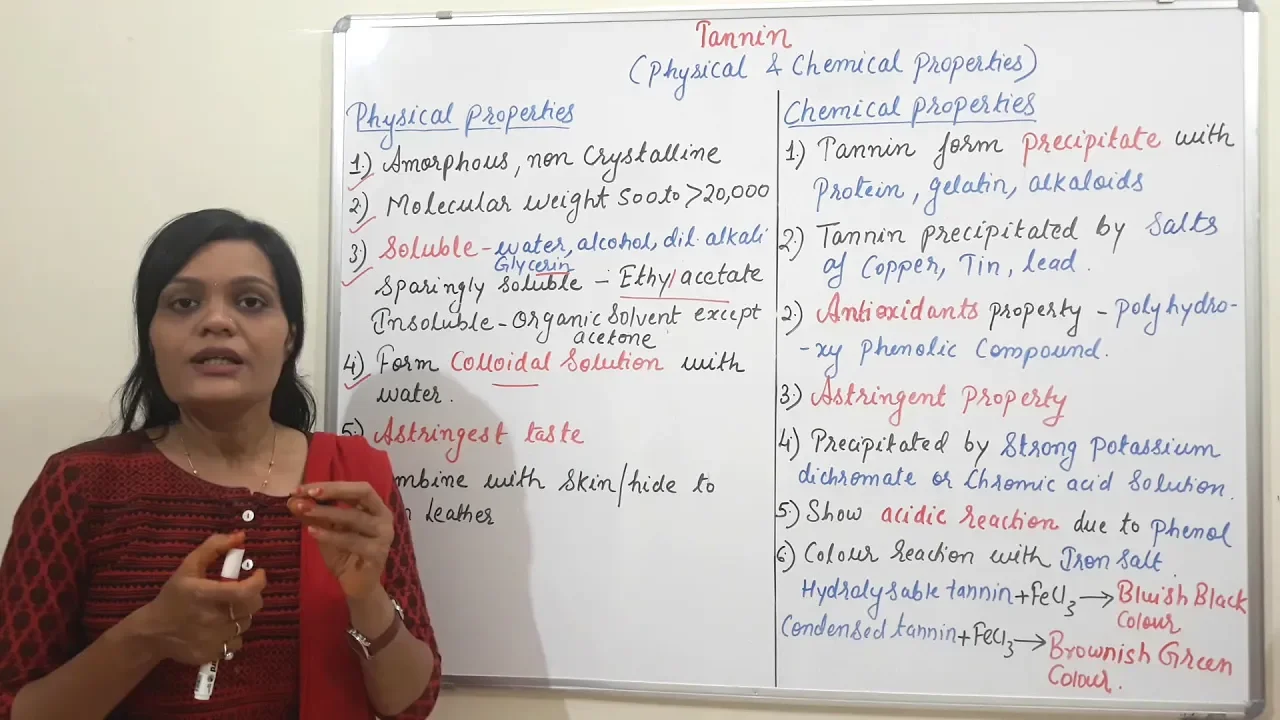
The chemical structure and properties of tannins and polyphenols naturally present in wood and various fruits.
The fundamentals of organic oxidation reactions and how atmospheric conditions affect organic compounds.
An introductory understanding of plant anatomy, specifically the role of lignin, cellulose, and simple sugars in plant tissue.
The historical and practical application of ammonia fuming in woodworking, particularly the 'fumed oak' technique popularized during the Arts and Crafts movement.
The chemistry of coordination complexes, such as how transition metal ions (like iron) interact with tannins to create dark pigments (e.g., iron gall ink).
A comparative analysis of food browning processes, distinguishing between enzymatic browning, caramelization, the Maillard reaction, and alkaline-induced darkening.
Industrial safety protocols and gas-phase chemical kinetics associated with using hazardous volatile alkaline compounds in controlled environments.
365.5K views15.9Klikes11:11Original Release: 2025-11-01
This is a black apple. It has not been painted. [music] In fact, I can even eat it.
Today, I'm going to show you how I chemically made pure black food and see if we can come up with a mechanism for how this works.
In the early 1900s, farmers noticed something strange. Wooden boards in their stables were slowly darkening. And what was weird about this is that one thing was clear. The smellier and more urine filled the barn, the darker the oak boards got. So, what's so special about urine? Well, the chemical in urine that it gets its name from is called ura. UA can be broken down by bacteria to produce a very recognizable gas, ammonia. I have some concentrated ammonia and I'm just going to let it evaporate in here with this apple. Let's watch what happens.
It turned completely black.
Wa! Look how crazy that is. It's jet black now.
Okay, let's see what this black apple actually tastes like. This is so weird.
Just a slight hint of ammonia.
It's actually pretty good.
It doesn't taste any different.
That is so weird.
Look at that. It's so weird how the flesh of the apple is so white and crispy still and then the outside is just jet black.
I wanted to test if this works for other fruits, too. So, I put in some strawberries, some red grapes, some blueberries, and a red potato, and some raspberries. If you look at the time lapse, the strawberries and raspberries turn black almost immediately. The red grapes take a little bit longer. The blueberries, you can't really tell. And the red potato didn't do much.
Here's my strawberry.
Here's a raspberry.
And some grapes.
This is so weird.
These actually look so cool.
Okay, so I can tell that these strawberries have a lot of ammonia in them. So, I'm not going to try to eat them. Just sniffing them. The super overwhelmingly strong smell.
So, I'm not going to dare to eat these.
In this time lapse, you can see how quickly the strawberries darken compared to the apples.
The strawberries darken almost immediately and the apples take a bit longer.
So, what is it about ammonia that causes fruit and even wood to darken in its presence? Well, there's actually a lot more chemistry going on here than it first seems. For example, the things that are red, they turn black very quickly, but for wood, it takes a long time. This is some white oak that I put in with some concentrated ammonia. And over 24 hours, it slightly darkened.
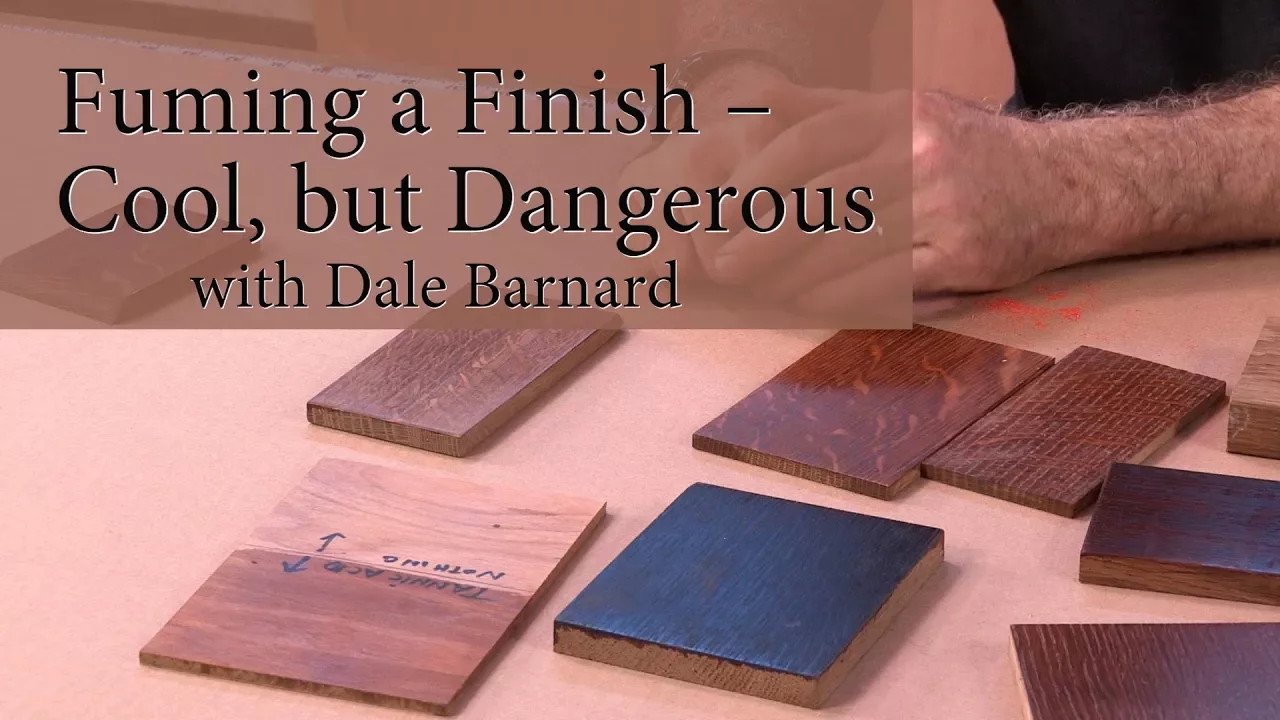
So, this is the piece I cut it from. You can see how much darker the piece that was in with the ammonia is. This is what the farmers were experiencing that I mentioned earlier. And this can actually be used as a treatment for wood called ammonia fuming.
But how is it turning dark when there's no red color? And why does it take so much longer?
Before we continue, have you ever wanted to turn your backyard pool into an actual swimming treadmill? Well, you can now with this cool new product called SwimJet from iGarden that sponsored this video. It basically transforms any pool into an endless swim lane. It's called the iGuard Swimjet P series.
Wow, she's swimming full speed.
I'm so surprised at how strong this is.
What's cool is that it creates a super strong current using a patented dual channel jet system. So, the water flows wide and deep, not just straight like a fire hose. That means two or even three people can use it at once, whether you're training, floating, or just having fun. I wanted to see how powerful this thing really is, so I set it up in free mode and ramped it from 20% to 100% power. Look how strong this is. It actually has five different modes.
Beginner, moderate, advanced, endurance, and even one called entertainment mode, which cranks the current up and fluctuates it like a real surf zone.
Okay, at 100%, this thing is insane.
It's so crazy how strong it actually is.
But then you can turn it down low enough for young kids to play in it. There are LED indicators that light up as you adjust it. In one setting, I was doing a relaxed backflow, and in another, I was getting pushed hard enough that it felt like sprinting in place. And because it runs on a stainless steel brushless motor with soft start tech, it's not only durable, but quieter and easier on the hardware. Plus, it's backed by a full 3-year no hassle replacement warranty. So, this is one of those upgrades that takes something ordinary, like a backyard pool, and makes it amazing. You can go from easy float sessions to real resistance swim training. It's so fun. Joanna practicing all her swim moves right now. She's like an Olympic swimmer.
>> Yeah, that's awesome.
>> This is the ideal swim jet that's perfectly designed for fun in your home pool. So, if you want to learn more or check it out for your own pool, I'll put a link in the description. Big thanks to i Garden for sponsoring this video. Now, let's get back to our experiment. To understand what's happening here, we have to understand that there's a lot of ways to make something black. Black just means that it's absorbing all of the different colored wavelengths of light.
And it seems that there's two mechanisms happening here. A fast reaction that turns things black almost immediately and a slower reaction that takes some more time. First, let's look at the fast reaction. One thing that I noticed is that it happens quickly and turns the red fruit black. But what's interesting is if you let the food air out for several hours afterward, it almost completely recovers from the blackness.
Okay, so it's been 10 hours since I took a bite of the apple, and you can see that it's almost completely returned to its red color. There's still some parts on here that are kind of brownish black, but for the most part, it's been completely reversed.
And these are the other two apples that I put in.
Can see they've reversed as well. But as for the strawberries, not so much. So, some of the red has come back, but for the most part, they're still very discolored, brown, black. Same with the raspberries. The blackness has stayed in some of the little pockets, but then it's turned back red in some of the other ones. So, they don't smell like ammonia anymore, but you can see that they're still black. So, there's been some permanent damage done here. Even on the apple, there is some permanent damage spots where there's some brownish blackish spots still.
So first we'll talk about the reversible color change which is pHbased and then we'll talk about the permanent color change. This quick and reversible color change comes from the color molecules in many red fruits called anthocyanins.
Anthocyanins are good at absorbing light because of these alternating double bonds. But ammonia is a strong base. So it pulls off these hydrogen atoms on the O groups of the molecule. This messes up the alternating double bonds and causes it to absorb more light in the yellow orange spectrum. I have here some concentrated anthocyanins.
This is basically just concentrated red radish juice. So you can see this has this rich red color here.
But now when I put a little ammonium hydroxide in it, it turns basically black.
You can see there's kind of a bluish tint to it though.
But then if I add some hydrochloric acid to it, you can see that it turns red again.
And if I add ammonia again, it turns black, but really it's this dark blue color.
Then add hydrochloric acid and it turns red again. So if this is just an acid base reaction, how come this doesn't happen to apples when I just put it around some other base like sodium hydroxide?
Well, the reason is because ammonia is very soluble in water. So it can easily penetrate the cells and change the pH within the cell whereas other bases can't do that as easily. So at first the blackening is due to the pH change in the cells, but this can be reversed when the ammonia is removed and the CO2 from the air reduces the pH again. So it wasn't permanent. But the darkening wood was permanent and the strawberries and the raspberries had a permanent reaction as well. This is where the second reaction comes in. Ammonia does something else besides raise the pH. It also starts to disrupt the cell structure which allows phenolic compounds inside the tissue to mix with oxygen and a defense enzyme called PO polyphenol oxidase. PO's job is to kind of try to patch up the cells and make polymers with these phenol compounds that are leaking out of the cells. These polymers should patch up the leaks. And these long polymers absorb all the wavelengths of light so they look dark brown or black. This is the same reaction that happens in just regular fruit when you cut it open and it turns brown. Unlike the reversible color shift of anthocyanins, this polymerization reaction cannot be undone. Also, the ammonia pulls off the hydrogen atoms from the phenol group so that they become very reactive and start to polymerize themselves. So, even in dead cells like wood where there's no PO, you still get browning and darkening due to ammonia reacting with the tannins to make these permanent dark pigments. In fact, this blackening even happens with tissue. Humans have the ability to remove ammonia from their system, but fish don't. So, if ammonia starts to build up in fish tanks, it can start to turn their skin black. This is irreversible tissue damage. What's crazy about all this is that when we think of ammonia, we usually think of a cleaning agent, but it has this innate ability to make black apples, black wood, and even black fish. So, don't use too much next time you clean your house. And thanks for watching another episode of the Action Lab. If you haven't subscribed yet, remember to hit that subscribe button and we'll see you next time.
[music]
Up Next

9:48
What Is an Emulsion and How Does It Work? A Food Science Guide
@JacobBurton
167.6K views•2011-10-12
83:56
Biocatalysis and Catalysis in Islatravir Synthesis | Merck Webinar
@SCIwheresciencemeetsbusiness
675 views•2020-10-08
10:06
1H NMR: Determining Number of Peaks from Structure
@MSJChem
59.2K views•2017-04-06

17:31
Edible Water Bottles: A DIY Guide to Sodium Alginate Spherification
@ryan
10.5M views•2019-06-21
Related Study Plans & Knowledge Roadmaps
Structured learning paths in Chemistry
chemistry
Nuclear Chemistry: Decay, Meds & Fuel Cycle
01Introduction to Nuclear Structure and Radioactivity
02Decay Dynamics and Kinetics
03Radiation Interaction and Detection
+ 2 more learning modules
24h5 modules
Explore Roadmap
chemistry
Supramolecular Chemistry: Forces & Machines
01Foundations of Chemical Bonding and Intermolecular Forces
02Introduction to Host-Guest Chemistry
03Thermodynamics and Dynamics of Self-Assembly
+ 2 more learning modules
16h5 modules
Explore Roadmap
chemistry
Photochemistry: Excited States & Reactions
01Foundations of Light-Matter Interactions
02Molecular Orbitals and Electronic States
03Photophysical Processes and Jablonski Diagrams
+ 2 more learning modules
18h5 modules
Explore Roadmap
chemistry
Coordination Chemistry: Bonding & Properties
01Introduction to Transition Metals and Ligands
02Crystal Field Theory (CFT) and Geometry
03Magnetic Behavior and Spin States
+ 2 more learning modules
14h5 modules
Explore Roadmap