

























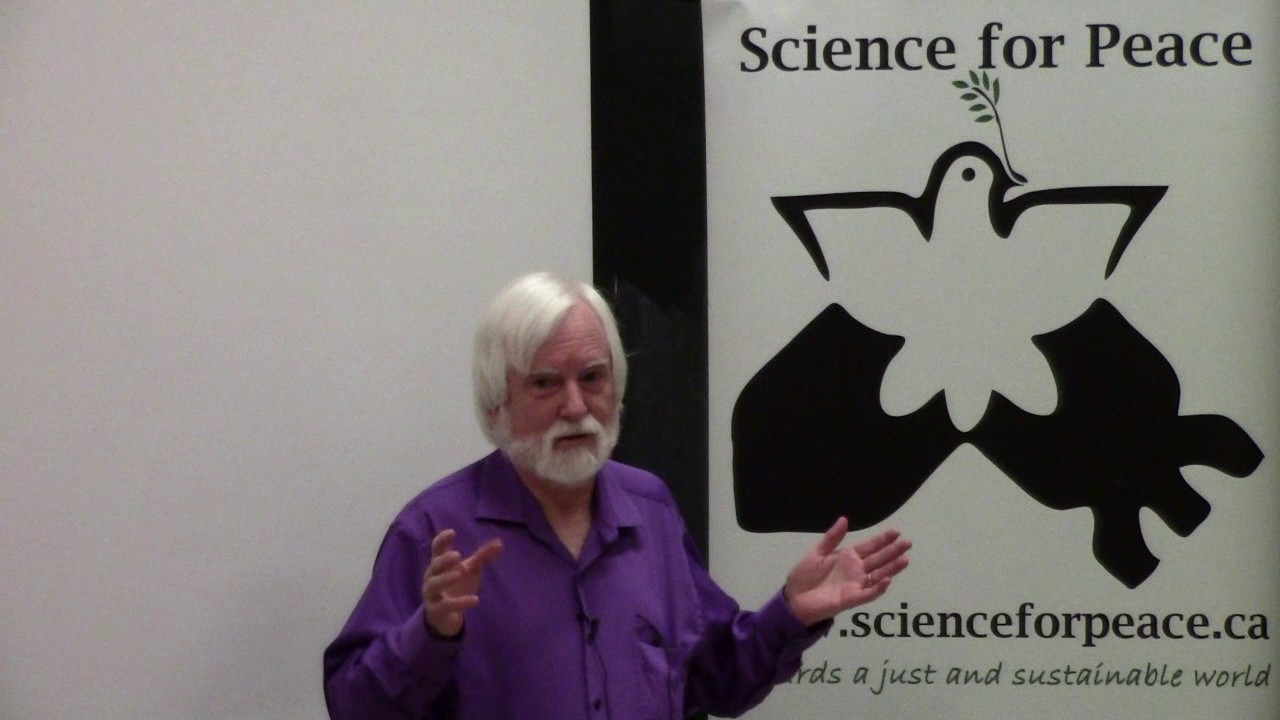


This lecture explores the evolution of human rights discourse from Hannah Arendt's concept of the 'right to have rights'—the fundamental entitlement of stateless persons, refugees, and asylum seekers to belong to some political community—to contemporary critiques of humanitarian reason. Benhabib analyzes how international human rights law since 1948 has created new normative spaces for political action, yet simultaneously exacerbated tensions between state sovereignty and universal human rights claims. She argues that while cynicism about human rights is understandable given humanitarian failures, it is not defensible; instead, we need a new conceptualization that bridges the gap between the facticity and validity of international law, enabling what she calls 'jurisgenerative' politics that can create new vistas for emancipatory political engagement.
Human Rights and Humanitarian Reason | Seyla Benhabib
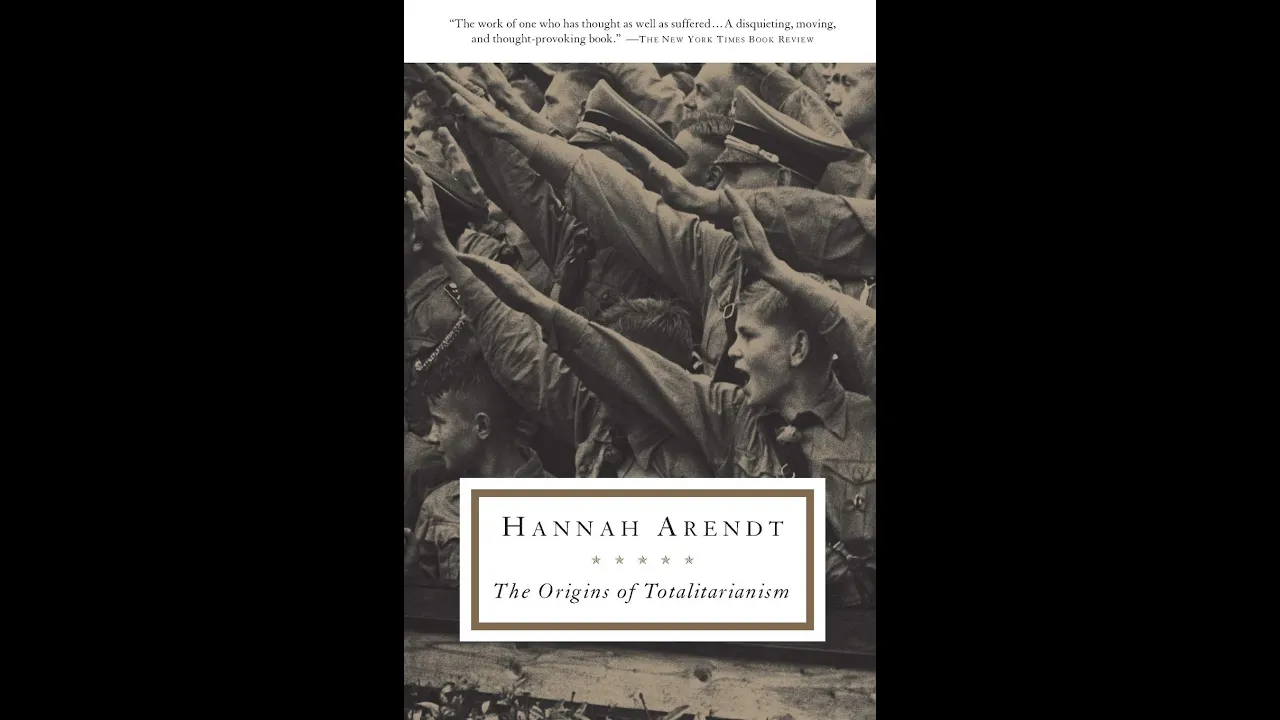
Added:on February 16 2014 the New York Times magazine ran an article by the journalist Mack mcland called container City container City refers to the kis camp in southern turkey housing 14,000 refugees from Syria protected by high Gates and surrounded by barbed wire killis from the outside shares features with many refugee camps all over the world that make them indistinguishable from prisons or criminal detention centers kis houses its population in 253 identical containers spread into neat rows the pictures that accompany the article remind one of shipping containers at the harbor each container is a 23x 10t trailer with three rooms a bathroom with its own plumbing and hot water a kitchen equipped with refrigerator and a stove and a living room with a color TV with close to 1,000 channels probably picking up programs from all the surrounding countries of the Mediterranean yet there are some unique features of kis besides the cleanliness of its streets and the organization of proper electricity water and sewage Services which led one Syrian resident to refer to it quote as a five-star hotel there are schools in the camp sex segregated according to the wishes of the syrians a grocery store where refugees can buy supplies with a credit card of $40 per person uh for month and $20 for other needs a beauty salon a barers shop artwork and gymnastics classes but despite all this quote nobody likes living there it is hard for us said Basher Alito the section leader who was so effusive on in his praise of the camps and the Turks quote inside we are unhappy in my heart it is temporary not permanent the killis refugee camp is among hundreds in dozens of countries of the world a report by the United Nations High Commissioner of refugees notes that by mid 2013 the number of worldwide refugees stood at 38.7 million this was the highest level on record and with no end in sight to conflicts in places such as Syria Central African Republic and the Democratic Republic of the Congo which you've all referred to by now most likely the refugee population stays at 40 million as the number of refugees worldwide has increased not only has the number of camps grown but the camps have ceased to be places where one held people only temporarily rather the camps have become semi-permanent the largest refugee camp in the world Kenya daab is 20 years old and houses 420,000 refugees the Palestinian refugee camps in southern Lebanon are in many cases nearly 70 to 50 years old depending on whether the refugee population was created in 1948 or 1968 the refugees who live in these camps and in some cases who have spent their entire lives there become P RSS I.E those in protracted Refugee situation refugees ases idps internally displaced persons prss those in protected Refugee situations stateless persons are new categories of human beings created by an international State system in turmoil and are subjected to a special kind of precarious existence although they share with other suffering strangers a term that has come up again the status of victimhood and become the objects of our compassion as the unhcr puts it they become persons of concern their plight reveals the most fiful distinction between so-called human rights or ladom as it used to be called and the rights of the citizen between the universal claims to human dignity and the specificities of indignity suffered by those who seem to possess only their human rights from hanahan's famous discussion of the right to have rights in the origins of totalitarianism to Georgio agamben's homo saer to Judith Buckler's precarious lives and Jac Coroner's call to the enactment of Rights the Asylum Seeker the stateless person and the refugee have become metaphors as well as symptoms of a much deeper Mala in the politics ICS of late modernity in this lecture after briefly recalling Hanah aran's discussion of the right to have rights I will consider jacqu rosier's trenchant critique of arant ronier not only misreads arent but much of what he defends as the necessary enactment of Rights is quite compatible with an aranan understanding of politics I will then turn to developments in international human rights Lo since 1948 these developments I will argue have not resolved but only exacerbated conflicts between the territorially demarcated system of State sovereignty and the universality of Human Rights claims in the conclusion to my lecture I return to the quandaries of humanitarian reason in the DF asan's Felicitas phrase which a number of you have quoted while the prevalent mood of cynicism among many I should say maybe deep dissolution among many concerning human rights as well as humanitarianism is understandable it is not defensible we need a new conceptualization of the relationship between international law and emancipatory politics a new way of understanding how to negotiate the facticity and the validity of the law in Hab Ma's terms including international human rights and humanitarian law such as to create new Vistas for the political let me begin with Hannah AR in a well-known and much discussed passage in the origins of totalitarianism Hanna arand wrote quote we become aware of the existence of a right to have rights and that means to live in a framework where one is judged by one's actions and opinions and a right to belong to some kind of organized Community only one millions of people emerge who had lost and could not regain those rights because of the new global political situation she goes on the right that corresponds to this loss and that was never even mentioned among the human rights cannot be expressed in the categories of the 18th century because they presume that rights spring immediately from the nature of man the right to have rights or the right of every individual to belong to humanity should be guaranteed by Humanity itself it's by no means certain whether this is possible she concludes the right to have rights therefore has become the well-known phrase through which to capture the plight of the stateless the refugee the asile and the displaced person that is the plight of those who have been cast out of the framework where one is judged by one's actions and opinions I want to single out very briefly several sets of philosophical issues which run through these famous passages first the normative justification of right and in particular of the right to have rights I guess this would put me in the deontological camp from where I gather from this discussion that's been going on here in the conference throughout this discussion arent po pisz against the grounding of Human Rights upon any conception of human nature or history for her conceptions of human nature commit the mistake of treating humans as mere substance as if they were things in nature but following Augustin and Iger for her humans are the ones for whom the question of being has become a question she quotes Augustin quid erum deum what then am I God what is my nature the answer simply is M I have become a question to myself and this capacity for self-questioning is also the source of one's Freedom although human freedom is not Limitless and is subject to the fact of The Human Condition in her words worldliness plurality nality and labor work in action it is with reference to this Human Condition alone and not in the light of a fixed concept of human nature that we must try to justify the right to have rights now arin's rejection of any justificatory role that the concept of history may play is complex we know that since the late 1950s she's engaged in a conversation with marks whom she accuses of having brought the tradition of Western political philosophy to an end by substituting a philosophy of history for a political philosophy proper aren's reading of Marx is often dismissive and I'm not concerned to evaluate it here but for her as for Walter Benjamin whose thesis on the philosophy of History the famous thesis on the philosophy of History she brought over to the United States with her in a su case after his suicide in Port B Spain and from whom she learned a great deal uh any deterministic account of History either privileging a mechanism of social forces that act as the engines of change or any theological account of History which attributes to it an end goal is intellectually shallow even more it is morally reprehensible because it makes human beings into an instrument of world World spirit and robs them of oppositional agency one has to act against the grain of history and be utopian sometimes to use a benjaminian locution now I am going to skip the philosophical discussion of justification there's lots here about whether arent is a political decisionist or existentialist more in the tradition of you know uh kmid Etc but I just want to quote one passage from Hannah arent which is I think crucial for understanding her politics of Human Rights she she writes our political life rests on the assumption that we can produce equality through organization because men can act and change and build a common world together with his equals and only equals we are not born equal we become equal as members of a group on the strength of our decision to guarantee ourselves mutually equal rights let me leave this passage un commented on I can return to it if you wish I have written one book on arent and I'm about to publish another collection of essays so I will just leave that as it is now and let me turn to Jac ronier in who is the subject of the rights of men jacqu Groner subject AR discussion in these famous passages to a trenchant critique composed in 2004 after the US invasion of Iraq had taken place and the wars in Afghanistan and Iraq were at their height ronier Begins by noting that the rights of men or in more contemporary language as we would say human rights which were rejuvenated by the dissident movements of Eastern Europe and in the Soviet Union in the 1970s and 880s were transformed in the first decade of the 20th century into something strange he writes the rights of men have been transformed I'm quoting into the rights of the rightless of the populations hunted out of their homes and land and threatened by ethnic Slaughter they appeared more and more as the rights of the victims the rights of those who were unable to enact any rights or even any claims in their name so that eventually their rights had to be upheld by others at the cost of shattering the edifice of international rights in the name and note this of a new right of humanitarian interference which ultimately boil down to the right of invasion human rights then according to ronier the rights of the rightless become the ideological scaffolding for interventionist reason at best r2p and for varieties of military intervention at first now Ron's essay is rich in polemic and sweeping in its generalizations often it is hard to distinguish between what arand said and the way AR words have been deployed by others such as Joo agamben let me just say two sentences here commenting on aamb Ban's claim that quote the camp can be put as the noros of modernity and of God Ronan notes that refugee camps the zones where illegal immigrants are parked such as meua in Spain or lampedusa Italy or historically the Nazi death camps all can be subsumed under the sweeping logic of sovereignty exercising biopower this is indeed the night in which all cows are black to use a hegelian locution and this is a mode of thinking for which all relevant distinctions disappear unlike arand who separates carefully the unique logic of totalitarianism from that of modern Mass democracies and many other regime forms such as tyranny and despotism the camps appear here as the culmination of a logic of biopower intrinsic to modernity this is georgo agamben perhaps zigmund Bowman and Upon A careless and contentious reading maybe even the dialectic of Enlightenment of adoro and horkheimer but it is not hanant ronier at times differentiates between what arent and aganan say at other times he seems to suggest that aamb Ban's misreading of arent and indeed it's a deep misreading is Justified on the basis of her own confusions but R's main disagreement with our and centers around the question of democracy arent on Ron's reading cannot see that the essence of democracy is challenging the boundary between the private and the public instead he claims she essentializes the public private distinction and in a critical slight of hand according to him the stateless the refugee and the S are supposedly identified by arent with the private poor unpolitical yet arin's point is precisely that the poor the unpolitical if they are unpolitical they are members of some human community and their condition cannot be compared to that of the stateless whose plight is that no human Community seems to want them recall here her ironical comment that even prisoners had more rights than the stateless why is ronier so obviously misreading aren primarily because he wants to fit ain's position into his position of what he calls the scheme sorry primarily because he wants to fit arin's position into his scheme of the Ari political which he understands as a false depolitization of matters of power and repression and setting them in a sphere of exceptionality that is no longer political in an anthropological sphere of sacrality situ ated beyond the reach of political dissensus and of Court this then unfolds into a critique of arin's distinction between the private and the public Realms and ultimately her separation of the technological and economic Matters from political ones now aren admittedly faulty views particularly on the question of the economic which she treats as if it were a technological issue have nothing to do with either a sphere of sacrality or with that of a state of exception and I dare say that many of us who believe in the art of careful reading uh such as Richard Bernstein Hanah Pitkin and myself have subjected aren's thought here to a critique but leave the question of democracy for the moment aside what has become in rosier's analysis of arin's Reflections on the modern State system of sovereignty which for her after all creates the refugees the stateless and the Asylum Seekers what of her concerns for the legal and political condition of the stateless and the refugee what about the right to have rights how can the right to belong to some political community be guaranteed by Humanity itself when as she admits this may not be possible Rosier focuses on the problem of democracy and very insightfully so but then he completely leaves aside the transnational dimension of the Constitution of the boundaries of democracy Who belongs to the demos which is where AR's questions are to be situated um there is one discussion of ronier uh here about his paradoxical formula which I'm going to go over very briefly where he says the rights of men are the rights of those who have not the rights that they have and have the rights that they have not the rights of men are the rights of those who have not the rights that they have and have the rights that they have not I'm going to interpret this as a kind of conflict between human rights and the rights of the citizen and see what we can do with their um antagonism agonism and decalage since Han arand penned her discussions of the right to have rights International institutions and inter interntional laww have changed the landscape against the background of which she wrote the right to have rights the book was published in 1951 thus as many of you here know the udhr In Articles 13 14 and 15 addresses some of the gerine questions that she reads Article 13 as you know guarantees the right to immigration but not immigration there is no international human right to enter a country although there is an international human right to leave a country and some of us have worked philosophically on whether or not the asymmetry uh here in Article 13 is um meaningful this may be one way in which we can you know contribute to something article 14 encodes the right to Asylum I'm not going to read it I'm assuming you all know it Article 15 seeks guarantees against denaturalization or loss of citizenship together with the United Nations convention on the prevention and Punishment of the crime of genocide of 1948 maybe the first formulation of some version of r2p the 1951 Geneva Convention on the status of refugees and in particular the two international human rights covenants the international Covenant on civil and political rights and the international Covenant on economic social and cultural rights these documents and the in institutions of compliance and monitoring have altered the legal landscape for the entitlement to and exercise or in roner terms the enactment of Human Rights just to remind you and um you will see that I think there is a constructive discussion between myself and Idan here which will become clearer as we get into the function of norms but the international Covenant on civil and political rights which was open to Signature in 1966 and entered into force in 1976 has 167 out of 195 State parties to it as of 2013 we may interpret that as we wish but that is a whooping number that we have to you know take into account likewise the international Covenant on economic and social rights has 169 State parties out of 195 and the last time I looked CEDA the convention against the elimination of discrimination against women had about 185 signatures out of 95 there is an intense contemporary debate not only among social scientists but also among political philosophers and legal theorists about how to characterize these changes in the international legal regime should we characterize them as leading to a regime of legal cosmop olism to core uh or uh do these changes amount to a transformation in regimes of State sovereignty which give rise to something like a dualistic International order of global governance on the one hand and the continuing State system on the other I have defended a position of moral and legal cosmopolitanism in works such as the rights of others 2004 and other cosmopolitanism and dignity in adversity which I Define as the proposition that we ought to consider each human being qu human being as a person entitled to basic human rights and not because they are a national or a citizen of a state this is not a descriptive Claim about the way the international State system functions it is rather a regulative ideal in the Cent sense of the term a regulative ideal is an odd statement addressed to a agents who through their actions can bring about the State of Affairs that the regulative statement only points to the issue is whether legal cosmopolitanism can become not just a regulative but also a constitutive ideal of the International Community as well now there are some institutional Trends contradictory and weak ones that try to mediate the gap between these regulative and constitutive dimensions of international human rights the distinctive feature of many human rights covenants this is uncontroversial of the post-war period is that while States and other state parties are signatories to these covenants in doing so they undertake to bind their own legislation policies and regulations in some sense in accordance with these International obligations this means that states Remain the principal actors for the G guarantee and respect of human rights as well as being the political domain within which human rights are in enacted and interpreted and of course if you're familiar with international law you know that states also impose rods reservations understandings and derogations which give them the escape hatch not to be compliant with certain Clauses but this again creates a very interesting area of analysis because it changes sometimes they put a rud on one item and they come back six or seven year later they modify it this is not a one time take it all or leave it process it's an ongoing process but as multilateral Global governance institutions such as the WTO uh who NATO proliferate increasingly compliance with international human rights Norms in general is also expected of these institutions the they have obligations quote to respect protect and fulfill human rights according to the Marr guidelines on violations of economic social and cultural rights which were formulated or convened on the 10th anniversary of the implementation of the iccpr However the fact that states Remain the principal domain within which human rights are enacted and interpreted does not mean that they are the only domain of the political or the public public sphere of our times in fact what has emerged is an international as well as transnational politics of human rights which is different than humanitarianism traveling across state borders but often deeply impacting human rights struggles within the states themselves this is a development which arent could not foresee now let me try to elaborate on this a bit more with the Advent of international human rights law individuals are recognized as holding human rights directly under international law again this is a revolution if One Compares the discussions among International lawyers in 1948 who thought that this was an absolute Shima the idea that this is you know what we've moved to today I mean people like I don't want to people like Kelson right you know who were the first Global constitutionalists you know were working for this but thought that we needed a universal Court as well we don't have a universal Court court but we do have a strange system that is emerging but what does that mean concretely again it means in the first place that the civil and the political rights of citizens as codified in various constitutions and bills of Rights can themselves be criticized in light of internationally acknowledged human rights standards there is a dialectic between international human rights and civil rights particularly the transnational women's movements across the globe have used Seda to force their governments and public institutions to comply with the convention standards for equal pay for equal work against sexual harassment sexual discrimination and for consideration of women's special health and physical needs other examples can be drawn from social struggles and litigations made possible by the Covenant on economic social and cultural rights in enabling indigenous group struggles for their own territories and cultur patrimony in the global South as you know an intense debate is now raging in the United Kingdom since the UK exceeded to the European convention for human rights and fundamental freedoms about prisoners disenfranchisement or loss of voting rights which was recently ruled against by the European Court of human rights in all these instances and this is my point international human rights instruments have created a conceptual a normative space within which what I call a Uris generative struggle is taking place by Uris generativity I mean the following this was a term that was first used by the legal philosopher Robert cover then picked up by Frank michelman and I'm continuing and elaborating on it and there are some shifts here but that is not the the issue by Uris generativity I mean the following laws acquire meaning in that they are interpreted within the context of certain rules and significations which often cannot be controlled there can be no rules without interpretation rules can only be followed in so far as they are interpreted but there are also no rules including legal Norms which can control the varieties of interpretation each rule can be subject to within all different hermeneutical context in that sense Norm interpretation is always an open hermeneutic iCal challenge Law's normativity does not consist in the ground of its formal validity I.E its legality alone law can also structure an extra legal normative Universe by developing new vocabularies for public claim making by encouraging new forms of subjectivity to engage within the public sphere and by in interjecting existing relations of Power with forms of Justice to come a air in Jac Dara's terms that is to say Uris generativity looks also at the space of normativity that is created uh uh by uh the law in that it creates new vocabularies for public claim making permits new subjectivities to enter into the public sphere that may or may not have been intended by the law and has these anticipations of Justice which the law can never fully fulfill in that sense LW is not simply a method of coercion and an instrument of domination or the silencing of the sensus as joner claims undoubtedly law is also a medium of coercion but the disjunction between the facticity and validity of the law facticity gelting is the space into which a politics of Uris generativity can be inserted which both signals to the presence of this gap between facticity and validity and tries to bridge it in the name of future forms of Justice to come do once more Bridging the regulative and constitutive ideals in Cent sense let me return then once more to the right to have rights in view of these considerations international human rights law since 1948 has created Norms instruments and institutions through which the contention between states treatment of non-nationals documented and undocumented migrants refugees Asylum Seekers displaced persons and stateless and their human rights can be framed and litigated it is in this domain however that Sovereign PR privilege still retains it most brutal form and we see the ironies of humanitarian reason at work the dsan to whom we owe this term and whom many of you have invoked defines it as follows quote humanitarian reason governs precarious lives the lives of the unemployed and the Asylum Seeker the lives of sick immigrants and people with AIDS the lives of disaster victims and victims of conflict threatened and forgotten lives that humanitarian government brings into existence by protecting and revealing them and you will know the critique of humanitarian reason is called a moral history of the present may be connecting back to some of the discussions you were having early this morning yet as did fan also notes sometimes there are legal victories that oblig recipient states to Grant undocumented or illegal migrants with AIDS the rights to stay who would most likely perish if they were rendered back to their countries of origin at other times as is happening quite often in the United States even a parent of an American child who remains without parental supervision is deported because he or she does not have the proper documentation sometimes the application of a refugee for Asylum is denied after 10 years in the meantime this person has married and has integrated into Civil Society of the country in which she is illegally in Residence in some cases she is sarily deported to a country of origin and a life which she has never known in other cases as in the Netherlands for example humanitarian reason is exercised through a process of dlen I think roughly tolerance such as to enable those undocumented migrants to disappear into the fults of civil society and live below the radar of legality this Chang landscape of international humanitarian and human rights Norms I want to suggest is among the many factors that is giving life and legitimacy to movement such as those of Leon papier in France the dreamers in the United States and the Los indos in Spain many of whom themselves are documented and undocumented migrant workers these individuals are demanding very often the rights that they do not have at least according to the state's constitutions in which they may be residing if ronier had a less truncated understanding of the law he would see that the politics of Uris generativity is one of the prime instantiations of the politics of demanding the enactment of Rights let me move slowly to a conclusion as political fatigue about internationalism has gripped the US in the wake of the interventions in Afghanistan and Iraq and President Obama's politics of caution and contradictions in Syria have further created moral quagmires we have moved moved from the right to have rights to the critique of humanitarian reason didan who for many years worked with Medan on Frontier in a high capacity is brutally honest about the shortcomings of humanitarian reason which is certainly one of the offshoots of the politics of international human rights though certainly not the only politics possible he writes again I have tried to grasp what humanitarian reason means and what it hides to take it neither as the best of all possible governments nor as an illusion that misleads us it seems to me that by viewing it from various angles we can render the global logic of humanitarian reason more intelligible and of course as I read fan he's an amarist he's a dedicated liberal reformer some of you have referred to the book maybe we have different understandings of what that book is about but I see that book as you know being and you know sober and dedication to continuing the project of liberal internationalism and humanitarian reform but if you wish we can discuss that this cautious assessment is to be contrasted with the words of Samuel Mo whose much Acclaim acclaimed book The Last Utopia human rights in history best illustrates the jaundice sense about human rights that has gripped the progressive Community some sought to achieve more writes quote through a moral critique of Politics the sense of pure cause that had once been sought in politics itself furthermore according to him human rights substituted a plausible morality for a failed politics and using a more cutting formula he asserts that human rights were born in anti-politics and that they survived IM moral Utopia when political Utopias died and in Mo's some passages of his reconstruction are very exciting but basically what we are being told is that the politics of Human Rights is a substitute for the failed energies of marxist revolutions this is the gist of it these are not only provocative claims but also fighting words based on binarisms that have never been clarified morality is just opposed simply to politics utopianism to realism and liberal internationalism to a dreamy fuzzy cosmopolitanism both of which are said to be antagonistic to democratic sovereignty ironically Hana arent the most trenchant critique of national sovereigntist delusions is summoned by Mo to his side with the claim that the history of Human Rights quote reveals the Persistence of the nation state as their aspirational form of humanity end oford Mo's work I think is part of an aoral turn in our understanding of the political one that blends together good old-fashioned nation state centered political realism whether Marxist or not with a postmodern skepticism towards normativity I've tried to argue in this lecture that the sea change from the right to have rights to the critique of humanitarian reason however should neither lead us to the defense to core of the Sovereign test nation state system which obviously is in trouble nor should it produce a flippant dismissal of the realm of Law and Inter International institutions as being products of a repressive imaginary of consensus rather one has to recognize the unending tension and disjunction between facticity and the the validity of Law and of institutions in general as they give rise to those cracks and fissures into which a politics of jurist generativity can intervene and where indeed we can call for radical legal reform why not thank you [Applause]
Up Next

Mind-Body Dualism: Kripke's Argument Explained
@WirelessPhilosophy
322.5K views•2014-09-19

John of Damascus on Holy Images: A Theological Defense
@BannedBooks
139 views•2026-04-25

Should We Destroy the Machines? Big Tech Surveillance Critique
@TheStoriesWeTell303
167.9K views•2025-11-30
The Myth of Sisyphus: A Greek Legend of Eternal Punishment
@TEDEd
8.6M views•2018-11-13
Related Study Plans & Knowledge Roadmaps
Structured learning paths in Philosophy