


![[15] Nhịp trong âm nhạc là gì, vì sao phải biết nhịp - Nhạc lý Part 2](https://i.ytimg.com/vi/y_6u45oJrjc/maxresdefault.jpg)






















![Understanding and Using Odd Time Signatures - 6 Examples [MUSIC THEORY / RHYTHM]](https://i.ytimg.com/vi_webp/T8AaalPfxYk/maxresdefault.webp)

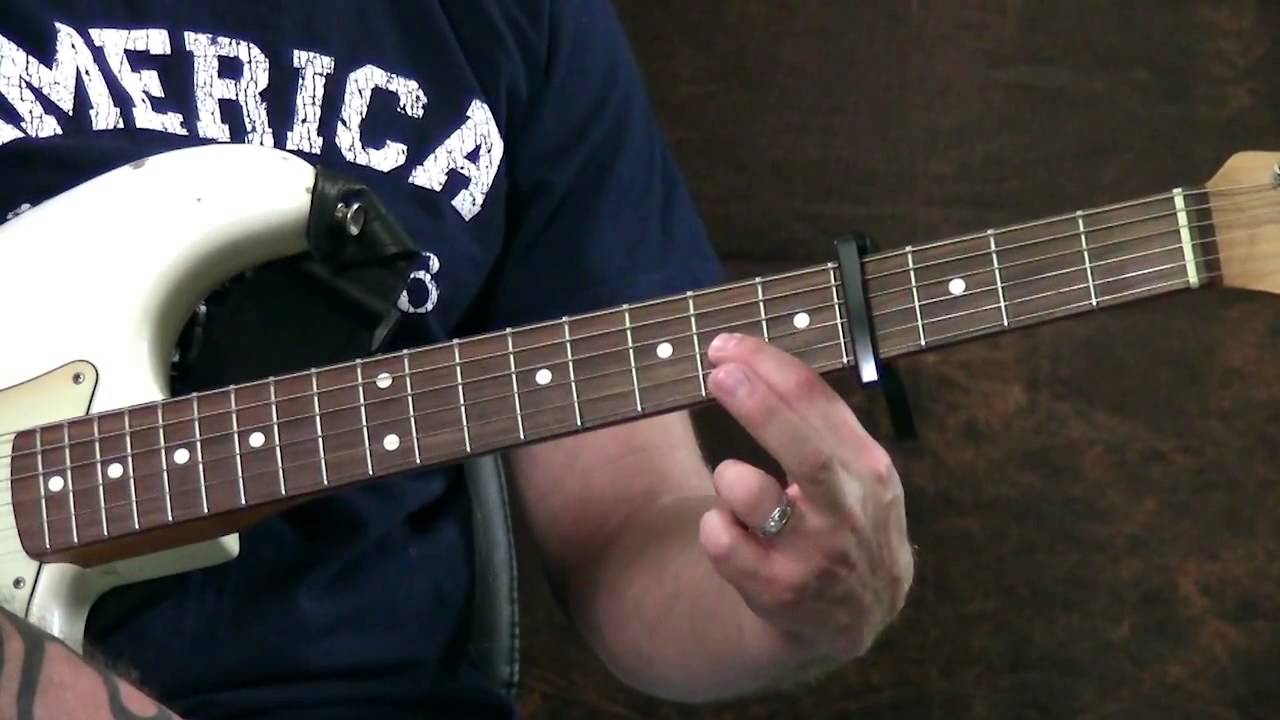
To improve guitar strumming timing, practice with a metronome at slow tempos (e.g., 94 BPM), starting with down beats (1, 2, 3, 4), then progressing to half subdivisions (1 and 2 and 3 and 4), eighth notes (1 e and a 2 e and a 3 e and a 4 e and a), and triplets (triple it triple it triple it), while maintaining a flowing wrist motion and counting aloud to ingrain rhythmic structure into muscle memory.
Guitar Strumming Precision: Metronome Practice Techniques
Added:Basic guitar strumming mechanics, including proper pick grip, relaxed wrist movement, and executing consistent downstrokes and upstrokes.
Fundamental understanding of musical rhythm, specifically beats, tempo (BPM), and common time signatures like 4/4.
Familiarity with standard open guitar chords (such as G, C, D, and Em) to allow focus on rhythm rather than fretting hand mechanics.
An introductory understanding of what a metronome is and how to listen to and align physical movements with an external beat.
Syncopated strumming patterns, which involve accenting off-beats and using sixteenth-note subdivisions for more complex rhythms.
Advanced dynamic techniques, such as integrating ghost notes, heavy accents, and selective string strumming to create texture.
Transitioning from practicing with a static metronome to playing with a live band, backing tracks, or drum loops to develop groove.
Applying rhythmic subdivision concepts to lead guitar playing, including scales, arpeggios, and improvisational phrasing.
Exploring strumming and rhythm in odd time signatures, such as 5/4, 7/8, or changing tempos within a musical piece.
179K views3.5Klikes10:20Original Release: 2016-09-16
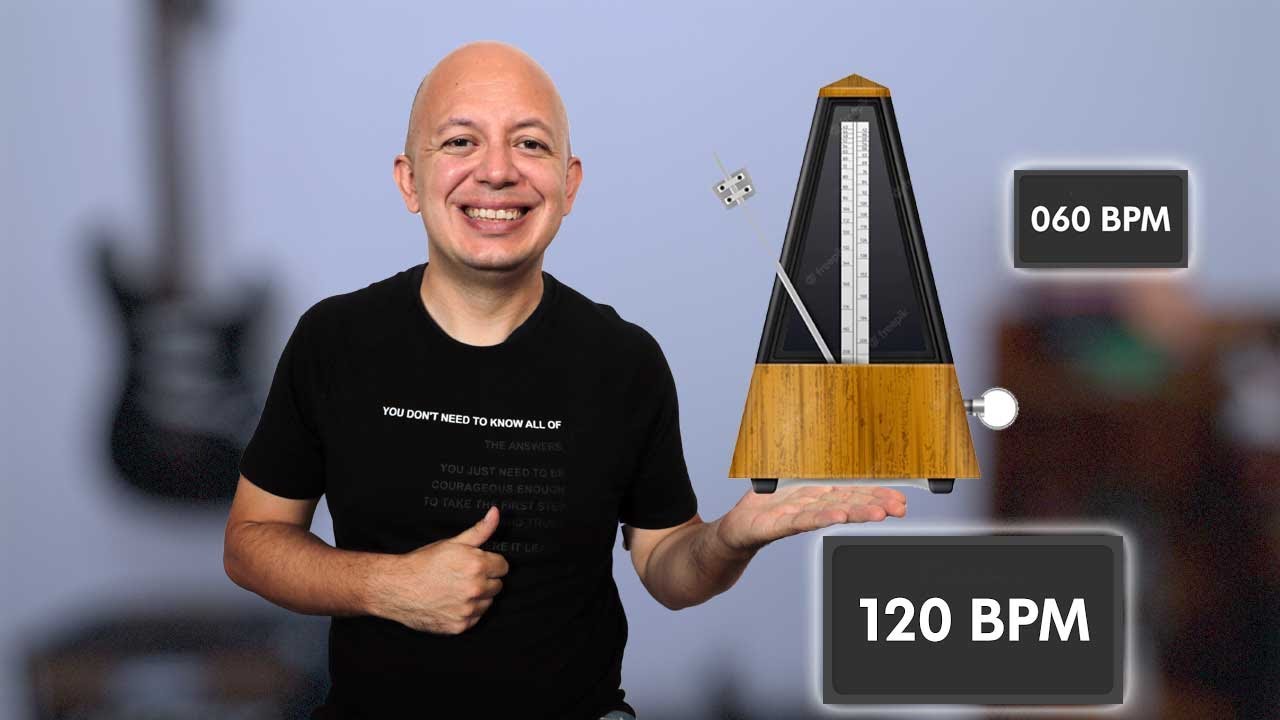
there are many things in life where if you're not on time it's no big deal job interviews filing your taxes giving eulogies at a funeral but so help me God if you are late on the downbeat when you're strumming a guitar you're in real trouble so today we're going to talk about how you can practice your strumming to get on time right because I think that staying in time and especially staying in time at slower tempos is one of the most overlooked things and hardest things to teach on guitar so today what we're going to do we're going to enlist the use of a metronome to kind of come up with with some exercises that you can maybe incorporate in more of like a structured way for practicing right so basically just a quick note about metronomes in general all it is is you press a button to a certain Tempo and it just clicks over and over again right now the volume of a metrome is very important and specifically when you're playing when you're working on your timing and your Rhythm I think the metronome click should be at least as loud as your guitar right if you're working on maybe trying to clean up like arpeggios and stuff I think maybe the click can be a little bit farther but you really want to be able to feel The Click as I would I would say it's even more Paramount to hearing your guitar because you're really trying to get the pulse of uh timing ingrained in what you're doing right so whether it's using headphones or hooking up to an amp or whatever just try to get it as loud as you can where you're strumming or whatever you're doing isn't totally masking The Click right so what we're going to do is we're going to set the metronome to 94 but for you whatever you want to do if you want to go way slower do it we want to do this as slow as you possibly can while you're perfectly on time I remember when I started practicing slowly I was shocked at how bad I was because I was used to trying to just speed everything up I think we have a tendency to try to play things as fast as we can which kind of leads to maybe having bad timing right so we're going to set the metronome to 94 beats per minute right 1 2 3 four stuff like that right so now we're just going to take a regular c chord and we're just going to try to hit every down beat so a Down Beat is just when it clicks one two 3 4 1 2 3 4 1 2 3 four now one thing to notice really quick if you look at my strumming right when I'm going 1 2 3 4 there's a big difference between that and going 1 2 3 4 I think a tendency might be to kind of be jumpy on the downbeat right like you you hit the down beat right and even though you might be able to hit that second down beat again if you're jumping back up it's going to have a rush sound and you're going to more often than not you're just stabbing at pieces of time right you want to create a system where it's more of like a flowing [Music] 2 3 4 see so it's almost like my wrist is just kind of on autopilot and I'm just striking the strings on the way down right one two and again I'm kind of choking the strings just to kind of you know get more of an impact of the click when you might want to practice now the reason we're doing this is because because we're going to start adding subdivisions into these beats right so whatever Tempo you're at once you get a handle on hitting the Down Beat every time we're going to start adding cutting these into half right so instead of 1 2 3 4 1 and 2 and 3 and four and 1 and 2 and 3 and four and 1 and 2 and three and four and so what you want to do is you want to be able to go back and forth between those so we can start with just down beatss one 2 3 4 1 and 2 and 3 and four and 1 2 3 4 1 and 2 and three and four and now the next obvious thing to do will be to split each beat into four I think the best way to count that is one a 2 and a 3 and a four and so every beat now is going to be down up down up right so instead of going 1 and 2 and 3 and four and 1 and a 2 E and A 3 E and A 4 and now before we do this to the click I want to just kind of talk about how we're doing this it's a little bit Dynamic right and I think this is a good way to really kind of break in to Dynamic strumming so we're breaking this chord into parts and for the first two beats I want to kind of get more of the chord so we're dynamically adding a little bit more of the high end I think when you're strumming and you kind of go for the higher part of the string set you get a little bit more of that accent one and a 2 and a three and a four and so what I'm doing I'm just going I'm hitting maybe aiming for the bottom four bottom three whatever just anything in the bottom part of the string set one e and so the the second two beats are going to be the lower strings right you can even just make it a root note whatever just aim for string sets you're you're more focused on your timing than exactly what strings you're hitting one 2 e and 3 and four so let's try to add that with the metronome 2 3 4 so down beats 3 4 1 2 3 4 1 and 2 and 3 and 4 and 1 and 2 and three and four and one and a 2 and a three and a four and a one and a 2 and a three and a four and a now that could be a little fast right so slow it way down whatever Tempo you need to do to be able to go one e and 2 E and A 3 E and A 4 E and A and really try to count out loud it may seem kind of silly counting out loud but it is such good practice to ingrain structure into your playing right so the other subdivision we're going to do are triplets right triplets I think are a little bit trickier to count it first because it's easier to symmetrically divide beats in my opinion but basically to do a triplet we're just going to break that beat into three separate beats so instead of 1 2 3 4 triple it triple it triple it triple it triple it triple it triple it triple it now the interesting thing about triplets is we're changing the accent if we're staying in a down up pattern so it's going to be triple it triple it down up down up down up down up down up down up down up down up down now another way to practice triplets is down up up down up up like this is more of like a waltz type feel two three 4 triple it triple it triple it triple it triple it triple it triple it triple it triple it triple it so again either way is good I kind of like the alternating way better triple it triple it triple it triple it triple it triple it triple it trip it's going to give you more control over going down and going up stuff like that too right so we're going to go through all the subdivisions in kind of one exercise 1 two 3 four down beats 2 3 4 1 2 3 4 break half 1 and 2 and 3 and 4 and 1 and 2 and 3 and four and triple it triple it triple it triple it triple it triple it triple it triple it one and a 2 and a 3 a 4 One 2 and a 3 and 4 so basically if you can kind of seamlessly go back and forth between all those subdivisions you're going to really have a better understanding of when you can switch in in and out of them and just getting that kind of ingrained in your muscle memory of your wrist is a really important thing now one other thing I want to talk about is adding Palm mutes to kind of a practice session right so again pal mutes uh I've did a separate video on this which I'll link you to if you don't know what they are basically you're just kind of getting your hand on the bottom of the string set to get more of like a a dead sound right and what I like about doing this with a metronome is you develop a lot of feel because they're all going to be downstrokes but you're accenting certain ones so for example we're still going to do the same thing with a subdivisions if we just did the down beats it would be like a 1 2 3 4 1 2 3 4 now before we went down up down up down up when we started breaking them in half right but what I like to do to kind of create like an alternating Dynamic it's kind of like a 1 and two and three and four and 1 and two and three and four and and I think this is a really good way to kind of get like a like a chug type of a pulse thing so what I'm doing here is on the down beat I'm getting maybe the first three four strings whatever and then on the offbeat on the upbeat however you want to look at it I'm just going for the root note so 1 and 2 and 3 and four and 1 and 2 and 3 and four and 1 and 2 and three and four and with the meshroom again and again this is something you can really get pretty fast at like if you let's go to America's favorite Tempo which is 120 [Music] two and four and 1 and 2 and 3 and four and 1 and 2 and 3 and four and 1 and 2 and three and Pull and one two and three so once you get it down you can start changing chords I'm just taking this c chord and moving it up and down two Frets to make kind of like a d chord one and two and three and four and one and two and three and four and one and so basically creating whatever kind of you know course that you want as far as just being able to do subdivisions with the metronome is going to be super helpful I also think that really just kind of playing around with songs like maybe find a song that you like that you know the ches to and try to play along with it now that's kind of easier said than done especially if you're higher Tempo songs because you need to be able to slow things down it's very very important again I know how hard it is and how stupid it seems to slow your metronome down to like 60 BPM but trust me it'll totally pay off and it's so much easier to do something slower and then gradually just crank it up then really just try to like do something super fast so any kind of like combination of metronom work and always just kind of like exploring creatively what you can do with strumming is great but I think especially if you want to focus in on your rhythm guitar playing a metronome is an excellent tool for getting better
Up Next

41:46
Songwriting with Neural DSP Nano Cortex: Orchestral Arrangement Guide
@ConnorKaminski
9K views•2024-09-20

12:54
Triumph of Orthodoxy Icon: Byzantine Art & History Explained
@BenCallan
2.1K views•2024-08-06

9:49
FastAPI vs Flask vs Django: Choosing the Right Python Web Framework
@TechWithTim
302.5K views•2024-05-26

1:42
Game of Thrones Opening Credits: A Cinematic Analysis
@gameofthrones
46.3M views•2011-04-18
Related Study Plans & Knowledge Roadmaps
Structured learning paths in General & Interdisciplinary Studies
general-studies
Elevator Engineering: History, Physics & Cities
01From Hoists to Safety Brakes: The Dawn of Vertical Lift
02Hydraulic vs. Traction: The Engineering Physics of Elevators
03Modern Speed, Safety, and Algorithms
+ 2 more learning modules
12h5 modules
Explore Roadmap
general-studies
Rubber: Material Science, History & Geopolitics
01Origins of Natural Rubber & Mesoamerican History
02The Chemistry of Natural Rubber & Vulcanization
03The Geopolitics of the Rubber Boom & Colonization
+ 2 more learning modules
12h5 modules
Explore Roadmap
general-studies
Containerization: Evolution, Logistics & Trade
01Ancient Trade & Bulk Cargo: Amphorae to Barrels
02The Industrial Revolution & Cardboard Packaging
03The Containerization Revolution: Malcom McLean
+ 2 more learning modules
12h5 modules
Explore Roadmap
general-studies
Textile Tech: Evolution, Labor & Global Impact
01Pre-Industrial Textiles: Handloom & Cottage Industry
02Mechanization: The Spinning Jenny to the Power Loom
03The Factory System & Global Labor Transformation
+ 2 more learning modules
10h5 modules
Explore Roadmap