











![Understanding and Using Odd Time Signatures - 6 Examples [MUSIC THEORY / RHYTHM]](https://i.ytimg.com/vi_webp/T8AaalPfxYk/maxresdefault.webp)
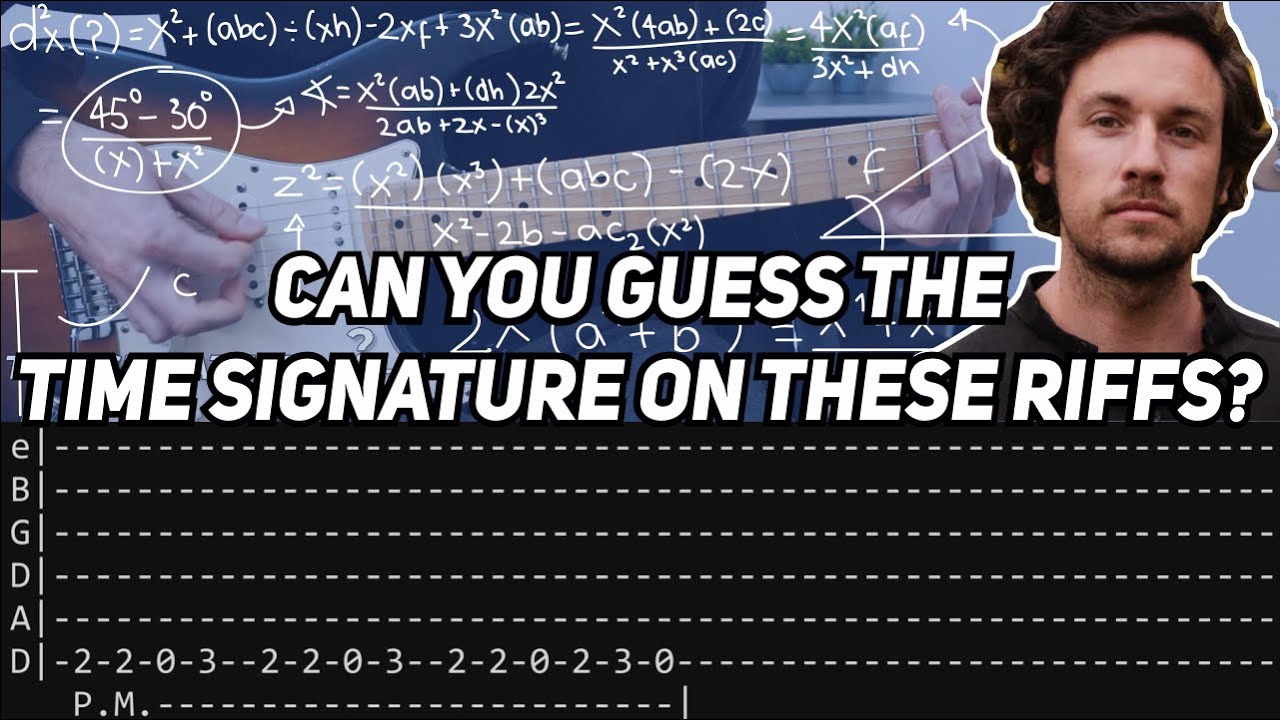



Odd time signatures (any time signature other than 4/4 or 3/4) can be understood by breaking them into smaller, symmetrical parts: 5/4 is 3+2, 7/8 is 4+3, 11/8 is 4+3+4, and 9/8 is 3+3+3; the key to feeling odd time is to identify these component patterns and accentuate the beat changes between them, making complex rhythms more manageable to hear and play.
Understanding Odd Time Signatures: 5/4, 7/8, 9/8, 11/8
Added:Understanding of basic common time signatures (such as 4/4, 3/4, and 2/4) and how to count them.
Familiarity with basic rhythmic notation, including the duration of quarter notes, eighth notes, and their corresponding rests.
Fundamental guitar playing mechanics, including comfortable alternate picking and basic chord transitions.
The concept of a pulse or beat, and the ability to maintain a steady tempo using a metronome.
Mastery of mixed meter, where time signatures change frequently within a single musical piece.
Introduction to polyrhythms (such as 3-against-4) and polymeters (different instruments playing in different time signatures simultaneously).
Applying odd time signatures to creative composition, songwriting, and lead guitar improvisation.
Analyzing advanced progressive rock, math rock, jazz fusion, or traditional folk repertoires that heavily rely on complex asymmetric meters.
71K views2.1Klikes14:15Original Release: 2017-03-25
[Music] C hey there lick riffers how are you doing welcome to another awesome lesson right here on licken rff in this video we're going to learn how to hear odd time signatures I'm going to try and help you alleviate some of the mystery behind the concept of odd time signatures and odd time beats Now by odd time I mean everything that's not four four time or 3 four time everything that's not 1 2 3 4 1 2 3 4 or 1 2 3 1 2 3 1 2 3 1 2 3 because even though 34 is an odd number it's still symmetrical because we tend to hear it and feel it as 128 most of the time 1 2 3 1 2 3 1 2 3 1 2 3 we we still feel it as if we're counting four but dissecting it into triplets so 44 and 34 are the most common rhythmical uh approaches but odd time signatures can be a lot of fun if you learn how to hear it you don't even have to incorporate it into your playing I'm going to try to help you with uh with that too but the the important thing is to feel it learn how to feel odd time signatures it's really a lot of fun so by odd time signatures I mean something like uh 54 time or 78 or 98 time or even 118 time and the basic idea is to um to cut it in the middle and to see it as uh two parts creating an uneven number for example 54 time is basically 1 2 312 1 2 312 1 2 3 1 2 1 2 3 1 2 and if you want to play it yourself just use bass and chord 1 2 3 1 2 1 2 3 1 2 1 2 3 1 2 1 2 3 1 2 okay and you have uh some songs you can use uh that you all know to get used to it you have the Mission Impossible theme it's see it's 54 time and it's not really 54 time because the field there is actually 108 time it's it's 3 three form it's see and that's the approach we're going to use to learn to listen to odd time signatures it's basically just breaking it down into sort of a puzzle that creates a whole Rhythm so let's let's try again and we get the the Mission Impossible theme and you see right now that you you can sing 108 time you can sing 54 time without a problem once you learn to hear it and that's the that's actually the Brilliance behind that thing now take five the classic example of 54 time which is da da da da is also in 54 da da da da basically we're playing which is three and then da da which is four and five da da da da okay so let's um okay I'm taking a minor and then I'm adding 0o and three on the sixth string e and G right and you can play the chords themselves if you like and playing E minor and G okay so we have five4 time and I hope that even at this point in this lesson you have more confidence in your own ability to hear odd time signatures even before we move into the more complex time signatures because as you can see it's not very complex if you know how to approach it so that's 54 time uh not that difficult right now 78 time if you can believe it is even more fun than 54 it's uh um it's a widely used rhythm in um in Baltic music uh and even in even in western music you have a lot of 78 and you don't even realize it um it's basically four and three so you can play three and four or which is four and then three it makes no difference in what order you put the four and three it makes a difference uh whether you can feel it or not and I prefer to hear it as three and then four it's easier it's okay okay slower okay now let's D with the chord [Music] if you want something more interesting try [Music] arpegios see 1 2 3 1 2 1 [Music] 2 right and play the a Bas string every time you play the first [Music] string right now now you can also change chords once you're used to this 1 2 3 1 2 1 2 1 2 3 1 2 1 2 1 2 3 1 2 1 2 1 2 3 you can also challenge yourself and try to take uh an easy composition and play it in 7 eight time now this is a more complex exercise but if you can hear the 1 two 3 1 two one two one two 3 one two one two one two 3 uh feel and if you can can feel the beat the T then you can take let's say green sleeves and try to to fit it in [Music] there right it doesn't have to be exactly the same uh composition you can just take something and try to see if you can play it in 7 a time you don't have to play it uh to play it perfectly you just have to get used to the Rhythm this is a rhythm exercise so as you can see 78 time is actually a lot of fun it's now 98 time is actually a complex Rhythm it's the most complex of all so let's move to 118 for a moment um ironically it's easier to get used to than 98 and then go back to 98 times so 118 time my favorite approach is 434 right T let's try to create uh Melody out of it um just to to hear it okay that's 118 time so let's see if we can play something with this uh it's a little more challenging let let's [Music] try see it's da da da da da da da da da [Music] da okay you can add a little lick to indicate the beat right the pull off on three to zero on the East rank da da da da da da da da 1 2 3 4 1 2 3 1 2 1 2 3 4 1 2 3 now one two is still 1 2 3 4 but I'm accentuating it to create a rhythm out of it we don't have to play all the eighth notes 1 2 3 4 1 2 3 1 2 3 4 1 2 3 1 2 3 4 1 2 3 4 1 2 3 1 2 34 right eight uh 8 98 time is a little different than everything else 98 time um because you can say that it's 33 there's a difficulty in in creating an odd Time Field to it because you can do one 2 3 1 2 3 1 2 3 because that's triplets and uh then it creates a three four time so what do you do with that you play Four and what play 441 doesn't really work that way so you can play three 4 and and two and you can do it uh like this 1 2 3 4 1 2 3 1 2 1 2 3 4 1 2 3 1 2 1 2 3 4 1 2 3 1 2 1 2 3 4 1 2 3 one2 see makes everything a lot easier and it sounds like an odd time signature and I warned you it's a bit difficult to get used to 98 78 is my absolute favorite but 98 is the least friendly of them all in my opinion um it might be subjective um you might have a very easy time getting used to 98 so again 1 2 3 4 1 2 3 1 2 1 2 3 4 1 2 3 1 2 okay ah no not the same [Music] idea okay just a G chord to indicate the one two at the end right I know it's difficult to hear it it doesn't make much sense musically you really have to be a genius to create something meaningful in 98 okay um at least while trying to give examples and I haven't prepared anything because I wanted to make sure that I was hearing it instead of just regurgitating examples so I'm actually making them up on the spot so let's try again let's try to use the minor scale and try to create [Music] something 1 2 3 4 1 2 3 1 2 1 2 3 4 1 2 3 1 right try to count it with [Music] me all right that was 98 I hope I hope I didn't lose any uh of the the counts but if so it was still odd time because it's changed and it didn't keep uh the One 2 3 4 1 2 3 four F and that's what we're going for in this lesson now before we finish this lesson I just want to give you one extra bonus kind of Rhythm uh something that I personally enjoy toying around with it's a 75 Rhythm pattern it's a bar of S8 and a bar of 5'8 and the basic rhythm is this can you can you hear it can you count it try it okay it's 1 2 3 4 1 2 3 1 2 3 one two okay it's 1 2 3 4 1 2 3 1 2 3 one two okay b b okay try try to sing it no that was one two one two t okay if you can do that you're doing better than me I just made a mistake one two now try to accompany yourself with [Music] it and I'll see you the next lesson thank you very much for watching bye for now enjoy
Up Next

10:20
Guitar Strumming Precision: Metronome Practice Techniques
@seandaniel23
179K views•2016-09-16

12:54
Triumph of Orthodoxy Icon: Byzantine Art & History Explained
@BenCallan
2.1K views•2024-08-06

9:49
FastAPI vs Flask vs Django: Choosing the Right Python Web Framework
@TechWithTim
302.5K views•2024-05-26

1:42
Game of Thrones Opening Credits: A Cinematic Analysis
@gameofthrones
46.3M views•2011-04-18
Related Study Plans & Knowledge Roadmaps
Structured learning paths in General & Interdisciplinary Studies
general-studies
Elevator Engineering: History, Physics & Cities
01From Hoists to Safety Brakes: The Dawn of Vertical Lift
02Hydraulic vs. Traction: The Engineering Physics of Elevators
03Modern Speed, Safety, and Algorithms
+ 2 more learning modules
12h5 modules
Explore Roadmap
general-studies
Rubber: Material Science, History & Geopolitics
01Origins of Natural Rubber & Mesoamerican History
02The Chemistry of Natural Rubber & Vulcanization
03The Geopolitics of the Rubber Boom & Colonization
+ 2 more learning modules
12h5 modules
Explore Roadmap
general-studies
Containerization: Evolution, Logistics & Trade
01Ancient Trade & Bulk Cargo: Amphorae to Barrels
02The Industrial Revolution & Cardboard Packaging
03The Containerization Revolution: Malcom McLean
+ 2 more learning modules
12h5 modules
Explore Roadmap
general-studies
Textile Tech: Evolution, Labor & Global Impact
01Pre-Industrial Textiles: Handloom & Cottage Industry
02Mechanization: The Spinning Jenny to the Power Loom
03The Factory System & Global Labor Transformation
+ 2 more learning modules
10h5 modules
Explore Roadmap