





![[Засыпаем с наукой] Что действительно происходит в чёрной дыре?](https://i.ytimg.com/vi/VmF_quVSBlM/maxresdefault.jpg)











![ESPECIAL 10 ANOS INTERESTELAR [COM CÉSAR LENZI E ROBERTA DUARTE] - Ciência Sem Fim #269](https://i.ytimg.com/vi/akP34WcwfAo/maxresdefault.jpg)
Black holes are regions of spacetime where gravity is so intense that not even light can escape, formed when massive stars collapse under their own gravity, creating objects with extreme density where Einstein's general relativity predicts an event horizon and a central singularity; scientists classify them by mass into stellar-mass, intermediate-mass, and supermassive varieties, and observe them through accretion disk emissions, gravitational lensing, stellar orbital dynamics, and gravitational wave detections, while theoretical challenges like the information paradox and the need for quantum gravity to explain the singularity remain unresolved mysteries.
Black Holes Explained: Structure, Detection, and Mysteries
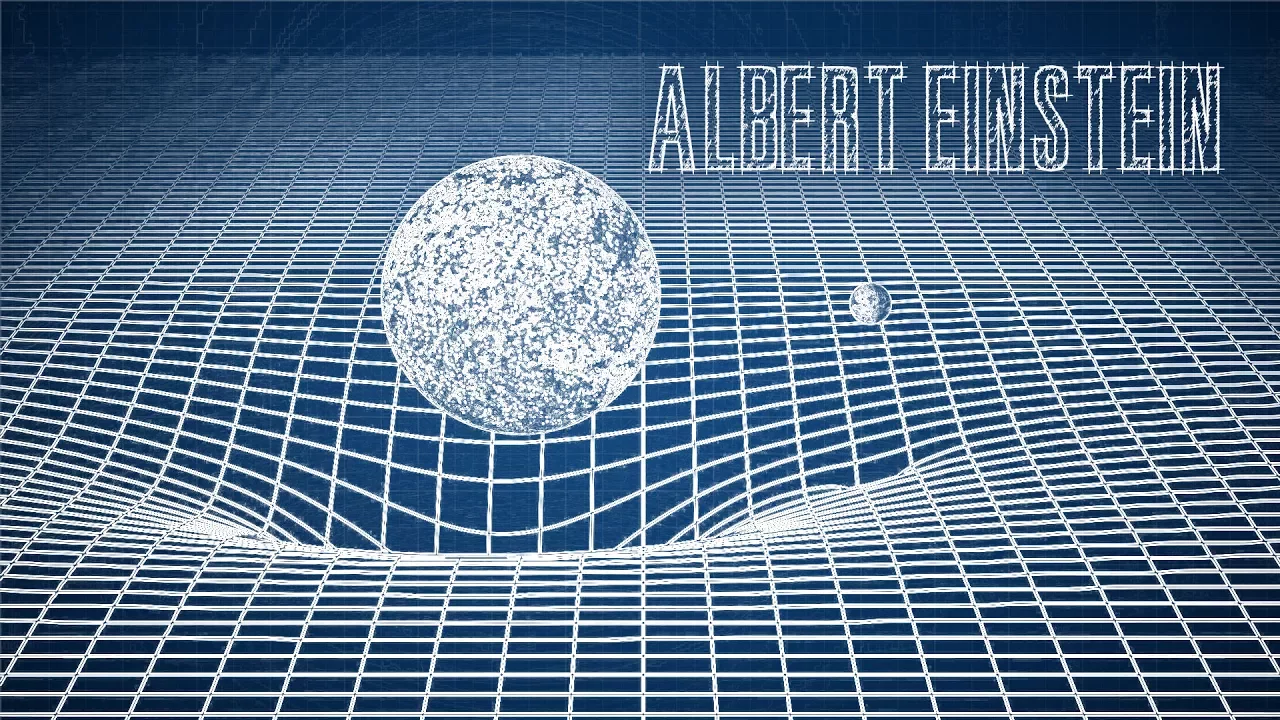
Added:Einstein's Theory of General Relativity, specifically how mass warps the fabric of spacetime.
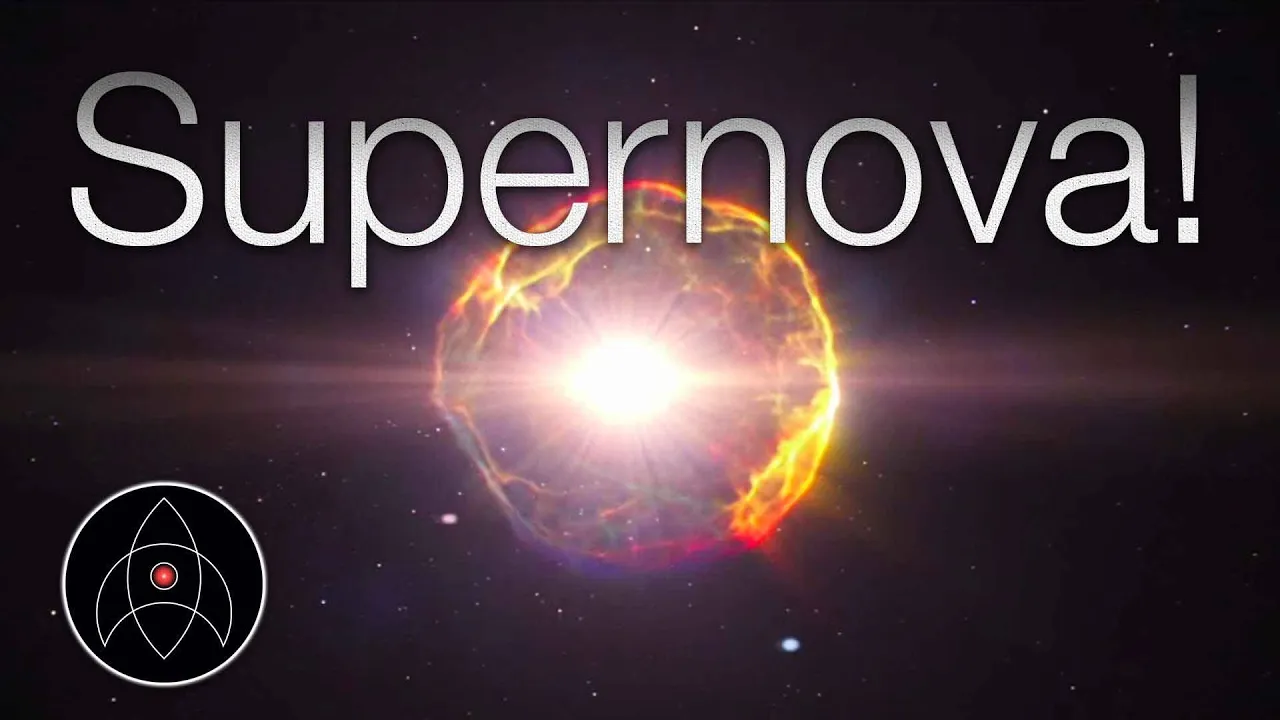
The lifecycle of massive stars, including stellar collapse and the formation of supernovae.
The concept of escape velocity and why the speed of light acts as the ultimate cosmic speed limit.
Basic principles of quantum mechanics, particularly virtual particles and quantum fluctuations.
The Black Hole Information Paradox and the ongoing debate over whether information is lost forever.
Gravitational Wave Astronomy, focusing on how detectors like LIGO identify black hole mergers.
The Holographic Principle and string theory approaches to reconciling quantum mechanics with gravity.
The physics of Active Galactic Nuclei (AGN) and the role supermassive black holes play in galaxy evolution.
597.5K views21Klikes27:08Original Release: 2021-08-22
Hello, welcome back, I m Dom and this is the Map of Black Holes which isn t a map of where all the black holes are in space, it s a concept map of the subject of black holes: laying out our current knowledge of them, the evidence for their existence, and the many outstanding mysteries still to be solved; they are very strange and fascinating indeed.
I find concept maps are really useful to give you a good overall idea of a field of research, so here s the current state of knowledge about black holes.
On Earth, getting into space in a space rocket is really hard, because we need to climb out of the Earth s gravity well. But in a way we re lucky. If the Earth was just fifty percent larger by diameter it would be impossible to get into orbit with any of our current technology.
This would mean no astronauts, no satellites, no GPS or google Earth.
So the stronger the gravity of a planet, the higher the escape velocity you need, and black holes are the most extreme example of this where the escape velocity exceeds the speed of light.
There is so much mass squeezed into such a small volume that nothing can escape because nothing can travel faster than the speed of light Hence the name: black hole, which weirdly comes from the black hole of calcutta, a notorious prison where people went in but nobody ever left alive.
Although this name, black hole, only caught on in the late 1960s, before that they were referred to as dark stars, frozen stars or gravitationally collapsed objects.
The original idea that black holes could exist came from our understanding of Einstein's theory of relativity published in 1915, where gravity is explained as the curvature of spacetime. The more dense an object is the more it curves spacetime, and the more curvature there is the stronger the force of gravity. In 1916 Karl Schwarzchild found a solution to the field equations of relativity which predicted a special distance from the black hole called the Schwarzchild radius, but is also known as the event horizon, beyond which nothing can escape. This event horizon was long considered a mathematical curiosity until the sixties and seventies where theoretical developments and experimental evidence mounted up and people realised black holes did actually exist in our universe.
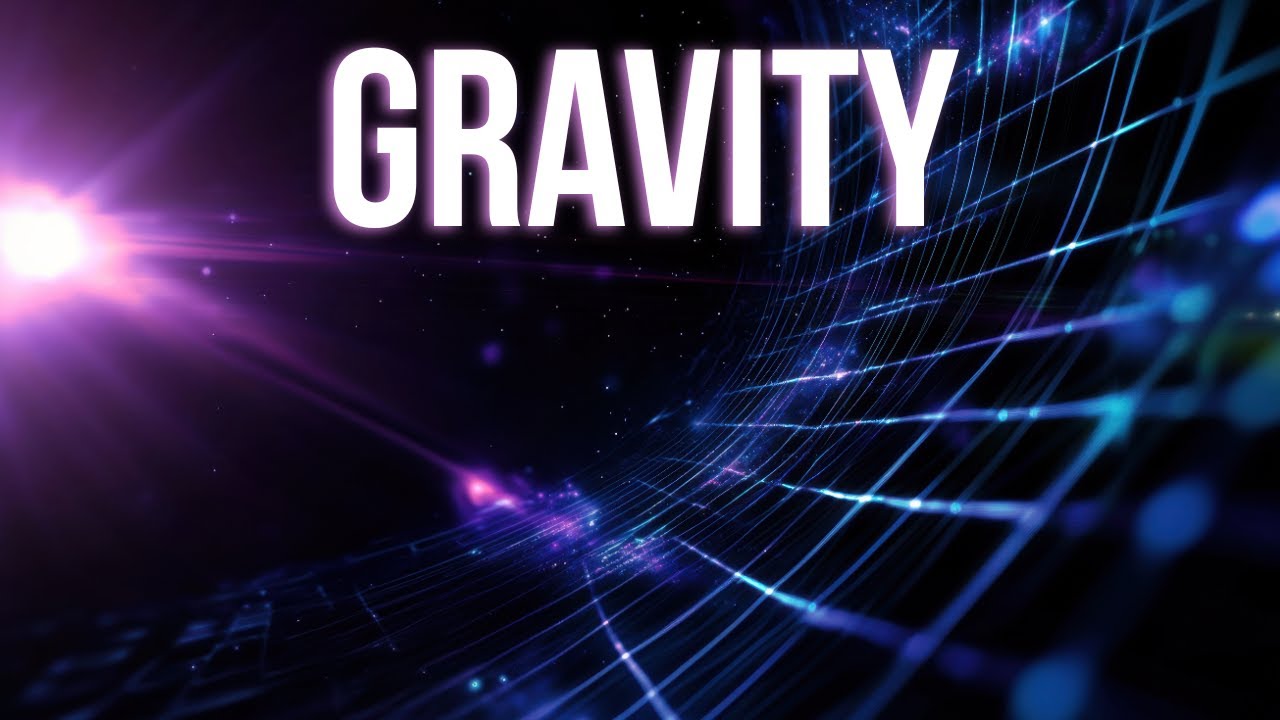
This is a common visualisation of the warping of spacetime around a black hole, although this is just a visual analogy. These squiggly lines represent photons which are actually travelling in straight lines. They only look like they curve around because they are travelling through a curved spacetime. This phenomenon is known as gravitational lensing.
The inner horizon is a feature of a rotating black hole. Rotating and non-rotating black holes have got distinct features which we ll see when we look at their structures in a bit.
At the centre of the black hole is a singularity where all of the mass of the black hole is squeezed into an infinitely small region of infinite density creating an infinite curvature of spacetime. Well, that s probably not actually true. This is a strong indication we are pushing the theory into a realm that it s not built to cover. Really we need a theory of quantum gravity, and people think that if we could add the laws of quantum mechanics to general relativity this could explain what is going on in the centre of a black hole. A theory of quantum gravity is the holy grail of theoretical physics, which is why black holes are so fascinating, because they are one of the few places in the universe where gravity gets big enough to be as strong as the other three fundamental forces and so general relativity and quantum mechanics are both needed to explain what is going on inside black holes. Another way to visualise the motion of particles near a black hole is using space-time diagrams. Far from a black hole, we see these squiggly lines travelling at 45 degrees which represents light travelling at the speed of light.
Because this is the cosmic speed limit, anything with mass will have trajectories at some angle in between these limiting cases which is traditionally referred to as a light cone.
As you get closer and closer to the black hole this light cone bends towards it due to the curvature of spacetime, and if you cross the event horizon, all paths point inwards to the centre, which means whatever direction you travel in you are always moving towards the centre of the black hole: every possible future ends up with you getting squished.
It s like space and time switch roles. Outside the event horizon time only goes forwards, but inside the only direction you can move is forwards in towards the singularity.
And it s called an event horizon because any event that happens inside the black hole can never be seen by anyone outside. So it is literally the horizon over which events can never be seen.
Most black holes that we know of are created from the remnants of dying stars.
When stars exhaust their fuel they perish in a variety of dramatic ways depending on their mass.
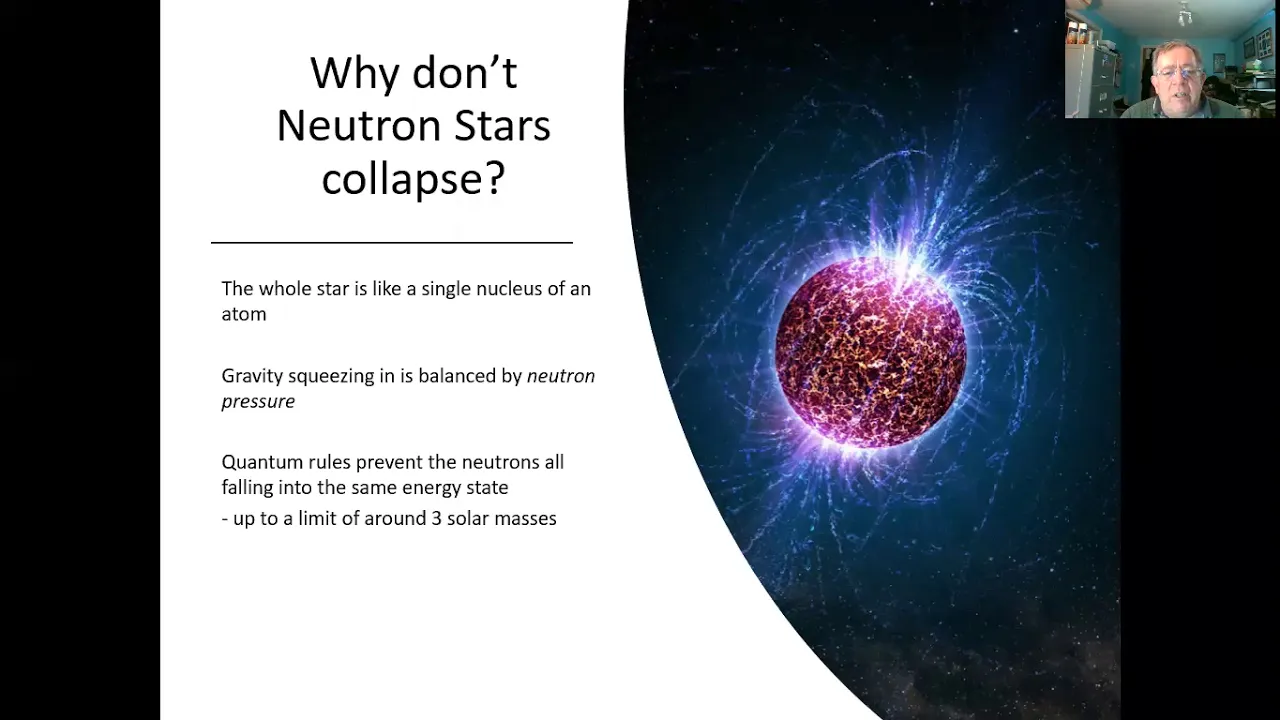
Stars who s cores have a mass less than 1.4 times the mass of the sun collapse into white dwarf stars. Above this limit, known as the Chandrasekhar limit, stars explode in a violent supernova and collapse into a neutron star. The incredible pressure of all that matter in the core overcomes the electron s ability to repel each other, known as electron degeneracy pressure, and the electrons and protons join together to make an incredibly dense star made of pure neutrons.
Then above that the theory says that a star with a mass in the core above 2.17 times the mass of the sun will collapse into an even denser object: a black hole.
There is a possibility there are other stars more dense than a neutron star and less dense than black holes made of some form of exotic matter, perhaps quark stars or strange stars, but these are hypothetical and we have no evidence of them so far.
But exploding stars is only one mechanism for black hole formation, there are giant black holes out there called supermassive black holes with masses of millions of times to tens of billions of times the mass of the sun. How they got so big is still an open question.
Did they grow bigger over time by absorbing other matter and black holes? Did they form from the universe s earliest massive stars? Or perhaps they formed directly after the big bang from the primordial gas collapsing in on itself? We don t yet know and this is still active research.
At the small mass scale it is theoretically possible to have very low mass black holes.
The key feature of a black hole is not so much its mass, but the very high density of that mass, and so some people have wondered if tiny black holes might be created in particle collisions like in the large hadron collider at CERN. You might remember a media scare that there might be a black hole created in Switzerland that gobbled up the Earth. But this was total nonsense because we get particles from space called cosmic rays with way higher energies than anything we can create on Earth and anything that was created at CERN. And they don t create black holes in the atmosphere, so there is absolutely no evidence that miniature black holes are created from particle collisions so perhaps there is a lower mass limit to black holes we don t know about, this is another open question. Here is how the different masses of black holes are typically classified according to mass and size: Micro-black holes would have a mass up to the mass of the moon, but would be tiny, having a radius of their event horizons of 0.1 millimetres or less. Stellar black holes have approximately ten times the mass of the sun and are about thirty kilometres in radius.
Intermediate black holes are about a thousand times the mass of the sun, and are a similar size to the Earth with a radius of about a thousand kilometres.
Although the Earth actually has a radius of 6 thousand so I kind of got this picture wrong.
Supermassive black holes have masses from a hundred thousand times the mass of the sun to tens of billions of solar masses and are so big they get as big as four hundred astronomical units.
For context, one astronomical unit is the distance from the earth to the sun, so four hundred astronomical units is about ten times the orbit of pluto. Which is insane to imagine a black hole that big. Let s take a closer look at the anatomy of black holes. We ve already talked about the event horizon and singularity, but there are many other interesting features we need to talk about. Near a black hole clocks run slow. This is the effect of the highly curved spacetime which causes time dilation. This means the experience of someone who is falling into a black hole would be quite different to someone watching them fall in. If you travelled over the event horizon, you wouldn t notice anything. But then, depending on the size of the black hole, it wouldn t be long until you got completely spaghettified.
If, however, you watched someone falling into a black hole, they would steadily move in slow motion as their local clock slowed down, and get more and more red shifted until they looked like a red smudge on the event horizon that gradually faded out of existence as the wavelength of light they emit got longer and longer.
Then we have the singularity which I ve already talked about, but basically it s a region of infinite curvature, where all the mass is squeezed into zero volume with infinite density. But implies a breakdown of general relativity, and really a theory of quantum gravity is needed.
Some more important features of a black hole. Outside the black hole at 3 times the Schwarzchild radius is the innermost stable circular orbit which is the minimum distance a test particle could orbit the black hole in a circle and this marks the inner edge of an accretion disk of infalling matter around a black hole.
And at 1.5 the Schwarzchild radius is the photon sphere, which is the only possible circular orbit for a massless particle, and if you sat here because photons are going all the way around the black hole you could look at the back of your own head. It also marks the closest distance any elliptical orbit of any kind of matter can get. If anything travels below this, it ll either get slingshotted out of the black hole s gravity, or eventually spiral in.
Also black holes give off Hawking radiation from the event horizon, although this is very very faint, and is impossible for us to detect this unless we could somehow get very very close to a black hole. It s worth noting here that black holes don t have any special suction powers where they go around the galaxy hoovering everything up.
The gravity of a black hole is the same shape as any other massive body so, at a distance, being around a black hole would feel just like being around any other star with the same mass, gravitationally speaking. They re special because they are so dense, so when you get close in to them you experience a way higher gravity than you could get anywhere else.
This picture only applies to non-rotating black holes, the picture for a rotating black hole is a little more complicated as shown here.
Now you may wonder if you ever get non-rotating black holes as everything in the universe is spinning in some way. But theoretically you can get non-rotating black holes because Hawking radiation takes away some of the angular momentum from the black hole, which would gradually slow down their spin, but it would take a very very long time for this to happen.
Non-rotating black holes are spherical, rotating black holes are a squashed oval shape.
Also the singularity in the centre is no longer a point, but a singularity ring. And they have a region outside the event horizon called an ergosphere which is a region where it would be impossible to stand still because the rotation of the black hole drags spacetime around it in a process called frame dragging, kind of like a whirlpool of spacetime.
And the frame dragging is so fast inside the ergosphere you would have to travel faster than the speed of light just to stand still. So you can move in the ergosphere, but only in the direction of the rotation of the black hole. At the edge of the ergosphere is the innermost stable orbit, the minimum distance to the black hole a particle can maintain a stable orbit.
Many real black holes are surrounded by an accretion disk, a cloud of material that is falling into the black hole and generating loads of heat and energy as the particles speed up and crash into each other. Accretion disks are very bright sources of x-ray radiation and high energy particles which can fly out of the ergosphere with way more energy than they entered, stealing angular momentum from the black hole as they do so using it as a slingshot.
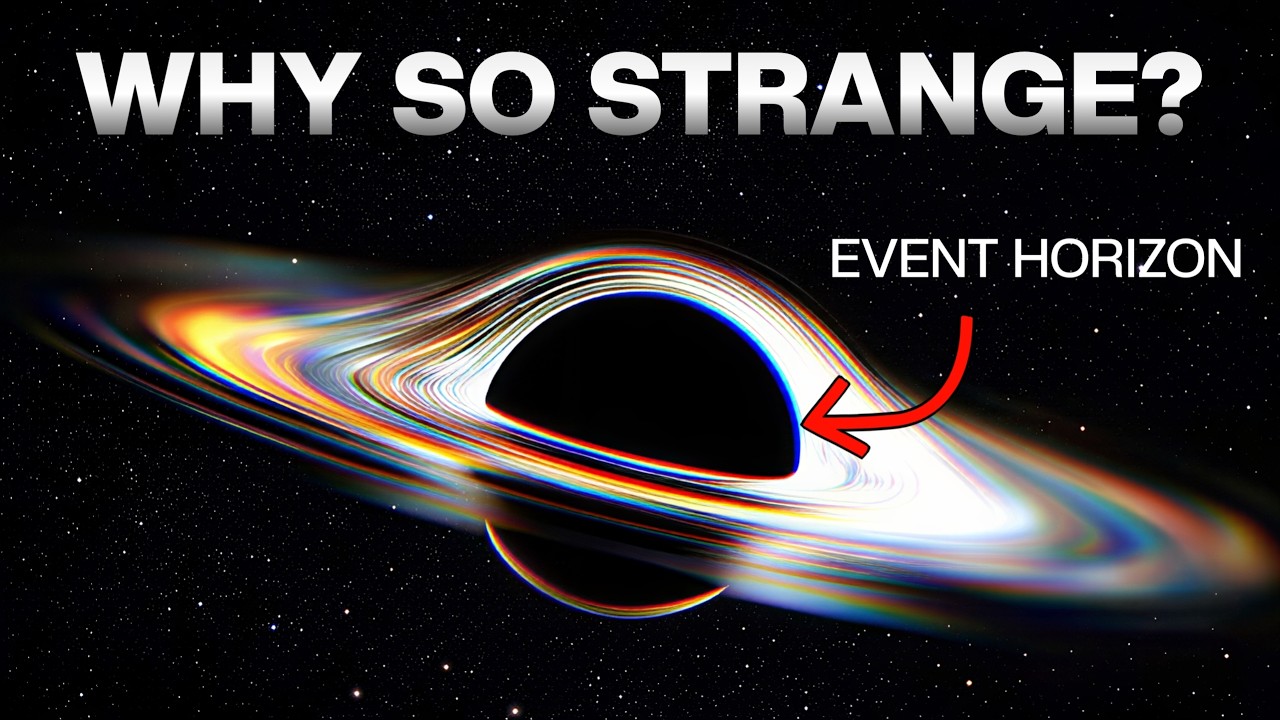
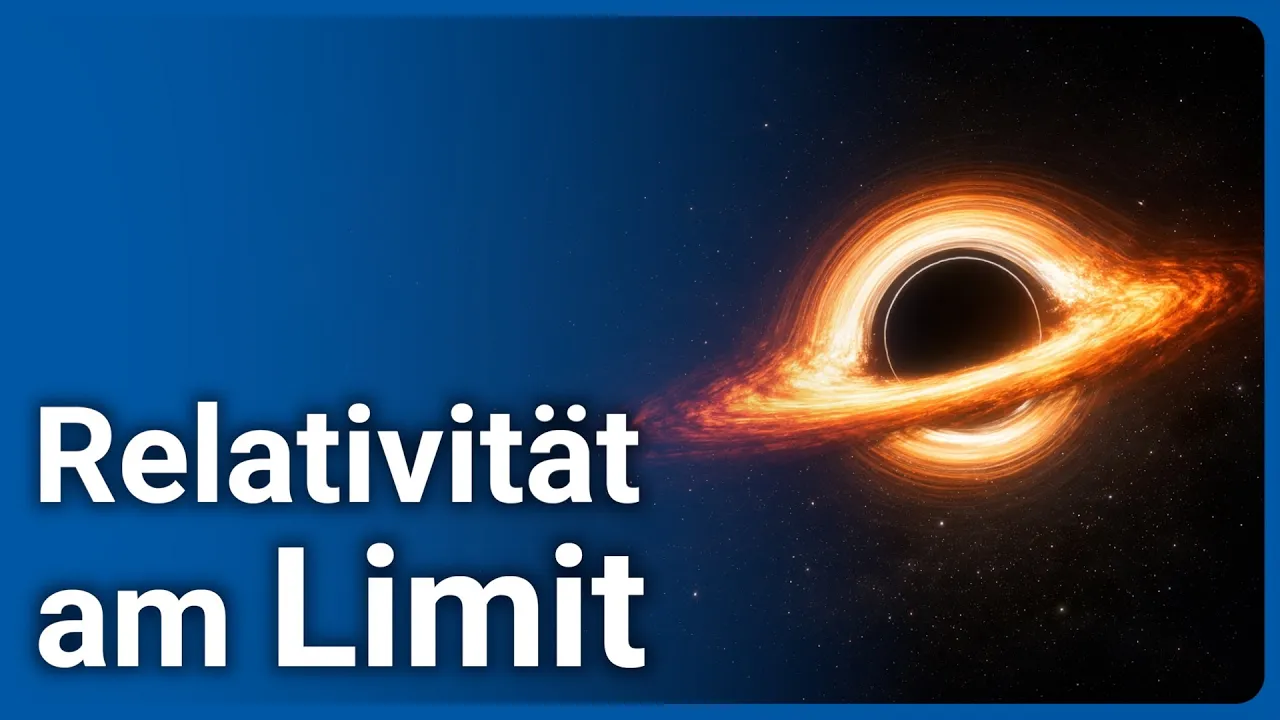
Finally, the incredible gravity around a black hole leads to interesting gravitational lensing effects on the accretion disk resulting in this familiar image.
In reality the accretion disk is actually a pancake shape, but we can see the accretion disk that would be normally hidden behind the black hole, because the light from it which travels upwards or downwards is bent around the black hole and comes towards us. So it looks like there is an accretion disk above and below the black hole, but we are actually seeing the top and bottom of the accretion disk that s behind the black hole.
I ve been talking for a long time, but how do we know black holes actually exist? Well over the last 50 years we ve built up a large body of observational evidence from many different techniques. The first was from x-ray astronomy as the radiation from the accretion disk is mostly x-ray radiation. The process that produces this x-ray radiation in the accretion disk is one of the most efficient energy producing processes known where the spiralling material has up to 40% of its rest mass converted into energy. To understand how hugely remarkable this is we can compare this to the nuclear fusion process that powers the sun and all stars. Here only 0.7% of the rest mass is converted to energy, way less than 40%.
So the accretion disk is nearly sixty times more violent than a burning star.
The very first black hole that was discovered was discovered this way in 1971 and is called Cygnus X-1. Since then we have discovered around a hundred more, although this is just a tiny sample of the number of black holes that are thought to exist in our galaxy, and every single galaxy is thought to have a supermassive black hole in its centre.
Often accretion disks are accompanied by relativistic jets, which emit even higher energy particles and radiation than from the accretion disk. The mechanism that creates these jests is not currently known. We see many high energy sources in space, and we think many of them are caused by the accretion of matter into black holes. These include active galactic nuclei, and quasars which are thought to be the accretion disks of supermassive black holes, and also ultraluminous x-ray sources thought to be from intermediate mass black holes.
Also things called x-ray binaries most likely consist of a normal star and a black hole orbiting each other while the black hole gradually sucks away matter from the star.
And short lived streamers are thought to be stars which shine incredibly brightly as they are being swallowed up by a black hole before disappearing. An entirely different line of evidence comes from the centre of our own galaxy by tracking the orbits of about 100 stars which have been observed to be orbiting around an invisible massive object called Sagittarius A*.
By tracing the orbits and measuring the velocities of the orbiting stars astrophysicists have been able to calculate the mass of the central body to be a humongous 4.3 million times the mass of the sun, but this mass is confined to a region of less than 0.002 light years, signs that it must be a supermassive black hole. Even more recently in 2019 the first direct image of the accretion disk around a black hole was constructed from the radio waves emitted by the galactic centre of the Messier 87 galaxy, and it had the features of an accretion disk that we expected, if a little blurry. But constructing this image was a feat of radio astronomy and was achieved by combining the signals from 8 radio telescopes all around the world to create a virtual telescope the size of the Earth; an amazing achievement.
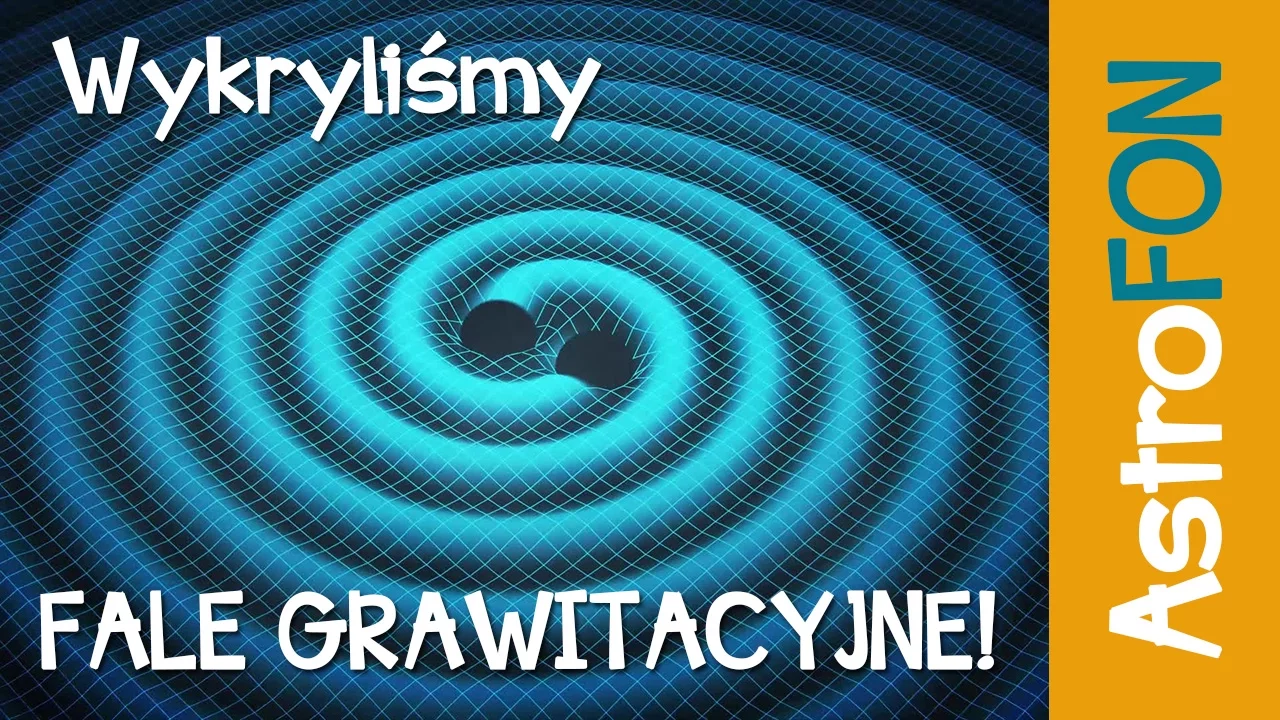
Just as incredible was the detection of gravitational waves by LIGO in 2016 which uses finely tuned lasers in a giant L shape to detect the miniscule changes of distance caused by the rippling of spacetime when gravitational waves passed through the Earth. The first gravitational waves they detected were created by a pair of stellar mass black holes spiralling into each other and finally merging into a larger black hole, and converting around 5% of their mass into gravitational waves. And since then LIGO and VIRGO have detected many more collisions.
Finally there is a proposed method called microlensing which has been seen many times for stars, but not as far as we know for black holes. I ve talked about how the strong gravitational field around a black hole causes a lensing effect. The idea is we could use this to detect black holes when they pass in front of a star. We ve seen things like supernovae be gravitationally lensed by massive objects like entire galaxies. But if we found a binary system where a star is orbiting a black hole we could potentially see the radiation from the star being bent towards us as it passes behind the black hole which would give us information about the black hole it is orbiting, and would be a really cool technique for the future of black hole observations.
Let s take a quick look at the theoretical understanding of black holes which started in 1916 but was really fleshed out in the 60s and 70s when black holes were taken seriously as real physical objects, not just mathematical curiosities. Here is the equation for the radius of a non-rotating black hole, which gives a simple relationship with its mass where G is the gravitational constant and c is the speed of light. But this gets more complicated if the black hole has spin or charge. The general description of black holes, developed in the 60 s is called the no hair theorem and states that a stationary black hole can be completely described by just three parameters: mass, angular momentum and electric charge.
Then in the 70s a theory of black hole thermodynamics was developed which describes the links between black hole mass and energy, how the surface area of a black hole relates it s entropy, and how the surface gravity relates to temperature.
Then Stephen Hawking applied quantum field theory to black holes and showed that black holes radiate Hawking radiation energy from the event horizon with a characteristic black body spectrum where the temperature is proportional to the surface gravity of the black hole.
So black holes will gradually lose their mass over time by radiating away Hawking radiation, but this evaporation is slowest for the largest black holes and fastest for the smallest black holes. Which means that micro-black holes would be short-lived, but supermassive black holes will live for over 10^100 years which is a ludicrous amount of time and those will be the last objects that will exist before the heat death of the universe. What is going on?
Oh it s just a car. This all gives you a good idea about what we think we understand about black holes, but there are many outstanding mysteries which we know about and these all seem to boil down to our lack of a theory of quantum gravity.
I ve already mentioned how singularities probably don t exist because they cannot be infinitely small with infinite density. So there s a question: what actually happens to matter at the singularity? Unfortunately if we ever found out experimentally, because of the event horizon we couldn t ever get the results out to anyone which is a bit of an issue to ever figure out what s going on in the singularity. Also, in the description of spinning or charged black holes there is a hypothetical possibility of them containing an unstable wormhole which would let you leave the black hole but in a completely different space time.
They also have regions inside them where it would be possible to travel to your own past along closed timelike curves which creates one of those time-travel grandfather paradoxes.
But, although these ideas are tantalizing from a science fiction perspective, both of these will probably go away with a proper quantum description of black holes.
There are other theoretical objects which have been conjectured, but there is no evidence for them yet. These include stars somewhere in between neutron stars and black holes but these are all highly speculative. Aslo white holes which are like black holes but where the event horizon goes the other way. Information can come out, but nothing can ever go in.
And finally naked singularities which are singularities which could be observed because they don t have an event horizon, but these are thought to be unphysical and so not actually possible.
But these aren t as interesting as the real theoretical puzzles.
First of all is the holographic principle, which is complicated to explain, but the general gist of it is that black holes might be telling us the whole universe is a hologram.
This is a strange result of the entropy of a black hole. In every other thing in the universe entropy scales with the volume of that thing, but in black holes it scales with the surface area, and this implies that anything that happens within a volume of spacetime can be described by data on the surface of that volume, so, we re all a hologram. But, again, we d need a theory of quantum gravity to properly calculate the entropy of a black hole, so this is still active work. Finally we have one of the biggest unsolved mysteries of black holes, what happens to the information that falls into them?
Now because black holes are defined by only three parameters: mass, charge and angular momentum, any other information about objects that fall into the black hole appears to be erased from the universe. But the thing is this isn t allowed by a fundamental law of quantum mechanics called unitarity. So for example, an electron has a load of quantum numbers associated with it that define it like lepton number, but if an electron falls into a black hole this information is lost because the black hole only preserves mass, charge, and angular momentum.
So one attempt to explain this is a theory called complementarity which says the information does actually come back out again, but in the Hawking radiation. The trouble was this was shown to fail by a further paradox called the firewall paradox. Now the details of all these things are complicated but the end result is that to resolve all these paradoxes about information we may need to give up one of the fundamental rules in the laws of physics, either: Einstein s equivalence principle, unitarity in quantum mechanics, or local quantum field theory. But overall black holes are fascinating objects to study as they are the most extreme environments in the universe where gravity and quantum physics meet and their very existence seems to break our fundamental theories of physics. But by studying them the hope is we may actually uncover some subtle clues that could help guide us to the next level of understanding so perhaps black holes are actually the experimental key to developing a theory of quantum gravity, or perhaps we ll just be a confused as we are now, forever.
Up Next

27:57
Understanding the Blandford-Znajek Mechanism for Black Hole Jets
@einsteintoolkit
272 views•2025-09-04

12:53
21cm Hyperfine Transition in Neutral Hydrogen: Radio Astronomy Basics
@AaronRobertParsons
12.4K views•2011-10-13
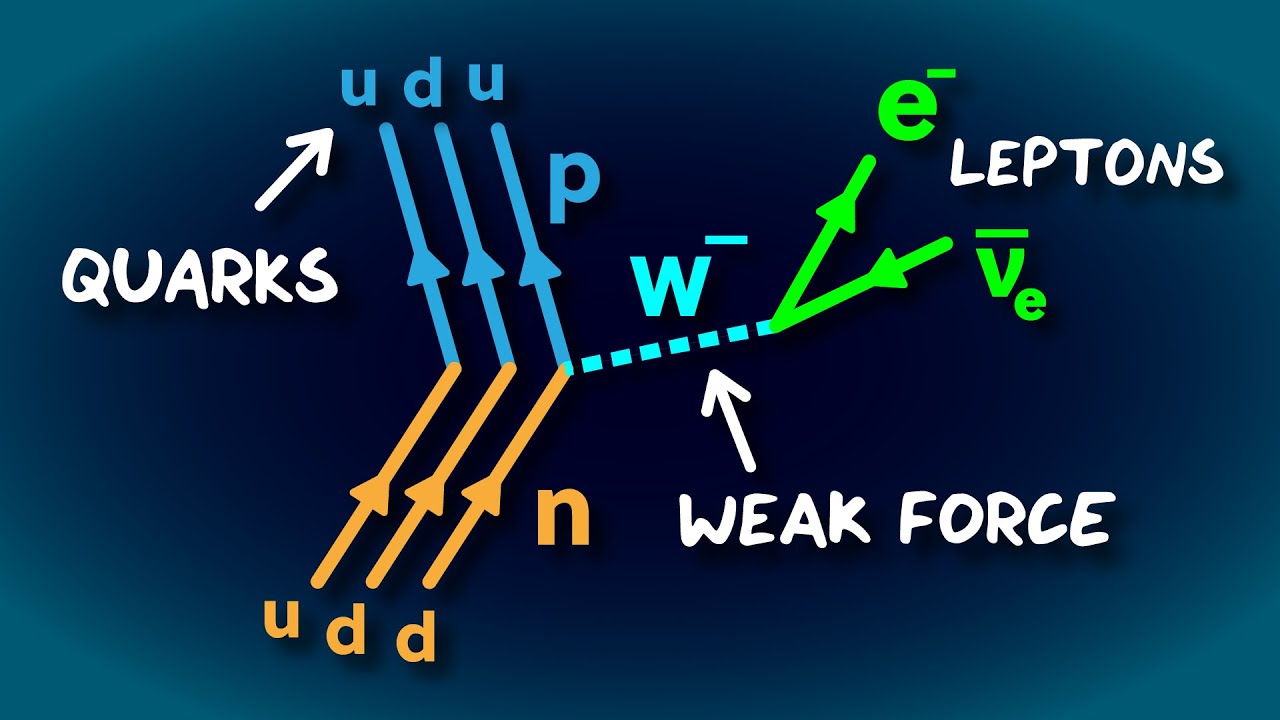
9:18
Reading Feynman Diagrams: A Beginner's Guide to Particle Physics
@domainofscience
245.9K views•2021-03-19

27:14
Entropy and the Second Law of Thermodynamics Explained
@veritasium
27.5M views•2023-07-01
Related Study Plans & Knowledge Roadmaps
Structured learning paths in Physics
physics
Nuclear Physics (Decay, Fission & Reactors)
01Atomic Structure and the Binding Force
02Radioactive Decay and Half-Life
03Nuclear Fission Mechanics and Chain Reactions
+ 2 more learning modules
12h5 modules
Explore Roadmap
physics
Soft Matter (Polymers, Colloids & Rheology)
01Foundations of Soft Matter & Thermal Forces
02Polymer Physics and Macromolecules
03Colloids, Surfactants, and Self-Assembly
+ 2 more learning modules
38h5 modules
Explore Roadmap
physics
Analytical Mechanics: Lagrangian & Hamiltonian
01Mathematical Foundations: Calculus of Variations
02From Newtonian Mechanics to Constraint Dynamics
03The Principle of Least Action & Lagrangian Mechanics
+ 3 more learning modules
28h6 modules
Explore Roadmap
physics
General Relativity (Spacetime & Cosmology)
01Foundations of Relativity: Special Relativity
02The Geometry of Spacetime: Equivalence Principle & Curvature
03Einstein's Field Equations: The Mathematics of Gravity
+ 2 more learning modules
55h5 modules
Explore Roadmap