


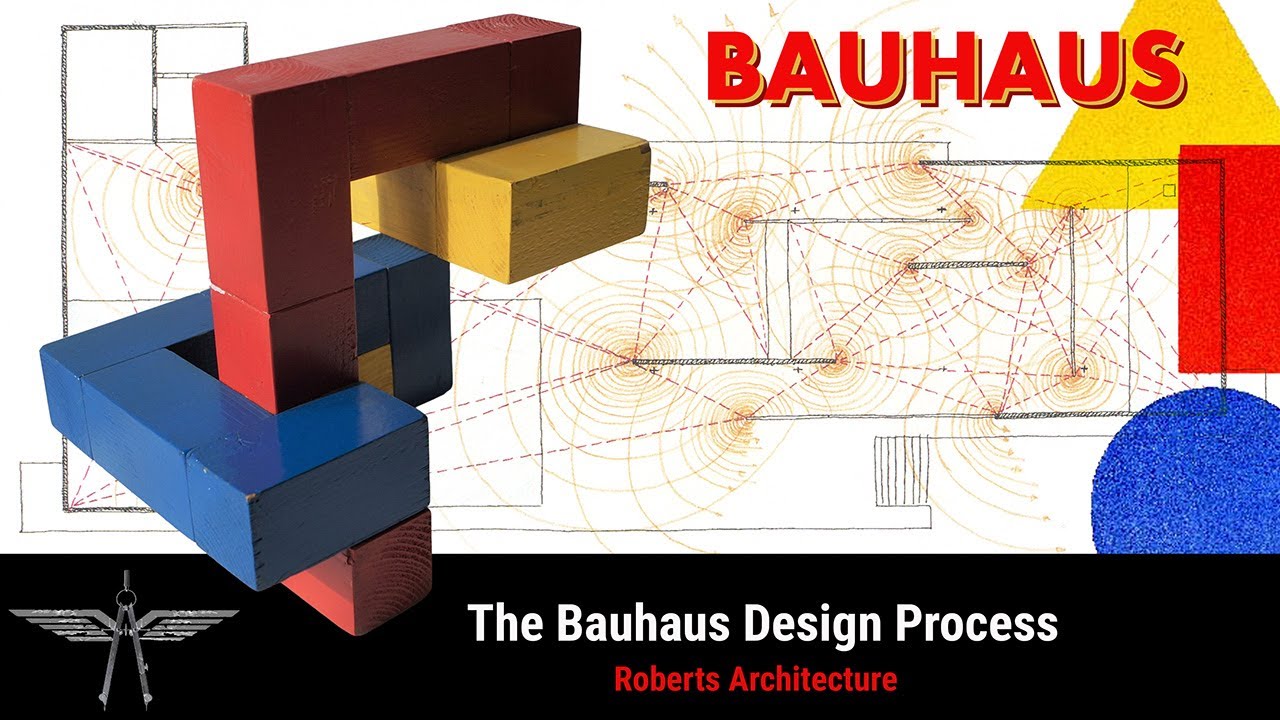


























The Bauhaus design school, founded in 1919 by Walter Gropius in Weimar, Germany, emerged as a revolutionary response to post-WWI societal devastation, rejecting nationalist Fraktur typography in favor of internationalist modern design principles; despite its original political intentions to transform German society through functional art, the Bauhaus philosophy was ultimately co-opted by global capitalism, becoming a worldwide commercial success while losing its original political context.
Bauhaus: Political Roots of Revolutionary Design History
Added:The socio-political history of the Weimar Republic and post-WWI Germany, which provided the unstable yet fertile ground for the birth of the Bauhaus school in 1919.
The industrial revolution's impact on manufacturing, specifically the tension between traditional craftsmanship and machine-age mass production.
The design principles of the Arts and Crafts Movement and Art Nouveau, which served as immediate precursors and ideological counterpoints to modernist design.
Basic tenets of early 20th-century leftist political ideologies, particularly regarding how art and architecture could serve the working class and democratize daily life.
The rise of the 'International Style' in architecture and how Bauhaus emigrants like Walter Gropius and Mies van der Rohe transformed global urban landscapes.
The institutionalization of Bauhaus principles in the United States through the New Bauhaus in Chicago and Black Mountain College.
The transition of modernism into corporate capitalism, analyzing how a revolutionary, anti-capitalist design philosophy became the aesthetic of mid-century corporate power.
The evolution of the 'form follows function' ethos into modern consumer product design, visible in brands like Braun and Apple, and mass-market furniture giants like IKEA.
254.6K views9.1Klikes7:01Original Release: 2019-09-13
Helvetica or Arial?
Cambria or Calibri?
With hundreds and hundreds of fonts at our fingertips today, selecting one can feel pretty arbitrary, but there was a time when choosing a particular typeface was considered a bold political act.
This was especially true in a short lived German school that, a century ago, shaped everything we now think of as modern design.
I'm Michael Tabb.
This is Quartz.
Please subscribe to our channel.
This is the Bauhaus.
This building was briefly home to one of the 20th century's most influential centers for design.
The ideas born in these classrooms have spread across the world, influencing everything from the design of home furniture to buildings to cities.
The story of the Bauhaus is a lesson in how easily the political can be co-opted by the commercial.
But even on its hundredth anniversary, Bauhaus still has more to teach us, because it was never just about the curvy forms and cool colors.
Its creators wanted to show how design can serve people.
The school wanted really to push in the way they educated the students that design and art is meaningful for societies.
That, you know, with the things you make, you might bring also the capacity to transform a society.
More specifically, they wanted to transform German society after World War I left the country in ruins.
Nationalist groups aligned to form what would become the Nazi Party.
Their right-wing ideology called for a return to traditional German values.
And their messaging carried a typeface.
Fraktur: the true German font, based on gothic script that had become synonymous with the German national identity for 800 years.
Fraktur became a recognizable part of Nazi branding, at least for a while.
On the opposite end of the political spectrum, avant-garde artists and designers saw the chaos as a chance to rethink their role completely.
Fresh from the horrors of the war, they wanted to turn over a new leaf, to start with the basics.
They came home being surrounded by millions of handicapped and wounded people.
And by the experience that every knowledge that they had before war started is now devalued.
So these artists came together and had the conviction that, "We have to start from scratch."
With a utopian vision, the architect Walter Gropius created a new school in Weimar called the Bauhaus.
Here, students were encouraged to experiment across disciplines: Painting, carpentry, weaving, printmaking, dance, lettering.
They created a radical new kind of typography.
But the Bauhaus didn't last long.
The Nazis believed that the Bauhaus' rejection of tradition was fundamentally un-German.
They hated their modern products, including the new typography.
The Bauhaus' play with typography is not simply innocent wordplay.
It is politically charged.
The Germans are probably the only users of the Roman alphabet who had given typescript a nationalist sense.
To refuse it and redesign the alphabet completely in the opposite direction is to free it of these national associations.
The Nazis closed the Dessau school for its degenerate art in 1932, then shut their Berlin outpost a year later.
Bauhausers fled Germany and spread their ideas around the world.
This was brought from Dessau to Berlin and then ultimately was shipped over here.
Founder Walter Gropius ended up in Massachusetts at Harvard University.
As chair of the architecture department, he brought the legacy of Bauhaus to mythic status.
He was kind of reforming architectural education, but really his role was almost as a cultural ambassador, promoting international modernist architecture in the United States but also the legacy of the Bauhaus.
The Bauhaus dogma took hold in schools across the world.
Students and scholars loved it, but something else started to happen.
Corporations loved it too.
As democracy and capitalism went global following World War II, so did Bauhaus design.
As corporations began to sell across borders, the advertising in the new typography was as effective in Switzerland as it was in California as it was in South Africa.
The new typographers of the 20s were aiming to make their graphic design international to lead to a kind of universal socialism, the irony being that what became international was capitalism.
A hundred years later, you can spot the Bauhaus influence in advertisements everywhere.
And thanks to many Bauhaus exhibitions and books and now the internet, designs from the school itself keep finding new life, including their experiments in lettering.
They've had half a million downloads so far.
They come from anywhere, so suddenly somebody takes us into a different environment.
Erik Spiekermann is a Berlin-based designer who's worked with students to revive Bauhaus type experiments.
They produced fonts based on century-old drawings that are now licensed by Adobe.
We are encouraging people to take liberties, I say, "Look, these weren't typefaces, they were sketches, they were very crude at times."
More often than not, I get a lot of joy out of people using my typefaces in a way I would have never done.
For Spiekermann and many others, this is the genius of the Bauhaus.
It's meant to be interpreted and reinterpreted. And that's because Bauhaus was not born as a style.
It was a revolutionary idea.
When the public began to talk about Bauhaus style, people at the Bauhaus were extremely upset, because they like to think that what they were creating was almost the necessity of modernity and was not at all anything so frivolous as style, which for them meant fashion.
On the school's hundredth anniversary, Bauhaus champions are trying to exhume its true legacy.
It's not the products or even the fonts, but the philosophy that good design can be a source of renewal and hope.
Up Next

59:25
Bauhaus Centenary: Legacy of Radical Art & Design | Documentary
@DrUmerHameed
607K views•2024-12-27

12:54
Triumph of Orthodoxy Icon: Byzantine Art & History Explained
@BenCallan
2.1K views•2024-08-06

9:49
FastAPI vs Flask vs Django: Choosing the Right Python Web Framework
@TechWithTim
302.5K views•2024-05-26

1:42
Game of Thrones Opening Credits: A Cinematic Analysis
@gameofthrones
46.3M views•2011-04-18
Related Study Plans & Knowledge Roadmaps
Structured learning paths in General & Interdisciplinary Studies
general-studies
Elevator Engineering: History, Physics & Cities
01From Hoists to Safety Brakes: The Dawn of Vertical Lift
02Hydraulic vs. Traction: The Engineering Physics of Elevators
03Modern Speed, Safety, and Algorithms
+ 2 more learning modules
12h5 modules
Explore Roadmap
general-studies
Rubber: Material Science, History & Geopolitics
01Origins of Natural Rubber & Mesoamerican History
02The Chemistry of Natural Rubber & Vulcanization
03The Geopolitics of the Rubber Boom & Colonization
+ 2 more learning modules
12h5 modules
Explore Roadmap
general-studies
Containerization: Evolution, Logistics & Trade
01Ancient Trade & Bulk Cargo: Amphorae to Barrels
02The Industrial Revolution & Cardboard Packaging
03The Containerization Revolution: Malcom McLean
+ 2 more learning modules
12h5 modules
Explore Roadmap
general-studies
Textile Tech: Evolution, Labor & Global Impact
01Pre-Industrial Textiles: Handloom & Cottage Industry
02Mechanization: The Spinning Jenny to the Power Loom
03The Factory System & Global Labor Transformation
+ 2 more learning modules
10h5 modules
Explore Roadmap