








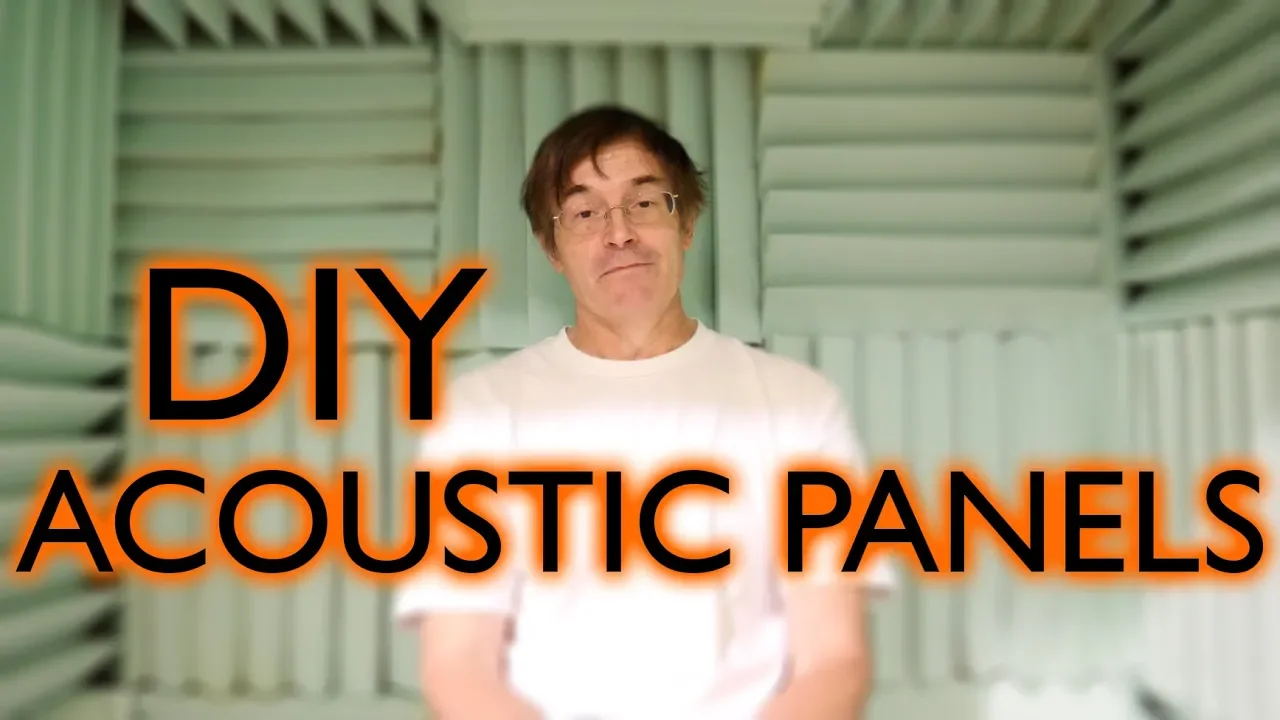









This video demonstrates how to build inexpensive acoustic panels using MDF frames wrapped in fabric and filled with insulation, which can effectively reduce echo in spaces like workshops and film studios; the key construction elements include a sturdy MDF frame with French cleat mounting system, breathable fabric covering, and acoustic insulation material, with each panel costing approximately $20 to construct.
DIY Acoustic Panels for Echo Reduction: A Cost-Effective Guide
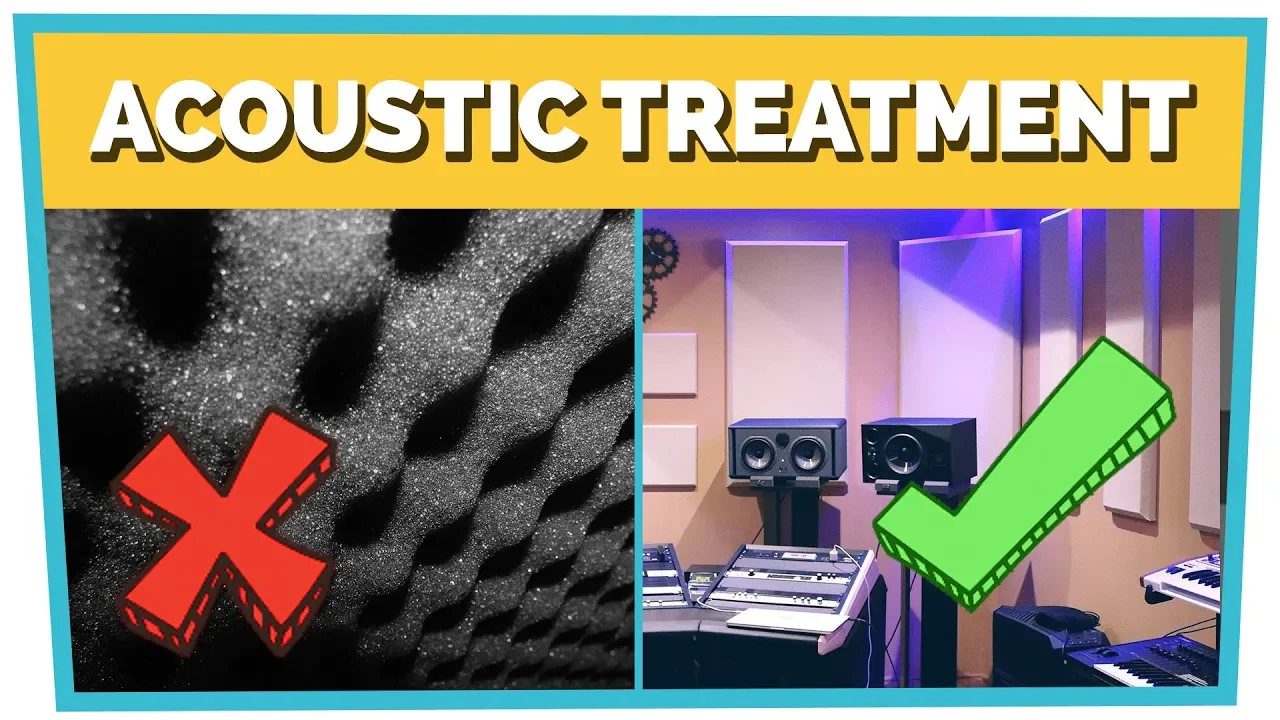
Added:The fundamental difference between soundproofing (blocking sound from entering or leaving a room) and acoustic treatment (controlling reflections and echo within a room).
Basic physics of sound waves, specifically how sound waves travel, reflect off hard surfaces to create reverberation, and dissipate through porous materials.
The physical properties of sound-absorbing materials, such as the density and flow resistivity of mineral wool, fiberglass, and acoustic foam.
Basic workshop safety and tool literacy, including the safe handling of insulating materials that require personal protective equipment (PPE) like masks and gloves.
Strategic acoustic panel placement theories, such as identifying first reflection points using the mirror method and addressing flutter echoes.
The design and construction of specialized low-frequency absorbers (bass traps) to target room modes and standing waves in corners.
Using acoustic measurement software (e.g., Room EQ Wizard) and measurement microphones to test a room's frequency response and reverberation time (RT60) before and after treatment.
Integrating acoustic diffusion (using 1D or 2D diffusers) alongside absorption to prevent a room from sounding acoustically 'dead' or unnatural.
1.7M views29.2Klikes14:59Original Release: 2021-11-29
My shop is great for woodworking, but it's also a film studio.
And as I made my workshop better with this sweet miners all station, I actually added in a lot of echo and made the film studio a lot worse by taking away the wood racks that used to be here.
I had a bunch of wood that was breaking up a lot of the sound waves, and I replaced it with some nice, flat hard surfaces, which are horrible for echoes.
So today I'm going to be making some inexpensive sound panels and hanging them on the ceiling to see if we can kill some echo now.
Honestly, guys, I kind of doubt if they're going to make a big difference, but I think it's worth a try and we'll see what the before and after sound like.
I'm Brad from Fix This Build That let's build something awesome.
The construction on these sound panels is going to be very simple, and I'm actually going to be using some MDF.
I'm not abducted. It's OK. Don't send help.
And my reason? Plywood tips VIDEO I just got through telling you how much I hate MDF and I still do, and I will be wearing a respirator the entire time that I'm cutting material because it is super dusty.
But not only is it dusty, it's very stable, and it also doesn't have any grain to it.
So as we're wrapping fabric around these same panels, it's not going to catch on any of the fibers.
And that's a really good thing.
So sometimes you can't beat them, you got to cut them, bring a dust mask and. And these pieces to. That up.
Hey, this is a brand from the future.
This guy has no idea that his microphone is not working and just good out, and all the audio that he recorded is complete trash.
You got to give it to him, though he's got some gumption.
But what he's trying to say is that this frame is just joined together and it is sized for insulation that is 15 and a quarter inches wide and 47 inches long, so it'll fit the batch of insulation perfectly.
I think the video equipment is trolling us because it knows we're trying to get better sound and this is working now.
So I'm just going to grab my Mi Naylor and some wood blue, and I'm going to go ahead and pop some nails into the sides on this then and come back and drill a countersign hole and put a screw in just for good measures.
And that should hold everything fine for what we need to put it on the ceiling.
All right, and just like that, we have a frame and this is drive for just a few minutes here, but just with even the screws and brand nails.
This is really strong.
That's the nice thing about MDF is that it does soak up the glue.
So the glue joints are really strong on MDF because it really gets into the pores and bonded.
And there is another piece that I'm going to be adding on the sides and that'll be for the mounting.
But I forgot to cut those in. They need miners on them.
So instead of throwing a whole bunch of dust in the air while I'm assembling these, I'm going to go ahead and assemble all the frames.
Then we'll come back to that.
Yes, I am vacuuming up the dust after every time neurotic.
All right. That is the last of them all twelve done, and a few things that I learned real quick, I would go a little heavier in the corners with the glue.
That way, when the glue squeezes out, it's going to provide a little extra bond right there and kind of fill up that corner and anything that squeezes out on the outside.
Just run your finger up it and wipe it away because it doesn't matter about the finish.
Since we're wrapping it in fabric, the other thing I would suggest, and of course, I don't work with MDF because I hate it, so I don't have any MDF specific screws.
I just have these regular wood screws, and I would highly recommend getting some MDF screws because they're going to hold a lot better.
It was really easy to strip the screws out.
So when you're driving it, just be careful when it starts to snug up.
Just leave it there because if you keep going, it's just going to strip it out.
So now I need to work on some cleats.
They're going to actually mount this to the ceiling, and I'm using a design by Alexander Chapelle.
Or it might be Chappel, but check him out.
He is right up here. He's actually one of my favorite YouTubers.
I love his creativity in the designs he does, and this sound panel design is based extremely closely off of here.
So all design credit to Alexander, he does an awesome job and what he did is he's using French cleats.
I'm to cut down some pieces, cut 45 degree angles and attach them to the short sides.
And then there will be a long piece that goes on the ceiling and then the French cleat just slides right up there.
So I'm going to go cut those parts and then we can get them attached to the frame and start putting on some fabric.
I've got two cleats, and I saw Alexander round over the front edges in that way when it's going onto the cleat.
It'll just give a little more clearance and make it a easier to slide them on.
I cut a little spacer block and I knocked out the corner so that there was any glue squeeze out in the corner and won't affect it, so I can just put that in. And now this will be centered perfectly.
That's going to give me about four and a half inches on each side of the cleat so that we can put the same panel up on the ceiling and then slide it onto that four inch cleat and it'll be stable again.
Great design, Alexander.
All right, now, it's time to talk about fabric, and I am in my dining room because I don't want to get the fabric called dirty in the shop.
So what I've got here is 100% cotton. This is a white solid.
It is 108 inches that is the width of this roll.
So this is doubled over, I think twice.
And basically what I've figured out is that out of 108 inches, if I get three yards of fabric, I can get enough to cover twelve panels.
This whole thing was a little over 50 bucks, so you're under $5 in fabric per panel and it comes in lots of different colors.
This is breathable and acoustically transparent, I believe.
And so I'm going to use this so I can cut out my individual panels and then we can go back to the shop and I can start putting them around the frame.
All right, now, we can lay this down on the bench, and this should be sized just enough so I can put the panel down in the middle and wrap around to the sides. And then I'm actually going to have another piece that's going to go on the back.
So I did cut these to I think about 27 inches wide and that is just perfect and 60 inches long.
I'm going to start on the long edge first and just pull the center tight and staple this onto the top.
I'm just using 50 staples in a staple gun.
Now, I could do that by hand for twelve panels and how many ever hundreds of staples or get a pneumatic on this little guy's only about 35 bucks and this is going to save my hand and make things that way faster.
Therefore, I've got this full first side locked in, and that's where I can pull over this backside side and really make sure I get a good stretch on it, and I've never done this before, but I am just starting to sit here and work my way out and keep looking down at the fabric to make sure that I'm not introducing any creases and keep it as tight as possible to hold the insulation.
And you get to the end and working with the corners, there's a bunch of different ways that I've seen online to do it.
The one I think I would go with is just folding it up and I'll give you a tight shot over here on this next one.
So that way, I don't have to do a bunch of cutting or folding around the corners.
I'm just going to do one single fold and kind of bunch it all together, and it should give a pretty clean corner.
And if I don't like it as I'm going, we'll switch up as we do the other eleven.
All right, the first corner came out really nicely, but smack it one.
Not as much. There's a little bunching over here that you can kind of see.
And I think that was because on that one, I was kind of pulling in instead of pulling out. But again, not that big of a deal.
And there's a little bit of extra fabric, and I need to get rid of that so it doesn't interfere with the mounting system. Susan, what?
Let me use her nice shears out here in the shop, but that's OK because I've got these crescent with utility shears.
These are from Home Depot, who is the sponsor today's video.
And these are great because they are small and compact, and so they'll fit in the tight little corners.
So it's great for cutting fabric, landscaping, fabric or even just general tubing around the shop.
I'll have a link below in the description where you can pick these up, as well as the ladder that I'm going to be using for installation, but I'll show you that a little bit later.
All right, and that's one panel, and I think this is going to work really well.
So instead of putting the insulation in right now, I'm going to go ahead and put the fabric on the rest of the other eleven.
And then that way I can work with the insulation all at once and not get a bunch of fibers in the air and then maybe take the mask all off.
So let's get these done in the we'll come back and do some insulation.
Twelve frames all finished.
That was a lot of work days, a lot of time, so don't underestimate it.
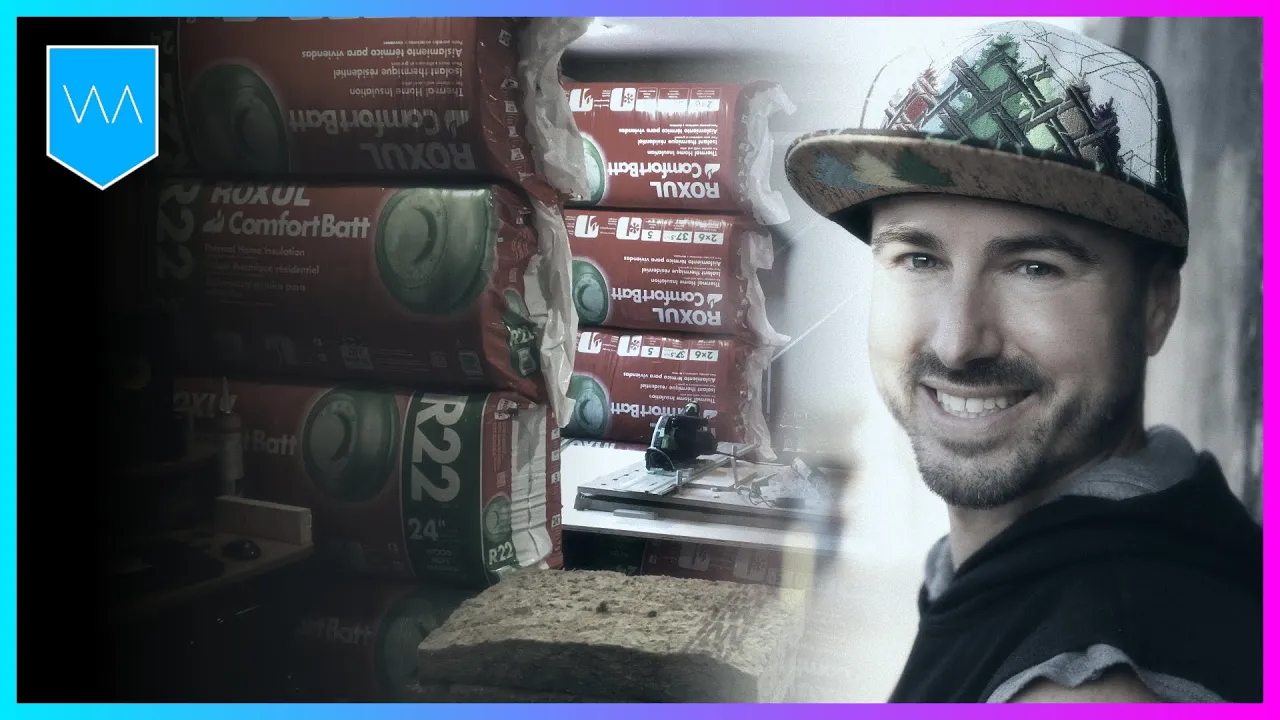
Now I can put the insulation and I'm using a rock wall safe and sound, and it is the three inch variety that's going to fit right into the panel.
And I'm going to put it under the cleats.
You really should wear a mask whenever you're touching that and the fibers are getting up in the air now because the insulation is going to be exposed in the backside.
I did cut some backing material and this is this the same type of cloth just in a different color.
So I'm going to put the insulation in and then nail this around.
And in that way, none of those fibers will want to get out, even though they're going to be hugged up against the wall.
Kind of better safe than sorry.
Once I get everything installed in these, I'll do the rest of them real quick and then we'll get into hanging them on the ceiling.
You might think that's a little bit overcautious, but I actually have asthma, and so that's one of the reasons I hate dust is because my lungs get irritated really easily.
Having this extra backing, we'll just keep all those fibers in place.
And now here's the true test.
I'm going to hold it up by the cleats. And yeah.
That's not bad. I was kind of worried about not having a senator support on the underside.
But I was able to pull it tight enough that there is very little snag on this and these cleats are holding up just fine.
So I think it's mounting system is going to work out when I finish the rest of those and then cut some cleats and then we'll talk about how we're going to get this up on the ceiling.
So I got the cleats cut the size, I just cut the bells outside on a larger sheet and then ripped them down to size on the table saw.
And this gives me a clip that we can put on the ceiling.
And here's how it will slide in.
And then that should be able to hold up the panel.
That's a very cool way to utilize French plates.
All right. I've got eleven foot ceilings, so I'll be using a multi position ladder.
This is the multi position pro from Werner.
And this is the 22 foot variety.
Now I've had one of these for years and I love them if you have high ceilings and a six foot ladder doesn't work for you.
This one is awesome, so I can easily reach the eleven foot ceilings and it can go into different positions and you can fully extend it to do 22 feet.
I have a link below to this one as well. You can pick it up at the Home Depot and these things can be heavy, but this is the lightest of the 375 pound rating variety, which this one is, which is nice.
I've got everything laid out on the ceiling, and I'm going to be putting these into the ceiling with three inch construction screws.
All right. As much as I trust this is going to work, I am going to do a test for it before I install everything else. Hey.
All right. That works out there.
Nice and secure. This is perfect.
All right. I'm going to take this down space. Everything else.
Get them all up.
All right, I've got everything up.
It already sounds a little more quiet, maybe placebo effect, but I feel like there's definitely less bouts and less echo, I am using the shotgun mike right now, so we have a little comparison.
So Syria sounds like before and after.
In a little voice test.
Hey, I'm Brad from fix this build that let's get out there and build something awesome.
I'm Brad Rodriguez from Fix this build that let's get out there and build something awesome.
Now, to my ears, it sounds like there's a lot less echo.
We'll see how it comes across on film, but I am pretty happy with this.
In each panel ended up about $20 to make it.
So all in all, is it worth it? I'd say yes.
And you'll notice things are not perfectly aligned, and that's because I had little obstruction over here that had to work around, so I couldn't get them symmetrical.
And that hurts me on the inside. But it's OK.
If you check out some other videos and see what I've done in my shop, you can check them out right there.
I want to give a big thank you to those folks that are joining the FTBT Builders Club.
Until next time, guys get out there and build something awesome.
Up Next

4:26
Fabric Wrapping Acoustic Panels: DIY Upholstery Tutorial
@soundheadquarters
2.7K views•2025-12-05

26:22
Walking in the City: Urban Rituals and the Flâneur in Contemporary India
@PSBTIndia
1.9K views•2016-08-02

9:49
FastAPI vs Flask vs Django: Choosing the Right Python Web Framework
@TechWithTim
302.5K views•2024-05-26

1:42
Game of Thrones Opening Credits: A Cinematic Analysis
@gameofthrones
46.3M views•2011-04-18
Related Study Plans & Knowledge Roadmaps
Structured learning paths in General & Interdisciplinary Studies
general-studies
Artificial Light: History, Tech & Human Impact
01The Pre-Electric Era: Fire, Oil, and Gas Lighting
02The Incandescent Revolution and Grid Electrification
03Gas Discharge and Fluorescent Illumination
+ 3 more learning modules
14h6 modules
Explore Roadmap
general-studies
Elevator Engineering: History, Physics & Cities
01From Hoists to Safety Brakes: The Dawn of Vertical Lift
02Hydraulic vs. Traction: The Engineering Physics of Elevators
03Modern Speed, Safety, and Algorithms
+ 2 more learning modules
12h5 modules
Explore Roadmap
general-studies
Rubber: Material Science, History & Geopolitics
01Origins of Natural Rubber & Mesoamerican History
02The Chemistry of Natural Rubber & Vulcanization
03The Geopolitics of the Rubber Boom & Colonization
+ 2 more learning modules
12h5 modules
Explore Roadmap
general-studies
Containerization: Evolution, Logistics & Trade
01Ancient Trade & Bulk Cargo: Amphorae to Barrels
02The Industrial Revolution & Cardboard Packaging
03The Containerization Revolution: Malcom McLean
+ 2 more learning modules
12h5 modules
Explore Roadmap