
















Researchers at Karlsruhe Institute of Technology have developed a mechanochemical recycling process that uses ball milling with aluminum as a reducing agent to recover up to 76% of lithium from various lithium-ion battery chemistries (LCO, NMC, LMO) at ambient temperature, avoiding the energy-intensive and chemically-intensive processes of traditional pyrometallurgy and hydrometallurgy; this method offers a simpler, safer, and more universally applicable approach to battery recycling since it requires no prior processing and can handle mixed battery types simultaneously.
New Mechanochemical Battery Recycling Method Boosts Lithium Recovery
Added:Basic chemistry of lithium-ion batteries, including the roles of the anode, cathode, electrolyte, and active materials like lithium cobalt oxide.
Traditional battery recycling methodologies, specifically pyrometallurgy (smelting) and hydrometallurgy (acid leaching), along with their energy and environmental drawbacks.
Fundamentals of mechanochemistry, which involves using mechanical energy (such as milling or grinding) to initiate and drive chemical reactions without solvents.
The concept of material recovery rates and why selective extraction of critical metals like lithium is chemically challenging.
Industrial scaling challenges of mechanochemical processing, specifically moving from lab-scale ball-milling to high-throughput continuous manufacturing.
Methods for purifying and upgrading recovered lithium compounds to achieve 'battery-grade' quality for re-integration into the battery supply chain.
Comparative Life Cycle Assessment (LCA) methodology to quantitatively evaluate the environmental and carbon footprint of mechanochemical recycling versus traditional methods.
Application of mechanochemical extraction to other valuable battery components, such as cobalt, nickel, manganese, and graphite.
90.1K views6.8Klikes13:39Original Release: 2023-05-14
We’ve looked at some very promising alternative battery chemistries in recent months here on Just Have a Think.
Some of them look like they could represent a genuine challenge to the current market dominance of lithium-ion technologies.
Personally, I’d say that SODIUM-ion is the most likely candidate in that department, especially after recent announcements from CATL and BYD over in China.
But that doesn’t change the fact that there are billions of lithium-ion batteries already in existence all over the planet, all of which at some point will come to the end of their operational lives and will need to be recycled or reused if we want to avoid chucking them into landfill along with all the other stuff we can’t be bothered to deal with responsibly.
One of the largest potential contributors to that challenge is the almost exponential growth of light electric vehicles, or cars to you and me.
According to the International Energy Agency there will be about three hundred and fifty million electric cars on the roads by twenty thirty and a separate report published in Q1 of twenty-twenty-three by an energy consultancy called Circular Energy Storage calculates that to be more than two and a half thousand gigawatt hours-worth of battery energy.
About a hundred-and-forty gigawatt-hours’ worth of batteries will be reaching the end of their useful lives in vehicle propulsion by then, roughly a hundred gigawatts of which will go on to spend many more years in second-life use as stationary energy storage for utility companies, leaving 40 gigawatt hours or so that will need to be recycled.
That’s almost two hundred and ten thousand tonnes of batteries requiring some sort of environmentally responsible processing.
New lithium recycling start-ups like Redwood and others are growing rapidly, which is great, but the recycling methods they use are not without their own challenges, like very heavy energy requirements, and the use of nasty chemicals to dissolve the various constituents of a battery cell.
Now, a team of researchers at the Karlsruhe Institute of Technology in Germany, reckon they’ve developed an alternative path to effective lithium capture that avoids all of these pitfalls while maintaining high lithium yields.
So, as usual, we have to ask ourselves how their lab results stack up against the existing competition and of course whether their findings are likely to translate into real-world commercial reality.
Hello and welcome to Just Have a Think.
Lithium recycling is still really a very young industry.
The biggest and arguably best-known recycler is Li-Cycle, based in Toronto Canada.
They do have competition though, chiefly from ABTC in Nevada, RecycLiCo Battery Materials in Surrey, Canada, and Ganfeng Lithium Group over in China.
And of course, not forgetting the company I mentioned a moment ago, Redwood Inc. headed by Tesla’s co-founder and former CTO, JB Straubel.
Redwood are not up with the big boys yet, but in typical Straubel fashion, they certainly intend to be!
They reckon their technology can recover ninety five percent of key battery elements and eighty percent of the lithium.
They’re planning to complete a one hundred gigawatt hour facility by twenty-twenty-five capable of producing enough recycled cathode and anode material for one million vehicles per year.
And by twenty-thirty the plan is to ramp that up to FIVE hundred gigawatt hours-worth, enough for FIVE million vehicles per year.
According to their website, here’s how virgin raw materials currently get shipped around the world before they reach a battery cell factory.
It’s an average round trip of fifty thousand miles.
We obviously need to get much, MUCH better at sourcing raw materials more locally, and making that supply chain a whole lot less environmentally impactful.
That’s a whole separate video in its own right.
BUT if each country could at least develop a robust and effective vehicle battery recycling industry of its own, then the reliance on very long supply chains like this will be diminished significantly.
There are currently two main methods for extracting the various metals and minerals from lithium-ion batteries.
The most commonly used technology is pyrometallurgy, which is essentially smelting at temperatures above a thousand degrees Celsius to produce an alloy of all the metals contained within the battery.
That alloy then needs to be processed again to split out the various different metal types.
The main advantage of the pyrometallurgical process is that there’s no pre-processing or pre-treatment required.
You just chuck everything in the oven at gas mark seventy-three and come back in a couple of hours.
The downsides are that it requires a significant investment in equipment, it’s very energy-intensive and wasteful, and it results in heavy pollution not just from the heat in the first smelting stage but also in the direct leaching of lithium from the output slag.
The other approach is called hydrometallurgy.
In this process the packs first have to be physically dismantled to separate out some of the easily removable materials like plastic casings and aluminium trays, all of which gets sent to a normal recycling plant.
The battery modules themselves then get dumped into a shredder where they’re ground up into tiny fragments in a completely enclosed inert or vacuum environment so that nothing explodes or catches fire.
The liquid electrolyte is evaporated off in the process and later condensed back out into a liquid for re-use.
Depending on the specific configuration of the batteries, what you get out at the other end of the shredder is a pile of granulated materials like aluminium, lithium, nickel, manganese, cobalt, graphite and copper.
The granules then get screened to separate out the aluminium and copper, plus any last bits of plastic from the internal components of the cell packs.
That leaves a fine power, which the industry refers to as black mass, containing all the really valuable materials from the battery electrodes, including lithium.
The black mass then gets dissolved in an acid bath, before going through a process known as solvent extraction to separate out the different metals, which are then ready to be packaged up and re-used in new battery production.
Straubel’s Redwood process uses a combination of pyrometallurgy and hydrometallurgy to recover what they claim to be between ninety-five and ninety eight percent of a battery’s nickel, cobalt, copper, aluminium, and graphite, and more than 80% of its lithium.
The biggest operator, Li-Cycle AVOIDS the energy intensive smelting processes in pyrometallurgy and instead relies entirely on the leaching out of constituent elements via the HYDROmetallurgical approach we just looked at.
But the complex leaching solution produced in this process often causes difficulties with the subsequent extraction and purification steps.
One of the biggest challenges is the loss of metal ions due to co-extraction with other metals.
According to the Karlsruhe Institute, more than twenty percent of the lithium ions are extracted simultaneously with nickel, cobalt, and manganese ions, and it’s extremely challenging to chemically drill down and recover this proportion of the overall yield.
The Karlsruhe paper suggests that despite the ability to produce high-quality products, hydrometallurgy is hampered by the complexity of the processes, which strongly depends on electrode chemistry and produces a significant amount of harmful waste.
All of that is leading some scientific developers towards the mechanochemical or MC, approach that we’ve looked at a couple of times on this channel in other applications.
The idea here is simply to use the brute force of a very heavy ball in a rotating drum, and the gift of time, to pulverise materials together to provoke a chemical reaction.
Because the chemical interactions in this process are activated by mechanical force, there’s no need for any of those hazardous solvents.
That makes the MC method relatively safe and clean, with high reaction efficiency and low energy consumption.
Some recyclers already use the MC method as a pre-treatment of battery materials, resulting in a significant improvement in the recovery of valuable components in the pyro or hydro processes.
But the most effective way to use the MC approach is when direct reactions take place between battery materials and non-hazardous, non-corrosive additives to recover valuable metals at close to room temperature and ambient pressure.
A recent study showed that solvent-free mechanochemical processing like this could successfully convert Lithium Cobalt Oxide (LiCoO2) or LCO chemistries into metallic Cobalt and Lithium derivatives.
The challenge the Karlsruhe team set for themselves was to develop that system into something that could be just as successful for the other main lithium battery chemistries, Nickel Manganese Cobalt or NMC, Lithium Manganese Oxide or LMO and Lithium Iron Phosphate or LFP.
And to do that, they employed a neat piece of lateral thinking, which regular viewers of this channel will know is something I am a very big fan of.
The insight they came up with was to use Aluminium as a reducing agent for the chemical transformation.
Why is that smart?
Well because aluminium is typically already present in the battery cell as part of the current collector.
The Karlsruhe team first tried a bit of ball rolling on a Lithium Cobalt Oxide cell to give themselves a benchmark.
What happens here is that after about thirty minutes of pummelling the cobalt starts to come out of the compound, and because cobalt is magnetic, it can be detected and picked up with a magnet.
At the same time though, the aluminium has wedeled its way in with the lithium so now you’ve got a compound of lithium aluminium oxide as well as your freed up cobalt.
Another hour or so of milling goes some way towards separating that new compound into ITS constituent parts, but for reasons that are definitely outside the scope of my little brain and therefore this video, the process only actually liberates between thirty and forty percent of the lithium.
To get over that little wrinkle the team employed a second method called ‘carbonisation’.
The thinking here was that they could react the lithium aluminium oxide with water and carbon dioxide in ambient air to produce a sort of mash up of everything, represented by one of those ridiculously complicated chemical equations that I imagine give scientists a warm fuzzy feeling in places they didn’t even know they had.
Once they’d done that, they applied various processes of filtration and leaching at a relatively low heating temperature of seventy degrees Celsius to separate out the only water-soluble constituent which is lithium carbonate.
And that’s the compound you’re after, because that can then be directly used by the battery makers in new cell chemistry.
This new process liberated up to seventy six percent of the lithium content of the main battery chemistries – that’s very similar to the numbers quoted by Redwood.
Chemical analysis showed that lithium-carbonate with a purity of more than ninety-nine percent can be obtained from LCO, NMC, and LMO chemistries.
The results weren’t quite so good for lithium-iron-phosphate cells though.
Apparently the phosphorous is a bit of a buggeration factor in the reaction because it quite likes to combine with lithium to make lithium phosphate.
So, the Karlruhe team reckon a further round of water dissolution and filtration will be needed to get lithium carbonate purity up to acceptable levels for this particular battery chemistry.
But assuming that hurdle can be overcome then what we’ve got here is a very simple, low energy, non-toxic mechanical process that can accept any battery chemistry or even a combination of all of them at the same time, with no prior processing required.
Just lob it all into the ball milling machine and go off for a well-earned cup of tea.
That makes it universally appealing to battery makers and recyclers anywhere in the world.
So…yes, it’s yet another piece of lab-bench research that will obviously need a lot of input to work it up into a commercially viable process, but hopefully even the most cynical observer would have to concede that it does at the very least represent an encouraging step forward.
If you agree with that point of view, or if you think it’s a bunch of arse, then feel free to barrel straight into the comments section below and leave your thoughts there.
That’s it for this week though.
Thanks, as always to the channel’s fantastic Patreon supporters, who keep me on the straight and narrow and help keep ads and sponsorship messages out of these videos.
And I must just give a quick shout out to the folks who’ve joined recently with pledges of ten dollars or more a month.
They are… Cesar Obach, Michael Paine, Scott Vye, Larry, Kyle Gambrell, Aisling, Bob Underwood, David Thomas and Perry Pillard And, of course, a huge thank you to everyone else whose come on board since last time too.
You can join them and get exclusive content from me and the chance to choose future video topics, by jumping over to Patreon dot com forward slash just have a think and of course you can hugely support the channel absolutely for free by subscribing and hitting that like button.
We’re really nudging up towards that half million subscriber mark now, thanks those of you who have subscribed in the last few weeks, so if you haven’t already done so, and you feel like we’ve earned your support, then you can help us get over that milestone by clicking down there or on that icon there.
And I will be forever in your debt.
As always, thanks very much for watching, have a great week, and remember to just have a think.
See you next week,
Up Next

3:15
Understanding PET: Polyethylene Terephthalate Structure and Uses
@Chemistry-For-Everyone
439 views•2025-03-15
83:56
Biocatalysis and Catalysis in Islatravir Synthesis | Merck Webinar
@SCIwheresciencemeetsbusiness
675 views•2020-10-08
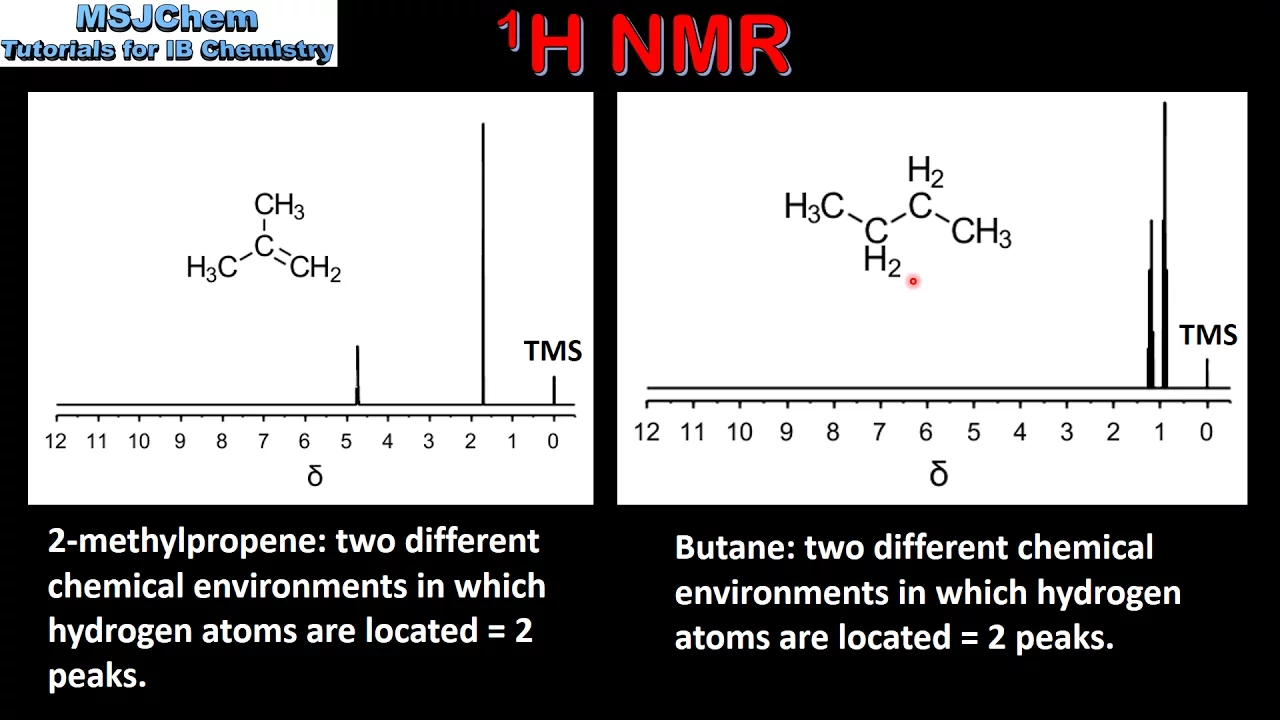
10:06
1H NMR: Determining Number of Peaks from Structure
@MSJChem
59.2K views•2017-04-06

17:31
Edible Water Bottles: A DIY Guide to Sodium Alginate Spherification
@ryan
10.5M views•2019-06-21
Related Study Plans & Knowledge Roadmaps
Structured learning paths in Chemistry
chemistry
Nuclear Chemistry: Decay, Meds & Fuel Cycle
01Introduction to Nuclear Structure and Radioactivity
02Decay Dynamics and Kinetics
03Radiation Interaction and Detection
+ 2 more learning modules
24h5 modules
Explore Roadmap
chemistry
Supramolecular Chemistry: Forces & Machines
01Foundations of Chemical Bonding and Intermolecular Forces
02Introduction to Host-Guest Chemistry
03Thermodynamics and Dynamics of Self-Assembly
+ 2 more learning modules
16h5 modules
Explore Roadmap
chemistry
Photochemistry: Excited States & Reactions
01Foundations of Light-Matter Interactions
02Molecular Orbitals and Electronic States
03Photophysical Processes and Jablonski Diagrams
+ 2 more learning modules
18h5 modules
Explore Roadmap
chemistry
Coordination Chemistry: Bonding & Properties
01Introduction to Transition Metals and Ligands
02Crystal Field Theory (CFT) and Geometry
03Magnetic Behavior and Spin States
+ 2 more learning modules
14h5 modules
Explore Roadmap