












![[오디오] 사피엔스! 1부 1,2,3,4장 인지혁명! 유발 하라리 역사 3부작 프로젝트 1탄! 드디어, 사피엔스와 독서스텔라가 만나다!](https://i.ytimg.com/vi/uLwO2htDXds/maxresdefault.jpg)












Humans are the only species to develop complex technology because our evolutionary path combined several unique factors: we are K-selected species with large brains and long lifespans that allow for complex social learning and cultural transmission, we evolved opposable thumbs and precision grip hands specifically adapted for manipulating objects, and we transitioned from arboreal to terrestrial lifestyles which freed our hands for tool-making. While other animals like dolphins and elephants have large brains or some tool-use abilities, they lack the combination of dexterous hands, social complexity, and environmental pressures that drove humans to create and refine increasingly sophisticated tools over millions of years.
Why Homo Sapiens Dominated Earth: The Evolution of Human Tool Use
Added:The fundamental principles of natural selection and how evolutionary adaptations occur over geological time.
An introduction to hominid evolution, including the distinction between the genus Homo and other primates.
The basic anatomical implications of bipedalism, specifically how upright walking freed the upper limbs for manipulation.
The concept of encephalization (brain-to-body mass ratio) and its general relationship with cognitive capacity.
The 'Cognitive Revolution' and how the development of complex language enabled large-scale human cooperation.
The transition from foraging to the Agricultural Revolution, examining how domestication of plants and animals reshaped human society.
The concept of the Anthropocene, focusing on how human technological dominance has fundamentally altered Earth's ecosystems and climate.
The philosophy of technology and transhumanism, exploring how modern tools (like AI and gene editing) are beginning to direct our own evolutionary future.
838.8K views21.8Klikes58:21Original Release: 2024-11-27
[Music] All is quiet on the tranquil sea.
Silent expanses of gray rock stretch out undisturbed.
But amongst the gray, there is a figure on the horizon, silhouetted against the blackness of space.
It is an astronaut carefully surveying the barren landscape around him.
For thousands of years, his kind had looked to the heavens and pondered the stars. But no other celestial body had begiled them, quite like the moon. And now here he is with moondust under his boots 400,000 km from home. A rocket might have brought him here, but the curiosity and ingenuity of his people is what made his journey possible.
As he collects his samples and records his notes, the sun slowly rises above him, bathing the lunar landscape in a soft silver glow. The astronaut raises his head, revealing a reptilian face behind the protective shield of his helmet.
[Music] This face with sharp intelligent eyes and scales that gleam faintly under the helmet's light belongs to a creature that is evolved not from apes but from a family of intelligent lizards. In this alternate universe, it is these reptiles that have risen to dominance, forming civilizations and crafting technologies that have taken them beyond the confines of the earth and into outer space.
But of course, in our reality, it is not reptiles, but homo sapiens who have achieved such feats. We humans have shaped the world around us like no other animal has. We've constructed buildings to shelter us from the elements, invented cars, airplanes, ships, and trains to transport us wherever we like, and employed computers to help us solve the most complex problems our minds could think of. And so what is it about humans that enabled us, the descendants of the mamalon, primate ape lineage, to conquer, control, and transform the world? To answer this question, we must go on a journey millions of years into the past to a time when our earliest ancestors diverged along a path that would set the stage for humanity as we know it today. We will discover how we went from unassuming primates to the dominant species that has shaped the planet and why we alone out of countless others that have walked the earth rose to such dizzying heights of technological and cultural achievement.
This is the story of why it was us.
[Music] Communication between our ancient ancestors allowed the creation of the very first technology, stone tools.
Flash forward over 3 million years and it is our technology that now communicates information from all over the world directly to us. But it can be overwhelming and hard to make sense of the chaos, which is why we're excited to have ground news help make this video possible. This platform gathers the world's news in one place, and it's been a big help in our research. For example, this September, news broke across a wide range of outlets, the DNA from a Neanderal tooth had revealed a new population of previously unknown Neanderals who had remarkably stayed isolated from the rest of their species for 50,000 years. Ground News gives links to dozens of articles in one handy place, along with context on each source, like where their funding comes from and a factuality rating, indicating subjectivity and coverage, so I could focus my time on the five articles listed as high factuality. When clicking on one of the sources listed as medium factuality, I found mostly good information, but accompanied by some very inaccurate images. So, if you're looking for a quick and easy way to stay fully informed on any topic, I encourage you to visit ground.news/hoh or scan the QR code. Remember to subscribe to our link so they know we sent you and save 50% off unlimited access.
The sound of stone hitting against stone echoes through a cave in the Catherine Formation deep in the East African Rift Valley.
A group of homminins has set up camp here, taking advantage of the bounties the surrounding environment has to offer. Around a hearth, a small group of men and women are exchanging stories as they work, shaping rough chunks of flint into perfectly symmetrical tools. Hand axes. Although their ancestors have been making and using stone tools for millions of years, this species, Homo Erectus, is the first to put such time and effort into the design of their technology.
More than a million years later, Homo erectus is long gone and has been replaced by an even more prolific tool user, Homo sapiens. It's now 2600 BC and the harsh Egyptian sun is beating down on Hemiunu's bronze skin. He is the architect of the Great Pyramid of Giza.
Beneath his watchful eye, thousands of workers toil to build what Hemunu knows will be one of the most architecturally impressive structures the world has ever seen. Teams of men drag sledges laden with massive limestone blocks from local quaries. Hundreds of artisans work to chip it into shape with wooden mallets and copper chisels. Then when they are finished, yet more men haul the blocks into position where they will stay for millennia to come. And in 1938, over 4 and a half thousand years later, the Great Pyramid still stands. A true monument to human engineering.
Meanwhile, thousands of miles away, two scientists in Berlin have just made a breakthrough that will change the world forever. Otto Han and Fritz Strazman, with the help of their colleague Lisa Mitner, have split the atom.
Throughout human history, we've been making and using tools. From some of the earliest examples of stone technology used by our pletoine ancestors to the architectural triumph of the great pyramids and the scientific breakthrough of nuclear fishision, we humans continuously invent new forms of technology that forever change the course of our future. But why do we do this? What is it that drives humans to create and use tools that allow us to alter and manipulate our surroundings?
And why don't other animals do the same?
To find out, let's travel to a time long before our species or any species of human existed. Let's trace our ancestry backwards deep into the Maya scene. The time when our ape forebears first arrived and flourished. Was it clear even then it would be a descendant of theirs that would go on to shape the world?
Climatic reconstructions show us that the early and middleene were periods characterized by warm and wet conditions supporting flourishing new habitats.
While this change in climate may have brought about the end for several species that were better adapted to the milder conditions of the preceding epoch, the relatively high temperatures and plentiful precipitation of the meiosene encouraged adaptive radiation to take place. Adaptive radiation is a process in which organisms rapidly evolve into many different forms, especially when a change in the environment makes new resources available, creates new challenges, or opens new environmental niches. Each organism evolves to specialize in exploiting a particular ecological situation leading to a diversity of new forms of life from a common ancestor.
Indeed, during the Mayene, apes were one such form, but so were the mistress seats, bailey whales, evolving from a common ancestor with dolphins and porpuses. Several ruminant lineages, cattle, antelopee, and deer, and the murids, a lineage that includes modern-day mice and rats, which split from a common ancestor with hamsters and vos. These new lineages joined the countless other species inhabiting our planet in the meioene.
But amongst all of them, it was only the apes that were destined to become expert tool users.
Why? To find out, let's travel back around 10 million years to stand in a measine forest in what is now India.
[Music] The air is humid, thick with a damp earthy scent of rich fertile soil and wet leaves. Towering trees with broad trunks coated in moss and lyken stretch upwards towards the sun. Amongst this canopy swings an ape.
[Music] This is Copipythecus, the ancestor of orangutans. We watch him as he moves amid the trees. his strong arms propelling him through the dense mesh of branches and leaves. But we're not here for Civopythecus. To find the creature we're after, we need to direct our gaze down to the forest floor. This part of the forest belongs to smaller, swifter creatures. And it is here, scurrying through the undergrowth, that we find what we're looking for, Pugonomous.
She is a tiny mammal closely resembling her modern-day descendants, the field mice. Like field mice, she's no more than 10 cm long with her tail making up the majority of that length. At just 3 months old, this proconomist is already a mother inside a hidden nest tucked beneath the roots of a tree. Her offspring are growing fast. Soft brown fur is beginning to cover their bodies, and their eyes are just starting to open. But in a few short weeks, her babies will be scurrying along beside her, learning to forage for themselves before they eventually leave her behind.
As with most small mammals, including modern mice, progus, began breeding at a very young age. Field mice, the descendants of Proggonomus, can give birth to litters of six offspring from the age of just 8 weeks old and produce new litters every few months. And this small body size and rapid reproductive cycle are key factors in the success of rodents. Traits such as these are vital for them to quickly populate a variety of environments. But they do come with a catch for animals with small bodies and fast breeding cycles are usually short-lived. Field mice, for example, rarely live beyond a year in the wild, and progus would likely have had a similarly tiny lifespan.
Most rodents, including field mice and the extinct progomous, are classified as R selected animals, meaning they are characterized by small body sizes, short lifespans, and high reproductive rates.
This evolutionary strategy ensures that they can survive and thrive in just about any environment, but it also leaves little room for more complex traits like tool use to evolve. Mice, for example, have relatively small and simple brains. And while this isn't always a signifier of low intelligence, research suggests that the most important prerequisite for a species to evolve the ability to make and use tools, a complex brains, and sophisticated social lives. Animals with well-developed brains that allow for abstract thinking, spatial awareness, and problem solving can hypothesize, plan, and execute complex sequences of actions. They can think about the future, remember and learn from the past, and come up with solutions for novel challenges. And this is just one side of the coin. Without social complexity to complement their brain power, a species will only ever be capable of the most rudimentary forms of tool use, if they make tools at all.
Indeed, this is the difference between an archer fish shooting jets to knock unsuspecting insects into the water and human societies inventing artificial intelligence or genetic engineering.
Mice, just like archer fish, do not generally form particularly complicated societies and do not possess the kind of cognitive complexity that we humans do.
And this is typical of our selected animals. Because their lives are so short, evolution has selected for populations that can get the most out of their limited time on Earth by reproducing as much as possible. Our selected animals also tend to have fast metabolisms, forcing them to spend a lot of their time looking for highquality foods like fruits and insects. Animals like this simply do not have the time or energy to waste on things like tools.
In contrast, our own measine ancestors and relatives were K selected. These early apes had much larger body sizes, bigger brains, and much longer lifespans.
Modern apes live for an average of 20 to 45 years, though humans and captive apes can live for much longer. Measin apes such as drythecus and civopycus, which are thought to be the extinct relatives of chimpanzees and durangotans, likely lived for similar lengths of time. And like modern-day apes, driopycus and civopythecus would have had slow reproductive rates and invested more time and energy into gestating and caring for their offspring. Humans, as a prime example of a K- selected species, gestate for 9 months, and in some parts of the world, children are breastfed until they're 2 or 3 years old. As in humans, apes have long childhoods compared to many other mammals and generally reach sexual maturity between the ages of 10 and 15. These slow maturation times and extended periods of parental care allow for the transfer of knowledge and skills between generations in K- selected species.
And so the contrast between our selected and K- selected animals highlights the diversity of life strategies that have evolved to ensure survival and reproduction in varying environments.
The success of our selected animals like mice lies not in long lifespans, big brains, or the development of complex behaviors, but in their remarkable adaptability and rapid reproductive rates. This approach has allowed many our selected animals, including rodents, insects, fish, and small birds, to quickly colonize a staggering variety of habitats, making them some of the most resilient and widespread creatures in the animal kingdom.
But one thing that of course unites most our selected animals is their lack of tool use. They rely on more straightforward strategies to survive.
And their success lies in their simplicity. But apes developed along the opposite evolutionary route. Their long lives, large bodies, and slow life histories are some of the traits that allow them to grow much larger brains than most other animals. They're capable of problem solving, social learning, and the transmission of culture, which helps them adapt to their environments in ways other than by simply producing large numbers of offspring. But just because an animal is K- selected does not mean that it is destined to evolve social learning or culture, which are often involved in making and using tools.
After all, there were many other K- selected lineages living on Earth millions of years ago that did not take the same path. Traveling again back to the Maya scene, we would encounter more familiar forms besides just mice and apes. In South Asia, for example, we would also encounter ancient horses, antelopee, and at the very end of the epoch, even a giant reptile called Megalocalis.
Megalois was an animal not unlike the giant tortoises of the sey shells or the Galapagos, but it was the size of a small car. With shells measuring more than 2 m in length and likely long lifespans, Megalois seems like a classic example of a K- selected animal, but they also had relatively small brains compared to their body mass. And unlike most toolm K- selected species, tortoises are not known for their social complexity. Indeed, most are either solitary or form loose groupings without the kind of intricacy that is a vital prerequisite for the creation and use of tools. Tortoises, including megalocculus, have evolved to excel in stable environments where slow growth, longevity, and infrequent reproduction are beneficial. So while case selection has given tortoises their impressive lifespans and in the case of megalois formidable size, it hasn't driven the need for large brains or sophisticated behaviors like tool use. For tortoises, the key to survival is endurance and physical defense, not social cooperation or problem solving.
[Music] Another case selected animal that you might think more suitable for tool use and manufacture is the hippopotamus.
They are large, reproduce slowly, and even share a common ancestor with citations. Citations are animals well known for their intelligence. So given their shared evolutionary history, you might think that hippos could also have inherited similar traits. But in general, hippos are not regarded to be especially bright animals.
Maryopotamus was a messene relative of the hippopotamus and although they were slightly smaller in size and more slender than their modern counterparts, they were still large animals with longer lifespans and slow reproductive rates. But what is especially intriguing about meopotamus as well as modern hippos is that they had relatively large well-developed brains relative to their body mass. However, hippo brains are not suited to crafting or using tools. For one, their neoortexes, the area of the brain associated with abstract thinking, future planning, and problem solving, are much smaller than in apes. While toolus animals often face dynamic environments that necessitate innovation, hippos seem to thrive in relatively stable environments. Rivers and grasslands offer consistent resources and hippos face few threats due to their large size and physical dominance. Their social structures are also relatively simple. As a result, there is little environmental pressure for them to develop tool use or inventive behaviors.
And hippos and tortoises are not alone.
The world is filled with K- selected species that simply do not have the size or type of brain required for tool use.
Animals such as tigers, wolves, bears, bison, eagles, and owls all live much longer than mice or mayflies, but they and their ancestors were prohibited from the path certain apes took by the limitations of their brains. And we can contrast this with the evolutionary journey of apes, including our own human lineage.
Early apes such as civopythecus adapted to life in the trees, developing complex social behaviors and large complex brains to navigate their aroreal habitats. These adaptations helped to lay the groundwork for the emergence of more advanced cognitive abilities, social learning, and finally the creation of tools.
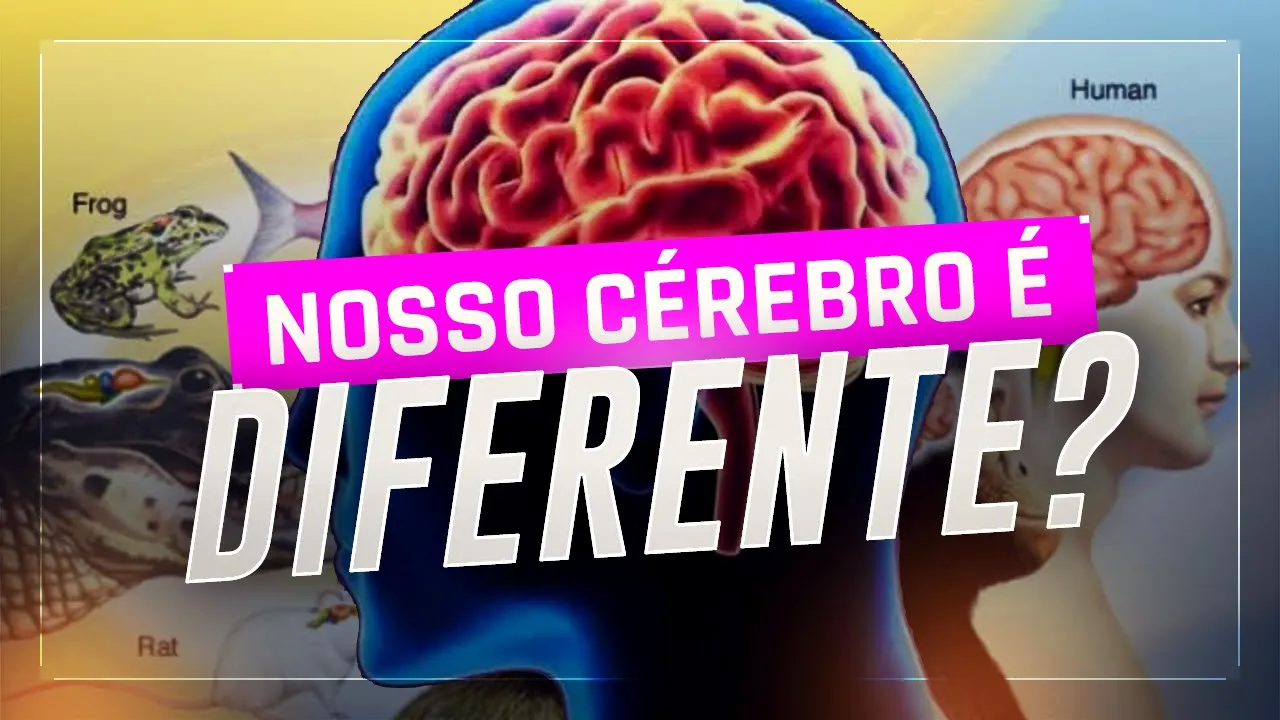
One of the most prominent differences between ape brains and those of other K- selected animals is the size and complexity of the neoortex. In chimpanzees, for instance, the neoortex accounts for over half the total brain volume, and in humans, it can be up to 76%.
Apes also have much more pronounced folding in their brain tissue. This is known as gyriication and significantly increases the surface area of the brain without making it too big or too heavy for the animal's head. Indeed, animals with particularly wrinkly brains are often associated with higher levels of intelligence than animals with smoother brains.
[Music] It would appear then that a long social life and a large brain with specific qualities are key requirements for the path our ancestors took in reshaping the world.
But that is not the end of it because humans and other apes are far from the only case selected species on the planet with large brains or even some tool use.
Imagine yourself in the clear blue waters of Shark Bay. This huge world heritage site situated in the coastal region of Western Australia is rich in marine life. It's home to over 300 species of fish, sharks, and rays, countless seabirds, and thousands of marine mammals. But we are here for one species in particular. Indo-Pacific bottl-nose dolphins.
With vast seaggrass meadows, mangroves, and sponge gardens, Shark Bay is a paradise for dolphins. But as with so many other animals here, they've had to come up with an innovative solution to getting enough food. And so these dolphins use tools.
As we float in the serene water, a small group of them approaches. They call and chatter among themselves as they glide past, but one dolphin swims down to the seafloor, her companions watching closely. And after a moment's careful deliberation, she selects a sponge, positioning it on the end of her beak like a gardener might dawn a padded glove. The sponge snugly covers the end of her sensitive beak and shields her from sharp rocks and any dangerous animals that might be lurking in the sediment.
In our journey back in time to discover why we humans are the most prolific makers and users of tools. We visited several measine species that a case selected. However, none of them demonstrated the ability to craft tools as we do despite their long lives. And in the case of meopotamus, their large brains, they lacked social learning and culture. There is however one kind of K- selected animal that may possess both of these things. Dolphins. And so we know that they can use tools. But can they make them?
Dolphins belong to a large and diverse group of marine mammals known as the citations.
Today approximately 89 species of citations inhabit our coasts, oceans and rivers. But we can trace their lineage back journeying once more to the epoch where our ancestors emerged. Indeed, one may citation genus Kentodon might have looked perfectly at home in today's oceans. Research suggests that this was a creature closely related to modern dolphins. But despite this, a critical anatomical difference set Contriodon apart. Its symmetrical skull.
Contriodon's symmetrical skull suggests that while it may have possessed echolocative capabilities, these were likely rudimentary compared to those of modern dolphins. This implies a significant evolutionary juncture in the history of odonttotites somewhere between 18 and 10 million years ago during the meiosene. For it was during this time that a substantial evolutionary transition occurred marked by notable brain enlargement. The driving force behind this sudden incilization is believed to be the evolutionary pressure to enhance echolocation faculties which in turn facilitated enhanced problem-solving abilities, social learning, culture, and possibly even the use of tools.
And yet only one population of Indoacific bottl-nose dolphins has been observed using tools. So why is tool use so rare when in theory all dolphins possess the brain power to do so?
The rarity of tool use among dolphins and the total lack of tool manufacture can be attributed to their physical limitations and also reveals why humans and other apes literally have the upper hand in the animal kingdom. Dolphins, unlike apes, lack appendages capable of fine motor skills and manipulation. They have flippers which while effective for swimming do not provide the dexterity needed for gripping or manipulating objects in the nuanced ways required for sophisticated tool use and manufacture.
Ape hands however are equipped with opposable thumbs which allow for a range of movements and precise control. And the same limitations can be seen in another kind of animal that has also been occasionally observed using tools in the wild, elephants.
[Music] During the Mayaene, elephant ancestors were diversifying and taking on forms that more closely resembled the morphology of the elephants that we are familiar with today. And one of those was Denothereum.
Danthetherum had downward curving tusks attached to its lower jaw, small ears, a flattened cranium, and a short trunk.
With this shorter, less flexible trunk, denithetherum was likely limited in its ability to manipulate objects as deafly as modern elephants. But even modern elephants, with their evolved longer trunks, are still limited in the scope of their ability to make and use tools.
An elephant's trunk is essentially a fusion of the nose and upper lip, which through millions of years of evolution has transformed into a limblike appendage capable of intricate grasping.
At the tip of the trunk, African elephants are equipped with two opposing extensions similar to fingers, while Asian elephants have a single finger.
And so, while elephants can indeed pick up and manipulate objects, they are limited to using their singular grasping appendage as opposed to having two hands like apes and humans. And though elephants do occasionally use tools in the wild, employing sticks to scratch themselves or leafy branches to swat flies, this represents the limit of their tool making abilities. Their daily activities such as foraging for food, bathing, and social interactions are more than possible without the need for tools. And so their trunks are highly adapted to these environments, enabling them to pull down branches, dig for water or minerals, and gather huge quantities of vegetation.
[Music] And so if the underwater habitats of dolphins and the vast terrains trodden by elephants do not lend themselves well to the development of complex tool use, what kind of environmental setting would? If we journeyed back many millions of years and scoured every species alive on the planet, looking for serious contenders to become the one that shapes the globe, would they all be grasping the branch of a tree?
All apes, no matter how much time they actually spend climbing, are aroreal.
Even humans until quite recently in our evolutionary history spent a good deal of our time amongst the leaves and branches of the tree canopy. And our aroreal heritage is as clear as day in our morphology. It's edged into our very bones and muscles.
We have flexible shoulder joints allowing for a wide range of motion critical for swinging through branches, reaching for fruit, and navigating the complex three-dimensional landscape of a forest canopy. However, one part of our body in particular represents the most vital of our aroreal adaptations that have allowed us to become such prolific tool users. Our hands.
Human hands with relatively short fingers and long thumbs allow for a precision grip that is unmatched in the animal kingdom, even amongst our fellow apes. This dexterity is rooted in our need to grasp and manipulate objects in the trees, whether for picking fruit, building nests, or using tools. And the evolution of human hands has a long and multifaceted history that stretches back hundreds of millions of years.
The first mammals lived during the Triacic period, a time when dinosaurs were also finding their place in the world. They were small nocturnal creatures with five digits on each hand and foot. This became the standard for mammals, although some lineages would evolve fewer digits over time. The mammals of the Triacic were jacks of all trades, generalists that survived two devastating mass extinction events. But it was after the second of these extinctions 66 million years ago, that mammals began to adapt to more specialized lifestyles. something that was only possible because of the demise of the non-avian dinosaurs. And so some adapted for lives spent in the trees.
And this is where the evolution of our hands truly began.
The earliest primates developed grasping hands and feet with nails instead of claws, an adaptation that allowed for better grip on branches and a greater ability to manipulate objects. These early primates, elesiatapforms, had hands that were beginning to resemble those of modern species such as lemurs and tarsas, but they were still very different to those that were to come. However, the journey from these primitive grasping appendages to the sophisticated hands of later primates was gradual and nuanced. Indeed, it was not until the Mayene epoch millions of years later that we see the emergence of great ape genera with hand characteristics eerily similar to our own.
And one of the most notable new developments in these great apes hands was the highly opposable thumb. Much like ours, civopythecus and driopythecus thumbs would have been able to rotate and move across the palm to touch the tips of the other fingers. The the muscles, a group of muscles in the palm that control thumb movement, are also highly developed in great apes.
Contrastingly, in most other primates, the thumb is either less opposable or sometimes even completely absent.
Great apes also evolved shorter fingers compared with other primates, a feature that allowed for greater control and precision, and that is associated with a departure from a fully aroreal lifestyle. Indeed, New World monkeys and gibbons have much longer, thinner fingers, characteristic of animals that use hanging and swinging as their primary way of getting around. Great apes, on the other hand, have robust bones in their hands. The first metacarpal, the bone that connects the thumb to the palm of the hand, is especially thick and strong, providing a sturdy base for the opposable thumb and allowing it to exert significant force during gripping, using, and making tools.
And this is how great ape hands evolved during the Maya scene. And these features are still prominent in many of their modern descendants, particularly chimpanzees and gorillas. Yet, despite these shared ancestries, the differences between human hands and those of our great ape relatives are striking and significant. Human fingers are shorter and thicker. Our thumbs are marketkedly longer. And our overall hand architecture supports a wide range of precise movements. And those differences underline a profound evolutionary divide that emerged over millions of years.
For humans, the evolutionary pathway focused increasingly on tool use and manufacture. The development of longer thumbs and shorter fingers facilitated more complex grip patterns and manipulative skills essential for tool handling. And this anatomical specialization not only influenced the types of tools early humans could create, but also had a broad impact on other areas such as diet, hunting strategies, and social interactions.
Although Meiosene apes had hands that show the beginnings of humanlike features, they were still fundamentally different. The journey from their hands to ours was not a straightforward path, but a complex evolution filled with subtle changes that gradually shaped the very essence of human capabilities.
And so, how did our hands, which once grasped the ancient branches of forgotten forests, become the hands we know today? that craft tools, build cities, and shape the planet as no species has before.
[Music] 3.3 million years ago, a girl called Salam died in a flood. And 24 years ago, researchers from the Maxplank Institute of Evolutionary Anthropology unearthed her skeleton in Hadar, Ethiopia.
Her fossilized bones revealed that she was no more than 2 or 3 years old when she lost her life, and that she belonged to a species of early human known as Orolopythecus apherensis, our ancient relative.
These bones in particular are remarkable when compared to many other fossil homminin finds. For Salam's remains were relatively complete and incredibly well preserved. Even the tiny bones of her hands and feet survive, offering an unparalleled opportunity for researchers to find out how our ancestors interacted with their environments, including whether they had the ability to create tools.
[Music] It had been widely believed that the earliest stone tools were created between 2.6 6 and 1.7 million years ago, marking the beginning of what archaeologists call the oldan industry.
This early lithic technology was named for the old gorge in Tanzania, where the first of these tools were excavated in the 1930s.
A mix of human species coexisted during this time, but archaeologists have traditionally associated the old industry with Homohabilis, a species whose name literally means handyman.
For many years, Homohabilis was assumed to be the first human to make and use tools, thereby representing a significant leap in cognitive and motor skills. Indeed, the very designation of Homohabilis as the first member of the genus Homo was largely based on this perceived connection to toolmaking, which was seen as a quintessential human behavior.
But then Jane Goodall complicated this narrative with her reports from Gome Stream National Park in Tanzania that chimpanzees were also making and using tools, demonstrating that technology was not quite the unique human trait that everyone thought it was.
Fast forward to 2011 and an even older stone tool industry was discovered. this time in Lamechi, Kenya. Dated to 3.3 million years ago, these tools pushed back our timeline of lithic technology by several hundred thousand years. And since they predate Homohabilis and the entire homogeneous, they also drew our attention to another previously unexpected group of stone toolmakers, the Orolopiththesines.
And so when Salam died 3.3 million years ago, her fellow oustralopiths could have been creating lamequan tools.
But what could have prompted these ancient humans to take stone from the earth below them and begin shaping it to their needs?
What are the roots of our tool use?
Back in the Maya scene, long before either Oralopythecus or Homohabilis existed, the forests of Europe and Asia were home to an ape called Dryopithecus.
This genus is often considered to be a potential ancestor of both the human lineage and the chimpanzeee, bonobo, and gorilla lineages.
Triopythecus may have appeared quite chimpanzee with long arms and strong fingers for climbing and swinging through the trees. Its teeth suggest that it eats a significant amount of fruit and foliage similar to today's non-human apes.
But if we humans and apes share an ancestor in dryopythecus, why did we evolve so differently? Why did humans evolved to craft tools of intricate complexity while the other apes content themselves with twigs and leaves?
As the measine progressed and drythecus gave way to new species, there were dramatic climatic changes that saw the gradual transformation of once dense forests into more open savannah landscapes.
One lineage, the homminins, departed what remained of the forests and scratched out a new living for themselves in these new savannah habitats. While the lineage that led to modern African apes stuck it out in the small pockets of forest that survived the change of climate. And to understand the effect this had, we can look at an animal that went through a similar journey, the giraffe.
[Music] Giraffes originally evolved in the forests of central Africa, but when the climate began to change and forests began to recede, the ancestors of modern giraffes took to the savannah just like our early human ancestors did. This sudden change in habitat resulted in a dramatic transformation, giving giraffes the iconic traits we're familiar with, long necks that enabled them to reach the upper canopies of sparse savannah trees and the yellow brown coloration which allowed them to blend in with savannah flora. In contrast, the okarpi, a less well-known member of the giraffe family, remained in the forests just as the African apes did. Okarpies have dark reddish brown coats that provide effective camouflage within the dense underbrush and their more compact bodies allow them to maneuver through thick vegetation. And so living in the savannah, hominins also experienced dramatic changes. All of a sudden, they were presented with new challenges and opportunities compared to what the African apes were used to dealing with in the forests.
Finding food, water, and shelter in wide, sparse landscapes would have required our early human ancestors to remember the locations of resources, to safely navigate long distances, and possibly even to develop detailed mental maps of their environments. Hominins in open savannah landscapes also would have faced greater pressure from predators.
Indeed, it's likely that this led to the appearance of more complex social structures and cooperative behaviors, including group defense and strategic planning. Finally, the need to exploit new types of food, including meat, may have prompted the invention of stone tools for cutting and butchering.
So, if we had to choose one vital aspect of humankind's evolutionary history during this period of transition that allowed us to craft such complex tools, what would it be?
[Music] Researchers used to think that brain expansion was tied to human stone tool use. Homohabilis, the creatures of the oldan, certainly had larger brains than their orolopith ancestors, reaching up to 6 or 700 cm.
Yet, Orolopycus apharensis had brains measuring in at a more chimpanzeeike 4 to 500 cc's. Even though archaeologists believe that oropithesines were the creators of the lamean industry. And so clearly brains the size of modern humans aren't quite the answer we're looking for. At least not for these earliest forms of lithic technology. But what did set these early humans on the path towards technological prowess was something evident in little Salam's fossilized bones.
Their hands.
The hand of Orolopycus Apherenis is notably similar to ours in several respects. It has shorter fingers than those of other apes and its thumb is longer and thicker, suggesting that Oralopythecus apherensis would have been able to grip items like tools with force.
It does however have some characteristics that seem more reminiscent of orangutan hands, including slightly curved fingers.
Analysis of these features reveals that Orolopythecus apherenis were able to flex their fingers strongly and grasp tightly but would have been less efficient when trying to handle large spherical or cylindrical objects.
Despite these limitations, the Oralopycus apheren's hand appears to have been capable of producing a precision grip, something that non-human apes lack, but which is crucial for making and using complex tools.
So what facilitated this shift towards human hands? To find out, we must return to near the end of the Myosene epoch.
For this is when the first bipeedal apes lived when the likes of Sahalanthropus Tredensis and Orurin Tuganis walked across African landscapes on two legs.
[Music] Bipedalism and complex tool use are deeply interconnected. Imagine trying to accomplish even the most simple everyday tasks like preparing food while on all fours. It would be almost impossible.
And so the development of bipedalism in our ancestors freed the hands, allowing early hominins to manipulate objects, carry tools, and eventually create them with relative ease.
But the question arises, if early hominin species like Sahalanthropus Chadensis and Orurin Tuganis were bipedal, why didn't they create tools?
Though there are no lithics from this far back in the record, it is still possible that Sahalanthropus and Orurin did make tools. But they could have been created using biodegradable materials like wood and other plant fibers. In which case, we would have scarce hope of ever finding them without access to a time machine.
In general, the only way we can be certain that any hominin created tools is if we find their remains alongside lithics. So, it's very difficult to say for sure who the earliest creators of tools actually were. But a common feature binding all these ancient toolmaking humans together is a shift away from using their hands for getting around. The early form of homminin bipedalism seen in Sahalanthropus and Orurin was likely quite different from that of orolopythecus apherenis and even more so from the way we modern humans walk. Indeed, it would take several million years for bipedalism to evolve into the more refined form seen in orolopythecus apherensis and several million more for the fully efficient bipedalism that characterizes our species. And so this gradual transition to more effective full-time bipedalism was a critical factor in enabling oropithecus apherences to begin making and using more complex tools.
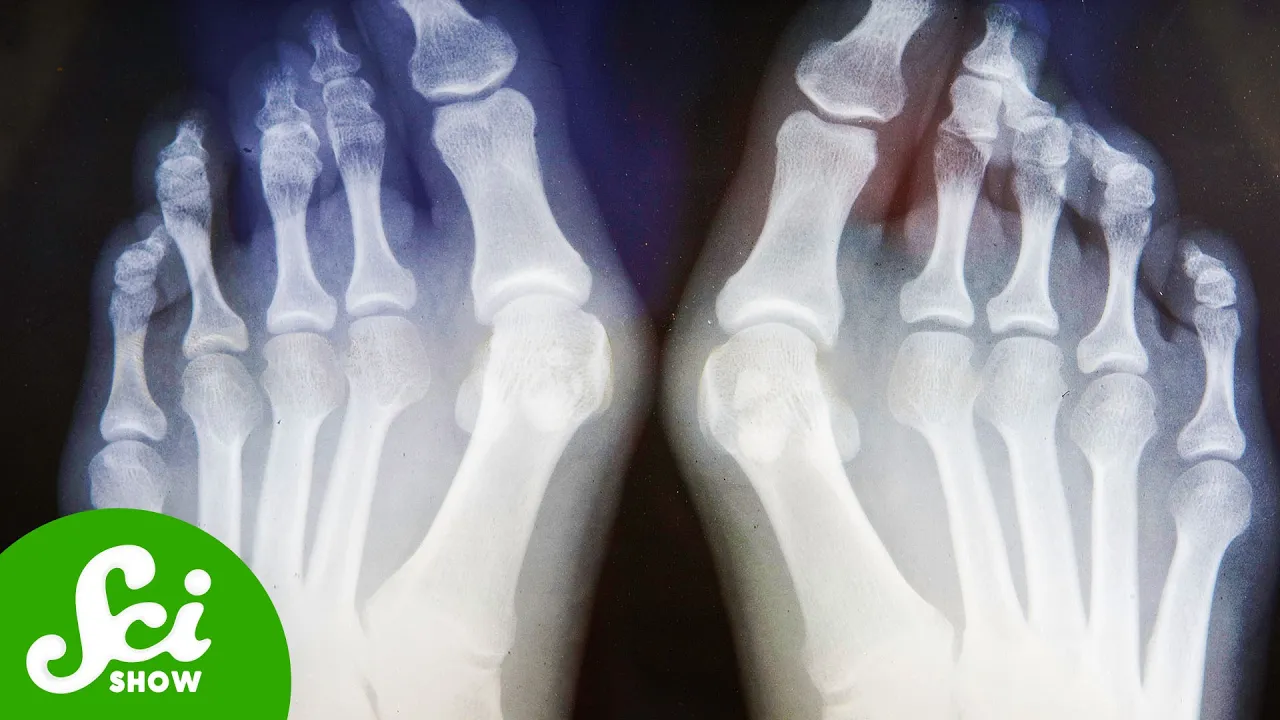
Analysis of little Salam's bones reveals that although she was a biped, her way of moving was quite different from our own. We modern humans are obligate striders fully adapted to walking long distances on two legs with an upright posture and a smooth energy efficient gate. Salam, however, represents an earlier form of bipedalism. Her footbones indicate that while she had an arch similar to ours, her big toe was positioned slightly further apart from the other toes. This suggests that although she could walk on two legs, her feet retained a degree of prehensility, allowing them to grasp like a hand.
And what's particularly interesting is that in general, Oralopycus apherenis is particularly well represented in the fossil record with many adult skeletons also available for study, including the famous Lucy, whose remains were discovered in 1974.
And these adult remains suggest that while the species was predominantly terrestrial with adults spending most of their time on the ground, infants and juveniles like Salam likely retained some climbing abilities. This ability to climb perhaps diminishing as they matured. This dual adaptation hints at a fascinating scenario. While Salam played and explored in the safety of the trees, her parents were likely on the ground, possibly making tools and secure in the knowledge that their offspring was safe in the canopy above.
As time went on and the orolopithesines were gradually replaced by new homminin species, we see further refinements in both hand anatomy and bipedalism, reflecting a pronounced shift towards a fully terrestrial lifestyle. One that facilitated the development of increasingly complex tools.
A million years after Salam, Homohabilis, handyman appeared and survived until 1 and a half million years ago. Compared to the hands of Oralopythecus apherensis, Homohabilis hands show several important changes that made them better suited for creating tools. While Oralopythecus hands were capable of the precision grip, they retained some features adapted to climbing, such as their curved finger bones. But in contrast, Homohabilis had straighter fingers and an even longer, more developed opposable thumb. Together, these features granted Homohabilis greater leverage and precision, and their broad fingertips further supported fine motor control, making their hands more dextrous and more capable of detailed work. Indeed, Homohabilis was given the name handyman for a reason. Their tools represent a significant leap in our genus's evolutionary history. Compared to the earlier lameran industry, oldan tools are smaller, sharper, and more carefully shaped. The oldan industry included choppers, scrapers, and sharpedged flakes produced using a more controlled technique known as hard hammer percussion.
These tools were not only more refined, but also more versatile, likely used for tasks such as cutting meat, processing plant material, and creating other implements.
But it wouldn't be until the arrival of another leader hominin that we would see something close to our own hands.
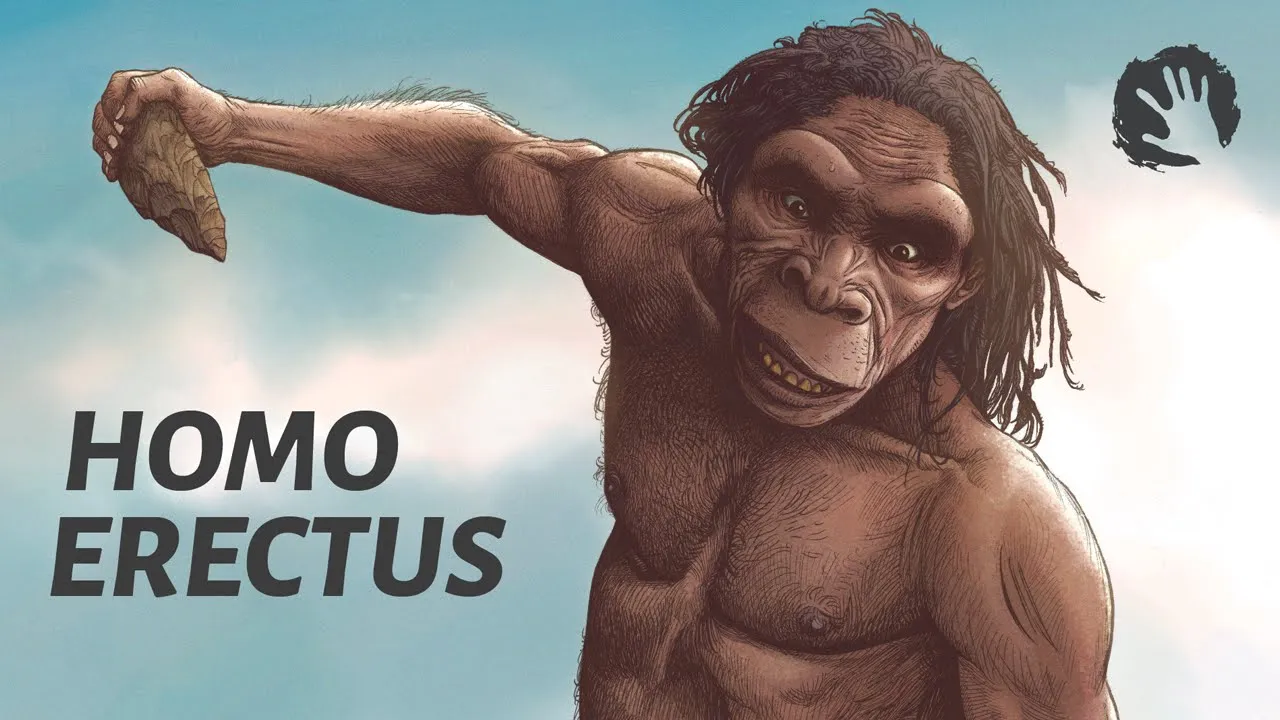
Homo erectus emerging around 1.9 million years ago, represents a significant leap in the evolution of both human anatomy and culture. This species is often regarded as a pivotal point in the development of many traits we associate with modern humans, including more advanced hands that were even better suited to tool use.
Homo erectus had hands that were even more humanlike than those of its predecessors. The fingers were straighter with a more pronounced opposable thumb, allowing for a precision grip and improved dexterity, which meant that Homo erectus could handle tools with greater control and skill. In addition to these changes in hand structure, Homo erectus also exhibited significant changes in overall body form and it was well adapted for long-d distanceance walking and running.
This efficient bipedalism allowed them to explore and colonize a variety of environments across Africa, Asia, and Europe, making them one of the most widespread homminin species.
The hands of Homo erectus were perfectly suited for crafting and using the more advanced Ashulian tools which represent a major leap from the earlier Aldowan tools. Ashulian tools characterized by their distinctive handaxes were carefully shaped and symmetrical requiring a much higher level of planning precision and skill. The ability to craft such tools indicates that Homo erectus had developed sophisticated cognitive abilities and manual dexterity that was far beyond that of earlier hominins. These tools were not only essential for processing food such as cutting meat and preparing hides, but they also likely played a role in hunting and other survival tasks. The development of such tools suggests that Homo erectus was capable of complex problem solving and adaptation which were crucial skills as they migrated and settled in diverse and often challenging environments.
But since Homo erectus, however, the basic structure of human hands has remained relatively unchanged. Their hands had already reached a level of sophistication that allowed for the precision and strength required for complex tool use.
2 million years ago then the journey of our ancestors bodies from tree graspers to prehistoric stonemasons was more or less complete.
By this time our lineage had evolved in such a way that it was now clear it would be them. Their descendants would raise wonders from stone, manipulate the earth's elements in unimaginable ways, and even leave the planet altogether.
But is this the end?
Or are there circumstances in which we could be joined by other species in our achievements.
[Music] Humans are empire builders.
Thanks to our skills as toolmakers, we have erected huge structures across the globe. And our population now numbers over 8 billion. But we are not alone.
Beneath our feet, another empire quietly thrives.
In the cracks of pavements, under fallen leaves, and deep within the soil, millions of tiny creatures scurry about their business, largely unnoticed by the humans above them. Ants construct nests that are sprawling interconnected networks of tunnels and chambers meticulously organized around a strict social and biological hierarchy. From the queen and her young to the soldiers who defend these fortresses, right down to the workers who tirelessly gather food and maintain the colony, each ant has a specific role.
Their nests function like a welloiled machine with every member contributing to the survival and prosperity of the colony. These are cities in miniature built without the need for tools, no hammers or spears, no fire or knives.
Nothing but ants, their bodies and their collective ingenuity. Indeed, here is an animal that has mastered its environment, not through the use of tools, but through cooperation, communication, and sheer numbers. Ants therefore despite their relative simplicity have conquered the world in their own way, thriving in almost every ecosystem from deserts to rainforests.
Indeed, in a way, their success challenges the notion that tool use is the pinnacle of evolution. In fact, many animals like ants have evolved to survive and thrive without them. Without the environmental motivation, why would they bother to create or use something that will only add another complicated step to their already busy lives?
Some animals, like raccoons, do have grasping hands that allow them to manipulate objects with almost humanlike precision. A raccoon can unscrew lids, unfasten clips, and even open doors. But they don't make tools.
Though in captivity, they have been seen using simple tools to solve puzzles or to access food. They might use sticks to reach items that are out of arms length on the other side of a fence perhaps, demonstrating that they can use tools when the need arises, but in the wild they get by perfectly well without them.
Their sharp claws, keen sense of touch, and inquisitive nature are more than sufficient for their survival. They thrive on scavenging and foraging, using their hands to dig, pry, and rummage rather than create tools.
Yet, while some animals may have the capacity to use tools, but have not always needed them in the wild, others have evolved specific tool using behaviors that are deeply integrated into their survival strategies. Corvids, particularly crows and ravens, are renowned for their intelligence and problem-solving abilities. Often using tools to access food in ways that demonstrates a high level of cognitive sophistication. New Caledonian crows, for example, are famous for fashioning sticks into hooks to extract insects from tree bark or crevices. In some instances, these birds have even been observed bending wires into hooks to retrieve food from containers. A behavior that indicates an understanding of cause and effect that rivals that of the great apes.
And it is the environmental pressures faced by corvids that has driven the evolution of these tool using behaviors.
In the wild, resources can be scarce or hidden. And the ability to use tools allows these birds to access food sources that other animals cannot. By exploiting hard-to-reach food sources such as insects hidden within bark or seeds inside tough shells, kovits gain a competitive advantage in their ecosystems. This remarkable adaptability and innovative use of tools highlights the complex interplay between environment and behavior in the evolution of intelligence.
However, despite the ability to use tools, neither raccoons, octopuses, or ravens are known to make tools. Just as with dolphins and elephants, the environment in which crows and octopuses live might not require the development of more complex tools for survival. Just as certain populations of chimpanzees don't use tools at all. Perhaps some animals simply have no need to create complex technology when they are already so well adapted to their environments.
But this is just our Earth today.
What might the future hold?
Could another species one day match or even surpass our technological achievements if placed under similar environmental pressures?
It is intriguing to consider which animals might follow a path similar to ours, developing their own forms of technology. And among the most promising candidates are the citations. Even without the evolutionary benefit of dextrous hands, these marine mammals already demonstrate a remarkable array of behaviors that hint at their potential for future innovation.
For citations, the challenges of an everchanging marine environment could serve as a catalyst for further innovation. As ocean conditions shift due to climate change and as human activities continue to impact marine ecosystems, citations could be forced to develop new strategies for survival.
For instance, declining fish stocks might push dolphins to develop more efficient foraging techniques or to use tools in new ways. Similarly, changing ocean currents and temperatures could lead to the evolution of new communication methods or navigation techniques among whales. The adaptability of citations combined with their advanced cognitive abilities suggests that they have the potential to respond creatively to these challenges.
And so if these trends continue, it's not unimaginable that a future might come to be where citations develop their own forms of technology. Just as early humans used stones to create tools that transform their way of life, citations may begin to manipulate their environment in increasingly sophisticated ways. They could start using natural materials found in the ocean, such as coral, shells, or kelp, to create tools or structures that enhance their ability to forage, communicate, or protect themselves. The development of such technologies would likely be driven by the same forces that have shaped human innovation, environmental necessity, cognitive ability, and the capacity for social learning. Whether or not citations will ever match or surpass our achievements remains to be seen, but the possibility is an exciting reminder of the potential for innovation in the natural world.
But for now though, when it comes to technology, it is still just us.
[Music] You've been watching the entire history of humankind. Don't forget to like and subscribe and leave us a comment to tell us what you think. Thanks for watching and we'll see you next time.
[Music]
Up Next
26:39
Homo Erectus: The First True Humans in Human Evolution
@StefanMilo
3.1M views•2021-04-23

12:54
Triumph of Orthodoxy Icon: Byzantine Art & History Explained
@BenCallan
2.1K views•2024-08-06

9:49
FastAPI vs Flask vs Django: Choosing the Right Python Web Framework
@TechWithTim
302.5K views•2024-05-26

1:42
Game of Thrones Opening Credits: A Cinematic Analysis
@gameofthrones
46.3M views•2011-04-18
Related Study Plans & Knowledge Roadmaps
Structured learning paths in General & Interdisciplinary Studies
general-studies
Elevator Engineering: History, Physics & Cities
01From Hoists to Safety Brakes: The Dawn of Vertical Lift
02Hydraulic vs. Traction: The Engineering Physics of Elevators
03Modern Speed, Safety, and Algorithms
+ 2 more learning modules
12h5 modules
Explore Roadmap
general-studies
Rubber: Material Science, History & Geopolitics
01Origins of Natural Rubber & Mesoamerican History
02The Chemistry of Natural Rubber & Vulcanization
03The Geopolitics of the Rubber Boom & Colonization
+ 2 more learning modules
12h5 modules
Explore Roadmap
general-studies
Containerization: Evolution, Logistics & Trade
01Ancient Trade & Bulk Cargo: Amphorae to Barrels
02The Industrial Revolution & Cardboard Packaging
03The Containerization Revolution: Malcom McLean
+ 2 more learning modules
12h5 modules
Explore Roadmap
general-studies
Textile Tech: Evolution, Labor & Global Impact
01Pre-Industrial Textiles: Handloom & Cottage Industry
02Mechanization: The Spinning Jenny to the Power Loom
03The Factory System & Global Labor Transformation
+ 2 more learning modules
10h5 modules
Explore Roadmap