









![Basic Concept of Quantum Physics - Tiny Particles, Infinite Possibilities -[Hindi] - Infinity Stream](https://i.ytimg.com/vi/R77vIMRiXr4/maxresdefault.jpg)




![المراجعة النهائية _ الكيمياء _ الباب الأول _ الكيمياء والقياس الدرجة النهائية مضمونة[القياس النانو]](https://i.ytimg.com/vi/sCxZZ8f1wIs/maxresdefault.jpg)




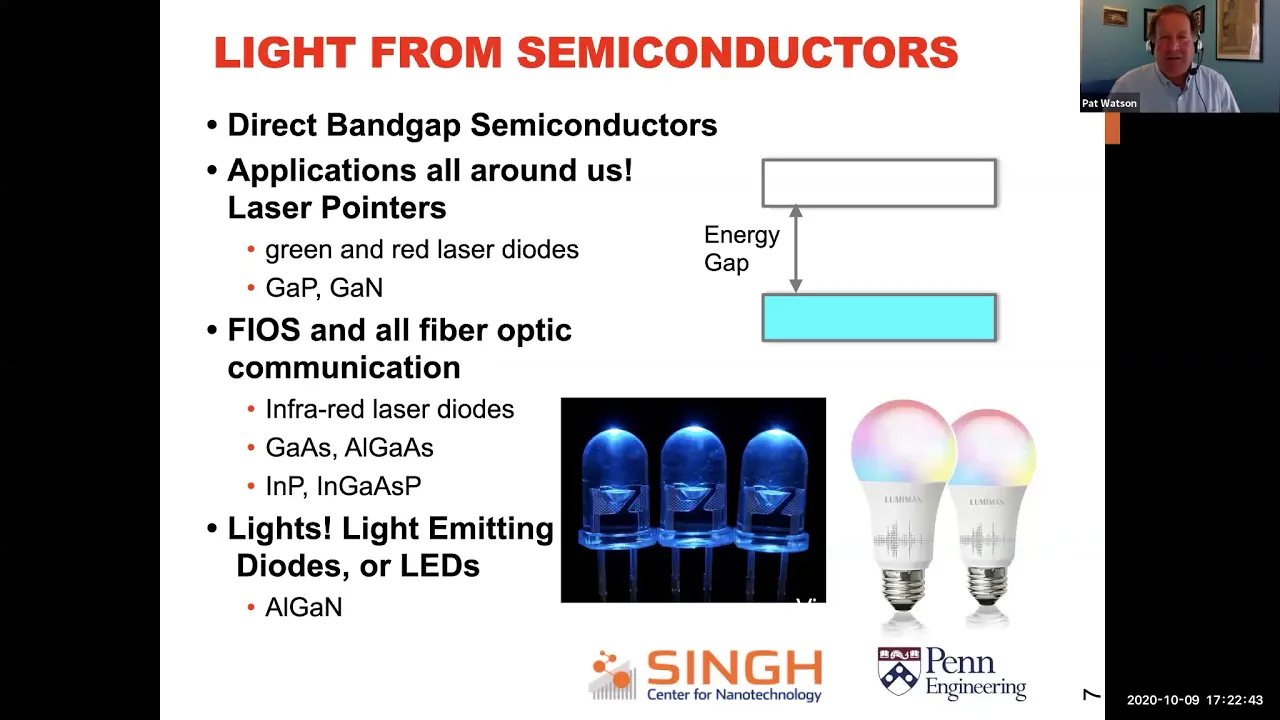


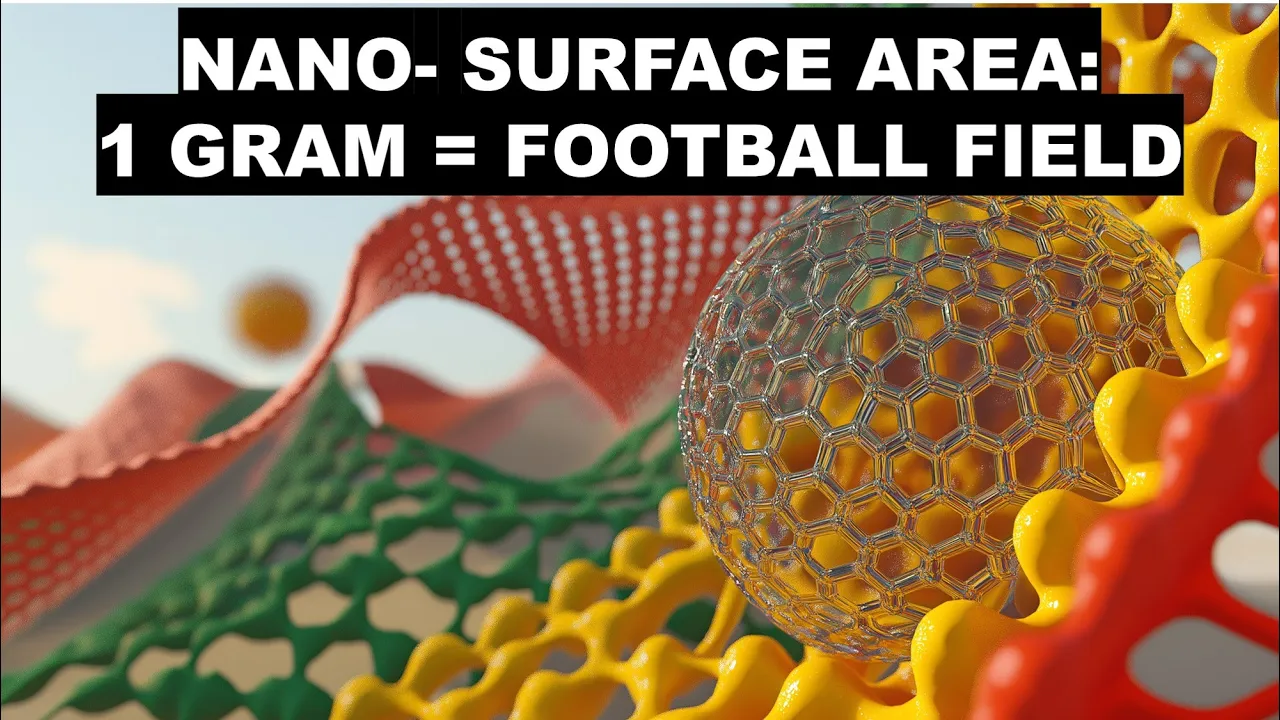














Nanomaterials exhibit unique physical and chemical properties different from bulk materials due to two primary factors: the quantum confinement effect (where energy bands separate at the nanoscale, changing electrical and optical behavior) and the drastically altered surface-to-volume ratio (where smaller particles have proportionally more surface area available for interaction). These effects explain phenomena such as gold nanoparticles appearing violet or wine red instead of yellow, graphene being 10,000 times stronger than steel, and the ability to tune material properties through size, shape, and doping for applications in electronics, catalysis, and solar cells.
Nano Materials Properties: Quantum Effects & Surface Area (Ep. 4)
Added:Basic understanding of atomic structure and chemical bonding, including valence and conduction bands in materials.
The mathematical concept of surface-area-to-volume ratio and how it scales as objects get smaller.
Fundamental principles of classical physics versus quantum mechanics, specifically the concept of wave-particle duality.
Familiarity with the metric scale, particularly the nanometer scale (10^-9 meters) relative to bulk materials.
The physics of Quantum Dots and how tuning their size changes their optical and electronic emission properties.
Real-world applications of high surface-area nanomaterials in nanocatalysis, chemical sensors, and energy storage devices like supercapacitors.
Synthesis methods of nanomaterials, including 'top-down' physical methods and 'bottom-up' chemical synthesis techniques.
Advanced characterization techniques used to view and measure nanomaterials, such as Transmission Electron Microscopy (TEM) and Atomic Force Microscopy (AFM).
The environmental, health, and safety implications (nanotoxicology) of utilizing materials with highly reactive nanoscale surfaces.
41K views582likes12:55Original Release: 2020-11-16
welcome back fellow travelers and let us continue onwards into the sea of mysteries that is nanoscience in today's episode we will take a look at what a nanoscientist actually encounters when they succeed in obtaining materials with building blocks only 10 times larger than an atom it is now time to understand why nano materials are so starkly different from their bulk or larger sized counterparts here we finally make some progress in understanding the mysteries behind the strange properties behind the lykergas cup and damascus steel which we have discussed in brief on our instagram page we also try to understand why gold is yellow but a solution of suspended gold nano particles can have colors ranging from violet to wine red or why graphene which is essentially only a flat sheet of carbon atoms arranged in regular repeating hexagonal pattern is potentially 10 000 times stronger than steel and can conduct heat about 7000 times better than metallic copper let's go curious wanderers deeper and deeper still when one deals with objects at the nano scale one must all but forget what that material behaved like when it was still in the millimeter or micrometer size range the two main factors that come into play now are the quantum confinement effect and the drastically altered surface to volume ratio of the atoms that make up the material these two effects and their unique interplay is the reason that nano materials are sought after for their novel and enhanced properties as compared to regular materials let us start by understanding the meaning of the surface-to-volume ratio in simple terms it is a mathematical term where the surface area of an object is divided by its total volume to arrive at a mathematical quantity indicative of how much of the material that makes up the object is occluded from external interactions naturally the higher this ratio higher is the amount of the material that can interact with its environment as an example let us consider small cubes having an edge length of one centimeter which gives them a surface area of six square centimeters and a volume of one cubic centimeter giving object a an sv ratio of six per centimeter imagine a slightly larger cube object b made of these smaller cubes where its edge length is two centimeters this means that a surface area of 24 square centimeters and a volume of eight cubic centimeters gives object b an sv ratio of three per centimeter this means that a reduced amount of the material is available to interact with any external factors as the cube's edge length goes on increasing the sv ratio will decline and so will the expected interaction capability of the object why this phenomenon is important for nanomaterials is that if we talk about the atoms or molecules that make up nanomaterials instead of talking about little cubes we will arrive at the same conclusion as before this factor alone is enough to make the behavior of nano materials drastically different from bulk material but it is not the only factor in play you see when you deal with atoms you can't ignore their cousins the electrons at a size scale of only 10 times larger than an atom we are still in the mysterious quantum realm and when in rome we must do as the romans do in our everyday life we have heard of objects being electrical conductors insulators or semiconductors which simply tells us how easy it is for electrons to flow through certain objects what decides the properties of these materials are their building blocks that is the atoms they are made of an atom is essentially made up of a central core called the nucleus which is formed by neutral neutrons and positively charged protons around this core electrons move in orbits of sequentially increasing radius all the elements have different numbers of electrons orbiting the nucleus which gives them all their different properties the electrons in the outermost orbit are called valence electrons and these primarily interact with whatever the atom comes into contact with when an atom is given energy in any form electrons from this valence shell jump to an imaginary level of higher energy called the conduction shell depending on how many electrons can enter this conduction band a material may be classified as a conductor a semiconductor or an insulator in decreasing order of electronic activity when we talk about a single atom these various electron orbits and the valence and conduction levels can be thought of as different energy levels with the innermost electron orbit having the highest stability and thus being lowest on the scale and the conduction level having the lowest stability and being highest on the scale when we talk about a number of atoms these energy levels of many atoms seem to merge and form bands with all energy levels of similar energy almost overlapping each other thus the gap between the valence band and the conduction band hereafter called the band gap is the factor that decides how much energy is required to allow electrons to start moving through the material insulators have the highest band gap and require extreme amounts of energy to allow the flow of electrons which may even damage the material conductors have the lowest band gap which means that small amounts of energy are enough to allow the flow of electrons semiconductors have a band gap between those of insulators and conductors this theory of bands makes it very easy to study the properties of bulk materials that have extremely large number of structural units since their energy levels merge conveniently to form bands but when we talk about nano materials since there aren't enough structural units to properly merge into bands the properties differ vastly from bulk materials when you go top down the bands move away from each other making electrical conductors into semiconductors or insulators and when you go bottom up the opposite trend is observed since the large scaler bulk properties are confined due to the proximity of the bands as measured in the quantum realm this is called the quantum confinement effect thus the surface-to-volume ratio and quantum confinement effect together dictate the properties that any given nano-material will have these are seen in some very interesting ways that completely defy common expectations optical properties of nano materials as discussed before the gap between the valence and conduction bands increases as we go from bulk to nano that is the band gap increases and it takes more and more energy to excite an electron as an example let us think back to our gold solution in the visible spectrum that is in the vivid your range of colors violet has the shortest wavelength and red has the longest wavelength if you look at the equation on the screen you will observe that wavelength and energy of the photon are inversely related therefore a photon of the violet color will have the highest energy and a photon of the red color will have the lowest energy one thing we must remember is that the color that we see is the wavelength that an object reflects while the remaining wavelengths are absorbed therefore going back to the bandgap theory it is expected that when gold goes from bulk to nano its band gap will increase this is evident because bulk gold is yellow which means a medium energy and gold nano particle solutions have either a wine red or violet color which clearly shows a shift from y to v on the vibrier scale which shows an increase in the band gap and a consequent increase in the energy required to excite an electron another amazing example of this phenomenon is butterfly wings which appear to be shimmering and multicolored due to their nano-scale structural units electrical and magnetic properties of nanomaterials now that we have studied the quantum confinement effect and seen its implications in everyday life understanding the electrical and magnetic properties of nanomaterials will be easier the bandgap theory very concisely explain why metals which are usually conductors may become semiconductors or even insulators at the namm size scale however this phenomenon can be finely tuned by doping other atoms in a nano material or by controlling its size and shape called its morphology this allows the band gap to be controlled and influenced as for the need of any particular application this strategy is frequently used in the design of modern types of solar cells such as dye sensitized solar cells and quantum dots sensitized solar cells among others the case of magnetic properties follows similar lines but is influenced by some more complicated factors such as change in orbital configurations of electrons change in electron spin activity etc these properties also depend on the polarizability of the nanomaterial which can be altered by doping and morphological control often exotic states such as superconductivity and esoteric applications such as exploratory research can be easily accessed by unique and ingenious material design strategies nano materials have been integral to the technological boom of the new millennium with their ubiquitous presence in circuit boards display systems high-end research aids and many many more physical and chemical properties of nano materials when we talk about the physicochemical properties of nanomaterials we must discuss the quantum confinement effect qce and the surface volume ratio sbr together while the qc dictates the electronic response to external stimuli the sbr decides how many atoms or molecules are available for this interaction phenomenon the svr often helps in predicting the reactivity of a particular nano material and is thus is very useful in the design of nano catalysts it can also be used to investigate whether or not a particular nano material will be structurally stable and hence can predict the feasibility of a particular synthesis process the sbr can also be used to study the porosity or orientation of nano materials so that their properties can be reliably predicted and corroborated after experimentation the qce is vital to most physical properties such as electrical and thermal conduction polarity and polarizability the svr and qce phenomena together also dictate the density hardness solubility and surface energy of the synthesized nano materials in the real world this translates to all the possible applications that a material may have or the changes that need to be made in a material to achieve the desired properties the properties of the nano world are as numerous as they are diverse and yet there remains much still to be discovered but it is only by shifting from macro to micro and micro to nano that humans have entered this era of technological progress and it is only by exploring this sea of scientific mystery that we will be able to move even further it's been a long journey so far but sadly we haven't even begun to touch the tip of this iceberg that is the world of nanoscience rest assured however for we are brave travelers and the spark of curiosity and adventure has been ignited within us the journey shall continue and we shall once again fill our wide open minds with all the mysteries that this universe is yet to reveal that is after all the beauty of the unknown the things we think are impossible are nothing but dreams of the future this is mr o signing off until we meet again on the journey that we call the nano odyssey in the next episode we will study various methods used to synthesize particles hey i am miss keen thank you for watching don't forget to like comment share and subscribe to my channel and for latest update hit the bell icon until then keep exploring
Up Next

4:32
Synthesis of CdSe Quantum Dots | Snee Lab Demo
@prestonsnee7690
11.9K views•2021-03-11

83:56
Biocatalysis and Catalysis in Islatravir Synthesis | Merck Webinar
@SCIwheresciencemeetsbusiness
675 views•2020-10-08
10:06
1H NMR: Determining Number of Peaks from Structure
@MSJChem
59.2K views•2017-04-06

17:31
Edible Water Bottles: A DIY Guide to Sodium Alginate Spherification
@ryan
10.5M views•2019-06-21
Related Study Plans & Knowledge Roadmaps
Structured learning paths in Chemistry
chemistry
Nuclear Chemistry: Decay, Meds & Fuel Cycle
01Introduction to Nuclear Structure and Radioactivity
02Decay Dynamics and Kinetics
03Radiation Interaction and Detection
+ 2 more learning modules
24h5 modules
Explore Roadmap
chemistry
Supramolecular Chemistry: Forces & Machines
01Foundations of Chemical Bonding and Intermolecular Forces
02Introduction to Host-Guest Chemistry
03Thermodynamics and Dynamics of Self-Assembly
+ 2 more learning modules
16h5 modules
Explore Roadmap
chemistry
Photochemistry: Excited States & Reactions
01Foundations of Light-Matter Interactions
02Molecular Orbitals and Electronic States
03Photophysical Processes and Jablonski Diagrams
+ 2 more learning modules
18h5 modules
Explore Roadmap
chemistry
Coordination Chemistry: Bonding & Properties
01Introduction to Transition Metals and Ligands
02Crystal Field Theory (CFT) and Geometry
03Magnetic Behavior and Spin States
+ 2 more learning modules
14h5 modules
Explore Roadmap