
![prof. E. Hulicius: Kvantové tečky – Nobelova cena za chemii v roce 2023 pohledem fyzika [Fyz. ¼]](https://i.ytimg.com/vi/N9iaXJ4_4WY/sddefault.jpg)





![Introduction to AM Academy and Fundamentals of Annular Microreactor Technology [AM Academy Webinar]](https://i.ytimg.com/vi/Ree0aPGs5s0/maxresdefault.jpg)






![naukovo.pl [646B] - Dobra ciotka Magda - #naukovlog 646B. Nobel z chemii – wywiad z prof. Proniem](https://i.ytimg.com/vi/D6WtsUajhNA/maxresdefault.jpg)


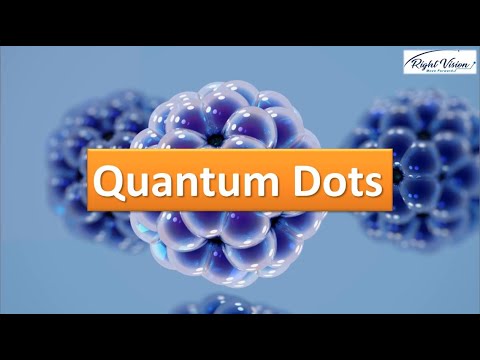


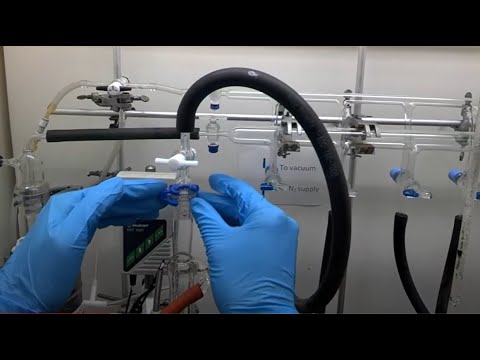
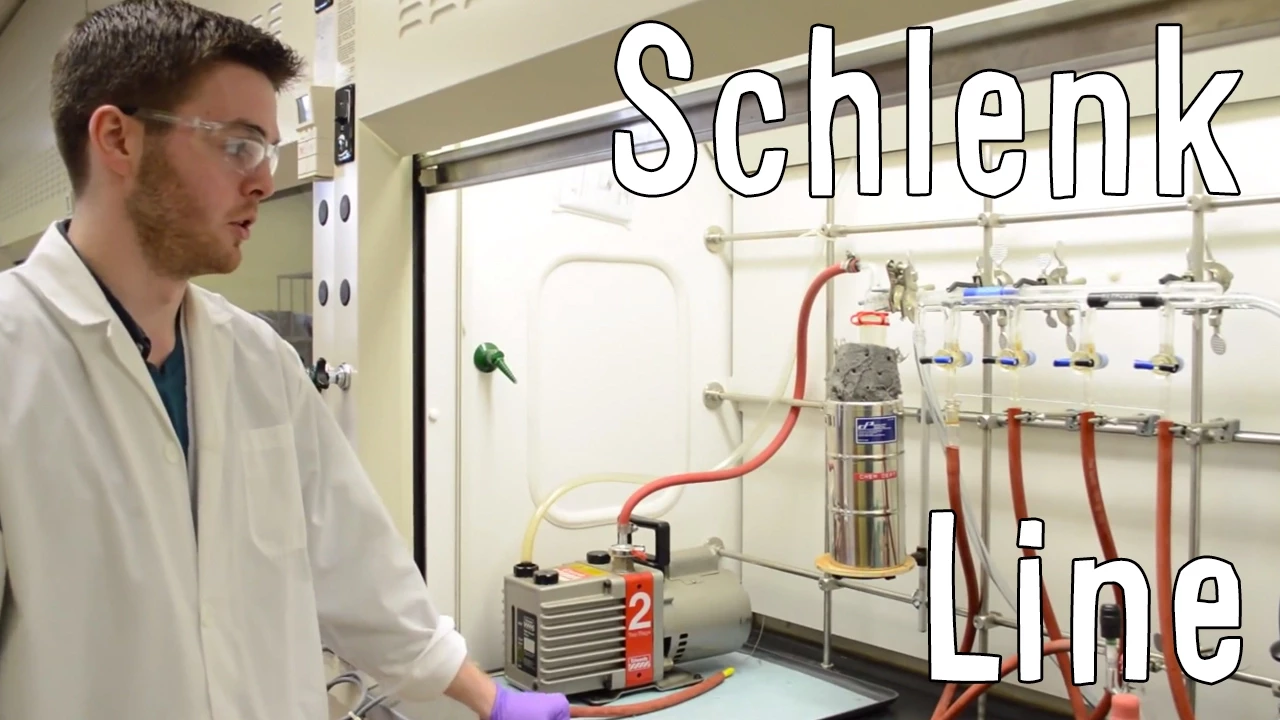
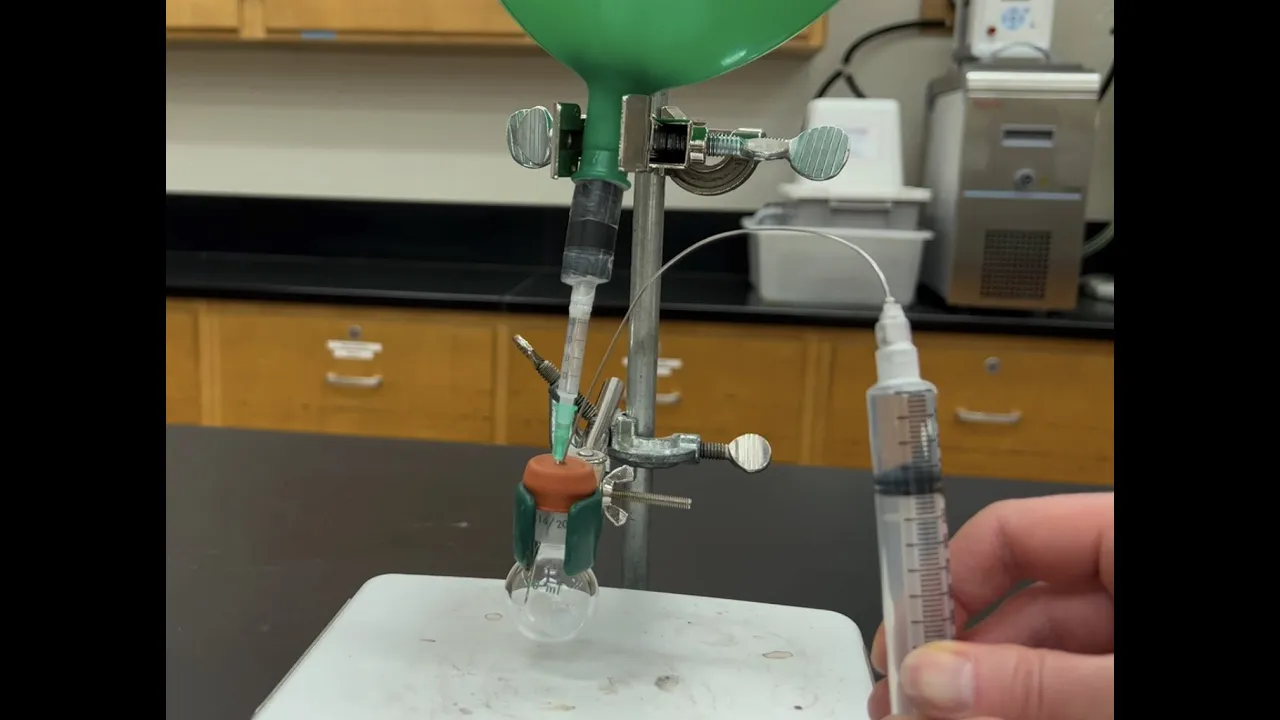
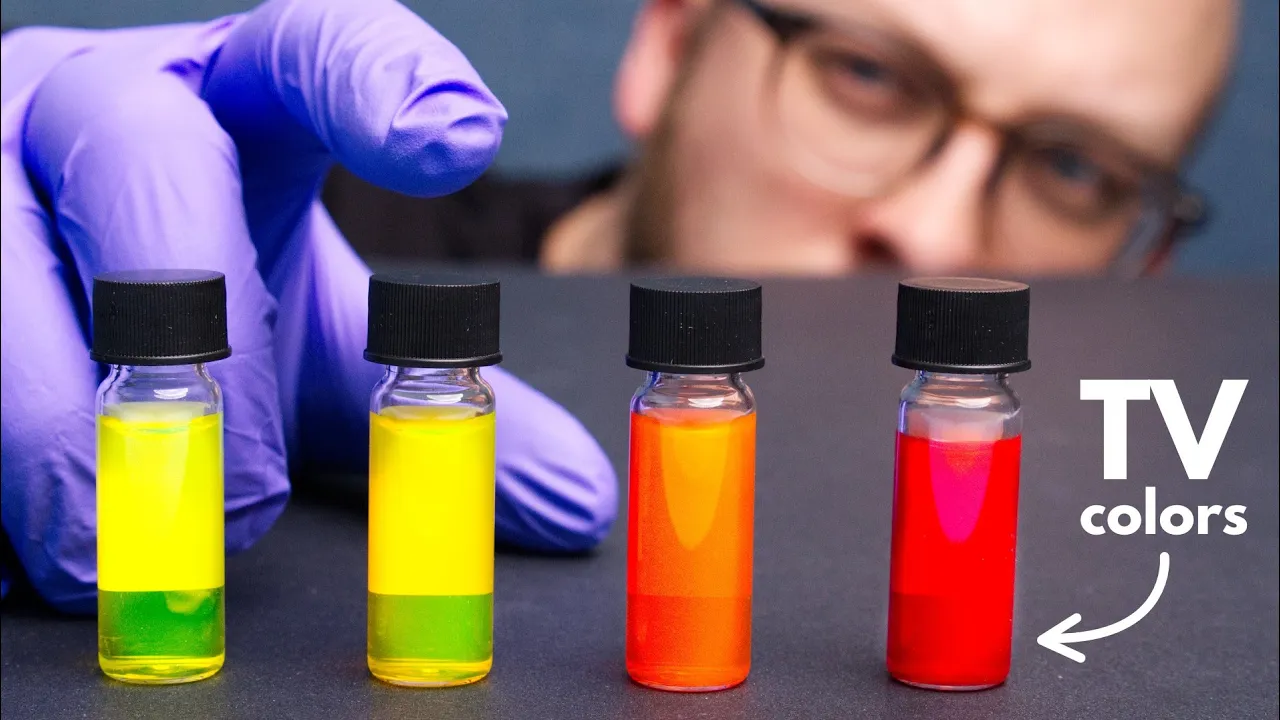
CdSe quantum dots are synthesized via rapid injection by heating trioctylphosphine oxide and cadmium acetate dihydrate to 350°C under nitrogen, then injecting tri-octylphosphine selenide, which causes instantaneous nucleation and produces quantum dots with excellent size distribution; the reaction is performed under air-free conditions using a glovebox and Schlenk line to prevent oxidation of air-sensitive precursors.
Synthesis of CdSe Quantum Dots | Snee Lab Demo
Added:The concept of quantum confinement, specifically how the physical size of a semiconductor nanoparticle dictates its electronic bandgap and optical emission properties.
Basic principles of colloidal chemistry, including the roles of precursors, high-boiling solvents, and capping ligands in controlling nanoparticle growth.
Fundamentals of air-free laboratory techniques, such as the operation of a Schlenk line and the manipulation of air-sensitive reagents under an inert gas (nitrogen or argon) atmosphere.
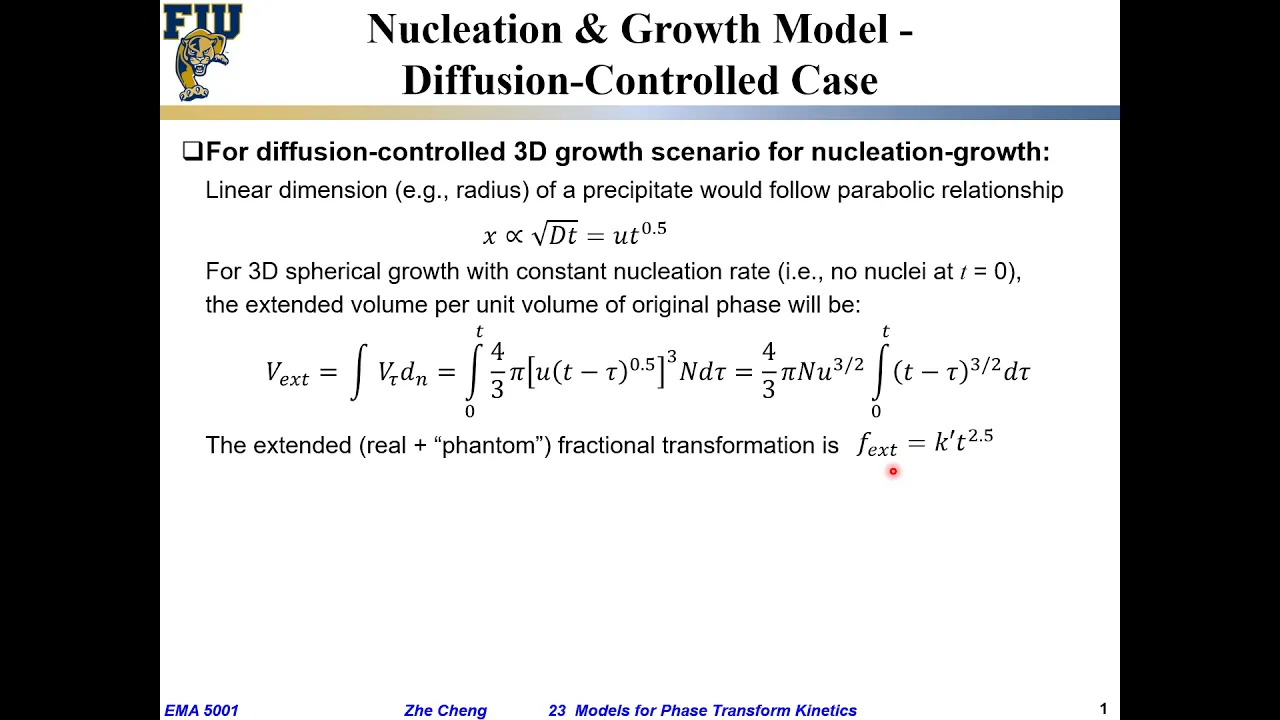
The LaMer model of nucleation and growth, which explains how a rapid injection of precursors triggers a single nucleation event followed by diffusion-controlled growth to achieve monodispersity.
Synthesis of core-shell quantum dot heterostructures (such as CdSe/ZnS) to passivate surface defects and drastically increase photoluminescence quantum yield.
Characterization methodologies for nanomaterials, including UV-Vis absorption spectroscopy, Photoluminescence (PL) spectroscopy, and Transmission Electron Microscopy (TEM) to assess size distribution.
Surface chemistry modifications and ligand exchange reactions to render hydrophobic quantum dots water-soluble for biological imaging and labeling.
Technological applications of quantum dots in optoelectronics, including their integration into QD-LED displays, bio-sensors, and quantum dot-sensitized solar cells.
11.9K views180likes4:32Original Release: 2021-03-11
[Music] all righty we are going to make cadmium selenide quantum dots today starting by weighing out some dry chemicals such as trioctylphosphine oxide it's not air sensitive and has a nominal purity of 99 percent that we prepared by distillation starting with a 90 pure product there are commercial vendors that sell 99 purity topo in other ways of preparing purifying topo if you just google that we're also adding half a gram of tetradecal phosphonic acid we actually have a video showing you how to prepare that material or it is also commercially available and we are also weighing out some cad acetate dihydrate that gets added to this 50 ml round bottom flask here okay the next thing is we are going to tie that into the schlink line and degas it to pull vacuum and put it under nitrogen and we'll actually do that a couple of times because the next chemical that gets added tri-octal phosphine is very air sensitive stored in a glovebox so you have to be very careful when handling tri-octal phosphine and when you add it to a flask you need to do that transfer from the glove box to the round bottom flask under air free conditions okay one thing that we do here that's very important is that you may notice that we have some pretty heavy clamps that we tie the round bottom flask into our hood with that's because this procedure is the rapid injection procedure it's done at 350 degrees and we don't want anything getting knocked over or broken open in the process right now we're adding the septum that we're going to add all the air sensitive chemicals through and we're going to add a 10 ml syringe into the glove box and concerning the glove box this is a good point in time to just state that if anyone watching this video wants to repeat what we're doing but you don't have a glove box or if you don't know what a glove box is you should not be doing this the chemicals we use from here on out are actually really quite dangerous now there's actually even some more things to point out here as marcel is getting the trioctylphosphine top is actually very damaging to the glove so you can't let a single drop touch the gloves it'll burn a hole through it top is also extremely viscous so it's difficult to handle unless you have a fair amount of experience with the glove box which marcel does and has a good hand strength okay now we're taking the top out and we're going to add that to the 50 ml round bottom flask through the septum using a 21 gauge needle now the reason that's important is is that that does not damage the septum such that we can pull vacuum on it so we're heating this up to 100 degrees and pulling vacuum and that is going to effectively degas the solvent of any air water residual acetic acid and whatnot from the cat acetate but we've sped up time here as you can tell we also have a pressure gauge on the schlink line to know when the system has fled to gas which is kind of hard to tell otherwise uh the next thing we need to do is to get the tri-octylphosphine selenide so what we do is we put the 50 ml round bottom flask under nitrogen gas get the temperature system set to 350 and while the heating mantle is heating up to 350 we get 1.5 mils of 1.5 molar tri-octal phosphine selenide also air sensitive and stored in the glove box here and now we're ready for the rapid injection the first thing we do is we drop the heating mantle and that's so that the stir plate can make good contact with the stir bar when you inject you don't want the stir to get lost and you're about to see the injection here and you can tell that you've made quantum dots by the color change which is pretty much instantaneous now another funny thing about this particular procedure is we inject and leave the system alone and those are the dots we get sometimes people will add the heating mantle back and reheat the solution to make larger dots in this formulation that would actually destroy the size distribution now the dots are not very bright nice green but they're not very bright but that's why you make core shell quantum dots and we're going to post a video on that shortly where we can make nearly 100 quantum yield quantum dots using the shell method and the the value of this particular formulation though is that the size distribution is absolutely phenomenal so thank you for watching and we hope this was informative and be sure to watch our other videos
Up Next

32:05
Quantum Dots Nobel Lecture 2023 | Moungi Bawendi, Chemistry
@NobelPrize
16.5K views•2024-01-19
83:56
Biocatalysis and Catalysis in Islatravir Synthesis | Merck Webinar
@SCIwheresciencemeetsbusiness
675 views•2020-10-08
10:06
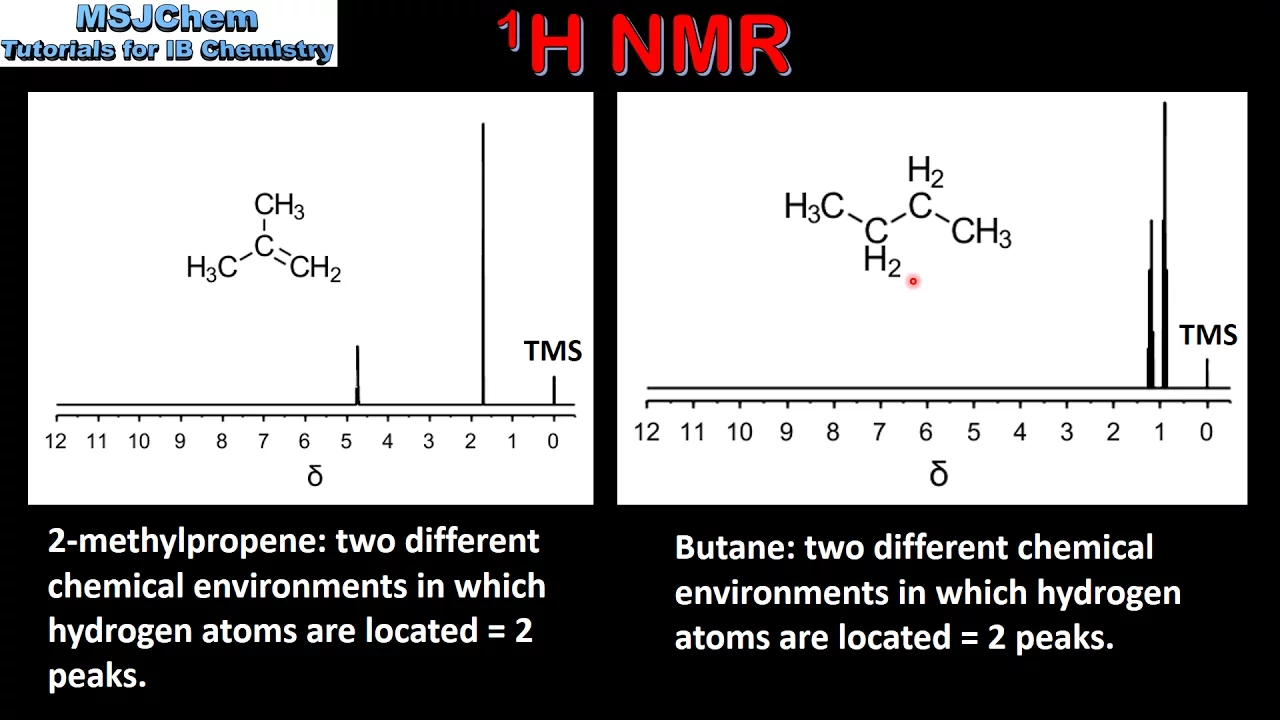
1H NMR: Determining Number of Peaks from Structure
@MSJChem
59.2K views•2017-04-06
17:31
Edible Water Bottles: A DIY Guide to Sodium Alginate Spherification
@ryan
10.5M views•2019-06-21
Related Study Plans & Knowledge Roadmaps
Structured learning paths in Chemistry
chemistry
Nuclear Chemistry: Decay, Meds & Fuel Cycle
01Introduction to Nuclear Structure and Radioactivity
02Decay Dynamics and Kinetics
03Radiation Interaction and Detection
+ 2 more learning modules
24h5 modules
Explore Roadmap
chemistry
Supramolecular Chemistry: Forces & Machines
01Foundations of Chemical Bonding and Intermolecular Forces
02Introduction to Host-Guest Chemistry
03Thermodynamics and Dynamics of Self-Assembly
+ 2 more learning modules
16h5 modules
Explore Roadmap
chemistry
Photochemistry: Excited States & Reactions
01Foundations of Light-Matter Interactions
02Molecular Orbitals and Electronic States
03Photophysical Processes and Jablonski Diagrams
+ 2 more learning modules
18h5 modules
Explore Roadmap
chemistry
Coordination Chemistry: Bonding & Properties
01Introduction to Transition Metals and Ligands
02Crystal Field Theory (CFT) and Geometry
03Magnetic Behavior and Spin States
+ 2 more learning modules
14h5 modules
Explore Roadmap