










![[6th ICLS] Session 3 | Prof. Joanna Claire MOSSOP](https://i.ytimg.com/vi/hDGVaBWzGpI/maxresdefault.jpg)


![El Nuevo Culpable del Cambio Climático [Resubido] #cambioclimatico](https://i.ytimg.com/vi/p5V-jC6skLk/maxresdefault.jpg)













International compliance literature presents three main schools of thought explaining why states sometimes fail to comply with international obligations: the enforcement school (states rationally calculate costs and benefits, and non-comply when costs exceed benefits, requiring sanctions to induce compliance); the managerial school (non-compliance stems from lack of capacity, unclear norms, or unrealistic deadlines rather than intentional defiance); and the legitimacy school (states lack incentive to comply with norms created without their meaningful participation or internalization). Effective compliance promotion requires addressing these multiple factors through a combination of enforcement measures (trade bans, benefit withdrawal, naming and shaming, financial penalties) and facilitation measures (capacity building, technical assistance, compliance action plans, detailed guidance).
Why States Disobey International Law: Compliance Theories Explained
Added:so if you look at the international legal literature this is one of the quotes that you'll find most most often so it's brightly lit by the late lui Hanken and he says that it's probably the case that almost all nations appear of almost all principles of international law almost and almost all of their obligations almost all of the time it's quite a positive message is this quite a positive view on compliance in in meas but the question is of course why do some countries so if we're not talking about all countries why do some countries sometimes not comply the two main schools that you see in the compliance literature is let's say what so called the enforcement school and a so-called managerial school so the enforcement school basically sees States as rational actors basically suggests that states will make a cost-benefit analysis how much is we go to cost us to to comply and if the costs exceeds the the benefits of compliance they will not comply so basically they suggest that if there's no sanctions that that we would add to the cost of compliance states would not comply very very basic explanation and referring back to to what what one of you said about the cost of participation then you have the managerial school which which see States is much more innocent or innocuous and suggests well non-compliance is not a reason the reason for non-compliance is not that states make this benefice this calculation but rather they want to comply but sometimes they simply do not have the capacity to comply they there's too little time so the deadlines set in meas might be it might be too too stringent or sometimes it's not even clear what the actual norm is that a state needs to comply with so here it's it's it's seen as a much more different reasoning or different explanation of why states do not comply and then and there's more Thea within more explanations but I just wanted to highlight the the third one as well which is from from an international perspective this about the legitimacy of the norms in meas so if these norms are created through a process with which state did not really agree or that a state was not really involved in the state might not feel any any needs to comply with that norm because they haven't internalized it through the process so this is the work of Tom Frank for example which which has referred to this as well so there are there are other explanations as well and also what you should remember is that none of these explanations is sufficient and none of these explanations is also not necessarily exclusionary of the other explanation so it might be that states do to some extent have have an analysis of the cost of benefit but it might also be that that in some cases there might be a lack of capacity or a lack of time for a state to comply so none of these these theories is necessarily a fully explanatory of all instances of non-compliance but these are some of the reasons so under the enforcement school it's about it's about raising the cost of non-compliance by putting in place sanctions by putting in place penalties if countries do not comply that's one of the measures that that's enforcement school would suggest then under the managerial school it's again well if we have a lack of capacity we need to build capacity as as you they were saying or we need to provide technical assistance for monitoring and other processes or in the end more broadly we need to facilitate implementation for these countries and if you take the legitimacy point of view well the norms that you're talking about need to created through a fair process only then will a country internalize those norms and actually comply with them so again none of these explanations and none of these suggestions is necessary exclusive or is necessarily the one right answer the one true answer but all taken together you provide let's say the broad spectrum of reasons why countries do not comply and the mechanisms and the measures that country or that meas can take to induce compliance so again - just like lift a few few of the measures that that's MEA scale can can can employ in in promoting compliance so focusing more on the enforcement side and again the distinction between enforcement and facilitation is not always crystal clear it's not always black and white but let's say if we're focusing more in the enforcement side we're talking about possible trade bans as is used in in some conventions like the Montreal Protocol and anxiety's we're talking about withdrawal of benefits so if you do not comply you will not get the benefits that you were originally getting under under the Convention or suspension of Rights is another measure like this naming and shaming so the political embarrassment that we're talking about so basically saying this this country did not comply with that obligation might be one way of at least inducing a government to comply in the future because it's basically seen before the rest of the world but also for its domestic actors for civil society as non-compliant with its international obligations or financial penalties again these these are some of the examples that have been used in existing meas but then focusing more in the facilitation side we can again talk about capacity building so make sure that that countries actually have the institutional capacity to implements the the agreements and to comply with their obligations we can talk about financial and technical assistance and we can help countries to to think about okay you're in non-compliance now but how do you intend to return to compliance so making a compliance action plan is one example and finally as was mentioned already providing detailed guidance on how countries can comply this is certainly not an exhaustive list of measures but it's quite an illustrative list so to give you a little bit more practical or tangible ways of how this can be included through MEA processes this is just one example from the situs compliance mechanism well you see basically that's the the standard committee in this case has quite a lot of measures at its availability to make sure that countries comply and some of them are focusing more on the facilitative side so we're talking about capacity building in country assistance others are already moving of slightly more towards not necessarily an enforcement side but at least already a little bit of naming ashaming so a public notification of what a party has been doing or issuing a caution which in in in international environmental agreements might already sound quite quite quite negative so there's a number of ways that that's that's meas already are employing in in their compliance mechanisms
Up Next

John Mearsheimer on Liberal Hegemony & Realism
@csis
107.3K views•2018-10-17

BRICS Pay and de-dollarization: A New Financial Order Emerges? | 55 chars
@DannyHaiphongYT
164.6K views•2024-10-22

Government Surveillance Methods: 10 Ways You May Be Watched
@BeAmazed
1.6M views•2017-04-09
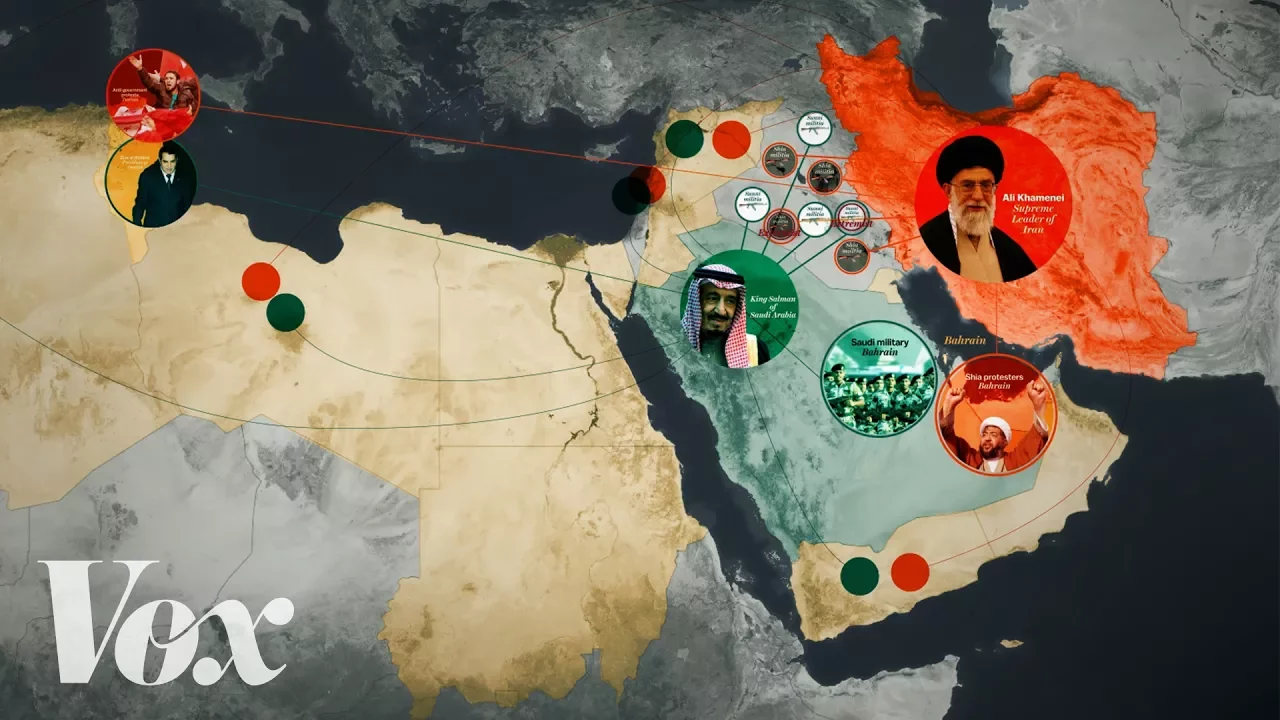
Explaining the Saudi-Iranian Proxy Conflict in the Middle East
@Vox
18.2M views•2017-07-17
Related Study Plans & Knowledge Roadmaps
Structured learning paths in Political Science