





![[Mankiw principles of economics 7] 7. 소비자, 생산자, 시장 효율성](https://i.ytimg.com/vi/VYbmOF-_5sI/maxresdefault.jpg)









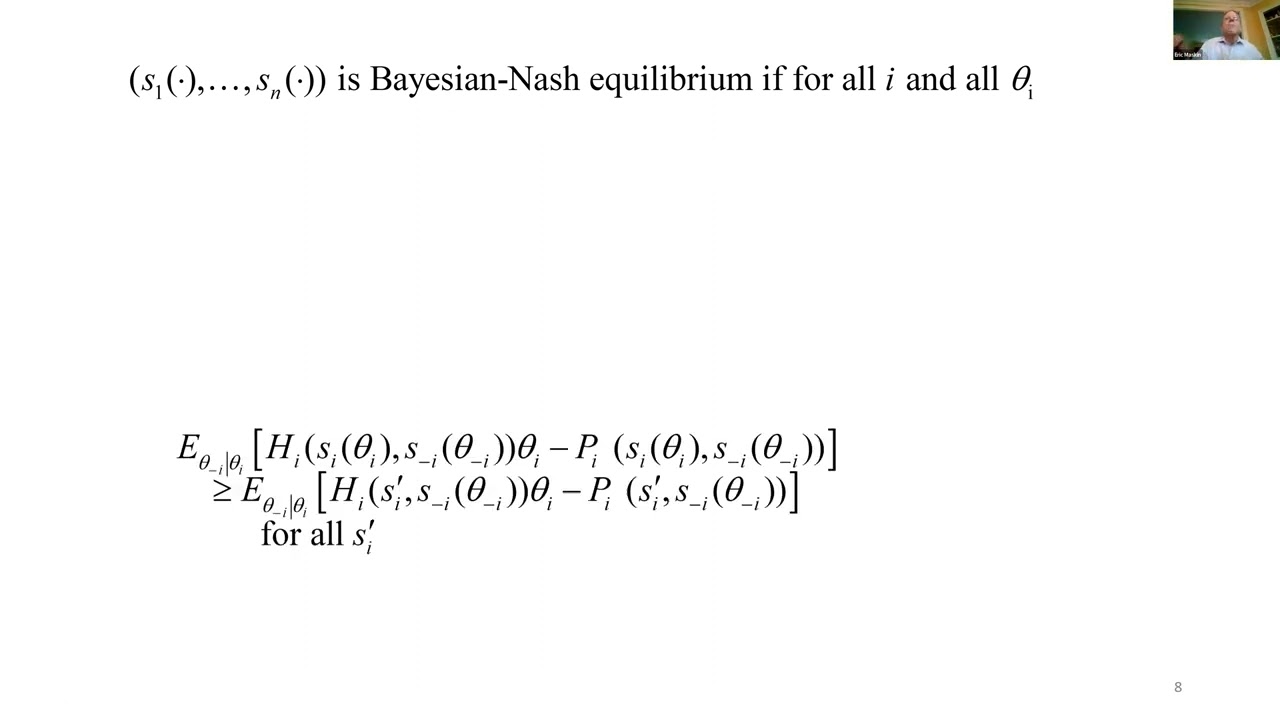

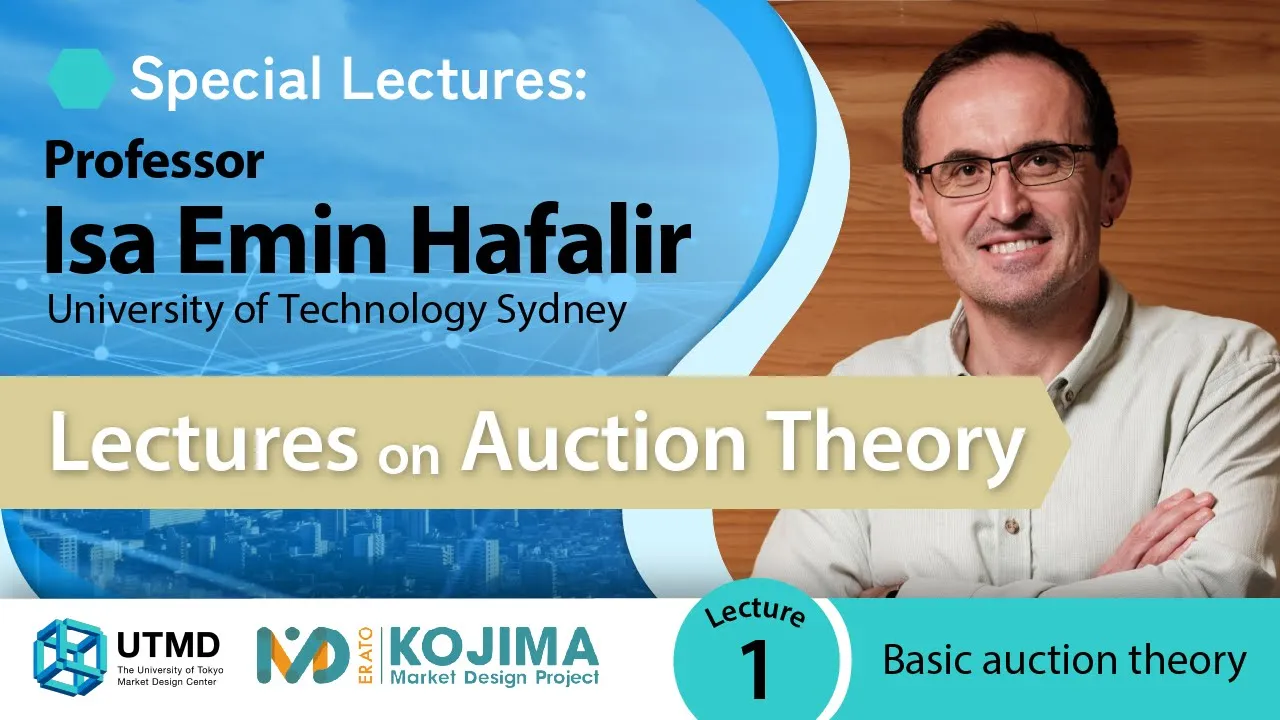

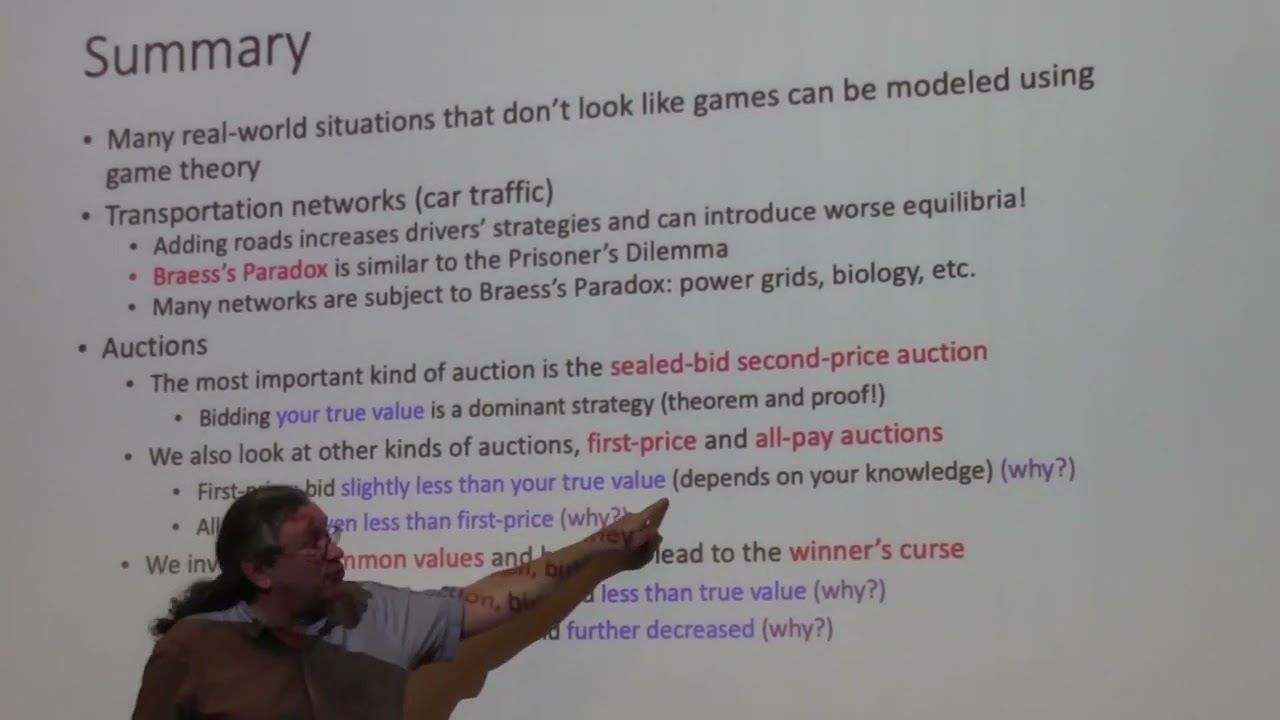


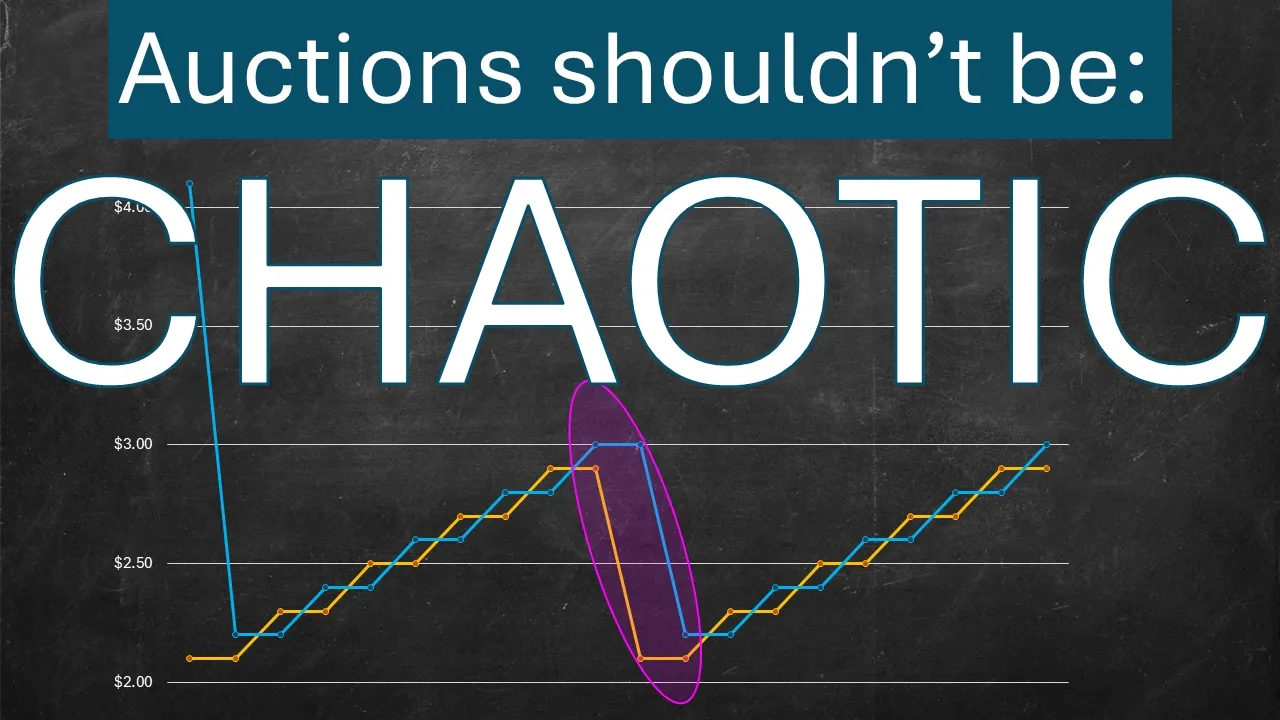


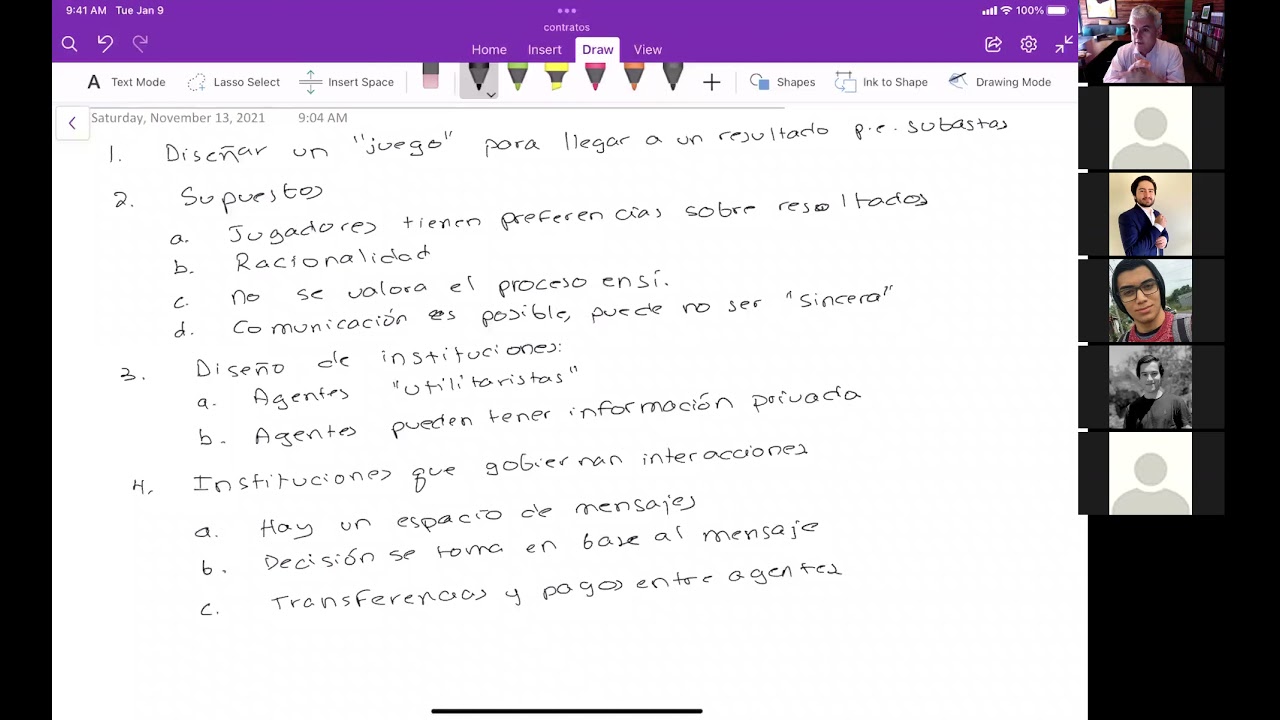

Auctions serve as mechanisms for price discovery when sellers lack complete information about buyer valuations; the English auction is an ascending open-bid auction where the winner pays the second-highest bid plus a small increment, while the second-price sealed bid auction (Vickrey auction) requires bidders to submit private bids with the highest bidder winning but paying the second-highest bid, both formats encouraging bidders to reveal their true valuations and achieving efficient price outcomes.
Auctions Explained: English & Vickrey Sealed-Bid Formats
Added:Basic microeconomic principles, specifically the concepts of utility, supply, and market demand.
The concept of 'Willingness to Pay' (WTP) and how individual consumer preferences dictate the valuation of goods.
Introductory game theory, particularly how rational actors make strategic decisions based on payoffs and incentives.
The concept of asymmetric information, where buyers and sellers hold differing amounts of private data.
Alternative major auction formats, such as Dutch (descending-bid) and First-Price Sealed-Bid auctions.
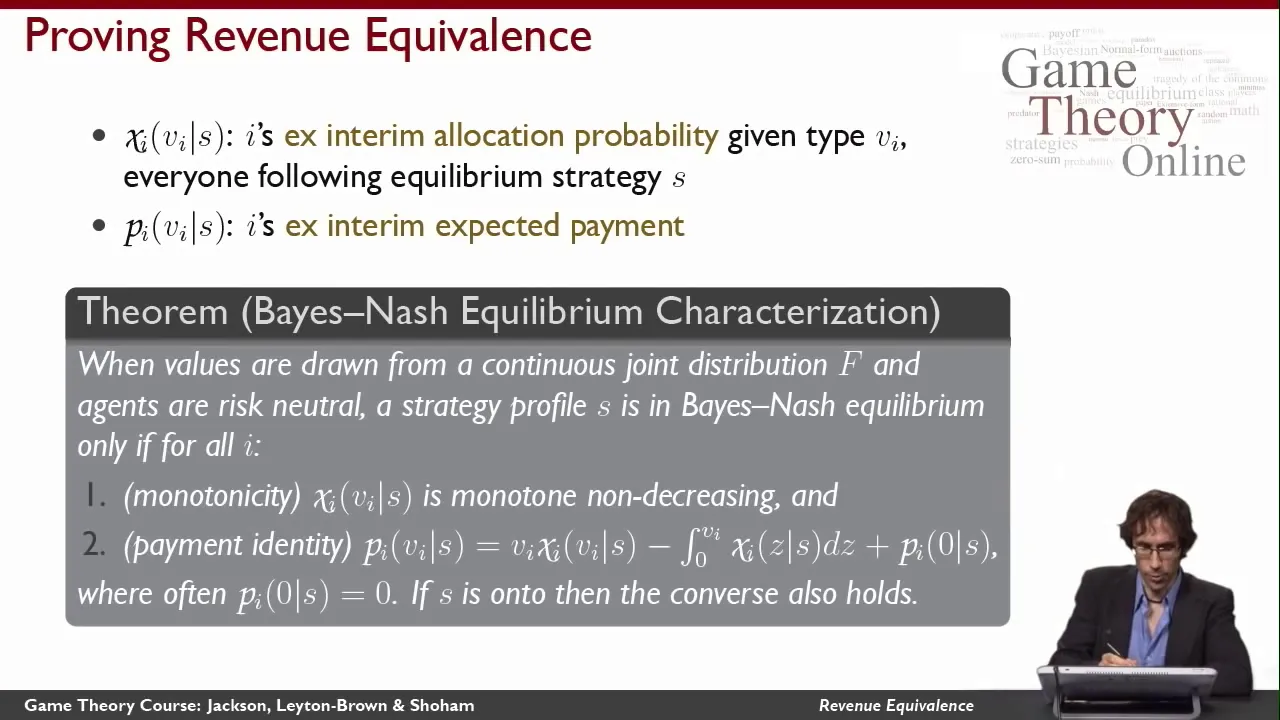
The Revenue Equivalence Theorem, which analyzes why different auction structures can yield identical expected revenue for sellers.
The 'Winner's Curse' phenomenon, explaining why winners in common-value auctions often overpay.
Real-world applications of Vickrey-style bidding, such as Generalized Second-Price (GSP) auctions used in online keyword advertising.
The foundations of Mechanism Design, focusing on how to engineer rules and institutions to achieve desired economic outcomes.
473 views6likes19:48Original Release: 2020-06-14
we're not going to star our last topic that is the setting of prices using auctions obviously the first question to ask is why would we want to use an option to determine a price most of the models that we've looked at in this course are once in which firms have simply set a price and buyers can take it or leave it but sometimes a posted price doesn't work because the seller has to know what price to post in the past what we've been assuming is that the seller knows demand for the product the seller knows buyers maximum willingness to pay and is able to figure out based on that information about the demand curve what the profit maximizing price would be or in the most extreme case the seller could carry a perfect price discrimination but suppose that the seller simply doesn't know anything or simply doesn't know enough about demand in that case we need the buyers to help us figure out what the value is because after all the buyers know their own valuations and in this case the seller doesn't know or perhaps the seller doesn't have as good knowledge about the nature of the or the quality of what's being sold maybe the buyers are the ones who are the specialists there and so we need them to compete against each other to determine what the price is going to be well there are many different kinds of auctions so let's just run through the some of the basic terminal gee we can classify auctions depending on the nature of the bids so if everybody is bidding openly and publicly so that other participants in the auction can see what the bids are we call that an open bid auction that sometimes interesting for the participants because you can see what other people are doing and that reveals something about their valuations for what whatever it is that's being sold on the other hand instead of bids being public bids could be private that could be taking place in what's called a closed or a sealed bid auction so you can imagine for example the participants in the auction writing down their bids and in the case of a sealed bid auction you can imagine them putting it putting their bids in an envelope and keeping them secret another way that we can classify auctions is based on the price that the winner pays our first class this may seem a little bit strange you might think well obviously the winner is the person who makes the highest bid but it's not quite so simple there are options which are called second price auctions that is auctions in which the price that the winner pays is essentially the second highest bid usually increased by some small amount we'll see some examples but let's think of some other types of auctions auctions differ depending on how much I'm is available for them one common type of auction is an open-ended auction so as long as people are making bids as long as the price is going up and up the auction will continue but there are plenty of examples in which the auction ends at a specified time and all the bids have to be received before that time so for example a second price sealed bid auction is an auction like that so all the bids have to be received by a certain date certain time and the bids are then compared and the decision is reached as to who has won if any of you have ever participated in eBay auctions you'll know that those are auctions that end at a specified time you can also classify the auction by the nature of what is being auctioned a common type of auction is what's called a private value auction that is the bidders the participants in the auction have their own private valuations their own private willingness to pay for the object imagine for example that a rare manuscript by a famous writer is being sold well different people would have different amounts that they would be willing to pay for that this is in contrast to what's called common value auction so a common value of auction is different from a private value auction because the participant or thinking about what the future market price is going to be for what's being sold so for example if we went to a cattle auction the people buying the cattle would have to think about the price that they would be able to get in the future when they sold those cattle I'll say for for slaughter well let's look at one particular kind of auction a common one called the English auction so this is an auction that's called an ascending price auction so in other words the bids each subsequent bid is higher than the bid before it and it's also an open open auction so that people can see what the bids are so in an ascending price auction a new bid is only accepted if it's higher than a little bit and the highest bid is going to win now a little bit more terminology for us we can describe each buyer as having what's called a reservation price that's what we've been calling their maximum willingness to pay and they're not going to bid anything more than that that would make any sense sellers on the other hand can set a reserve price the idea of a reserve price is that the seller thinks that the item that's being sold is worth at least a certain amount and they would not be willing to accept anything less than that the English auction is flexible in terms of its timing could be open-ended which is public what many of you are familiar with but it could also take place for a fixed length of time as in the eBay example that I gave let's just look at an example of a private value English auction hypothetical case and let's suppose that we have what are called bid increments so in the case of typically in the case of items that have very high value nobody's going to be interested in wasting their time with very low bid increments so in other words if somebody bids a hundred million dollars for this painting nobody is going to be allowed to say 1 million and ten dollars that's not worth awkward third time so let's suppose that we've got increments of a million dollars what's the outcome of this auction going to be well let's suppose given these these reservation prices or maximum willingness to pay on the part of these different individuals of course only they know those those particular values the bidding is going to take place well you can see that clearly only two people are in the running here who have the highest valuations and suppose that the bidding went on and Miss eras bid a hundred and nineteen million then we know that mr. moneybags here will bill will bid a hundred and twenty million dollars and he will win the auction so obviously he's going to get something Sumer surplus his reservation price or his willingness to pay was higher than the actual price that he had to pay another way to think about this is that the price that he paid is really the second highest valuation Miss Eris's valuation plus an increment in this case an increment of 1 million dollars so this is really what is called the second price auction so for example mr. moneybags had a about reservation price of 150 million then he would get a much bigger consumer surplus but he wouldn't have to bid up to the maximum amount that he'd be willing to pay well what can we conclude about about this oh I should just add like this is an actual example this painting called The Scream exists in I think at least three different versions painted by the same artist this was this version here was sold for 120 million dollars in 2012 the auction itself lasted for 12 minutes okay our conclusions about the English auction the final price as we've seen is there really the reservation price of the second highest bidder because that's how high that second a spitter is willing to bid plus some pending increment so the person is going to win the auction is going to have to just open the person for the second highest valuation and as we saw in that example the buyer can get some surplus in principle the amount of that surplus is going to depend up an upper bidders so the more bidders there are the more likely it is that their reservation prices are going to be closer to each other so that's why if you want to have an auction you want to have as many people participating as possible that's going to reduce the surplus that the buyer is going to get and is going to leave a price that's closer to the highest reservation price amongst all the bidders so what should better strategy be in this particular case well it makes sense to bid up to your reservation price and of course not beyond that let's consider one more kind of auction this is called the second price sealed bid auction and as I've noted here sometimes called a Vickrey auction after William Vickery incidentally he won the Nobel Memorial Prize in Economics in 1996 and had the bad luck of having a heart attack about a week later he died well a vicar he wrote a famous paper analyzing this particular type of auction so let's look at it in a bit more detail in this case because it's a sealed bid auction the bids are not open they're private and person who makes the highest bid wins but pays the second highest bid again plus some small increment so in that respect it very much looks like an English auction except that the bids are private so the best strategy if you have to participate in such an auction is just a bid your reservation price and if your reservation price or if your willingness to pay is the highest amongst everyone participating then you're gonna win the auction so this kind of auction can be used for both a private value and a common value of auction now I just note here on the slide that if it's a common value of auction this is going to reduce the danger of what's called a winner's curse I'll explain that shortly but that's the idea that you've overestimated the value what's being sold you've overestimated its future market value and in that case you're running the risk of paint too much so in this case the price that you end up paying is the valuation that the second highest bidder places upon it so that reduces the danger of you paying too much well let's just have a quick example of this kind of auction I found this example here it's an auction of a rare standard so there's a company that specializes in stamp options and here they describe how they they set the prices so bids are private and the person as we saw that the highest bid is going to win and favor a simple pricing rule so the highest bidder pays a price that's equal to the price of the second highest bid plus one increment or if there's a minimum bid which would really be the case where there's a reservation price then you pay the increment above that reservation price or what here is called a minimum bid so from there the cowboy pick at the example if the high bid is $200 and the second highest bid is $100 then the person with the high bid of $200 pays $100 plus a $5 increment and typically the increments the vary depending on the general value of the item as I described in the case of the auction of the painting okay well we're now going to turn to examine common value auctions in some detail
Up Next
11:47
Mechanism Design Theory Explained by Eric Maskin (Nobel Laureate)
@SeriousScience
37.1K views•2013-12-23

5:07
Impact of Yuan in Indo-Russian Trade Amid Sanctions
@WION
261.9K views•2022-07-01
10:33
Behavioral Economics Explained: Rationality, Nudges, and Risk
@crashcourse
1.1M views•2016-03-12

113:18
The Age of Easy Money: Fed & Inflation | Full Documentary
@frontline
21.2M views•2023-03-15
Related Study Plans & Knowledge Roadmaps
Structured learning paths in Economics
economics
Sovereign Debt: Defaults, IMF & Restructuring
01Introduction to Sovereign Debt & Government Bonds
02Debt Sustainability & Credit Ratings
03Anatomy and History of Debt Crises
+ 2 more learning modules
12h5 modules
Explore Roadmap
economics
Market Design: Matching Theory & Gale-Shapley
01Introduction to Market Design and Price-Free Markets
02Two-Sided Matching & The Gale-Shapley Algorithm
03School Choice Systems and Mechanism Design
+ 2 more learning modules
10h5 modules
Explore Roadmap
economics
Impossible Trinity: Forex, Capital & Policy
01Introduction to Monetary Policy and Central Banking
02Exchange Rates and International Capital Flows
03The Mundell-Fleming Model
+ 2 more learning modules
8h5 modules
Explore Roadmap
economics
Healthcare Economics: Market Failures & Systems
01Introduction to Healthcare Markets and Market Failure
02Asymmetric Information and Adverse Selection
03Moral Hazard and Insurance Design
+ 2 more learning modules
12h5 modules
Explore Roadmap