

















Antimicrobial stewardship is essential for combating antibiotic resistance, which has been rising steadily (2.8 million infections annually with 35,000 deaths in 2019, with a 20% increase during the pandemic). The CDC's seven core elements—leadership commitment, accountability, stewardship and pharmacy expertise, action, tracking and reporting, and education—provide a framework for effective stewardship programs. Key implementation strategies include conducting gap analyses to identify program strengths and weaknesses, utilizing regional antibiograms to guide empiric prescribing, implementing facility-specific treatment guidelines and order sets, optimizing vancomycin dosing using AUC/MIC methods, and addressing penicillin allergies through delabeling initiatives. Regular tracking of antimicrobial use, resistance patterns, and adverse effects, combined with ongoing education and stakeholder engagement, helps facilities reduce unnecessary antibiotic use while maintaining appropriate treatment standards.
Antimicrobial Stewardship for Rural Providers Webinar
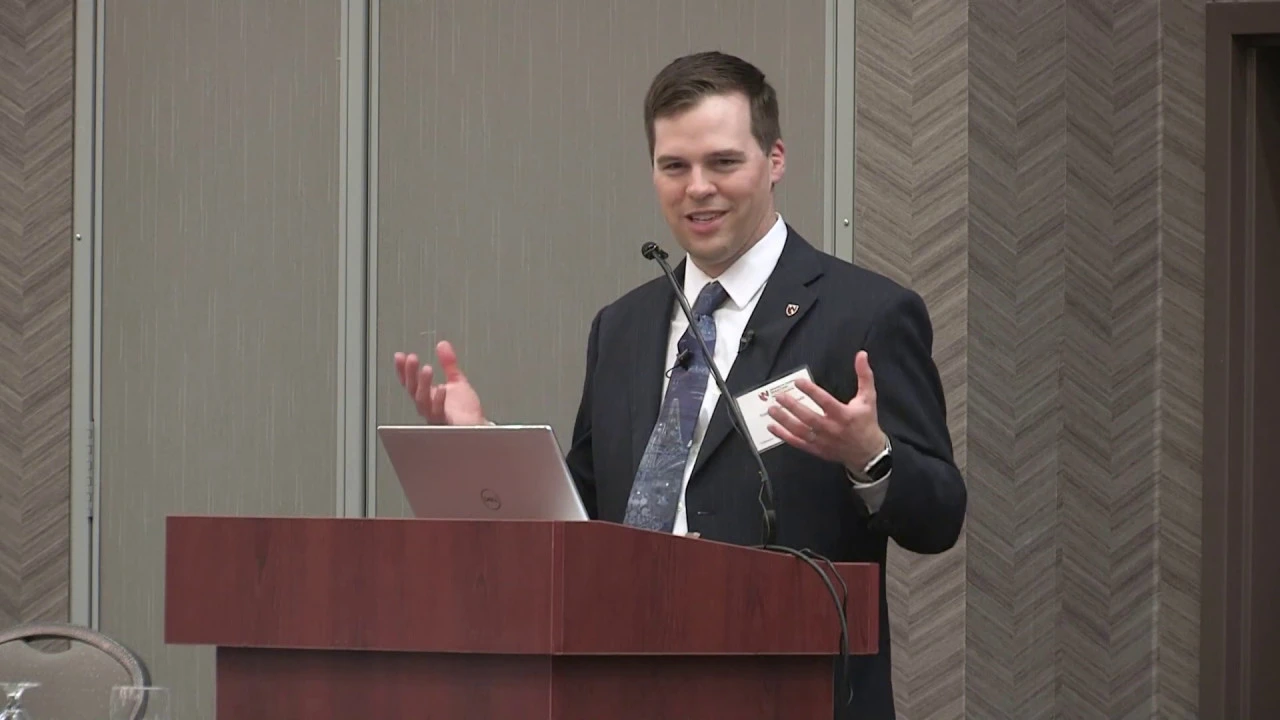
Added:[Music] good afternoon everyone today we are very excited um to have our friend and colleague from the State Department of Health presenting on ant on antibiotic stewardship um if you recall uh leading up to this webinar we had sent out a survey and we received 20 responses and so we're also going to be highlighting some of those responses to gauge the greater need um today's webinar is about resources information answering questions that you might have with that said we are a smaller group so feel free to unmute your line um feel free to put something in the chat I will be watching the chat and if you are watching this recording and you have any questions or concerns please do not hesitate to reach out and with that said Madison I'll turn it over to you thank you so much much as Laura said my name is Madison Rios I am uh the pharmacist the antimicrobial stewardship pharmacist at Thea State Department of Health um a little bit about me and some background I um worked for five years at integis Baptist Medical Center as an infectious diseases pharmacist before recently moving to the state department to um look at stewardship from kind of a different angle so I'm really excited to be here talking about stewardship with you all and definitely encourage any of you to reach out if you need any support or um have any questions about stewardship so for today's presentation we're going to be talking about uh stewardship program resources that are available to you that um I've been working on and um would just are targeted for all of the stewardship programs throughout the state in all of the different facility types uh we're going to look at the background of antimicrobial stewardship and then we're going to look at the cdc's core elements of antimicrobial stewardship and how to identify gaps in practice and do a good Gap analysis of identifying places where you can really grow your program so to dive in and start with is talking about the why why are we talking about this and why does antimicrobial stewardship matter so I wanted to start out by highlighting some of the impacts of antimicrobial use and notice that this is the impacts of antimicrobial use not the impacts of appropriate antimicrobial use because adverse medication effects and all of the other complications can occur with appropriate use just as much as inappropriate use so adverse effects being nephrotoxicity bone marrow suppression neurotoxicity and the list could go on and on and on um but I really just wanted to highlight some of the really significant adverse effects that can be associated with antibiotics as well as causing SE diff infection from suppressing that normal F flora and driving antimicrobial resistance so all of these components really do come into play whether or not the patient is indicated to be using antibiotics and it really hits home why it's important to make sure that we're limiting antibiotic use to just the patients that are really indicated um and really have an infection that can benefit from treatment to walk through a little history of antimicrobial resistance um I've put together this timeline the source is cited at the bottom of the page and that timeline from that source is uh much more in-depth and calls out a lot of lot more details but I pulled out some of the what I felt like were really good talking points from the timeline and put together this timeline uh so penicillin is discovered in 1928 um but it doesn't hit the market um for from FDA approval until 1945 by this time time in 1940 we were already beginning to see penicillin resistance identified um so before it even is commercially available we see that the bacteria are beginning to learn about penicillin and um develop resistance patterns the 1950s through the 1970s are considered the Golden Age of antibiotics and the majority of antibiotic classes that you've heard of really came about in this time frame um but it's also the time frame that MRSA was identified which is largely one of the pieces that was driving all of the Innovation and antibiotics at this time the 1980s brought along the carbapenams which indicates there was some gram negative resistance developing as well um the 1980s is also when VRE was identified and if you'll note it wasn't until early 2000 before dapy and Len nasid were identified and were commercially available so roughly 15 years went by Between the identification of anomy resistant anoc caucus or V and an appropriate treatment for these infections I want this point to really ruminate because this stretch on this timeline really represents lives lost and people clinically impacted and infections that we could not treat and that's really important to keep in mind when considering antimicrobial stewardship and antimicrobial resistance because the organisms that we're worried about now some of these negative organisms and carop penum resistant uh organisms they're much more aggressive than inoc cacus and as far as virulence factors go and so if we don't if we run out of treatments and we get to a point that we don't have anything that can treat these infections it's going to represent a larger swwa of the population than the VR ISU did so I just want to put that in your in your mind and and um at your focus when considering the importance of stewardship and why it's something really worth our efforts and um worth our attention so all of that was very historical um and to bring it a little bit closer to where we are now uh the CDC started putting out antimicrobial or antibiotic resistance threats reports the first report was uh looking at 2013 um this identified that there were 2 million resistant infections per year associated with 23,000 deaths by 2019 for the next report 2.8 million infections per year were identified and 35,000 Associated deaths so as you can see we definitely have been climbing and then the covid-19 pandemic hit the 2021 to 2022 report looked specifically at the impact of covid on these resistance organisms that we've been tracking specifically and noted that there's been a combined 20% increase in the targeted antimicrobial resistance pathogens during that pandemic five out of six of the targeted pathogens remained above pre-pandemic Levels by 2022 so this is one of the largest spikes on this trend that we've seen and it has not actually resolved um So Co really kind of set back this movement in a lot of ways in that there were multiple factors um contributing to the increase in these resistant organisms but now we're sitting in a space where we just see that many more of them and it makes antimicrobial stewardship uh all that more important at this time so there's all my warnings and um my why as to why we should be focusing on stero chip and now I really want to delve into the how uh so I wanted to start out by presenting to you all some of the resource projects that I have been working on at the at my um at the state level one of those is the regional antibiogram and we'll dive into that in good depth here in the next few slides um I also do facility specific Gap analysis and workshops so if you have any questions about your program and you want my input um I am happy to meet one-on-one I'm happy to meet with a handful of facilities if you're all under kind of the same umbrella um whatever way that I can come in and help you build your program and solidify your program I am happy to so just reach out if you are interested in that um I also help with nhsn um or national Healthcare Safety Network antimicrobial use and resistance data uh whether that be getting your data live understanding your data uh troubleshooting why it's not working correctly um any of that I'm happy to help with especially as that's becoming become a CMS requirement and part of the promoting interoperability program I'm sure that this is something that has been um at the Forefront of many of your minds so if there's anything I can do to help you with that as aspect um very happy too um I have an infectious diseases and antimicrobial stewardship uh community of practice this was initially targeted just at Pharmacists but there have been several infection preventionists a couple of Physicians uh some nurses uh just kind of a myriad of people that have been interested in this community of practice so now it's kind of becoming a more General antimicrobial stewardship community of practice but this meets quarterly and there's a webinar with the CE Associated every meeting uh so if you would like if you're not currently getting an invite to that and would like uh one let me know on that as well and then we've just also been working on data driven initiatives to identify and address Health Equity disparities so as more and more data becomes available looking at the Health Equity component um which is one of the reasons I was super excited to speak um to this group because I think that rural health is a space where um Health Equity needs to be evaluated because I think that sometimes you all get Overlook for resources and we want to want to make sure that that we address that whenever it's identified so to jump into the regional antibiogram uh an antibiogram being a compilation of pathogens and susceptibility patterns for a set time frame for specific location um and these are really used to guide empiric prescribing whether the pathogen is known or suspected um and it really helps identify the local susceptibility patterns and the likelihood that you're going to be able to treat that organism with the selected antimicrobial um this this Regional antibiogram has pulled Regional culture data together to get a larger isolate number what I really noticed when I took this role is that as I began talking to more rural facilities and smaller facilities the a very common issue was that they couldn't get enough isolates of anything other than eoli to make a really statistically significant antibio CSI says that you need 30 or more isolates of an applicable pathogen to be considered statistically significant and it's just really hard to get a large number of pathogens if you have a low volume of patients um but it doesn't mean it's any less important for you to know what the general Trends in Risk susceptibility are based off of those pathogens when one comes in the door so that's really where this Regional antibiogram is targeted to to assist is to come alongside what antibi data that you have available and to supplement from the region so this is what is anticipated to look like um it's kind of going through some of the final channels to being publicly available um but the opening page will have a map with all of the different regions and allow you to identify where your facility is and what region you're looking at what all counties are considered in that data set and then you can follow to your specific region and I have it broken out by urine and non- urine for the antibiogram then you can filter down to the specific pathogen and actually have the breakdown of just that pathogen um or related pathogens so some of the organisms I've put together into a complex like the interactor cloy complex um so any of those subspecies that that are similar enough to fall into that category the reason I've put it in this format and I do I will have the PDFs of each of the detailed antibiograms in a format that you're used to seeing available as well but once I got this information I noticed that it was very very in-depth and there are lots and lots of lines on the antibiogram and it's a little overwhelming so I thought that by putting it into this um format so that you could filter and adjust and just an interactive dashboard format might be more user friendly especially in a quick moment where you really just need to know okay I think it's eoli in this patient what are we looking at in our region or I think it's pomonis in this patient what are we looking at empirically in this region so another resource I mentioned that I've been doing a lot with the nhsn Au and AR data uh so one thing that I'm I'm working on to provide to you all as well is a deidentified interactive dashboard for the a data this will allow facilities to compare similar facilities uh as far as size in the state you won't know the specific of the hospital name that you're comparing to but for example hospitals with less than 50 beds you can compare across all of those different hospitals in a deidentified manner to identify if your facility is an outlier or if you're tracking with the general trend of the state um you can identify uh and evaluate drug specific us Trends uh you can see what you're doing and compare that to the Statewide perspective uh and then also I know that your time is limited and many of you are where wearing multiple hats and so I want this dashboard to be an option to be a pre-built graphic so that you can filter down to just your facility take those Graphics to your stewardship committees and your p&t committees and not have to spend your time building Graphics to give that information you can spend your time evaluating the data and not having to build visuals out of it so that's kind of the end of the projects that I wanted to update you all on as as far as the things that I have been working on um I now kind of want to dive more into the cdc's core elements of antimicrobial stewardship and really just talk about some options that you will have um for building your programs and identifying gaps in in the current Pro programs that you're running the seven elements are leadership commitment accountability stewardship and Pharmacy expertise action tracking reporting and education if you've been on the cdc's website and you've looked into the core elements you have probably seen that they have broken it down to multiple different Avenues there are core elements for acute care hospitals there are core elements for critical access hospitals for resource limited facilities nursing home outpatient any facility type that you can think of they have gone through and done core elements for acute care they've also elaborated with the priorities of core core elements and here they kind of a more indepth so yes you are tracking but what are you tracking and what all are you utilizing um so that's that's really what these resources are um I know that critical access hospitals and other smaller rural facilities don't always have the same resources that a large acute care hospital does but the core elements really are not intended to be prescriptive they're more just intended to be um evidence-based recommendations that will that have been shown to be effective and utilization and barriers are going to be different from every kind of facility so it's really about um using this as a road map and and setting the goal as to where you're headed so leadership commitment this is a really big one and when you start looking at surveys and polls lack of resources is really commonly identified as a top barrier so if the leadership doesn't buy into what you're trying to accomplish with stewardship then it's really difficult to move the needle and it's really difficult to get everybody else on board it's really about creating a culture that supports stewardship in your facility if the top believes in stewardship then that will begin to trickle down through everybody else um having a culture of stewardship that has pharmacists Physicians nurses infection preventionists um Everybody thinking about stewardship and that being something that everybody cares about um can make a huge difference in how well initiatives go over and how successful they really are accountability uh is about designating a leader or co-leader to Champion the program um the literature really says that a pharmacist and physician team is highly successful um physician having kind of that Authority uh and that peer-to-peer relationship whereas um pharmacists come in with the uh detailed medication understanding and um it's a really good and very effective team uh but that's not necessarily always available um Pharmacy leads are are pretty common um but I um and I definitely recommend um empowering them if they are an available resource um but really just Empower what existing Personnel you have whether that be the medical director dor director of nursing consultant pharmacists infection preventionists any of the nurses anybody who's interested in stewardship and ready to uh really do the work of identifying where medication use can be uh optimized is is really the best way to go um so it doesn't necessarily matter if your infectious disease is trained um there are resources out there stewardship training um certifications programs um just empowering whoever is passionate and um it's just a really I think a good recommendation as far as stewardship and Pharmacy expertise I have listed here several of the training um training programs and certificate programs that can really bolster your understanding of stewardship and some infectious diseases Concepts um if you don't already have that infectious diseases trained person U working on your stewardship team uh so I really would recommend any of these programs the sidp and the Mad ID uh stewardship programs are targeted towards pharmacists but the CDC training is uh open to any discipline um if you use a consultant pharmacist um whether or not they're the lead for your program I really recommend partnering and really bringing in their expertise and um and tapping them for the resource that they are um especially if your leadership helps support them having time to focus on stewardship um and if you're not given time to focus on stewardship and you are the consultant pharmacist I recommend um really empowering everyone around you making the whole group at the facility um your task force for for stewardship and helping provide this education which we'll F focus more on education um on one of the later slides as well so action uh this this is probably not necessarily the biggest component but it's definitely the most talked about component because it's what are you doing um is it pre-authorization or restricting some antimicrobials to um have the stewardship sign off stewardship team sign off on whether or not they need to be utilized like carbapenams uh requiring a es positive culture or a really good rationale as to why you need to pull out the carb Peno it can be of prospective audit and feedback this gets a lot harder if your stewardship lead is your consultant pharmacist and you're not there every day um and you're doing a lot more of like a weekly review um so I really recommend handshake stewardship in the in these circumstances where as you're meeting with the Physicians and as you're running into people you're discussing the patients and what antibiotics they're on setting facility specific treatment guidelines is another really important one this is another one I think that there is a lot of potential for success especially in um small or critical access hospitals because you can really utilize your ability to create an order set in your electronic health record and really funnel everybody through that order set the order set then can provide education as well as guide Pro prescribers down the correct and guideline appropriate paths for imper treatment for community acquired pneumonia or urinary tract infections with urinary tract infections include the urinalysis portion whenever you're building these kind of treatment guidelines you know um walk through when a UR analysis should be collected and from that point when it should reflex to a culture create those barriers in the ordering process to cause prescribers to stop and pause and think about what antimicrobials they're prescribing and why and whether or not they can give a good indication for what they're doing is just a really strong way to not have to be there and handholding the prescribers through the process but to potentially also get really successful results so I've also listed out in the next few slides are just some potential actions and some potential initiatives that could be implemented um and just wanted to walk through some of these opportunities so one action could be revolving around bomy and dosing so the Au over mic uh dosing or um area under the curve per uh minimum inhibitory concentration dosing was recommended by the idsa and the 2020 bomy guidelines this is great but there are lots of barriers to implementing it um obviously the basian and popul population models that are more predictive and prescriptive are the most ideal because you have a computer doing advanced math and comparing to other patient populations of similar size and Metabolism to help you make your decisions on dosing um but these softwares can be really costly um and it can be difficult to uh get into different facilities um trough based dosing is kind of on the other end of the spectrum it's been the standard for many years but it has many pitfalls like the timing of levels the turnaround time for getting the levels back um the consistency of changing dosing do you have a protocol um specifically for that uh so there's there's lots of um barriers to both and I don't know that Venom is ever something that anybody would say we've been doing phenomenally well in any facility type or size ever um so this is definitely a place that I I encourage you to review potential options um because I guess the other question is how does this fit into stewardship but if you're dosing the vomisin appropriately you're more inclined to be able to actually treat that MRSA infection so if you're appropriately treating MRSA with fomy and you're dosing in the most optimized manner then you're going to have the most success on treating that infection and you're not going to run into these partial treatments that could then produce further resistance so definitely a stewardship metric um so some current options that exist uh there is a basian model uh Partnership of RX with ashp rural health and they have a package um and so that could be something to look into um sdp has a or the Society of infectious diseases pharmacists has a toolkit they have an excel-based tool it's not basian or population model but it does do that area under the curve calculation um which could potentially be a little bit more effective than just using um trough based recommendations um but there's always the opportunity for cumulative derived vomisin protocols um to have something very consistent across the state is an option and if that's the best option definitely feel free to to reach out to me about uh maybe a group collaboration to develop that another action that could be considered is evaluating penicillin allergies um on this slide I have a snip of a infographic that I put together um this will be available very soon on the OS website under the appropriate antibiotic use um and then you can download and print it and share but um penic and allergies are a really big problem 10% of the US population reports an allergy but less than 1% of the population has a true allergy I'm sure all of you have experienced this of wanting to treat a patient with a seos sporin or a penicillin and running into an allergy that then sends you down the path to marinum or some other less ideal antibiotic for this patient so penicillin allergy delabeling can be a really really important initiative that makes a huge impact on patient care um this infographic focuses on the cross sensitivity um and C um cross reactivity of allergies based on the betal lacum structure so betal Lums the r side chain if there is similarity in that side chain there is a much higher likelihood of cross reactivity between two anti microbials for an allergy but if there's not similarity there is very very little chance of that cross reactivity so evaluating patients allergies for whether or not they can use for example a penicillin allergy most spilos porins are just fine and don't have any of that cross reactivity issues so along with this chart uh or this infographic there's a chart that you can access that allows you to kind of match the antimicrobials together to see if if there's cross reactivity or not um additionally I just wanted to list some of the the tools that you could use for implementation of addressing penicillin allergies whether that be cross reactivity charts education tools there's also pen fast scoring which is a score that you can walk through to identify How likely a patient is to have a true allergy based off of how they reacted in the past and what their reaction was um creates a scoring system um that then identifies How likely they are to have that that allergy or if you can really go about through the process of delabeling that so we've walked through several um potential actions or potential initiatives that you can be doing at your facility and now it's time to track them um so these are some of the standard tracking recommendations so whether that be days of therapy or the anotic days per 10,000 patient days there's also the nhsn reporting um that you can be tracked and they there's the antimicrobial use module which provides a standardized antimicrobial Administration ratio or SAR um as well as antibiotic days and some other really um interesting and useful uh information there and this is really a useful tool because it's comparative across the rest of the nation so everybody's data goes into this pool and then we identify what everybody's doing across the country um so this really helps with standardization of data and really identifying where you're an outlier versus not you can always look at outcome measures um tracking adverse effects as we as I mentioned before um adverse effects is a huge component of antibiotic use and antimicrobial use so um looking to see what kind of adverse reactions you're seeing and how many and is that decreasing with decreasing antimicrobial use um you can track CI cases and how they um track with uh inappropriate antibiotic use uh versus appropriate um you can look at the antimicrobial resistance module through nhsn um this is actually going to help you track what organis how many resistant organisms you're seeing so it's really useful to pair some of these AR reports with your au reports so for example if you're seeing a lot of marinum you can look at your AR reports and see okay but how much Es are we seeing and if those numbers don't really match up then you need to start looking into okay well why are we using so much Mar if we don't have much ESO um so the AR module can really help identify where your efforts might be the most fruitful and then there's always the financial impact cost savings are not the goal of stewardship programs and I definitely want to make that clear however if you use less antibiotics you do save money um so you can use cost savings as a surrogate marker to identify um decreasing uh utilization of unnecessary antimicrobial therapies and then there's quality improvement process measures so all of the um actions that we talked about before tracking the acceptance rates from prospective audits or the adherence to using the guidelines and the order sets that we talked about or um a change in practice based off of Education about penicillin allergies whatever you're doing I recommend tracking the impact that it had um um and the uptake of your initiative but what is tracking if you're not reporting it um it's really important to have regular facility specific updates keep your prescribers pharmacist nurses leadership in the loop keep everybody in the circle and identify um where you have problems um identify what initiatives you're going to be doing and the impact of those initiatives um reporting keeps people engaged and it increases buyin um you know use the opportunity to share National Trends and Regional Trends um and really compare how your faciliity is performing up against some of those Trends um this also gives you an opportunity to really discuss successes and challenges and when you have everybody at the table and you're consistently keeping everybody in the loop then you're going to have the best um information and you're going to have the um the best feedback as to how to overcome some of the challenges and barriers and then education education is key to changing the way that we prescribe antimicrobials across the board um there's lots of different forms that you can do education um whether that be presentations webinars um looking specific at for targets at your facility and educating on hot button topics uh that really apply to your prescribers and your facility um handouts and posters are are great just plaster your message everywhere um they're National campaigns um that you can be a part of which I definitely wanted to bring up today um so us antibiotic Awareness Week is an example of one of these National campaigns the CDC hosts this every November on the 18th through the 24th so that's going to be coming up on Monday um and I do want to go ahead and throw out there that if you get involved with your facility um and use this campaign as an opportunity to educate your uh facility and your practitioners um if you do anything you know send me pictures or send me information about what you did and that way I can really showcase um what you all are working on and showcase what Oklahomans are doing to really change the change the narrative and bring information and bring awareness to the issue of antimicrobial resistance and um antimicrobial resistance the color is purple this year um and the theme is fighting antimicrobial resistance takes all of us um and it's really geared towards this Hands-On idea that everybody's voice matters when it comes to talking about antimicrobial stewardship and then the last couple of slides are really just looking at uh Gap analyses so I really recommend taking the core elements that we walked through today laying them up against your facility and identifying where you have gaps uh it's a really great strategy to identify what you're doing well and being able to boost morale with your team of saying you know we do a really great job at whichever of the elements and then identifying okay but here is a place that we can put more effort we can put more resources into and we can really focus here um and then repeat the process I recommend annually but as often as um is a available and applicable and you know that really helps to identify how those answers change and where the progress in the program has been made um it also helps keep you accountable and not letting slip the things that you were already doing good now that you've shifted your focus to something else so all in all antibiotics are amazing um but they do have risks like seiff adverse reactions antimicrobial resistance but everyone has a role in the appropriate utilization and uh just because a facility has a uh fewer resources doesn't mean that they can't absolutely thr out in their antimicrobial stewardship um especially when developing a culture of stewardship um to boost the program I've included some resources um for links to the core elements um some of the priorities and implementing um some of these core elements so um hope these are useful for you all and I would be very happy to take any questions that anybody has I don't have any question but I do want to tell Madison thank you she has helped me in several of my rural facilities um catch some things that weren't uploading correctly and just to be able to explain where we are in the position that we're in and so I appreciate all of the work that you've been doing and that you have done thank you so much you mentioned doing the Gap analysis with facilities what all does that look like and what is the commitment to that with that so it really um is kind of up to the facility um I'm happy to come you know in person and meet with everybody I'm happy to meet over the phone over the phone has been probably the most common um and just I could just kind of have people talk to me about what they're doing with their program and what they feel like the biggest barriers and successes that they have are and then we kind of walk through some of the core elements and um I know tracking and Reporting is probably one of the biggest areas I pretty much just provide some recommendations and some outside eyes uh sometimes it's really hard to see where the best place to move is when you're really close to the BR really close to the program and so I just kind of come in as that outside perspective and say you know consider this consider this consider this and just uh am available as a resource or kind of just bouncing off ideas or whatever that really needs to look like for the facility it's um very very flexible at this point does anyone else have a question while people are thinking um I do get a lot of Aur related questions um do you have can I put Place folks in touch with you as I received those questions and then also do you have good examples of folks that are doing it well I guess that's one of the questions I get a lot of who is a um a a facility for us to look to in a area in in terms of Aur yeah absolutely and any questions you can absolutely send my way and put people in contact with me I'm very very happy to help with the Aur process questions and getting the data where it needs to go and then how to how to utilize the data um as far as who was doing it well that's kind of a difficult question to say um honestly once you get your data in um and validated and you're submitting I would definitely say that you're in the group doing it well because the second you start reporting and you start seeing what you have um that's really where the conversation starts and so then at that point it's just a means of identifying um where you fall nationally um once we once the dashboard is live um so that facilities can actually compare themselves to similar SI hospitals um I think that that will be a very useful tool as far as looking to um kind of examples uh because from that point you can kind of see okay well I don't know who Hospital 4 is but they use less marinum and more stuff triaxone than we do etc etc um but if there's any question as far as like how to do um submissions well um I'm happy help with the technical pieces of that and kind of walk through what reports are useful and how to really apply that to your facility perfect thank you um I did receive a question in the chat um via direct message how do you gain access to C state and local resistance compared to an individual rural facility sorry will you repeat that um how do you gain access to see state and local resistance compared to an individual rule facility yes so the Antti biogram um will be a good way to see that it will be uh posted to the website the goal is here in the next few weeks but I will be sending out Communications when that is live and then you'll be able to access that and you can identify the Statewide Trends and you can see Regional Trends and you can compare that to your individual facility Trends as far as specific AR data there's we don't have a dashboard at this point to compare that way but I know that that's hopefully something in the pipeline um at this point we're just able to compare the antimicrobial use data through that dashboard which again should hopefully be be live here very soon that sounds great and I can also um help forward it out to the Ral health clinics and Ral hospitals as well that would be great great are there any other questions well if you get off this call and you get back with your team and you're like I have a question please reach out I am happy to place you in touch if you're watching this recording and you have any questions please do not hesitate to reach out um Madison thank you so much for your time today and everyone have a great rest of your day thank you so much [Music]
Up Next

Antimicrobial Stewardship in ICU: Expert Strategies for Optimization
@ISACAPUA
1.4K views•2025-04-09

Graphic Medicine: Comics for Collaborative Healthcare Communication
@nationalpatientadvocate
189 views•2023-12-04

Neuroanatomy: Central and Peripheral Nervous System Divisions Explained
@AKLECTURES
136.2K views•2014-09-20

Stages of Labor and Vaginal Birth | Childbirth Animation
@nucleusmedicalmedia
52.1M views•2017-08-18
Related Study Plans & Knowledge Roadmaps
Structured learning paths in Medicine