








![C[a,b] is Complete Metric Space | L37 | TYBSc Maths | Completeness @ranjankhatu](https://i.ytimg.com/vi_webp/5Pdnb66woGM/maxresdefault.webp)


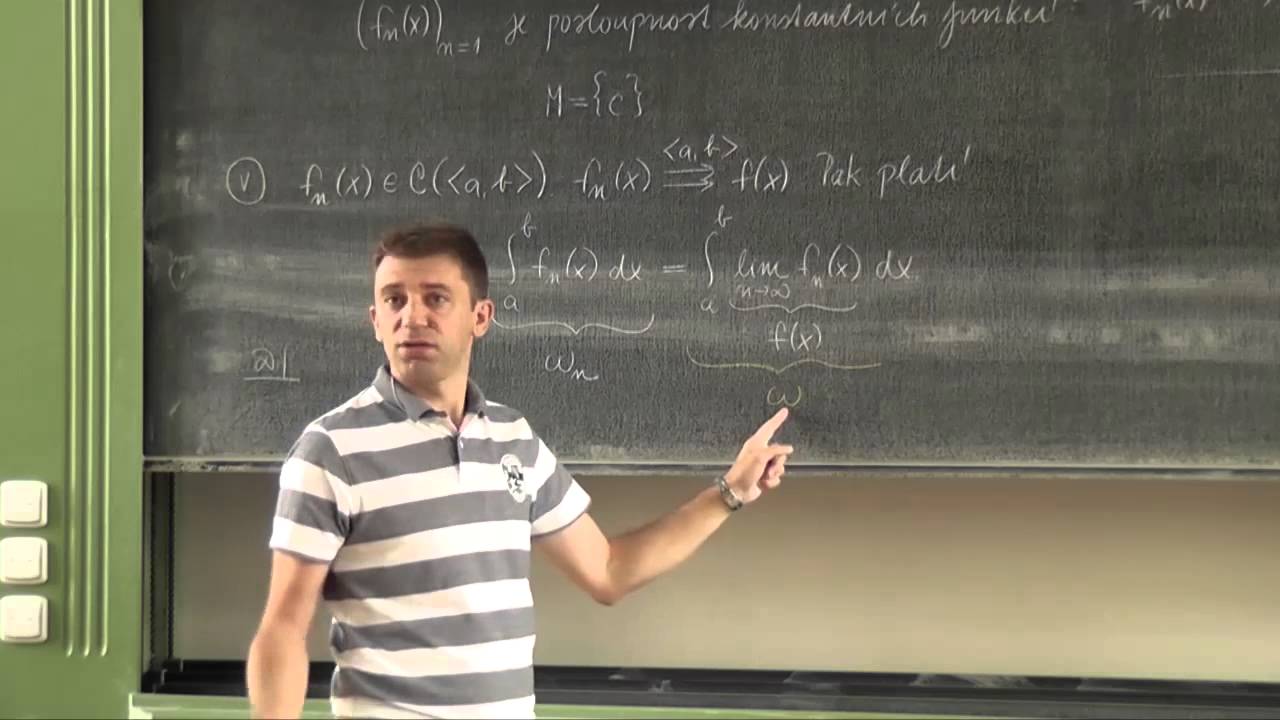

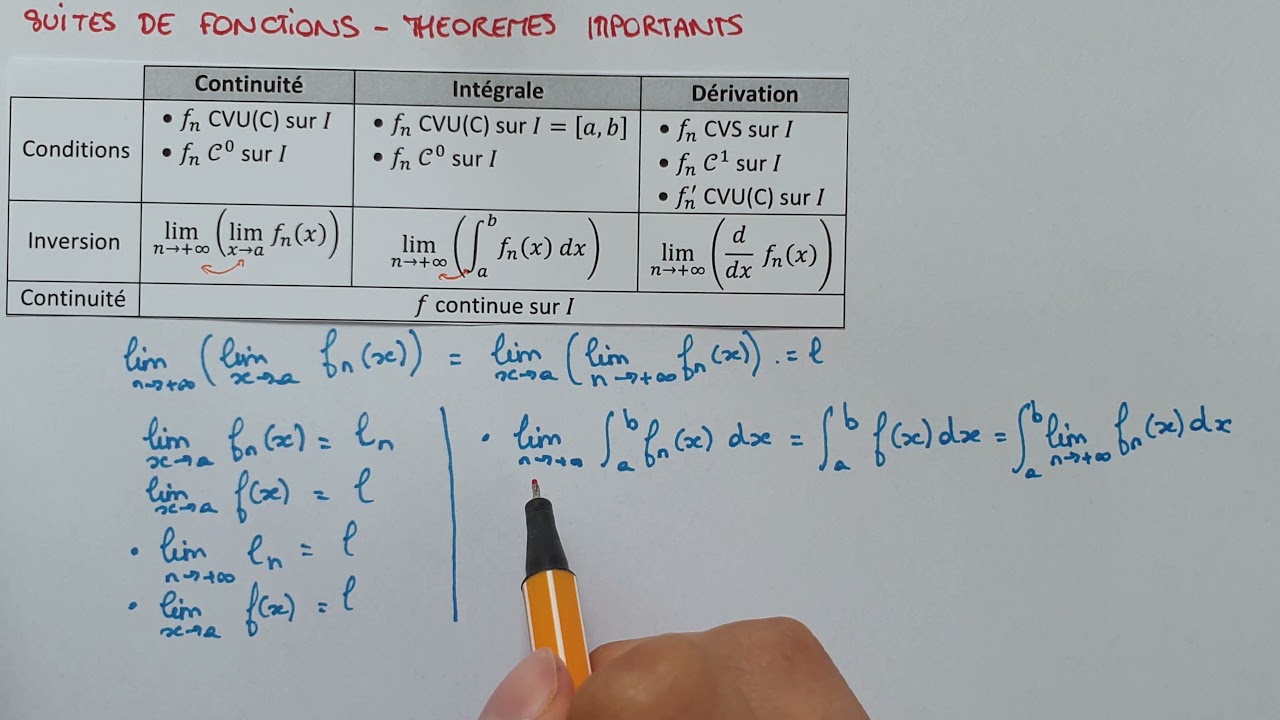



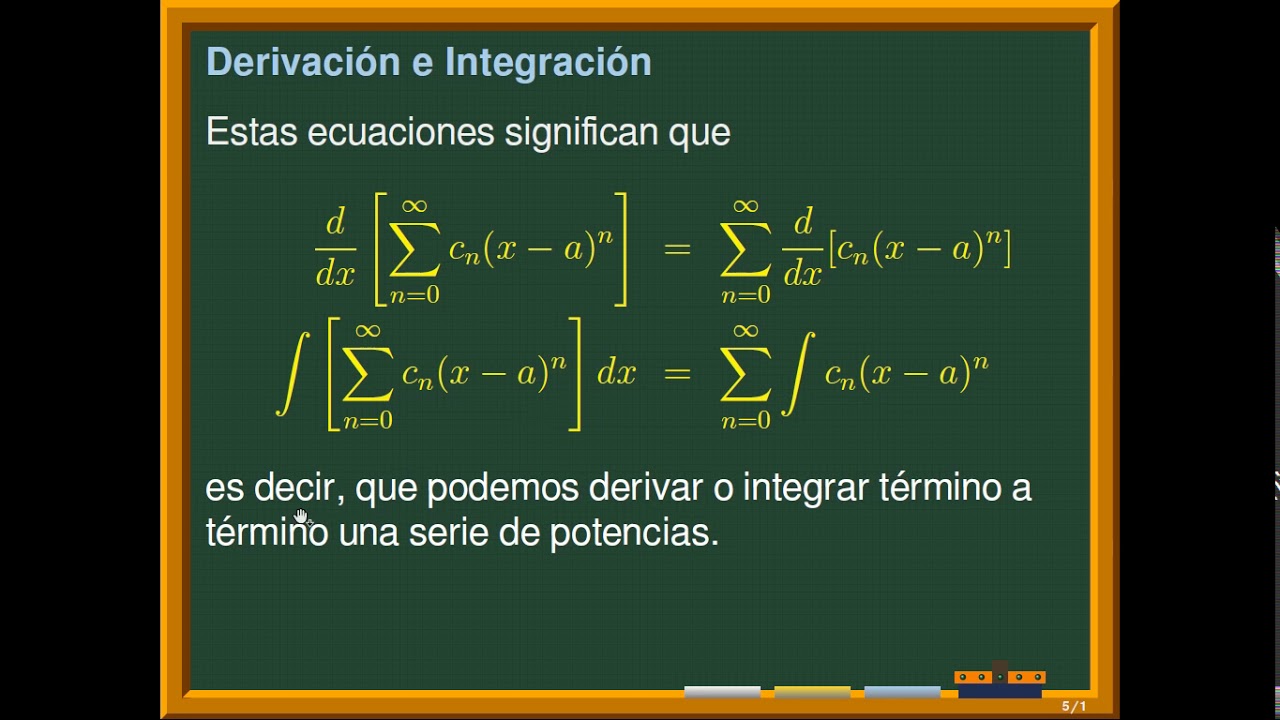








If a sequence of Riemann integrable functions converges uniformly to a function f on a closed interval [a,b], then f is Riemann integrable and the integral of f equals the limit of the integrals of the sequence functions. This theorem allows term-by-term integration of uniformly convergent series, such as power series within their radius of convergence.
Uniform Convergence and Riemann Integration | Math Lecture 34
Added:The definition and distinction between pointwise convergence and uniform convergence of a sequence of functions.
The formal definition of Riemann integration, including Riemann sums, upper/lower Darboux sums, and the criteria for integrability.
Basic topology of the real numbers, particularly the properties of continuous functions on closed and bounded intervals (compact sets).
The Uniform Limit Theorem, which establishes that the uniform limit of a sequence of continuous functions is itself continuous.
Uniform convergence and differentiability, exploring the more stringent conditions required to exchange limit operations with derivatives.
Term-by-term integration and differentiation of power series, and finding their intervals of convergence.
The Weierstrass Approximation Theorem, which utilizes uniform convergence to show that any continuous function on a closed interval can be uniformly approximated by polynomials.
An introduction to Lebesgue integration and its convergence theorems (e.g., Monotone and Dominated Convergence Theorems), which address the limitations of Riemann integration regarding pointwise limits.
231 views5likes49:57Original Release: 2024-07-31
okay so remember what we're doing we're talking about um uniform convergence right so like what the good things about uniform convergence as opposed to point-wise convergence right so point-wise convergence you know you had some had some qualities that weren't so good um uniform convergence um like what we showed last time was that um what we showed last time was that uh so basically looking at good properties uniform converence and what we showed last time was that if you have um uniform convergence and you have that these guys are continuous um then f is f is going to be continuous right so uniform convergence of continuous functions guarantees that the thing that they converge to is is continuous um previously we had seen that that doesn't that doesn't hold um if you just have Point pointwise convergence right and um um what we're going to see today are two things maybe um one is that if these guys are integrable if these if the things that are converging are un are uh the things that are uniformly converging are are integral then the thing that they converge to is and then we're going to see something that is not quite um the same thing in terms of differentiable because the statement with differentiable here is actually false um but we if you impose a bit more conditions on it then you can get something that is true okay so um first we're going to be doing doing this one okay um but before that uh we need sort of a crash crash review of Crash Course or crash review of what um uh remon incable means okay so um so this is the one that you saw in um this is the thing that you you may have seen in calculus um but uh it's probably we're going to do it a bit you know slightly just slightly more rigorously now okay um okay so let's see let's do it over here okay see is the definition um so you have um a function a real valued function on a closed and bounded interval and it's bounded okay so when we talk about when we're talking about remon integral functions we're only talking about bounded functions so then we introduce a couple of definitions um the first thing is called a partition [Music] of the interval okay and a partition is is just a very simple idea it's that you take you have um you take your interval and then you divide it into into pie into pieces okay so um uh um a set of points P being xot X1 X2 through xn um uh so these guys are all in AB um is called a partition of a if they're increasing they're strictly increasing and the first one is a and the last one is B okay so it's it's a a long long thing but all it means is that you've got a bunch of points going from A to B right you got a bunch of points xot X1 side going from A to B okay okay um uh so let um some notation let M subi be the supremum of f on X IUS one comma XI okay so your fun your function right you have some function uh on this interval and for each for the I interval m subi is the supremum on the I interval okay right so the highest biggest value on the I interval right and Little M subi is going to be the infinite mod on on that interval okay um uh Delta XI is going to denote going to denote the length the length the width of that interval right um and then we Define uh this thing [Music] UF um which is called the upper [Music] sum upper sum of f on P okay and UPF all that means is that for you're going to take um you're going to take the maximum value on each interval and then multiply by the width of the base right so you take the maximum value you multiply by the width of the base and you get the area of this dominating rectangle here right and then you add all those things together and that's called the upper sum okay and then you do the same thing below you call that the lower sum okay so this is going to be summation capital M subi uh Delta Delta XI and lower sum DF is going to denote summation of the lower values times the width widths okay I'm sure you've seen this sort of thing before if you haven't you're probably seen something very similar to it okay everybody everybody following along it's just some some ideas that we're just sort of like codifying some things that you've seen before I think okay so um let me ask you this um with the if I change the partition suppose I throw in an extra dot here okay suppose I throw in an an extra dot here what happens to the upper sum suppose I I make the partition a little bit finer by by throwing in a DOT what happens to the upper sum what's the relation between this the new upper sum is this new upper sum bigger or smaller than the old one anybody do you want to talk to each other talk to each other for one minute talk to each other for 10 seconds the same or smaller spot line right so here's here's here's your original I interval right you have the maximum here right now we we break it into break it into smaller pieces and we take the maximum over the smaller pieces right what happens to the maximum well the maximum on this side is going to get going to get lower right the maximum this size stays the same I guess right but um as you since you're taking a maximum over since you're taking a maximum over fewer things right then the maximum will decrease right the supremum will decrease you're taking a supremum over a smaller s Okay so as you get fi as you um make these things finer and finer right then the then the supremum is going to get lower and lower right okay yeah I'm sorry then the then the upper sums are going to get lower and lower okay so um that sort of motivates um the following definition we Define the upper remon sum I'm sorry the upper remon [Music] integral um of f as um we denote it like this and we find it to be the inum of all the upper sums over all partitions okay so you say let's consider the upper sums over all partitions possible okay right all partitions possible right you know there's this crude very crude like you could take you know this as your your partition right in that case your remon sum your upper upper sum would be you know just the area of this block right if you just took you know you know the partition to be a b right then you would get this right but as you get finer and finer the upper part the the upper remon sums are going to get you know are going to start dropping down closer and closer to the actual actual actual area okay right so you take the inum you take the lowest the greatest lower bound over all all of sums right and and as expected youd find the lower um the lower REM sum the lower lower REM integral that's this okay and that finally gives us the def allows us to Define what integ integral means we say f is remon integrable on um on AB if the upper sum and the lower sum are the okay so if the if the inum of the upper sums equals the supremum of the lower lower sums then we say it's remon integrable and denote that value by the integral okay you can take it as an exercise or as a fact that if f is continuous on AB then it turns out to be remarcable [Music] I hope that seems at least plausible right that if your function is continuous then when you when you take the you know the you know inum of the upper sums itg with the supremum of the lower sums um Let me give a uh a [Music] example okay and that is uh F ofx being the character characteristic function of the rational numbers okay so that is this guy is going to be one if F if x is rational and zero if x is irrational okay so the function right you know here's here's 01 um let's let's consider this function on Z on 01 is this is this an integrable function on 01 well at every rational point right so like at zero at one at a half right at 1/3 at 2/3 at 14 2 24 3/4 at 1/ f 2 fths you know 3 3 fths 4 fths you know at 1 six 26 Etc at every rational point it takes the value one but at every irrational point it takes the value zero okay so you see that this thing is you know you know it's sort of flipping back and forth you know infinitely in in every interval in every interval you choose there's rational and irrational points right and it's going to be going jumping up and down okay so if we think of um uh if we take some partition right let's take a partition just arbitrarily choose a partition what's going to be the upper sum over that partition one yeah one right because you're going to take the maximum value over each interval well the maximum value is always going to be one right right and then you multiply by the width so you're going to get 1 * the width of this guy plus 1 * the width of this this guy 1 * the width of this guy but the sum of all those widths is going to be just the length of the base right and so you're going to get 1 * one right so the upper upper sum no matter what partition you choose right the upper sum is always going to be one right for all so observe this is going to be one for all partitions right and so so the if we take the inum of those guys the the upper remon upper remon integral is going to be one right because they're all equal to one so okay uh on the other hand what's the lower what's the lower partition lower Su zero zero right because the no matter what value no matter what partition you take the minimum value is going to be zero right because you always have you always have irrational points inside there right so this is going to be zero and you see that the the lower the lower integral is zero and those don't agree with each other okay so this is not this is a not remon integrable function okay okay um uh those of you who can go on and take um take a course where they teach about teach you about Le integration uh like um you know graduate real analysis 1 137 um we'll be amused to hear that the actual the Le integral of this is actually zero and the reason is that the set of points where um uh where the function is is one actually doesn't have much mass doesn't have much mass to it it's a countable set right the rational numbers are countable and every any countable set is is pretty sparse in fact it's it's any countable set is what we call a measure zero um and the the irrational points on the other hand basically make up 100% of the mass here of this of this of this uh interval right so you say well look you know it's it's zero on you know 100% of the basically 100% of the points here and it's one on basically Z 0% of the points and so the value should be zero okay so um it is this function is actually is inable but not in the remon sense but make sense okay okay okay people starting to get a sense of what integ integral means right you know it just means that the um it just means that the uh inum of the upper upper sums equals you know the Supreme of the lower SS okay so um yeah I'm I should say that um uh one of my uncles uh was a student was a is is a ma or is or was a mathematician and um he's reti now and he was he was a student of mathematician young um who's also famous in in this in this area um and he he he repeatedly said that it's actually this is not the leag intrical it should properly be called the Young intrical um that young discovered it before before reman I before in the bank I I don't I I don't know the truth about it okay um okay some observations I mean most most things in mathematics are actually misnamed like lall's rule um is actually a result of ber one of the beri um uh the Koshi Schwarz inequality um the Russians call it the Koshi Schwarz buak kovski inequality um etc etc the uh the radon integral um should probably be called the funk integral etc etc okay Co um Le St people say these make make complaints about all these things okay some observations um first off um uh if if your function is bounded between two values so a simple simple observation right if your function is bounded between two values then um then uh the well first off the um the upper integral I'm sorry the then for any partition any Partition p um the upper sum is going to be bigger than the lower sum um and the lower sum is going to be bigger than um uh M * Little M time the width of the base um and the upper sum is going to be smaller than Big M * the WID of the base okay so I don't even know if you want to copy this down this is this is pretty pretty obvious right that the upper sum is going to be bigger than the lower sum that the upper sum is smaller than the greatest value times the width of the base right the lower sum is bigger than the smallest value times the width of the base it's pretty pretty obvious um okay um second thing second observation requires me to define something first um okay um so first first definition is um if you have p and p Prime that are both um partitions of an interval a um and uh if P Prime contains P we call P prime a refinement a refinement of okay it just means that you know you have one partition and then the the other one has has all those points and more right so it's just you know it this this partition contains the previous partition right so it has it has all all of P P's points and then some more points okay that is called a refinement um um so observe if P Prime is a refinement of P then um what can you say about the relationship between the lower the lower sums this is actually what we said earlier right you have you have you know you have one you have a lower sum you have a lower sum and then you refine it what happens to the lower sum is the refined one bigger or is the refin refined lower sum smaller is the lower sum of the refin one bigger or smaller could be bigger or equal to bigger than equal to Y right because um you're taking the you're taking the um the lowest value over a smaller over a smaller set right so if I if I throw this point in now I'm taking the lowest value over a smaller set so it will only get get larger right and similarly what we said before if we do that for the upper sum the ref the refined upper sum will only get it's smaller this is what we said before yeah wait the refined set or the refined partition is the larger is the one with more yeah with more points yeah okay um second definition um uh if P1 and P2 are partitions of ab then um we call the union P1 Union P2 the common refinement of P1 and P2 okay so it's a refinement and it contains everything in P1 and everything in P2 okay so yeah this is I I should say you know this is not the most exciting stuff if you're if you're bored then yeah I I think it's reasonable to be born um we're we're basically just trying to get enough um about the definitions so that we can talk about uniform convergence and and re integration so we'll we have just one more one more to do and then we can actually get back to uniform convergence okay so um here it is theem that um uh that if you look at the um lower the lower remon integral then it's always less than or equal to the upper integral in other words that the um supremum of the lower sums is always less than to less than equal to the inum of the upper sums Okay so so um we're going to do we're going to do a proof by contradiction um um suppose that that um the lower lower sum is strictly greater than uh the lower integral is strictly greater than the upper integral okay so let's put a number line here and we have the the lower integral and it's strictly greater it's strictly greater than the upper interal okay now um the the lower guy is the supremum of of the lower sums right the supremum of the lower sums so um that means that we can we can find lower sums that are arbitrarily close to it right it's a supremum of them so we can given any Epsilon we can find a lower sum inside here right and this guy is the in the inum of the upper sums so given any given any Epsilon we can we can find an upper sum that lies inside here right okay so what we're going to do um is take our Epsilon to be know half the distance okay take our Epsilon to be half the distance right half you know half the distance between these guys and we say well okay so we know that there's one uh there's a there's a lower sum inside here and we know that there's an upper sum that lies inside here right so there's there's some there's some lower sum based on one partition that that's that's bigger than the upper sum based on the on on the other partition right so so uh then there exists P1 and P2 such that the lower Dy is is strictly bigger than the upper Dy okay okay um but now uh now let P star be the refinement the common refinement of okay [Music] okay so um right what then what can we say about the lower sum on P star it gets bigger right we have it right there we just have yeah right it'll be larger than that one right and similarly the upper sum will be less than this one up upper some on P star will be less than less than this but that gives you a contradiction right because what that says is that the upper sum on P star is strictly less than the lower sum on P Star right which is impossible right the lower you know the upper sum on on a partition is always greater than or equal to the lower sum on that partition right but we we've got this Con me okay okay so this was just sort of a crash course and basically what I hope you get out of it um are one you know what the definition of remon integral is right what's what's a remon integral um and then um just I'd say these basic facts right that um you know this fact this this fact here um this fact about the refinements you know what what happens when you when you refine it and then this this thing here and these are all you know these are all sort of like Common Sense s right so just we're just putting this common common sense on a firm footing okay um okay so yeah so we we just wanted to get a bunch of of um basic observations so that we can talk about um about uniform convergence so so now now let's get back to the actual topic of that we're interested in so here it is so um okay so suppose you have a sequence um of remon integral functions we got a sequence of remon integral function um uh and uh they converge uniformly to some function f um in that case uh one the um f that they converge to is remon integrable and two um the remon integral the remon integral of f is the limit of the remon integrals of f suben [Music] [Music] okay so this is this is kind of what we hope for you know showing that um uh that um that uniform convergence uh preserves integrability and the second thing is one of these commutation things right because this F here is the limit of of the esence right so what this is saying is that the integral of the limit equals the limit of the integrals okay that is you know to to find the integral of the limit function you just take take the integrals of each each of these guys and then take the limit of them okay so um yeah and remember that's that's sort of thing is false um for just pointwise um pointwise uh convergence okay okay so here's the proof um we say okay let um let Epsilon denote Epsilon let Epsilon subn denote the um the greatest difference between uh F subn and F okay so this is the what we called previously the the sorm metric right so this is the the distance the distance from this guy to that guy in in the snorm metric right um and notice that e subn goes to zero right because the F subn converge F uniformly okay so um so that tells you that um f is trapped between FN minus Epsilon and FN plus Epsilon right here's your f right is your F subn right Epsilon Epsilon subn is the biggest difference right is the biggest difference between between the two functions right and so if we take an Epsilon N Tube around uh around F subn uh we see that that F must lie in that that tube normally we usually think of the tube around being around F but this this time we're going to think about the tube being on EP around epen in any case it's still true okay so now um uh we're going to take um yeah we're going to take um uh uh lower lower and upper remon sums of of things so we'll say well look um if we take the lower remon sum of we have this inequality here right so that tells us that the lower if we take the lower lower uh integrals then this this equality still holds because we have this point we have this pointwise we have this pointwise inequality and it's still going to hold true when we take partition when we take uh uh lower sums okay and then we do this we do something on on the right side um for upper sums right that this guy is controlled by the upper upper um integral okay um okay and by the theem the theorem that we just proved we know that you know this thing is always less than equal to that thing right that the that the lower integral is always less than equal to the upper intergral by okay um okay everybody all right yeah nothing nothing nothing going on here so now remember the fens are are remon integrable right so when we take the you know the lower the lower integral of this we just get you know this is going to be just this right and over here we're going to get the integral of f plus plus right because because for f f subn the lower integral and the upper integral are the same thing and certainly you know for a constant constants are definitely remon integrable so yeah we can do that yeah okay okay so now we um we observe that look if we take um this guy minus this guy right we take the bigger guy minus the smaller guy right that's bigger than zero certainly um but it's also smaller than this guy minus this guy right right if I got four numbers a b c and d and they're and they're increasing the distance you know this minus this is smaller than this minus this right that's all that's all I'm saying here right so we take the difference of the the two interior guys we take the difference of the exterior guys but the difference of the exterior guys is is just 2 Epsilon right because we get F subn minus f subn right and so what we get here is um Epsilon * B minus a okay and then you know if you let um uh let N Go to Infinity you get that that these things are equal to each other right because they're trapped between Z and zero the difference is tra between 0 and zero get that this thing actually equals this thing the value yes s um will you explain again how you got the two Epsilon and yeah because this minus this is smaller than this minus this right uh so that that second thing is this minus uh this right you know there's a plus here there's a minus here so we're going to get as my son says the minus it combines with the minus and makes a plus yes just wondering where did the two go from the sure oh okay it doesn't matter as n goes as n goes to Infinity still goes to zero yeah but you're absolutely okay right okay so that that's that gives it to you right that um that uh what do you get f is remon integrable Right f is remon integ and you see that um kind of by the same reasoning right the the the remon integral is trapped between this and this right and further you going going back there back here we see that the remon integral is trapped between FN plus Epsilon n and the integral of FN minus Epsilon n right and so when we take the limit when we take the limit we see that this thing equals the the the limit of the integrals right again let N Go to infinity and we get that um the limit sorry let WR it over here let Ang go Infinity we get that the limit of this um is less than or equal to the the remon intergral of f Which is less than equal to that right which is which is the same thing right and so this uh so the intercal of the limit is the limit of the intergal as we hoped okay let me just make one I think I have enough time to make to make the cor um right um if um you have a bunch of remon integrable functions sry this is the notation the remon integrable functions on AB um if their sum converges to f uniformally um then what do we see we see that um just by the theorem the integral of f equals the limit of the integrals of the partial sums of the partial sums of of that infinite series right the integral of the limit is going to be the limit um the limit of of of these guys actually maybe um no leave it that way okay but the these integrals these integrals of the partial sums uh this is just a finite sum so we can pull the sum out right so this is the limit as n goes to Infinity of the sums of the integrals of the functions okay so this this part you I should sort of leave out this isn't part of the theorem this the point of the theorem is this that the integral the integral the limit is the limmit of the um of the uh sums of the integrals right so um so for example if f ofx equals some power series suppose f ofx is some power series and let's say that the power series converges uniformly to F okay what this theorem says is that then the integral of f on on some interval is going to be the limit of the integrals limit of the integrals of of each of those [Music] monomials okay in other words you can integrate you can inte integrate the terms term by term okay can can do one can integrate term by term right so basically what this is saying is that if you're taking the integral of some uniformly conversion power series then it's okay to just take the integral of these terms it's okay to take the integral you know term term by term okay that's that's something that will be very handy um uh in complex in in complex analysis next next turn um because what you'll see is that power series um always converge uniformally um within within a small a smaller dis than their than their radius of convergence if you take power if you take complex analysis there'll be a radius of convergence and turns out that in any smaller disc you're guaranteed uniform convergence um and so you can do term term by term integration okay sorry to keep you over um that's it for today next time we'll do uh uh differentiation uniform uh convergence and differentiation and then we'll probably go right into um something called equicontinuity and hopefully try to get to the the big big result called the theorem of ascoli arel that's the climax of the course w
Up Next
19:39
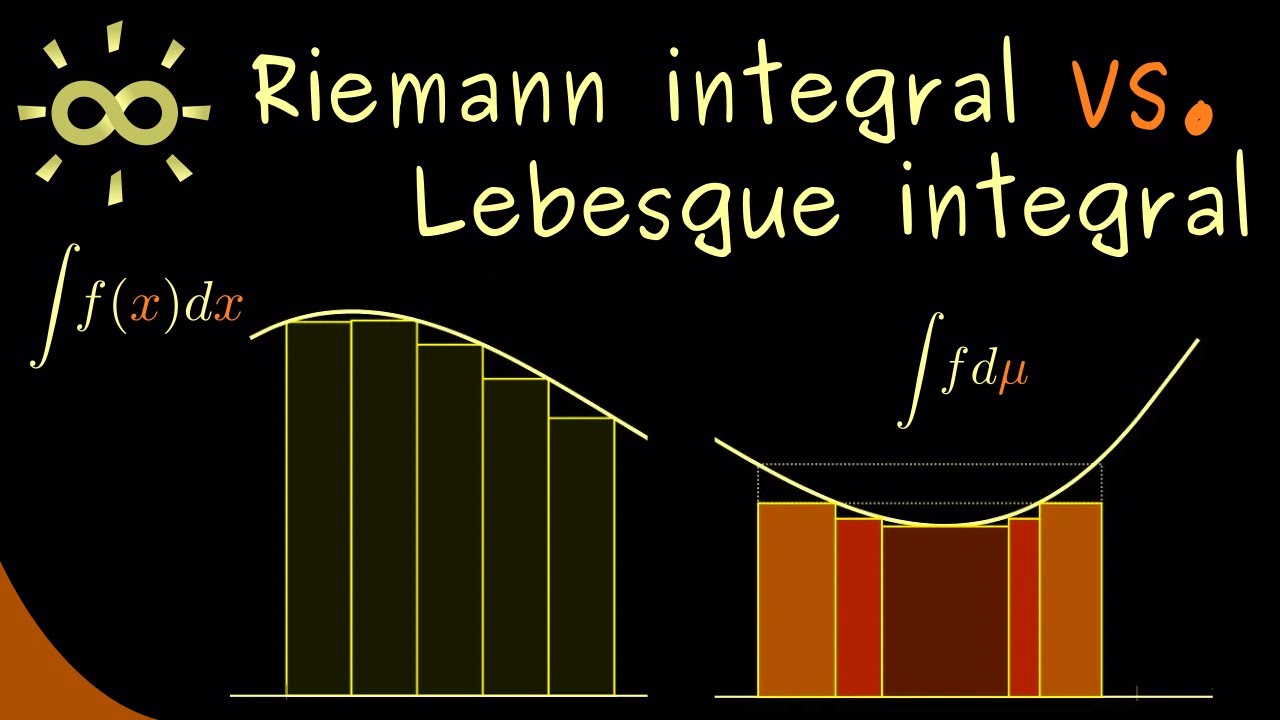
Riemann vs Lebesgue Integral: Motivation and Key Differences
@brightsideofmaths
14K views•2022-12-12

4:43
Elliptic Curve Cryptography Explained: ECC, ECDSA, ECDH
@PracticalNetworking
28.5K views•2024-10-21
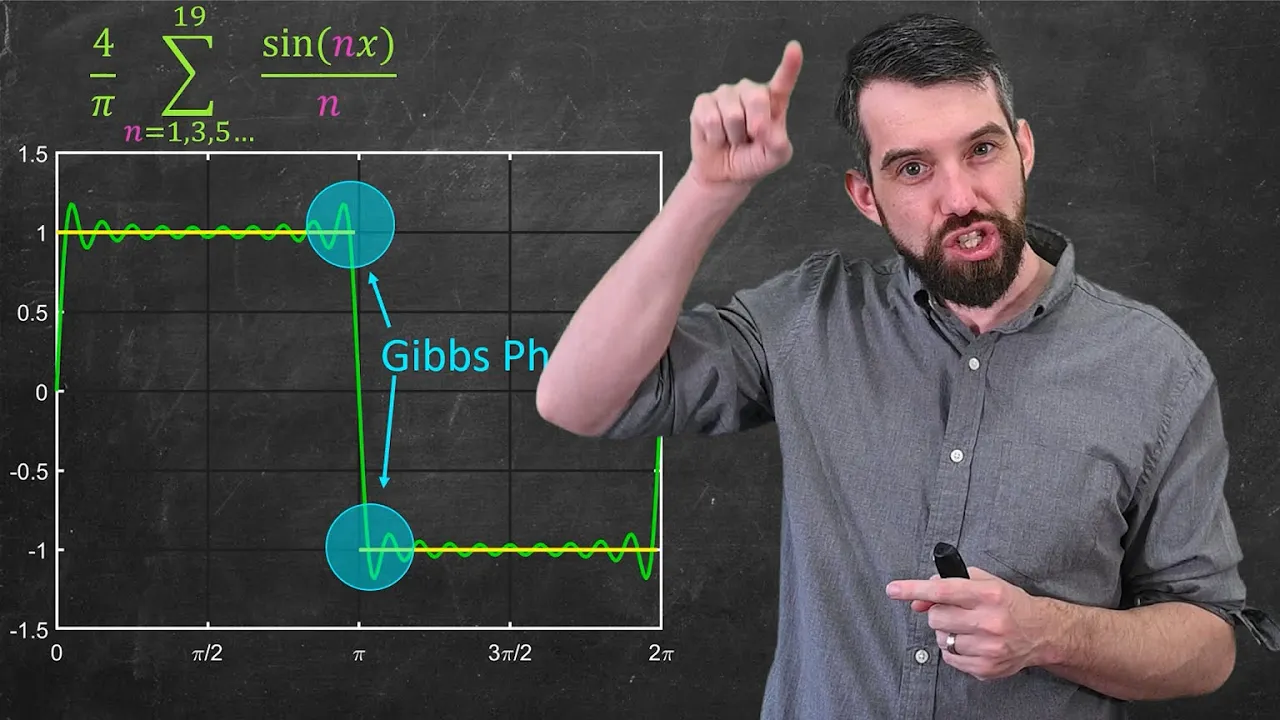
10:44
Fourier Series Introduction: The Big Idea Explained
@DrTrefor
387K views•2021-05-03

6:00
The Mathematical Impossibility of Accurate World Maps
@Vox
23.3M views•2016-12-02
Related Study Plans & Knowledge Roadmaps
Structured learning paths in Mathematics
mathematics
Tensor Calculus: Vectors to Riemann Curvature
01Mathematical Foundations: Linear Algebra & Calculus
02Covectors, Dual Spaces, and Tensor Basics
03The Metric Tensor and Index Gymnastics
+ 2 more learning modules
40h5 modules
Explore Roadmap
mathematics
Gödel's Incompleteness: Logic, Proofs & Limits
01Introduction to Formal Systems & Hilbert's Dream
02Set Theory, Cardinality, and Cantor's Diagonal Argument
03Arithmetization and Gödel Numbering
+ 2 more learning modules
14h5 modules
Explore Roadmap
mathematics
Galois Theory: Fields, Groups & Solvability
01Foundations of Abstract Algebra: Groups & Fields
02Polynomials & Field Extensions
03Splitting Fields & Symmetries
+ 2 more learning modules
24h5 modules
Explore Roadmap
mathematics
Non-Euclidean Geometry: Models & Geodesics
01Euclid's Fifth Postulate and the Birth of New Geometries
02Hyperbolic Space and the Poincaré Disk Model
03Geodesics: Defining Straight Lines in Curved Spaces
+ 2 more learning modules
15h5 modules
Explore Roadmap